
Free book for boys and reluctant readers
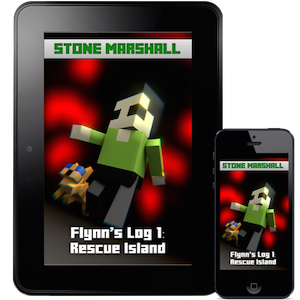
Flynn’s Log is free on the following devices
Choose your device
KindleiPad/iPod/iPhoneGoogle Play (Android Tablets)nookkoboRead Online
US$8.99 Paperback
Get Reluctant Reader Book News from Stone Marshall
Reading is important
Any book that helps a child to form a habit of reading, to make reading one of his deep and continuing needs, is good for him. –Maya Angelou
Most adults would agree that reading is important, but many kids detest reading. Video games, devices, and TV are preferred entertainment and escape. They provide instant gratification. Reading takes time. For some kids, reading isn’t engaging.
I had this same problem with my son, so I solved the problem.
The classic stories I remember enjoying as a kid don’t interest my son and his immediate attention span. If he doesn’t enjoy the story from page one, he will not read further.
So how did I get my son to read?
I showed him how much fun it is to get sucked into a story.
Your book is amazing I can’t stop reading it – Joseph Young via twitter
Contemporary and Classic titles alike don’t interest many kids. Don’t worry, the love of reading is learned. We need a starting point. We need that one book that is just as engaging on the first read as the fifth, just like a really great movie that kids want to see again and again. A positive association with reading will make kids want to read more.
A love of reading is cited as the number one indicator of future success. My son didn’t have the desire to read. He didn’t care about the books I chose to read to him, and was overwhelmed with the selection at the library. I want my son to succeed, so I had to do something. Since we struggled to find books he cared to read, I wrote one. An epic saga about the things he loves. I put it in a world he loves and addressed the issues he faces in his life.
I just love your books I’ve been reading them over and over again. -Carson via twitter
But it’s a video game book
Don’t worry; it’s not a book about video games, nor is it a game strategy book. Flynn’s Log is a hero’s journey that takes place inside the Minecraft world that today’s kids know and love. The protagonist, Flynn, naturally flows through Maslow’s hierarchy of needs (builds shelter and tools, learns what to eat and discovers a digital friend) and faces questions about his destiny. He learns important life lessons about friendship, integrity, and trust. Flynn’s Log is good for kids without being boring.
Thank you so so much for the free ebook. My son loves Minecraft now with this book I can get him to read to me. – Jennifer Wilkins
Start your son or daughter on journey today, reading Flynn’s Log 1: Rescue Island. Free on available these devices and apps.
Flynn’s Log is free on the following devices
Choose your device
KindleiPad/iPod/iPhoneGoogle Play (Android Tablets)nookkoboRead Online
US$8.99 Paperback
Why is Flynn’s Log 1 Free?
My son loves reading — finally. If you have experience with a reluctant reader then I know your pain and I want to help. I’ve seen thousands of kids transform with this book. My readers, who don’t usually read books during the summer, couldn’t put Flynn’s Log 1 down.
Good book I thought I would never read a book on my summer but I feel I’m gonna finish it soon – Multigamer 47 via twitter
Let this book change your kid’s life too. You have nothing to lose and an avid reader to gain.
Once you learn to read, you will be forever free.
–Frederick Douglas
I am giving away Flynn’s Log 1 free because I want to give you a risk-free way to hook your reluctant reader.
Please and I mean PLEASE, WRITE MORE! I absolutely love it! They’re outstanding books.
-Devon123321 via twitter
What are Books for Boys?
I spend lots of time with teachers and parents. I hear parents ask, “How do I get my son to read? Do you have books for boys?”
I wrote the Flynn’s Log series for my son, and this book is interesting for boys. However, the series is a non-stop read for both boys and girls, especially those who are interested in Minecraft.
The more that you read, the more things you will know. The more that you learn, the more places you’ll go.
—Dr. Seuss
What are you waiting for?
You have nothing to lose!
Flynn’s Log is free on the following devices
Choose your device
KindleiPad/iPod/iPhoneGoogle Play (Android Tablets)nookkoboRead Online
US$8.99 Paperback
News for Parents of Reluctant Readers
Get Reluctant Reader Book News from Stone Marshall
How can parents help their kids learn to read?
Monday night’s School Reform Commission meeting on strategy, policy, and priorities brought together teachers, partner organizations, and District officials working on a new citywide campaign. They were all looking for answers to the same question: How do we get kids to read?
The common answer that night: Parents need to be involved, preferably from their children’s early stages of development. Parents at the meeting, however, represented a small minority of attendees.
The campaign, called READ! by 4th, stands for Ready, Engaged, Able, and Determined, and aims for reading proficiency for all Philadelphia 4th graders by 2020. The program launched in August.
Superintendent William Hite talked at the meeting about the importance of early literacy in children for future success.
“One thing we know [is] that all of the factors around literacy point to the fact that if we can address early literacy by the time children are in 3rd or 4th grade, it’s a resolution to everything we will face later,” he said in his opening remarks.
Monday’s SRC meeting included panel presentations, table discussions with a moderator, and a summary of every table’s thoughts and ideas to the larger group. About 100 attendees discussed questions about early literacy and involvement from READ! by 4th partners on strategies and best ways to support families and children.
When roundtable discussions were shared with the group, the common theme expressed was that parent involvement in reading with their children at an early age is imperative. However, attendees agreed that bringing that information to parents directly, in their own community, needed to be the first step.
“We wanted to make sure that parents really have a true understanding of what’s at stake. That’s the real bottom line,” one table facilitator said to the room. “Do the parents really understand what the impact of READ! by 4th really is? And so we have to really figure out the most effective way to convey that to parents.”
One table called the alignment between parents and organizations “puzzle pieces,” questioning what needs to be done so they can fit together. Another called for stronger connections where organizations learn the needs of families, the District aids partner organizations with community updates and initiatives, and school principals and teachers work together to get what they need.
Amy Pace, a Temple University post-doctoral fellow, spoke about a study in which she placed large signs within the fruit and vegetable sections of grocery stores that encouraged parents to talk to their children and ask open-ended questions to facilitate a healthy conversation.
She explained that her other studies have found that good communication with parents and their children at an early age is a good predictor of the child’s language skills later in life. Over time, the quality of early interactions, like what the grocery stores signs are meant to encourage, were important for communication growth.
“If we can help parents engage in what we’re calling ‘conversational duets,’ we can improve language and literacy outcomes,” Pace said. “It does not matter what language they’re speaking or learning a language or two or more, it cannot be a solo performance. It has to go back and forth to continue the conversation.”
During the short Q&A section of the meeting, one woman asked Pace how much the materials for the supermarket campaign had cost. The reply: “About 60 bucks.” The audience laughed and nodded in approval. One person said, “We can do that.”
Conversations for the final roundtable discussions centered on strategies that could be used to improve literacy. Many tables responded positively to the idea of “going back to the basics” and trying to get messaging out to parents at home and in their communities.
“If children start behind, they are likely to stay behind,” said Diane Castelbuono, deputy chief of the District’s Office of Early Childhood Education. She also emphasized that teaching a child to read is a very individualized process and that teachers need to be given materials that are easy to use and reflect the child’s identity.
A core component to READ! by 4th includes increasing access to high-quality pre-K, and she said she expects access around the city to improve with the addition of over 200 seats by the end of the school year.
It was also announced at the meeting that the Free Library of Philadelphia was selected as the anchor organization for the READ! by 4th campaign.
“One thing that went unsaid tonight is the scale of the crisis that we’re confronting as a city and a country,” said Deputy Superintendent Paul Kihn in his closing remarks. “It will really take all of us working together in a coordinated and collected way … in order to make progress in this regard.”
The fate of two young boys are entwined in ‘The Madman of Piney Woods’
THE MADMAN OF PINEY WOODS
By Christopher Paul Curtis
Scholastic. $16.99.

Ages 8-12
To get kids reading, the secret, you know, is to turn to the terrible Gruffalo
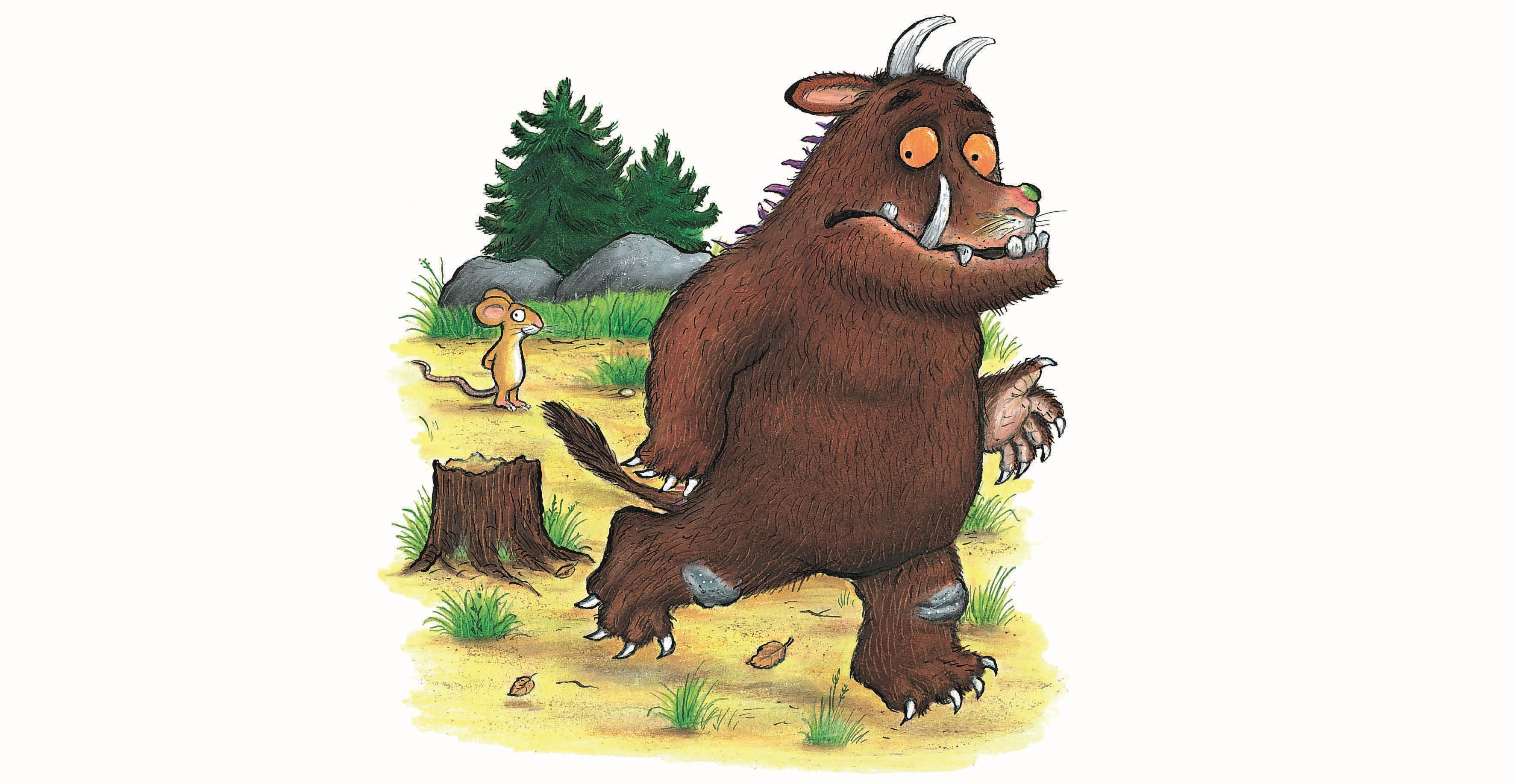 Hidden somewhere in a deep, dark wood – guarded by a quick-witted mouse and a gullible creature with “terrible claws/And terrible teeth in his terrible jaws” – is the secret to getting young children reading for pleasure. Not just a few children: we’re talking millions. And Julia Donaldson is going to tell you what it is.
In the 24 October issue, the author of The Gruffalo and former children’s laureate explains that the secret is simpler than you might imagine: utilising rhyme.
“Children love rhyme and rhythm, it’s a very natural thing,” she says. “If they are lucky, a child has probably been brought up on nursery rhymes and chants. Even if they haven’t, people tend to speak rhythmically to children, even if it’s just: ‘Go to sleep, go to sleep.’ ”
As a result, Donaldson says, children have an affinity with rhyme that can be utilised in the classroom.
“As they enjoy it, it will increase their overall enjoyment of reading and their love of and interest in language,” she says.
She explains that exploring rhyme is not just about reading it, but writing it, too. Admittedly, this is tough with younger children, but Donaldson has some tips teachers can use including the below (see the full feature for more).
“I make myself a little list of all the possible rhyme onsets,” she says. “There are so many beginnings to words – not just the alphabet but sounds like “sh” and “th” – that it can be difficult to remember them. I started giving kids an onset list like the one I would use myself. I’d get them to think of a word and then come up with a rhyme for it by going down the list and trying each sound.”
Although she is not claiming that using rhyme or performance will automatically instil a love of reading in all students, Donaldson’s use of these elements in books that have a proven track record in getting pupils reading suggests that teachers should at least give them a try. After all, 13 million children (the current sales of The Gruffalo) can’t be wrong, can they?
Read the full article in the 24 October edition of TES on your tablet or phone or by downloading the TES Reader app for Android or iOS. Or pick it up at all good newsagents.
Papa talk: Interest in reading can be cultivated early
The ability to read is doubtlessly one of the most important fundamental skills a child can have, and without it, his or her education course will have suffered a stillbirth right from the outset.
S/he will never even be able to master all the other subjects if they can’t read. So, reading isn’t something one can take lightly at all. Many children do get to love books and reading. But how about the reluctant reader, one who has no interest in reading books whatsoever? How do you handle them?
I quite clearly remember when my younger brother and I were in primary school; we weren’t much of readers. But one of our teachers encouraged us to visit our town’s public library, which in a pleasant coincidental twist, was attached to our school. We walked into the library and got overwhelmed by this huge array of books arranged in a series of bookshelves, one after another.
We were further intimidated by the number of people, mostly adults, at the reading tables, reading silently. We didn’t even know where to start, and often found ourselves staring, fingering and leafing through books whose contents we couldn’t make heads or tails of.
But just to appease our teacher, we grabbed any books we thought would serve the purpose and headed for the librarian’s table. We suddenly bumped into our Science teacher, a pleasant lady who always looked out for her pupils. She took one look at the books each one of us was clutching and stopped us in our tracks.
She turned us back and had us return the books to their shelves. She led us to a section of books written for younger minds. She then picked books by Enid Blyton, the famous British children’s writer. We were, however, horrified by the number of pages each book had and were convinced we would never get round to finishing them.
Books were loaned out for 14 days, but we returned the books even before seven days, having read every page, almost non-stop, and after swapping the books between us! We fell in love with reading from then on, and by the time I sat for my PLE, I was reading novels read by secondary and university students!
I have always attributed my reading and writing abilities to this one incident in my life and will forever be indebted to this lady, who sadly passed on not long after. Carol Quick, a clinical social worker, observes that for all children, being at ease with letters, their sounds, and words is an important foundation for learning throughout life.
She advises parents to identify what captures a child’s interest and imagination and start the reading project there.
“Comics or joke books may not be your first choice to boost literacy, but the reality is they can be very motivating. Children will often amaze you with their ability to read something that they really want to read,” she says.
I recollect sometimes going to my mother as a little boy in primary school to solicit for money to buy books.
“And if you go and buy those books with funny drawings (comic books), you’ll be in trouble with me,” she would always warn. I would buy the ‘serious’ books but would always save some for the ‘comics.’ I greatly believe that comic books enriched mine and my brother’s vocabulary and educated us on the way of life in Europe and America.
Read original article: Papa talk: Interest in reading can be cultivated early
Books to Motivate Every Reader
As educators, one of our overarching goals is to support literacy communities where leisure reading can motivate all of readers to develop a lifelong love of reading. In this column, the members of the Children’s Literature and Special Interest Group, feature titles that have the potential to both support struggling readers and challenge more confident ones. For example, panel art might motivate reluctant readers while picture books with surprise twists offer unique challenges for more avid readers. Through the use of whitespace, illustrations, varied sentence length, complexity, and text features, the titles afford opportunities to scaffold the reading process. Through interesting storylines and the use of humor, these selections will provide wide appeal to both avid and reluctant readers.
Grades K-2
Bee, William. (2013). Digger Dog. Illus by Cecilia Johansson. Somerville, MA: Nosy Crow/Candlewick.
 With such a positive attitude and big smile, everyone needs a friend like Digger Dog. In this story, Digger Dog loves to dig for bones, but he also teaches the sound of the letter D, all about using comparatives and superlatives, and good adjectives. Most importantly, Digger Dog teaches the rewards of perseverance. On every page, Digger’s animal friends have his back as he tries harder and harder to dig up the biggest bone ever. A surprise-ending, four-page fold-out showing Digger’s bone digging success (a dinosaur digit!) inspires some primary-aged critical thinking as readers are encouraged to wonder about things they cannot see. Humorous illustrations in bright, sunny colors are enhanced by graphic polka dot backgrounds throughout the book. Visual cohesiveness partnered with consistent text patterns make this picture book a winner.
—Emily Ritholz, Reading Specialist, Quarryville, PA
Cohn, Ariel. (2014) The Zoo Box. Illus by Aron Nels Steinke. NY: First Second.
 In this comic book style picture book, a brother and sister are left home alone to discover a suspicious box in the attic. The story starts with the parents reminding the children of bedtime, but the kids proceed to put on animal costumes (a tiger for the older sister, Erika). They then open the box labeled “do not open.” The children remain calm when first emerges an ostrich. From there, the story takes one fantastical turn after another. Young readers will enjoy the pacing of this book as they make sense of the bizarre “zoo” the children find themselves in. The amount of text varies from page to page which will help reluctant readers. There are wordless double-page spreads, eight panel spreads with only a few speech bubbles, and pages with plenty of text. This appealing offering will help build familiarity with the graphic novel format and also build confidence in young readers.
—Lesley Colabucci, Millersville University of Pennsylvania
Barnett, Mac (2014). Sam & Dave Dig a Hole. Illus by Jon Klassen. Somerville, MA: Candlewick Press.
 This irresistible picture book invites readers on an adventure with two boys and a dog. Armed with shovels, Sam and Dave are digging for “something spectacular.” As in the best picture books, readers needs the illustrations to understand the story. Humor is embedded in what the pictures convey that the text does not and the plot depends on pictures. The muted tones, varied page layout, and subtle details within the pictures are all key elements in this clever story. The book is meant to be read and re-read which will provide lots of practice for reluctant readers. In addition, young people will likely notice the ending twist before their teachers or parents.
—Lesley Colabucci, Millersville University of Pennsylvania
DiCamillo, Kate. (2014). Leroy Ninker Saddles Up. Illus. by Chris Van Dusen. Somerville, MA: Candlewick Press.
 “Yippee-i-oh!” This transitional reader offers witty wordplay, a creative storyline, and endearing characters. Leroy Ninker has aspirations of becoming a cowboy. Even though he has a hat and nifty boots, he is missing one of the most essential items needed to be considered a “true” and “bona fide” cowboy—his very own horse. His search for a horse comes to fruition when he meets Maybelline, an oversized and friendly animal (with four large teeth). Leroy is instructed to follow some unusual rules. First, he must shower Maybelline with compliments or she won’t gallop or respond to any other commands. Second, Maybelline loves to eat, so he must feed her “plenty of grub” and finally, he should never leave Maybelline unattended. Unfortunately, Leroy leaves Maybelline alone and she runs away. Through a series of adventures and missed opportunities, Maybelline and Leroy finally reunite on Deckawoo Drive at the home of familiar characters (Mrs. Watson, Mercy, Stella and Frank). DiCamillo’s brilliant use of descriptive language and character development coupled with a heartfelt message about friendship make this a must-have for the classroom. The illustrations and the ‘horseshoe marker’ page numbers add to the light-hearted mood of the text. Teachers might be interested in viewing more information about the book, including a teacher’s guide at the publisher’s web site:
—Mary Napoli, Penn State Harrisburg
Hanlon, Abby. (2014). Dory Fantasmagory. New York, NY: Penguin Young Readers.
 Imaginative, creative, humorous, and playful are just a few ways to describe this transitional chapter book. Dory, also known as Rascal, is the youngest sibling. Despite the fact her older brother and sister think she is a baby, her imagination and creative sense of play provide her hours of entertainment. Through a series of make-believe characters, Dory and her imaginary friend Mary, find ways to occupy their day (and also annoy her older siblings, Luke and Violet). Her sister threatens Dory that unless she stops acting like a baby, she will be snatched up by the ruthless Mrs. Gobble Gracker. Dory decides to defeat Mrs. Gobble Gracker by pretending to be a dog and engaging in other mischievous acts. Will she defeat Mrs. Gobble Gracker? Will her brother and sister finally play with her? What will be her next adventure? Dory is a well-developed and relatable character. The mix of words and illustrations (along with comic speech bubbles) make this an entertaining read-aloud.
—Mary Napoli, Penn State Harrisburg
Grades 3-5
Gaiman, Neil. (2014). Hansel and Gretel. Illus. by Lorenzo Mattotti. New York, NY: RAW Jr. /TOON Books.
 In this retelling of the classic fairy tale first published by the Brothers Grimm in 1812, Gaiman’s gift of descriptive language offers subtle nuances to provoke readers to question the underlying tone and messages of poverty, war, and abandonment. Gaiman adds an interesting ending where Hansel, Gretel, and their father live prosperous lives, never having to worry about food or shelter. He includes background information about the origin of the tale and a short bibliography of other Grimm collections. Moreover, he shares information about how his collaboration with illustrator Mattotti developed. Lorenzo Mattotti’s initial renderings were part of an exhibit to celebrate the Metropolitan Opera Production of Hansel and Gretel. His haunting illustrations immediately sear through the reader’s emotions. The wordless double page spreads contain swirls of blackness that support Gaiman’s text, but can also be ‘read’ independently. Gaiman & Mattotti’s rendition will intrigue and puzzle readers.
—Mary Napoli, Penn State Harrisburg
Judge, Lita (2014). Born in the Wild: Baby Mammals and their Parents. NY: Roaring Brook Press.
 This unique book presents 26 species of baby mammals. With a balance of storytelling through illustration, repetitive verses, and informational text this book offer a delightful experience for a wide variety of readers. Accordingly, the book can be read repeatedly and on many levels. The basic narrative pages contain just a simple sentence (The baby needs protection. The baby needs shelter) but the pages in between feature paragraphs devoted to each animal. These pages still maintain plenty of whitespace with bolder, colored text used to direct reader’s attention to the focus animal. In this way, readers can pick animals to focus on and read those sections. Readers with more motivation or endurance will find the back matter satisfying (containing further details on each animal, a glossary, sources, and a listing of websites). The art is an additional selling point for this book. The animals are drawn with a softness and realism that makes each one endearing.
—Lesley Colabucci, Millersville University of Pennsylvania
Spinelli, Eileen. (2014). Another Day as Emily. NY: Alfred A. Knopf.
 Eleven-year-old Suzy and 4-year-old Parker are pictured on the cover of this book as typical siblings. Suzy is easy to relate to as she spends her summer talking to her pet fish, participating in the library’s “Tween Time,” and becoming friends with an older boy named Gilbert. The character is tested when Suzy becomes jealous of the attention Parker gets for being a hero by calling 911 for a neighbor and gets rejected for a part in a play while her best friend is chosen. Suzy’s story maintains a hopeful tone throughout but her inner struggles with feel familiar with readers. Written in brief poems, the book moves fast. Some readers will want to take their time with individual poems (and possibly investigate Emily Dickinson further) while others will feel satisfied with the quick pace of the story.
—Lesley Colabucci, Millersville University of Pennsylvania
Grades 6-8
Holt, K.A. (2014). Rhyme Schemer. San Francisco: Chronicle Books.
 In the tradition of Love that Dog and Locomotion, K.A. Holt’s Rhyme Schemer explores the love/hate relationship between a boy and poetry. Kevin is in middle school and he is a bully. Ironically, he becomes a victim of bullies when his secret love of poetry is discovered. As “the poetry bandit,” Kevin rips out pages from books, then creates and pins up ingenious Found Poetry, which angers and baffles teachers while students cheer on this mysterious Robin Hood of words. Readers empathize with the emotional rollercoaster ride that is middle school. Who has not felt the way Kevin feels when he writes: “I am not a stone./I am not a rock./I am not a giant and unblinking and cold./ There is an earthquake./In my guts.” Kevin survives family problems, school disciplinary action, and self-esteem issues. Middle school students who struggle academically or emotionally will identify with Kevin. In the end, it is everyone’s angel, the school librarian who uplifts and supports Kevin. The book closes with a smile and a very important middle school reminder: Be Kind.
—Emily Ritholz, Reading Specialist, Quarryville, PA
Thomson, Ruth (2014). Photos Framed: A Fresh Look at the World’s Most Memorable Photographs. Somerville, MA: Candlewick.
 Photographs capture moments in time and serve as passports to understanding our past and capture our present. There is nothing quite like the experience of gazing at a photograph to convey emotion and its significance of a particular moment in time. In this well-organized nonfiction text, Ruth Thompson provides readers with a visual journey through history. The collection of 27 high quality photographic images feature an iconic self-portrait of photography inventor, Louis Daguerre (1844) to more contemporary images, including the Royal Wedding portrait of Prince William and Kate Middleton. The front matter includes a “note to readers” to pay close attention to the intricacies of each image. The table of contents includes headings, such as “portrait photography, nature photography, photography as art, and documentary photography.” Each double page spread contains information about the photograph and the photographer. There are also color coded questions to facilitate observation and discussion as well as text boxes: Blow Up and Zoom In. Each text box provides further opportunities for readers to observe and consider the details of each image. The adjacent page contains a full color photograph along with a relevant quote from the photographer that captures his/her keen perceptions to keep the reader interested and entranced. This is unquestionably an informative, well researched, and engaging nonfiction selection.
—Mary Napoli, Penn State Harrisburg
Grades 9-12
Lewis, J. Patrick & Lyon, George Ella. (2014). Voices from the March on Washington. Honesdale, PA: Wordsong.
 This book bridges non-fiction and poetry beautifully. Readers will learn about the March on Washington through poems in “imagined voices.” These poems present this historical event through the eyes of fictionalized characters—a third-grader from Washington, D.C. to a 16-year-old from Georgia to a Spelman College student. These voices are complemented by poems that capture the events of the time period, including poems devoted to Rosa Parks, Bayard Rustin, and Langston Hughes. The book starts with black and white photos, an in depth introduction, table of contents, and an initial poem titled “Reflection.” The end matter includes a guide to the voices, bibliography, websites, and two indices (one by voice and one by title). While the book has a satisfying arc read as a whole, the variety of poems and the detailed information about all the voices give this piece a special kind of accessibility to a wide range of readers for a wide range of purposes.
—Lesley Colabucci, Millersville University of Pennsylvania
Smith, Andrew. (2014). 100 Sideways Miles. NY: Simon & Schuster Books for Young Readers.
 Finn Easton and Cade Hernandez are best friends. Their friendship is the heart of this novel which features first love, a tragic death, and the protagonist’s struggle epilepsy. In addition, Finn is also dealing with unwanted notoriety because of similarities he shares with a characters in his father’s famous cult-classic science fiction novel. While events in the story may seem bizarre and even disturbing, the deadpan dialogue between characters and classic teenage sarcasm make for a hilarious read. Fans of young adult literature will immediately “get” these characters and more reluctant readers will be drawn in by the charisma of the characters.
—Lesley Colabucci, Millersville University of Pennsylvania
These reviews are submitted by members of the International Reading Association’s Children’s Literature and Reading Special Interest Group (CL/R SIG) and are published weekly on Reading Today Online.
‘Brainwashed’ author inspires kids to read
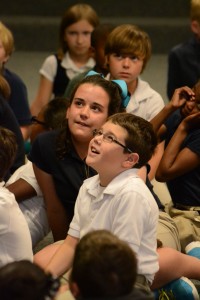
Students at Peabody Montessori Elementary School traveled with children’s author Paul Aertker to London and France without leaving the school auditorium thanks to his way with words.
“Reading to me is being able to travel without going anywhere,” said Aertker, an Alexandria native. “So we can all go on vacation together as soon as we open page one.”
He shared passages of his book “Brainwashed” to students in fourth through sixth grades on Thursday. It is the first in a series called Crime Travelers by Aertker, who now lives in Denver, Colo.
The mystery novel is about a boy who leads a group of international teenagers to Paris on a secret mission to stop a company from brainwashing children.
Aertker, a 1983 graduate of Holy Savior Menard Central High School, also is a former teacher and avid traveler. He used those experiences to emphasize the importance of reading.
Children’s author Paul Aertker speaks to students at Peabody Montessori Elementary School before reading a portion from his new book, “Brainwashed,” on Thursday. (Photo: Tia Owens-Powers/towens@thetowntalk.com )
He gave the students an example of the power of words by describing his experience as a teenager camping out in London to see the royal wedding between Prince Charles and Princess Diana.
He included details from street decorations to guards to Diana’s wave from her window as she passed, and every student was silent with eyes locked on Aertker. He asked if they could see what he saw, and they said yes.
“You can take a couple of nouns and a couple of verbs and make pictures,” he said.
Fellow Menard grad and Peabody Montessori Assistant Principal Kelly Fields invited Aertker to talk with students. She hopes books like his keep kids interested in reading.
“The way he has written it to appeal to this age group is extremely important,” Fields said. “With boys this age myself, I know this is the age they usually drop off (from reading). This is the perfect opportunity for kids to be inspired.”
Aertker said he writes for this age group because he relates to it.
“I act like a child,” he said with a laugh. “My emotional level doesn’t really go past age 11. For me to write for this age group is easy because I can get there pretty quick.”
The students had read a few chapters of the book before the author’s visit. They will finish reading “Brainwashed” and complete writing assignments about it.
“We want them not only to read and analyze the genre but also connect the literature with reading,” Fields said. “It’s so important to get them to love reading.”
Aertker’s book is available on Amazon.
Congratulations to the Book Giveaway winner: Chantel Mc Carthy!
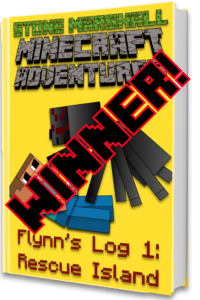 October 2014 Paperback Giveaway!
Congratulations to Chantel Mc Carthy of Ireland, winner of Flynn’s Log 1: Rescue Island in paperback, signed by Stone Marshall!
Giveaway DetailsAnd the Winner is…
 Thank you for entering my Minecraft Book Giveaway Contest!
I emailed the winner minutes ago. If you are the winner you will receive a separate email from me.
Everyone gets the eBook, Flynn’s Log 1: Rescue Island for an e-reader.
Get Flynn’s Log 1: Free Minecraft eBook(there is also an option to read online, without an e-reader)
The winner will be listed as soon as she accepts, on the giveaway page, here:
Winner of the October 2014 Book Giveaway!What Minecraft is teaching your kids about money | Reuters
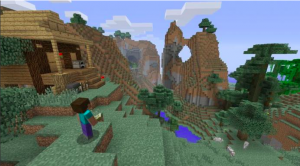 “Kids are learning about money on a lot of different levels in Minecraft,” says Joel Levin, co-founder of Manhattan-based TeacherGaming, a firm that works with educators to use video games as teaching tools.
“There are basic currencies, like emeralds that you dig up and can trade with villagers,” Levin explains. “There are exchange rates, because certain items are worth more than others. Then players have to think about whether to spend money right away, or save it and get something more rewarding later on. These are analogous to the financial decisions people are making in the real world all the time.”
And that is just if you are playing the game on your own. If you are online with multiple players, the financial issues become much more complex.
“At that point, players are setting up actual economies,” Levin says. “On a particular server, they may decide that diamonds are the currency of choice. Or some kids start playing the role of a bank, offering loans and charging interest.”
Levin is aware of instances where teachers introduce a rare item into the game that kids can’t obtain on their own, and then watch them react to the scarcity. “It’s supply and demand in action,” he says.
HOW TO START FROM NOTHING
Of course, most parents only experience Minecraft by peering over their kids’ shoulders and trying to figure out what the hell is going on.
So in case you were wondering, here are a few of Minecraft’s key financial lessons:
When starting out in the world of Minecraft, “nobody tells you anything, no instructions,” says 19-year-old Harvey Mulvihill, son of Hank, who plays along with his two brothers. “You are a stranger in a strange land, and you have to figure out how to gain resources.”
Indeed, Minecraft is a so-called “sandbox” game, in which players roam a virtual world with very few limitations. In that way, it is a riff on the traditional American archetype of the Horatio Alger story – starting from nothing and somehow making a huge success of yourself.
Players have to gain skills and then leverage those skills to develop a better world for themselves.
HOW TO PROTECT WHAT YOU HAVE
As in life, very bad things happen all the time in Minecraft – death, robbery, physical attacks and disasters of all stripes. As a result, players have to protect themselves against a number of terrible futures.
For example: travel light. “It is never a good idea to carry your valuables on your person,” advises 17-year-old Patrick Mulvihill. “Once you die your things are dropped on the spot of death. Valuables should be kept in chests in safe, well-lit places.”
But it is not just death players have to insure themselves against. That is because some people in this virtual world – known as “griefers,” according to Patrick – go online solely to steal and break other people’s things.
HOW TO MAKE THE RIGHT CONNECTIONS
Life is all about who you know, and Minecraft is no different. Connecting with the right people can make your virtual life a whole lot easier.
“If I was starting from scratch and didn’t know any coding, I could be digging for emeralds forever,” says Dan Short, associate professor of environmental science at Robert Morris University in Pittsburgh, who has written an academic paper on Minecraft.
“But if you are on a server with other kids, the server owner can basically give you as many emeralds as you need. They’re like little monarchs.”
The moral of the story? Your network counts, and you should develop it as much as possible.
HOW TO MONETIZE YOUR SKILLS
Once you become talented at something, you could find yourself in serious demand. Fifteen-year-old Sean Mulvihill plays with his buddies Jackson, Oscar and Wyatt. “Jackson is known for being the best builder, and others pay him to build them a house,” Sean says.
Meanwhile, Sean is seen as “by far, the best farmer,” he notes modestly. As a result, other players come to him with business propositions, like supplying him with seed, equipment and gold in order to tend their farms and divvy up the profits.
This principle of monetizing your Minecraft skills applies in the real world, too, notes Short. Some have become so talented at the game and charismatic with their audiences – with handles like TheBajanCanadian, Sky Does Minecraft and Lewis & Simon – that they run their own insanely popular channels on Google Inc’s YouTube.
“They get followers on YouTube, they host games and then kids sometimes pay a premium for the chance to play with them and be in their videos,” Short says. “They must be making serious bank. That might be the biggest financial lesson of all.”
(Editing by Lauren Young, Beth Pinsker and G Crosse)
via What Minecraft is teaching your kids about money | Reuters.
Readers in Canada, I need your help|Flynn’s Log 1, price problem
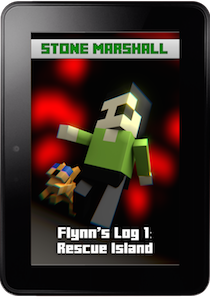 Oh no! Flynn’s Log 1: Rescue Island is not Free on Amazon.ca in Canada!
I need your help to fix this.
If you try to download Flynn’s Log 1 and the price is not free, it means Amazon has decided to not match the promotion price available on other e-reader devices.
Amazon will change the price to free, but I need some help.
First, on the Amazon page for Canada, scroll down to find and click the link that says tell us about a lower price.
Next, paste some simple info into the Amazon window. It looks like this.
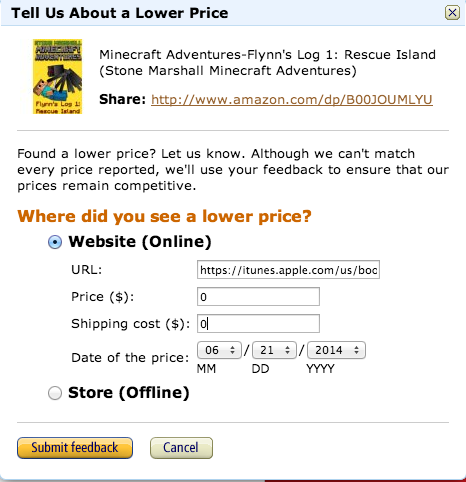
Copy and paste this URL to the Online store:
https://itunes.apple.com/us/book/minecraft-adventures-flynns/id885613859?mt=11
Enter the following.
Price: $0
Shipping: $0
Soon (based on Amazon’s time) the price for my book in Canada will be free (again).
In the meantime, you can download Flynn’s Log 1: Rescue Island for Kindle directly from me, free.
Thank you and sorry for this silly problem.
-Stone Marshall