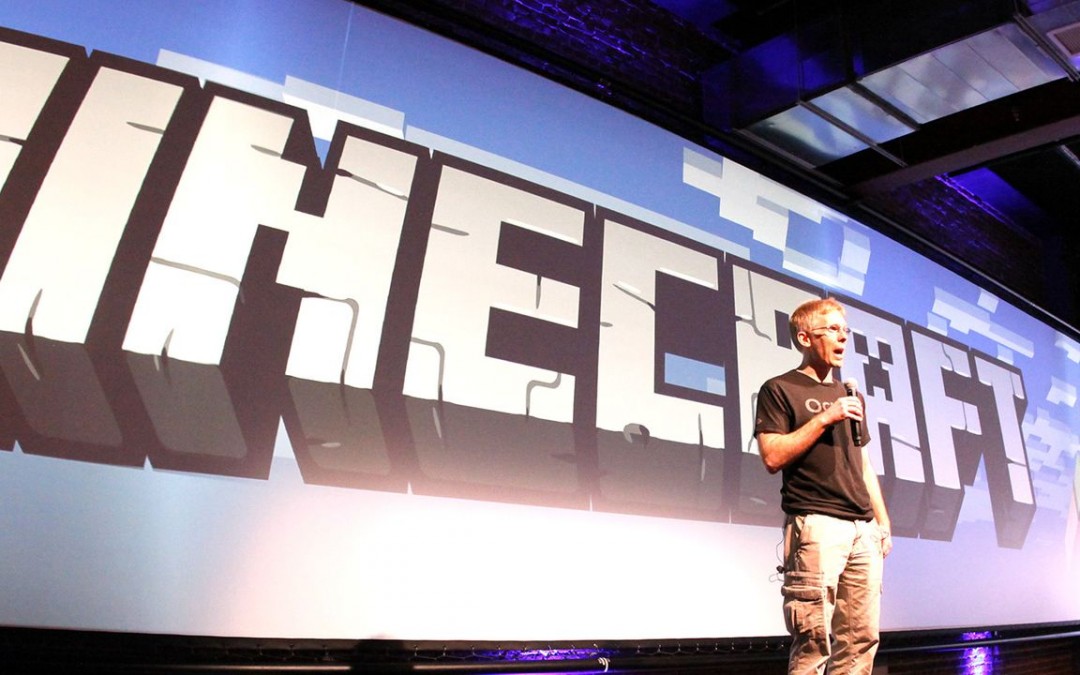
Microsoft and Oculus VR held a press event yesterday to demo Minecrafton the Gear VR for the first time. Oculus’ chief technical officer, John Carmack, was on hand to give his thoughts, and it turns out he’s been strapping smartphones to his face for a while now. But the demonstration showed that the game is still not quite performing up to its potential.
“About a year ago I gotMinecrafton the Gear VR and I couldn’t tell anyone about it,” said Carmack. “And it was extremely frustrating because I was playing this game and I could spend hours playing. […] I thought it was the best VR experience that we had available. For anything.”
The reason the Gear VR is the ideal platform forMinecraft, Carmack said, is because there are no wires tethering the user to a computer. With all the processing power built into the headset itself — in the form of a Samsung smartphone — there’s nothing holding the user back from moving in any direction.
“In VR, I want to go explore the world,” Carmack said. “I think that the ability to be wireless, to spin around and have that freedom, really makes this a unique experience. […] Minecrafthits all of those buttons very, very well. It is the quintessential open-world game, and being able to explore that world in VR was what I always thought the core of this was all cracked up to be.”
To enable that kind of experience, the demo space was littered with spinning office chairs and Gear VRs fitted with Samsung Galaxy S7 phones.
But whileMinecrafthas been up and running on the Gear VR for some time, it still has no release date. Looking atMinecraft: Pocket Editionside by side withMinecrafton the Gear VR, it’s easy to see why; right now, the view distance is remarkably shorter in VR.
The play space designed for journalists to experience was very narrow. While the frame rate was acceptable — I had no issues with nausea — the grand vistas I’ve come to appreciate inMinecraftwere almost entirely absent.
Once I broke free from the prepared environment and ran off into the world, I immediately noticed how details were only visible out to a stone’s throw away, a distance of perhaps 40 or 50 blocks. Past that, the edge of the rendered space manifested itself as an opaque white wall. Underground, in the pitch dark, that wall actually lit entire caves, meaning I could glitch the game into giving me enough light to see.
RIGHT NOW, THE VIEW DISTANCE IS REMARKABLY SHORTER IN VR
Inside the prepared environment, it seemed as if I could see farther up and down than I could see out into the distance.
Despite these technical issues with view distance, the locomotion system was particularly well-refined. Jumps had been smoothed out, and felt more like mantling obstacles in a third-person shooter than leaping into the air.
That freedom of movement was a recurring theme in Carmack’s short speech.
“Knowing that you don’t simply control your character to turn 90 degrees this way, to move over here and turn around, but instead to actually turn your body all the way around [is powerful],” Carmack said. “You know that you’re 200 meters away this way down the hill and around the bend from where you started, and that sense of being in a big world is wonderful.”
Carmack closed by reaffirming his belief thatMinecraftwould be available in VR for consumers very soon.
“I said this was my grail for VR, that this was the most important gaming application that I could do, or that I could be involved with, and so I’m very proud for the part that I’ve had and I’m happy to have worked with Microsoft and Mojang to get this at the point that it’s at. I’m excited to be supporting it in the coming years as things continue to improve.”
Computer scientists at Microsoft have developed a new artificial intelligence platform atop the hugely popular video gameMinecraft.Dubbed AIX, the platform hooks intoMinecraftand allows the AI to take control of a character and learn from its actions. It’s early days for the project; so far, the scientists have been hard at work getting the the AI to learn to climb a hill.
It’s a simple enough task to program directly, but for an AI that starts out knowing nothing at all about its environment or what it’s supposed to be doing, that’s a big ask. The AI not only needs to understand its surroundings, but it also needs to figure out the difference between day and night, why walking on lava is probably a bad idea, and when exactly it has achieved its goal via a system of rewards.
Microsoft’s AI isn’t quite there yet, but those wanting to program their own can do so this summer when the AIX software will be released for free and as open-source code. Budding programmers and researchers need only purchase a licence for the Java version of the game, which currently goes for £17.95 ($26.95/€19.95). AIX will run on Windows, Linux, or Mac OS, and researchers can programme their AI in any programming language they like. The only proviso is that AI experiments won’t be able to interact with other players online—at least not yet.
“People build amazing structures that do amazing things inMinecraft, and this allows experimenters to put in tasks that will stretch AI technology beyond its current capacity,” project lead Katja Hofmanntold the BBC. “But eventually, we will be able to scale this up further to include tasks that allow AI agents to learn to collaborate with humans and support them in a creative manner. This provides a way to take AI from where it is today up to human-level intelligence, which is where we want to be, in several decades time.”
While Microsoft says it’s entirely possible to program an AI, stick it inside a robot, and have that try to climb a real-world hill, it’s an extremely costly experiment—particularly if (when) the AI fails and the robot tumbles down the hill.Minecraftalso offers a number of different AI learning opportunities that aren’t always easy to try in the real world, including combat and building. Sure, the odd physics of theMinecraftworld might not be reflective of the real world, but the complex decisions and consequences inherent to playingMinecraftmay make it easier for AI to learn similar concepts.
AI research has come on leaps and bounds in recent years, but it typically focuses on having a computer learn a specific task, whether that’s beatinghumans inJeopardy, or, uhh,beating humans at the game of Go. Microsoft says that by usingMinecraft researchers will be able to create AI that’s more adept at “general intelligence,” learning in a similar way to humans by parsing information from light, smell, sound, and touch.
“[Minecraft] allows you to have ’embodied AI’,” AIX software engineer Matthew Johnson told the BBC. “So, rather than have a situation where the AI sees an avatar of itself, it can actually be inside, looking out through the eyes of something that is living in the world. We think this is an essential part of building this kind of general intelligence.”
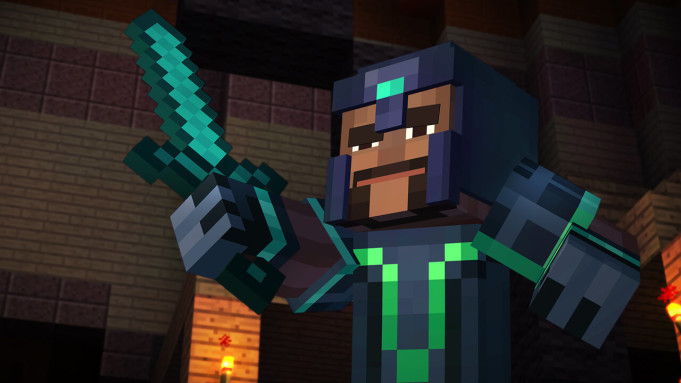
Minecraft fans all over the world were elated to hear that the latest update scheduled for March 29 will not be the last chapter in the widely successful Minecraft game series. Telltale Games has recently announced that it will be adding three more episodes to its Minecraft: Story Mode series to the delight of fans of the game. The update that is being released on March 29 is now being speculated that it will act as a bridge to tie the remaining story together. While the three new episodes do not have release dates yet, players who wish to purchase episodes 6, 7 and 8 will have to have purchased at least the first episode in the series that came out in October 2015 called “The Order of the Stone”.
Minecraft’s fifth installment, “Order Up!” will see the protagonist, Jesse and his group to an abandoned temple where, following an ambush by the former Ocelot Aiden and his crew, the team will enter an entirely new world called Sky City. The ruler of Sky City finds out that the new Order of the Stone are up to no good, and the catalyst to bridge the next three episodes will be set forth in the game.
According to the Telltale Games blog, the upcoming three episodes will continue the adventures of the New Order of the Stone and will see Jesse and his team in new worlds that have never been experienced before, sure to thrill fans of the game series.
The fifth installment will also see a new character added to the team, voiced by Melissa Hutchinson, who is known as Clementine in Telltale Games Walking Dead game adaptation. While the three additional episodes do not have release dates yet, the update on March 29 will hold fans over until the new dates for release are announced.
Soon “Minecraft Story Mode” episode 5 will arrive on several gaming platforms such as Xbox One, Xbox 360, PS4, PS3, Mac, and PC. Moreover, thegameis also expected to be launched on the mobile platform, with both iOS and Android devices.
On the Swedish video game’s official website, Owen Hill of Mojang, who is the developer of the game said that episode 5 will be released for download on March 29, and gamers can experience a unique land called Sky City. Jessy would be exploring this new location along with his friends, and the creator has described it as “Intriguing” and “awe-inspiring.”
“Episode 5 will not be the last you see of Jessie and the gang. We can now confirm that three extra episodes will arrive some time in 2016,” Hill wrote on hisblog.
The company has revelead much about the new episode called as “Order Up” as the developer of the game want the gamers to play and discover the title all by themselves. However, reports have suggested that “Lord of the Rings” star Sean Astin will give his voice for the game.
The company has launched the “Minecraft Story Mode” in October 2015, and it the roots to the sandbox video game “Minecraft”. The game has features of episodic adventures with a point-and-click story gameplay. Telltale Games and Mojang AB have collaborated to create the entiregame.
Currently, “Minecraft Story Mode” has episodes such as 1 “The Order of the Stone”, “Assembly Required” for episode 2, “The Last Place You Took” for episode 3 and “A Block and a Hard Place,” for episode 4. Previously, the company intended to include the episode 5, however, latest news have claims otherwise.
Engadgetnotes that the company will also release three more seasons soon, and it will contain unique content which has not been introduced in the current Season Pass.
Gamers can buy “Minecraft Story Mode” episode 6, 7 and, 8 provided that they already downloaded, at least, one of the older episodes. Albeit, the content of these episodes has not been divulged as of now but according to Mojang claims the “game will be great, and will come with a different flavor.”
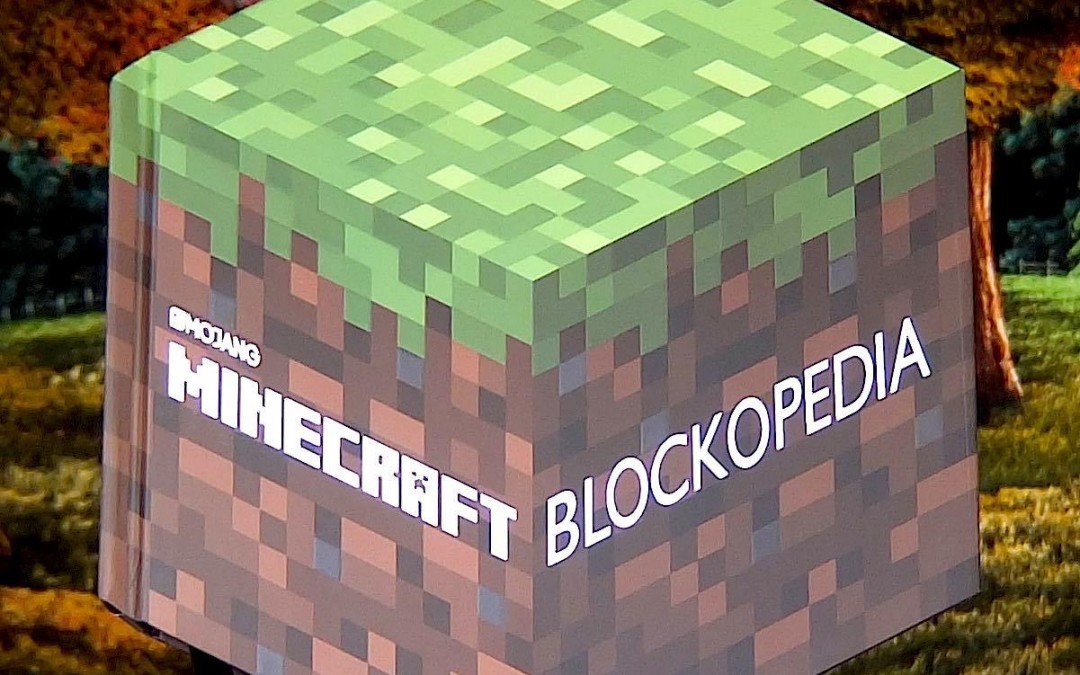
Shaped like a hexagon to mimic the dimensions of a cube,Minecraft: Blockopediais designed for full-on Minecraft geeks, although those of us who have only watched the game over the shoulders of children and loved ones will find plenty to admire here too. After the briefest of introductions and a quick glossary to help noobs make sense of the stats that accompany each block’s name, it’s off to the races, with page after page devoted to blocks made from rocks, blocks made from plants, blocks that serve particular functions (a ladder), and blocks that do particular things (acting as a switch).
One of the coolest characteristics about Minecraft is how it chooses to observe the laws of nature and physics, or ignore them. Sand, we are told, can be a cave-in hazard, but when it’s smelted in a furnace, it turns to glass. Both statements are true, but don’t go looking for glowstone the next time you’re spelunking – it is only found in a sinister dimension of Minecraft called the Nether. And while sugar cane in both the real world and the Overworld of Minecraft can be used to make sugar, guess where it can also be used to block flowing lava?
Though the format and illustrations inMinecraft: Blockopediaare the book’s most prominent features, it’s still a book filled with lots and lots of, you know, words. Writer Alex Wiltshire mostly plays it straight (“Water is incredibly useful.”), but often he lets the language and logic of Minecraft add color, as in “Sticky pistons are made by crafting a piston with a slimeball…” and “If you dig podzol without the silk touch enhancement it drops dirt.” Got that?
Your kids want to make Minecraft YouTube videos – but should you let them?
Millions of children want to be the next Stampy or Diamond Minecart. How to do it is easy enough, but how to do it safely and appropriately is the bigger question
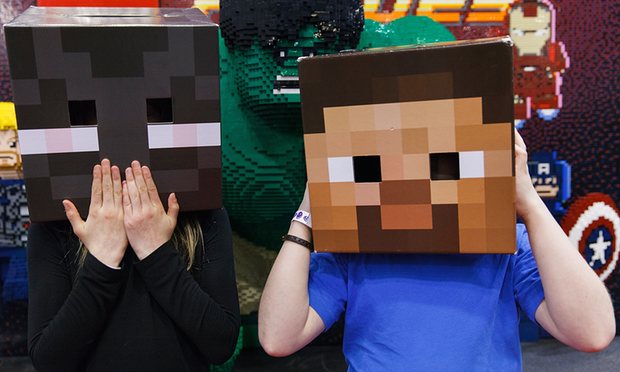
Minecraft has tens of millions of young fans – who are taking their crafting talents to YouTube. Photograph: Andrew Chin/Getty Images
Don’t put your daughter on the stage, Mrs Worthington. But in 2016, what if the stage is YouTube, and your daughter (or son) is demanding to be put on it, playingMinecraft?
That’s the dilemma facing a growing number of parents, whose children aren’t just watching YouTube Minecraft channels likeThe Diamond Minecart,StampyandCaptainSparklez– they want to follow in their blocky footsteps.
“I want to make Minecraft videos and I want you to put them onYouTube,” was how my eight-year-old son put it recently. “I’ve been practising talking while I play, and I’m nearly as good as Stampy now.”
That’s some confidence. YouTuber Joseph “Stampy” Garrett has nearly 7.2 million subscribers to his channel, with videos that have been watched more than 4.8bn times.
His fellow Brit Dan “The Diamond Minecart” Middleton is even more popular, with just under 10 million subscribers and 6.3bn video views.
For tweens and teens around the world, these are the new pop stars. But whereas the historical cliche about pop fans has them miming with a hairbrush to their favourite stars’ songs, today’s children understand that they can do exactly what their Minecraft idols are doing, on the same stage – YouTube.
“I would say that the majority of my audience has tried making video, even if it’s just using their parents’ phone and filming the TV screen as they speak,” said Garrett,when I interviewed him for the Guardian in October 2015.
“Even if they’re not recording, they’re speaking as if they’re doing a video. At a recent event, I asked ‘who in the audience is a YouTuber?’ and the majority put their hand up: they all want to do it.”
For parents, this is sparking several questions. First, could their children really make Minecraft videos for YouTube, and if so, how? To which the short answers are “Yes” and “More easily than you think”.
A third question: should their children be allowed to make Minecraft videos for YouTube? That’s a bit more complicated, as I found out.
Stampy has inspired children to make their own Minecraft YouTube videos.
Getting set up
In my case, the “how?” question had already been answered before my children – the eight year-old’s younger brother wasn’t going to be left out – developed their block-based broadcasting ambitions.
In 2014, I’d bought a £120 device called the Elgato Game Capture HD with the intention of producing some video reviews of apps. It sits in between your games console and computer, feeding video from the former into editing software on the latter. A USB Skype headset plugged in to the computer provided the means for spoken commentary while playing.
If your children play Minecraft on a PC or Mac, you don’t need the extra hardware (apart from a headset) – Google “screen capture” software and pick from options including Fraps, ScreenPresso, Ezvid, Bandicam and many more, with a range of prices.
The resulting videos can be uploaded to YouTube as they are, or edited using any video-editing software: iMovie on Macs, for example. Meanwhile, YouTube has clear instructions online forcreating a new channelanduploading videos.
Parental guidance
With my sons demanding to try their hands at Minecraft YouTube videos, I had the kit and knowledge to do it. Deciding whether or not it was a good idea took a bit longer though.
YouTube has an increasingly diverse and fascinating community of creators making videos for children to watch, but I worried about allowing my kids to become creators themselves: from toxic comment threads to more general concerns about their privacy and safety offline as well as online.
With their teenage years ahead of them, my children will have ample opportunity to be made to feel awful by social media in the future. Would I be a bad parent for potentially exposing them to that even earlier?
I have no ambitions for my children to be the next Stampy or DanTDM, but like a lot of parents, I’d love them to find the ways they like to express themselves creatively – whether that’s writing stories, drawing and painting, making up songs and playing instruments, or other activities.
Making at least one Minecraft video and publishing it on YouTube seemed like a fun project, but one requiring some strict ground rules.
In our case, these included sitting both my sons down and explaining why I didn’t want them to use their real names in their videos – or to talk about their families, where they live or any other personal information.
Both had to make up their own characters, settling on “Percy Panther” and “Chickeny Chap”, and just as importantly remember those names while recording.
We agreed time limits on our recording sessions – half an hour per child split between three 10-minute episodes – and for my part, I learned how to disable comments on the uploaded videos.
Watching the results
So how was it for them, and for me? Our recording session was genuinely fun, with no worrying moments bar one son’s enthusiastic “HELLO! IT’S [FIRSTNAME] DREDGE FROM [TOWN NAME]” introduction when he forgot he was a virtual panther, requiring a swift restart.
Both children loved the creative challenge of making a good video: for example, switching to a camera view of their character at the start and end of each video to deliver their intros and sign-offs; and figuring out what the narrative arcs would be for the episodes beyond “wandering around and shouting”.
It surprised me how much they’d soaked up from watching their favourite online stars, too.
Sometimes that wasn’t such a good thing: both children nicked Stampy’s “BYYYYEEEEEEE!” signoff wholesale until I pointed out that their idol might be a bit miffed if he heard it.
But their ability to explain and entertain while building, fighting and tackling the Ender Dragon was hugely impressive. Today’s children are getting a broadcasting crash course whether in front of a camera or behind it with joypad.
One unforseen parental headache was the view-count aftermath of uploading each child’s first video to my YouTube channel. It really didn’t matter to me how many views they got, and I was secretly relieved that the totals were tiny: 31 and 14 respectively in the first few days after posting.
The problem, as any parent with more than one child will have spotted from that last paragraph, is that the totals weren’t the same: one son is twice as “popular” as the other, and he’s not shy of rubbing it in.
Foolishly, I hadn’t spotted that problem coming. On a more positive note, both are feeling proud as punch that they are “on YouTube like Stampy”, so the intense oneupmanship at home is hopefully being balanced by a boost to their playground credibility with their friends.
Having done it once, would I put my children on YouTube again? Yes, but not to make them famous. The joy of this process was in the making, not in the distribution.
I spent a couple of hours with my sons making something creative that they were excited about, with lots of laughter (and only a few stern rebukes about why the Chickeny Chap brand probably shouldn’t be so reliant on fart and bottom jokes).
I’m no Mrs Worthington, then. But in this case, responding positively to my children’s demands felt like a fun – and safe, with the ground rules – thing to do together.

/cdn0.vox-cdn.com/uploads/chorus_asset/file/6207707/oculus_chairs.jpg)