by Stone Marshall | Nov 18, 2015 | Awesome Book News |
“Minecraft” has received a lot of updates since October came, but it proves to be “Minecraft: Pocket Edition’s” turn finally.
In this Neuro Gadget report, “Minecraft: Pocket Edition” 0.13.0 BETA finally arrives. What this means—for the uninformed—is that the pocket edition of Minecraft will have new features to look out for, this one in the guise of the Redstone Circuits. People playing Minecraft on PCs will be familiar with the many uses and benefits of having Redstone circuits.
For those who have yet to explore their advantages, Redstone circuits can power entire relays of systems. The 0.13.0 BETA will bring Redstone wires, buttons, levers, lamps, pressure plates, torches, tripwires, trapped chests, detector rails, as well as Redstone itself into the “Minecraft” world.
Other patches which the update brings into the Pocket Edition will be a new wooded door, according to the article, as well as some tweaks and new commands that players will be able to use. Enemies are brought along as well, meaning Ghasts and Slimes will trouble players starting from the latest update.
Here are further information about what people can do with the latest update on the Pocket Edition, according to this video.
Through this Touch Arcade report, two videos arrive—one of which shows a couple of Mojang developers show the power of a Redstone-powered mansion. The mansion has a lot of powered blocks, as well as doors. The complication of making Redstone circuits also arrives in the mobile version.
The importance of Redstone isn’t only because of the game. There are a lot of purposes that can be thought of for Redstone circuits in the game. There have been instances where appliances created for the game—some of which are computers—were powered by Redstone. This video shows an instance where musical instruments can also gain an added benefit from these Redstone blocks.
What was once only doable on the PC can also be doable in smartphones yet again.
‘Minecraft’ updates: ‘Pocket Edition’ receives an important Redstone boost
by Stone Marshall | Nov 17, 2015 | Minecraft News |
Gamers can now explore thousands of years of history thanks to the most topographically accurate and interactive Minecraft map of Scotland ever created.
GAMERS can now explore thousands of years of history thanks to the most topographically accurate and interactive Minecraft map of Scotland ever created.
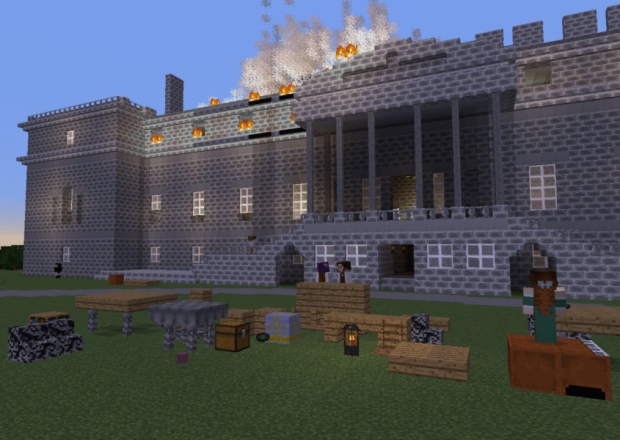
Scotland’s ancient historical sites are now “virtually” at player’s fingertips through a full-scale Minecraft world called Crafting the Past.
After months of site visits, building and trialling, people from across the world are invited to download and uncover Roman forts, journey back to the Victorian era or excavate long-lost Pictish settlements as part of the immersive game.
The project is running in tandem with Dig It! 2015, the year-long celebration of Scottish archaeology.
In order to create the most authentic experience possible, archaeologists have been working alongside gaming experts since the beginning of the project.
Stephen Reid of ImmersiveMinds, who has been building the Crafting the Past worlds with a global team of Minecrafters, said: “It brings what children are learning to life. So the obvious choice for doing structural or topographical landscapes was Minecraft.
“We have more projects coming – we’re working with the National Mining Museum of Scotland, we’ve got an ancient burial cairns in Inverness. The downloads have absolutely been popular – we’ve had requests from as far away as New Zealand.
“We intended it to be a celebration of Scottish architecture and to create a digital archive for the people of Scotland. But immediately it’s been picked up by people from Israel, lots of European countries, asking if they can have a look, because people genuinely are interested in the history of Scotland. And a digital representation allows them to explore it.
“So, for example, in Penicuik House, they can actually re-live the fire of 1899 by setting the building on fire, watch it burn down, and then be left with the ruin. It allows people who have maybe visited it once or just want to see it in the first place to explore the site.
“There’s a real emphasis in the classroom just now to teach local and national history. They’re now looking at Scottish language, culture and heritage and we’re introducing this to schools as a way for them to explore their own heritage, through a platform they enjoy.”
Minecraft maps Scotland’s past
by Stone Marshall | Nov 17, 2015 | Minecraft News |
By Seth G. Macy A rating for Minecraft Wii U has appeared on the Pan European Game Information page. The listing shows the game has been deemed suitable for ages 7 and up, but perhaps even more surprising than the game’s existence is the release date listed at November 12.
November 12 is also the day Nintendo will broadcast its first Nintendo Direct since the passing of former CEO Satoru Iwata. The company has been mum on details, which is par for the course for Nintendo. However, we’ve got 11 predictions about tomorrow’s Direct.
Way back in 2013, Minecraft-creator Notch said there were no Minecraft plans for Wii U, but Notch has since sold the company and the game now belongs to Microsoft. Minecraft routinely shows on the list of top selling games in the NPD Group reports of software and hardware sales in the US, so complete platform saturation is in the best interest of monetizing the Minecraft brand.
Fans of Minecraft and the Wii U have long wanted a marriage of the two, as the Wii U gamepad seems like it would make a perfect Minecraft companion. If Minecraft really is coming to Wii U, does this mean we can look forward to Minecraft amiibo? Let’s hope so, because a Creeper amiibo would be pretty awesome.
Minecraft Wii U Rated By PEGI
by Stone Marshall | Nov 16, 2015 | Awesome Book News |
World of Warcraft has been arguably the most popular MMORPG in the world since its launch in 2004. With its sixth expansion pack, Legion, set for release next spring, the world of Azeroth faces another invasion by the demonic Burning Legion, but sees a new class of heroes dubbed Demon Hunters arise to combat them.
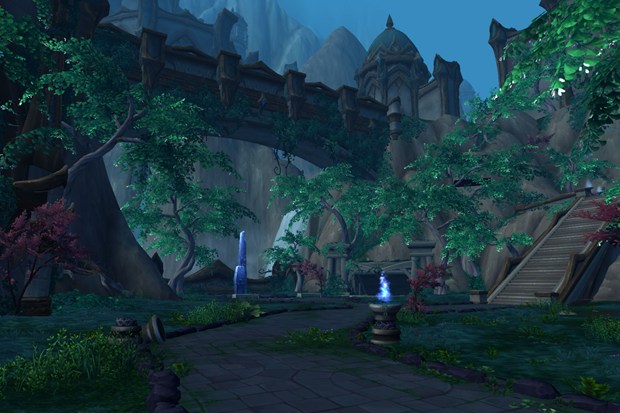
With dark fel magic running rampant, though, the colourful world takes on a sickly hue. Bad news for the Horde and Alliance, forced into an uneasy partnership against a common foe, but an excellent opportunity for players to explore a setting that looks wildly different to anything WoW has offered before.
At this year’s Blizzcon, WIRED spoke with senior art director Chris Robinson on designing a poisoned environment, the impact of the Warcraft movie on the game’s visuals, and how traditional artistry remains a key skill in creating digital worlds.
WIRED: The Legion expansion has been the one most overlapping with the development of the movie. Has the film affected the way you’ve done things visually, since you’ll be launching at around the same time?
Chris Robinson: We actually thought a lot of about keeping the game distinct, to where we saw the vision going. When we started the movie process, we talked about where we thought the overlap was going to happen. The people working on the movie were taking it in the direction of telling a story in the world with some characters that overlap. With us, we didn’t really want to get to that point where we were relying on someone else to make our decisions, or to group-think. It’s always been about protecting the vision in the team, and our writers, artists and designers are so passionate about what we think of as “the game” that the idea of it being influenced by an outside factor doesn’t make us excited. Certainly, we’ve been watching what they were doing and we love it. It looks great and I think there’s probably a little overlap in terms of the visuals, skin textures and what orcs look like, that kind of thing. But in terms of the game world, very little.
When you’re creating art and designs for an ongoing gaming world like Warcraft, what’s the development process? Do you focus on each expansion at a time, or are you constantly rolling out new material?
It’s a train, it’s a constant. We’re staggered in a way, so not everyone’s focused on one expansion or one innovation. Some of it’s stuff that might come out two or three years down the road; some that will come out in the next patch. It’s a little more reactive for the most part. We might put something out, see how players respond and then react to it and change our judgement and alter the process along the way, to make sure it’s stuff that’s relevant and resonates. Then there’s key elements that we feel we really want to do because we’re passionate about it and that’s always rolling. It’s about maintaining what people find to be the important parts of the game that resonate and identify with, and use that as a base to introduce new mechanics that might reference that or build on the core themes that make Warcraft what it is.
Legion is delving into darker territory, with the demonic Burning Legion returning. What goes into making the world aesthetically pleasing to players, when everything is death and destruction?
It’s a contrast, you know? We want those moments where you’re experiencing bleak horror and the colour palette is something you’ve never seen before. And then we want to pull you right back out of that to something that feels more light-hearted so you breathe again. It’s all about that balance — you don’t have it be epic all the time. Not everything has to be Burning Legion in your face at all times.
To me, Warcraft has always been about whimsy alongside the more serious storytelling, like a fairy forest. The theme is certainly very heavy but as you roll through the environment and you progress, we definitely wanted those moments of an arc — like in a story or a good movie — where there’s a build-up and the heat of it but then you need a rest period before you build up again. To me it’s about that contrast, about visually pulling people in and out so they’re not just getting the same thing over and over again.
World of Warcraft is over a decade old now. Where’s the line between maintaining the early, almost cartoonish aesthetic versus pushing out more technically detailed designs that both Blizzard’s engines and player’s machines are capable of now?
The art that we create is not the most definitive or realistic — to me it’s more like a painting where you leave areas for the imagination to fill in. This is what the style is, this is what we’re trying to convey to the player, but they also fill in the blanks with their own brain. Everyone who plays the same game doesn’t get the same experience. It reflects how we see the world and it maintains the connectivity for them, because a lot of that [immersion] is stories that they’ve told themselves between the gaps that we left for them.
Almost a form of interactive impressionism?
That’s a great way to put it. The hard part has been that when new creators come in, we don’t have like a 500 page book that we give them and say “read this book to learn how to make WoW” art. We sit with that person and work on the things that you get to work on; they’ll paint with you, do paint-overs, talk about art. It’s a big group that’s always driving the new people to understand the style.
Presumably some of that influx of new talent grew up on the game, too?
We have a lot of people who still work on the game were there at the beginning or close to the beginning. But we also have people we hired recently, who’ve just come out of school and they say that Warcraft was the beginning for them, it was their game. It’s a crazy thing for us, having people coming in and saying “I remember when…”, you know? Like, how dare people be younger than us?! But it really brings an interesting dynamic to the team because they have things that mean a lot to them, that mean something completely different to the people who created it.
How much of the art generated for Warcraft now is produced on traditional media compared to digitally?
A lot of it, actually. We do a lot of concept work in traditional forms. We do a certain amount of textures where you start traditional, scan and then sketch over or paint over that. I think that as an artist, you’re never going to excel at digital art if you don’t understand that kind of thing. You’re not going to be able to push your digital art as far as you can. When we’re not in active game development, we have classes where you actually sit down and sculpt or use oil painting, so that you understand the medium. When you later sit down to paint a texture or model something, you’ll pull in that knowledge from the traditional medium. We want you to feel that you’re in a piece of art, like at any moment you could take a screencap and it would look like a painting.
World of Warcraft: Legion will ‘feel like you’re in a piece of art’
by Stone Marshall | Nov 16, 2015 | Awesome Book News |
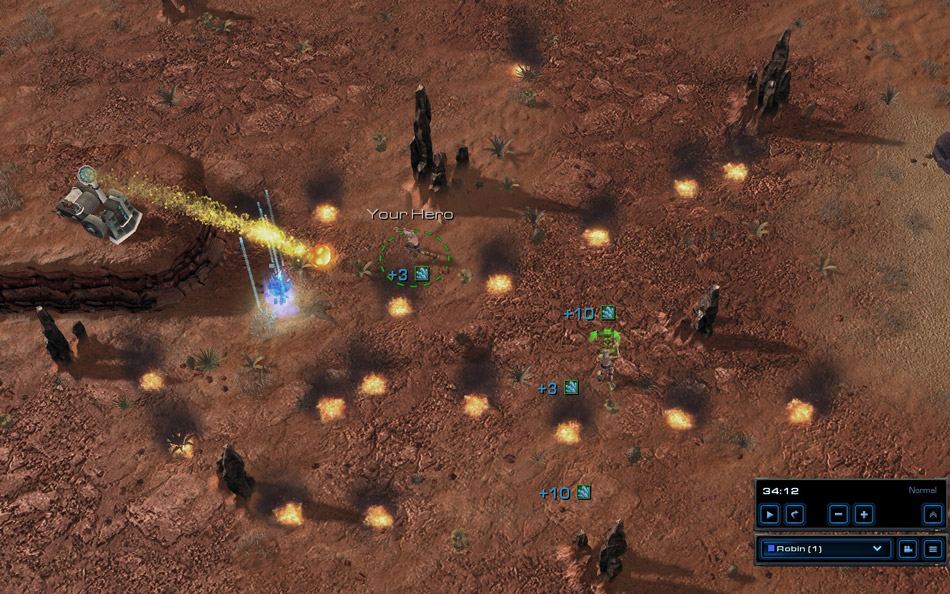
StarCraft II draws to a close this week, with the release of Legacy of the Void. Focused on the advanced Protoss civilisation, it caps the sci-fi RTS trilogy which begun back in 2010.
WIRED speaks with StarCraft II lead designer Jason Huck on the creation of the game, pleasing Blizzard’s vocal international fanbase, and how it feels to be concluding a story a half-decade in the telling.
WIRED: When Starcraft II was originally announced as being split into three separate games, that was seen as controversial. Do you still feel that was the right decision?
Jason Huck: Totally. And I feel a lot of the community agrees with that. We don’t hear the negativity anymore but we hear a lot of “I’m really looking forward to Legacy of the Void”.
One of the big announcements from this year’s BlizzCon has been the new Covert Ops missions focusing on Nova coming to the game. With the core StarCraft II trilogy now done, what do these add?
We wanted to tell more stories and we had all these cool characters that we haven’t really been able to feature as much. There are a lot of players who just play the campaigns and that’s it, and our goal is give them more of the story-driven strategy game element.
[Nova] is a total of nine missions. The story arc is nine. The first pack comes out next year and that’s three missions and the next pack has three and the last pack has the final three. We’re pretty set on that format. If we wanted to, we could do more, maybe change it to a different format. We’re open to experiment with different ways to do this.
As far as anyone knows, there’s no core StarCraft game after Legacy of the Void. Where next for the series?
This is a transition point for us. There’s still so much that we want to do with StarCraft and we feel like we would be neglecting it if we went to do something else. Expanding on it in these other ways — voice packs, skin packs — is something that many players want and when we told them we were going to do it they were very excited. The players want us to support the game and we’ve heard that clearly. They don’t want us to abandon the game.
How do you go about ending a story like this, that’s been spread over a half-decade with legions of fans waiting?
That was a significant challenge. The aim was to give a satisfying ending — there are no cliffhangers. This is the true ending. There’s no multiple endings. That was always the goal. We want players to feel satisfied that they stuck with the story and played the game, but that it’s also really fun to get there. I’m confident about it. We’re giving [players] an ending that we really enjoyed and again internal feedback was really good for that. In the end it’s all objective.
Have there been changes along the way? Did you always have this end point in mind?
The skeleton was always there. There were definitely changes as we worked and iterated. Plenty of internal playtesting gave us feedback on gameplay and story and we changed according to that.
StarCraft as a whole is 17 years old, steeped in lore, and with a dedicated player base — how do you achieve balance between making new instalments accessible for new players and enjoyable for veterans?
A lot of iteration on our part. We do a lot of internal “new user tests”, where we bring in brand-new players who have never picked up StarCraft. We watch them play and there are many cycles of bringing people in, watching them play and then responding to their feedback. On the other end, the challenge and the players who are really skilled — that’s actually a little easier for us because we have a lot of really skilled players in the office so we can just turn around and say “come play this, how does it feel?” That’s still a ton of iteration; maybe it feels too easy and we need to make it hard. That’s just a ton of playtesting.
Even with gameplay tweaks, can players reasonably get invested, with Legacy of the Void being the last of three chapters?
Everything’s a stand-alone. We’ve re-done the tutorial and we dig the training mission. If you’re interested in multiplayer we have that for you but the tutorials are still a good way to learn the three races. We’ve changed them so it’s a more story-driven experience. It sets you up so that you understand how the three races play and you can do the [three StarCraft II] campaigns in any order — though obviously we would encourage you to play Terran first [2010’s Wings of Liberty]. If you’re interested in the story it would make more sense to do it in that order but if you really like the Protoss you can start with Legacy of the Void. There’s a lot of story so far and there are movies to help you catch up but the story is a little dense. Still, it’s a great time to get into the game.
We’ve already seen StarCraft characters popping up in Heroes of the Storm. Are you involved in how they get presented?
Yeah, a little bit. We’re fortunate in that the Heroes team and the StarCraft team are basically the same team. They’re like upstairs from us. With the case of Artanis, we were able to provide feedback on the development but they had the final decision on what was best for them. It’s been really fun as a developer to play their game and give feedback.
It’s more of an inspirational thing. We’ll see what they’re doing, their battlegrounds and they’ll see our missions. And because we’re using the same editor it’s easy to see something in their game and put it in our game. We’re constantly bouncing ideas off each other.
Blizzard is an American company, but arguably StarCraft’s biggest audience is in South Korea. How do you keep that community engaged?
We’ve had community summits there where we’ve flown in the pros. We had one before Blizzcon and one six months ago. We have people in Korea, a Blizzard office there. [International feedback] is treated equally. It’s really important to us to get that global, balanced viewpoint, to put that together and make the decision that’s best for everyone. The challenge is of course to encapsulate all that feedback into one good decision!
With Legacy of the Void out the door, how does it feel to see StarCraft II coming to an end?
That’s a really good question — you never think you’ll get there. It’s really exciting but it’s a also bittersweet in a way. But you’re excited for the next thing. The team is really excited to see what we can do next. And we’re really excited about Nova because she’s a character we have the freedom to develop.
Why StarCraft II’s final chapter is the perfect place to start


