
Free book for boys and reluctant readers

Flynn’s Log is free on the following devices
Choose your device
KindleiPad/iPod/iPhoneGoogle Play (Android Tablets)nookkoboRead Online
US$8.99 Paperback
Get Reluctant Reader Book News from Stone Marshall
Reading is important
Any book that helps a child to form a habit of reading, to make reading one of his deep and continuing needs, is good for him. –Maya Angelou
Most adults would agree that reading is important, but many kids detest reading. Video games, devices, and TV are preferred entertainment and escape. They provide instant gratification. Reading takes time. For some kids, reading isn’t engaging.
I had this same problem with my son, so I solved the problem.
The classic stories I remember enjoying as a kid don’t interest my son and his immediate attention span. If he doesn’t enjoy the story from page one, he will not read further.
So how did I get my son to read?
I showed him how much fun it is to get sucked into a story.
Your book is amazing I can’t stop reading it – Joseph Young via twitter
Contemporary and Classic titles alike don’t interest many kids. Don’t worry, the love of reading is learned. We need a starting point. We need that one book that is just as engaging on the first read as the fifth, just like a really great movie that kids want to see again and again. A positive association with reading will make kids want to read more.
A love of reading is cited as the number one indicator of future success. My son didn’t have the desire to read. He didn’t care about the books I chose to read to him, and was overwhelmed with the selection at the library. I want my son to succeed, so I had to do something. Since we struggled to find books he cared to read, I wrote one. An epic saga about the things he loves. I put it in a world he loves and addressed the issues he faces in his life.
I just love your books I’ve been reading them over and over again. -Carson via twitter
But it’s a video game book
Don’t worry; it’s not a book about video games, nor is it a game strategy book. Flynn’s Log is a hero’s journey that takes place inside the Minecraft world that today’s kids know and love. The protagonist, Flynn, naturally flows through Maslow’s hierarchy of needs (builds shelter and tools, learns what to eat and discovers a digital friend) and faces questions about his destiny. He learns important life lessons about friendship, integrity, and trust. Flynn’s Log is good for kids without being boring.
Thank you so so much for the free ebook. My son loves Minecraft now with this book I can get him to read to me. – Jennifer Wilkins
Start your son or daughter on journey today, reading Flynn’s Log 1: Rescue Island. Free on available these devices and apps.
Flynn’s Log is free on the following devices
Choose your device
KindleiPad/iPod/iPhoneGoogle Play (Android Tablets)nookkoboRead Online
US$8.99 Paperback
Why is Flynn’s Log 1 Free?
My son loves reading — finally. If you have experience with a reluctant reader then I know your pain and I want to help. I’ve seen thousands of kids transform with this book. My readers, who don’t usually read books during the summer, couldn’t put Flynn’s Log 1 down.
Good book I thought I would never read a book on my summer but I feel I’m gonna finish it soon – Multigamer 47 via twitter
Let this book change your kid’s life too. You have nothing to lose and an avid reader to gain.
Once you learn to read, you will be forever free.
–Frederick Douglas
I am giving away Flynn’s Log 1 free because I want to give you a risk-free way to hook your reluctant reader.
Please and I mean PLEASE, WRITE MORE! I absolutely love it! They’re outstanding books.
-Devon123321 via twitter
What are Books for Boys?
I spend lots of time with teachers and parents. I hear parents ask, “How do I get my son to read? Do you have books for boys?”
I wrote the Flynn’s Log series for my son, and this book is interesting for boys. However, the series is a non-stop read for both boys and girls, especially those who are interested in Minecraft.
The more that you read, the more things you will know. The more that you learn, the more places you’ll go.
—Dr. Seuss
What are you waiting for?
You have nothing to lose!
Flynn’s Log is free on the following devices
Choose your device
KindleiPad/iPod/iPhoneGoogle Play (Android Tablets)nookkoboRead Online
US$8.99 Paperback
News for Parents of Reluctant Readers
Get Reluctant Reader Book News from Stone Marshall
Witches, wizards and muggles welcomed to Stroud Library for Harry Potter craft day

Faye McCrink, eight, at the Harry Potter themed craft event at Stroud Library

The magical fun was not just for established Potter fans – library staff are hoping the event introduced new readers to J.K. Rowling’s world of Harry Potter.
It was part of Harry Potter Book Night, organised by Bloomsbury Children’s Books.


Video games in museums: fine art or just fun?

Visitors to the “Art of the Video Game” exhibition at the Smithsonian American Art Museum
The British Museum posted a message on the website Reddit last September asking for volunteers for its “build the British Museum in ‘Minecraft’” project, hoping for 20 applicants. “It exploded… Twitter went berserk and we had more than 1,000 applicants in a single day,” said Nick Harris, a broadcast assistant and content producer working on the London institution’s Museum of the Future project, in a talk at the British Library last December. One of the respondents wrote: “Yes, please. I love ‘Minecraft’ and I would really like to help build it. I’m ten (my mother knows).”
The Tate received an equally enthusiastic response when it launched a project to recreate works from its collection, including André Derain’s The Pool of London, 1906, in the “Minecraft” video game: within 48 hours, amateur videos on how to navigate “Tate Worlds” appeared on YouTube. When London’s Wellcome Collection released the video game “High Tea”, 2011, a strategy game based on the 19th-century opium trade in China’s Pearl River Delta, to coincide with an exhibition on recreational drug use, the museum discovered that, on average, people spent four times longer playing the game than they did browsing its website.
The popularity of video games shows no sign of waning, and museums have ramped up their interest in the medium. From mounting exhibitions like the Smithsonian American Art Museum’s (Saam) blockbuster travelling show “The Art of Video Games”, which drew 3,400 visitors a day during its run in Washington, DC, in 2012, or the “Game Masters” show at the National Museums of Scotland (until 20 April), to acquiring or commissioning games around their permanent collections or exhibitions, museums are looking at video games as both an art form and a means to reach a wider audience.
“It’s an innovative way to get the public interested in collections, especially audiences that wouldn’t normally engage with them,” says Stella Wisdom, the British Library’s digital curator. She is behind the library’s Off the Map competition, in which university students use items from the collection to design games. This year’s contest—a collaboration with the GameCity festival—is based on Alice in Wonderland, to mark the 150th anniversary of Lewis Carroll’s book, and will coincide with an Alice show at the British Library in the autumn. “There’s a lot of potential for creative industries to work with cultural institutions and vice versa,” Wisdom says. “We’re just at the start of a journey.”
Danny Birchall, the Wellcome Collection’s digital manager, says that the games “are part of a larger strategy of using many different things to engage the public. You use video games to reach those who play games, like you create documentaries for those who watch television. We’re not trying to convert museum people into games players.” The museum has commissioned several games related to its collection and exhibitions. In developing them, the institution follows the cardinal rule that content is paramount. “Our motto is ‘no chocolate-covered broccoli here’,” he says. “We’re not making unpalatable things tasty by wrapping game magic around them.”
The museum’s latest game, “Criminel”, developed by graduates from the National Film and Television School, relates to “Forensics: the Anatomy of a Crime”, which is due to open on 25 February (until 21 June). Inspired by the famous French police officer Alphonse Bertillon, who promoted the use of scientific systems to identify criminals, the iPad-based, “CSI”-style game is set in late 19th-century Paris.
Digital natives
The museum world is now being populated by video-game enthusiasts. Kieran Long, the Victoria and Albert Museum’s (V&A) senior curator of contemporary architecture, design and digital (and a long-time video-game fan), who joined the London institution in 2012, says that games “were a big part of my strategy from the start”. The museum, which has two video games—a copy of “Sonic the Hedgehog”, 1991, which the V&A’s Museum of Childhood acquired in 2004, and the 2013 mobile app “Flappy Bird”—is becoming more systematic and strategic in its engagement with the field. It has hired a video-game specialist on a one-year contract and an exhibition on video games is “in the works”.
Like Saam, which has hosted gaming events such as a pop-up Indie Arcade in its courtyard and “hackathons” that encourage people to create games around the collection, the V&A has held a Games Jam, where designers had 48 hours to create games around the Medieval and Renaissance collections. The museum’s evening based on “Minecraft”, in which players build constructions using textured blocks, proved particularly popular, with artists responding to the collection through a “Minecraft” lens, as well as workshops and DJs playing remixes of “Minecraft”-inspired music. There was also a talk by designers from Mojang, the Swedish studio behind the game. “I’ve never seen 350 teenage boys so wrapped up in the V&A for an hour and a half,” Long says. For another event, FyreUK, a group that makes time-lapse videos of massive “Minecraft” builds, took over the Raphael Court. “They’re engaged in a new kind of folk design,” Long says.
Alex Flowers, the V&A’s team leader for digital programmes, says these events have shown that video games are “powerful tools” for looking at collections in new ways. The actions, emotions, cognition and problem-solving skills of the player breathe life into objects and their rich histories. The V&A also had its first game-designer-in-residence last year: Sophia George created a game inspired by William Morris’s tapestry Strawberry Thief, 1883, in which players sketch and colour in the textile’s pattern. The game, developed with colleagues from the University of Abertay in Dundee, Scotland, was downloaded 60,000 times in its first two weeks.
“Minecraft” was acquired by Microsoft in November 2014, when the computer giant bought Mojang for $2.5bn, and is the game of choice for many museums. Jane Burton, the creative director of Tate Media, says that its big audience and ethos made it attractive. “It’s not heavily commercialised or expensive to join, so it feels fairly democratic. The game’s whole ethos is about being open and encouraging imagination, and for people to create things and share their creations. It’s a very generous and imaginative platform.”
Knee-jerk criticism
“Sorry MoMA, video games are not art” was the headline on Jonathan Jones’s blog on the Guardian’s website after New York’s Museum of Modern Art (MoMA) announced the acquisition of 14 video games, including 1980s classics “Tetris” and “Pac-Man”. “All hell broke loose in an interesting way,” said Paola Antonelli, a senior curator in the museum’s department of architecture and design and its director of research and development, in a Ted talk filmed shortly after the acquisition in 2012.
Antonelli says that the negative responses “were based on a knee-jerk, defensive reaction”. She points out that the museum did not acquire these games as works of art, but as forms of interactive design. Similarly, the V&A acquired “Flappy Bird” as a design object. “I don’t think video games are art, I think they are design, and as a design museum, we are committed to collecting all fields of design,” Kieran Long says. When he was tasked with covering the field of digital design, he felt that video games were a good place to start, as they are made by some of the most creative design teams around. “It’s a good way for the V&A to begin to seriously engage with born-digital artefacts and digital design in general, because you have to start somewhere and we weren’t going to collect the whole internet,” he says.
The Smithsonian, however, did not make such distinctions when it acquired “Flower”, 2009, and “Halo 2600”, 2010, in 2013. “We didn’t qualify it; we acquired them as great works of art,” says Elizabeth Broun, Saam’s director. “It’s been important for us for some time to represent games as this fantastic and unique expression among artists,” says Michael Mansfield, the museum’s curator of film and media arts. He says these games were chosen because they represent “unique paths for the artists and the medium”. Broun develops the point. “We understand that video games are their own platform for art and expression in the same way that photography, television or films are. You can have great films or terrible ones, and the same goes for games,” she says.
Broun describes “Flower”, in which players become the wind, as a “thrilling exploration of the American landscape” by the Chinese-born designer Jenova Chen, who found inspiration in the open spaces of the US West Coast. “How is this not like the Hudson River School?” Broun asks. “Land and landscape have always been crucially important in American art.”
Mansfield argues that the video game is not the first medium to have its viability as an art form questioned and certainly won’t be the last. “There were concerns about photography being a viable art form. I think one critic defined it as the bastard child of science left at the door of art. The same issue has been raised with video and performance art,” he says.
The perils of acquisition
Museums have different approaches to how they buy games. The V&A wants to acquire “Minecraft”, but Long is undecided as to how to go about it. “It’s the culture around the game, the amazing creativity of the kind of machinima videos [film-style narratives created in real time with computer graphics] around it, the works of makers like FyreUK that maybe we should collect,” he says.
For MoMA, it’s all about the source code. “It’s the holy grail of the acquisition,” Antonelli says, explaining that it enables the game to be replicated on new platforms. “It’s like the recipe for Coca-Cola. It’s the company’s deepest intellectual property.” When MoMA cannot get the code, it tries for an emulation of the code. If that is not available, the museum acquires the package software, which is not ideal because these items are perishable. MoMA “tries to get as deep as possible within the company” so that if the firm goes out of business, the museum could become the code’s repository.
Even a powerhouse like MoMA does not always get what it wants. “In some cases, we simply haven’t cracked the nut. You’ll notice we don’t have Nintendo games because there was just no way,” Antonelli says. Tracking down the current holders of the intellectual property rights in some early games has also been problematic. “[There are] some games we’d like, but we can’t find them,” she says. “The issues in the acquisition of video games are sociological, aesthetic, cultural, legal, technological and communicative—it’s one of the most interesting and dense kind of acquisitions I’ve ever tackled.”
The Wellcome Collection’s Danny Birchall argues that “museums are just scratching the surface of what’s possible” with video games. “If the same budget for an exhibition was devoted to a game, you could… probably reach the same raw numbers as an exhibition. I think people are less willing to take that risk because it doesn’t have that intimacy of contact with the venue. Knowing that 100,000 people have done something online is never quite as reassuring as seeing 10,000 people walk through your door.” But as museums continue to cross digital thresholds, one senses that this hierarchy between physical and online visitors is beginning to dissolve.
Kids’ race earns $7K for CISD reading program
A thick fog blanketed Market Street early Saturday morning, but it couldn’t smother the energy more than 750 kids brought with them to compete in a race for charity.
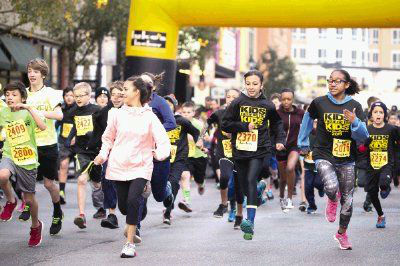
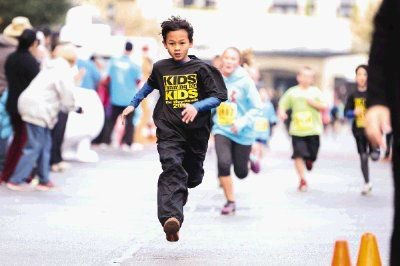
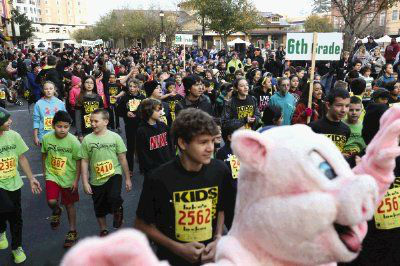
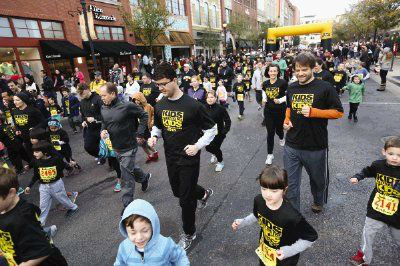
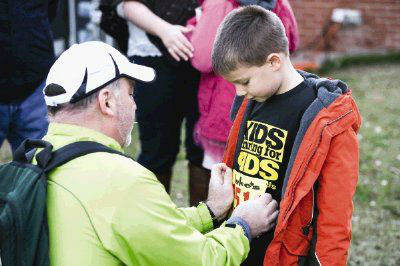
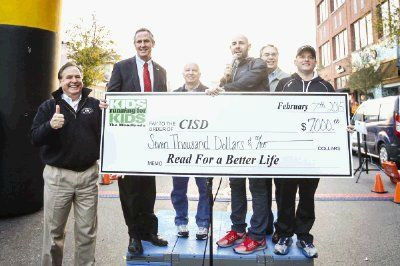

The children from all over Montgomery County were a part of the third annual Kids Running for Kids charity race that raised $7,000 for the Read for a Better Life program in Conroe ISD.
“All students are important,” CISD Superintendent Dr. Don Stockton said. “By your participation this morning, you are helping all our students. I encourage you to read every day and that will help you to succeed.”
Lego Festival encourages kids to read more
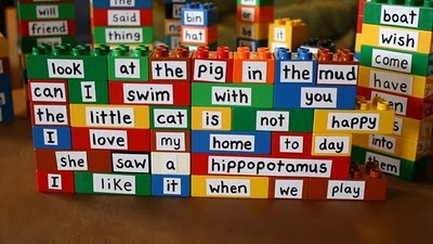
SARATOGA, N.Y. (NEWS10)– Young readers got a chance to use their imaginations and make their favorite books come to life at Lego Festival on Saturday in Saratoga.
Saratoga Read’s third annual event took place at Division Street Elementary School in Saratoga Springs. Through games and activities the mission was to encourage kids of all ages to read more. “What we hope the kids get out of it is the opportunity to be creative and competitive at the same time,” said Tabitha Orthwein, of Saratoga Reads.
Program aims to get boys interested in reading
 GADSDEN, Ala. (AP) — Adventures around the world await, Steven Winston told fourth-grade boys at Floyd Elementary School.
“It takes you opening up that book and beginning to read,” Winston said.
Winston, who works at the Alabama Power Steam Plant, and Greater Gadsden Tourism Director Hugh Stump met with students for the first time Thursday as part of Guys Read, a Gadsden Public Library project designed to keep boys interested in reading.
All Gadsden City elementary schools have “Guys Read” volunteers coming in to promote reading this month, thanks to the efforts of the library staff.
Stump will soon be back with the Floyd fourth-graders, introducing them to a tale of high adventure on the open seas: “Pirate Diary, The Journal of Jake Carpenter.”
He will be talking to the boys about how to speak like a real pirate — just another example of cool things kids can learn from books.
The goal is not to read to students. As library director Amanda Jackson said, they are fourth-graders and can read for themselves.
Instead, the idea is get the boys interested in seeking out these books to read for themselves.
“We’re not doing this for the girls,” Stump told the boys, and there’s a reason.
Studies show girls continue to read after fourth grade, while boys tend to lose interest, Jackson said. Guys Read was developed to keep boys interested in reading, ideally, for the rest of their lives.
The program will bring “cool guys” into the classrooms twice a week throughout February, to show the boys that cool guys keep reading.
On Thursday, Winston and writer Nick Bruel’s “Bad Kitty Takes a Bath” had Jeanmarie Wright’s students doubled over their desks in laughter.
Winston told the students the book would make them laugh and give them helpful tips for giving a cat a bath.
Stump had a confession: “I’ve got a cat. I’ve never given it a bath.”
It was not, Winston said, something for the faint of heart.
The book listed things needed to give a cat a bath: a bathtub, warm water, a suit of armor, a letter to your family and a kitty-shaped bathrobe.
“Who has a kitty-shaped bathrobe?” Winston asked the students. “Really? Where’d you buy it?” he asked, when one boy raised his hand indicating that he had one.
“Wal-Mart,” the boy said.
Both Stump and Winston said they are involved in Guys Read because they loved spending time with kids, and they love books.
The visit included a slide presentation with photos and text from the book that students enjoyed reading aloud.
At one point, Winston had to prompt Wright to move to the next slide.
“I got so caught up in it,” Wright said, of Winston’s interaction with the kids, that she forgot she about the slides.
She was appreciative of the enthusiasm Stump and Winston generated in the children. She said the children are, at this point, still interested in reading. The faculty and administration try to cultivate that with the Scholastic Book Fair and in other ways.
When they discuss something in class, Wright said, such as World War II, teachers will talk about “The Diary of Anne Frank.” They see their students then going to the library to look for the book. They also are encouraged to seek out books on other subjects, such as Black History Month.
If the response in the classroom was any indication, cat-bathing soon may be a research subject.
The first step in the program involved having students complete a brief survey, asking if they like to read, if they read books at home, if they think books are fun and to name their favorite book. They will complete the same survey at the end of the program.
Books for kids from the heart for February
By Kelly Light
Best for girls, ages 3 – 8
The spunky little girl in this tale is hard to resist.
She’s got a flare for art and marvels at her ability to see every detail. As she races through the house creating art for her one-woman show, she is missing the important stuff right under her nose — her little brother’s love. In the end, Louise learns that she really does love Art.
That is, she loves her brother, Art. And by the looks of his creations, he loves his sister too.
It’s not only our hero’s attitude that makes us think of Eloise and Olivia tales. It’s also Light’s illustrative use of strong black lines and a single color highlighted for emphasis. In this case that single color is a bright red that is used for glasses and illustrative energy. This is a great book for young siblings.
What’s good: Energetic, easy to translate illustrations.
What’s bad: Louise’s turnaround from angry to loving is a little abrupt, but not unexpected.
.
“Born From the Heart”
By Berta Serrano
Illustrated by Alfonso Serrano
Best for ages 4 – 8
A unique approach to the adoption story, this book uses heart and humor to convey very real issues, struggles and joys. When Rose and Charlie want a baby, they go see a doctor. He gives them a magic potion to help, but in the end we discover that it is adoption that makes this family whole. Through fun illustrations we see that it is Rose’s heart, not her belly, that grows bigger in anticipation of the arrival of her new child. The modern and somewhat blob-like illustrations may be a little hard for children to accept. However, the use of colors and movement make the emotions very clear throughout.
This book is probably better suited as a gift for new adoptive parents, or those awaiting the arrival of their child. Children may enjoy this book once, but parents will connect to the storytelling and want to read it many times.
What’s good:Strong message about the importance of adoption.
What’s bad: Younger children might be confused by some of the imagery.
.
“Coming Home”
By Greg Ruth
Best for boys, ages 5 – 10
We’ve all seen the videos on YouTube, but have we really stopped to think about the story we’re witnessing? No service person goes to war alone. They take a piece of their parents, children, friends and pets with them. This story takes the reader through all the emotions while using an economy of words.
We follow one boy waiting for his reunion at the airport. While he waits and anticipates, we see a soldier and his dog, sweethearts and families find their loved ones. We feel the boy’s growing anxiety as he wonders why he is still alone on the airport tarmac. Using only a word or two here and there, the entire story is told through framing the illustrations and reading the expressions. When the reunion finally happens and he yells, “Mom!” we feel like we’re a part of the embrace. This is a great reminder of the sacrifices our soldiers and their families make to keep us safe.
What’s good:Strong illustrations that will engage even young readers.
What’s bad: The cover is a little misleading to what is actually in the book.
Scholastic study: Choosing books builds love of reading
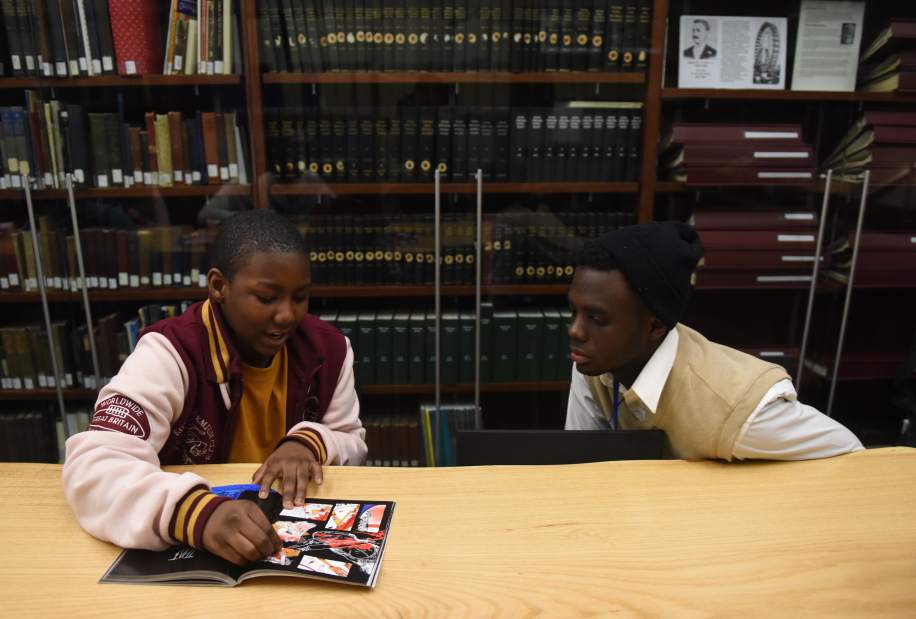
Tarreau Simpson, 11, says he likes to read action and adventure stories, poems and haikus and sports stories. But don’t try to dictate what he reads.
“I like to have my own opinion,” says Tarreau of the North Side as he enjoys a reading group for youths at the Carnegie Library of Pittsburgh’s Allegheny branch.
Lavontae Sanders, 12, agrees. If pushed to read a book, “I wouldn’t really read it,” the North Side resident says.
Many children and adults agree with the results of Scholastic Corp.’s Kids & Family Reading Report, which suggests that students in middle and high school who have time to read books they choose themselves are more likely to read frequently for pleasure. In the survey, 91 percent of kids ages 6 to 17 say they’re more likely to read a book if they pick it out.
“As adults, we choose the books we want to read,” says Maggie McGuire, vice president of eScholastic Kids and Parents Channels. “Blessing a wide variety of reading material and letting kids choose is so important to developing a love of reading.”
To clarify, nobody is suggesting that kids should have the option of declining books that are part of the classroom curriculum, say substituting “Twilight” for “A Wrinkle in Time” for classroom studies and homework. But in their free time, whether at school or at home, kids should get a choice of reading material, McGuire says. She says one-third of kids ages 6 to 18 attend a school where a class period is designated as a reading time during the school day.
Designating this time evidently can be helpful. In the survey, 78 percent of students who read frequently for fun — at least five days a week — said they had time to read a book during the school day. By contrast, 24 percent of infrequent readers, who read for fun less than one day a week, said they had no time during the school day.
The study gives a “holistic view of what makes a reader … what turns kids on, what indicators predict and potential to become a very frequent reader. That can be in any environment,” McGuire says.
Donna Stephenson of Pine says she encourages her sons — Evan, 17, Troy, 14, and Kyle, 12, — to read for leisure. She wants them to have a choice, because that will encourage them to enjoy reading more than a reading assignment will.
“The whole point is the reading and that they’re becoming good readers,” Stephenson, 49, says. “I think that’s the key to success. … I think you just want to develop strong readers because it matters in the academic areas.
“I was not a strong reader as a child,” she says. “It took me longer to get through my academic work as a high school and college student.”
Troy, an eighth-grader at Pine Richland Middle School, says he is not a big reader, but if he chooses the book, he is more likely to want to read.
“It’s not really fun to read a required book,” he says.
Not that kids should be able to read anything they choose. Parents should ensure the material is age-appropriate, experts say. But, as much as is possible, letting kids choose what they want to read is going to create a habit that equates reading with pleasure, and they’re going to want to do it more, McGuire says.
In the 12 to 14 age group, 70 percent of kids in the survey said they are looking for books that make them laugh, and 46 percent said they wanted books that have strong and brave characters. That may explain the popularity of “The Hunger Games.”
Kelly Rottmund, teen services coordinator for Carnegie Library of Pittsburgh, agrees with the findings of the Scholastic study.
“We’ve seen those results over and over again in various surveys,” she says. “Providing teens a choice in their reading materials really increases the chances of them … engaging and continuing to read for pleasure.”
The librarians work together to create a suggested reading list, like for the summer reading program — including the popular “The 5th Wave” by Rick Yancey — but the kids make the choice. Rottmund recalls one girl who selected “Divergent” by Veronica Roth, finished the book in two days, and came back to the library to ask for more.
“For us, that was seeing the power of choice in action,” Rottmund says.
Jaimere Washington, 15, of the North Side says both a parent-chosen and kid-chosen book can work. If he is open to reading something his parents encourage, he just might like it, and then he can get more books like it.
“I feel like both can be beneficial,” Jaimere says. He and his peers were discussing “Through the Woods,” a graphic novel by Emily Carroll, at their library book group.
Michele Brooks, a language-arts teacher at Norwin Middle School, supports providing a choice for reading material. In Brooks’ classes, she forms small groups called literature circles with the students, and each group chooses from six novels to read outside of class and then discuss the book with classmates.
“The benefit of that is, when they present that to the class, other kids in the class are hearing about novels from their classmates,” she says. “So they are more likely to read them because their classmates are recommending them.”
When parents come in for open house, many of them tell Brooks their child doesn’t really like to read. She tries to help those students find a genre they like. Sports fans, for instance, should enjoy reading sports books and magazines. Even if it’s something simple like “Diary of a Wimpy Kid,” reading is reading, and all kids should be able to find something that appeals to them, she says.
“I really feel like almost every person … there was that novel than when your read it, you thought, ‘Wow, that’s it,’ and you really start to love literature,” says Brooks, who cites “The Outsiders” as the book that did it for her in her youth.
“For some, it might be magazines,” Brooks says. “If that’s where it starts, they’re at least reading.”
Katy Perry Shines During Super Bowl XLIX Halftime Show: Watch

Katy Perry performs during the Pepsi Super Bowl XLIX Halftime Show at University of Phoenix Stadium on February 1, 2015 in Glendale, Arizona.
A Missy Elliott medley, a male-female duet on “I Kissed a Girl” and a pyrotechnic finale: Katy’s Super Bowl performance had it all.
Katy Perry‘s halftime performance at Super Bowl XLIX, hyped for months and anticipated by millions, did not disappoint. Taking the University of Phoenix Stadium field in Glendale, Ariz. halfway through the matchup between the Seattle Seahawks and New England Patriots, Perry plowed through her plentiful collection of hits with the help of some special guests, Lenny Kravitz and Missy Elliott.
Wearing a flame-adorned dress (all of Perry’s outfits were designed by Jeremy Scott) and her hair in a black ponytail, Perry kicked off the Pepsi Super Bowl Halftime Show perched atop a moving gold tiger, which strolled spectacularly across the field as the pop superstar performed “Roar” live. The stage then became a breathing chessboard for “Dark Horse,” another No. 1 hit from Perry’s latest album, PRISM. Acrobats flipped beside Perry as the stage turned three-dimensional, and the singer welcomed her first guest: Lenny Kravitz.Super Bowl XLIX: Photos of the Parties, Halftime & More!
Flames exploded behind Perry and Kravitz as the pair combined for an unlikely duet of “I Kissed a Girl.” Very soon after, the stage segued into a breezy beach setting, with dancing sharks, bopping palm trees and smiling beach balls helping Perry out with a performance of “Teenage Dream.”
Another Teenage Dream smash, “California Gurls,” was quickly performed before Perry brought another guest, Missy Elliott to the stage; the veteran rapper tore through “Get Ur Freak On” and “Work It” as Perry played hype-woman while wearing a custom Super Bowl 49 jersey. Perry disappeared briefly as Missy Elliott performed “Lose Control,” and returned sporting a star-encrusted gown for the finale of “Firework.”
Rising from the middle of the field on a tiny platform, Perry circled the stadium and waved to the adoring crowd during the climactic performance. There were glowing orbs on the field, and of course, fireworks exploding around Perry as she delivered the self-empowerment anthem. It was a fittingly explosive ending to a fiery performance, one that serves as a career highlight for the pop superstar.
Billboard Cover: Behind the Scenes With Katy Perry as She Rehearses for the Super Bowl
Here is the set list from Katy Perry’s Super Bowl XLIX halftime show:
“Roar”
“Dark Horse”
“I Kissed a Girl” (with Lenny Kravitz)
“Teenage Dream”
“California Gurls”
Missy Elliott medley: “Get Ur Freak On,” “Work It,” “Lose Control”
“Firework”
Parents’ guide to ‘Minecraft,’ advanced level: Mods and servers will require your help
Just about the only practical limits to “Minecraft” are the imagination, creativity and persistence of players.
Independent tinkerers and gaming enthusiasts have wielded their creativity to fashion an array of worlds that go well beyond the basic environments through which people can wander and attempt to survive, as well as fresh codes that can introduce new characters and twists to the game.
“You will need a certain type of server with plenty of capacity and speed, and you need a certain level of broadband,” said Ben Bajarin, principal executive with San Jose-based Creative Strategies, a tech market research firm.
Getting more involved can be beneficial, though, offering a bonding experience and teaching your child more about computers. Bajarin said he often plays “Minecraft” with his two daughters.
“It’s not mind-numbing, let’s dumb ourselves down with mindless entertainment,” he said. “It’s quite productive.”
Flynn’s Log 1 featured today, Free on ChoosyBookWorm, get it here: http://StoneMarshall.com/FL1-CBW
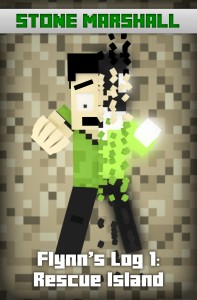
Flynn’s Log 1 Featured on ChoosyBookWorm.com
Get the epic story of today, Free! Read it on Kindle, iBooks, Google Play, Nook orKobo. Choosybookworm.com