‘Minecraft: The Island’ Blurs the Line Between Fiction and Gaming

‘Minecraft: The Island’ Blurs the Line Between Fiction and Gaming

The protagonist of Max Brooks’s new fantasy novel doesn’t have a name, a gender or even normal human appendages. Instead of hands, the narrator has clumsy, flesh-toned cubes, just one more weird feature of the strange and unsettling world where the story unfolds, where everything — the sun, clouds, cows, mushrooms, watermelons — is composed of squares.

For the uninitiated, the setting may seem bizarre and disorienting, but Mr. Brooks isn’t writing for novices or lay readers. He’s writing for a very particular tribe: die-hard devotees of the video game Minecraft.

“Minecraft: The Island,” which was released this month by the science fiction and fantasy publisher Del Rey, represents an unusual experiment in multiplatform brand extension. It marks the first officially sanctioned novel commissioned by Mojang, the Swedish game studio behind Minecraft, as the company seeks new ways to capitalize on the game’s enormous popularity. (To eliminate any doubt about the company’s consent, Mojang’s name and logo appear twice on the book’s cover, which bears the bland endorsement, “Mojang Official Product.”)

Unlike most video and computer games, Minecraft doesn’t have clear-cut objectives or levels to ascend. Instead, it’s more like an elaborate digital Lego set that allows players to build whatever they like, designing their own castles, skyscrapers, underground bunkers and booby traps.

The open-ended nature of the game is a big part of its appeal. Since its release in 2011, Minecraft has sold more than 122 million copies and now has 55 million active monthly users. The game’s user base exploded so rapidly that in 2014, Microsoft bought the company for $2.5 billion.

Continue reading the main story

As product spinoffs go, a series of novels seems like a natural step for Mojang, which already has a wildly successful publishing line of gaming manuals. (A feature film is also in the works, at Warner Bros.) Since 2013, the children’s publisher Scholastic has published 10 Minecraft titles, which have 25 million copies in print. On Amazon, there are thousands more unofficial titles that fans have self-published, including entire novels set inside the game.

“We had been thinking about fiction for a long time but wanted to make sure that it didn’t take away from people’s experience of the game, because everyone plays in a different way,” said Lydia Winters, Mojang’s brand director.

But commissioning a brand-approved Minecraft novel posed unique creative and commercial challenges. How do you create a story with a beginning, a middle and an end out of an open-ended game? And would gamers bother to pick up a nearly 300-page novel about Minecraft, when they could be spending their free time playing it?

Mr. Brooks — a cheerful, enthusiastic paranoiac who is obsessed with survival strategies, zombies, apocalyptic scenarios and plagues — wrote the story as a first-person, Robinson Crusoe-esque narrative, featuring an initially hapless character who is stranded on a strange island and has to build shelter, find food and fight off zombies and giant spiders, all features that exist in the game.

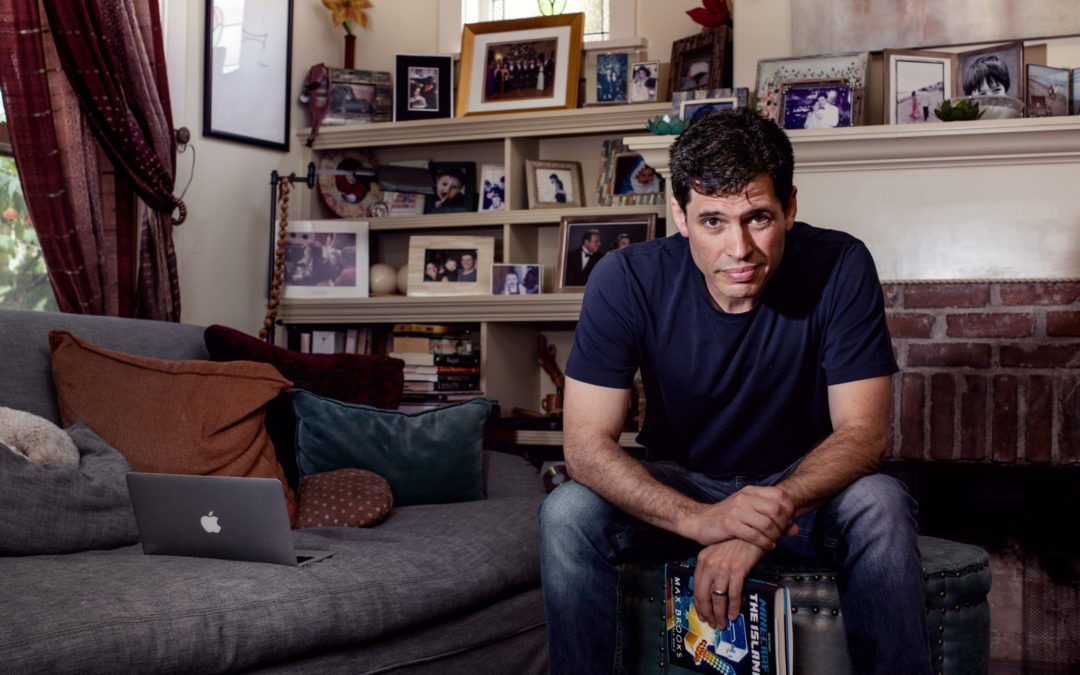
When Mojang approached him to write a Minecraft novel in fall 2015, Mr. Brooks already had a track record as a best-selling author. The son of the actor Mel Brooks and the actress Anne Bancroft, Max Brooks turned to fiction after a brief and unremarkable career in comedy writing, which included a stint as a writer for “Saturday Night Live.”

After he was fired from the show, he started writing chillingly realistic zombie fiction and found his calling. Two of his previous books, “World War Z” and “The Zombie Survival Guide,” have collectively sold more than 3.5 million copies, and “World War Z,” a faux oral history about the aftermath of a zombie apocalypse, was adapted into a feature film starring Brad Pitt.

Other successful authors might have brushed off an invitation to write a video game tie-in novel, an unabashedly commercial genre that some say amounts to little more than elaborate product placement. But Mr. Brooks happens to be an avid Minecraft player and jumped at the opportunity. He was determined to write a story that mirrored the experience of playing the game. He developed a plot that conformed to the Minecraft universe so closely that someone reading the book could recreate the narrative within the game and play along.

“I war-gamed out everything,” Mr. Brooks said in a recent interview from his home in Los Angeles. “My biggest fear was that somebody tries to play out my book and finds out it won’t work.”

In the process, he may have also created a strange new entertainment category, one that hovers somewhere between fan fiction, role-playing games and literature — a novel set in a game, that can itself be played within the game.

Like reverse adaptations of movies and TV shows (see, for example, novels based on “Buffy the Vampire Slayer” and “CSI”), novels based on gaming franchises have long been a lucrative niche within the publishing industry.

Publishers have been releasing novels based on popular video games for decades, hoping to capture a slice of the medium’s huge fan base. Gallery Books, an imprint of Simon & Schuster, has published fictional series based on games like Halo, Doom and World of Warcraft, and has millions of copies of its video game tie-in novels in circulation. Other publishers have built fictional franchises based on games like Gears of War, Starcraft, BioShock and Tomb Raider.

“Especially with teenage boys, it’s one of the only ways we can get them to read,” said Keith Clayton, the associate publisher at Del Rey.

To market its Minecraft novel, Del Rey has been assiduously courting players. The project was announced with fanfare last year at Minecon in Anaheim, Calif., a fan convention that drew 14,000 people. Del Rey is promoting the novel within the game’s platform, with a digital replica of the island Mr. Brooks created, which players can explore. They are also advertising on YouTube, where videos of people playing the game have become a popular subgenre.

Mr. Brooks, 45, began playing Minecraft five years ago, after a family friend showed him how the game worked. He began playing regularly with his son, who is now 12, and was immediately sucked in by the creative possibilities of the game.

Photo

A scene from the in-game version of the novel “Minecraft Island,” created by Max Brooks.
Photo

In Minecraft, everything — animals, elements, landscapes and machines — is composed of cubes.

When Mojang asked if he would be interested in writing a Minecraft novel, Mr. Brooks was so enthusiastic that he wrote a full draft before his contract was even completed. For the most part, Mojang gave him freedom to write the story however he wanted. The company’s only instructions had to do with the protagonist’s physical appearance.

“They were very hands off when it came to the story, but very hands on when it came to inclusiveness,” he said.

Mojang wanted to make sure that any Minecraft player could pick up the novel and imagine himself or herself in it. The company even commissioned two different versions of the audiobook, one by a female narrator, Samira Wiley, and another by a man, the actor Jack Black, so that listeners can choose a narrator of either gender.

Keeping the character’s identity ambiguous wasn’t too hard: Because the hero is stranded alone on an island, with only animals and other ghoulish creatures to talk to, Mr. Brooks was able to avoid using gendered pronouns.

Mr. Brooks concedes that the novel, which is geared toward 8- to 12-year-olds, might not hold much appeal for those who are unfamiliar with the game.

The plot was created for players, and perhaps parents and grandparents who want to understand the game’s appeal, Mr. Brooks said.

Above all, though, Mr. Brooks wrote it to satisfy his own creative impulses.

“Honestly, at the end of it all, I wrote it for me,” he said. “I’m a fan first.”

‘Minecraft: The Island’ Blurs the Line Between Fiction and Gaming
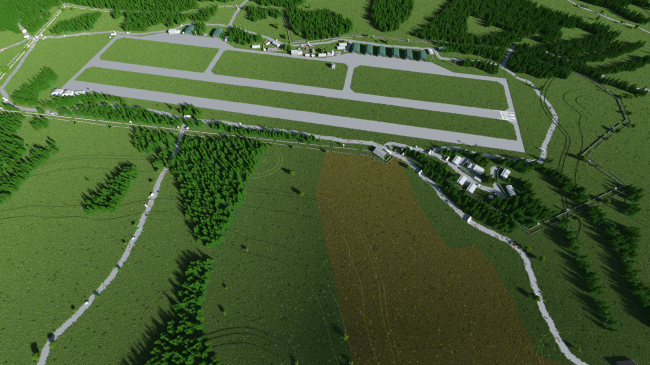
Chernarus map from Arma 2 and DayZ beautifully recreated in Minecraft

Chernarus map from Arma 2 and DayZ beautifully recreated in Minecraft

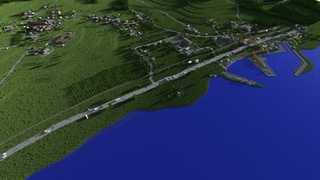
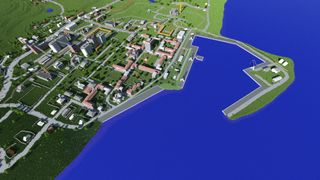
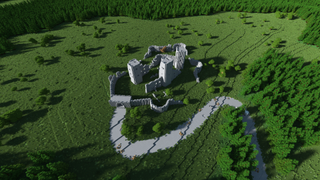
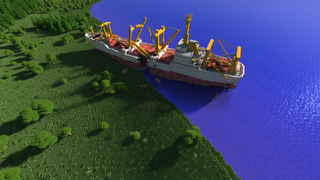
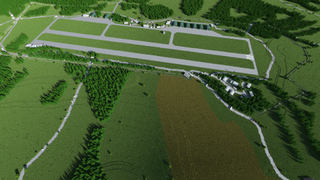
If you’ve got the urge to spend a few hours running around Chernarus today, you don’t need to boot up Arma 2 or DayZ. Now you can do it in Minecraft, thanks to map-maker Criand who has recreated the entire map in beautiful—and incredibly accurate—blocky glory. Here’s a big gallery of images to scroll through, (I’ve posted a few shots below as well) and there’s a trailer above.

In a Reddit post, Criand says the project began in 2014 and took an estimated 1800 hours to complete. It really shows: the detail is amazing, the various cities, towns, roads, airfields, castle ruins, and landmarks are instantly recognizable to anyone who has spent a good amount of time in Arma 2 or DayZ. There’s even an interactive zoomable version of the map.

The Chernarus map isn’t currently available to download, though Criand says it will be “eventually.” In the meantime, there’s a server you can join (no mods required) to check it out, run around, and kill some zombies using the IP play.mcraftz.com.

We’ve launched the PC Gamer Club, a membership program that offers ad-free browsing on this site and a bunch of other benefits including a digital subscription to PC Gamer magazine, monthly game keys, access to our private Discord server and more. For all the info, visit club.pcgamer.com.

Chernarus map from Arma 2 and DayZ beautifully recreated in Minecraft

Minecraft for Xbox One and 360 Patch Details

Minecraft for Xbox One and 360 Patch Details

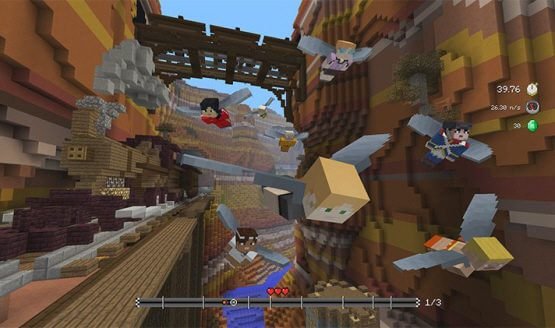
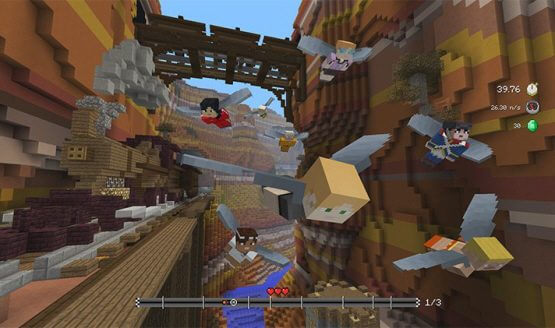
4J Studios released details of the Content Update 48 patch for Minecraft: Xbox One Edition and Title Update 56 for Minecraft: Xbox 360 Edition. Included are the normal bug fixes and game changes associated with most patches. New content includes a new Glide track called Canyon, a new Biome Settlers 2 skin pack, and new Terracotta layers added to Tumble. The full patch notes are below.

Glide Canyon


  • Added Canyon, a free Glide track.
  • Added Biome Settlers 2 Skin pack.
  • Added Terracotta and Glazed Terracotta layers to Tumble.
  • Improved performance in Solo Glide when restarting the level (particularly with split-screen spectators).
  • Totem of Undying now also applies Fire Resistance II.
  • Fixed some areas where it was possible to escape from Battle maps or Glide tracks.
  • Fixed a bug where players were unable to milk a Cow in Creative Mode.
  • Fixed a bug where players were being teleported back to the Nether portal shortly after arriving in the other dimension.
  • Fixed a bug where broken Banners wouldn’t stack with crafted Banners.
  • Fixed a bug where Wheat, Ladders, and Banners were not correctly spawning in Woodland Mansions.
  • Fixed a bug where Monster Spawners in Woodland Mansions were Pigs instead of Spiders.
  • Fixed a bug where the Item Frame icon appeared when holding a Map.
  • Fixed an incorrect death message when players were killed by Zombie Villagers.
  • Fix for custom names of Mobs not being shown in death messages.
  • Fix for being unable to unlock “Sniper Duel”.
  • Fix for being unable to unlock “Camouflage”.
  • Fix for MCCE #5183 – Player can kill a tamed Parrot with PvP disabled.
  • Fix for MCCE #5062 – Farmer Villagers only plant one seed after harvesting a whole crop of seeds from a field.
  • Fix for MCCE #4103 – Time spent on the Pause menu when under water counts towards the “Free Diver” trophy.
  • Fix for MCCE #3112 – When trying to throw food, Villagers throw it in the wrong direction.
  • Fix for MCCE #5219 – Two types of Bone Block with different pictures.
  • Fix for MCCE #4989 – Zombie Villager Spawn eggs are the wrong colour.
  • Fix for MCCE #5261 – Flower hitbox is displaced.
  • Fix for MCCE #4897 – Beds explode when TNT Explodes is disabled.
  • Fix for MCCE #4954 – Mobs can’t move with a block above them.
  • Fix for MCCE #3010 – Constructing an End portal in a certain method can lead to the End Portal being created next to the portal frame.
  • Fix for MCCE #5292 – Only regular Skeletons spawning in the Nether.
  • Fix for MCCE #5151 & MCCE #5208 – Item frames don’t show the custom name of their items.

4J Studios did not release any patch details for any other version of Minecraft that have achievements.

The Xbox One and 360 patches are rolling out now.

Minecraft for Xbox One and 360 Patch Details

4J Studios Explain How They Got Minecraft On Switch To Work In 1080p When Docked

4J Studios Explain How They Got Minecraft On Switch To Work In 1080p When Docked

4J Studios, the people who are responsible for getting Minecraft over to consoles, have recently spoken to TIME about how they bumped up the performance for Minecraft on Switch; allowing players to play the game at 1080p whilst docked. 4J Studios’ CEO, Richard Reavy explained:

“We did spend some time analyzing our GPU usage and optimizing things before we did this move as well,” he says. “We needed to spend some time looking at the fill rate and being more careful with that, just because of the number of pixels in 1080p. We kind of knew we could do the optimization and we would get there with the performance. But yeah, ultimately, the fundamental problem was switching resolution.”

Reavy goes to on to talk about how each different version of Minecraft has a custom interface to suit the resolution of the console it’s being played on. Switching between docked and undocked mode at any given time could have caused some issues so the team got to work on bringing us an update.

“Every interface seam is handcrafted by our art team to suit the exact resolution of the console it’s on,” says Reavy. “We wanted to make sure the transition was really slick, and that the user wouldn’t notice anything, like it taking seconds unloading one user interface system for another,” he says. “And also because you can dock and undock your console at any point, it can be quite problematic that the user could switch the console at a really inopportune moment.”

4J Studios Explain How They Got Minecraft On Switch To Work In 1080p When Docked

NBC is now using Minecraft to explain who owns the moon

NBC is now using Minecraft to explain who owns the moon

You ever really think about the moon? More specifically, have you ever thought about who owns it? It’s actually a very complicated matter. Fortunately, NBC Left Field is here to break down the basics, complete with illustrations and animations, all of it rendered in Minecraft.

Launched last month, NBC Left Field is a “social video unit” that “aims to reinvent storytelling for viewers who primarily get their news from Facebook, Twitter and Instagram,” according to Variety. It features content from journalists around the world, and while some of it is obviously lighthearted—like, for instance, this—it does dig into more difficult topics too, such as a military summer camp for kids in Ukraine, or the challenges and risks facing coal miners in the US.

Microsoft apparently wasn’t involved in the creation of the video, as a rep said the Minecraft team had no comment on it. “But I learned some new stuff about the Moon today!” the rep added. I’d call that a pretty good outcome.

NBC is now using Minecraft to explain who owns the moon

Switch Minecraft’s 1080p patch improves more than just resolution

Switch Minecraft’s 1080p patch improves more than just resolution

Minecraft on Switch is one of the best uses to date of Nintendo’s hybrid design, delivering a complete rendition of the classic game with full four-player functionality – even when undocked and gaming on the go. But its launch was marred by two factors: a lacklustre 720p resolution even when docked with your HDTV, along with noticeably jarring performance drops in split-screen mode. Developer 4J Studios promised that it would look into a full 1080p upgrade and it has duly delivered – and not only that, despite the 2.25x boost to resolution, performance in some split-screen scenarios is improved too.

The 1080p Switch upgrade is understated in 4J Studios’ patch notes, hidden in a line of bug fixes. It’s the only visual upgrade listed too. According to an interview with the Time website, CTO Richard Reavy says that “everything else is unchanged at present. We really just wanted to make sure jumping up the resolution wouldn’t cause any problems.” Indeed, at launch, Microsoft confirmed that switching resolutions on the fly between Switch’s docked and undocked modes caused issues with the HUD. But on patch 1.06, clearly 4J Studios has overcome the problem, and it all just clicks together.

As you can see in the video and the comparison zoomers on this page, Minecraft’s stark visual style benefits enormously from the resolution upgrade, bringing it right up to our level of expectations for the launch code – and despite compromises in other areas, it even compares fairly well with PS4’s 1080p image too. Native full HD resolution pays huge dividends for anyone using a 1080p TV: we’re no longer at the mercy of Switch’s scaler, and users get a true 1:1 pixel match from the console. And as you’d expect, even the menu overlays run at 1080p.

Everything you need to know about patch 1.06 for Minecraft on Switch. It’s a good one!

For a game like Minecraft, a resolution boost is deceptively useful. Of course, this title takes pride in its simplicity, with low res textures used to build a world of blocks. But this jump to 1080p has a big benefit for greater, long-distance views of the land. Looking over your creations at range, the upgrade is impossible to ignore when directly compared to 720p imagery, taken from the launch version of the game. A surprise bonus here is that texture filtering also gets a boost on Switch, with the higher resolution increasing the pixel sample range: this means you get clearer, cleaner surfaces at a tight angle than you did before.

So it’s all gain so far, but are there any sacrifices to get these results? Well, the good news is that the game’s render distance is still set to the same level as before, at between 11 and 12 chunks while docked, while the world size stays at the medium 3072×3072 block setting. As a result, pop-in kicks in at the exact same points as you move through the world. And really, there’s no other visual changes to speak on. The good news is that it was already an acceptable setup on Switch, and nothing is compromised to give the GPU more fill-rate to achieve the resolution bump.

Again, Richard Reavy is quoted on the Time website, explaining extra optimisation is to thank for this. The main point holding the team back from 1080p was the matter of transitioning to and from the dock, but with that fixed, Switch can unleash more of its potential here. It’s understandable that keeping everything at 720p made life easier for the launch, but now we have the update, there are no obvious issues changing between the two. Barring a quick re-rendering of the world’s block layout while docking, it’s a seamless jump between each.

Ok, so what about frame-rate? Interestingly, our test route on the tutorial stage shows no major issues in holding 60fps. Bearing in mind Switch was running nicely at 60fps – even outperforming PS4 at 1080p – it suggests there must have been a lot of headroom to work at 720p originally. That untapped fill-rate is now finally being put to use effectively, and impressively you still get a mostly locked 60fps in solo play. There’s a case where we see a lengthy drop to the mid-50fps region – around 2-3fps lower than the original patch. But even in a complex, built-up area like this, there’s not much to suggest performance gets any kind of noticeable downgrade. This is exactly what we wanted, with stuttering also noticeably decreased next to our original tests.

From the solo standpoint, it’s an excellent showing. Better still is the turnout for Switch in split-screen while docked; on the original patch this had a range between a hard lock at 40fps at times, right up to 60fps. The locking to 40 and 60 here may suggest a double-buffer form of v-sync, which in effect creates the erratic frame-rate reading on our graphs and noticeable frame-time stutter. But moving to patch 1.06 something has clearly changed; the average frame-rate is slightly higher, and while it stays between 40 and 60fps, performance is smoother overall and motion feels less disjointed as a result. In fact, this even benefits Switch in the portable mode, and the hard switches between 30fps and 60fps are gone in the areas we originally encountered them – and yes, split-screen mode is still rendering at full 1080p.

Improved image quality and better texture filtering are the crux of the story here then, but the good news is that it comes at little to no cost in terms of performance. In fact, for split-screen gamers, it’s surprising this extends to an actual improvement in frame-rates in addition to the resolution boost. In the meantime, this Minecraft patch goes down as one of the more radical visual upgrades we’ve seen on Switch. 720p to 1080p without some form of compromise isn’t trivial, but 4J Studios deserves kudos for making it happen.

Switch Minecraft’s 1080p patch improves more than just resolution