
by Stone Marshall | Jan 9, 2018 | Awesome Book News, Free, Intro, Minecraft News, Minecraft questions, news, parent-news, State of Stone, Stone Marshall Book News, Stone Marshall Books, Stone Marshall Club, Stone Marshall Minecraft Adventures, Uncategorized |
“‘Mom, you are crouching again!”
“I can’t help it!” I said. “I can’t figure out how to stand up straight.”
Sure enough, my character was tramping across the green block landscape slumped forward like a sulky teen who just broke up with her boyfriend.
We got an Xbox for Christmas, the goal, of course, being to insinuate ourselves into the lives of our children so that even their virtual reality is not safe from their parents’ antics.
“Just get in the house and stop wandering off!” advised my 10-year-old, who was teaching me how to play Minecraft. By “teaching,” I mean yelling at me continually as I stabbed at buttons.
But I didn’t go inside the house he had built for us. I was feeling rather full of myself, having just slaughtered a pig with a few swipes of my bare, block hands, earning my household pork chops. I was now off to chop down trees for an addition.
There was only one problem.
“I can’t figure out how to put this pork chop down,” I lamented.
My boy was too busy killing a spider with glowing red eyes to help me, so I just went with it.
I chopped down that tree with a pork chop. Who knew the other white meat could be so versatile?
“I got us more wood for the house!” I announced.
I only got a grunt. It was starting to get dark in our virtual world, and my son was killing another spider.
I moved across the screen, getting stuck in holes, stuck under tree branches, falling off cliffs.
The first-person vantage point of the game, like all modern offerings, messes with me. I grew up on a steady diet of old-school Nintendo, not this herky, jerky Blair Witch Project-meets-Luigi madness. Still, I wasn’t ready to give up. I wanted to make my boy proud, and that’s when I saw the llama. Eager to get the sort of accolades earned by my pig slaughter, I chased down the llama, and by “chased” I mean I stumbled and crouched across the screen until the llama was eventually cornered by some square blocks of earth. Then I began mowing down the animal with my pork chop.
The llama, however, was not going down without a fight. It kicked me and made angry llama noises. But I kept at it and eventually I killed that llama.
“I killed a llama!” I chirped. “What do I get for killing a llama?!”
“Ummm, you get nothing,” said my kid, giving me a look that said, “what kind of sicko kills a llama?”
“OK, now we have standards?” I said. “That’s the line we don’t cross? Llamas? It is not like it was a unicorn or something.”
I sulked back to the house to call it a night.
I jumped into bed and pushed a button, destroying the bed in one swipe.
“What did you do?” he yelled.
“I don’t know … I just pushed a button. I was trying to … ” I said, looking down at the controller that had, no lie, 11 buttons! Plus two joysticks and an up-down-side-to-side tossed in for good measure. “I am sorry … I …”
I stopped talking and walked to the corner with my pork chop.
“I am just going to crouch over here till morning.”
COLUMN: Minecraft mom
by Stone Marshall | Jan 9, 2018 | Awesome Book News, Free, Intro, Minecraft News, Minecraft questions, news, parent-news, State of Stone, Stone Marshall Book News, Stone Marshall Books, Stone Marshall Club, Stone Marshall Minecraft Adventures, Uncategorized |
Alice Maz was part of a small group of players who came to have near-total mastery over the internal economy of a popular Minecraft; Maz describes how her early fascination with the mechanics of complex multiplayer games carried over into an interest in economics and games, and that let her become a virtuoso player, and brilliant thinker, about games and economics.
Maz’s long, fascinating essay about her business ventures in Minecraft are a potted lesson in economics, one that shows where financial engineering actually does something useful (providing liquidity, matching supply and demand) and the places where it becomes nothing more than a predatory drag on the “real economy” of people making amazing things in Minecraft.
Back when I was working on For the Win, my YA novel about gold farming, I read pretty much every book and academic paper on the subject of games and economics, and Maz’s essay is among the best pieces of writing on the subject I’ve encountered. It’s especially interesting because all the economic activities are aimed at dominating a server, but Maz never talks about whether, how, or if any of the in-game wealth can be converted to cash money, giving the whole thing a kind of abstract clarity that is sometimes obfuscated in the literature on in-game economics.
Diamonds being not the most valuable but certainly the most valued item in the game, both for their utility and their price stability, the server was littered with buy chests for them. These were mostly of the fling and a prayer sort, offering prices low enough that anyone selling to them was a noob or a fool. But not so low that I couldn’t sell them Charlotte’s. I bought from her all I could afford, bankrupted every single person who had a buy chest at any price, then went back for more. Buy chests in the market shops, scattered on the roadsides, nestled in secluded towns no one remembered the names of, I hit them all. If you were buying diamonds at the bottom of the ocean, I would find you and take all of your money.
At the same time, I dropped my sell price in the market to 16M and did pretty good business for a few weeks. I had the advantage of one of the two best plots there were, the other belonging to Emma. (This I’d gotten via inside knowledge that Zel’s to-be partner was shuttering his store and gifting the plot to a friend. I offered to swap my plot as the gift, help with the deconstruction process, and advise on pricing in the Emporium in exchange, thus getting the prized location without it ever going up for sale.) QuickShop provided a console command to show the closest shop selling an item, and these two plots, though behind hedge walls and not immediately visible, were the closest as the crow flies to the market’s warp-in point. So anyone using the command–and this was most people, traipsing through the market looking for deals being a rare activity mostly limited to speculators–got directed to me or Emma for anything either of us sold.
This all made me a lot of money. I drove a portion of profits into bolstering my diamond and beacon reserves, bought basically any building material I thought I’d ever need in bulk, and still watched my marble balance grow. Up til the diamond bonanza, I’d been making money on a dozen different side hustles. A bit here, a bit there, doing better than most, but regardless the day-in day-out of working the market took up the majority of my time on the game. That made me rich; this is what made me wealthy.
But soon 16M became 14M, and 14M became 12M. A few people started to notice Charlotte’s store, and she restocked faster than I, or anyone, could recoup enough to buy out. Mostly though, it was clear to everyone the price of diamond was falling, even if they had no idea why. I diversified into selling enchanted diamond equipment of all types, priced just so that I could break even on the enchant and move the component diamonds at the same price I sold them for raw. A few of the buy chest people I’d tanked tried recovering some of their money by putting up at a loss the diamonds I’d sold them, but they still couldn’t move product faster than a trickle. Eventually even Charlotte had to cut her prices to keep selling. It was bad.
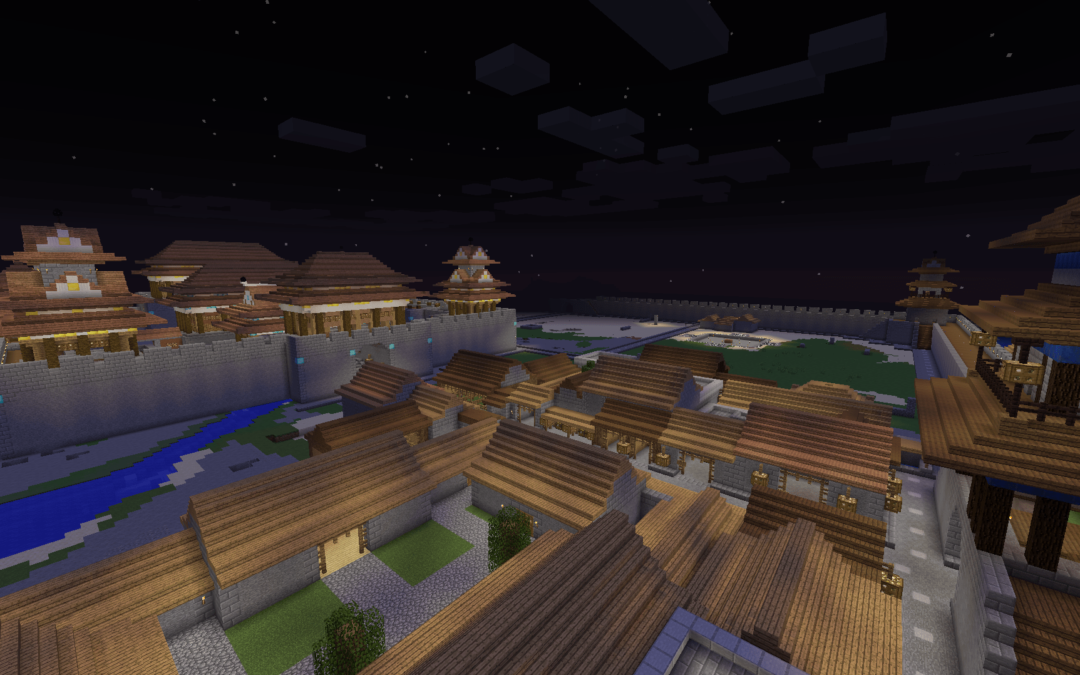
The internal economics of a popular Minecraft server are an object lesson in everything great and terrible about markets
by Stone Marshall | Jan 8, 2018 | Awesome Book News, Free, Intro, Minecraft News, Minecraft questions, news, parent-news, State of Stone, Stone Marshall Book News, Stone Marshall Books, Stone Marshall Club, Stone Marshall Minecraft Adventures, Uncategorized |
A post by a Reddit user has revealed some new information about Destiny 2’s playerbase and how much it has dropped off since the game launched in September.
The user, named “stevetheimpact,” used Bungie’s application programming interface from its web site to find when players last logged into the game. The chart below shows a steady decline in players since launch, with it recently reaching an all-time low at the end of 2017.
Image via u/stevetheimpact – Full size
According to stevetheimpact, the total player count dropped from around 1.3 million at launch to just over 321,000 at the end of year, which is a drop of 75.37 percent.
The percentages were even higher on each individual platform, too. PlayStation 4 player count dropped from 712,431 to 158,523 for a drop of 77.74 percent, Xbox One dropped from 594,987 to 127,428 for a total of 78.58 percent, and the PC player count dropped from 194,607 at launch on Oct. 24 to 35,892 at the end of the year, which is a drop of a whopping 81.55 percent.
The chart comes with warnings, though, as stevetheimpact says they were not able to account for players returning for the Curse of Osiris DLC in December, but the final endpoint shows the correct player dropoff regardless.
While this information is not official or entirely accurate, the Bungie API does not lie when it comes to data. In 2018, fans of the series will be looking for reasons to boot the game back up again.
This chart shows how much Destiny 2’s playerbase has dropped off since launch
by Stone Marshall | Jan 8, 2018 | Awesome Book News, Free, Intro, Minecraft News, Minecraft questions, news, parent-news, State of Stone, Stone Marshall Book News, Stone Marshall Books, Stone Marshall Club, Stone Marshall Minecraft Adventures, Uncategorized |
It turns out Steam’s 2017 releases may not be as addicting as one might hope. A new report from GitHyp reveals that Steam’s top 10 most-played games for the year were all released before 2017 even began. That is, except for one title: PlayerUnknown’s Battlegrounds.
GitHyp regularly tracks Steam’s most-played games, calculating how many players hop online per day, when playercount peaks, and how many players are currently online, among other values. And according to GitHyp’s statistics, PUBG ranks in first place with over three million players. No other games from 2017 can be found on the top 10 list, and it’s not until 12th place that another game from this year emerges—Divinity: Original Sin 2.
Listed below are the top 10 games for 2017, along with the approximate playercount tallied for each.
- PlayerUnknown’s Battlegrounds ~3 million players
- Dota 2 ~1 million players
- Counter-Strike: Global Offensive ~800,000 players
- Payday 2 ~250,000 players
- Grand Theft Auto V ~170,000 players
- H1Z1 ~150,000 players
- Warframe ~120,000 players
- ARK: Survival Evolved ~1000,000 players
- Tom Clancy’s Rainbow Six: Siege ~100,000 players
- Path of Exile ~100,000 players
Last year was great for gaming overall, and as the second Steam Awards reveals, games like Cuphead and Sonic Mania certainly proved PC gaming has plenty of great hits to look forward to during even a slower year. But as far as Steam games go, sometimes great titles from the past few years are just hard to beat.
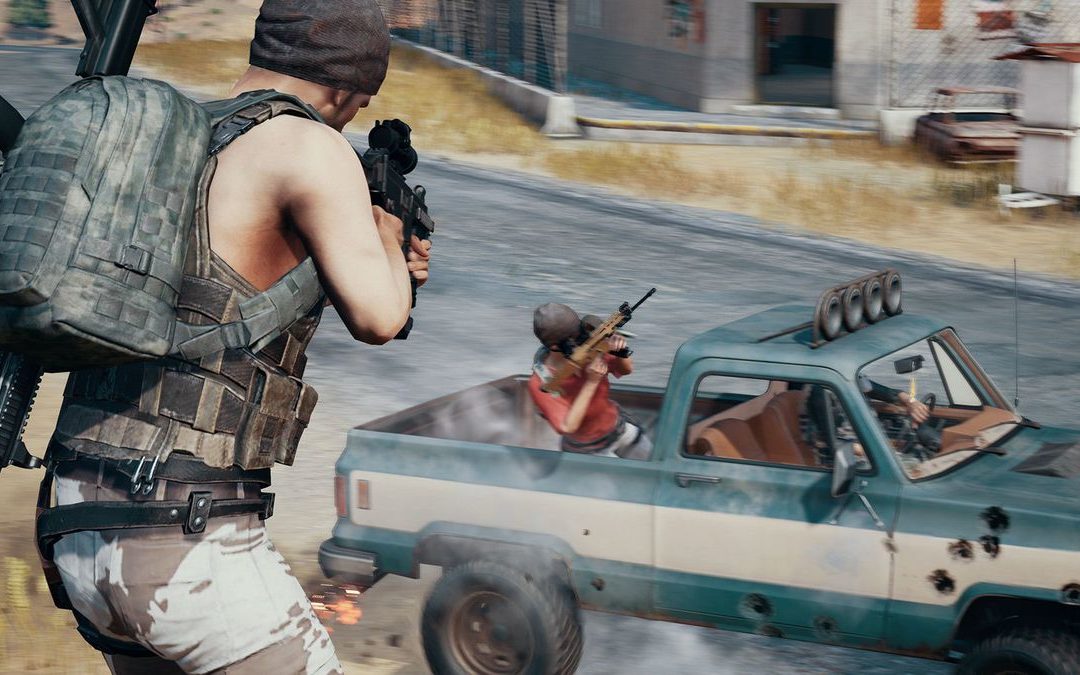
Steam’s top 10 games for 2017 were all released before 2017, except for one
by Stone Marshall | Jan 7, 2018 | Awesome Book News, Free, Intro, Minecraft News, Minecraft questions, news, parent-news, State of Stone, Stone Marshall Book News, Stone Marshall Books, Stone Marshall Club, Stone Marshall Minecraft Adventures, Uncategorized |
In an announcement that likely surprises exactly no one, Nintendo confirmed that the Switch is now the fastest-selling console in U.S. history, thanks to data compiled via internal sales info.
The console has officially beaten out the original Wii’s sales numbers from when it launched in the US as well, leading to a ridiculously successful launch and what will remain a bustling part of the console’s life cycle.
Since the console’s launch back on March 3, 2017, it’s managed to amass over 4.8 million units sold in the 10 months since its debut. Those are impressive numbers, and it’s not just localized to Nintendo consoles. Those are the best numbers, period, for all video game consoles in the U.S. The old record holder was the Wii, with four million units sold during the same amount of time.
With titles like The Legend of Zelda: Breath of the Wild and Super Mario Odyssey out on store shelves, it’s clear Nintendo is going to be able to keep up the momentum with solid games and system-sellers that get people to pull the trigger on the Switch in general. Those games themselves managed to accrue some impressive review scores and sales numbers as well, meaning the Switch is and will likely remain a powerhouse in terms of moving units and making mountains of cash.
If you still don’t have a Switch, it might be time to admit that it probably does live up to the hype. If you’re a big first-party Nintendo fan and enjoy ports, it’s an interesting system that’s definitely worth picking up.
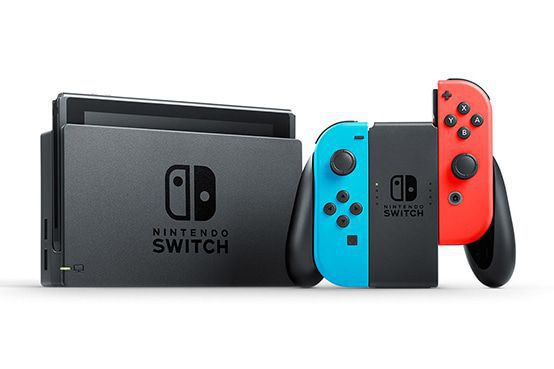
The Switch is now officially the fastest-selling console in U.S. history
by Stone Marshall | Jan 7, 2018 | Awesome Book News, Free, Intro, Minecraft News, Minecraft questions, news, parent-news, State of Stone, Stone Marshall Book News, Stone Marshall Books, Stone Marshall Club, Stone Marshall Minecraft Adventures, Uncategorized |
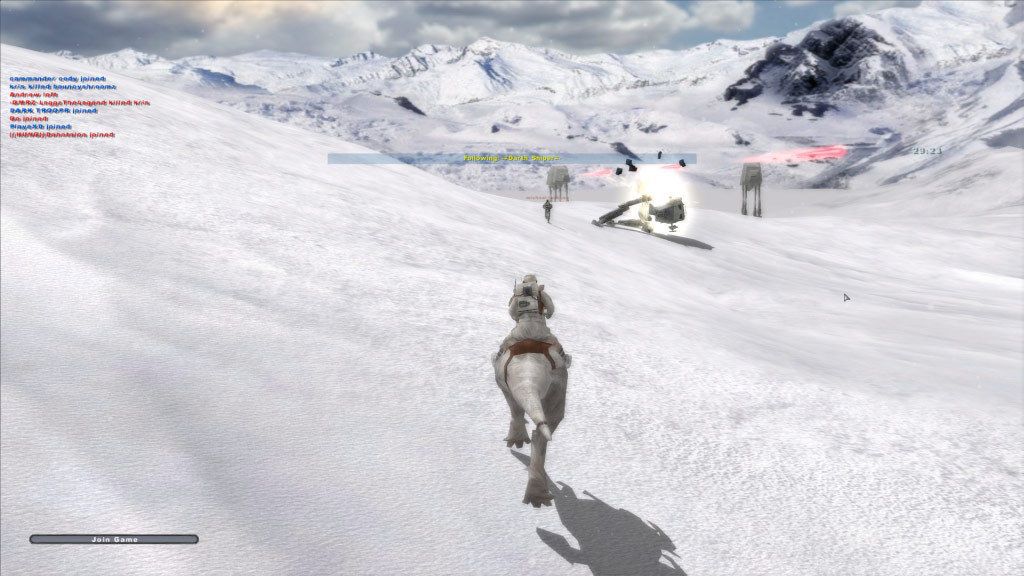
The original Star Wars: Battlefront II launched back in 2005, over 12 years ago. It’s just gotten a new patch for PC users, if you can believe that. The new Star Wars Battlefront II may have just hit physical and digital store shelves near the end of 2017, but there’s still love out there for the original game, too.
The patch is a pretty small one, but it proves there’s still a loyal fanbase surrounding the original sequel. According to Disney, it’s a mass of bug fixes, which resolve issues with Steam username displays, ping calculations, and the game’s lobby and matchmaking. There’s admittedly not a lot to it, but it’s enough to let fans know their concerns are still being heard, and this beloved title is still being supported.
In fact, this is a revitalization for the game, when it got a new update to add multiplayer support in October 2017, with cross-play for Steam and GOG buyers added in as well. It was likely added in not only as a response to the fervor for the game since the new Battlefront II released, but to curry fan favor after EA dropped the ball on the fan experience with all things related to loot crates when the new title launched.
It’s always pretty heartwarming in some way to see older games still receiving support. And given how in many ways the original Star Wars: Battlefront II is superior to the new game (though they both have their high and low points) it’s refreshing that you still have options in terms of which game you’re going to spend time with your friends in.
Star Wars: Battlefront II gets a multiplayer update more than decade after launch
