by StoneMarshall | Oct 23, 2014 | Minecraft News, parent-news |
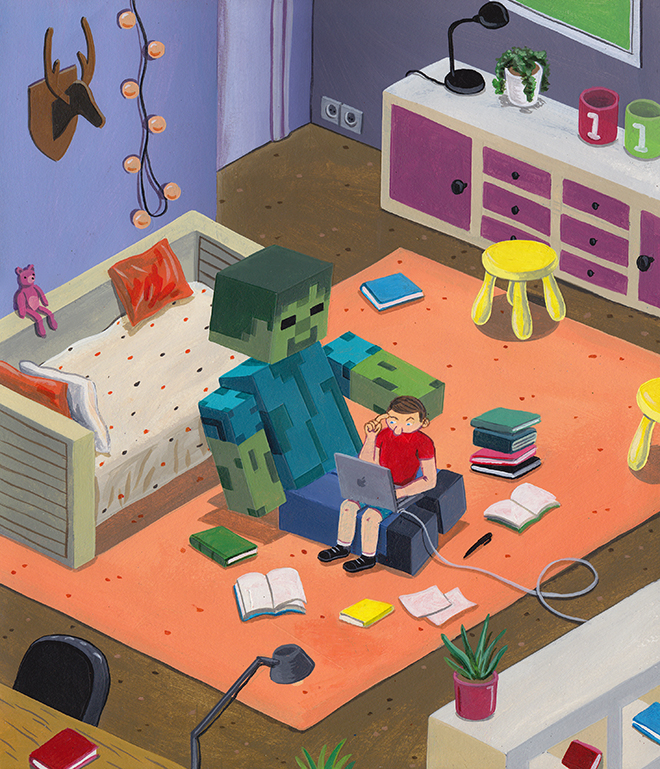
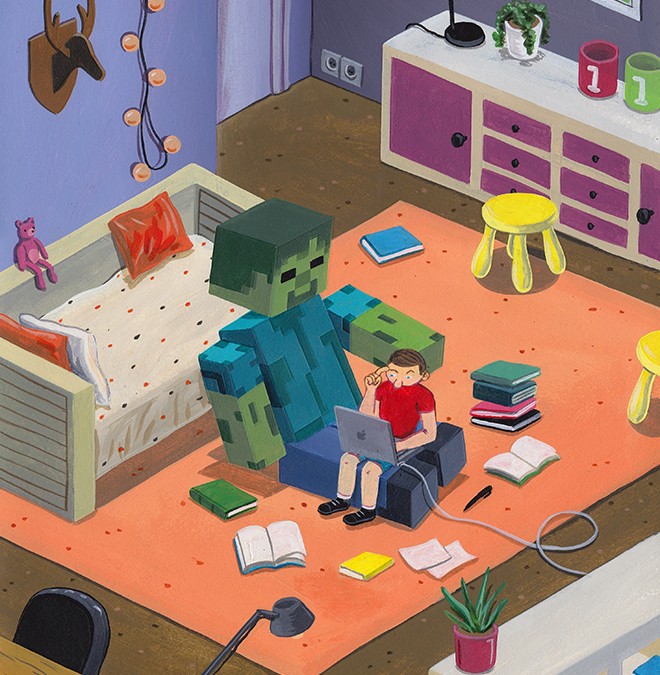
Minecraft is the hot new videogame among teachers and parents. It’s considered genuinely educational: Like an infinite set of programmable Lego blocks, it’s a way to instill spatial reasoning, math, and logic—the skills beloved by science and technology educators. But from what I’ve seen, it also teaches something else: good old-fashioned reading and writing.
How does it do this? The secret lies not inside the game itself but in the players’ activities outside of it. Minecraft is surrounded by a culture of literacy. The game comes with minimal instructions or tutorials, so new players immediately set about hunting for info on how it works. That means watching YouTube videos of experts at play, of course, but it also means poring over how-to texts at Minecraft wikis and “walk-through” sites, written by gamers for gamers. Or digging into printed manuals like The Ultimate Player’s Guide to Minecraft or the official Minecraft Redstone Handbook, some of which are now best sellers.
This is complex, challenging material. I analyzed several chunks of The Ultimate Player’s Guide using the Flesch-Kincaid Reading Ease scale, and they scored from grade 8 to grade 11. Yet in my neighborhood they’re being devoured by kids in the early phases of elementary school. Games, it seems, can motivate kids to read—and to read way above their level. This is what Constance Steinkuehler, a games researcher at the University of Wisconsin-Madison, discovered. She asked middle and high school students who were struggling readers (one 11th-grade student read at a 6th-grade level) to choose a game topic they were interested in, and then she picked texts from game sites for them to read—some as difficult as first-year-college language. The kids devoured them with no help and nearly perfect accuracy.
How could they do this? “Because they’re really, really motivated,” Steinkuehler tells me. It wasn’t just that the students knew the domain well; there were plenty of unfamiliar words. But they persisted more because they cared about the task. “It’s situated knowledge. They see a piece of language, a turn of phrase, and they figure it out.”
Hannah Gerber, a literacy researcher at Sam Houston State University, found much the same thing. She monitored several 10th-grade students at school and at home and saw that they read only 10 minutes a day in English class—but an astonishing 70 minutes at home as they boned up on games. Again, it was challenging stuff. Steinkuehler found that videogame sites devoted to World of Warcraft, for example, are written at nearly 12th-grade level, with a 2 to 6 percent incidence of “academic” jargon.
Passion for games drives writing too. When Steinkuehler informally observes kids contributing to game sites and discussions online, she sees serious craft. “Suddenly, being a writer is sexy and hip and cool. They have an audience that knows their stuff, and they expect you to be knowledgeable,” she says. What about fiction? Oh, games have you covered there too: Behold the teeming seas of Minecraft fan stories at sites like FanFiction.net or Wattpad. My kids are deep into a trilogy of Minecraft novellas—written by a 13-year-old girl in Missouri.
I’m praising Minecraft, but nearly all games have this effect. The lesson here is the same one John Dewey instructed us in a century ago: To get kids reading and writing, give them a real-world task they care about. These days that’s games.
via How Videogames Like Minecraft Actually Help Kids Learn to Read | WIRED.
by StoneMarshall | Oct 22, 2014 | parent-news |
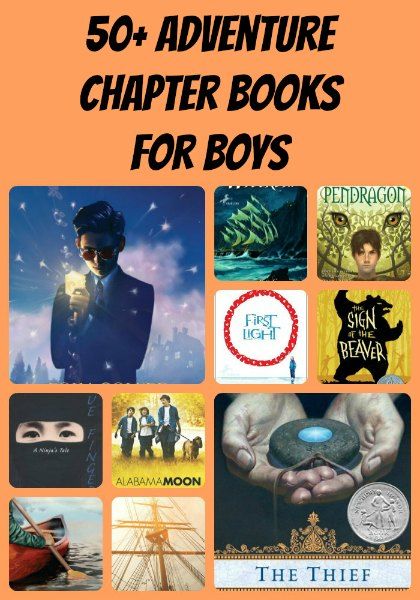
50+ Amazing Adventure Chapter Books for Boys: Find these books at your local library. It’s a common fact that girls read more than most boys. Girls
via (4) 50+ Amazing Adventure Chapter Books for Boys.
by StoneMarshall | Oct 22, 2014 | parent-news |
A generation raised on the delights of Donkey Kong, Super Mario, Sonic the Hedgehog, and Game Boy Tetris has now grown up. We have iPhones that wake us in the morning, Kindles that put us to sleep, and Facebook news feeds that annoy and entice us during the day. Many of us also have children. These children see us on our screens, want to play with these screens, and eventually ask to have their own screens. The discussion about how much screen time a child should be allowed is central to modern parenting. It’s the inescapable question.
The fervor and complications behind this issue were brought into relief by two recent news stories. The first was a report in the Times, by Nick Bilton, about how, in 2010, Steve Jobs was a “low-tech parent” who did not let his children have access to Apple’s new gadget, the iPad. Bilton quotes Walter Isaacson, who describes how Jobs instead “made a point of having dinner at the big long table in their kitchen, discussing books and history and a variety of things.” Then, on Monday, Microsoft paid $2.5 billion for Minecraft, the hugely popular game in which players build, explore, and destroy Lego-like virtual worlds. When the Microsoft chief executive Satya Nadella was asked why his company bought Minecraft, he replied, “If you think about it, it’s the one game parents want their kids to play.”
via The Minecraft Parent – The New Yorker.
by StoneMarshall | Oct 21, 2014 | parent-news |
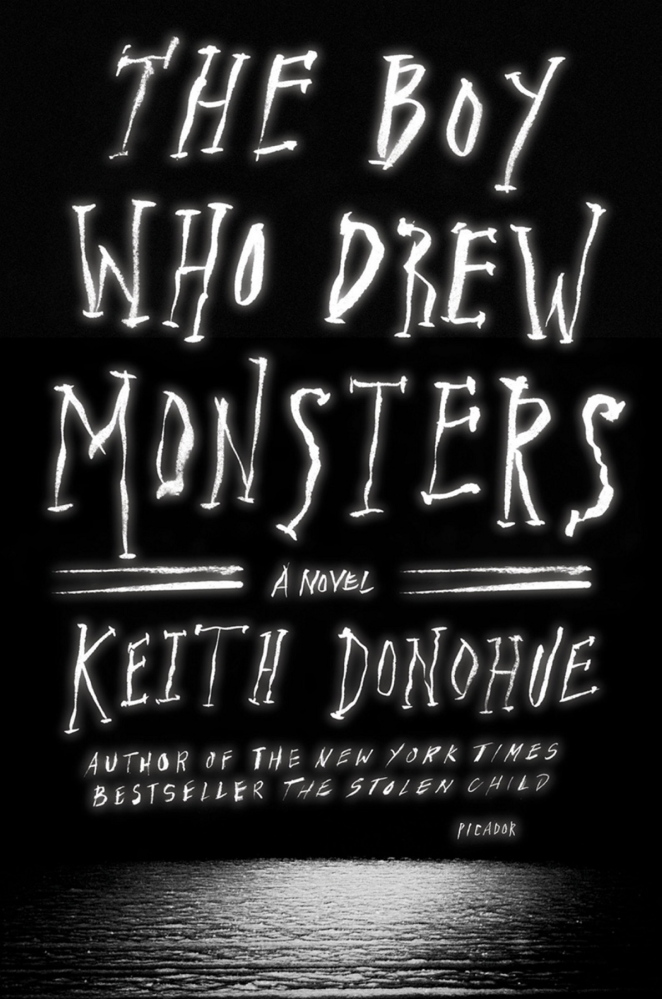
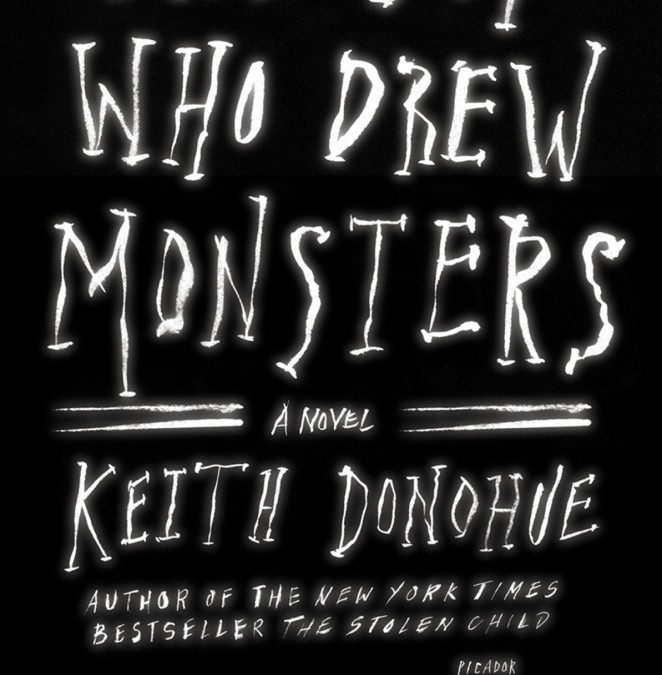
“The Boy Who Drew Monsters” starts with dreams: a home in Maine by the sea; an only, precious child; stories spun in sleep. Quickly, dreams become nightmares as reality slowly warps, and dark, childish imaginings infiltrate even the adult world.
Jack Peter is the boy in the title. He’s a bright 10-year-old on the autism spectrum, prone to obsession. He wants only to read comic books, then he focuses only on playing war with plastic figurines. As the story begins, Jack has begun to spend all of his hours drawing imaginary creatures. He refuses to leave the house, venturing out only a few times a year for doctors appointments. His only friend is Nick Weller, a kind and quiet boy who indulges Jack’s quirks.
via Book Review: ‘Boy Who Drew Monsters’ a chilling family tale set alongside foreboding Maine coast – The Portland Press Herald / Maine Sunday Telegram.
by StoneMarshall | Oct 21, 2014 | Minecraft News, parent-news |
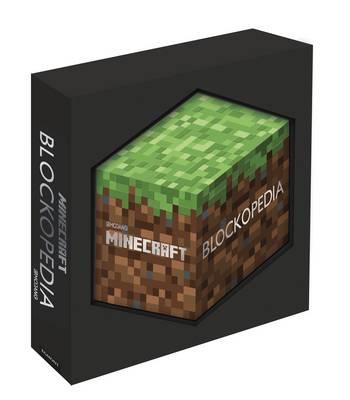
If you are the parent or grandparent of boys aged between five to 12, chances are you are familiar with Minecraft, a computer game. Minecraft has spawned a range of official books, rather ugly affairs, which the developers insist can only be printed at one particular European printer. As the whole demographic worldwide wants these books, it’s often hard for the printer to keep up. For local publisher, Hardie Grant Egmont, the book has been a bonanza. In November, the Minecraft Blockopedia will be published and will retail for $59.95. One large Australian retailer reputedly wants 100,000 copies. We want quite a few too. But the Minecraft books are creating a bit of confusion on our shop floor. A customer recently asked one of our children’s specialists if we had Minecraft. ‘Of course,’ she answered, ‘it’s in the children’s section.’ ‘What? You keep it in the children’s section?’ ‘Oh yes, it’s very popular with five to 12-year-old boys.’ ‘I can’t believe that Mein Kampf could appeal like that!’ Red faces all round!
via Blog: Mark’s Say: Minecraft and the vitality of the printed book · Readings.com.au.
by StoneMarshall | Oct 20, 2014 | parent-news |
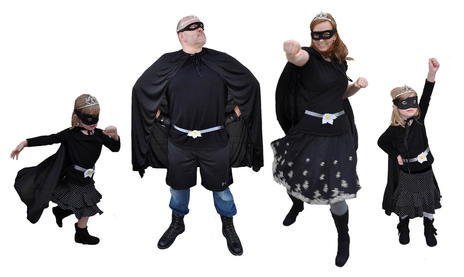
Princess Magnolia does things a proper princess should do — she sits primly and is polite while receiving an unexpected visit from the nosy Duchess Wigtower.
But when her glitterstone ring goes off, it’s an alarm that a monster is getting too close to the entrance to Monster Land, which is located in a goat field not far from the castle.
via Shannon and Dean Hale introduce a superhero princess in ‘The Princess in Black’ | Deseret News.
