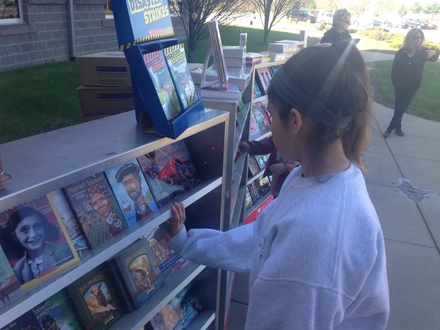
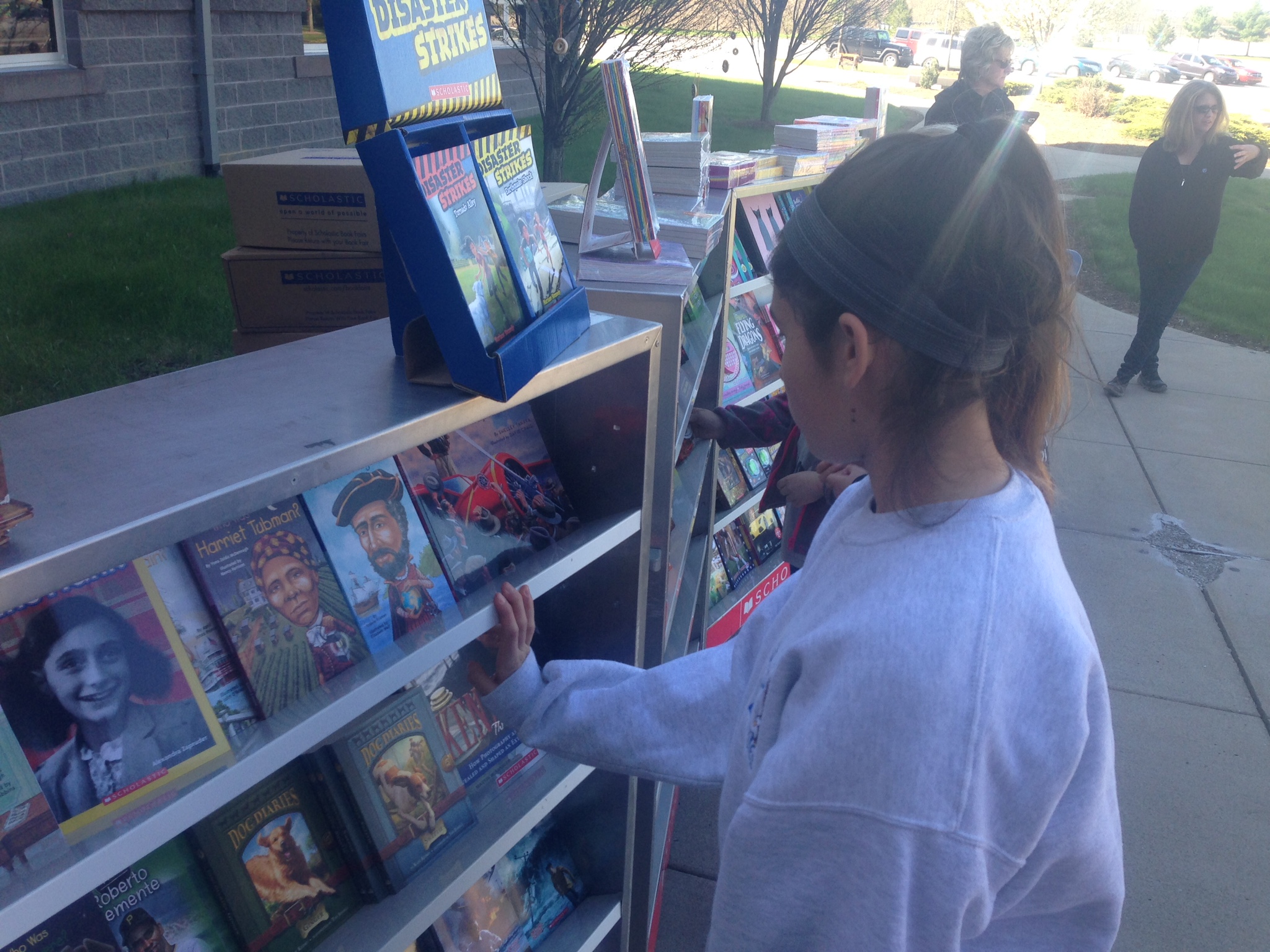
Why do we have so many children that choose not to read? As I pondered that question, I was watching a children’s TV channel and decided to do some informal research. I decided to pay particular attention to the commercials being presented to our children. The following is what I discovered:
6 commercials about other TV shows 4 Food Commercials 7 commercials about toys 6 commercials about various video games and apps 0 commercials about books
The question of why our kids are not reading for pleasure is not a new one, but there is no easy answer. All we can do is speculate. For example:
• Kids don’t read for pleasure because they are distracted by TV. • Kids don’t read for pleasure because they are more interested in video games. • Kids don’t read for pleasure because there is too much technology (social media) in their life. • Kids don’t read for pleasure because they no longer can use their imagination to create their own movie in their head.
Perhaps parents need to have their children earn TV time by reading first. Perhaps teachers need to include reading for pleasure as a part of their homework or school expectation. Authors need to compete with the movie industry. Books need to be as cool as the movies. Authors need to advertise their books on that children’s TV channel.
Parents become a prime motivator for their children to read for pleasure and become lifelong readers. I would advise parents to be a reading example for their kids. So many parents share that they just don’t have time to read for pleasure, or they only read after the children go to bed, or they only read in the bathroom. It is conceivable that a child could go from sun up to sun down and never see the most important adults in their life read a book for pleasure. Yet, parents are constantly telling their children how important it is to read. Perhaps our children perceive a double standard. I would advise that parents make reading a priority in their homes. Sit down and discuss the book that your child is reading. How do they think it will end? What is their favorite part so far? Who is the author?
Once again, there is no easy answer for encouraging our children to read, but the fact remains that we need to get our children reading! Kids will do things if it is popular, cool, or fun. We need to make reading all three of those and the best way to do that is through… technology!
Let them read their books online. Let them read a graphic novel from their tablet or laptop. Let them use Book Wizard (http://www.scholastic.com/bookwizard/) which is sort of a Pandora Music App but for Children and Young Adult Books. Let them go on YouTube (https://www.youtube.com/user/polandbananasBOOKS) and watch book talks from other kids and help them find a good book that they might enjoy reading. Let them discuss what they have read with someone online, either in a book club chatroom( http://www.epals.com/#!/main) or have them write a critique of the book on a blog. All of these possibilities will make reading fun and highly motivating for our children.
There is one thing that must come first before any reluctant reader finds his/her passion for reading. There has to be someone who guides them to discovery. The sheer definition of reluctant tells us that there must be at least one person who helps the child find that first book…. that person must guide them to the pathway that can help them discover a love of reading. It just takes one person. Will you be the one?
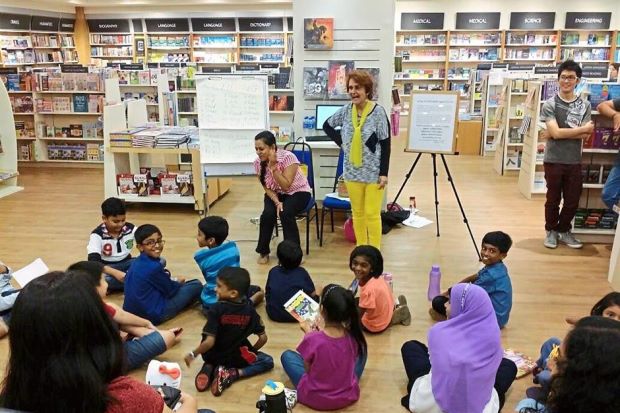
The writer (standing), conducting a session with children who were asked to bring their favourite book.
BOOKworms Penang kick-started its series of reading events for 2015 with who else but the precious young ones aged six to 13. This was our seventh event since our inception in late 2011.
This particular event was held at MPH Bookstore, Gurney Plaza in Penang recently.
The children attended the session accompanied by their parents. Although there was a drop in numbers, I fervently hoped it had nothing to do with a decline in reading interests.
This group, however, proved to be an active bunch! Even the six-year-olds could hardly stop talking about their favourite book(s) and characters! This, amongst themselves even before a proper start!
Each child was asked to bring along their favourite book.
They had to talk a little about it – sharing the best bits and why, their favourite heroes/heroines and the genre of books preferred. I found them all to be so forthcoming and articulate!
The mother of 10-year-old Winson Tan (he attends a Chinese Primary School), said that she started him off with picture books at the age of two and at five, he turned to reading other books.
He now relishes in reading a range – mystery and adventure stories, books with mystical creatures. He completed the Harry Potter series when he was in Year Three.
Another 10-year-old, Pramod Linganathan from SK Batu Lancang shared bits from Diary of a Wimpy Kid.
He finds the book funny and this led him to catch the movie as well.
His parents and friends encourage him to read – now that is a good sign, friends encouraging fellow friends.
He doesn’t like reading eBooks. Seven-year-old Pavitra Pusparajan from Convent Green Lane enjoys Frozen.
She loves Princess Sofia and the beautiful accompanying illustrations.
Six-year-old Paramjit Singh from Trinity Kindergarten enjoys fairy tales – Cinderella, Snow White and the Seven Dwarfs. His heroines are Sofia The First and Amber.
He gets his mother to buy books of his choice.
Haresh Singh, nine, from SK Batu Lancang, likes to read books on pirates.
He finds pirates adventurous and smart enough to find hidden treasures and they have cool names like Jack Sparrow, and even Mr Smith!
A very articulate 10-year-old Darsheena Vengadasan impressed me with her impeccable English when she said in flowing sentences about her love for reading “because it helps me fill up my free time”.
“It also helps me in my studies especially with my vocabulary. It excites me and raises my awareness of what is happening in the stories that I read.”
Darsheena’s favourite comes from the bestselling children’s book series – Geronimo Stilton.
She is basically into the action and adventure genre favoured by most children everywhere.
Before we gave them the little space and time to share, we did a little warm-up quiz on fairy tales to lead them into more related activities later.
In the second half of the session, Suriya, a reading enthusiast and a teacher from Penang Free School who is a core team member of BOOKworms, took the little ones aged six to nine, to spend more time on story-sharing.
She let them do gap-filling (orally), and act out some of the characters in the story.
Meanwhile, the writer conducted reading-related activities of a more challenging nature with the 10 to 13-year-olds.
The activities were timed and therefore competitive in nature.
All winners were given token prizes courtesy of MPH (more books!) and BOOKworms Penang.
The two hours on a lazy Sunday afternoon just whizzed by because the children were so engaged and engrossed in what BOOKworms had prepared for them to further kindle and sustain their interest in reading.
It is our passion that helps make things happen! So, listen to what the children have to say – READ! It’s good for you.
ST. JOSEPH – “That’s the best bedtime of the month, the day they get their Imagination Library book.”
Jessica Johnson clearly remembers the comment.
It’s from a parent whose child was enrolled in the Dolly Parton’s Imagination Library program.
The program distributes age-appropriate books to kids from birth to age 5 to promote literacy, and it will distribute its 1 millionth book this month.
Johnson is the marketing and communications manager for United Way of Central Minnesota, which has made Imagination Library one of its best-known programs. The local program — the 13th-largest in the world — is in its 10th year.
Dolly Parton even recorded a congratulatory message to participants, organizers and donors.
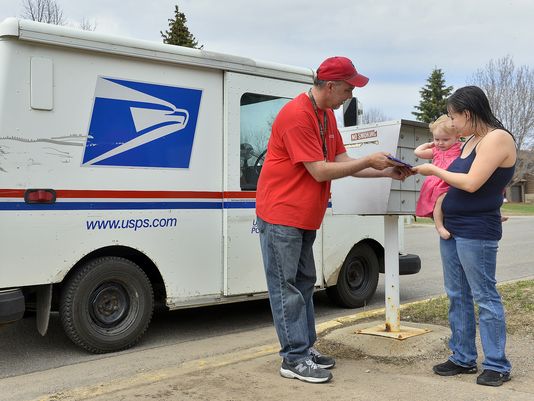
On Thursday, organizers traveled to St. Joseph to celebrate the milestone, following a book from post office to a waiting family.
St. Joseph Postmaster Tony Terwey is also the father of four kids, ages 3 through 8, who participated in the program.
He said the program is important because it fosters a love of reading and stories in kids, something he witnessed firsthand.
“It’s fun to see the excitement,” he said about kids receiving their packages.
Terwey estimates the St. Joseph post office sees close to 200 book packages a month.
“It’s far more reaching than someone just making a donation to the United Way,” he said. “It makes a greater impact than is known.”
The program is free for any child and doesn’t have any income requirements. Each child can be signed up individually.
If enrolled at birth, a child will get 60 books by the time they enter kindergarten — from “The Little Engine That Could” to “Look Out Kindergarten Here I Come.”
“If we can get kids inspired to read, and they learn to love to read, they’re better off in school, better prepared for kindergarten,” Johnson said. United Way hopes that sets up kids to be successful later in life.
Story continues below.
The books arrive in the mail, addressed to the child, something that gives the child pride of ownership.
And the books have reading tips for parents, which encourage literacy, comprehension and creativity.
Imagination Library selects the books, which can sometimes get a family outside its comfort zone. A child might receive a book the family wouldn’t have bought for the child and ends up loving it.
•Since the program began in February 2005, more than 28,000 local children have received free books. That’s equal to the populations of Sartell and Sauk Rapids combined.
•United Way of Central Minnesota is the 13th largest of 1,400Imagination Library affiliates across the United States, Canada, United Kingdom and Australia.
•The program currently costs our local United Way more than $200,000 per year, or about $30 per child enrolled. It’s funded by individual donations, grants, foundations, corporate sponsorships and special event fundraising.
•A recent study from local Imagination Library parents said 94 percent of parents noted their children asked to be read to more because of the program.
•83 percent of local Imagination Library parents agreed they read more to their children because of the program.
•66 percent of age-eligible children are enrolled in the program locally.
•The total number of children enrolled in 2014 was 10,475, or enough for 140 full-size school buses.
•85 percent of brain development happens before age 3.
•If enrolled at birth, a child receives 60 free books.
•At 1 million, the program has mailed more books than the Great River Regional Library’s 32 locations have in circulation.
However, with the current focus on tests and scores even at pre-K, kindergarten and first-grade levels, the tendency is to care more about ability than enjoyment.
The truth is, for most part, they are coupled together.
As former classroom teachers, we recognize how reading for pleasure builds not only reading skills but also leads to personal development. Our research has only confirmed this belief.
Children are not reading for pleasure
We know a large number of kids are unable to reach the basic proficiency level in reading.
Pressures of testing have not helped. Instead, they have taken the joy out of reading.
Over the last 13 years, there has been an increase in the number of states that have enacted legislation on retention (or holding back a year) policies for students who do not meet literacy standards, with 32 states and Washington DC now requiring reading tests in elementary school.
Such pressures haven’t quite helped improve learning. In fact, parents report high anxiety and nervousness levels in their children as a result of testing. These pressures have an impact on teaching as well.
Teachers have been found to teach to the tests, foregoing development of reading comprehension and more holistic reading habits.
Reading for pleasure could actually make a difference. Evidence suggests that kids who are highly engaged with books perform better on school measures, because they learn to enjoy reading.
Make reading a fun, social activity
So, how could we get our kids to enjoy reading?
Here are some ideas based on our survey of reading research on how to get started with young children, new readers and even experienced but disengaged readers.
Making reading a social activity can also help engage young readers. So read with other family members, such as older siblings.
Young readers also enjoy reading the same stories over and over, and referring to characters during the day helps to build connections and literate lives.
For new or disengaged readers, a good place to start is by reading to them at least as much as they read to you.
When they are reading to you, remember that reading aloud at home should be about pleasure rather than accuracy; don’t correct more than a couple of words as they read.
You may also want to make space for them to tell you stories from the pictures; that is an important reading skill too.
Like with young readers, read favorite books over and over again. Repeated readings help readers recognize words quickly and automatically.
Find urgent reasons for reading, like signs, recipes, or directions for putting a toy together.
Remember, all books are good books, even if they don’t seem sophisticated. Kids will get bored and move on eventually.
Work towards reading for pleasure
When children are not reading as might be expected for their grade, it can be really hard on their confidence and identities as readers. It might also lead to concern amongst parents about their child.
In a society that is increasingly being built on an idea-driven economy, at least paying attention and working towards enjoyment and pleasure of reading – not just the ability to read – may help in other areas of social and school life.
So, make reading about enjoyment, not about the technicalities of testing.
One day, you’ll need to speak to children about the birds and bees. We list a few good books that might help out.
Scarborough Mirror
As a parent it seems there will come a day when your little one will ask the question: where do babies come from? Naturally, when the stork answer will no longer pacify your curious youngster it may be time to turn to a few resources to further your child’s education.
1. It’s Not the Stork!: A Book About Girls, Boys, Babies, Bodies, Families and Friends by Robie H. Harris, illustrated by Michael Emberley
2. Mommy Laid an Egg: Or, Where Do Babies Come from? by Babette Cole
3. The Boys Body Book: Everything You Need to Know for Growing Up YOU by Kelli Dunham and Steve Björkman
4. Who Has What?: All About Girls’ Bodies and Boys’ Bodies (Let’s Talk about You and Me) by Robie H. Harris and Nadine Bernard Westcott
5. Amazing You!: Getting Smart About Your Private Parts by Gail Saltz and Lynne Avril Cravath
6. It’s Perfectly Normal: Changing Bodies, Growing Up, Sex, and Sexual Health (The Family Library) by Robie H. Harris and Michael Emberley
7. What’s the Big Secret?: Talking about Sex with Girls and Boys by Laurie Krasny Brown (Author), Marc Brown (Illustrator)
Pilgrim Jones, daughter of hippies and now living in Switzerland, is in a state of grief: her treacherous husband has left her for his pregnant girlfriend. After Pilgrim is involved in a terrible accident, she takes the first flight she sees on the departures board and ends up in Tanzania, where she encounters an assortment of characters: mercenaries, witch doctors, aid workers, and drunks with secrets. There are also two men who have flown from Europe to find her, for very different reasons. Full of empathy and intelligence, this novel is a study of the shame, guilt and despair that can result from nothing more than desperately bad luck. With no shadow of didacticism or propaganda, it explores the nuances of our moral choices in a postcolonial context. The ending is startlingly optimistic and very moving.
In Wilderness
DIANE THOMAS
Shame By Melanie Finn
BANTAM, $32.99
This novel’s badly damaged main characters have sought solitude in the mountain wilderness of the American South, both bewildered as to what is wrong with them and both at the extremity of existence. It’s some time in the late 1960s, and Katherine, a former successful businesswoman, is unable to digest food and has been told she is dying by doctors who can’t tell her why, though perceptive readers will quickly realise that she has developed multiple chemical allergies. Danny is a very young Vietnam veteran with a bad case of PTSD, another condition that hasn’t yet been identified. Danny has come to hide, Katherine has come to die. But they meet and quickly find themselves in a state of intense erotic co-dependency. This is the best account of a woman in a state of sexual obsession that I have ever read.
The Faithful Couple
A.D. MILLER
LITTLE, BROWN, $29.99
A.D. Miller’s Snowdrops was a success, making it as far up the ladder as the shortlist of the 2011 Man Booker Prize. Metaphors of climbing and competition come easily when discussing his second book, for its subject matter is male friendship and his view of this topic seems queasy and jaded. Neil and Adam’s friendship, born by chance and cemented on a whimsical trip to the US, is poisoned by an encounter on a camping trip that haunts them for years. Both see their friendship in terms of comparison and competition: he’s got more money, I have a better job, his chest is hairier than mine. And both use women as a kind of currency and means of communication between them. Miller is a writer of skill and intelligence but this novel will be rough going for female readers, and probably most male ones.
Prince of Afghanistan
LOUIS NOWRA
ALLEN & UNWIN, $16.99
Louis Nowra’s second book for young adults is a model of traditional storytelling: a dramatic setup followed by a race against danger, hunger and time. Mark is a young Australian soldier in Afghanistan, in fear of his life after a mission goes wrong. He is left to find his way out of enemy territory, in the company of an army dog called Prince whose handler has been killed. The novel is recommended for 14-16 year olds but it still comes as a shock to discover that Mark is barely older than that. This is a particularly good book for that age group, likely to engage reluctant readers – especially boys – with a tale full of action and danger, a hero who hasn’t always been heroic, and an animal story that’s touching without being saccharine. It will also give young adult readers some ideas to chew over about the nature of war.






 The Faithful Couple By A.D. Miller
 In Wilderness By Diane Thomas
 Shame By Melanie Finn