by Stone Marshall | Jan 6, 2016 | Awesome Book News, parent-news |
A group of students were asked what they expect life to look like in ten years, and their predictions ranged from superhuman abilities to world peace.
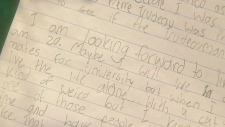
CTV Toronto asked six Grade 4 and 5 students at Brampton’s Thorndale Public School to write a letter to their future selves, describing what they expected in 2026.
“In 2026, I will look forward to take care of my parents. I will take care of my parents because they took good care of me,” 9-year-old Dishanthan Sutharsan read from his letter.
“In 2026, I look forward to being a good student in university.”
Like Dishanthan, many of the students wrote about going off to university and finding a job.
“I would like to graduate with Masters of Management because I want to be a human resources manager,” Pari Sandhu wrote.
“In 10 years, I want to see myself in Harvard University,” Niket Bajwa read.
Though most wrote about school, the children’s letters also touched on what they hope for the world.
“I am hoping in 10 years scientists find a cure for all cancers and diseases. I also home the world is at peace and the world is a better place,” Bajwa wrote.
“When I will have lots of money I will make clothing for the poor people who don’t have clothing,” Simran Bhinder pledged.
Ganeev Singh filled his letter with questions: “Are we safe from guns? Are buildings taller? Can we fly? Is global warming still affecting the world?”
The students also wrote about current issues, like the conflict in Syria, and all wrote about the importance of peace.
Bajwa wrote, “I desire that the war will end and ISIS will be defeated.”
Atheka Jeyatharan said she hopes that “no such thing as war still exists.”
The letters were filled with hope for positive changes in their lives and the world around them.
“I can’t wait to read this letter in 10 years. I will keep my fingers crossed my wishes and goals come true. Sincerely, Atheka.”
From a cure for cancer to the ability to fly, kids make predictions for 2026
by Stone Marshall | Jan 5, 2016 | Awesome Book News, parent-news |
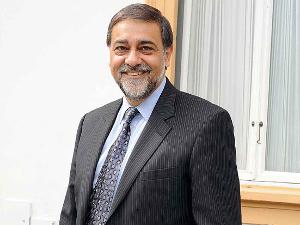
Vivek Wadhwa, an Indian American entrepreneur turned academic, has been called one of the world’s top thinkers on tech policy. Neelam Raaj spoke to the Stanford University fellow on the ongoing controversy over Facebook’s Free Basics plan
What did you think of Mark Zuckerberg’s defence of Free Basics in TOI? Were you convinced by his case for digital equality which cited the example of a farmer named Ganesh, who would be able to access weather information, commodity prices, etc?
Zuckerberg doesn’t realize that Ganesh cherishes the freedom that India gained from its British colonizers in 1947 and doesn’t want a handout from a western company. Ganesh may be poor, but he doesn’t want anyone to dictate what sites he can visit, what movies he may watch, or what applications he can download.
Zuckerberg is right about the benefits of internet access: it will enable village artisans to access global markets; farmers to learn about weather and commodity prices; and labourers and domestic help to find work through sharing-economy applications.
But here is the problem with Free Basics: the internet access on offer is not unrestricted. Facebook and the mobile carriers get to decide what websites people can visit, and Facebook becomes the centre of the internet universe. Zuckerberg compares this limited service to libraries and hospitals. But imagine a private corporation being allowed to decide which books your children could read and which videos they could watch — and to monitor everything that they did. Would you accept that?
The aggressive nature of FB’s campaign in India has surprised many. Will the fate of net neutrality here have a global impact?
This is not an Indian issue; we are fighting these battles in the US. The Federal Communications Commission enacted rules in March 2015 to require broadband providers to treat all data equally rather than provide preference to some sites. A federal appeals court is challenging these rules at the behest of the telecommunications industry.
Google has the same motivations as Facebook — to bring billions more people online. But it is pursuing a more sensible strategy: it is setting up fast and free Wi-Fi internet access points at 400 railroad stations all over India. Facebook could one-up Google by setting up access points at thousands of schools, libraries, and villages. This “no strings attached” approach would earn it gratitude — and signups — rather than resentment.
If the solution to making internet connectivity accessible to everyone isn’t Free Basics, then what is it?
The ultimate solution, unrestricted internet for everyone, is something that Facebook, Google, and others are already working on providing, via drones, balloons, and micro satellites.
With its Aquila Unmanned Aircraft and laser technologies, Facebook has demonstrated the ability to deliver data at a rate of tens of gigabytes per second to a target the size of a coin — from 10 miles away. This is ten times faster than existing land-based technologies. With interconnected drones, it will, within two or three years, most likely be able to provide internet access to the remotest regions of the world.
Google is further ahead in its efforts. Its balloons, called Loons, are essentially floating cell towers that can relay a signal to a mobile device on the ground.
And then there are low-orbit micro satellites, which Oneweb, SpaceX, and now Samsung are building. These beam internet signals by laser to ground stations.
Google is launching Loons in Indonesia and Sri Lanka. It was also supposed to launch them in India, but India’s defence, aviation, and telecom ministries raised technical and security concerns and stopped the project. When the telecom providers figure out that with unlimited, inexpensive internet access, their cell and data businesses will be decimated, they too will place obstacles in the way of these technologies.
This, therefore, is the real battle that Facebook should be fighting. If the goal is to provide everyone with internet access, Facebook and the internet-freedom groups that it is fighting should be working together to lobby for a change in government policies — for when the new space-based technologies are ready.
Which tech advance are you most excited about in 2016?
To start with, let’s look at what happened in 2015. Knowledge became globalized, with one quarter of India’s population gaining access to the internet (this is without Free Basics). And then, the medical revolution got in high gear with inexpensive medical devices that connect to smartphones and incredible breakthroughs in genomics. Just watch over the next few years as our smartphones become doctors.
Most important of all, in 2015, we reached a tipping point in clean energy, with solar and battery storage becoming affordable and practical.
By 2030, all of India will have off-the-grid clean energy and this will be cheaper than cellphone calls. India won’t need the nuclear plants that it is purchasing.
Next up, starting in 2016, we will see amazing advances in robotics, self-driving cars, artificial intelligence, internet of things, and the space race.
‘Imagine a private company deciding what your kids can read or watch’
by Stone Marshall | Jan 5, 2016 | Awesome Book News, parent-news |
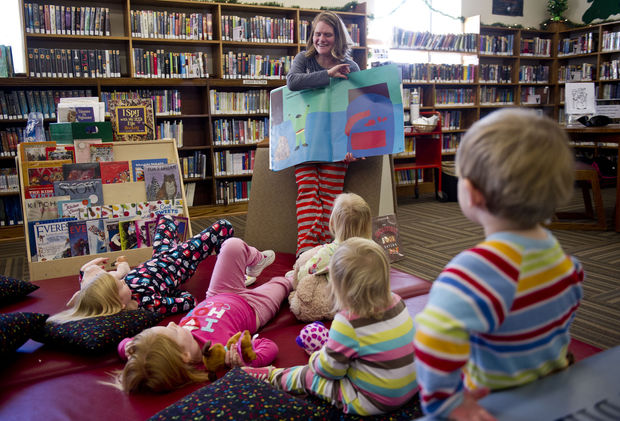
“Now it’s time for story time, story time. Now it’s time for story time, on the red mat!” Library aide and children’s programming organizer Daryl Anne Stangle sang to six kids at the Winona Public library Saturday morning, signaling the start of the story time pajama party.
The six children in attendance, all in comfy pajamas, cheered and rushed to the red mat in the youth fiction room.
On the menu today: “The Incredible Book Eating Boy,” “Snow on Snow on Snow” and “Rabbit’s Pajama Party.”
“Hey, I got that book from the library. It’s pretty silly!” said five-year-old Vera O’Shea of “The Incredible Book Eating Boy.”
Vera and her three sisters, Evie, Mimi and Nora, attend library story times often. “He eats books and that’s crazy, and I like being crazy,” Vera added.
Kids quieted down as Stangle began reading, drawn into a book whose main character literally devours books to become smarter.
“So everything he ate, he learned,” said Stangle to her attentive audience.
Stangle said she organizes Saturday programs for kids not only because she enjoys working with them, but also because she believes public libraries are a vital part of a childhood and the community.
“For me [the library]…was a place I could find answers,” Stangle said. “Kids learn that books do hold answers and worlds they can travel to in their mind. I think that’s really important.”
Vera’s seven-year-old sister Evie, who Vera describes as a “bookworm,” said her favorite part of library story time is being read to.
“I like that we got to pretend to sleep and that I got to snuggle with Piggy,” she said, clutching her stuffed toy pig to her chest. During “Rabbit’s Pajama Party” — an appropriate book for the pajama party occasion — Stangle asked her audience to act out what the characters in the book did. Rabbit gobbled a snack and so did her audience. Rabbit made an ice cream sundae and the kids pretended to put whip cream and a cherry on top.
Although Saturday programs for kids are irregular now, Stangle said she tries to do them every other month. Tuesday and Friday story times for kids occur weekly.
Saturday programs draw anywhere from five to 50 children, Stangle said, while story times during the week draw 20-30 children.
Each Saturday story time is followed by crafts or games. These activities showcase opportunities for children and parents to learn skills beyond reading at their public library, Stangle said.
“Kids learn that books do hold answers and worlds they can travel to in their mind. I think that’s really important.” Daryl Anne Stangle, library aide and children’s programming organizer
Library pajama party: story time holds “answers and worlds” for kids to explore

by StoneMarshall | Nov 8, 2015 | Awesome Book News, parent-news, State of Stone, Stone Marshall Book News |

Starting an email with “Dear Reader” feels lame. I’d rather say, Hello Andrew and Rachel and Ryan and Ava and, well, I think I’m making the point to myself. With each new book, I can’t exactly write an email to every one on the team, but I can reply to each email I receive. I don’t always reply and I’m sorry for that. But I’ll keep trying!
So, as I write this email, I’ll write to my son, Nabru Marshall.
Hi son,
Nice job at the Pokémon tournament on Saturday! No, I can’t play Pokémon now. Why? Because I’m writing you a letter. Let’s play tonight, 8pm, but you’ve got to give me a couple of Megas or else I have no chance. Ok, sure, we’ll build on our Studio Minecraft server for a bit and then play Pokémon.
Should we open the Stone Marshall Studio MC server to our readers? I think it makes sense to do that. They’ll get it. We’ve built the Legends & Heroes world they know from the books. Right, Jesse built most of it, but you’ve got your secret area that only you and your buddies know how to get to. Doh, it’s not a secret area now that I told everybody, but the entrance is still a secret.
How should we open it? We’ve got to keep the world intact. We can’t have Greifers destroying the Kingdom or parts of the Beyond. We can change the game mode to protect it. I think it would be cool to have a certain time each week where we login and create groups (Heroes vs. Legends) and have battles. I’m not sure how to set that up. I wonder if one of our readers knows how to admin an MC server?
You know what else I’d love? To have a reader-created world that we can write stories about. Make it part of our Legends & Heroes series.
Your buddies want me to finish Flynn’s Log 5. Yea, I know. I get email every day from readers, our friends, who want the same thing. I’m working on it. I distracted myself early in the year. We started the Stone Marshall Studio and the Legends & Heroes series to give me more time to write Flynn’s Log and keep up with our friends’ demands for more books, but it backfired. We spent tons of time working out the Legends & Heroes story arc and creating characters and illustrations and the world. And the whole time we left Flynn in limbo.
I need to tell you about Flynn.
What’s taking so long? Yikes, that’s a tough question. I love Flynn, but his mind is a bit mixed up right now. He doesn’t realize what’s really happening. So I’m trying to help him, but he’s not listening to me. He’s only listening to Zana.
Why don’t I tell Zana what to do, you ask? Right, have you tried talking to Zana? She’s way too logical. I can’t get anything past her. I try to explain “life” to her and she destroys my logic. I use the definition of life and she tells me how her version of life is more accurate. I can’t convince Zana to tell Flynn anything that I want him to hear.
Whose cap did Elle grab in Flynn’s Log 4? Wait just a minute, I’m not giving spoilers here, but I think you know what happened, if you look deep within.
When will the next book be out? If Flynn and Zana cooperate, then we’ll have a Christmas release. Elle is being helpful, but right now I need to listen in on Flynn’s mind. I also need to intercept Zana’s transmissions (her encryption is becoming more difficult to break).
I’ve not yet told you anything about Flynn. That’s because you keep asking questions. Flynn is, well, he’s where we left him. What’s he been doing? We’ll find out soon enough. But, I need to warn you. His emotional state might be unstable. He’s facing some questions that we all face, questions about his very existence and what it all means.
Does he find the answers? No more questions!
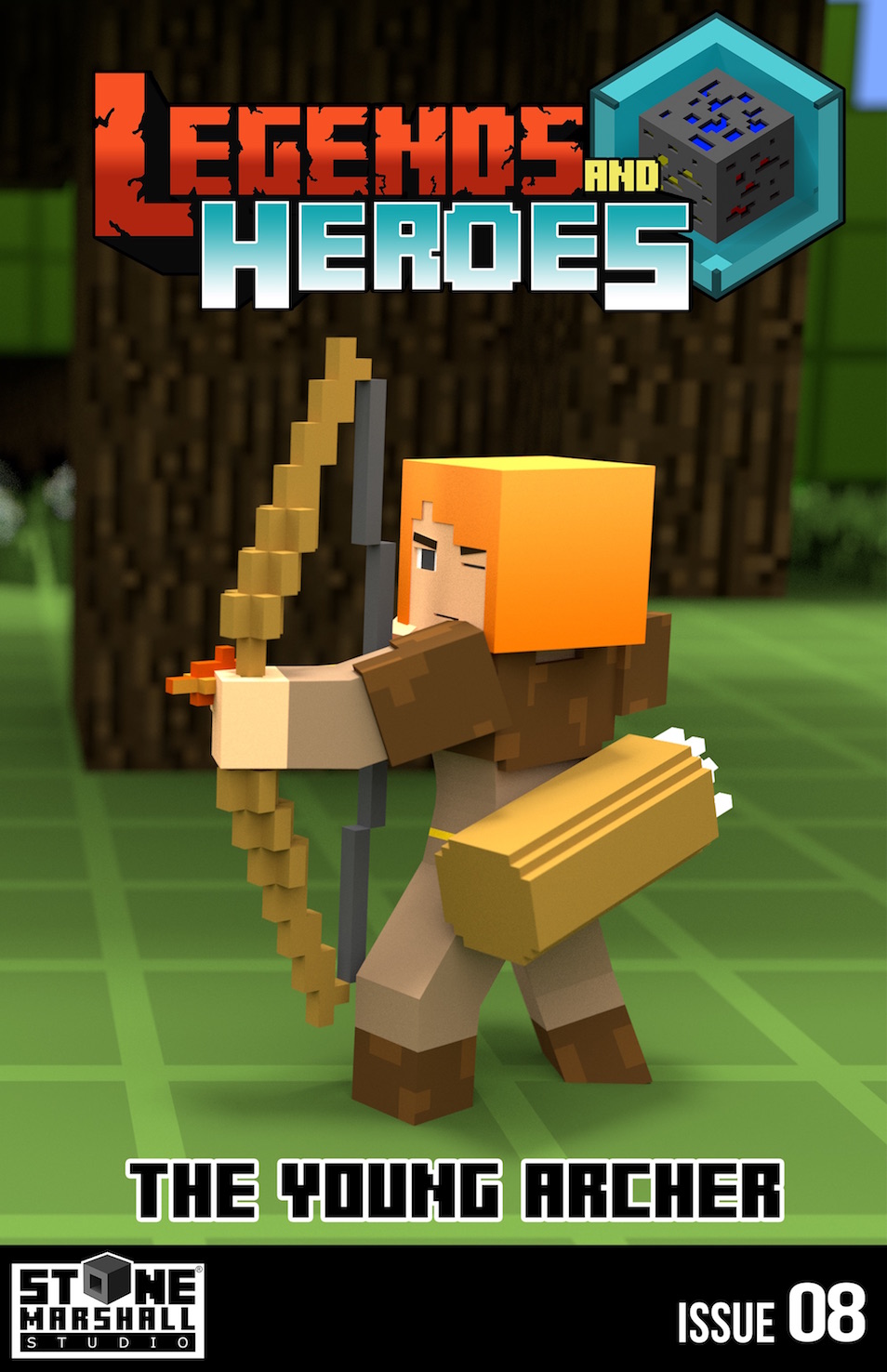
Until then, our friends can read the latest Legends & Heroes issue. Yes, our friends can get free codes for iBooks. I can’t get codes for the other ebook stores, it’s like Apple “gets it” with codes and the others don’t. But I can still get the issue to our friends who read on Kindle, Android, etc., if they know how to load an ebook onto their device.
So, if your friends want the latest issue for free, ask them to email me. If they read iBooks (Apple devices), I’ll send a promo code. If they use another device, I’ll send a link to the file for side loading.
But I need the right information, so be sure they send this to me:
Subject Line of Email: Legends & Heroes Issue 8
Type of eReader: iBooks, Kindle, Google Play, NOOK, Kobo, online, other
Or, if they don’t want the hassle of side loading and don’t mind paying a buck, they can get it here: https://www.stonemarshall.com/l&h0008. Be sure they ask their parents if it’s OK to buy the book and download the file!
With Love,
Dad (Stone Marshall)
by Stone Marshall | Jun 11, 2015 | Minecraft News, parent-news |
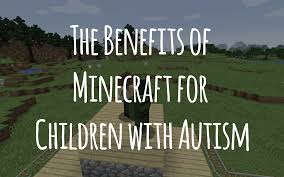
Block building video game Minecraft could help children with autism to interact with others, according to medics.
A speech and language expert from the National Autistic Society said the game could help autistic children improve their communication, concentration and ability to solve problems.
Mum Lisa Taft said her 14-year-old son Donny “struggled with interaction” but enjoyed Minecraft because the game was “never-ending” and relied on “imagination”.
Donny said: “My confidence has now improved… and I’ve made a lot of friends around the world.”
This clip is originally from 5 live Breakfast on Wednesday 10th June 2015.
How the computer game Minecraft can help autism
by Stone Marshall | May 26, 2015 | parent-news |
 Any avid reader knows the worst thing about a good book is finishing it, and understands the curse of the seemingly perpetual hunt for the next fix, the next great read.
Today marks the start of Library and Information Week and the Australian Library and Information Association (ALIA) hopes a list of the top 10 books borrowed at more than 150 Australian libraries across four categories will momentarily ease that burden.
“We’re all interested in what everybody is reading,” said association chief executive Sue McKerracher.
A wide range of genres were borrowed and read by Australians between February and April, with thrillers, crime, humour, fantasy, science fiction, cookery, biography and contemporary literature all getting a look-in.
Advertisement
Ms McKerracher said while it was “slightly disappointing” British and American authors took out the number one spot in all four categories – adult fiction, adult non-fiction, children’s books and young adult fiction – Australian writers feature prominently in all but one group.
“I think we punch above our weight, but it was disappointing in the young adult genre, because we’ve got some fantastic young adult writers in Australia,” she said.
There were only two Australian writers in that category, and Ms McKerracher put the Americans’ dominance down to heavy investment in marketing.
“Clearly, we don’t have that kind of investment available for our writers.”
She was, however, thrilled with the children’s book category, which featured six books by Australians, including two humorous series by dream-team Andy Griffiths and illustrator Terry Denton.
Another book in the pair’s phenomenally popular Treehouse series was awarded Book of the Year at last week’s Australian Book Industry Awards, the first time a children’s book has taken out the top prize.
Meanwhile, adults voraciously consumed popular and critically acclaimed Aussie fiction titles like The Rosie Project, Burial Rites and The Narrow Road to the Deep North, and our obsession with food showed in the non-fiction category with three of Jamie Oliver’s cookbooks making the top 10.
The survey showed print books were still going strong, with e-books borrowed from libraries making up fewer than 5 percent of loans.
Ms McKerracher said the future was hopeful for print, despite earlier fears of its downfall with the arrival of e-readers.
“The feeling now is that, yes, we’re all going digital, but actually print is still a very attractive medium and people are using multiple formats.
“They’ll have an audiobook when they’re in the car, an e-book when they’re going on holiday and a print book when they’re in the bath.”
Ms McKerracher said the lists showed Australians were reading for pleasure, and, unsurprisingly, she reckons that’s a good thing.
“It’s very good for our souls and contributes to our general sense of wellbeing.”
MOST BORROWED ADULT FICTION TITLES
1. Never Go Back by Lee Child
2. The Rosie Project by Graeme Simsion
3. The Gods of Guilt by Michael Connolly
4. Burial Rites by Hannah Kent
5. Eyrie by Tim Winton
6. The Narrow Road to the Deep North by Richard Flanagan
7. Inferno by Dan Brown
8. The Rook by Daniel O’Malley
9. Gone Girl by Gillian Flynn
10. A Wanted Man by Lee Child
MOST BORROWED CHILDREN’S BOOKS
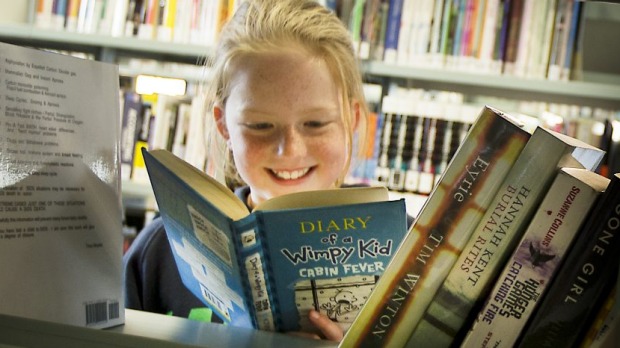
1. Diary of a Wimpy Kid series by Jeff Kinney
2. 13-Storey, 26 Storey and 39-Storey Treehouse by Andy Griffiths and Terry Denton
3. Geronimo and Thea Stilton series by Elisabetta Dami
4. Spot series by Eric Hill
5. The Wrong Book by Nick Bland
6. Just! series by Andy Griffiths and Terry Denton
7. Once by Morris Gleitzman
8. Peck Peck Peck by Lucy Cousins
9. Selby series by Duncan Ball
10. The Boy in the Striped Pyjamas by John Boyne
Libraries to list the most popular books borrowed
