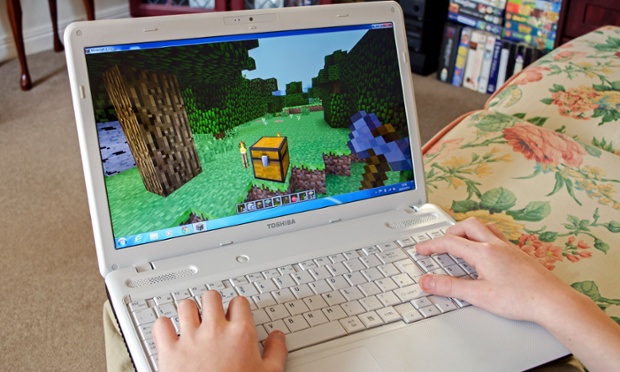
George R. R. Martin is said to have first started writing A Song of Ice and Fire back in 1991, believing that he could tell his story in a trilogy of novels and probably wrap it all up before the start of the Third Millennium. This didn’t quite go to plan, did it? 24 years later and we’re still on book five of seven. Come on George, mate.Speaking to the project lead of WesterosCraft, Jacob Granberry, I realised there was something of a comparison to be made. His initial plan to build the world of Game of Thrones within Minecraft was only supposed to take a year or two at most, and yet almost four years later, he’s still going. His team has grown to include over one hundred active volunteers, but their ambitions seem to have grown alongside them. As I caught up with Jacob over the weekend, I found both Kings Landing and Winterfell being rebuilt from scratch. Those are no small tasks.
Minecraft is one of the most successful video games in the world, with more than 100 million registered users. YouTube is the top video site in the world, with a billion unique visitors a month.
And when combined, they are a staple of today’s tween entertainment diet.
YouTube videos about Minecraft are giant hits, even though the game’s blocky graphics don’t seem to scream excitement. Millions of people watch players narrate while they fly, hike and excavate Minecraft’s virtual world, which is akin to an open world digital Lego set. The Minecraft narrators – often men in their early 20s with effervescent personalities – act as solo tour guides as they build skyscrapers, ships and other structures or engage in battles of survival.
The most popular narrators turn up the entertainment value by bantering with others in the style of a talk-show host. Still, the popularity of this genre can be slightly baffling. After all, children can play Minecraft — why watch others do it?
“It’s super bizarre,” said Mitchell Hughes, 21, a top Minecraft YouTuber who, like his peers in the streaming world, is far better known by his online handle, BajanCanadian. “I don’t even understand it myself.
From Minecraft’s earliest days, the company behind it encouraged people to share video clips on YouTube and other social media sites, seeing it as a potent form of grass-roots marketing. Initially, many of the Minecraft clips were tutorials for newbies to the game. They gradually evolved into their own genre of entertainment — a remix of Saturday morning cartoons, pop culture parodies and pranks.
The videos aren’t exactly “Mad Men,” but they aren’t trying to be ambitious television, either. As with a lot of reality television programming, much of the appeal lies in the emotions of the Minecraft narrators. When one squeals in terror, it seems authentic, whether it is or not.
“I think content beauty is in the eye of the beholder,” said Ryan Wyatt, the global head of content for gaming at YouTube.
YouTube, which is owned by Google, says Minecraft is the most popular game of all time on the site, ahead of Grand Theft Auto and Call of Duty, two major video game franchises. Last year, “Minecraft” was the second most searched term on YouTube, after “Frozen.” The popularity of the game explains why Microsoft paid $2.5 billion last year to acquire Mojang, the Swedish company that created Minecraft in 2009.
“The amazing thing about using this software is you can produce an amazing video every day with big production values,” said Joseph Garrett, a master of the Minecraft YouTube genre who uses the handle Stampy. “If you were doing live action shows that could be done, but it wouldn’t be as easy.”
Mr. Garrett has more than 5.7 million subscribers to his Stampy videos, which have been seen almost 3.5 billion times, placing him just ahead of Lady Gaga in terms of cumulative views. BajanCanadian has 4.8 million subscribers on YouTube and, since he joined the service in 2011, his videos have been watched more than 1.2 billion times.
YouTube has become a lucrative, full-time career for Mr. Hughes and Mr. Garrett, who get a cut of advertising revenue from their videos. Neither would say how much they make — “Billions!” joked Mr. Hughes — but both are making a healthy living off the videos.
Based on publicly available audience numbers and typical advertising rates, Peter Warman, an analyst with the market research firm Newzoo, estimates there are eight to 10 Minecraft YouTubers who earn over $1 million a year.
To get a better grasp on what it takes to be a successful Minecraft YouTuber — and, by extension, better understand what makes the videos so popular — I enlisted the help of YouTube itself, Mr. Hughes and Mr. Garrett. Although the alchemy behind online sensations is as elusive as for any other kind of celebrity, they all shared some basic prerequisites for their stardom.
Have personality, a lot of it
All the top Minecraft YouTubers are extroverts, or at least act like them in the voice-overs for their videos. Mr. Garrett’s Stampy is like a British version of Mr. Rogers after inhaling a bit of helium. As he gambols around a Minecraft map of his own creation, a cluster of buildings, tunnels and landscapes he calls “my lovely world,” Stampy seems to exist in a permanent state of delight.
“It’s a bigger, brighter version of me,” said Mr. Garrett, a former bartender who records his shows from his home in southern England. (To deter stalkers, he won’t give precise details about where he lives.)
The videos on his main YouTube channel are nonscripted, lasting around 20 minutes each. While plenty of Minecraft YouTubers delve into off-color humor, Mr. Garrett, represented in the game as a yellow-and-white cat, keeps his videos clean and cheerful.
“I would never get angry in a video,” he said. “If I lose, it’s, ‘Oh well, maybe next time I’ll do better.’ Everything is positive and happy. It’s the ideal me, living in the ideal world, where nothing ever goes wrong.”
Collaborate with others
Mr. Hughes believes a big reason his videos as BajanCanadian have been so successful is that he records himself playing with friends. Most of the videos consist of Mr. Hughes and a couple of friends exchanging jokes as they play survival games with other online players.
The fraternal chemistry between Mr. Hughes and his buddies seems genuine and keeps his videos from growing dull. Mr. Hughes’s roommate in St. Petersburg, Fla., Jerome Aceti, is a childhood friend with his own large YouTube following under the online name JeromeASF. He makes frequent cameos in BajanCanadian videos.
“Definitely surround yourself with positive influences and friends who are going to be able to motivate and participate in your content,” Mr. Hughes said. “Otherwise it might get lonely. That makes it a lot more fun.”
Some Minecraft YouTube stars, like Mr. Garrett, are mostly solo artists. But even that’s changing with a new Stampy side project called Wonder Quest that Mr. Garrett is creating in partnership with YouTube and Maker Studios, a producer of short online videos owned by Walt Disney. The scripted series has a cast of other YouTubers who voice various characters.
Be consistent
Mr. Wyatt of YouTube said any aspiring YouTube star seeking to build an audience should release new videos on a dependable schedule. Die-hard fans will come to expect fresh episodes, and they will be disappointed if the videos don’t appear.
“Often people get demoralized or complacent and stop doing consistent programming,” Mr. Wyatt said. “Whatever your schedule is, stay consistent to it.”
Mr. Hughes and Mr. Garrett post new videos at least once a day, sometimes multiple times a day. Mr. Garrett says keeping up that pace can be challenging, but it has been worth it.
“My fans love it,” he said. “Most content creators are creating one video every two weeks. I choose to be a little more programmatic about it. That was a big steppingstone for me.”
The world of Minecraft can be a dark and terrifying place…for adults.
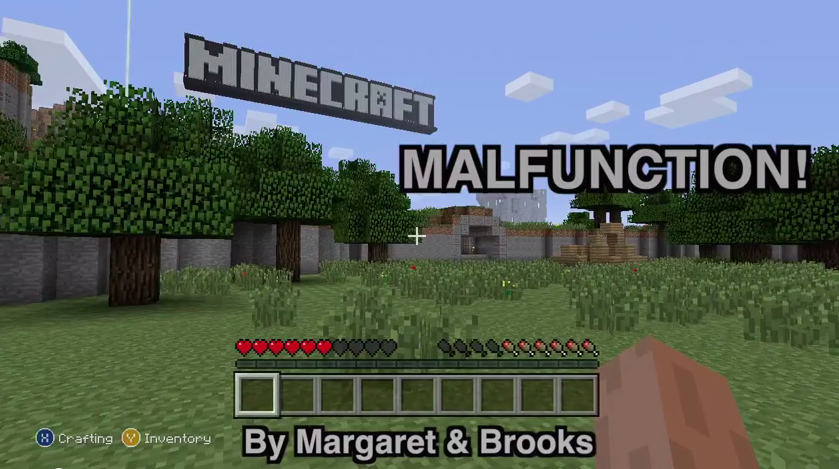
Welcome to Minecraft Malfunction, a new YouTube channel from Seattleites Margaret Chiavetta and Brooks Peck. The pair — she teaches coding to kids and he is the sci-fi curator at Experience Music Project — created the channel when they realized that Minecraft was more than just a game. It was a phenomenon among the younger set.
So they challenged themselves to learn how to play with kids as their instructors.
It’s a fun idea on role reversal: Not only is it hilarious to watch two adults fumble their way through the mystical world — it’s even more fun to hear the kids explain the game to them.
Or, in Chiavetta’s words, “We suck at it, and the kids are hilarious.”
Here we talked to Chiavetta and Peck about their YouTube channel and why Minecraft is such a runaway hit.
Photo via Minecraft Malfunction/Brooks Peck [left] and Margaret Chiavetta
How did you get the idea to do this?Margaret Chiavetta: I’m teaching after-school coding to elementary school kids called Creative Coding 4 Kids. One of the questions we have to ask them in the beginning is “what video games do you play?” They all say Minecraft — boys and girls equally. So we were thinking, “OK, this Minecraft is replacing Harry Potter as this global, cultural phenomenon.”
Brooks and I were looking for a project together and originally thinking of doing a podcast. And that evolved into us playing Minecraft.
Brooks Peck: You notice something that keeps popping up all around you, and for me that was Minecraft. From Margaret’s students and people at work, we saw it was all around us. Margaret had the idea that we try it and find out what was going on.
That’s a big part of it – the fact that you both don’t know how to play, right?
Peck: Right. Arguably, we still don’t.
Chiavetta: We’re actually not playing it on our own on purpose, so we can have the fun of the kids showing us how to play.
Photo via YouTube/Minecraft Malfunction
How far into this Minecraft experiment are you – and how do you find the kids?
Chiavetta: We have 15 episodes up [as of this date], the first 10 are Brooks and me trying to do the tutorial, the next 11 to 15 episodes are playing with my nephew Brayden.
Peck: We play every couple weeks at least. It’s with kids of friends, coworkers, within our network mostly — and we’re always looking for more girls to play the game with us. So far, it’s not be terribly hard. Everyone with kids over 6, they play Minecraft.
What has been the most difficult part of learning Minecraft so far?
Chiavetta: Surviving one night was our biggest challenge. We weren’t building a shelter fast enough. I got distracted that night would come, and I would have to barricade myself and wouldn’t be able to finish the shelter. There was no roof usually.
The first one we made, I accidentally made a step up so a skeleton got inside and killed me. We didn’t survive a night until we got Brayden to help.
Peck: We might as well have left the door open. We’ve been learning about the creatures, but it’s mostly been running in panic in the dark and falling into pits. This happens way more often than it should.
Is there any chance of a Minecraft exhibition at EMP anytime soon?
Peck: We’ve had two different video game exhibitions so far. [Laughs] I wouldn’t rule it out, but I’m not promising anything. We’re always looking for ideas.
The cool thing about Minecraft is that it is transcending video gamers and video game culture and becoming a wider thing, and that is always interesting to me as a curator.
That’s why Minecraft is something parents and kids can enjoy together, yes?
Chiavetta: We’re noticing with kids, 8 or 9 years old, they really want their own YouTube channels. And parents are like, “No, you’re too young.” This is a great compromise for them – they can be on YouTube and not have to maintain their own channel.
Peck: It goes back to the idea that we’re always thinking about ways to get intergenerational conversations into the EMP gallery, and ways to get kids to talk to adults. The art of video games — old games and new games – are great for this kind of dialogue.
Minecraft has great potential for that since it can be so collaborative. It’s not like Facebook. No one sits down as a family and uses Facebook together.
With the recent sale of Minecraft for $2.5 B to Microsoft, the brand is in no danger of losing steam. It’s even expanded into toys, film, and books. Recently, I had the privilege to speak to the author of one of the Minecraft novels on the market, MTV journalist Danica Davidson. Her day job may be covering social justice issues at MTV, but when she comes home at night she authors Minecraft novels. Her first, Escape from the Overworld, is already out in print, ebook, and audiobook formats. She is working on a second novel Attack on the Overworld is in production. Both are available to order at Amazon as well to preorder.
William Wilson– Danica, thank you for speaking with me today. So, how did you get involved with the Minecraft brand?
Danica Davidson– Pleasure’s all mine. I got involved in the Minecraft brand after my publisher suggested I pitch them about it. I’d played Minecraft, I knew Minecraft, I appreciated the versatility of Minecraft … but it had never crossed my mind before that I could write a fictional book about it.
WW– What drew you to the Minecraft Universe originally?
DD– I like how it lets you be creative and make the game what you want it to be. You can have all the swashbuckling adventure you desire, or you can create your own world, or you can spend all your time building whatever your mind comes up with. Or all of the above. For me, it lets me write fun books!
WW– Makes total sense. So, in your opinion, why do you think people love this brand?
DD– I think because it really lets you play. A lot of people have compared it to Legos because of the building aspect, but there’s so much more. For one, the building is endless because you don’t have to buy supplies. You can go on adventures and fight monsters like zombies or skeletons. They have “skins” that let you play as different characters, or create your own. So you can get skins for big franchises like The Simpsons, Halo, My Little Pony, Attack on Titan… or you can make your skin look like yourself (except, you know, blockier). There are portals so you can enter different worlds and there’s a whole Minecraft mythology. I’ve heard parents also say they like their kids playing because Minecraft can be used for everything from teaching reading skills to learning chemistry. Whatever it is, Minecraft has it. It’s also fun to play with groups of people, which is typically how I do it. We take turns building while we hang out and relax.
WW– Can you tell our audience about the first book, and why should they go out and buy it?
DD-11-year-old Stevie lives in the Minecraft world and has been feeling down on himself because he’s not good at building or fighting monsters. He finds a portal to our world and steps out of the computer of an 11-year-old girl named Maison, who’s bullied at school for being different. The two become friends, but because they don’t close the portal, zombies and other monsters from the Minecraft world break through and attack Maison’s school. Stevie and Maison have to put their heads together to save the school and the world from this attack.
People should buy it because it has a number of Minecraft elements and cliffhangers, but it also has things real kids can relate to. I went to my old writing from sixth grade to inspire me, and I put in stuff about bullies, about going to a new school, about feeling like an outsider. From my research, it didn’t look as if girls were getting much representation in Minecraft novels, even though girls love video games, too. So it was important for me to have a character like Maison. She’s smart, strong-willed and talented, and there’s a reason Stevie looks up to her. The book has actually be selected for inclusion in an anti-bullying, girl-empowerment curriculum called Saving Our Cinderellas, and it’s all because of Maison.
WW– Now you’re in the middle of writing a second novel. Can you tell us a little about it?
DD– In the next book, cyberbullies are harassing Maison. She’s become a hero for saving her school in the first book, but the cyberbullies think she knows more about the zombie attack than she lets on. I mean, how do you explain zombies attacking the school? Where did they come from? They hack her computer, realize it’s a portal to the Minecraft world, and start griefing it, turning it to eternal night and unleashing monsters on the villagers. Stevie and Maison have to stop the cyberbullies, but they also have to figure out why they were bullying in the first place.
WW– What was the inspiration for writing the second book?
DD– The first book dealt a lot with bullying — the in-your-face kind. After I wrote it, I kept thinking, I need to talk about cyberbullying. Cyberbullying can get so vicious and attack people of all ages. I get bullied online for my writing — unfortunately, it seems to come with being a journalist — but I’m an adult, and I can ignore it. I can’t imagine what it’s like for kids to face that sort of thing. It also got me thinking about why kids cyberbully others. I do a lot of writing about cyberbullying for MTV, and I took that knowledge to explore this theme in the second book. I’m hoping it can help kids feel less alone and be able to talk about cyberbullying with their parents and teachers.
WW– That’s a really good point, something rarely touched on. Now, when you write, do video games inspire that, or do ideas come from somewhere else?
DD– I’d never thought about writing about video games before this. I’d just sold a manga book and my publisher asked if I had any ideas on Minecraft I could pitch for them to consider. There are a number of adventure Minecraft books out there, I found out, but I wanted to write something that had adventure and important real issues. So I take on bullying, I take on gender roles, I take on universal fears and insecurities. I sent the pitch in through my agent, not knowing what to expect, because it’s not as if the publisher had to take it. They just wanted to see if I had any ideas. But they got back to me almost immediately, wanting me to write the book as soon as possible. They gave me a six week deadline, and I buckled down and got it in while still working full-time for MTV.
WW– How has the videogame industry influenced you outside of writing?
DD– I grew up playing video games as a kid. I do remember — and this is me being a child of the 90s — that there were some games aimed for boys and games aimed for girls on my Sega Genesis. I would play both, but I would be frustrated because the girls’ games I had weren’t challenging at all, as if they expected girls to be bad at playing video games. The games aimed for boys were much more fun, so they were the bulk of the ones I played.
WW– Now apart from Minecraft, what is your favorite video game, and why?
DD– I don’t know about having a favorite, but I still do like to get together with friends and play Mario Party on a pretty regular basis.
WW– How long do you see yourself writing Minecraft novels?
DD– As long as the ideas keep coming and the interest is there. I write novels about things other than Minecraft, but I’m really enjoying how Minecraft has let me build my own book worlds in its universe.
Primary school pupils encouraged to use ‘sandbox’-style game to visualise their dream park, with $8.9m allotted to bring winning design to life
Australia’s next national park could be designed on the video game Minecraft – by primary school children Photograph: Alamy
Parents may be looking for reasons to coax their square-eyed offspring away from the flicker of the computer screen but the South Australian government is taking a more entrepreneurial approach to young gamers.
Australia’s next national park could be designed on the video game Minecraft – and by primary school children – if a new venture by the Adelaide and Mount Lofty Ranges natural resources management board (NRAMLR) goes to plan.
In a move worthy of Leslie Knope from Parks and Recreation, pupils from the Adelaide Hills area have been invited to design their “perfect national park” using the block-building game, with $8.9m allotted to bring the winning student’s design to life, reported the Adelaide website In Daily.
Suggestions for design elements include bushwalking, mountain biking or horse riding trails, wheelchair accessible and interpretive paths, campsites and, for the digital natives out there, geocaches. Entries must incorporate five Minecraft screenshots and a narrated flythrough of no longer than three minutes.
They will be judged on design, real-world usability, and sustainability – the park design must complement the natural environment of the Adelaide and Mount Lofty Ranges and use sustainable materials and resources. Judges will also be looking out for that elusive fun factor and “how amazing we think it is”.
The educational potential of Minecraft is attracting attention worldwide. In March, the CultureTECH innovation festival announced it would be distributing the game free to every secondary school in Northern Ireland. Teachers recently shared creative ways to use the game in the classroom on the Guardian Teacher network.
“It’s a really good thing to get kids using as a positive,” Georgia Gowing of South Australia’s environment department told In Daily. “They do this stuff on a screen and then they get out into a real national park.”
The competition is open to class groups from fourth to seventh grade until 12 June, with shortlisted entries uploaded to the NRAMLR YouTube channel and a winner announced in July. The successful student will win a free trip to Belair national park for his or her class.
The rules state that entrants must use the basic version of the game with no add-ons “to keep it fair and creative”. The board has also published an online consultation for adults – though sadly with no gaming element.
After a series of missteps in video game development, this duo now hosts multi-player servers for the popular game Minecraft.
A two-person company from the small southern French town of Narbonne has unlocked a lucrative revenue stream from a global trend: Minecraft. After a series of missteps in video game development, Starlancer Studios, run by Jacques Vaquier and his business partner, Gregory Jung, now hosts multi-player servers for the immensely popular game.
“I’d spent a good amount of time playing video games. So, I was really motivated to develop video games myself,” Vaquier says, using the French word impassioné, or impassioned, to express his enthusiasm for gaming. Initially, hosting Minecraft servers was only a way to fund his video game development business.
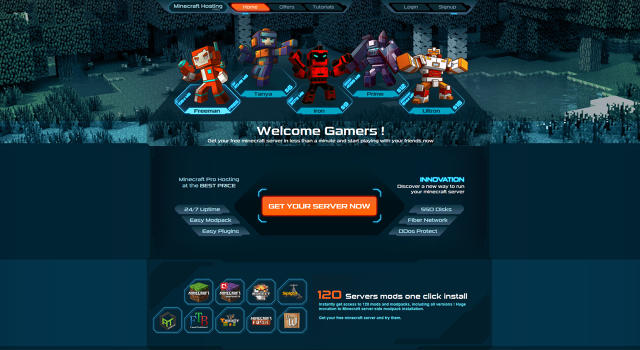
Vaquier’s and Jung’s future English-language site.
Taking advantage of Minecraft’s worldwide success, Vaquier and Jung are expanding Starlancer Studios’ Minecraft operations into North America and the rest of Europe this month. They will launch their new English-language site to promote their Minecraft servers on both sides of the Atlantic, on top of their three-year-old site for the French market.
Minecraft was created by Stockholm-based Mojang, which is now part of Microsoft. At the time I wrote this, Mojang reports there were 19,405,002 paying PC and Mac customers, and the number keeps growing. Known as a “sandbox” video game, its threadbare rules let players wander through virtual realms. The only real imperative is that a new player must gather enough resources to build a shelter by nightfall.
What is Minecraft?
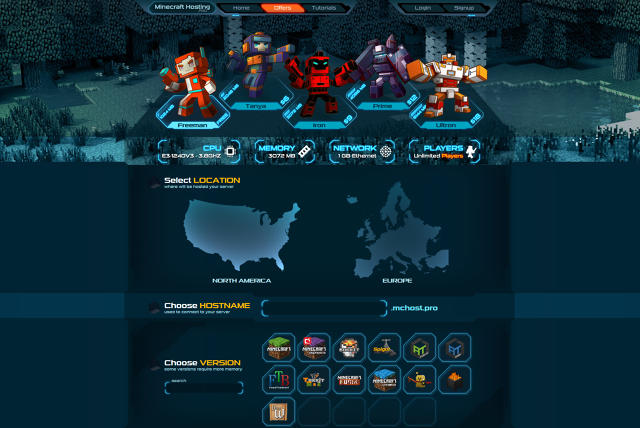
Minecraft servers enable multiple players to play the game together, without requiring people to keep their machines on at all times, or at least whenever their friends want to continue playing. The business opportunity lies in renting server space out to groups of players. And Minecraft isn’t the only game that requires servers for more than one player to play against one another. Games like Call of Duty and Battlefield work under the same principle.
“We have 8,000 servers available to us in a data center in Paris,” Vaquier says. “The value is that they are always online, are reliable, and are stable.” He now has a new partnership with a data center in North America, to serve his new clients with the same dependability.
Minecraft’s Global Takeover
In 2008, Vaquier started developing browser-based video games with a team in Montpellier, France. There, he met Jung, and with their joint investment, they transformed the group’s project into a business. It eventually flopped.
Vaquier and Jung then struck out on their own, forming Starlancer Studios in 2012 and focusing on creating a more intricate browser video game. To raise funds for this effort, they hosted Minecraft servers. Vaquier says that was the same year in which the game “exploded.” When the money started rolling in, the duo decided to make Minecraft the business’s focus.
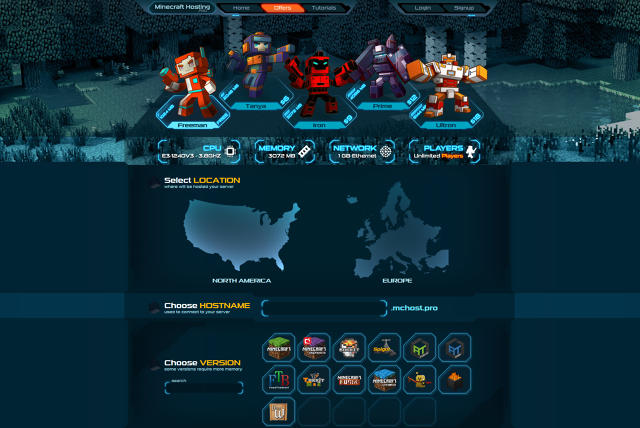
Players use a visual interface to connect to international servers.
Given that Minecraft’s player numbers keep booming, very little may hinder Starlancer Studios’ growth—except for competition from other Minecraft servers. James Copeland, the founder of Canadian-based GGServers, says there are hundreds of thousands of companies offering server space for Minecraft players. Like Vaquier, Copeland is taking advantage of the game’s worldwide user base by renting out servers in eight locations around the world, with 10,000 to 12,000 virtual servers online at any given time.
Currently, Vaquier says, France is the third largest market for multiplayer Minecraft, after the U.S. and Germany. So entering the U.S. was a natural move for Vaquier’s growing company. But after an exhaustive market research study, he devised a careful initial strategy based on offering add-on applications for Minecraft and free server access.
“The U.S. and French markets are really different,” says Vaquier. “France is advanced in that it’s easier for players to find servers at no cost,” adding that running servers in Europe costs less than in the U.S. He’s decided to differentiate his business for the North American market by offering a “sizable amount” of free servers to players, giving them the opportunity to get used to other perks of the service.
According to Vaquier, there are two ways to make a Minecraft server business stand out:
Offer fun extras. In addition to server space, the team develops user interfaces and extra applications, called mods, to enhance the Minecraft-playing experience. Some popular mods let players build a complete Middle Earth or re-create Westeros from Game of Thrones. Vaquier and Jung have developed their own 3-D maps for various Minecraft worlds, as well as a VoIP application that allows players to communicate with other players in real time.
Make interfaces simple. “We make our user interfaces our number-one priority,” says Vaquier. “We want our users to be able to easily sign up for a server, automating as many steps as possible.” He mentions that many of his clients are children and teenagers, aged 8 to 16. They won’t take the time to configure IP addresses on their own.
Now 32, Vaquier says he’ll go back to developing his original video game concept, but there’s too much going on in the Minecraft world to divert resources away from the hosting business. For now, serving the game’s vast base of users is all the opportunity his company needs.





![Photo via Minecraft Malfunction/Brooks Peck [left] and Margaret Chiavetta](https://www.geekwire.com/wp-content/uploads/2015/05/IMG_0211-620x827.jpg)


 WW– Can you tell our audience about the first book, and why should they go out and buy it?
 Arch Enemy Entertainment