
© Nintendo


There are no rules or goals in Minecraft.
“The game is brilliant in a lot of ways,” observed Brian Krebs, a former Washington Post reporter and well-known cybersecurity blogger at KrebsonSecurity.com, talking about the incredibly popular Lego-like video game where players make things out of virtual blocks. “You can build anything and destroy anything. You just make up things as you go along.”
Paras Jha, a Rutgers University computer science major, was apparently a Minecraft devotee, playing the game with others in an on-line world where everyone knows each other by their screen names.
That was before the 21-year-old from Fanwood wrote the computer code that was later used by others in one of the biggest internet attacks of the decade.
The unsealing of federal charges Wednesday against Jha and two other young men in connection with a series of earlier cyber attacks was described by prosecutors in terms most familiar to a computer security expert. The trio, according to the feds, created and operated two “botnets” which targeted “Internet of Things” (IoT) devices, launching a powerful distributed denial-of-service or DDoS attack that crippled web hosting companies across the country.
But essentially what they were doing, according to authorities, was running a sophisticated high-tech protection racket.
Federal prosecutors have not provided much detail into what motivated them. However, investigators and computer security experts say it all may have begun with Minecraft, the game with no rules.
And the muscle they employed was a malicious computer software program they had written. That code was used by others–their identities still unknown–to infect hundreds of thousands of devices connected to the internet in a massive online attack in October 2016 that blocked access to Twitter, Spotify, Netflix, Amazon, Tumblr, Reddit, PayPal and many other popular websites.
No one has been charged in that incident, which came after Jha and others posted their malware on the Dark Web.
New variants of the code, meanwhile, have been picked up recently by cyber security researchers.
Jha, together with Josiah White, 20, of Washington, Pa., and Dalton Norman, 21, of Metairie, La., earlier this month pleaded guilty to creating and operating a network of compromised computers known as “botnets” that were used in a number of attacks on several host servers.
Jha also last week pleaded guilty to a series of separate attacks that took out the Rutgers computer network.
Appearing in court before U.S. District Court Judge Michael Shipp in Trenton, Jha acknowledged his involvement, but offered little more. His attorney, Robert Stahl of Westfield, said “Paras Jha is a brilliant young man whose intellect and technical skills far exceeded his emotional maturity.”
Investigators say Jha was immersed in online gaming culture, and was adept at writing code–the software that controls a computer.

But there is a dark side to cyber gaming. Popular game servers are often targeted for sport. And sometimes, for money.
Krebs, who was the first to link Jha to the cyber attacks and the software that caused them, said there is a lot of money to be made off hosting Minecraft servers. Some in the industry have told him it’s not hard to make $200,000 or more a month.
That did not go unnoticed.
“What started happening in 2013 and 2014 was the biggest Minecraft servers began to come under DDoS attacks,” said Krebs, noting that some of these operations were willing to “pay handsomely to protect them from these type of attacks, which are fairly complicated.”
Distributed denial-of-service, or DDoS attacks involve the hijacking of hundreds of computers, which are used to flood the internet connection of a targeted server or computers. Such an attack generates a barrage of so many fake requests for information that the server typically crashes under the assault.
“It only takes a while for some of these servers to be off line before someone says ‘screw it, I’ll find someplace else that doesn’t have problems,'” Krebs noted.
Jha was one of those who created a business offering his services to companies hosting Minecraft servers, to protect against DDoS attacks, said Krebs.
According to court filings, however, Jha had also created a botnet–a collection of hijacked computers that were infected with malware software used to launch the kind of distributed denial-of-service attacks that were plaguing many of the Minecraft game servers.
However, the targets of the worm Jha and others used to create the botnet was something that had not been seen before, according to the Justice Department. It burrowed into non-traditional computing devices connected to the internet, such as wireless cameras, home routers, and digital video recorders, the so-called “Internet of Things.”
“Some of these devices have no way to change default passwords,” noted Adam Alexander, an assistant U.S. attorney for the District of Alaska, where the hidden controlling software corrupting the internet-connected things was first discovered.
The authors of the botnet called it Mirai, named after a popular character in Japanese anime, according to FBI case agents who said the three were fans. The Justice Department said the Mirai botnet, at its peak, was made up of hundreds of thousands of compromised devices.
“Once they built the botnet, they sought to make money by renting it or extorting companies for money,” said William Fitzpatrick, the acting U.S. Attorney in New Jersey, where the botnet repeatedly hit the computer network at Rutgers University.
According to the government, Jha ran Mirai on computers from his family home in Fanwood.
Beginning in the summer of 2016, Mirai was deployed to conduct attacks against a number of game servers and hosting companies. Prosecutors said Jha contacted one company and demanded payment in exchange for halting the attack. They said he also bragged about his exploits using monikers such as “ormemes” and “Anna Senpai” on discussion boards, soliciting clients.
That bravado also served to unmask him.
Krebs began a deep dive into the Mirai botnet after his own site was forced offline by a DDoS attack for nearly four days.
Krebs tied to the malware to Jha earlier this year, publicly naming him after linking him to Anna-Senpai. But he believes the FBI already knew much of what he posted.
Indeed, when NJ Advance Media knocked on Jha’s door back in January after the Krebs post, his father said the FBI had interviewed his son, but denied he had any knowledge of the attacks.
In addition to those attacks, prosecutors said Jha and Norman made money with software that duped on-line advertisers.
“They build a botnet to commit click fraud,” said Fitzpatrick.
Click fraud is a scheme to artificially pump up the number of “clicks” on a particular website, to increase advertising revenue generally based on how many times someone clicks on a page. In Jha’s plea agreement, prosecutors said the student leased access to his click fraud botnet in exchange for payment.
“Because the victim activity resembled legitimate view of these websites, the activity generated fraudulent profits through the sites hosting the advertising content, at the expense of the on-line advertising companies,” noted the court filing.
That scam netted Jha and others 100 bitcoin, valued at the time at more than $180,000, said prosecutors.
Closer to home, even before those attacks, Jha admitted he had initiated DDoS attacks on the computer network at Rutgers University, where he was then studying.

In 2014, the university first began to get hit with a series of denial-of-service attacks that crashed Rutgers’ websites and cut off Internet and Wi-Fi access to tens of thousands of students, faculty and employees. The university, which had announced it planned to spend $3 million to upgrade its computer security system, was taunted by someone on Twitter using the screen name “exfocus.”
“where internet go?? 3m dollar gone?” asked one tweet.
In a courtroom in Trenton on Wednesday, Jha, who is no longer at Rutgers, admitted that he was “exfocus.” And he said he timed the attack during midterms when it would cause the most disruption.
He did not say why.
Prosecutors said toward the end of the scheme, Jha took steps to conceal his role in the Mirai botnet.
In September 2016, the government said he erased the files on his home computer and then posted the Mirai code online, “in order to create plausible deniability if law enforcement found the code on computers controlled by Jha or his co-conspirators.”
The following month, other hackers took the Mirai code and launched a massive cyber attack that crippled much of the internet, crashing Twitter, Netflix and other websites.
Who they are remains a mystery.
All three men have pleaded guilty in the District of Alaska to charges of conspiracy to violate the Computer Fraud & Abuse Act in operating the Mirai Botnet.
Jha pleaded separately in New Jersey to launching the cyber attack on the Rutgers University computer network.
He is to be sentenced in March.
How a Rutgers student went from Minecraft to internet warfare

Minecraft is a game that most people certainly have heard of. If you do not know about the game, ask a child who will likely to give a very enthusiastic response that can last up to several minutes (or hours depending on the child). As of the time I wrote this article, Minecraft was the No. 1 best-selling PC game in history. Minecraft has been so successful that it caught the attention of Microsoft, which purchased the game as well as the founding company, Mojang, in 2014.
I first heard about Minecraft about three years ago when numerous students in my class constantly talked about it. Hearing about this game so annoyed me that I wanted nothing to do with it. The concept of Minecraft sounded confusing to me, and I could not figure out why it was such a popular game with children. About a year after I first heard about it, I caved in and bought the game to check it out. As the saying goes: “curiosity killed the cat.” It definitely killed my skepticism about the game, and I became hooked within just a couple days. One night I played Minecraft so intensely that it was 1 a.m. before I realized it.
For those who don’t know about Minecraft, it is an open-world concept game where players can build, mine, fly, explore and do just about anything their heart desires. Players can be in creative mode, which allows them to build with unlimited blocks and fly around the world they are in. They also can be in survival mode, where they create weapons using materials they find; obtain food by hunting animals and planting gardens; and build an appropriate shelter to protect themselves from monsters that are ready to attack or blow up the players. Minecraft is available in multiplayer mode so numerous people can build in the same world at the same time.
Parents and teachers need to be in tune with what children are engaged in and find ways to use it as an educational tool. Minecraft is one of the rare games that can be used in every classroom subject and beyond. Children are still fascinated with the game, so this is our chance to capitalize on it and use it to our advantage.
Here are some ideas for you to use Minecraft with your children or students:
–Math and Minecraft go hand in hand in several ways.
One, it is very easy to integrate area and perimeter in the game. Have the child build something with a square shape in Minecraft, and after they are done they can count the blocks on each side and calculate the area and perimeter. For older elementary and junior high children, integrate volume as well and have them find the answer. Each block in Minecraft is one meter long, wide, and high. Older students can calculate the exact area and perimeter using that information.
Another topic that usually is introduced in fifth grade is finding the area of composite shapes. A teacher approached me and told me that her students were not doing well in this topic, so I taught it using Minecraft to see how the students would respond. As I broke the composite shape down into two different shapes using different blocks, it clicked for the class. Students’ scores in this topic went up dramatically, and it was all because of the game.
–You can use Minecraft in science by allowing students to be creative.
If younger students are having a difficult time understanding ecosystems, there is a world that can be downloaded that introduces different habitats. For older students who are learning about the respiratory system, download a world where students can explore how air travels down the trachea to the lungs and ultimately to the blood.
If you google the subject you are looking, for followed by “Minecraft world,” there’s a good chance that a world already has been made.
–Reading and Minecraft work very well together, believe it or not.
You can have the child recreate a scene from a book they are reading and have them act out what they have read so far. You can also have them place signs in order and have them type the sequence of events in the story. Signs have many uses, such as creating a story and having the child read it out loud. They also can be very helpful with comprehension, phonics or any other topic the child is not doing well in.
–Minecraft can also be used in social studies, foreign languages or art.
You can show the child a building from the 1700s and have them recreate it by using the features being studied. Signs can also be used to label different parts in a house in the language they are learning. In art, students can recreate a painting to the best of their ability to identify shading, tint and more.
Minecraft can even be used as an assessment tool. You can get real creative and make rooms with four doors as the answer choices. Place the question on a sign on the side of the room, then place chests behind each door. The right answer choice can have food of some sort, while the wrong answer choice can have rotten flesh.
These are just a few ideas on how Minecraft can be tailored to the needs of the child to increase learning in whatever subject is being taught. This game has the amazing power of immediately engaging students, so I challenge you today to help your children or students by implementing ideas such as this to bring learning to their level. A big thing holding us back is fear, so for the sake of the children, let’s get out of our comfort bubble and do what’s best for them.
D.J. Rambo teaches technology at Pease Communications and Technology Academy.
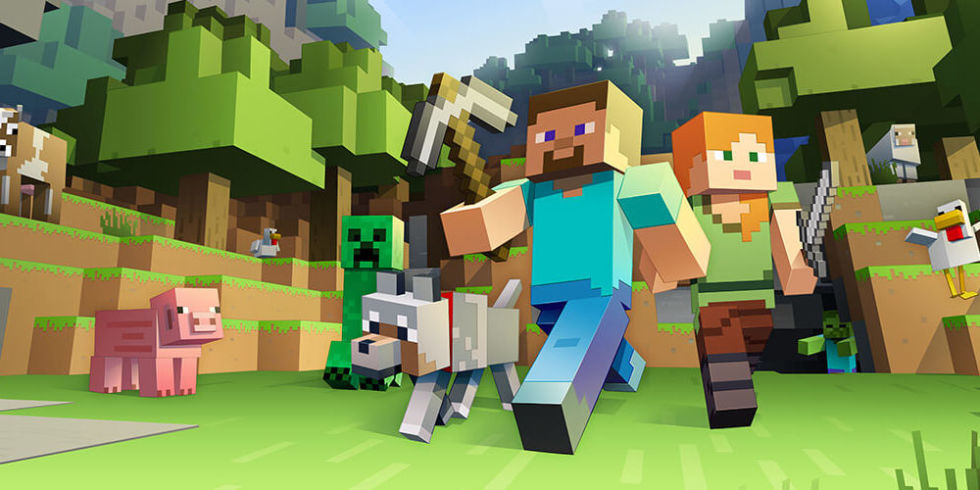
A primary school in Cambridgeshire is using Minecraft in the classroom to teach pupils all about history.
According to the BBC, the children at Haslingfield School have been playing the popular computer game to design a Bronze Age city which has helped them to learn more about yesteryear.
The school has also been assisted by a group of experts from the University of Cambridge in order to design the city accurately.
The game, which ultimately allows players to build with a variety of different cubes in a 3D procedurally-generated world, has gained much success since it was first developed back in 2009.
Although the demo is free, it actually costs to pay and many more editions have been released since.
Earlier this year, the Nintendo Switch partnered up with the game to create Minecraft: Nintendo Switch Edition.
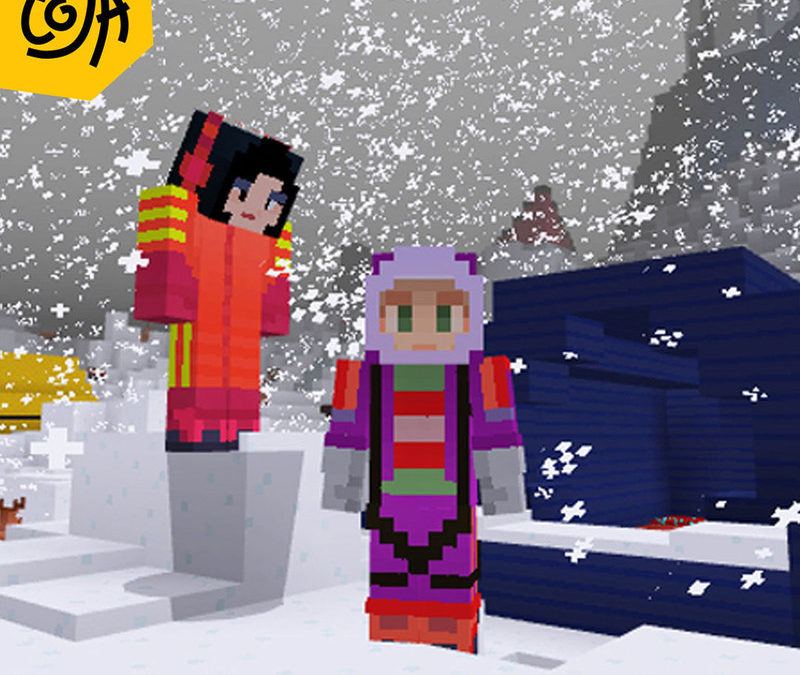
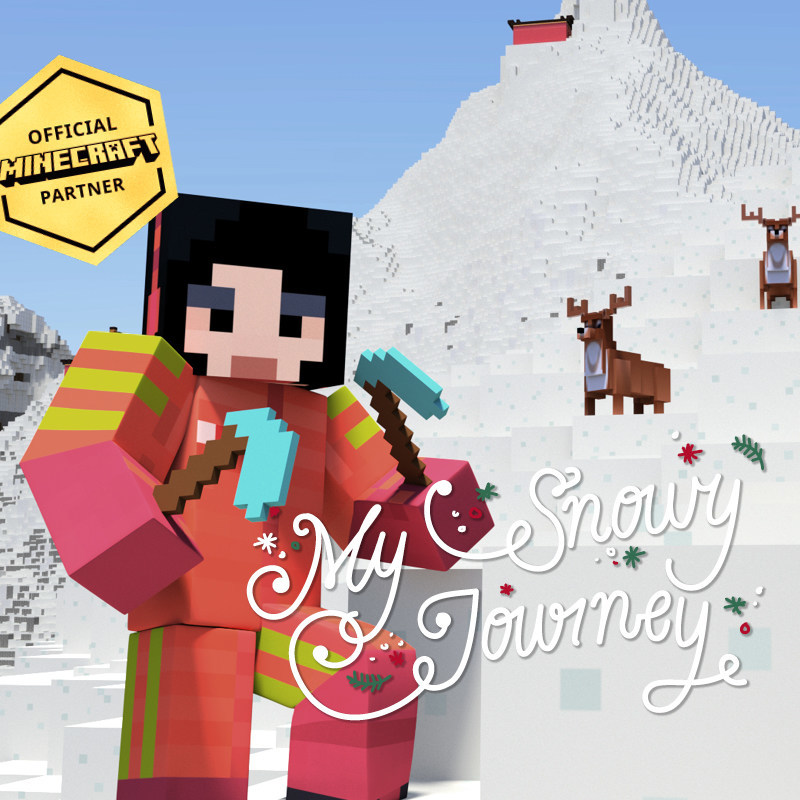
TEL AVIV, Israel, Dec. 22, 2017 /PRNewswire/ — Just in time for Christmas, there’s a new Minecraft game from the Israeli start-up company TOYA, which develops games for girl-empowerment. “My Snowy Journey” is an awe-inspiring trip up Mt. Everest where players follow in the footsteps of and are assisted by the first woman ever to reach the summit, Japanese climber Junko Tabei.
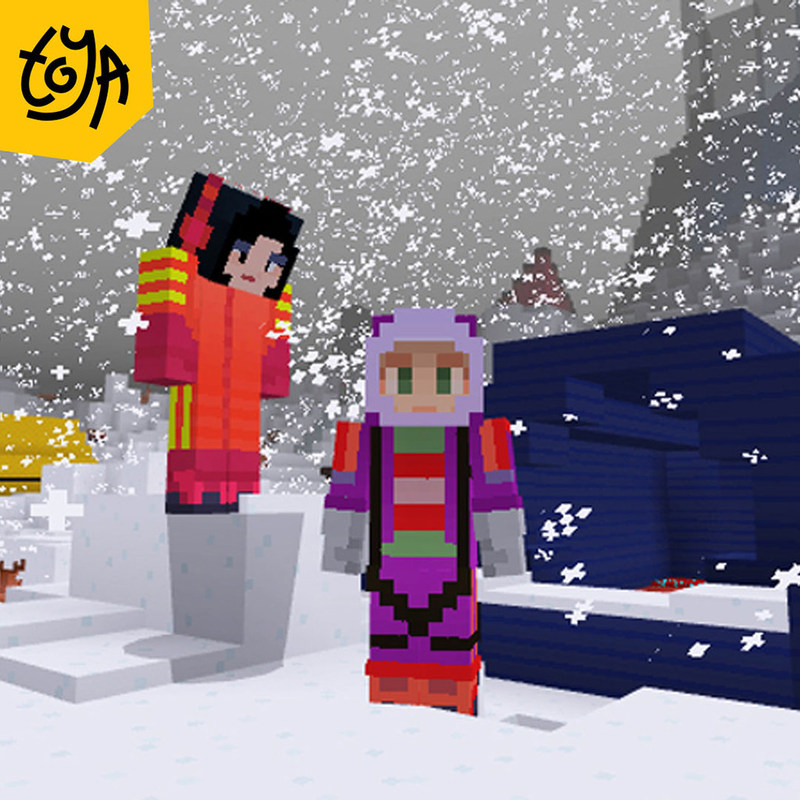
“Junko Tabei was an amazing woman,” said TOYA CEO Anat Shperling. “Although at the start of her career she had no help from her government or male mountaineers, she climbed not only Mt. Everest but the Seven Summit peaks – the highest mountains on seven continents.”
“As a role model for the millions of gamers playing Minecraft, especially girls, Junko is very special. She did things her own way, resisting and overcoming all obstacles. We were inspired by her personal passion for climbing, and created a game that enables you to climb Mt. Everest while experiencing fun and challenging gameplay.”
“My Snowy Journey” takes players up the mountain through a series of challenges, including three giant ice walls that increase in difficulty. With tools and the help of Whysa, a rather unpredictable old lady who appears in every TOYA game, gamers interact with Junko and each other as they climb to the top – where, like real mountaineers, they can leave their own permanent messages. The game is available for purchase at http://bit.ly/2Bv1PNW
“Making Everest look like its gigantic self, while not intimidating young gamers, was a design challenge we had to overcome,” said Yifat Anzelevich, TOYA’s COO. “We wanted girls to experience the immense, icy world of Everest while understanding how Junko’s personal approach of not being intimidated by the mountain was what enabled her to master it!”
TOYA was founded by Shperling and Anzelevich, women entrepreneurs, to create a brand of digital games and media designed to inspire and motivate young girls to realize their full potential, and expose boys to the accomplishments of women who changed our world. The small start-up is developing new Minecraft games designed to be an alternative to the typical “pink” games about fashion, pets and homecare targeted to grade-school-age girls.
The games are important for boys, too: research indicates that there is only one female for every five male characters in video games, and 76% of solo video game heroes are male, despite the fact that half of online gamers are female. The Minecraft games’ playful learning experience enables gamers to become explorers, adventurers and all sorts of heroes through experiencing the accomplishments of exceptional women from around the world. The company’s first Minecraft game, inspired by the work of renowned gorilla researcher Dian Fossey, was released in November.
“My Snowy Journey” will be featured on Microsoft’s “12 Days of Minecraft” and its skin pack will be available to play for free on December 29th. The game will be available for purchase starting December 19th. Toya is one of Microsoft’s few Minecraft content-creator partners and is the only one developing games that focus on phenomenal women achievers around the world. Most of the games include subtle encouragement for players to develop and use STEM skills, from understanding animal biology to figuring out the geology of mountain-climbing.
Minecraft itself is a gaming phenomenon, with a user base of more than 130 million gamers around the world, 40% of whom are female. The game’s popularity is rooted in its creative, non-violent approach, and in its graphics, both the users and their surroundings are made out of blocks, allowing unlimited choices in representation and creating new worlds.
“From the textures and colors of this game to the ability to join an online “community” of gamers who have completed the game successfully, ‘My Snowy Journey’ is a unique addition to the Minecraft universe,” Shperling said. “It’s another landmark for the TOYA approach: fun and interesting but with the serious purpose of empowering girls around the world.”
In 2018, TOYA will release a series of adventure games inspired by extraordinary women from Brazil, Egypt, the UK and Japan, and is expected to expand its content to linear media as well.
Media Contact:
Anat Shperling
972537728870
187910@email4pr.com
SOURCE TOYA
Climb a Mountain for Christmas: TOYA Releases “My Snowy Journey” on Minecraft Marketplace

Star Wars: The Last Jedi has lit the internet up with both praise and critique, an overflow of love and hate. It’s actually pretty poetic, considering a theme of the movie is about finding a balance between light and dark. As the debate continues a large petition circulating online right now focuses on Luke’s actions and argues the portrayal of the Jedi is so horrid, Disney should scrap the record-breaking box office hit from the official canon and completely redo the story. These people are wrong.

WARNING: Full The Last Jedi spoilers ahead. Read at your own risk.
The crux of the argument for the petition is that The Last Jedi depicted Luke Skywalker, and therefore the entire Jedi order, as less than pure good. “ It completely destroyed the legacy of Luke Skywalker and the Jedi. It destroyed the very reasons most of us, as fans, liked Star Wars,” the petition argues. “[R]e-make Episode VIII properly to redeem Luke Skywalker’s legacy, integrity, and character.”
The problem, if you haven’t seen the movie and are still reading this article, is Luke attempted to kill Ben Solo back when he was training his young nephew. Luke’s justification for this move is because he saw the evil lurking in Solo, and wanted to eradicate it before it could spread. Ironically, Skywalker’s actions further fueled Solo’s quest for power and was the driving reason for Solo to turn into his alter ego Kylo Ren.
If that moment felt off to you, like Luke was abandoning the ways of the Jedi and becoming evil, then congratulations. That’s how you’re supposed to feel. Luke even feels this, which is why he decided to run away to a small corner of the galaxy and hide for the rest of his life. He knew he did something wrong, and couldn’t face the repercussions of his actions, especially from Han and Leia.
This point is driven home even further when Rey shows up, asking what happened to the legendary Luke Skywalker. The rebellion is failing and the Ultimate Hero is needed once again to come save the day. However, Luke knows he isn’t what people want him to be. He can’t be the force of pure good people think he is, because of his actions in the past. He’s flawed, he’s human.
If this makes you stop and look critically at who your heroes are, that’s a good thing. Allegations against many notable people like Louis C.K., Al Franken and Matt Lauer have made us rethink if those we look up to should be put on pedestals and trumpeted as our favorites.
The petition ends with the line “let us keep our heroes.” Maybe our heroes know they have reason to not be seen as such. Maybe it’s time to make some new heroes.
So what do you think? Are you still upset with what The Last Jedi did to Luke Skywalker? Do you like the flawed portrayal of a man who is capable of error? Let us know your thoughts in the comments section below, but please keep it civil.
Movie releases and casual mobile games seem to go hand in hand these days, so it’s no surprise the new Jumanji: Welcome to the Jungle film has a companion mobile game. In my experience, the majority of movie-themed mobile games turn out to be uninspired money grabs, so I went into Jumanji with some tacit eye-rolling. However, after spending a little time with the game, I was happy to discover it isn’t half bad. In fact, once I got a handle on the rules, it became downright fun..

The best way I can describe Jumanji: The Mobile Game is a mashup of Monopoly and Hearthstone, but simpler. While the combination may sound terrible, it actually comes off quite well in Jumanji. The game board consists of 12 spaces. 10 of them are like Monopoly properties you can purchase and then set up camp. Each time you pass START, you’ll earn income off these properties, so acquiring as many as you can becomes a central goal. The other two spaces are special features, similar to the corners in Monopoly. These change as the game progresses. Sometimes they are punitive and landing on them will cause you to be imprisoned and miss a turn. Others can give you boosts like gold coins or the ability to move to any spot you choose on the board.
Like Monopoly, the object of the game is to monopolize the board, forcing your opponent into bankruptcy. What makes Jumanji ingenious, however, is that it solves a major Monopoly gameplay problem that puts many people off. When you first start playing Monopoly, it can be fun, but once a player has gained control of the board, the outcome is unavoidable and inevitable. If you are the loser, you’ll be subjected to hours of tedious torture as your opponent slowly bleeds you dry of your resources.

Jumanji solves this problem by offering more options for what can happen when you land on an opponent’s property. Players have the option to pay a toll or attack the other player. If they choose to attack (which everyone pretty much does), then players move to an RPG-style dice battle. If your attack is higher than your opponent’s defense score, you win the fight and with it, not only steal that player’s property, but also some of his or her gold.
But the battle isn’t solely dependant on the toss of a dice. In fact, attacks are where the Hearthstone -like CCG elements come into play. Going into a game, each player takes with them a deck of six cards. These cards make up your team and each have varying amounts of attack and defense points, as well as special skills. When you purchase a property, its base defense level is the same as your team’s combined defense points. In the same way, when you make an attack, your base attack is equal to the combined attack points of your team. When an attack occurs, your base points are added to your dice roll and whichever player’s total is higher wins the match. When a game ends, whichever player wins will be awarded a backpack full of resources, including new cards you can unlock or duplicates used for upgrading cards.

In the first stage of Jumanji, this is as complex as the rules get, but Stage 2 introduces to skills, which add a greater element of strategy to the game. Each card in your deck comes with a particular skill that is either passive or active. Passive skills go into action under certain conditions (ex: increase defense by 1 during the day), while active skills can only be used once during a game. These include everything from destroying an opponent’s base to stealing coins and more. Some of these skills prove quite useful and become a key factor in putting together your team. You also get to choose one of four heroes for your game, each with a starting perk like additional coins or heightened attack scores.
Since Jumanji is meant to be played in five to 15 minutes, the developers have added two additional ways of winning the game if you can’t manage to bankrupt your opponent. 1) Gain control of all properties in a set, creating a monopoly or 2) have the most money at the end of 12 rounds.
My biggest complaint with Jumanji is the opening tutorial lacked information about how to play and the strategy behind the game, which could be off-putting to new players. If you stick in there though, you’ll soon discover that Jumanji is a satisfying online multiplayer game. If you enjoy casual games that combine both luck and strategy this one is worth checking out. You can download Jumanji now for free on either the Apple App or Google Play store.