Minecraft wasn’t always the enormous franchise that it has become. It has slowly been building in popularity since its creator, Markus Persson, released the game in 2009. So, what is it about this independently created game that made it endure over time?
Microsoft’s ownership of “Minecraft” has made for some decidedly strange situations.
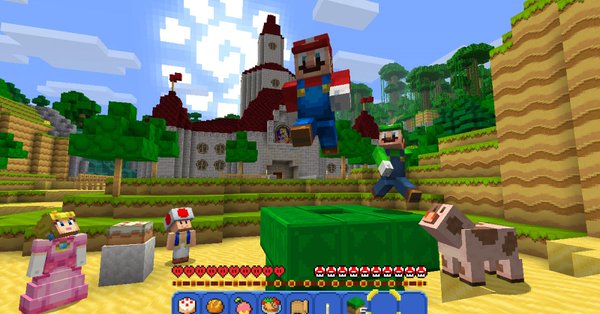
There was none more bizarre than this week, when company executive Phil Spencer celebrated the launch of “Minecraft” for Nintendo’s hot new game console, the Switch. As of May 11, you can buy and play “Minecraft: Nintendo Switch Edition,” a fact Spencer touted on Twitter:
What makes this so weird is Spencer is the guy in charge of Microsoft’s gaming division. That makes him responsible for sales of Microsoft’s Xbox One game console. And the Switch is Nintendo’s latest rival to the Xbox One.
In the game business, great games drive hardware sales. Consumers often buy particular consoles because they want to play a hit new game.
View photos
With that in mind, console makers have tried to develop blockbuster games that they have exclusive rights too. And they typically reserve those games for their own platforms. For example, “Halo,” “Forza Motorsport,” “Gears of War” and other game franchises that Microsoft owns are only available for its Xbox consoles or PCs running its Windows operating system.
The idea is that those franchises will drive people to buy Microsoft hardware (in the case of the Xbox One) or software (in the case of Windows 10).
Spencer is in charge of overseeing Microsoft’s games in addition to its consoles. So you might think he’d want to use “Minecraft” to help boost the Xbox One, not one of its chief rivals. After all, “Minecraft” is one of the most popular games in the world. Instead, here he was not only green lighting a game that could boost the Switch, he was celebrating its launch!
But such weird situations are nothing new. Microsoft has been placed in them repeatedly ever since it purchased “Minecraft” back in 2014. That’s because Microsoft has continued to support the game on a whole slew of platforms it doesn’t control. You can play it on your phone (iPhone and Android), on your tablet, on your computer (PC or Mac), and even on Sony’s PlayStation 4.
Heck, the Switch isn’t even the first Nintendo console for “Minecraft” to appear on. Microsoft previously released a version of the game for the Wii U, Nintendo’s last home console.
Which isn’t to say there’s something wrong with Microsoft preserving the legacy of “Minecraft” as a game you can play on pretty much anything.It might be a smart business move! And from a consumer’s perspective, it’s mighty nice to be able to play the game on any platform you want. But that situation is a tremendous outlier in terms of typical game industry strategy, and it sticks out as a result.
It’s outright fantastic that “Minecraft” just launched on the Nintendo Switch, a platform that makes perfect sense for it. It’s also outright bizarre that Microsoft is responsible for making that happen.
Box Office: Guardians Vol. 2 Tops Snatched, King Arthur
The Fate of the Furious and The Boss Baby round out the top five.
This weekend two new major new releases disappointed while there were a couple of surprises near the bottom of the top 10.
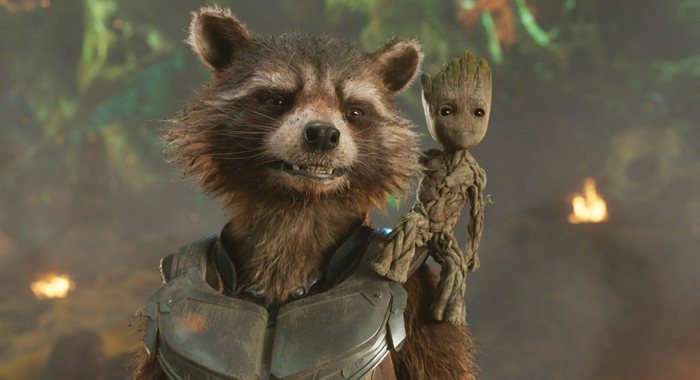
The rag-tag team of misfits lead the box office for a second straight weekend as Guardians of the Galaxy Vol. 2slipped a reasonable 57% from last weekend to an estimated $63M, bringing its total to $246M after 10 days. By comparison, the original fell 55% in its second weekend so even though sequels tend to front load their grosses, Guardians 2 seems to be holding on better than most. After 10 days the original was at $176M and ended its run at $333M. Following roughly the same trajectory, and realizing the box office at the beginning of the summer is more competitive than at the end of the summer, Guardians 2 could end at around $375-400M.
Second place belonged to the leading ladies of Snatched. The R-rated comedy starring Amy Schumer and Goldie Hawn opened to a so-so $17.5M, according to estimates, from 3,501 theaters for a per screen average of $4,999. Critics were not kind as it currently sits at 36% positive on Rotten Tomatoes. Audiences didn’t seem too pleased either as it got a B CinemaScore. It doesn’t appear the counterprogramming to the male dominated summer blockbusters worked in this case. However, with a production budget around $40M, it will likely make back its money unlike…
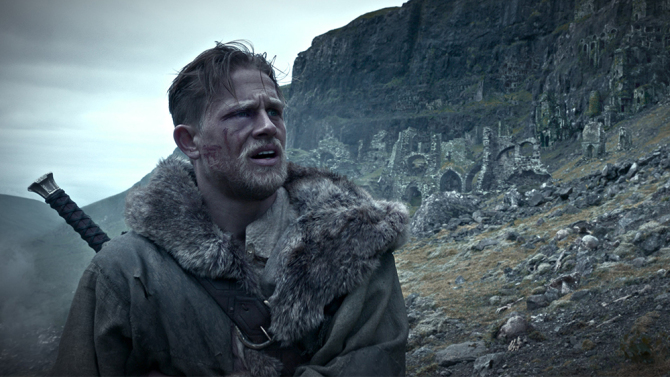
King Arthur: Legend of the Sword which tanked this weekend grossing only an estimated $14.7M from 3,702 theaters for a per screen average of $3,971. Its production budget was in the $175M vicinity and while a lot of films these days make up their money overseas, King Arthur is dying there too as it opened to $29M from 51 markets this weekend. Critics liked this one even less as it stands at 28% positive on Rotten Tomatoes, yet audiences liked it a bit more as it got a B+ CinemaScore. Still, this one is in the running for biggest bomb of the year and it’s only the second week of May.
Holdovers, all with relatively small drops, took the next four places on the charts. Landing in fourth place was the multicultural crew of The Fate of the Furious which took in an estimated $5.3M in its fifth go around, bringing its cume up to $215M. In fifth place was The Boss Baby which added an estimated $4.6M to its coffers, bringing its total up to $162M after seven weeks. 2017s reigning champ fell to sixth place this weekend as Beauty and the Beast added another $3.86M, according to estimates, to its gargantuan total, bringing its cume up to $493M after nine weeks. Does it have enough left in the tank to become only the eighth film to hit the magical $500M mark? I’m gonna say yes. And in seventh place was How to be a Latin Lover which took in an estimated $3.75M bringing its total up to $26M after three weeks.
There was s surprise entry in the top 10 as the unheralded Lowriders ended in eighth place this weekend with an estimated $2.4M from only 295 theaters for a per screen average of $8,810, second best in the top 10. A PG-13 drama about lowrider car culture with virtually no stars managed to do some pretty good business. Ninth place belonged to the disappointing thriller The Circle which added an estimated $1.7M to its bank, bringing the total up to only $18.9M… which is virtually the same total as the final film in the top 10, the biggest Bollywood hit of all time, Baahubali 2: The Conclusion which made $1.5M from only 375 theaters this weekend, bringing its total to $18.93M. If I told you a few weeks ago that a Bollywood film that had a 167 minute running time and never play in more than 425 theaters would outgross a film starring Tom Hanks and Emma Watson, would you have believed me? Also, I never would have said it because I never would have imagined it happening.
The top ten films grossed an estimated $118M which was down 3.7% from last year when Captain America: Civil War remained at number one with $72.6M; and down 32.5% from 2015 when the ladies of Pitch Perfect 2 opened in the top spot with $69.2M.
As noted by Variety, director Guy Ritchie’s fantasy drama, starring Charlie Hunnam, is this summer’s first box office flop and has a long way to go before recouping its hefty production budget of $175 million. Read IGN’s King Arthur: Legend of the Sword review, or watch the video below, to find out why the film’s “incessant desire to be clever and funny, go too far and become off-putting.”
King Arthur: Legend of the Sword – Review
02:35
Leading the box office for its second consecutive week is Guardians of the Galaxy Vol. 2, which earned an estimated $63 million. With a $145 million debut last weekend, the domestic total for director James Gunn’s sci-fi sequel is nearing $250 million.
Just ahead of King Arthur: Legend of the Sword in second place is Snatched. Fox’s R-rated comedy, starring Amy Schumer and Goldie Hawn, debuted to an estimated $17.5 million. Meanwhile, Lowriders, the Ricardo de Montreuil-directed drama about a teenage graffiti artist, played by Gabriel Chavarria, had a limited release this weekend, placing eighth with $2.4 million.
Rounding out this weekend’s top five are The Fate of the Furious and The Boss Baby, which earned an estimated $5.3 million and $4.6 million, respectively.
Guardians of the Galaxy Vol. 2 – Chris Pratt on What Comes Next for Star-Lord
01:41
Here are this weekend’s Top 10 North American box office estimates via comScore:
The project from Warner Bros. and Village Roadshow landed with a thud after earning only $14.7 million domestically during its opening weekend off an estimated $175 million production budget, not to mention marketing costs. Not even overseas grosses — which have propped up big-budget films, not in the least limited to “Pacific Rim” and “Warcraft” that would have been considered bombs otherwise — could save “Arthur,” which brought in $29.1 million internationally this weekend. Audiences have received the movie relatively well, earning it a B+ CinemaScore, but the same cannot be said for critics, who sliced and diced the picture down to a 27% on Rotten Tomatoes.
The weekend tallies and critical and audience consensus are the result of a years-in-the-making story, eventually directed by Guy Ritchie and starring Charlie Hunnam. So how did the big-budget film become what could be remembered as the biggest flop of the summer, or even the entire year?
Was the IP too tired? The legend of King Arthur is one that has been told and retold in various forms, not unlike many of the superhero movies that dominate the modern-day box office. But this flop feeds the narrative that Warner Bros. is banking too much on reviving stale ideas after misfires including “Pan,” “The Legend of Tarzan,” and, most recently, “Chips.” Still, Ritchie has made good money off an old idea with his take on Sherlock Holmes in 2009 and its sequel in 2011, which both grossed over $500 million worldwide. Ritchie addressed the idea in an interview with Variety’s Kris Tapley.
“It didn’t occur to me that it was a dusty or unexciting title,” Ritchie said. “To me, I fancy the challenge of — a bit like ‘Sherlock Holmes’ — I thought, ‘Oh, I’m familiar with that. I think I can do something with that.’”
Did the delays kill buzz? When Ritchie signed onto “Arthur” in 2014, he attached himself to a script by Joby Harold that was conceived as the first part in a six-film series set in one contained universe. Three years later, the film was finally released.
“King Arthur” was originally slated for a July 22, 2016 release, which ended up belonging to Paramount’s “Star Trek Beyond.” Warner Bros. released the low-budget supernatural horror film “Lights Out” instead, which was a surprise hit. “Arthur” was pushed to a Feb. 17, 2017 release, only to be pushed again to March 24, and then finally to its ultimate date of May 12. If IP already causes rumblings of being tired, delaying a film’s release several times might only hinder potential excitement.
Did recasting get in the way? Starting in 2011, years prior to Ritchie’s involvement, Warner Bros. was adapting an Arthur-based project with director David Dobkin called “Arthur and Lancelot.” At the time, Kit Harington and Joel Kinnaman were attached to star, and later Colin Farrell was thought to bring the star power necessary to see the project through. Neither iteration was brought to production.
When Ritchie reignited talks of reviving the property, Idris Elba’s name was floated to play a Merlin-esque character. Neither the actor nor his character made the 2017 release.
Does Charlie Hunnam lack star power? Charlie Hunnam is a relatively untested star. Although he toplined “Pacific Rim,” the actor is most well-known for “Sons of Anarchy,” which ran for seven seasons on FX. Whenever a film tanks, the star shares some of the responsibility. But Hunnam’s role in “Arthur’s” lack of draw seems more like a small piece of a large puzzle.
Was it the recutting? Ritchie’s original cut of “King Arthur” was three and a half hours long. The final product clocks in at two hours and six minutes, which some critics, including Variety’s Peter Debruge, have identified as feeling more characteristic of Ritchie than a sprawling Arthurian epic.
“I was desperate that it would be an entertaining three and a half hours,” Ritchie told the Ringer’s Sean Fennessey. “Two hours into it, I knew I was in trouble.”
But Ritchie defended his process of trying to make the “worthy, extended version” before chopping it down to a movie that fits within his own oeuvre. “If I went to the studio and said, ‘This scene is going to cost me $3 million and it’s going to be ten seconds long,’ it’s very hard to get your nut around that,” Ritchie said.
So what? Despite this catastrophic flop, Ritchie has a potential reputation rehab project in place with Disney’s live-action “Aladdin.” The studio has had nary a miss recently with remakes of “Jungle Book” and “Beauty and the Beast” each topping $1 billion worldwide. Warner Bros., too, has several shots at redemption with titles including “Wonder Woman” and “Dunkirk” in the summer pipeline and “It” hitting theaters in early fall. But while the residual effects of “King Arthur’s” financial losses have yet to be seen on a grand scale, the jab of earning title of “summer’s first big flop” can only be felt once a year
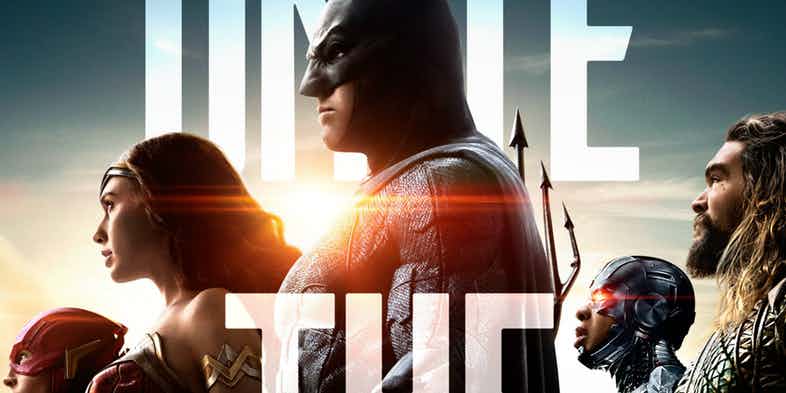
The DCEU has not been without controversy and Diane Lane may have accidentally added to that by saying Justice League won’t be better than The Avengers. Warner Bros. has made a big push to get the DCEU off the ground and running, and one of the biggest ways to jump start the universe has been the formation of the Justice League before each character gets a solo movie. This strategy allows for Justice League to come out years before and capitalize on the boom in comic book movies, which can be largely equated to the success of The Avengers.
However, even though studio executives and most people agree it is in everyone’s best interest to see all comic book movies succeed, there is another section of fans that have divided the genre into a Marvel vs DC fight. This has caused somewhat venomous factions that believe only their side is good and think every Marvel or DC film – depending on their stance – needs to be better than any other film from the other side. But, the DCEU’s Diane Lane doesn’t think Justice League will ultimately be better than Avengers.
This statement came about during an interview Lane – who plays Martha Kent in the DCEU – had on Watch What Happens Live with Andy Cohen After Show. The interview allowed for fans to call in and when one asked if she had any Justice League spoilers and if she thought it will be a better movie than 2012’s The Avengers, Lane had a quick response that is sure to be divisive saying, “No and no. [laughs] Short but honest. I hate to disappoint.”
First things first, this is simply Lane’s opinion and not necessarily a jab at the quality of the film that will mark Zack Snyder’s third entry in the universe. Also, there is no telling how big or small of a role Lane has in the movie to truly know how much she knows about the overall direction, and she has most likely yet to see anything close to a finished cut of the movie. She could simply be a big fan of The Avengers and understand how highly regarded the film is for many.
Even with her saying she hates to disappoint, that too may very well not be an indicator of the film’s quality since she may be referring to being unable to divulge spoilers. Justice League has high expectations to meet – possibly the highest for any DCEU film – so she could simply be tempering said expectations so everyone can come out loving the film and not slightly disappointed that it didn’t meet every ridiculously lofty expectation. Even if Justice League doesn’t wind up being better than The Avengers, there is nothing wrong with that. Not every movie can be the best film ever made – not to say Avengers is – so the goal here should be producing the best Justice League movie.
The comparisons to Avengers have stuck with Justice League ever since it was announced. Both movies will bring together various heroes in a team-up fashion. Avengers was a true kick starter for the Marvel Cinematic Universe, and Justice League wants to have a similar response without question. Those similarities aside, the build up to each has been quite different. Avengers saw all of the characters previously introduced in better received films, while Justice League is marching forward with an established divisive past. Hopefully when the dust settles on Lane’s statements and the release of Justice League, both Marvel and DC will have their own successful team-up movies.