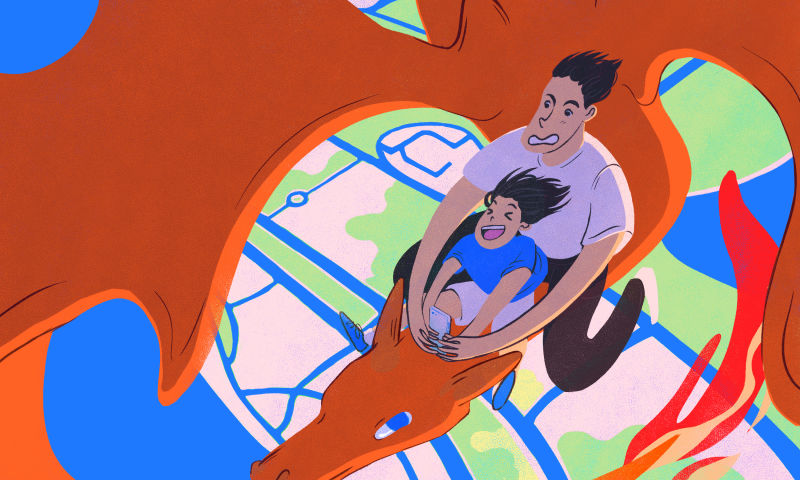
While Pokémon Go is geared toward adults and teens, a lot of parents are playing it with their children too. I helped my kindergartener install it yesterday, and we spent an afternoon at a park looking for Pikachu. There are some safety concerns, but lots of potential for exercise and learning, too.
If you’re still not sure what this game is all about, read our explainer. It’s a free game where you walk to places in the real world to collect in-game supplies and characters. You can catch the pokémon characters almost anywhere, but if you want them to battle, you have to go to real-world locations called gyms. Supply stops and gyms are usually places like libraries, churches, and parks.
Figure Out Which Parts of the Game Are Age Appropriate
For a kid to get the most out of the game, it really helps if they can read and do simple math. You can read them the instructions at the beginning, but they’ll keep encountering creatures and objects that have names and stats.
To involve toddlers and preschoolers, you can play the game yourself, and offer the kid a chance to help at spin at each pokéstop. They can also try to throw pokéballs to catch the pokémon you find. That job takes a little dexterity, but if you have enough pokéballs, why not let them practice?
Once kids are old enough to have their own phones and transportation, they’re certainly old enough to play the game without help—but now you have to worry about where they’re going and whether they’re paying attention to their surroundings. More on that in a bit.
Set Up a Phone to Play Pokémon Go
You can install Pokémon Go on your own phone, of course, but if you hand it to a pokémon-happy kid, you may never get it back. Instead, see if you have an old phone or tablet around that has GPS capabilities. Even if it only has wifi and not a cellular data connection, you can still play the game.
You can do this by sticking to areas with wifi, of course. It’s even possible to catch pokémon without leaving home. Or you can use your own phone as a wifi hotspot, if your data plan allows, so you and your offspring can tour pokéstops together. Be aware that the iPod Touch doesn’t have GPS, so it needs to connect to stationary wifi spots (not your phone’s hotspot) to know its location.
Since Pokémon Go has lots of opportunities to spend real money, you may want to limit in-game purchases. On an iPhone, there’s a setting to turn off in-app purchases. On Android, make sure your phone is set to ask for a password for every purchase (and don’t blab the password).
I go a step further, on my kids’ phones. I have a throwaway google account that’s just for their games, and I don’t enter a credit card for payment. I just buy Play Store gift cards, so if they somehow find a way to spend money, the worst they can do is drain the $25 from their account.
Getting Started With Your Child and a Google Account
My son’s reaction to catching his first Pikachu
The first thing the app does is ask your birthdate. For adults, it then asks if you want to log in with your Google account or with a Pokémon Trainer account. For kids (13 and under), it doesn’t offer Google as an option. Unfortunately, since Pokémon’s servers are currently overloaded, it may be impossible to create a Pokémon Trainer account. You may want to create a dummy Google account (technically belonging to you, the parent) and have them log in that way.
When you begin, you can customize an avatar, and then it’s time to catch your starter pokémon. (You don’t have to wander around for this one.) If your kid’s heart is set on Pikachu, there is reportedly an easter egg that lets you catch Pikachu as your starter. It may not be easy to actually catch the little guy, though, so remind the kid that you can always go looking for wild Pikachu later.
Stay Safe—Especially Around Lures
One of these kids set up a lure before (or during?) soccer camp.
Remember everything you taught your kid about watching where they’re going, holding hands near busy roads, and looking both ways while crossing streets or parking lots? They’re going to completely forget all that when they have their eyes glued to their phone. It’s worth having a little talk with them before they get run over by a car, about how to be careful and how maybe we’re going to put some more rules into effect—like only crossing a street when their phone is in their pocket, perhaps.
If your kid is old enough to wander around on her own, remember that she may now be walking around oblivious to her surroundings (even if she promises to be careful). You may want to revisit rules in this case, too: are you still okay with her traveling to the same places she’s usually allowed?
Lures make the situation a little more complicated, from a parent’s perspective. A player can set out a lure to attract pokémon for 30 minutes, but since these lures are visible to nearby players, they have the effect of luring people too. This can be fun: a bunch of kids can catch pokémon together, or a library or museum can set out lures to help attract people for an event. It can also be concerning to parents. Who’s setting out that lure, and why?
It would be possible for someone to set out a lure to attract kids for nefarious purposes—maybe a potential abuser, or just the neighborhood bully.
Roaming around may be the most worrying part of playing Pokémon Go—but that’s also what makes it worthwhile. How many video games come with built-in exercise, education, and opportunities to learn about art and the natural world?
The exercise is a given: you have to walk to incubate eggs, for instance. Driving doesn’t count, and the app knows the difference. Parks will often have a bunch of pokéstops close together, so even if you have to drive to get there, you can walk around to monuments, statues, and historical signs to collect supplies and look for new pokémon. Different kinds of places have different pokémon. I caught a goldfish-like Goldeen today near a lake.
But there’s more. A lot of pokéstops are at interesting places, including historical markers. Yesterday my son and I visited a cannon in a cemetery (dedicated as a war memorial) and a chestnut tree nursery in a park. I had driven by those trees a million times without knowing what it was, but signs explained how the area’s chestnut trees had been devastated by a fungus and park workers were trying to protect some of the trees so they could reach maturity.
While you’re out wandering, you may even find real animals. Some wildlife experts on twitter are now monitoring the hashtag #PokeBlitz to help you identify the birds, bugs, snakes, plants and other things you might find while looking for pokémon.
The game intertwines so many interests that it’s a natural for family outings. And since you can play it almost anywhere, it works for city strolls as well as nature walks. Watch out for safety concerns, to be sure, but don’t forget to have fun.
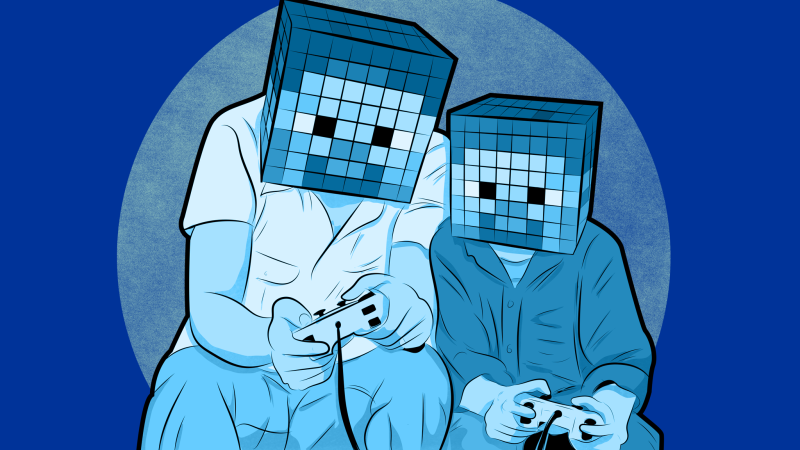
When your kid shows interest in a popular phenomenon, usually there’s not much to understand—you just help them turn on the videos, and put the toys on their birthday wish list. But it’s a little trickier when your kid comes home and insists that they need to play Minecraft. You have some learning to do.
If you’re nervous about letting your kid log on to a server with other people, it may help to know that they don’t have to. We’ll discuss below how to set up a multiplayer world, but there are plenty of ways to do that while keeping the world private. Minecraft is also tons of fun in single player mode. If you do end up introducing your child to public servers, you’ll probably want to have a talk with them about online safety, and it may be a good idea to play with them at first.
Pick a Platform and Install the Game
There’s a version of Minecraft for every platform. The cheapest, and easiest to install, is the Minecraft Pocket Edition app. It’s $6.99 on iOS and Android. Once it’s installed, you just hit Play, create a world, and you’re off.
Pocket edition has a limited set of inventory items and commands. You can still do a ton of fun things, but currently the game lacks large “boss” monsters to battle, and you don’t have access to some of the lesser used items. The mobile app will do almost anything you can think of, but if you want the most flexibility down the line and the physically largest worlds, go with the desktop version. We imagine though, that your child will probably have a preference as to the platform you buy and install on.
The traditional and most full-featured way to play is on a computer, with the version that runs on Windows, Mac, or Linux. The software is free to download, but you have to pay a one-time fee of $26.95 to create an account. The program won’t run unless you log in.
Minecraft is also available for the Xbox 360 and Xbox One, PlayStation 3 and 4, Wii U, and a handful of other console and mobile platforms,at varying price points in the $20-$30 range, with licenses available either through direct download or physical copies, whichever you prefer. Once you’ve installed the version Minecraft of your (or your child’s) choice, create a Single Player world for starters, and begin exploring.
Learn the Controls
Even if it’s your kid that will be doing the gameplay, you’ll want to have a sense of how to move around and use objects in the game. I can’t count how many times a kid asked me how to do something, I googled and confidently told them the answer, and then felt a little clueless when they handed me the device and said “Show me how.”
On a computer, the w, a, s, and d keys control which direction you walk, and your mouse position controls where you look. Left click destroys a block; right click places the block you are holding. Similarly, interact with objects with a click: left click to hit, right click to use an object. So, for example, hold a bone and right click on a dog to give the dog a bone. Left click to smack the dog with the bone.
The space bar lets you jump, and in creative mode (more about that below), you can fly. Double tap the space bar to start flying, and tap it again to move higher. Shift lowers you down, and another double space drops you to the ground.
On a touch screen device, you’ll have arrow buttons on the left side of the screen for walking, and a separate button for jumping or flying on the right. Swipe the screen to look around. Place blocks with a tap, and destroy them by tapping and holding. You can use some items by tapping, others by tapping and holding, and still others by looking for a special button to appear at the bottom of the screen. For example, if you hold an apple and approach a horse, there will be a “feed” button. You can read more about all the different controls for all the different platforms on the Official Minecraft Wiki.
To manage your inventory, press “e” on your keybord (on the desktop) or tap the “…” button next to the row of nine empty boxes at the bottom of the screen (on mobile.) Scroll through to see what you’ve picked up, if you’re playing in survival mode. In creative mode, you can also search and scroll through hundreds of items that are yours for the choosing. Those nine empty boxes, by the way? Those are your “hot bar” of readily accessible objects. You can drag items from your inventory into them to use them quickly, like with a single tap or keypress, which comes in handy later.
So, What Do You Do?
So what do you do in Minecraft, anyway? What is your kid trying to accomplish when they spend hours at the computer playing? You already know the answer, actually: you mine blocks from your surroundings, and you use them to craft new things. Imagine walking through a world made of lego blocks as far as the eye can see. You can break off a block from the ground, from a tree, anywhere you like, and then you can use the blocks you’ve gathered to make something new.
In survival mode, you arrive in Minecraft land with literally nothing. You can karate-chop the world with your hand to gather blocks of dirt and wood. You can make a pickaxe out of wood, and use it to mine for stone. Then you can make a better pickaxe out of stone. In the meantime, you’d better create a shelter before dark, because that’s when the monsters come out. If they get you, you die:
Survival minecraft can be challenging and fun, but young kids are often more interested in building things, spawning animals, and exploring all the different types of objects that exist in the universe. (Me too, honestly.) You can do all that without fear of being killed by Creepers if you play your game in creative mode. That means you don’t have any damage or hunger meters, you can fly, and you can have as many as you want of anything. Diamond armor? Golden apples? Potions that let you see in the dark? All yours!
Fun Things to Try with Your Kids
Here are some things you can do right away. They’re easy in creative, and possible (if you can gather the materials) in survival. Best of all, if you’re new to the game, you can do them yourself, or if you’re installing for your kids or playing along with them, they’re fun for everyone involved.
Watch the Sunset: A new day dawns in Minecraft every 20 minutes. You get 10 minutes of daylight, 90 seconds of dusk, seven minutes of night, and another 90 seconds for sunrise. It’s kind of beautiful.
See in the Dark: If a young child starts crying for seven out of every 20 minutes while playing, now you know why. After dark, just snag a Potion of Night Vision from your inventory. On the computer you can search for items by name; on mobile, scroll until you find it. It’s dark blue. Right click, or tap and hold, to drink the potion.
Change Your Skin: Gameplay is typically in a first person point-of-view, but if other players are around, they’ll be able to see you. You can also switch views while playing and see yourself in the third-person. If you’d like to tweak your look, visit minecraftskins.net, where you can choose a new skin. Hit Edit to customize it to your liking, and if you play the desktop edition, hit Change to submit it to Minecraft’s account servers. (Your skin is considered part of your account profile.) If you play on the mobile editions, Download the skin and save it to your device’s photo library. Then you can change your skin from within the game.
Tame a Wolf: No wolves? Look in your inventory for an egg called “spawn wolf.“ It does exactly what you’d think. Feed one of your new wolves a bone, and it will start following you and exuding hearts. Once the wolf has been tamed, it wears a red collar and is a dog. Do not hit your dog with a bone. They attack as a pack when one is hurt.
Ride a Pig: Hold a carrot on a stick, and all the pigs around will follow you. Place a saddle on a pig, and then you can ride it. The pig will walk constantly, but you can steer with your mouse as usual. To stop the pig, take the carrot and stick out of your hand.
Teleport: If you’re playing with your kid in multiplayer mode, they’re almost guaranteed to wander off. If you type a forward slash, you’ll find you can enter commands. A handy one is /teleport, or /tp for short, followed by your kid’s player name. You’ll teleport right to where they are.
Build a Beacon: Especially in survival mode, you’ll want to find a way to get back to your home. Build dirt, or whatever you’ve got, into a tall tower that you can see from a distance. While there are other ways to find your way home when you get lost, this is the simplest.
I learned all of these tricks from my six-year-old son, who in turned learned them from watching YouTube. As an adult, you may not have noticed, but roughly half of YouTube is just videos of people playing Minecraft. You can find a guide to the best channels, with notes on their kid-friendliness, at Common Sense Media.
Be warned: these videos often show features that go far beyond what you can find in an ordinary Minecraft installation. There are mods (modifications to either clients or servers), resource packs (which change game features like the appearance of blocks), maps (pre-built worlds), and mini-games (maps set up for solo or competitive games).
Playing With Others
In single player mode, you can set your kid up with a world of her own that she can build and proudly show you all about. But if you really want to play with your kid, you’ll need to learn about multiplayer Minecraft. There are three big ways to play multiplayer:
On a computer, after creating a single player world, you can choose “Open to LAN” to enable others to connect to the world you’ve created. Your friends will need to know your IP address and port to connect to your server. Don’t forget that each player needs their own Minecraft account, so you’ll have to pay again to play together: one account for you, one for your kid.
You can install a server on another, separate computer to keep your world running all the time. The server software is free, but again each player needs their own account.
You can sign up for Minecraft Realms, a subscription service at $9.99/month. Only the person who sets up the world needs a paid subscription, and they can invite others to play with them.
Pocket edition, Windows 10, and consoles support those same three ways of connecting with other players, but are incompatible with PC/Mac editions. Realms subscriptions are, likewise, available either for the PC/Mac edition or the Pocket/Windows 10 edition. That means you can’t play on your phone and connect to your kid’s desktop-based world. Try both if you like, but make sure you consider which ecosystem you want to stick with before your kid starts building that massive castle.
Potential spoilers ahead for The Walking Dead TV show and comics.
The Walking Dead fans have been eagerly awaiting the return of the apocalyptic drama since back in April, and it’s finally upon us. In just one week we’ll be transported back into the world of zombies, Saviors, and the occasional cannibal. Season 7 promises to be a game changer for the series, as Rick and the Alexandrians are completely powerless to Negan and his forces. And while fans of Robert Kirkman’s comic book are eagerly anticipating the introduction of communities like The Kingdom, a new image from the AMC drama may be teasing yet another major comic book plot line: The Whisperers.
The Whisperers are a huge threat in The Walking Dead comic book series. You can see the image that is setting comic fans into a frenzy below, courtesy of the show’s official Instagram.
Pretty creepy, right? While this image is enough to build anticipation for Season 7 of The Walking Dead, fans of the comics are finding an entirely different meaning altogether. The Whisperers may be coming.
The Whisperers are an especially terrifying threat in the Walking Dead comic book series. They’re a murderous cult who disguise themselves by wearing the skin of walkers so they might blend in with the massive amounts of infected roaming the apocalyptic world. They don’t believe in killing the undead- living peacefully among them through their disguises. Instead, they reserve their violence for the living, and are known to be a threat both physically and emotionally. Much like The Wolves from Season 6, The Whisperers completely abandoned their lives from the pre-apocalypse, and live a violent cult-focused life led by an unnamed Alpha leader. And the group only speaks in whispers- chilling AF if you ask me.
The above image is extremely close to an iconic Walking Dead comic book moment. When The Whispers decide that Alexandrians are getting to close to their land, they kidnap and murder a group of survivors and put their heads on spikes. This marks a border of sorts for The Whisperers, and the moment is noted for killing off a few major characters that are present in both the comics and AMC TV series.
The idea that The Whisperers could be introduced in Season 7 is baffling for fans of the comics. Season 7 will finally delve into the threat of The Saviors, which we’d been eagerly anticipating since Season 6’s midseason finale. Season 7 must also introduce The Kingdom, and further flesh out The Hilltop community. With all of this material to cover properly, it seems bananas that they’d even hint at another threat. Chronologically, The Whisperers should be introduced after the Savior plot line ends, which can’t be anytime soon.
We’ll just have to wait and see if and when The Whisperers are introduced in The Walking Dead. The series will return to AMC Sunday, October 23rd.
Everybody knows Wolverine. Almost sixteen years after Hugh Jackman first burst onto the big screen as the centerpiece of Fox’s X-Men cinematic universe, Wolverine has become one of the most famous names in comic books… and he was already pretty famous to begin with! Since his first appearance in 1974, Wolverine has grown to be a fan favorite and a huge part of the Marvel universe as one of its most recognizable faces.
Although Logan is known for many things – his temper, his fighting abilities, his interesting hairstyle – his most recognizable feature for most is his claws. His most deadly weapon, these retractable blades have been with Wolvie from the very beginning, but how much do you really know about these unique appendages? Read on for 14 things you might not have known about his weapon of choice… *snikt!* 14. HIS CLAWS ARE FUSED WITH ADAMANTIUM
Let’s get the obvious out of the way. Starting us off, we have some fairly common knowledge – that Wolverine’s claws, along with the rest of his skeleton, are fused with a metal that only exists in the Marvel universe, known as adamantium. This isn’t part of his mutation, though. His skeleton was fused with the metal courtesy of the Weapon X project, a secret government branch dedicated to weaponizing superpowers. Logan wasn’t the only subject, but he was one of their most successful attempts to build the perfect living weapon. He was the ideal candidate for this because of his natural mutation – his healing factor meant that he would be able to survive the process, something that no one else could.
What you may not know is that he also had his memory wiped at the time. This was part of the plan, and put him under the control of the project, programmed to kill for them for some time before he could eventually break free. His escape was also aided by the Winter Soldier – yet another amazing crossover that we won’t see until Marvel and Fox learn to play nice with each other. However, we did see a little bit about this in X-Men: Apocalypse, when Jean Grey released a crazed Weapon X from a bunker. 13. HIS CLAWS ARE PART OF HIS BONE STRUCTURE
Although they weren’t always (see: number 8), Wolverine’s claws are now actually fully retractable bone claws. These claws are just a little bit shorter than the rest of his forearm, which allows him bend his arm when they are retracted (despite this, they often appear longer in certain comic panels – this is just artistic license. If the claws were actually longer, they simply wouldn’t fit into his body!). The claws themselves are part of his original mutation, along with his healing factor, heightened senses, increased strength and stamina and animal empathy.
Although earlier comics showed them as a Weapon X addition to his body, this has since been retconned. Originally, he had only his healing powers, and Weapon X added the “claws” as a weapon when they fused his (much more human) skeleton with adamantium. However, his current origin story shows him with bone claws popping out at a young age. In fact, it was in the 1800s (remember, Wolverine is super old) that his powers first manifested after his father was killed in front of him, and his bone claws first burst out of his fists. It wasn’t until much later that the adamantium was added by the Weapon X project (see: number 14). 12. HIS BONE CLAWS HAVE BEEN IN THREE MOVIES
Although he is shown with adamantium claws in most of the comics, and it wasn’t actually until the ‘90s that comic books showed his claws as part of his bone structure, they have still appeared in several of the movies in the X-Men franchise. First, we saw his bone claws in X-Men Origins: Wolverine, which went right back to his beginnings in the 1800s, and did a surprisingly good job of staying true to the current comic canon. Here, we saw both his bone claws and how he got his more recognizable adamantium claws when the Weapon X project got their hands on him. Then, they appeared again in the significant solo improvement that was The Wolverine, when the Silver Samurai severed his adamantium claws, and Wolverine was able to regrow his bone claws in time to kill Yashida. Interestingly, this wouldn’t actually happen like this in the comics, where he regrows his skeleton with the adamantium attached (his mutation adapted to be able to do this).
Most recently, his bone claws came up in X-Men: Days of Future Past, when Logan went back in time (before the Weapon X procedure) to change the future. For the extent of the scenes in the ‘70s, his claws are bone, although he apparently will be getting his adamantium back for Hugh Jackman’s final two appearances in character. 11. REAL-LIFE WOLVERINE CLAWS EXIST
OK, not true real-life claws that actually exist as a retractable part of a skeleton. Replica claws in various forms do exist though, as fans and cosplayers have made multiple variations on the iconic weapon for fun. Most of these are either sewn into gloves (like Wolverine’s very first claws in the comics!), or include a base/handle that has to be held for the claws to poke out between the wearer’s knuckles. However, these are rarely retractable, which is why you will see cosplayers wandering the convention floor with claws out at all times – it’s just simpler to create replica claws that don’t have to move.
However, one YouTuber and inventor, Colin Furze, has created a set of fully retractable, wearable claws! The claws are attached to wrist gauntlets and a pneumatic apparatus on his back, and by squeezing a button in his hand, he can extend and retract them at will. They even spark when they hit each other. Awesome! The backpack that holds the pneumatic equipment can fit under a coat, too. Sadly, they aren’t actually made of actual adamantium, though.
These aren’t the only replicas Colin Furze has made, either. He’s also made a Pyro wrist-mounted flamethrower, Magento-inspired magnetic boots to allow him to walk on the ceiling, and many more film-based gadgets. 10. HE HAS A COMIC MINI-SERIES TITLED ‘CLAWS’
Claws and claws 2 comic book 14 Things You Need To Know About Wolverine’s Claws While it’s not technically about his claws, this certainly features them heavily! In 2006, Marvel published a short miniseries starring Wolverine entitled Wolverine & The Black Cat: Claws starring Logan and Felicia Hardy (more commonly found in the pages of Spider-Man comics). The story follows Wolverine and Black Cat (another character with sharp claws, although hers are in her gloves) as they were kidnapped to be hunted for sport. The series also featured Arcade and his girlfriend White Rabbit, along with a few other name drops (including Emma Frost). Put together by Joe Linsner (known for Dawn and Sinful Suzi), Jimmy Palmiotti and Justin Gray, the series is a fun (and still bloody!) break from Wolverine’s regular scheduled programming.
It was also popular enough to warrant a sequel. In 2011, the pair picked up where they left off with the (imaginatively titled) follow-up Wolverine & The Black Cat: Claws 2, in which their kidnappers return and Wolverine and Black Cat end up transported to an alternate future. Combining these two favorite clawed characters led to romance, but Felicia Hardy is only one of Logan’s many (many) love interests over the years, and a very minor one at that. Still, it’s a sweet two-part story for the pair. 9. HIS CLAWS HURT
Not simply having them, of course, but releasing his claws is actually painful for Wolverine. It’s because his mutation doesn’t affect the pain that he feels – part of his mutation are the claws themselves, and the other part is his ability to heal inhumanly fast. (There are more elements to his mutation, of course – the enhanced speed, strength, agility and animal instincts that give him the name Wolverine. However, those are not directly related to his claws.)
When the claws shoot out, they are actually slicing through the skin on his hands – we just don’t usually see it because his healing factor takes care of those minor injuries almost immediately. He also is a complete bad-ass, and not the type to stop and whimper about how much it hurts when he is seconds away from kicking some ass. That doesn’t stop him feeling the pain at the moment that they break the skin, though. However, when his healing factor has been weakened in the past, he’s been shown bleeding and in extreme pain when his claws come out (such as in “Fatal Attractions”). This may be why he tends to just use his claws as weapons, rather than as, say, can openers. Ouch! 8. THEY WEREN’T ALWAYS CLAWS
Although we now know that Wolverine’s claws are actually part of his bone structure (and that he has always had them), they weren’t intended that way from the start. In fact, his original creators Len Wein (writer) and John Romita (artist) intended for them to be part of his suit when he was first conceived in the 1970s. In early drawings, his claws are drawn to appear to be coming out of his gloves. They also extend from his wrists, rather than between his knuckles, which makes less sense from an anatomical perspective. On top of all that, several storylines backed up the idea that the claws were not a part of his mutant abilities.
However, this was later retconned, and it was officially revealed that the claws were part of his body in the Official Marvel Handbook. Published in the ‘80s, the book included a description and diagram of Wolverine’s skeletal structure, showing the claws as “pure adamantium” added to his skeleton. At this point, however the claws were still considered to be an addition to his body, thanks to the Weapon X Project. It wasn’t until 1993 that they were shown to actually be part of his skeleton, after Magneto ripped the adamantium out of his body. (More on that later.) 7. HIS CLAWS WERE RE-DESIGNED FOR THE WOLVERINE Wolverine and his claws have appeared in almost every single X-Men movie (although he didn’t pop the claws in his cameo in X-Men: First Class), but they haven’t actually been the same claws every time. In the earlier X-Men movies (X-Men, X2, X-Men: The Last Stand, and X-Men Origins: Wolverine), Hugh Jackman wore prop claws that were straight, with only a slight curve at the end to give them a pointed tip. These were re-designed for his second solo adventure, The Wolverine. The new claws were given sharper angles along the sides and toward the end, a change that isn’t immediately apparent, but which can be seen if you look at stills from the films side by side. This change was made so that the claws would catch the light more effectively when filming (otherwise known as “looking cooler”).
As well as the shape change, the new claws came out of a different part of Hugh Jackman’s hand. They were moved slightly lower and closer to the palm, which was done to make them more anatomically accurate. If the claws were real, and were retractable back into the forearm, they would come out lower down between the knuckles. The original film claws came out a little too high up to be as realistic as the new design. 6. THEY ALMOST NEVER NEED SHARPENING
As bone claws, Wolverine would have sharpened his natural weaponry the same way that animals do – through simple use. In some animals (such as small cats), an outer layer of the claw is shed, which would be an interesting concept for Wolverine – leaving foot-long claw husks all over the X-Mansion! However, his adamantium claws are razor sharp, and appear as blades that rarely, if ever, need sharpening. This is primarily because of the strength of the adamantium – because they are so much harder than anything he is using them against, they simply don’t get dull enough to need a whole lot of maintenance (especially as he is commonly using them against the softness of human flesh).
However, he has been seen to sharpen his claws on occasion, usually against his other claws – although this seems to be more of a habit to get him geared up for an oncoming fight, as blades are usually sharpened by running them against a harder material in order to grind the edge. Presumably, Wolverine would be able to sharpen his claws against a grindstone if he really needed to – or he could cut off his arm and re-grow brand new claws, although that seems a little more extreme! 5. HE CAN RETRACT HIS CLAWS INDIVIDUALLY
Although Wolverine usually releases all three of his claws on each hand at the same time, he doesn’t actually have to. The reason that we usually only see him with all claws either retracted or unsheathed has to do primarily with the fact that it hurts to pop ‘em out (as we saw in number 9). Because of this, Wolverine doesn’t bust out the claws casually, but only when he needs to fight. And in a fight, six claws can do significantly more damage than just one. However, he has been shown in the comics to only unsheathe the claws on one hand at a time, or to have each of his three claws out to a different length (very useful for pinning someone down and threatening them with the same hand!). Presumably, the claws are retracted using his muscles, and extending a single claw is no more complicated than extending one finger while the others are bent.
He has even used a single claw to give people his own special version of the finger (or to reveal to Twitter fans how many more movies Wolverine will be in…). That one is a little more of a rarity though, as shooting his claws out is actually pretty darn painful, and not something he is likely to do just to show how annoyed he is at someone. Unless it’s Cyclops. 4. HE CAN RE-GROW HIS CLAWS
On the very rare occasion that someone was able to snap off one of his claws (see number 3 for why that’s unlikely), he would be able to grow it back, lizard-with-a-tail style. At least, he would in his most recent incarnations (obviously ignoring the fact that he is currently dead in the comics). When Wolverine first appeared in the comics, his powers weren’t quite as developed as they are now, and had someone managed to rip out a claw, it may not have regenerated. Now, although Wolverine’s healing ability was initially not quite powerful enough to regrow whole limbs, as the character developed, so did his powers.
This is a common occurrence in comic books – characters often become more powerful the longer they exist, to keep things interesting for the readers and allow them to take on stronger villains. In recent years, Wolverine’s healing factor has become so powerful that he has been able to come back from almost total destruction, although the more severe the injury, the longer it would take to recover completely. In The Wolverine, he regrows bone claws when they are cut off, reverting to his original anatomy. However, because his skeleton is made of adamantium-beta, which has adapted to fuse the metal with his biology he would actually most likely regrow them as adamantium. 3. THEY ARE (ALMOST) UNBREAKABLE AND CANNOT BE REMOVED
wolverine adamantium ripped out magneto 14 Things You Need To Know About Wolverine’s Claws As almost the strongest metal in the Marvel universe, it’s nearly impossible to break one of Wolverine’s claws, which is one of the reasons that he is so deadly. It’s also been suggested in certain storylines that the adamantium that is fused with his skeleton has also begun to connect to his tendons, making it impossible to simply rip one of the claws out of the (comparatively) weaker surrounding tissue. He can essentially never be disarmed.
However, there have been one or two times where someone has managed to come close. In an alternate universe, Gladiator did manage to pull one of his claws out (in Wolverine v Gladiator: Galactic Guardians #1), and in the main Marvelverse, Steve Rogers was able to apply so much force to Wolverine’s arms that he could force them to retract.
Magneto took a slightly different tack in Fatal Attractions, when he used his mutant power to rip the adamantium out of Wolverine’s body in one of the most brutal panels in either character’s history. Technically, it didn’t actually get rid of the claws completely (he just regrew them, along with the rest of his skeleton), but it certainly took him down for a while. Finally, in Fox’s X-Men franchise, the Silver Samurai manages to sever his claws with adamantium swords. 2. HIS CLAWS AREN’T TRUE ADAMANTIUM
Yes, the first entry on this list stated that the claws are adamantium, but there are actually several different kinds of adamantium in the Marvel comic universe, although they are rarely differentiated. True Adamantium was originally created by Dr. Myron Maclain in the 1940s, although not even he knows exactly how he did it, as he fell asleep at his workbench and woke up to find it mysteriously bonded together! The component parts are still a closely guarded government secret. The metal was created in an attempt to duplicate the metal used to create Captain America’s shield, and True Adamantium is one of the strongest metals on earth.
It’s also ruinously expensive and almost impossible to synthesize, which led to the creation of a slightly weaker form, Secondary Adamantium. Although this is easier, it’s still expensive and complicated, which is why there isn’t more adamantium weaponry in the Marvel Universe. Finally, Wolverine’s skeleton contains a third form of the metal: Adamantium Beta. Adamantium Beta is a result of Wolverine’s healing factor altering the molecular structure of the metal so that it acts as a part of his body. This allows him to regenerate adamantium parts, and prevents the adamantium from interfering with his body’s processes (such as his bone marrow and healing). 1. HIS CLAWS AREN’T STRONGER THAN CAP’S SHIELD
One of the biggest questions for fans of both Fox’s X-Men franchise and the MCU is, which would be stronger – Wolverine’s claws or Captain America’s shield? The answer is (like most things in the comic-verse), complicated.
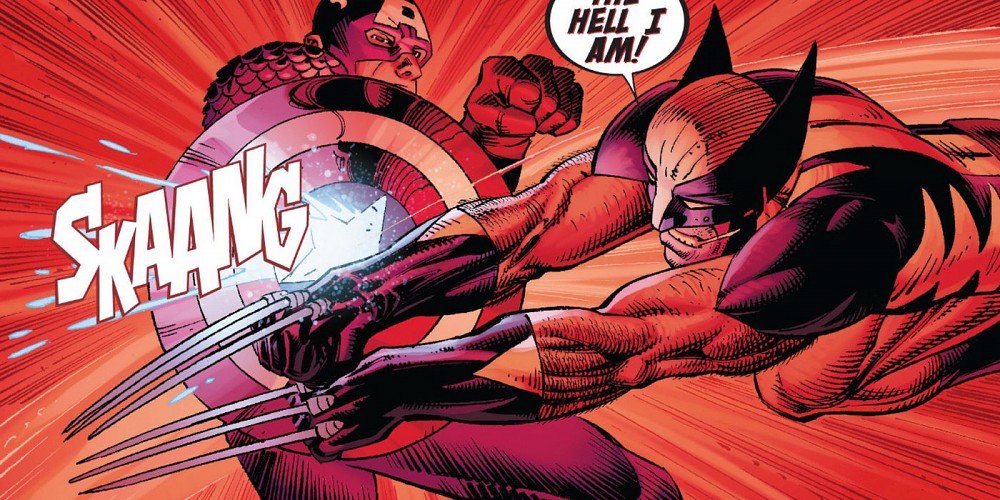
Wolverine’s skeleton was originally reinforced with True Adamantium, but became altered by his healing factor to become Beta Adamantium (see number 2), whereas Captain America’s shield is made of Proto Adamantium – an alloy of True Adamantium and Vibranium. Proto Adamantium is the strongest metal in existence in the Marvel-verse, so Wolverine’s claws could not damage it. This makes Cap’s shield one of the very (very) few things in the Marvel Universe that cannot be cut by Wolverine’s claws, no matter how much pressure he puts behind it. The two have even duked it out, and Wolverine’s claws slid off the shield (with what we can only imagine was a sound ten times worse than nails on a blackboard!).
However, in the Marvel Cinematic Universe, Cap’s shield is made out of pure vibranium (presumably because Fox has the rights to adamantium), and Wolverine’s claws are described only as “adamantium,” without all the detail of the comics. Therefore, if the film universes were ever to come together, Wolverine’s claws could potentially be stronger than the shield. We’ll just have to wait for a rights-sharing deal to find the answer to that one out!
If the Iron Man series can be remembered for one thing, it’s for single-handedly kickstarting the absolute hurricane of comic book movies that has come to define our current pop culture moment. Before Iron Man, there was no Marvel Cinematic Universe. There was no copycat DC Extended Universe. Hell, the very concept of shared universes hadn’t really even gotten off the ground, for better or worse. Suffice it to say that when Iron Man premiered eight years ago in 2008, no one could have possibly anticipated its influence—and now what had been predicted to be a box office gamble, a mildly successful B-tier blockbuster at best, has the distinction of anchoring one of the most successful series in film history.
We’ll be living with Iron Man’s influence for years to come, that much is a given. But what about the curious absence of Iron Man 4? At this point, are we ever getting one? Let’s dig through the gossip and find out whether we’ll ever see one more solo adventure with Robert Downey, Jr. as the invincible Iron Man.
RDJ is too expensive
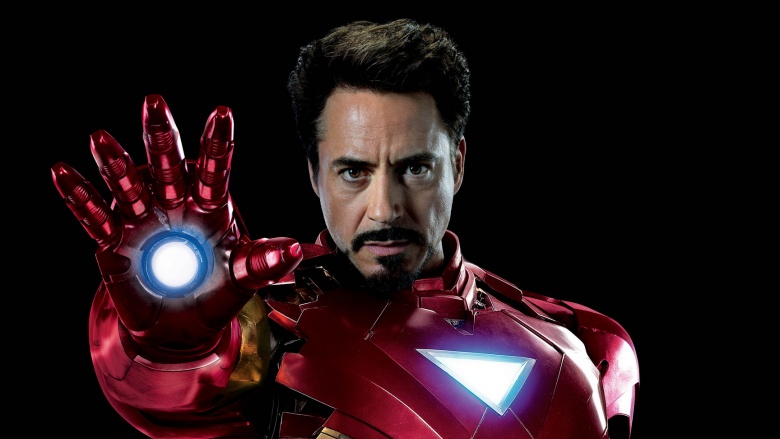
Robert Downey, Jr.’s value to the Marvel Cinematic Universe simply can’t be overstated; for years, he’s been the charismatic center of the Avengers initiative, taking the first movie, the first face-to-face with Nick Fury, and the first trilogy. This storytelling value, however, comes with a high real-world monetary price tag. As Tony Stark, RDJ hasn’t just been one of the most valuable players in the Marvel stable, he’s become one of the most valuable actors in the entire world. While nobody outside the negotiations can be precisely sure of the dollar amount Downey’s netting these days, one thing’s for certain—it isn’t small. Even modest estimates have his earning capacity at hundreds of millions of dollars, with nearly half-a-billion dollars in earnings not outside the realm of possibility. And it’s not as though these numbers ever go down. It would be no surprise if the cost-benefit analysis of an Iron Man 4, from Marvel’s side, shows less and less of a reward. And that’s fine! The end of RDJ’s involvement would by no means spell the end for a big-screen Iron Man. Like it or not, his version—beloved as it is—is more likely the beginning of something that will last awhile, rather than a role that ends with his departure.
The comic storylines are more exciting
In the comics, it’s not surprising to see an occasional dramatic passing of the mantle, wherein one hero steps into the shoes of another. Commissioner Gordon has been Batman; Doctor Octopus has been the Superior Spider-Man; Bucky Barnes and Sam Wilson, the Winter Soldier and Falcon, have both been Captain America. These departures do tend to curve back toward a status quo or reset, with the “original” version of a hero rarely being permanently sidelined. But that doesn’t invalidate the other narratives starring different heroes, and the Iron Man comics are currently going through an exciting stretch: Tony Stark is no longer Iron Man. In his place, a 15-year-old girl genius named Riri Williams has assumed the mantle—and so has Doctor Doom, in his own Infamous Iron Man title. It’s about the biggest 180-degree-turn one could imagine, and fertile ground for storytelling possibilities. You think you wouldn’t be curious to see some of these changes unfold on the big screen?
We’ve got other heroes to get to
If you’re a fan of the Marvel Cinematic Universe, you’ve likely heard about their peculiar strategy of releasing movies in “phases.” Phase 1 was the original “Avengers assemble” arc, introducing our main heroes. Phase 2, leading up to Age of Ultron, broadened the world, taking us into space and folding new heroes like Scott Lang’s Ant-Man and Janet Van Dyne’s Wasp into the mix. Now we’re at the start of Phase 3, set to introduce a slew of new heroes (and likely send a few off by the end). Phase 3 is set to culminate with the long-awaited fight with Thanos, teased for what feels like 40 or 50 years now, in 2018’s Avengers: Infinity War. Meanwhile, Captain America has already had his third adventure, and Thor will also see his third movie before Phase 4 begins. The plan appears to be a gradual handoff, as older heroes are phased out and newer ones are introduced. It’s hard to see how another Robert Downey Jr. Iron Man can fit into the mix—or the overall strategy of new heroes in, old heroes out.
Iron Man has taken on the Nick Fury role
When the MCU started, the movies weren’t as interconnected, easing audiences into the “shared universe” concept with hints and references rather than a truly serialized story. In those pre-Avengers days, the real connecting tissue was Samuel L. Jackson’s Nick Fury and the organization S.H.I.E.L.D. After a few movies spent thoroughly dismantling and destroying that institution—Hail Hydra, and all that—Nick Fury is lately nowhere to be seen, and the strongest connection between all of the movies has become Tony Stark. It’s Stark, after all, who propels the events of Captain America: Civil War, in which he basically shares top billing. It’s Stark who pulls Spider-Man into the fold, and he’ll be appearing in the web-slinger’s upcoming solo outing, acting presumably as a sort of mentor to Peter Parker (and maybe a sorta something else to single lady Aunt May, if you know what we’re saying). In short, we don’t need a fourth Iron Man movie to see Iron Man anymore. He’s already popping up everywhere else.
We’re running out of villains
Villains have admittedly never been the strong point of the otherwise very entertaining MCU. They’re all fairly one-note, and their surface-level diversity fails to cover for the fact that all of their master plans boil down to using some unearthly power to blow up buildings for 20 minutes before getting their asses handed to them by the Avengers (or the Guardians of the Galaxy, or Black Panther, Ant-Man, Moondragon, Warlock, Pip the Troll, the Nova Corps, Beta Ray Bill… whatever). No one’s seeing these movies for the villains—or, as Will Smith’s Deadshot so aptly put it in this summer’s DCEU entry Suicide Squad, the swirling rings of trash in the sky that threaten all-so-frequently to destroy humanity.
It wouldn’t be prudent for a potential Iron Man 4 to come out swinging with a villain that impresses less than the previous three, and honestly, we’re sort of running out of interesting villains that are Iron Man-specific. Now, in our opinion, there are still interesting directions they can go with this, but with Marvel’s past unwillingness to feature a female villain, particularly in the Iron Man series, it seems unfortunately unlikely. The thinking may well be that more valuable Iron Man villains, like the Green Goblin, would be better off showing up elsewhere in the universe, like Spider-Man’s neck of the woods, where he’s much more commonly known.
Oh, the rest of the cast is expensive, too
Lest we put all of the blame for running up the budget on Robert Downey, Jr.’s popularity alone, we should remember that he’s not the only superstar in his cast. Gwyneth Paltrow and Don Cheadle are in these movies, too, and they likely take home more money the more they appear as well. Add in a villain played by an actor with some star power, and it’d probably be a lot cheaper to try and make a profit on a Squirrel Girl movie than an overstuffed Iron Man sequel.
Tony Stark is running out of interesting storylines
One of Iron Man’s most famous storylines seems unlikely, at this point, to ever make it to the big screen, for better or for worse. The odds of family-friendly fun-time Disney being cool with a movie where Tony Stark confronts one of his most famous foes—alcohol—seem minimal at this point. If the character were going this direction, we would have probably seen it by now; it would be somewhat jarring for Tony Stark to start hitting the bottle after this many appearances. It’s ground that was fairly well covered, in euphemistic terms, by other movies in the series, with PTSD being the major concern of Iron Man 3. At this point, Marvel is in a bad position, story-wise. They can’t use Tony’s most famous story, but is it a good idea to go more obscure? Especially for a fourth movie. Could it be they’d rather not push their luck?
An unnecessary risk
The Iron Man trilogy is, in critics’ eyes, a three-for-three success story, despite some dispute about the merits of Iron Man 2. (Hey, we liked it.) This is hard to do! Ask the Spider-Man, X-Men, and Batman franchises how well their third installments went, for instance. Or look at series like Fantastic Four and The Amazing Spider-Man that were put to rest before getting a chance at a third at-bat. There’s a certain level of accomplishment to pulling off a trilogy that succeeds critically—not even The Godfather could do it!—and executives may well be hesitant to risk even making a fourth Iron Man movie. In short, they stand to lose more than they stand to gain. What if it’s lousy? What if it’s tired? Wouldn’t it be easier to call it a day? Especially since…
Iron Man 3 was a perfect ending
We’re getting more into the realm of opinion here, but it’s really hard to argue with the conclusion of Iron Man 3, which even at the time felt like a pretty final statement on the character. Scripted and directed by the celebrated writer-director Shane Black, the up-to-now final chapter of the Iron Man series had a lot of fun analyzing the meaning of the series and the character, playing around with a lot of metatextual concepts about what Iron Man meant. Pepper Potts wears the suit twice in the movie (which was super-fun and true to the comics), and the climax, an insane action sequence in which Stark summons something like 50 sentient uninhabited Iron Man suits to save him from an unstable, explosive villain, seems impossible to top.
It was a movie where Tony was separated from his suit for a long stretch; the movie made us analyze Tony Stark and Iron Man as separate entities, before ultimately reconciling them in the end. “My armor was never a distraction or a hobby,” says Tony, as he drives into the sunset before the credits roll. “It was a cocoon—and now I’m a changed man. You can take away my house, all my tricks and toys, but one thing you can’t take away—I am Iron Man.” It’s just a fantastic way to end the series, and to risk spoiling it with a fourth installment means flirting with diminishing the whole series. Sometimes the only way to win is not to play, and with all of these other superheroes on the shelf, maybe the smartest move is to let the series lie. We don’t need Iron Man 4, not really. The next best thing is right around the corner.
Time and time again, fans have criticized the DCEU for being too dark. Often, fans compare it unfavorably to The CW’s Arrowverse, where DC’s light-hearted comic book origins are embraced in shows like Arrow and The Flash.
However, this is grossly misleading. While the CW are clearly restricted to a degree by the ratings and their younger demographic, heroes such as Green Arrow and the Scarlet Speedster have suffered their fair share of tragedies over the past five years, including personal heartbreak and many, many deaths. The key here is maintaining a balance between light and dark — something that the DCEU is still struggling to manage.
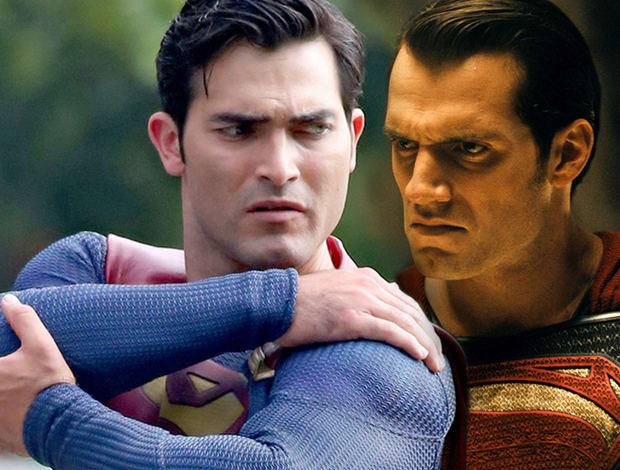
The secret to the Arrowverse’s success is the harmony between light and shadow. Their world is populated by both lighthearted heroes and more brooding figures. Tyler Hoechlin, who’s about to join the Arrowverse as Superman, looks set to be the former. Comparisons will inevitably be drawn between this Last Son of Krypton and Henry Cavill’s interpretation of the character, which can be currently found brooding over in the DCEU.
Check out our first glimpse of Tyler Hoechlin’s Superman in action below:
While we’re yet to see a full episode featuring Supergirl’s new Man of Steel, we’re already confident that Tyler Hoechlin has nailed the role — and here’s why.
It’s Ok To Be Dark, But Not All The Time
Injustice [Via DC Comics]
The problem with the DCEU isn’t that Warner Bros. has chosen to take a darker route than the CW. After all, stories such as Injustice and Arkham Asylum have resonated with comic book fans in recent years for their unflinching depiction of heroics in a cruel and unjust world. So why don’t films like Man of Steel receive the same acclaim?
It’s important to establish from the outset that Henry Cavill isn’t a bad actor. The British hunk nailed his suave role in The Man from U.N.C.L.E., and also impressed during his time on The Tudors. But whether he’s playing Clark Kent or Superman himself, something just doesn’t sit right with Cavill’s pivotal role in the DCEU.
At his best, Cavill’s Superman is purely aesthetic; and the comic-faithful attributes certainly weren’t the only parts of his appearance fans appreciated:
At his worst though, Cavill’s Superman was ripped apart by critics for a lack of strong characterization. Sure, it would be great to discuss Cavill’s hotness if we had 4 hours to spare, but instead, we’re too busy poring through the many negative reactions that Cavill’s performance received when Man of Steel first came out in 2013:
A.V. Club: “Cavill — whose performance involves more posing than acting — is alternately presented as an alien messiah, a superweapon, and an American flag flapping in the wind; the one thing he never gets to be is a character.”
Boston Globe: “British actor Henry Cavill gives a strong, likable, occasionally moving performance in the title role, but doesn’t quite come out a movie star. I missed the dorky modesty of Christopher Reeves Superman, the squareness that really marked the character as an alien. Cavill’s Superman is an interestingly conflicted hunk, but he doesn’t resonate beyond the borders of the screen.”
Inquirer: “Cavill’s performance is less memorable for his introspective brooding than for his six-pack (a fetish for Snyder, the director of “300”). He’s handsome and capable, but one can’t help missing Christopher Reeve’s twinkle. At least he smiled.”
Well… he did try at least. [Via Warner Bros.]
It’s hard to deny that the constant Christopher Reeves comparisons are somewhat unfair. After all, it’s commendable that both Snyder and Cavill put their own stamp on the legacy of Superman, rather than simply recycle what had come before. But the problem is that by trying something different, the pair ended up distancing themselves from what makes Superman a legitimate icon.
The DCEU itself doesn’t need to be lighter, but a moral counterpoint is needed to balance out the likes of Harley Quinn and Batman. Instead, we’ve been left with a destructive, god-like figure who seems too far removed from humanity to care; something that even Cavill himself has poked fun of in the past.
A photo posted by Henry Cavill (@henrycavill) on
“>
How Will Tyler Hoechlin’s Superman Differ?
When CW’s Supergirl first announced that Tyler Hoechlin would join the show as Superman, the reaction was mixed to say the least. But now that we’ve seen the Big Blue in action, it looks like Hoechlin will nail the role in every way that Cavill failed to do so.
[Via CW]
Far too much of Cavill’s portrayal in the DCEU revolved around this idea of Kal-El as a messiah figure without imbuing him with a sense of humanity. The moments when Snyder chose to explore Clark Kent’s personal life were rather lacking in comparison, and felt more perfunctory than anything else.
In contrast, The CW’s decision to introduce Hoechlin first as his alter-ego, awkwardly conversing with his boss, was the perfect move. It would have been easy to open with a flashy reveal of Hoechlin in spandex — but with this approach, The CW reminded us that Superman may be a powerful symbol of hope, but Clark Kent’s humanity remains the real essence of the character, “lickety-splits” and all.
[Via CW]
Hoechlin’s Superman Does Seem Rather Familiar Though…
[Via CW]
Sure, detractors might argue that Hoechlin’s portrayal is trying too hard, striving to copy Reeves’s iconic performance without bringing anything new to the table, but they’d be wrong. Instead of paying tribute to performances from the past, Hoechlin is tapping into the same ideals that Reeves drew from the comics, reminding us why Superman has endured as an icon for so long in the first place.
Check out Hoechlin’s Superman in this second Supergirl trailer for Season 2:
In an interview with EW, Hoechlin summed up his portrayal perfectly:
“It’s Superman as I think he was intended to be, which is just an incredible symbol of hope to kids that they can do anything, that they can be good people, and that good people can triumph over evil. You don’t have to be dark and brooding and always in this state of masculine toughness. He sits in that very hopeful and optimistic place that Kara tends to be in.”
[Via CW]
Sure, Spider-Man’s funny, Wolverine’s a badass and Batman’s got that fancy car, but Superman represents something far more important: hope. At the risk of stepping on my soapbox, it’s worth remembering that the symbol on Big Blue’s chest is a stark reminder that the world really does need someone like Superman. In these trying times, the message of hope that Superman embodies is more vital than ever.
Check out Supergirl’s adorable conversation with her cousin in Season 1 below:
Of course, we’ve yet to see Tyler Hoechlin’s Superman in full flight — but even with just these trailers to go on, we hope that the DCEU will learn some much-needed lessons from the CW. If Hoechlin embodies Clark Kent as well as we think he will, then both the films and the TV shows could help draw the very best out of our favorite heroes to create the best adaptations yet. The red capes are coming, and we couldn’t be more excited.






![Injustice [Via DC Comics]](https://images.moviepilot.com/image/upload/c_limit,h_1000,q_auto,w_710/x37ycwhahhutttn7min7.jpg)
![[Via Warner Bros.]](https://images.moviepilot.com/image/upload/c_limit,h_1000,q_auto,w_710/hdatvtmybmjdmzdv4kzh.jpg)
![[Via CW]](https://images.moviepilot.com/image/upload/c_limit,h_1000,q_auto,w_710/orh3ki47wan633hymcxd.jpg)
![[Via CW]](https://images.moviepilot.com/image/upload/c_limit,h_1000,q_auto,w_710/ekjip9zvg0gu42gx1lrm.jpg)
![[Via CW]](https://images.moviepilot.com/image/upload/c_limit,h_1000,q_auto,w_710/weeekvdakuyvmvdzy2bt.jpg)
![[Via CW]](https://images.moviepilot.com/image/upload/c_limit,h_1000,q_auto,w_710/jwnvwhcgvsajrxypnwfd.jpg)