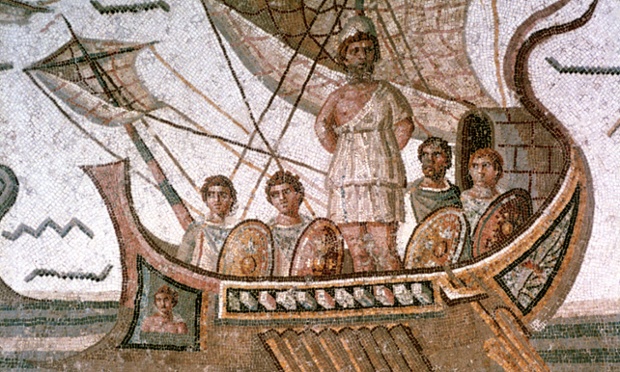
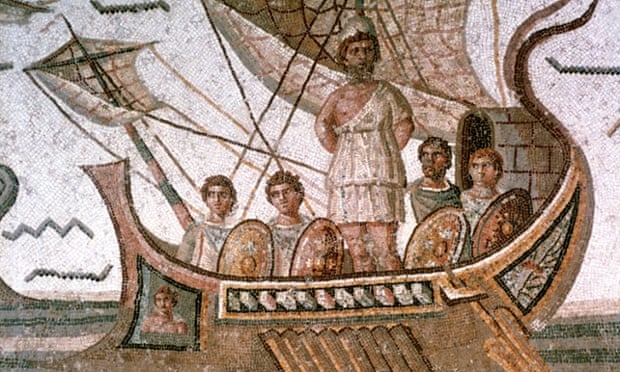
The director, the writer and the producer of the latest in the The Hunger Games franchise have been hired to bring the Greek epic to the screen
Go hard or go Homer. Photograph: Universal Images Group/Getty Images
The project has been fast-tracked, with Lionsgate hoping to continue the blockbuster success they’ve had with The Hunger Games by focusing on further large-scale films. The project reportedly began when Erik Feig, the co-president of Lionsgate Motion Picture Group, pitched the idea to Lawrence in Paris while they worked on Mockingjay.
As well as directing three Hunger Games films, Lawrence also directed I Am Legend and Constantine; Peter Craig also wrote the script for The Town and is working on upcoming sequels Top Gun 2 and Bad Boys 3; and Nina Jacobson also produced One Day and Diary of a Wimpy Kid.
The Homeric epic, which follows Odysseus on his journey home after the fall of Troy, has influenced the plots of films including Big Fish and O Brother, Where Art Thou?
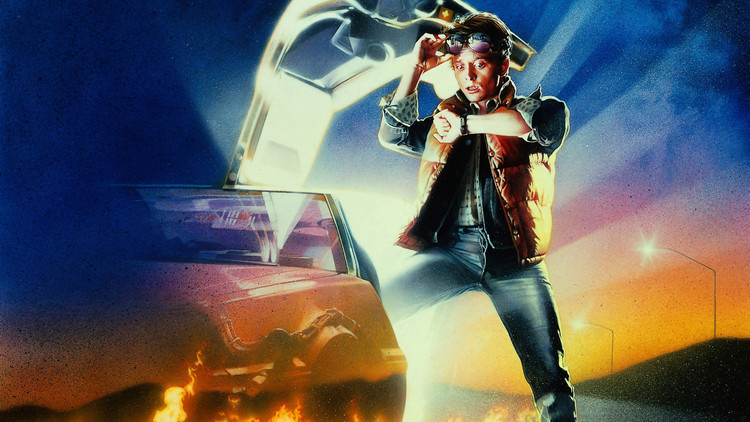
This year marks the 30th anniversary of Robert Zemeckis’ time travel classic Back to the Future. This is one of my favorite movies of all time, and I can’t believe it has been thirty years since it was released in theaters. I still have memories of my parents taking me to see it. Over the years I’ve watched this movie countless time, and every time I see it, I enjoy the hell out of it. This film has never lost its flavor.
You might think you know all there is to know about this movie. I thought that before I started looking into it, and in the process I came to find out that there was a ton of stuff that I didn’t know. I have put together a list of 25 Fun Facts here for you to go through as a way to celebrate 30 years of Back to the Future greatness.
President Ronald Reagan was amused by Doc Brown’s disbelief that an actor like him could become president. Apparently he found it so funny that he had the projectionist stop the movie and replay the scene. The President also enjoyed the movie so much that he made a direct reference of the film in his 1986 State of the Union address saying, “As they said in the film Back to the Future, ‘Where we’re going, we don’t need roads.'”
The script was rejected 40 times before it finally got the greenlight.
Apparently producer studio head Sid Sheinberg did not like the title Back to the Future, insisting that nobody would see a movie with “future” in the title. He sent a memo to Zemeckis saying that the title should be changed to “Spaceman From Pluto”, so it would tie in with the Marty-as-alien jokes in the film. He also suggested other stupid changes like replacing the “I’m Darth Vader from planet Vulcan” line with “I am a spaceman from Pluto!” Sheinberg changed his mind after he got a response memo from Steven Spielberg, which thanked him for sending a wonderful “joke memo”, and that everyone got a kick out of it.
Most people know that Eric Stoltz was originally cast in the role of Marty before Michael J. Fox. They filmed for five weeks before everyone agreed that he wasn’t working out for the part. They ended up casting Fox, and he shot both Back to the Future and Family Ties at the same time. Every day during production, the actor drove straight to the movie set after he was done with Family Ties. The bulk of the production was filmed from 6pm to 6am to fit his schedule, with all the daylight scenes filmed on the weekends. Reshooting all of Stoltz’s scenes added $3 million dollars to the budget.
Thomas F. Wilson, who played Biff, almost had his collarbone broken in the scene where Marty and Biff are about to fight in the cafeteria. Apparently Stoltz roughed up Tom for real on every take, even after repeated requests from Tom to tone it down. Tom planned on getting back at him during the car park scene outside the dance, but Stoltz was fired before that confrontation could take place.
Claudia Wells, who played Jennifer Parker in Back to the Future, gave her role up to Elisabeth Shue for Back to the Future Part II and Back to the Future Part III because her mother was diagnosed with cancer.
Biff’s popular catchphrases “make like a tree and get outta here” and “butthead” were improvised by Wilson.
The film crew played a prank on Fox while filming the “parking” scene with Marty and Lorraine in the car. The scene called for Fox to drink from a prop liquor bottle filled with water and do a spit take when he sees Lorraine with a cigarette. during a specific take, the prop liquor bottle was switched with one that contained real alcohol. Fox, unaware of this, performed the scene and drank from the bottle, only to discover the switch after-the-fact. The full gag is featured on the “Outtakes.”
Ralph Macchio turned down the role of Marty McFly, thinking the movie was about “A kid, a car and plutonium pills.”
The inspiration for the film comes from producer Bob Gale finding his father’s high school yearbook and wondering if he would have been friends with his dad as a teenager.
Both Marty and Jennifer credit Doc as the originator of the saying “If you put your mind to it, you can accomplish anything.” The thing is, Doc never says the line once in any of the Back to the Future movies.
Doc’s hunched-over look in the movie was developed when the filmmakers realized the big difference in height between Lloyd and Fox; Fox is 5′ 4½” while Lloyd is 6′ 1″. To compensate for the height difference, Zemeckis used specific blocking where the two often stood far apart at different camera depths. For close ups, Lloyd would have to hunch over to appear in frame with Fox. The same approach was used in the two sequels.
When Doc Brown first sends Einstein “one minute” into the future, the time elapsed between when the DeLorean disappears and reappears is actually 1 minute 21 seconds, just as the reappearance occurred at 1:21am, and the flux capacitor required 1.21 gigawatts of electricity.
The 1985 version of Doc’s home is the same garage that Marty and Doc hide the DeLorean in 1955. In the opening scene an article shows that the mansion burned down years before, either for insurance money or due to an explosive experiment. The presence of the commercial development also implies that Doc sold the land surrounding the house for more money to fund his project. After all, he does state later that it took “many years and his entire family fortune” to build the time machine.
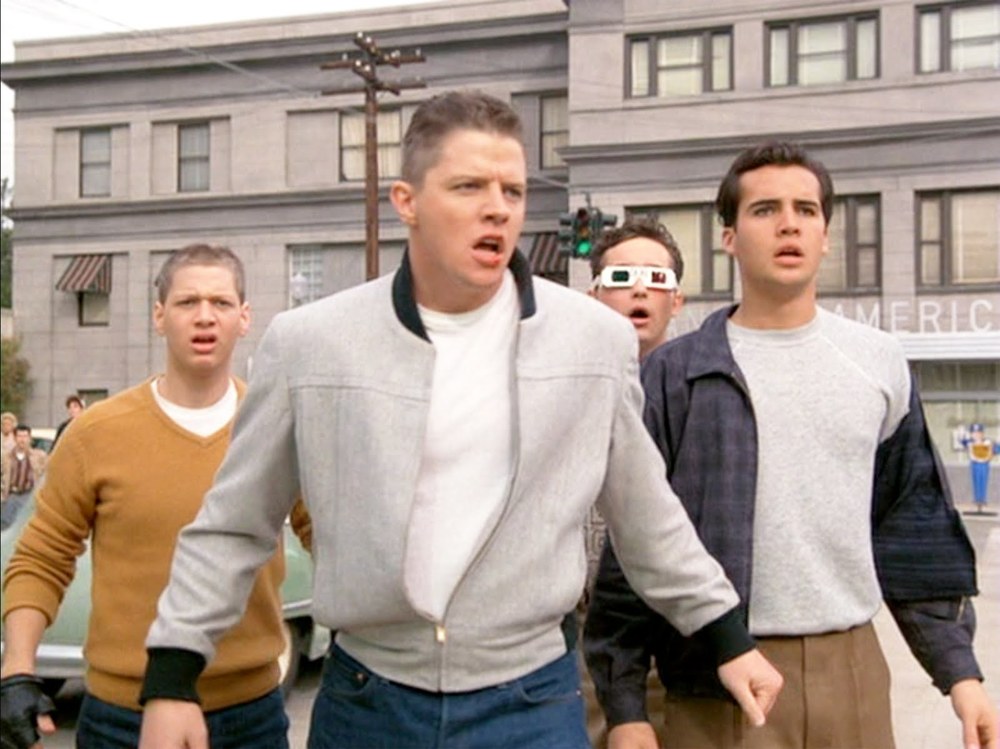
Billy Zane makes his first on-screen appearance in the movie as a character named Match, one of Biff’s cronies.
The time machine went through several variations. The first draft of the script featured the time machine as a laser device that was housed in a room. At the end of the first draft the device was attached to a refrigerator and taken to an atomic bomb test. Zemeckis said in an interview that the idea was scrapped because he and Steven Spielberg did not want children to start climbing into refrigerators and getting trapped inside.
Apparently in one of the original script drafts, Doc and Marty sell bootleg videos so they could make money to fund the time machine. This plot point was removed at Universal’s request, as they did not want to be seen as promoting movie piracy.
“A brief scene was cut in-between the scenes of the McFly family dinner and Marty being woken up by Doc’s phone call. It involved Marty preparing to send his demo tape to a record company. Marty decides not to do it, and leaves the empty manila envelope on his desk. In a scene that remains in the film, he goes to breakfast with the manila envelope sealed, suggesting he decided to send it in.”
John Lithgow, James Woods, Dudley Moore, and Jeff Goldblum were all considered for the role of Doc Brown.
Just in case you’ve never bothered to read the two red labels on the flux capacitor, they say “Disconnect Capacitor Drive Before Opening” and “Shield Eyes From Light.”
The backlot used as the town of Hill Valley is also seen in the first episode of Twilight Zone.
In the opening sequence, when Marty is turning on the electrical equipment to play guitar, the first switch has a label which says “CRM 114,” which is a reference to the radio equipment in Dr. Strangelove.
The “To be Continued” phrase wasn’t in the theatrical cut of the film. It was inserted into the end of the VHS release of Back to the Future, and was later omitted from the 2002 DVD release. “The cliff-hanger ending of the film was not originally intended to set up a sequel, but rather just as one last joke. It was admitted by the writer that had they originally intended the following two sequels, the ending would not have had Jennifer get into the car with Doc and Marty. This is why Jennifer was almost immediately knocked unconscious at the beginning of Back to the Future Part II.”
After the film was released, body kits were actually made so that people could make their DeLoreans look like the time machine.
“In the original script, Marty’s playing rock and roll at the dance caused a riot which had to be broken up by police. This, combined with Marty accidentally tipping Doc off to the ‘secret ingredient’ that made the time machine work (Coca-Cola) caused history to change. When Marty got back to the 1980s, he found that it was now the 1950s conception of that decade, with air-cars and what-not (all invented by Doc Brown and running on Coca-Cola). Marty also discovers that rock and roll was never invented, and he dedicates himself to starting the delayed cultural revolution. Meanwhile, his dad digs out the newspaper from the day after the dance and sees his son in the picture of the riot.”
I’ve included the original theatrical trailer below along with several deleted scenes that have found their way online.
There are so many comic book characters that have been created over the years that it’s hard not to think that some of them are based on real people. The thought has crossed my mind during my years of reading comics, but I’ve never actually done the research to figure it out.
Thanks to Youtubers Matthew Santoro and VSauce3, who did do the research, we have a great video breakdown that lists off 10 comic book characters whose creation was inspired by real people. Check out the video. I’ve listed them off in text form below.
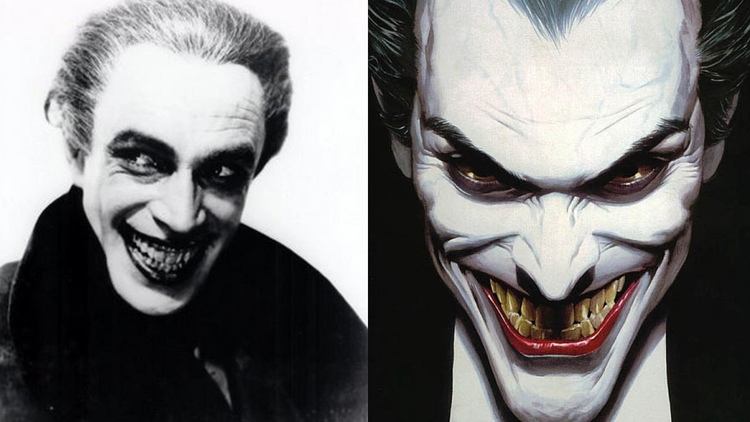
#1 – The Joker – Conrad Viedt (1928) #2 – John Constantine – Sting #3 – Tintin – Danish Boy Scout Palle Huld #4 – The Hellfire Club – Various actors who Jack Kirby and Stan Lee were familiar with #5 – Magneto and Professor X – Malcolm X and Martin Luther King Jr. #6 – Iron Man – Howard Hughes #7 – Lucifer Morningstar – David Bowie #8 – Harley Quinn – Arleen Sorkin (Days of Our Lives) #9 – J. Jonah Jameson – Stan Lee #10 – Darkseid – Adolf Hitler
Pilgrim Jones, daughter of hippies and now living in Switzerland, is in a state of grief: her treacherous husband has left her for his pregnant girlfriend. After Pilgrim is involved in a terrible accident, she takes the first flight she sees on the departures board and ends up in Tanzania, where she encounters an assortment of characters: mercenaries, witch doctors, aid workers, and drunks with secrets. There are also two men who have flown from Europe to find her, for very different reasons. Full of empathy and intelligence, this novel is a study of the shame, guilt and despair that can result from nothing more than desperately bad luck. With no shadow of didacticism or propaganda, it explores the nuances of our moral choices in a postcolonial context. The ending is startlingly optimistic and very moving.
In Wilderness
DIANE THOMAS
Shame By Melanie Finn
BANTAM, $32.99
This novel’s badly damaged main characters have sought solitude in the mountain wilderness of the American South, both bewildered as to what is wrong with them and both at the extremity of existence. It’s some time in the late 1960s, and Katherine, a former successful businesswoman, is unable to digest food and has been told she is dying by doctors who can’t tell her why, though perceptive readers will quickly realise that she has developed multiple chemical allergies. Danny is a very young Vietnam veteran with a bad case of PTSD, another condition that hasn’t yet been identified. Danny has come to hide, Katherine has come to die. But they meet and quickly find themselves in a state of intense erotic co-dependency. This is the best account of a woman in a state of sexual obsession that I have ever read.
The Faithful Couple
A.D. MILLER
LITTLE, BROWN, $29.99
A.D. Miller’s Snowdrops was a success, making it as far up the ladder as the shortlist of the 2011 Man Booker Prize. Metaphors of climbing and competition come easily when discussing his second book, for its subject matter is male friendship and his view of this topic seems queasy and jaded. Neil and Adam’s friendship, born by chance and cemented on a whimsical trip to the US, is poisoned by an encounter on a camping trip that haunts them for years. Both see their friendship in terms of comparison and competition: he’s got more money, I have a better job, his chest is hairier than mine. And both use women as a kind of currency and means of communication between them. Miller is a writer of skill and intelligence but this novel will be rough going for female readers, and probably most male ones.
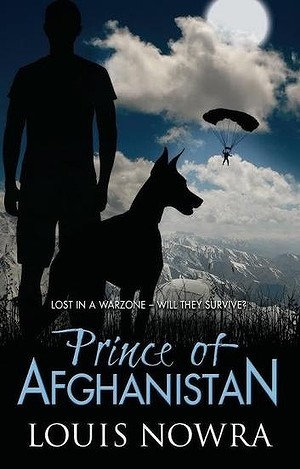
Prince of Afghanistan
LOUIS NOWRA
ALLEN & UNWIN, $16.99
Louis Nowra’s second book for young adults is a model of traditional storytelling: a dramatic setup followed by a race against danger, hunger and time. Mark is a young Australian soldier in Afghanistan, in fear of his life after a mission goes wrong. He is left to find his way out of enemy territory, in the company of an army dog called Prince whose handler has been killed. The novel is recommended for 14-16 year olds but it still comes as a shock to discover that Mark is barely older than that. This is a particularly good book for that age group, likely to engage reluctant readers – especially boys – with a tale full of action and danger, a hero who hasn’t always been heroic, and an animal story that’s touching without being saccharine. It will also give young adult readers some ideas to chew over about the nature of war.
HARTFORD – After the movie version of Harry Potter and the Sorcerer’s Stone was released in 2001, author J.K. Rowling also released a book called Fantastic Beasts and Where to Find Them.
It was a different kind of book, penned under the name Newt Scamander, a “magiczoologist”, and purporting to be Harry Potter’s exact copy from the series, a required textbook from his first year at Hogwarts. It was a fun book to write, according to Rowling, who thought the topic of magical creatures would have widespread interest, and provide further information on beings touched upon in the previous seven-part book series.
On September 12, 2013, Warner Bros., who produced the eight-part Harry Potter film series, and Rowling announced that a new Pottermore trilogy would be produced, beginning with a film inspired by Fantastic Beasts and Where to Find Them. The film, featuring Rowling herself as the screenwriter, will feature Newt Scamander as the main character, set in New York 70 years before Harry’s story starts, and following his many escapades with a variety of magical creatures.
“Although it will be set in the worldwide community of witches and wizards where I was so happy for 17 years, ‘Fantastic Beasts and Where to Find Them’ is neither a prequel nor a sequel to the ‘Harry Potter’ series but an extension of the wizarding world,” Rowling explained of the trilogy.
New information has been released that British actor Eddie Redmayne (The Theory of Everything) is the studio’s first choice for Newt Scamander. Director David Yates, who also directed the last four of the previous Harry Potter movies, is said to be considering a few other actors for the part, such as Nicholas Hoult (Warm Bodies) but Redmayne, according to sources, is the frontrunner.
Besides Scamander, there are four other main roles — two American girls and two American boys — that the studio is currently looking to cast.
The first of this new Pottermore trilogy is expected to be released in theaters on November 18, 2016.



 The Faithful Couple By A.D. Miller
 In Wilderness By Diane Thomas
 Shame By Melanie Finn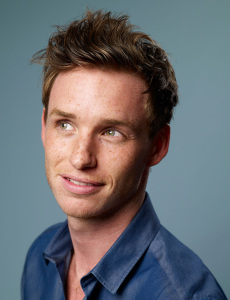

 New information has been released that British actor Eddie Redmayne (The Theory of Everything) is the studio’s first choice for Newt Scamander. Director David Yates, who also directed the last four of the previous Harry Potter movies, is said to be considering a few other actors for the part, such as Nicholas Hoult (Warm Bodies) but Redmayne,