Jens Bergensten, one of the Minecraft developers working at Mojang, has recently announced that the team is working on a brand new dungeon and new features.
Describing what he was doing Jens confirmed, via the social networking website Twitter, that the team is “working on upcoming features!” Without going into any details he went on to add that currently it revolves around “A new ‘dungeon’, with blocks and mobs, [which is] very different from the other dungeons.”
Jens, who took over Minecraft’s development from creator Markus “Notch” Persson in 2011 to become the lead designer and developer, has not yet revealed if these new features will be released as part of Minecraft 1.9. Up until now we have been lead to believe that the 1.9 update will be focused around combat, with Mojang even reaching out to fans for their thoughts and opinions.
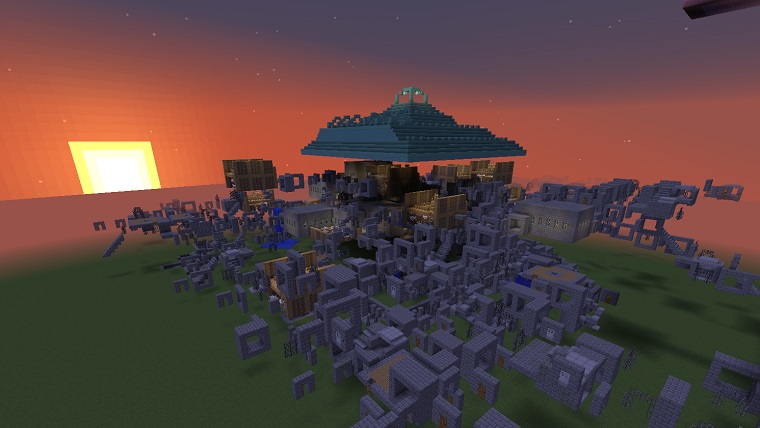
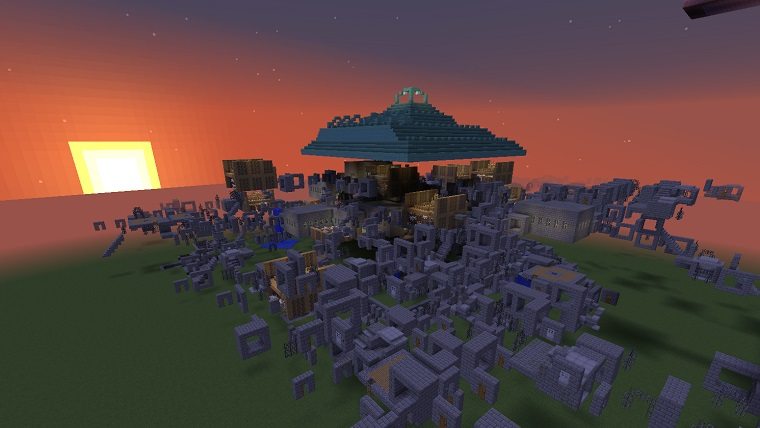
While Jens has not confirmed if they are linked, he has also posted a screenshot (seen above) of what happened during the design process of a new feature. It seems to have a similar structure to that of existing dungeons, with a sprawling network of rooms to be explored by players. Alongside the image he simply put that when working on new features for Minecraft they “sometimes produce surprising
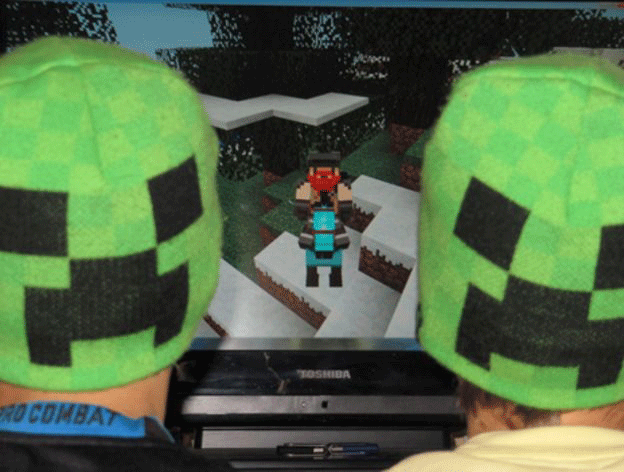
Minecraft, the online world that most parents simply don’t understand, is now officially the most watched game of all time on YouTube.
According to the video-sharing site, the game that allows children to build worlds made out of blocks – a bit like Lego – has also become the most searched-for term, behind “music”.
It bears out earlier research from YouTube video research firms Newzoo and Octoloy, which found that Minecraft material notched up more than 3.9 billion views on YouTube in March 2015 alone.
None of this will come as a surprise to the many parents who have become ‘Minecraft-widows’, desperately trying to entice their children to go on a bike ride, throw a ball, visit the park – anything other than while away the hours watching other people build things with little green bricks on the internet.
The fact that parents are worried about the varying levels of enthusiasm/obsession/addiction that their children display when playing Minecraft has been well-documented.
In numerous posts and articles online, they complain that the game is taking over their children’s lives, that they become irritated when they aren’t playing it, they neglect homework, chores, even going to the toilet, to keep on playing.
It has led some parents to ban or severely curtail Minecraft time. One father, explaining his decision to limit his twin boys’ access to the game, said simply: “Minecraft, as with all successfully addictive games, is endless. My kids’ childhood isn’t, and I want them to spend it learning about the real world, not a virtual one.”
But for other parents, children playing the game is OK – at least they are doing something vaguely creative – but spending hours mindlessly watching others playing it represents a whole new level of obsession.
Living with Minecraft fans – by Mark Ward, BBC technology correspondent
Is Mark worried about the amount of time his boys devote to Minecraft?
I’ve got two boys who, it is fair to say, are closer to being Minecraft fanatics rather than just fans.
That means they spend a lot of time watching YouTube videos of other people playing the game in its various guises. Right now, they probably watch more YouTube than regular TV.
Do I mind? A little, but I’m aware of the place that Minecraft occupies among my boys and their peers. Cutting them off would mean severing a strong link to their friends.
And that interest has a positive aspect too. It’s made them intimately familiar with Minecraft down to its most esoteric commands, is nurturing a desire to make their own mods for the game, has led them to run their own game server, make and edit videos and curate their own YouTube channel. It’s by no means passive consumption.
There is certainly a rich vein of Minecraft-related content on YouTube – around 42 million videos that range from tutorials offering ideas on new things to create, “Let’s Play” videos, essentially footage of other people playing the game, and new ways to modify their Minecraft worlds.
There are also hundreds of channels devoted to Minecraft, including popular ones such as Yogscast and SkyDoesMinecraft.
Some, dedicated specifically to children, have become internet sensations. Stampy, a YouTube channel narrated by a cat has more than 5.6 million subscribers and nearly 3.4 billion views. In 2014, it was the fourth most popular YouTube channel.
Others are less appropriate, narrated by what one parent described as “helpful but sweary” adults.
Bec Oakley is founder of MineMum, a blog intended to help guide parents through the minefield that is Minecraft.
She is not surprised that it has become so popular on YouTube.
“YouTube is this generation’s television. It’s how [children] entertain themselves, learn, share. Watching others play Minecraft allows them to extend their experience of the game, to share it with others and to learn from each other,” she told the BBC.
“There’s a huge amount of content available, and much of it is incredibly engaging, educational or useful for kids,” she added.
She acknowledged that Minecraft is “definitely a game that kids can become obsessed with, and watching YouTube can be part of that obsession”.
But she added that she doesn’t think it signals a problem in itself. “A better indication of that is how much time is being spent, and the flow on effect on health and mood.
“It’s important for parents to help kids enjoy their love of Minecraft in healthy ways – to talk with them about things like how to be healthy gamers, how to identify when they need a break, and to set rules for healthy game play with rewards for sticking to them.”
A particularly imposing entrance to a castle
Mojang, the maker of Minecraft, never designed the game specifically for children.
The brainchild of Swedish videogame programmer and designer Markus “Notch” Persson, Minecraft was inspired by a series of other games such as Dwarf Fortress, amusement park simulator RollerCoaster Tycoon and strategy game Dungeon Keeper.
Eventually Mr Persson founded Mojang, which last year was bought by Microsoft.
His firm has always encouraged fans to put videos up on YouTube.
While Nintendo uses YouTube’s Content ID copyright system to make its claim videos featuring its games – accruing any advertising revenue they generate along the way, Mojang has always taken a more relaxed approach.
“We’ve essentially outsourced YouTube videos to a community of millions of people, and what they come up with is more creative than anything we could make ourselves… There’s no damage to us from YouTube,” Mojang’s chief operating officer Vu Bui told the Guardian newspaper last year.
At the same time as Minecraft has become a sensation, so too has YouTube begun to appeal to a younger audience – in February 2015, nine of the top 20 YouTube channels were aimed at youngsters.
And it isn’t just Minecraft videos that they are watching. My son, who never really took to Minecraft, will happily watch videos of other people playing Fifa. Often for hours.
And children do get obsessed with things. There is a long list of toys and games that have been greedily coveted by kids, only to be discarded a few years later.
And maybe Minecraft will also end up in the back of the toy cupboard – and children will return to watching cats on YouTube like every other self-respecting citizen.
What effect does playing Minecraft have on the brain?
There have been many studies, some controversial, into whether gaming affects the brain.
Researchers in China, for example, performed magnetic resonance imaging (MRI) studies on the brains of 18 college students who spent an average of 10 hours a day online, primarily playing games like World of Warcraft. Compared with a control group who spent less than two hours a day online, gamers had less grey matter (the thinking part of the brain).
And, as far back as the early 1990s, scientists warned that because video games only stimulate brain regions that control vision and movement, other parts of the mind responsible for behaviour, emotion, and learning could become underdeveloped.
In terms of specific studies on Minecraft, an article penned by psychologists Jun Lee and Robert Pasin in Quartz magazine, suggests it may not be as creative as parents might hope: “In Minecraft, kids can build and explore new worlds and manipulate them with unprecedented control and precision.
“The underlying creativity is baked into the program – the combinations, tools and materials – so the players have only one task to complete: design ever more complex structures. Though this seems like the pinnacle of an imaginative play experience, the kids we studied said they felt edgy and irritable after Minecraft sessions.”
The game, said the researchers, becomes “less about open-ended play and more about working to complete the never-ending stacks of buildings.”
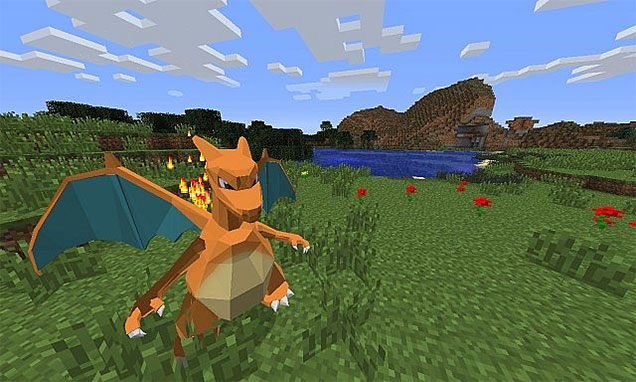
Pixelmon has been around for years, but we’ve never written about it, so it’s time to fix that. It’s an attempt by fans to bring as much Pokemon to Minecraft as the latter’s code will allow. Which, Minecraft being Minecraft, is a lot.
You can choose a Pokemon, summon them then give them commands. Pretty cool!
In terms of how it all works, the animals of the game have been replaced with wild Pokemon, which you can walk up to and capture. You can then use them in fights against other Pokemon trainers; they’ll appear in the game world and go at it until one of them faints (as you can see below).
Just like regular Pokemon! Only on your PC, and in full 3D.
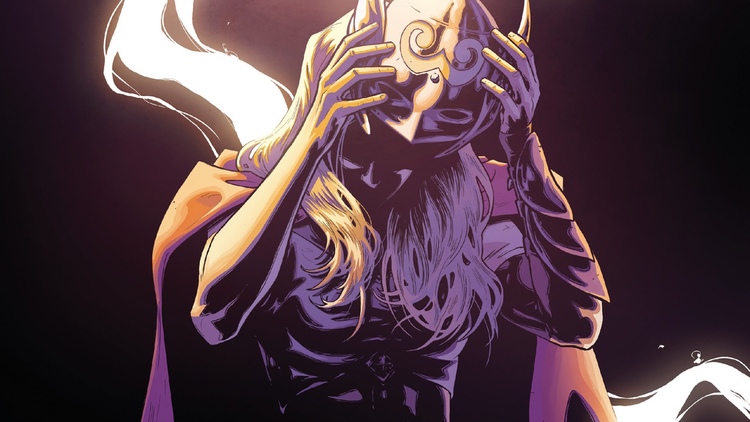
Marvel isn’t waiting until the release of Thor #8 tomorrow for people to find out who exactly the new female Thor is. The comic book publisher decided to leak it early so that no one else could. For those of you who have eagerly been waiting for confirmation on the identity of the woman who took up Mjolnir, the wait is over.
SPOILERS AHEAD:
It’s been a mystery in the comics since her first appearance, but now we know who the new God of Thunder is. It’s unsurprisingly Dr. Jane Foster, the former girlfriend of Thor, who was played by Natalie Portman in the movies. Like many of you, I kind of figured that this was going to be the case early on. Of course, there was also a lot of speculation that it could have been Thor’s sister Angela.
It makes sense to me that it would be Jane. Comic writer Jason Aaron had this to say about the reveal:
“Jane Foster has been part of the Thor comics and the Thor mythology from almost the very beginning. The very act of picking up this hammer, of becoming Thor, is killing her. Where we go from here is the real story.”
Sounds like things are going to get even more intriguing. Who knows where exactly the story will go from here? She will be teaming up with the Avengers in the Secret Wars crossover event, though.
It makes me wonder if this is where the Marvel Cinematic Universe will be headed, as well. Is it possible that one day Natalie Portman could be the new Thor? I think that would be pretty badass. What do you all think of Jane Foster as the God of Thunder?
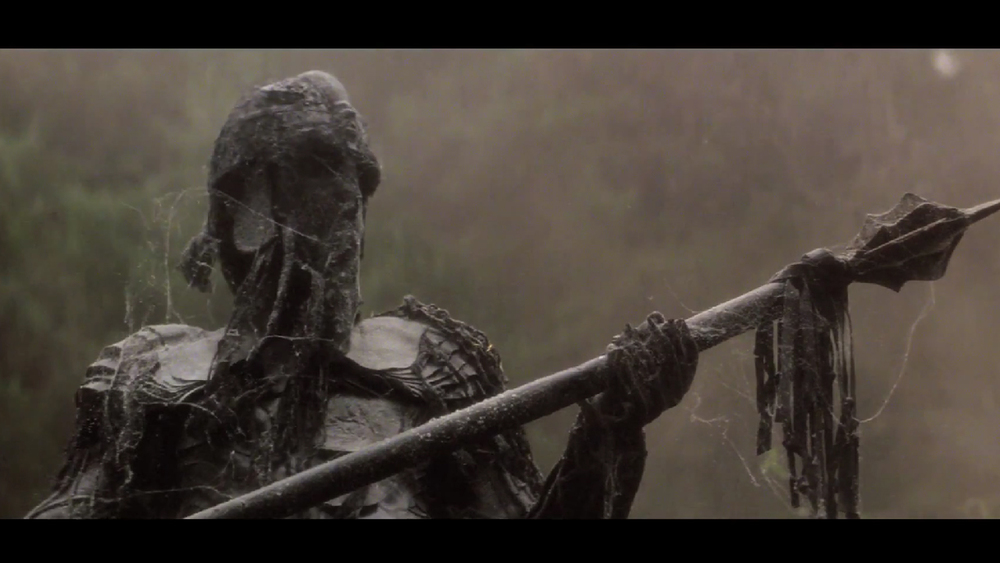
I’d never heard of “Black Angel” before today, but there’s a fascinating story that accompanies the 34-year-old short film. It was directed by Roger Christian, the Oscar-winning art director of Star Wars and Alien, and George Lucas commissioned the short to be made so it could debut in front of Star Wars: The Empire Strikes Back in theaters in Europe. It’s a fantasy film that had a big influence on sword and sorcery movies that followed, including John Boorman’s Excalibur (Boorman showed it to his entire crew before filming that movie), and also impacted Empire itself, since Lucas used Christian’s “step-printing” technique to slow down one of the lightsaber fight sequences.
The short was lost for decades and was recently unearthed, and now io9 points us to the full film that you can watch below, including a cool introduction from Christian himself that fills you in on the whole backstory: