
Free book for boys and reluctant readers

Flynn’s Log is free on the following devices
Choose your device
KindleiPad/iPod/iPhoneGoogle Play (Android Tablets)nookkoboRead Online
US$8.99 Paperback
Get Reluctant Reader Book News from Stone Marshall
Reading is important
Any book that helps a child to form a habit of reading, to make reading one of his deep and continuing needs, is good for him. –Maya Angelou
Most adults would agree that reading is important, but many kids detest reading. Video games, devices, and TV are preferred entertainment and escape. They provide instant gratification. Reading takes time. For some kids, reading isn’t engaging.
I had this same problem with my son, so I solved the problem.
The classic stories I remember enjoying as a kid don’t interest my son and his immediate attention span. If he doesn’t enjoy the story from page one, he will not read further.
So how did I get my son to read?
I showed him how much fun it is to get sucked into a story.
Your book is amazing I can’t stop reading it – Joseph Young via twitter
Contemporary and Classic titles alike don’t interest many kids. Don’t worry, the love of reading is learned. We need a starting point. We need that one book that is just as engaging on the first read as the fifth, just like a really great movie that kids want to see again and again. A positive association with reading will make kids want to read more.
A love of reading is cited as the number one indicator of future success. My son didn’t have the desire to read. He didn’t care about the books I chose to read to him, and was overwhelmed with the selection at the library. I want my son to succeed, so I had to do something. Since we struggled to find books he cared to read, I wrote one. An epic saga about the things he loves. I put it in a world he loves and addressed the issues he faces in his life.
I just love your books I’ve been reading them over and over again. -Carson via twitter
But it’s a video game book
Don’t worry; it’s not a book about video games, nor is it a game strategy book. Flynn’s Log is a hero’s journey that takes place inside the Minecraft world that today’s kids know and love. The protagonist, Flynn, naturally flows through Maslow’s hierarchy of needs (builds shelter and tools, learns what to eat and discovers a digital friend) and faces questions about his destiny. He learns important life lessons about friendship, integrity, and trust. Flynn’s Log is good for kids without being boring.
Thank you so so much for the free ebook. My son loves Minecraft now with this book I can get him to read to me. – Jennifer Wilkins
Start your son or daughter on journey today, reading Flynn’s Log 1: Rescue Island. Free on available these devices and apps.
Flynn’s Log is free on the following devices
Choose your device
KindleiPad/iPod/iPhoneGoogle Play (Android Tablets)nookkoboRead Online
US$8.99 Paperback
Why is Flynn’s Log 1 Free?
My son loves reading — finally. If you have experience with a reluctant reader then I know your pain and I want to help. I’ve seen thousands of kids transform with this book. My readers, who don’t usually read books during the summer, couldn’t put Flynn’s Log 1 down.
Good book I thought I would never read a book on my summer but I feel I’m gonna finish it soon – Multigamer 47 via twitter
Let this book change your kid’s life too. You have nothing to lose and an avid reader to gain.
Once you learn to read, you will be forever free.
–Frederick Douglas
I am giving away Flynn’s Log 1 free because I want to give you a risk-free way to hook your reluctant reader.
Please and I mean PLEASE, WRITE MORE! I absolutely love it! They’re outstanding books.
-Devon123321 via twitter
What are Books for Boys?
I spend lots of time with teachers and parents. I hear parents ask, “How do I get my son to read? Do you have books for boys?”
I wrote the Flynn’s Log series for my son, and this book is interesting for boys. However, the series is a non-stop read for both boys and girls, especially those who are interested in Minecraft.
The more that you read, the more things you will know. The more that you learn, the more places you’ll go.
—Dr. Seuss
What are you waiting for?
You have nothing to lose!
Flynn’s Log is free on the following devices
Choose your device
KindleiPad/iPod/iPhoneGoogle Play (Android Tablets)nookkoboRead Online
US$8.99 Paperback
News for Parents of Reluctant Readers
Get Reluctant Reader Book News from Stone Marshall
Imagination Library gives out 1 millionth book locally
ST. JOSEPH – “That’s the best bedtime of the month, the day they get their Imagination Library book.”
Jessica Johnson clearly remembers the comment.
It’s from a parent whose child was enrolled in the Dolly Parton’s Imagination Library program.
The program distributes age-appropriate books to kids from birth to age 5 to promote literacy, and it will distribute its 1 millionth book this month.
Johnson is the marketing and communications manager for United Way of Central Minnesota, which has made Imagination Library one of its best-known programs. The local program — the 13th-largest in the world — is in its 10th year.
Dolly Parton even recorded a congratulatory message to participants, organizers and donors.
On Thursday, organizers traveled to St. Joseph to celebrate the milestone, following a book from post office to a waiting family.
St. Joseph Postmaster Tony Terwey is also the father of four kids, ages 3 through 8, who participated in the program.
He said the program is important because it fosters a love of reading and stories in kids, something he witnessed firsthand.
“It’s fun to see the excitement,” he said about kids receiving their packages.
Terwey estimates the St. Joseph post office sees close to 200 book packages a month.
“It’s far more reaching than someone just making a donation to the United Way,” he said. “It makes a greater impact than is known.”
The program is free for any child and doesn’t have any income requirements. Each child can be signed up individually.
If enrolled at birth, a child will get 60 books by the time they enter kindergarten — from “The Little Engine That Could” to “Look Out Kindergarten Here I Come.”
“If we can get kids inspired to read, and they learn to love to read, they’re better off in school, better prepared for kindergarten,” Johnson said. United Way hopes that sets up kids to be successful later in life.
Story continues below.
And the books have reading tips for parents, which encourage literacy, comprehension and creativity.
Imagination Library selects the books, which can sometimes get a family outside its comfort zone. A child might receive a book the family wouldn’t have bought for the child and ends up loving it.
Follow Stephanie Dickrell on Twitter @SctimesSteph, call her at 255-8749 or read more stories at www.sctimes.com/sdickrell.
By the numbers …
•Since the program began in February 2005, more than 28,000 local children have received free books. That’s equal to the populations of Sartell and Sauk Rapids combined.
•United Way of Central Minnesota is the 13th largest of 1,400Imagination Library affiliates across the United States, Canada, United Kingdom and Australia.
•The program currently costs our local United Way more than $200,000 per year, or about $30 per child enrolled. It’s funded by individual donations, grants, foundations, corporate sponsorships and special event fundraising.
•A recent study from local Imagination Library parents said 94 percent of parents noted their children asked to be read to more because of the program.
•83 percent of local Imagination Library parents agreed they read more to their children because of the program.
•66 percent of age-eligible children are enrolled in the program locally.
•The total number of children enrolled in 2014 was 10,475, or enough for 140 full-size school buses.
•85 percent of brain development happens before age 3.
•If enrolled at birth, a child receives 60 free books.
•At 1 million, the program has mailed more books than the Great River Regional Library’s 32 locations have in circulation.
Source: United Way of Central Minnesota.
To sign up
To register your child with the Imagination Library, visit https://usa.imaginationlibrary.com/register_my_child.php.
Related stories
Read more about United Way of Central Minnesota’s other projects, including reducing poverty.
United Way has its spring celebration.
Is your kid having fun reading? Here are some tips

Not being able to read is a problem but so is not liking to read.
Reading for pleasure has been linked to growth across many domains, including greater reading confidence, gains in general knowledge and insights that help disrupt negative stereotypes. Engagement with books not only improves social relationships but also builds empathy.
However, with the current focus on tests and scores even at pre-K, kindergarten and first-grade levels, the tendency is to care more about ability than enjoyment.
The truth is, for most part, they are coupled together.
As former classroom teachers, we recognize how reading for pleasure builds not only reading skills but also leads to personal development. Our research has only confirmed this belief.
Children are not reading for pleasure
We know a large number of kids are unable to reach the basic proficiency level in reading.
According to the 2013 data of the National Center for Education Statistics, often called the nation’s report card, 32% of fourth graders and 22% of eighth graders were reading below the basic level of proficiency.
Pressures of testing have not helped. Instead, they have taken the joy out of reading.
Over the last 13 years, there has been an increase in the number of states that have enacted legislation on retention (or holding back a year) policies for students who do not meet literacy standards, with 32 states and Washington DC now requiring reading tests in elementary school.
In many Texas elementary schools, kids’ literacy scores are publicly posted. Parents are given goals and advice on how to increase score. As a result, the scope of what gets taught narrows down.
Such pressures haven’t quite helped improve learning. In fact, parents report high anxiety and nervousness levels in their children as a result of testing. These pressures have an impact on teaching as well.
Teachers have been found to teach to the tests, foregoing development of reading comprehension and more holistic reading habits.
Reading for pleasure could actually make a difference. Evidence suggests that kids who are highly engaged with books perform better on school measures, because they learn to enjoy reading.
Make reading a fun, social activity
So, how could we get our kids to enjoy reading?
Here are some ideas based on our survey of reading research on how to get started with young children, new readers and even experienced but disengaged readers.
To draw young children into reading, try building routines for reading together like before bed or after bath time.

Making reading a social activity can also help engage young readers. So read with other family members, such as older siblings.
Young readers also enjoy reading the same stories over and over, and referring to characters during the day helps to build connections and literate lives.
For new or disengaged readers, a good place to start is by reading to them at least as much as they read to you.
When they are reading to you, remember that reading aloud at home should be about pleasure rather than accuracy; don’t correct more than a couple of words as they read.
You may also want to make space for them to tell you stories from the pictures; that is an important reading skill too.
Like with young readers, read favorite books over and over again. Repeated readings help readers recognize words quickly and automatically.
Find urgent reasons for reading, like signs, recipes, or directions for putting a toy together.
Remember, all books are good books, even if they don’t seem sophisticated. Kids will get bored and move on eventually.
Work towards reading for pleasure
When children are not reading as might be expected for their grade, it can be really hard on their confidence and identities as readers. It might also lead to concern amongst parents about their child.
In a society that is increasingly being built on an idea-driven economy, at least paying attention and working towards enjoyment and pleasure of reading – not just the ability to read – may help in other areas of social and school life.
So, make reading about enjoyment, not about the technicalities of testing.
7 books to teach children about the birds and the bees

Birds and Bees
Stock image
As a parent it seems there will come a day when your little one will ask the question: where do babies come from? Naturally, when the stork answer will no longer pacify your curious youngster it may be time to turn to a few resources to further your child’s education.
1. It’s Not the Stork!: A Book About Girls, Boys, Babies, Bodies, Families and Friends by Robie H. Harris, illustrated by Michael Emberley
2. Mommy Laid an Egg: Or, Where Do Babies Come from? by Babette Cole
3. The Boys Body Book: Everything You Need to Know for Growing Up YOU by Kelli Dunham and Steve Björkman
4. Who Has What?: All About Girls’ Bodies and Boys’ Bodies (Let’s Talk about You and Me) by Robie H. Harris and Nadine Bernard Westcott
5. Amazing You!: Getting Smart About Your Private Parts by Gail Saltz and Lynne Avril Cravath
6. It’s Perfectly Normal: Changing Bodies, Growing Up, Sex, and Sexual Health (The Family Library) by Robie H. Harris and Michael Emberley
7. What’s the Big Secret?: Talking about Sex with Girls and Boys by Laurie Krasny Brown (Author), Marc Brown (Illustrator)
Fiction reviews: Melanie Finn, Diane Thomas, A.D. Miller and Louis Nowra
IN SHORT FICTION
REVIEWS BY KERRYN GOLDSWORTHY
PICK OF THE WEEK
 The Faithful Couple By A.D. Miller
Shame
MELANIE FINN
WEIDENFELD & NICOLSON, $29.99
 In Wilderness By Diane Thomas
Pilgrim Jones, daughter of hippies and now living in Switzerland, is in a state of grief: her treacherous husband has left her for his pregnant girlfriend. After Pilgrim is involved in a terrible accident, she takes the first flight she sees on the departures board and ends up in Tanzania, where she encounters an assortment of characters: mercenaries, witch doctors, aid workers, and drunks with secrets. There are also two men who have flown from Europe to find her, for very different reasons. Full of empathy and intelligence, this novel is a study of the shame, guilt and despair that can result from nothing more than desperately bad luck. With no shadow of didacticism or propaganda, it explores the nuances of our moral choices in a postcolonial context. The ending is startlingly optimistic and very moving.
In Wilderness
DIANE THOMAS
 Shame By Melanie Finn
BANTAM, $32.99
This novel’s badly damaged main characters have sought solitude in the mountain wilderness of the American South, both bewildered as to what is wrong with them and both at the extremity of existence. It’s some time in the late 1960s, and Katherine, a former successful businesswoman, is unable to digest food and has been told she is dying by doctors who can’t tell her why, though perceptive readers will quickly realise that she has developed multiple chemical allergies. Danny is a very young Vietnam veteran with a bad case of PTSD, another condition that hasn’t yet been identified. Danny has come to hide, Katherine has come to die. But they meet and quickly find themselves in a state of intense erotic co-dependency. This is the best account of a woman in a state of sexual obsession that I have ever read.
The Faithful Couple
A.D. MILLER
LITTLE, BROWN, $29.99
A.D. Miller’s Snowdrops was a success, making it as far up the ladder as the shortlist of the 2011 Man Booker Prize. Metaphors of climbing and competition come easily when discussing his second book, for its subject matter is male friendship and his view of this topic seems queasy and jaded. Neil and Adam’s friendship, born by chance and cemented on a whimsical trip to the US, is poisoned by an encounter on a camping trip that haunts them for years. Both see their friendship in terms of comparison and competition: he’s got more money, I have a better job, his chest is hairier than mine. And both use women as a kind of currency and means of communication between them. Miller is a writer of skill and intelligence but this novel will be rough going for female readers, and probably most male ones.
Prince of Afghanistan
LOUIS NOWRA
ALLEN & UNWIN, $16.99
Louis Nowra’s second book for young adults is a model of traditional storytelling: a dramatic setup followed by a race against danger, hunger and time. Mark is a young Australian soldier in Afghanistan, in fear of his life after a mission goes wrong. He is left to find his way out of enemy territory, in the company of an army dog called Prince whose handler has been killed. The novel is recommended for 14-16 year olds but it still comes as a shock to discover that Mark is barely older than that. This is a particularly good book for that age group, likely to engage reluctant readers – especially boys – with a tale full of action and danger, a hero who hasn’t always been heroic, and an animal story that’s touching without being saccharine. It will also give young adult readers some ideas to chew over about the nature of war.
Funny Books: That Should Be a Movie! 20th Century Boys [Series Spotlight]

You know, with so much superhero movie news coming out lately, it’s sometimes nice to relax and think about other stuff. Like say, that time you made up your own plan to take over the world only for it to come true twenty years later. Or maybe that just happened to me and the guys in 20th Century Boys?
20th Century Boys, by Naoki Urasawa, is a manga about a group of childhood friends who reunite after one of them die, only to slowly realize that their friend’s death may part of a much larger conspiracy involving the enigmatic cult leader “Friend.” What follows is story taking place in three different times (technically four), but each echoing within across one another. Kenji Endo stars in the first half, and his niece Kanna leads the second.
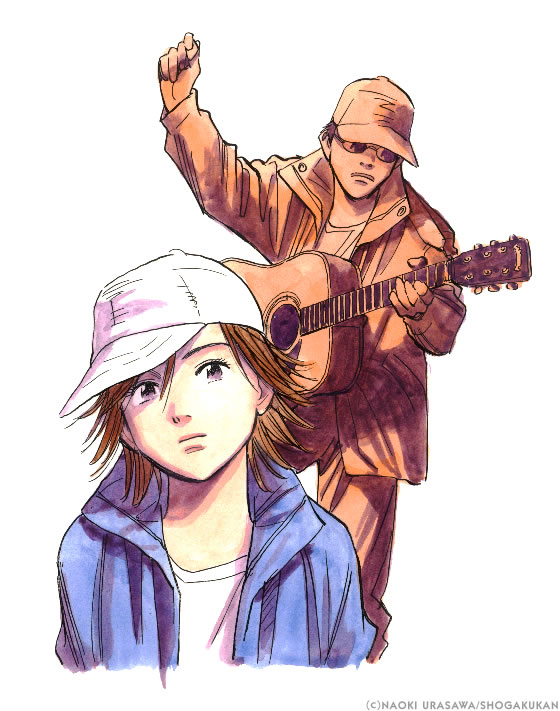
Although the series is a complex and multilayered mystery-thriller, a lot of the themes have to do with growing up and how the past never really stays in the past. So many of the characters in the story are affected by their previous decisions and selves, to the extent that the main antagonist is working off a plan the heroes came up with!
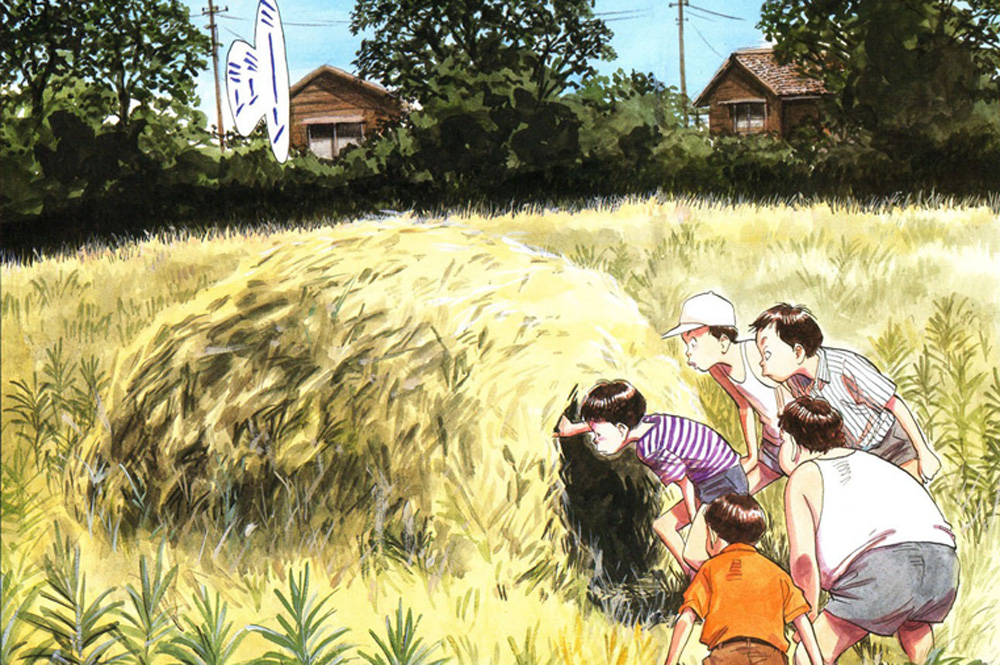
While it’s fun to slowly untangle the twists and turns of the story, the real hook to 20th Century Boys is the character work. You get to see each of the protagonists in three stages of their lives, their childhoods, mid-twenties, and early forties. What Urasawa accomplishes brilliantly is making each character act age specific while still retaining their core self. The optimistic Kenji of 7 may not be identical to the calm weirdo of 40, but you can still call them the same guy. You become invested in these characters because you feel that you’ve seen them grow up right before your eyes.

The only part where the manga may tumble a little is with the reveal of “Friend.” But to be fair, after building him up so much, any revelation concerning his secret identity would have been a letdown. It may have been better to just keep the mystery unresolved.
What’s really great about 20th Century Boys is that it feels really universal. This story works in any setting and with any culture. You could have replaced the manga references to comic references and set it in North Dakota, and it still would have worked. The manga has already been made into a live-action trilogy in Japan, but I hope and prey they being over an adaptation here in the states. Or even an anime. WHY ISN’T THIS AN ANIME!
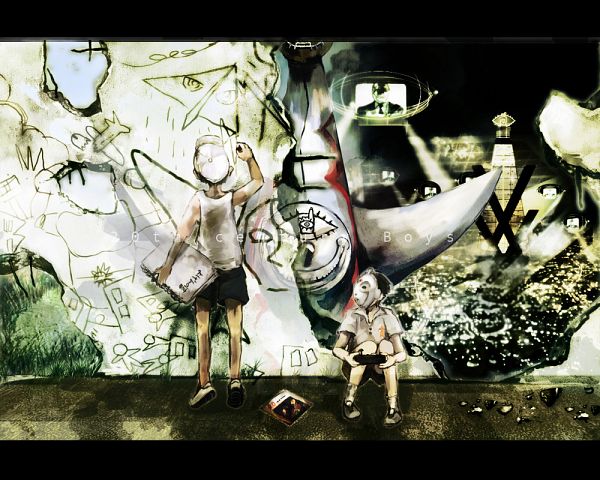
I’m trying to be a vague as possible with 20th Century Boys because it’s a must read. I’d say it easily goes on Funny Book’s Top 3 recommended reading. Only behind All-Star Superman and Saga.
Great books that inspire a love of reading in kids — recommended by kids
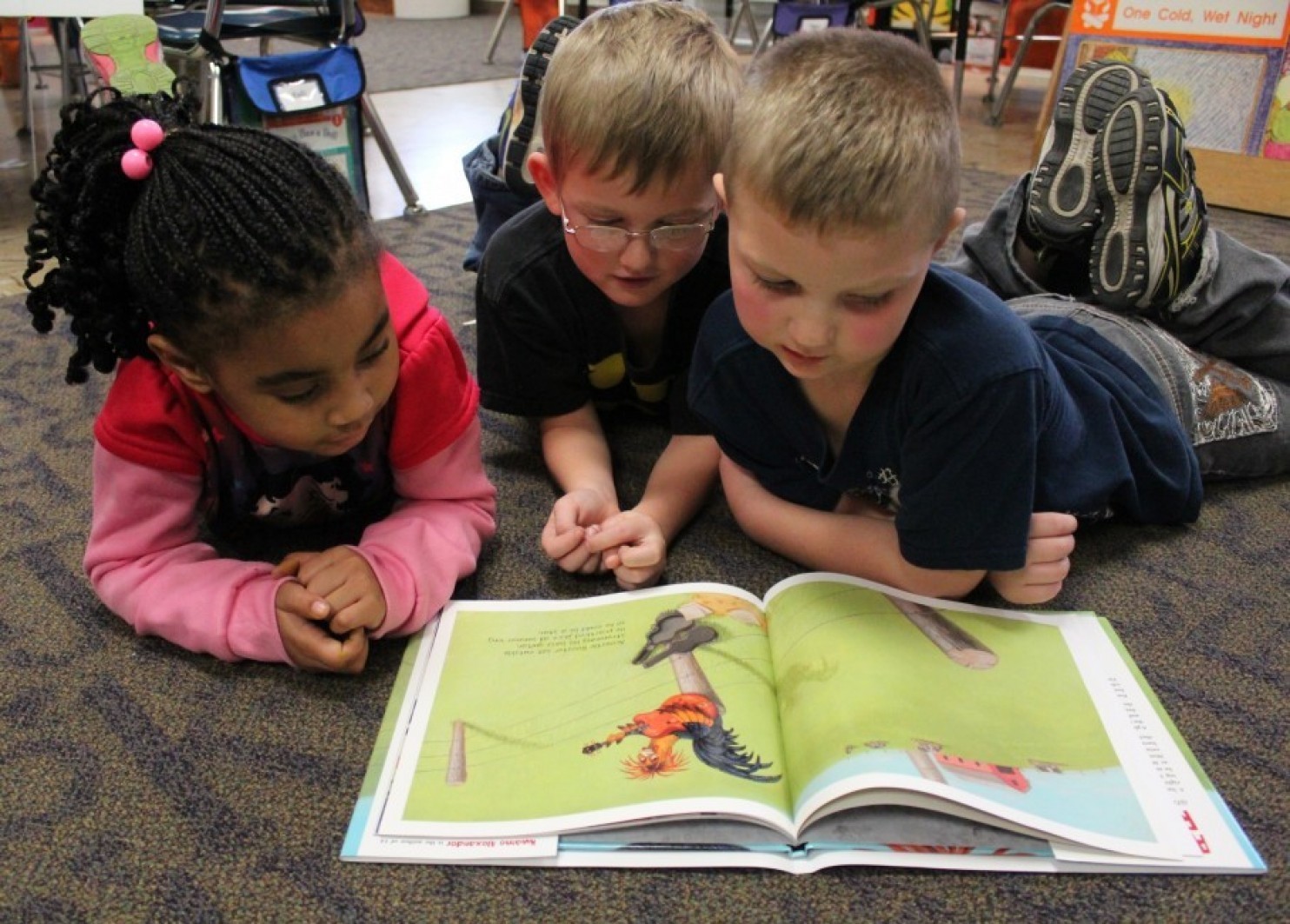 In this Dec. 1, 2014 photo, from left, Edgewood Elementary School kindergartners Asha Wilson, Jacob Grimm and Hunter Potter look over the “Acoustic Rooster and his Barnyard Band,” book in Fruitport, Mich. (AP Photo/Grand Haven Tribune, Krystle Wagner)
The only way to hook children on reading for pleasure is to allow them to read for pleasure. That means permitting them to choose the books that interest them and then letting them to read at their own pace, without being asked to analyze every single sentence for inner meaning. This is the way kids learn to love to read at the Center for Teaching and Learning, an award-winning non-profit independent demonstration school in Maine that was founded in 1990 by educator Nancie Atwell, who last month was awarded the first $1 million Global Teacher Prize given by the Varkey Foundation.
The school has a national reputation for its research-based literacy methods that focuses on engaging and challenging students while fostering relationships between faculty and parents. A hallmark of the school are the collections of books, carefully selected by adults, from which students can choose. Afterward the children develop lists of books they found inspiring, an effort to help guide other young people looking for great books to read. The recommended book lists are on the school’s website and popular with teachers around the country.
Here is an introduction to the lists and the school’s reading philosophy, by Atwell, and following that are some of the books recommended by students from each grade. I am publishing this material — all of which you can find on the school’s website here — with permission.
By Nancie Atwell
The annual average number of books read by seventh and eighth grade readers at CTL is at least forty titles. In the lower grades, the numbers are similarly high. My K-6 colleagues and I make time every day for our students to curl up with good books and engage in the single activity that consistently correlates with high levels of performance on standardized tests of reading ability. That is frequent, voluminous, self-selected reading. A child sitting in a quiet room with a good book isn’t a flashy or marketable teaching method. It just happens to be the only way anyone ever became a reader.
Our goal is for every child to become a skilled, passionate, habitual, critical reader—as novelist Robertson Davies put it, to learn how to make of reading “a personal art.” Along the way, CTL teachers hope our students will become smarter, happier, more just, and more compassionate people because of the worlds they experience within those hundreds of thousands of lines of print.
We know that students need time to read, at school and home, every day. We understand that when particular children love their particular books, reading is more likely to happen during the time set aside for it. And we have learned that the only sure-fire way to induce a love of books is to invite students to select their own. CTL teachers buy the best children’s literature we can find, conduct booktalks and bookwalks, and help our students choose books, develop and refine literary criteria, and carve out identities for themselves as readers. We get that it’s essential for every child to be able to say These are my favorite books, authors, genres, and characters this year, and this is why. Personal preference is the foundation, walls, and ceiling in building a reader for a lifetime.
Starting in kindergarten, free choice of books is a child’s right, not a privilege granted by a kind teacher. Our students have demonstrated that opportunities to consider, select, and reconsider books make reading feel sensible and attractive to children right from the start-that they’ll read more books than we dreamed possible and more challenging books than we dreamed of assigning them.
We’ve also learned that students need access to a wide, up-to-date assortment of inviting titles. Instead of investing in class sets of novels or expensive basals or anthologies, we make classroom libraries of individual titles our budget priority. Teachers read a lot of the books that we hope our students will, so we can make knowledgeable recommendations. We offer help when readers need it, and we teach children, one at a time, about books and reading in the daily, quiet conversations in our reading workshops.
We understand that the only delivery system for reading comprehension is reading. When reading is meaning-filled, understanding cannot be separated from decoding. Reading comprehension is not a set of sub-skills or strategies that children need to be taught to bring to bear once they’ve learned to translate letters to sounds. When students are reading stories that are interesting to them, and when the books are written at their independent reading level, comprehension—the making of meaning—is direct, and kids understand.
Human beings are wired to understand. As reading theorist Frank Smith put it, “Children know how to comprehend, provided they are in a situation that has the possibility of making sense to them” (1997). Reading workshop is our best approximation of an instructional context that has the possibility of making sense to young readers: a child sits in a quiet, book-filled space, engrossed in a beloved book in the company of classmates who are reading and loving books, too, monitored by a teacher who knows about literature, reading, and his or her students’ tastes, strengths, and challenges.
Because CTL is a non-profit demonstration school, a place where other teachers come to learn about innovative methods, we work hard to attract a student body that represents a diverse range of socioeconomic backgrounds and ability levels, and we fundraise twelve months a year so we can set a tuition rate that’s as low as possible. The goal is to attract a mix of students in whom visiting teachers can recognize their own.
And they do, because CTL students are regular kids. They suffer ADHD and such identified learning disabilities as nonverbal learning disorders, visual processing difficulties, and dyslexia. Some kids come from homes with packed bookshelves; others own only a few books. Maine is a rural state and a poor one, in the bottom third nationally in terms of per capita income. Only 66% of jobs here pay a livable wage, and our students’ parents work hard at all kinds of occupations: farmer, carpenter, house cleaner, store clerk, soldier, fisherman, gardener, postal worker, and housecleaner, as well as physician, minister, teacher, and small-business owner.
We do not believe that CTL students’ accomplishments as readers can be explained away as an anomaly. Ours is not a privileged population of students. This is what is possible for children as readers.
It’s also important to understand that reading workshop is not S.S.R. (Sustained Silent Reading). It’s not a study hall, where we watch the clock with one eye as we Drop Everything And Read. In reading workshop, we teach readers for a lifetime: introduce new books and old favorites, tell about authors and genres, read aloud, talk with kids about their reading rituals and plans, and present lessons about elements of fiction, how poems work, what efficient readers do—and don’t do—when they come across an unfamiliar word, how punctuation gives voice to reading, when to speed up or slow down, who won this year’s Newbery Award, how to keep a reading record, what a sequel is, what readers can glean from a copyright page, how to identify the narrative voice or tone of a novel and why it matters, how there are different purposes for reading that affect a reader’s style and pace, how to unpack a poem, how to distinguish between popular and literary fiction, how to tell if a book is too hard, too easy, or just right, and why the only way to become a strong, fluent reader is to read often and a lot.
Reading workshop is one of the simplest and hardest things we do. It’s also the most worthwhile. Students leave our school as literary, well-above-grade-level readers. But they also leave smarter about a diversity of words, ideas, events, people, and places. Books and stories bring the whole world to a tiny school in rural Maine. When the readers grow up and leave the school, they recognize the wide world they encounter out there because it is already lodged in the “chambers of their imaginations” (Spufford, 2002).
Sydney Jourard wrote, “The vicarious experience of reading can shape our essence, change us, just as firsthand experience can. Experience seems to be as transfusible as blood” (1971). For students who know reading as a personal art, every day is a transfusion. Every day they engage with literature that enables them to know things, feel things, imagine things, hope for things, become people they never could have dreamed without the transforming power of books, books, books.
Three times a year, the boys and girls at CTL help their teachers create master lists of the inviting, accessible books they love best. The “Kids Recommend” lists feature the titles our students name in response to this question: Which books do you love so much that you think they might convince a _____-grade girl/boy—someone who’s a lot like you, except that she/he doesn’t read much—that books are great? The answers are available to our students and their parents, as well as other teachers, their students, and the general public here on our website.
Students update the lists continuously, because the field of children’s literature changes so quickly. While a handful of titles do maintain their popularity—S.E. Hinton’s The Outsiders (1968), the novel that virtually created the field of young adult literature, continues to speak to middle schoolers-—many drop off and are replaced over time.
We separated the lists of book titles for grades 3-8 into girls’ and boys’ choices because, in general, their tastes in books aren’t the same: at the middle-school level, the gender overlap in titles is only about twenty percent; in grades 3-4, it’s around seventeen percent. Gender is not a consideration in children’s book choices in grades K-2.
We hope that CTL’s book lists will set a trend. Our goal is a national network of websites of great titles, nominated by K-12 students from all kinds of school settings who choose their own books: favorite titles of a cross-section of American children as the go-to resource for teachers selecting literature for classroom libraries in diverse communities.
If you are interested in learning more about how we teach reading at CTL, I have written a brief, practical book for teachers and parents entitled The Reading Zone: How to Help Kids Become Skilled, Passionate, Habitual, Critical Readers (Scholastic, 2007). and an overview of CTL’s entire program, Systems to Transform Your Classroom and School (Heinemann, 2014); and a third edition of In the Middle: A Lifetime of Learning about Writing, Reading, and Adolescents (Heinemann, 2015).
Here are some of the recommended books, from grades K-3. You can see all of the books, through Grade 6, on the school website here.
Kindergarten:
Bang, Molly When Sophie Gets Angry
Barrett, Judi Cloudy with a Chance of Meatballs
Brett, Jan Annie and the Wild Animals, The First Dog, The Three Snow Bears, Hedgie’s Surprise, The Hat, The Mitten, Fritz and the Beautiful Horses, Christmas Trolls, Comet’s Nine Lives, The Wild Christmas Reindeer, and Cinders
Carle, Eric The Mixed-Up Chameleon, The Secret Birthday Message, The Tiny Seed, The Very Hungry Caterpillar, The Very Busy Spider, The Greedy Python, Pancakes, Pancakes, and The Very Quiet Cricket
Crews, Donald School Bus, Ten Black Dots, Truck, and any of his other titles
Cronin, Doreen Click, Clack, Moo … Cows That Type
De Beer, Hans Little Polar Bear
Dewdney, Anna Llama Llama Red Pajama
Donaldson, Julia/Axel Scheffler The Gruffalo
Elhert, Lois Feathers for Lunch, Nuts to You, Pie in the Sky, Snowballs, Top Cat, Wag a Tail, and Waiting for Wings
Emberley, Ed Go Away, Big Green Monster!
Falconer, Ian Olivia
Fleming, Denise Time to Sleep
Fox, Mem Boo to a Goose, Feathers and Fools, Harriet, You Drive Me Wild, Hattie and the Fox, Koala Lou, The Magic Hat, Night Noises, Shoes from Grandpa, Time for Bed, Tough Boris, Guess Who,and Wilfrid Gordon McDonald Partridge
Henkes, Kevin Chester’s Way, Chrysanthemum, Julius, the Baby of the World, Lilly and the Purple Plastic Purse, Lilly’s Big Day, Lilly’s Chocolate Heart, Owen, Sheila Rae’s Peppermint Stick, A Weekend with Wendell, and Wemberly Worried
Hughes, Shirley Alfie Gets In First, Alfie Wins a Prize, Angel Mae, Dogger, Alfie and the Big Boys, Alfie’s Word, and Sally’s Secret
Keats, Ezra Jack The Snowy Day
Knudsen, Michelle Library Lion
Lies, Brian Bats at the Beach and Bats at the Library
Lionni, Leo Alexander and the Wind-Up Mouse, The Alphabet Tree, An Extraordinary Egg, Fish Is Fish, Inch by Inch, It’s Mine,
Little Blue and Little Yellow, Six Crows, Tico and the Golden Wings, Geraldine and the Music Mouse,and Tillie and the Wall
Lobel, Arnold The Frog and Toad books, Mouse Soup, and Mouse Tales
Long, Melinda How I Became a Pirate
Marshall, Janet Look Once, Look Twice
Martin, Bill, Jr. Chicka-Chicka Boom-Boom
McAllister, Angela The Tortoise and the Hare
McPhail, David Edward and the Pirates
Munsch, Robert Thomas’ Snowsuit
Muntean, Michaela Do Not Open This Book
Myller, Rolf How Big Is a Foot?
Numeroff, Laura Joffe If You Give a Mouse a Cookie
Pelham, David A Is for Animals
Penn, Audrey The Kissing Hand
Pinkney, Jerry The Lion and the Mouse
Portis, Antoinette Kindergarten Diary
Sendak, Maurice Where the Wild Things Are
Shannon, David Alice the Fairy, David Gets in Trouble, No, David, and Too Many Toys
Slate, Joseph Miss Bindergarten Gets Ready for Kindergarten
Stadler, John Wilson and Miss Lovely
Stevens, Janet Tops and Bottoms
Van Dusen, Chris If I Built a House, The Circus Ship, A Camping Spree
with Mr. Magee
Wells, Rosemary Max’s Chocolate Chicken, Max’s Dragon Shirt, Bunny Cakes,
Fritz and the Mess Fairy, Yoko, Bunny Money,and McDuff Goes to School
Willems, Mo Don’t Let the Pigeon Drive the Bus, Don’t Let the Pigeon Stay
Up Late, The Pigeon Finds a Hot Dog, The Pigeon Wants a Puppy, I Broke My Trunk and My Friend Is Sad
Wood, Audrey Alphabet Mystery, King Bidgood’s in the Bathtub, Elbert’s Bad Word, The Little Mouse, the Red, Ripe Strawberry, and the Big, Hungry Bear, The Napping House, Jubal’s Wish, Heckedey Peg, The Scaredy Cats, Silly Sally, Weird Parents, Sweet Dream Pie, Twenty-Four Robbers and Tooth Fairy
Yolen, Jane Owl Moon, How Do Dinosaurs Go to School?
Gr. 1-2
Abbott, Tony The Secrets of Droon books
Ahlberg, Alan and Janet Each Peach, Pear, Plum and The Jolly Postman
Avi Poppy, Poppy and Rye, Poppy Returns, and Ereth’s Birthday
Bang-Campbell, Monika Little Rat Rides and Little Rat Sets Sail
Barrows, Annie The Ivy and Bean series
Benton, Jim The Franny K. Stein series
Blade, Adam The Beast Quest series
Brett, Jan The Hat, The Mitten, Town Mouse, Country Mouse,
Annie and the Wild Animals, and Gingerbread Baby
Brown, Jeff The Flat Stanley books
Brown, Margaret Wise The Important Book
Burton, Virginia The Little House and Mike Mulligan and His Steam Shovel
Cazet, Denys The Minnie and Moo books
Charlip, Remy Fortunately
Cleary, Beverly Ralph S. Mouse, Ramona’s World, Runaway Ralph, Henry Huggins, Henry and Ribsy, Henry and the Paper Route,
and Henry and the Clubhouse
Cook, Julia My Mouth is a Volcano!
Cowell, Cressida The How to Train Your Dragon series
Craft, K.V. Cinderella
Creech, Sharon Love That Dog, Hate That Cat, and Pleasing the Ghost
Dahl, Roald Giraffe, Pelly, and Me; The BFG;
Fantastic Mr. Fox; and The Enormous Crocodile
Daywalt, Drew The Day the Crayons Quit
De Paola, Tomie The Legend of the Bluebonnet, The Knight and the Dragon,
Strega Nona, The Art Lesson, and Pancakes for Breakfast
Doyle, Roddy The Meanwhile Adventures and Rover Saves Christmas
Fienberg, Anna and Gamble, Kim The Minton series
Gannett, Ruth Stiles The My Father’s Dragon series
Gibbons, Gail Frogs and her other nonfiction books
Gill, Peter Outside
Gutman, Dan The My Weird School series and Miss Small Is Off the Wall
Henkes, Kevin The Penny series, A Good Day, Lily’s Purple Plastic Purse, Lily’s
Big Dog, Owen, Weekend with Wendell, and Kitten’s First Full Moon
Howe, James The Pinky and Rex books
Jacobson, Jennifer Richard Truly Winnie and Winnie Dancing on Her Own
Jeffers, Oliver The Great Paper Caper, How to Catch a Star, The Book Eating Boy, Lost and Found, The Heart and the Bottle, and The Way Back Home
Jenkins, Emily Toys Go Out and Toy Dance Party
Johnson, Crockett Harold and the Purple Crayon
Joslin, Sesyle What Do You Do, Dear? and What Do You Say, Dear?
Kimmel, Eric Seven at One Blow
Kimpton, Diana The Pony-Crazed Princess series
King-Smith, Dick Martin’s Mice, A Mouse Called Wolf, and The Mouse Family
Robinson
The Kingfisher Treasuries: The Kingfisher Treasury of Dragon Stories, the Kingfisher Treasury of Pet Stories, the Kingfisher Treasury of Pirate Stories, the Kingfisher Treasury of Funny Stories, the Kingfisher Treasury of Animal Stories, the Kingfisher Treasury of Spooky Stories, the Kingfisher Treasury of Ghost Stories, the Kingfisher Treasury of Princess Stories, the Kingfisher Treasury of Stories for Seven-Year-Olds, the Kingfisher Treasury of Stories for Eight-Year-Olds, and the Kingfisher Treasury of Ballet Stories
Krauss, Robert Whose Mouse Are You?
Krauss, Ruth The Carrot Seed
Krulik, Nancy Twelve Burps of Christmas, The Katie Kazoo Switcheroo series, the George Brown, Class Clown series, and the Magic Bone series
Levine, Gail Carson The Princess Tales
Lionni, Leo The Greentail Mouse, Mr. McMouse, On the Beach There Are
Many Pebbles, Flea Story, An Extraordinary Egg, Frederick, and It’s Mine!
Lobel, Arnold The Frog and Toad books, Mouse Soup, Mouse Tales, Small Pig,
Uncle Elephant, Fables, and Grasshopper on the Road
Maguire, Gregory Leaping Beauty and Other Animal Fairy Tales
Marshall, Edward Four by the Shore and Three by the Sea
Marshall, Edward and James The Fox books: Fox on Stage, Fox All Week, Fox Outfoxed, and Fox in Love
Mass, Wendy Space Taxi: Water Planet Rescue
McCarty, Peter First Snow
McCloskey, Robert Blueberries for Sal, Make Way for Ducklings, One Morning
in Maine, and Time of Wonder
McDonald, Megan The Judy Moody and Stink series
Miles, Ellen The Puppy Place series and the Taylor-Made Tales books
O’Ryan, Ray The Galaxy Zack series
Osborne, Mary Pope The Magic Tree House books
Parish, Peggy The Amelia Bedelia books
Perry, Sarah If
Portis, Antoinette Not a Stick, Not a Box and A Penguin Story
Provensen, Alice and Martin A Book of Seasons, Our Animal Friends at Maple
Hill Farm and The Year at Maple Hill Farm
Rinker, Sherri Dusky Goodnight, Goodnight, Construction Site and Steam Train, Dream Train
Rocco, John Blizzard
Roy, Ron A-Z Mysteries series
Rylant, Cynthia Cat Heaven, Dog Heaven, Gooseberry Park, The Mr. Putter and
Tabby series, the Henry and Mudge series, and the Poppleton series
Shannon, George Hands Say Love
Silverman, Erica Cowgirl Kate and Cocoa series
Steig, William Amos and Boris, Sylvester and the Magic Pebble, Dr. DeSoto, and Spinky Sulks
Stevenson, James The Castaway, Quick, Turn the Page, Rolling Rose, Brrr!, Don’t Make Me Laugh, Fast Friends, and Worse than Willy
Stilton, Geronimo The Geronimo Stilton series
Stone, Rex The Dinosaur Cove books
Strauss, Linda Leopold A Fairy Called Hilary
Trine, Greg The Melvin Beederman series
The Usborne collection of fairy tales, folk tales, fiction, and nonfiction
White, E.B. Charlotte’s Web, Stuart Little and The Trumpet of the Swan
Willems, Mo The Pigeon books, the Elephant and Piggie series, and Goldilocks and the Three Dinosaurs
Wilson, Karma Bear Snores On and the rest of the Bear books
Wojciechowski, Susan The Beany series
Gr. 3-4 Boys
Abbott, Tony The Hidden Stairs and the Magic Carpet
Adams, Richard Watership Down
Avi The End of the Beginning, Ereth’s Birthday, The Good Dog, and the Poppy series
Banks, Kate The Magician’s Apprentice
Barker, Clive Abarat and Days of Magic, Nights of War
Barry, Dave The Peter and the Starcatchers series and Science Fair
Birdsall, Jeanne The Penderwicks
Bisson, Terry The Star Wars Boba Fett series
Blume, Judy Tales of a Fourth Grade Nothing, Otherwise Known as Sheila the Great, Superfudge, Fudge-a-mania, and Double Fudge
Beck, W.H. Malcolm at Midnight
Buckley, Michael The Nerds trilogy and the Sisters Grimm series
Byars, Betsy My Dog, My Hero
Cowell, Cressida The How to Train Your Dragon series
Creech, Sharon Love That Dog
Dahl, Roald James and the Giant Peach, The Witches, and The Twits
Delaney, Joseph The Last Apprentice series
Di Camillo, Kate Because of Winn-Dixie and The Tale of Despereaux
Doyle, Roddy The Giggler Treatment, The Meanwhile Adventures,
and Rover Saves Christmas
Eager, Edward Knight’s Castle
Evans, Lissa Horten’s Miraculous Mechanisms
Flanagan, John The Ranger’s Apprentice series
Funke, Cornelia Dragon Rider, Inkheart, Inkspell, The Thief Lord, and When Santa Fell to Earth
Gardiner, John Stone Fox
George, Jean Craighead My Side of the Mountain and There’s an Owl in the Shower
Goscinny, Rene The Nicholas series
Hawking, Lucy and Stephen George’s Cosmic Treasure Hunt series
Hiaasen, Carl Flush and Hoot
Howe, James The Bunnicula series
Hunter, Erin The Warriors series
Ibbotson, Eva Dial-a-Ghost, Island of the Aunts, Pleasing the Ghost, and Which Witch?
Kinney, Jeff Diary of a Wimpy Kid, Diary of a Wimpy Kid: Roderick Rules, and Diary of a Wimpy Kid: The Last Straw
Kurzweil, Allen Leon and the Champion Chip and Leon and the Spitting Image
LaFevers, R.L. The Theodosia series
Lasky, Kathryn The Guardians of Ga’Hoole series: The Capture, The Journey,
The Rescue, etc. and the Wolves of the Beyond series
Lewis, C.S. The Chronicles of Narnia: The Lion, the Witch and the Wardrobe, Prince Caspian, The Voyage of the Dawn Treader, etc.
Lin, Grace Where the Mountain Meets the Moon
London, Jack Call of the Wild
Lubar, David Invasion of the Road Weenies
MacHale, D.J. The Pendragon series
Maguire, Gregory Leaping Beauty
Martin, Ann A Dog’s Life: The Autobiography of a Stray
Mass, Wendy The Candymakers
McSwigan, Marie The Snow Treasure
Mull, Brandon The Fablehaven series and The Candy Shop War
Nimmo, Jenny Midnight for Charlie Bone and the other Charlie Bone books
Oliver, Lauren Leisel and Po
Paolini, Christopher Eragon, Eldest, and Brisingr
Patterson, James Treasure Hunters
Paulsen, Gary Hatchet, The River, and Dogsong
Paver, Michelle Wolf Brother, Spirit Walker, and the rest of the Chronicles of Ancient Darkness
Pearson, Ridley The Kingdom Keepers series
Pinkwater, Daniel Five Novels, Four Fantastic Novels, The Neddiad, The Yggyssey, and Once Upon a Blue Moose
Prineas, Sarah The Magic Thief
Riordan, Rick The Lightning Thief, Sea of Monsters, and Titan’s Curse
Rowling, J.K. Harry Potter and the Sorcerer’s Stone, Harry Potter and the Chamber of Secrets, Harry Potter and the Prisoner of Azkaban, etc.
Sachar, Louis Holes
Sage, Angie Flyte, Magyk, and Physik
Seidler, Tor The Wainscot Weasel
Selden, George A Cricket in Times Square and Harry Cat’s Pet Puppy
Selznick, Brian The Invention of Hugh Cabret
Smith, Jeff The Bone series
Smith, Robert Kimmel Chocolate Fever
Snicket, Lemony The Series of Unfortunate Events books
Soup, Dr. Cuthbert A Whole Nother Story
Sperry, Armstrong Call It Courage
Spinelli, Jerry Crash
Stein, Garth Racing in the Rain
Stewart, Trenton Lee The Mysterious Benedict Society series
Stone, Jeff The Five Ancestors series
Swope, Sam Jack and the Seven Deadly Giants
Tolkien, J.R.R. The Hobbit, The Fellowship of the Ring, The Two Towers, The Return of the King,and The Silmarillion
Wallace, Bill Snot Stew, Furball, Puppy, and Me, and Goosed!
Wells, H.G. The Time Machine
Westerfield, Scott The Leviathan trilogy
Gr. 3-4 Girls
Adams, Richard Watership Down
Appelt, Kathi The True Blue Scouts of Sugar Man Swamp
Avi Ereth’s Birthday, The End of the Beginning, and the Poppy series
Barker, Clive Abarat and Days of Magic, Nights of War
Barry, Dave Peter and the Starcatchers and Science Fair
Bauer, Joan Almost Home
Blume, Judy Blubber, Double Fudge, and Superfudge
Bode, N.E. The Anybody series
Bond, Michael The Paddington series
Buckley, Michael The Nerds trilogy and the Sisters Grimm series
Byars, Betsy My Dog, My Hero
Carmen, Patrick Floors
Cleary, Beverly Ribsy and the Ramona series
Clements, Andrew Lunch Money
Colfer, Eoin Artemis Fowl and Half Moon Investigations
Coville, Bruce Jennifer Murdley’s Toad and Juliet Dove, Queen of Love
Cowley, Joy Chicken Feathers
Creech, Sharon Hate That Cat, Love That Dog, Granny Torelli Makes Soup, and Pleasing the Ghost
Dahl, Roald George’s Marvelous Medicine, The Witches, and The Twits
Delaney, Joseph The Last Apprentice series
Di Camillo, Kate Because of Winn-Dixie, The Miraculous Journey of Edward Tulane, and The Tale of Despereaux
Doyle, Roddy The Giggler Treatment and Rover Saves Christmas
Eager, Edward Knight’s Castle
Epstein, Adam Jay The Familiars series
Estes, Eleanor The Moffets, Ginger Pye, and Pinky Pye
Evans, Lissa Horten’s Miraculous Mechanisms
Farran, Christopher Animals to the Rescue: True Stories of Animal Heroes
Fitzhugh, Louise Harriet the Spy
Funke, Cornelia Dragon Rider, Inkheart, Inkspell, and The Thief Lord
Hawking, Lucy and Stephen George’s Cosmic Treasure Hunt
Herlong, M.H. Buddy
Hesse, Karen The Music of the Dolphins
Hiaasen, Carl Flush and Hoot
Hoberman, Mary Ann Strawberry Hill
Howe, James The Bunnicula series
Ibbotson, Eva Dial-a-Ghost and Which Witch?
Jacobson, Jennifer Richard Truly Winnie
Jenkins, Emily Toys Go Out
Keene, Carolyn The Nancy Drew series
Kelly, Lynne Chained
Kessler, Liz The Tail of Emily Windsnap
Kilse, Kate Letters from Camp and Regarding the Fountain
King-Smith, Dick The Cat Lady
Kinney, Jeff Diary of a Wimpy Kid, Diary of a Wimpy Kid: Roderick Rules, and Diary of a Wimpy Kid: The Last Straw
Laiz, Jana The Twelfth Stone
Lasky, Kathryn The Guardians of Ga’hoole series and the Wolves of the Beyond series
Lewis, C.S. The Lion, the Witch, and the Wardrobe and The Magician’s Nephew
Lin, Grace Where the Mountain Meets the Moon, Year of the Dog, and Year of the Rat
London, Jack Call of the Wild
Lord, Cynthia Rules
Lowry, Lois Number the Stars
Lovelace, Maud Hart The Betsy-Tacy series
Maguire, Gregory Leaping Beauty
Martin, Ann The Doll People, The Runaway Dolls, and The Meanest Doll in the World
Mass, Wendy The Candymakers
Matson, Nancy The Boy Trap
Mills, Claudia 7 x 9 = Trouble
Mlynowski, Sarah The Whatever After series
Mull, Brandon The Fablehaven series and The Candy Shop War
Myracle, Lauren The Winnie Years series
Oliver, Lauren Leisel and Po
Paolini, Christopher Eragon, Eldest, and Brisingr
Paterson, Katherine Bridge to Terabithia
Rhodes, Jewel Parker Sugar
Riordan, Rick The Percy Jackson and the Olympians series
Rowling, J.K. Harry Potter and the Sorcerer’s Stone, Harry Potter and the Chamber of Secrets, Harry Potter and the Prisoner of Azkaban,
Harry Potter and the Deathly Hallows, etc.
Sachar, Louis Holes
Sage, Angie Flyte, Magyk, and Physik
Schndback, Mindy Princess from Another Planet
Seidler, Tor Toes and The Wainscot Weasel
Selznick, Brian The Invention of Hugo Cabret
Smith, Robert Kimmel Chocolate Fever
Snicket, Lemony The Bad Beginning and the rest of the Series of Unfortunate Events books.
Soup, Cuthbert A Whole Nother Story
Spinelli, Jerry Fourth Grade Rats
Sutherland, Tui The Wings of Fire series
Telgemeier, Raina Smile and Sisters
Tolkien, J.R.R. The Hobbit and The Fellowship of the Ring
Van Cleve, Kathleen Drizzle
Voigt, Cynthia Angus and Sadie
Wallace, Bill Snot Stew and Furball, Puppy, and Me
Wells, H.G. The Time Machine
West, Jacqueline The Books of Elsewhere series
Greenville restaurant hosting book drive
 People Dedicated to Quality (PDQ) is collecting books from now through Sunday at each of its restaurants in recognition of National Children’s Book Day.
The Greenville PDQ, located at 3906 Pelham Road Greenville, SC 29615, will be collecting books for Boys & Girls Clubs of Greenville.
Guests that donate a new or gently used book will be offered a card for free 3-piece chicken tenders, a sandwich or a salad for use on their next visit.
Outback Steakhouse co-founder Bob Basham and MVP Holdings CEO Nick Reader are the principal owners of PDQ.
The original PDQ restaurant opened in South Tampa and the concept now has 39 locations throughout Alabama, Florida, Georgia, Nevada, North Carolina, South Carolina and Texas.
PDQ hosted a similar book drive last year. With the help of its guests and Boys & Girls Clubs supporters, more than 10,000 books were collected for local clubs.
This year, books will be collected at all PDQ locations. PDQ is looking forward to working with its local clubs to add more library resources for children to enjoy.
“We are honored to participate in an event that furthers the advancement of education and benefits local youth,” said Steve Erickson, president of PDQ. “As People Dedicated to Quality, we always remember that people are the heart and soul of our brand and this book drive exemplifies that.”
Basketball story isn’t just for kids

Oh, how you hate to lose!
You hate it so much, in fact, that it’s not really an option. You’ll do anything and work hardest to make sure that you’re not finishing last.
It’s all or nothing for you, and in the new book “Stealing the Game” by Kareem Abdul-Jabbar and Raymond Obstfeld, it’s about more than how you play the game.
Everyone at Orangetree Middle School knew that 13-year-old Chris Richards was someone they could trust, a decent-enough student, but kind of quiet.
Even Chris himself would admit that, and he was OK with it. He always thought his observation skills were better than anything else he did, except maybe basketball.
Yep, Chris was a good kid. So it came as a huge surprise to everyone when a cop came to algebra class and escorted him to the principal’s office.
The whole mess started four days earlier.
Jax, Chris’s older brother was the “Golden Boy.” Always likeable, good-hearted, smart, capable and responsible, Jax had spent the last year at Stanford University on a full scholarship, studying to being a lawyer.
The Richards — both lawyers — were proud of him, but when Jax came home and announced that he’d quit school, well, it was like World War III had started in the living room.
Chris had always looked up to Jax, and Jax’s behavior didn’t make sense. Then again, in Chris’s world, not much did.
Girls were a total mystery, teachers were a surprise, and most of his classes were a struggle. But basketball, now that made sense. For Chris, the only thing better than a good pickup game was drawing comics.
Ever since his parents started pushing Chris toward college, he wished he could tell them that being a comic book artist was what he wanted to do someday. He loved comics, loved collecting them, and he loved imagining ways his own main character, Master Thief, could save the world.
But Master Thief couldn’t save Jax. Jax, in fact, was in big trouble and he needed Chris’s help with a real burglary.
Jax, you see, had a secret life, too.
Ka-thunk-ka-thunk-ka-thunk. If you’ve got a basketball fan around, that’s a familiar sound at your house. But you’ll silence that sound for a few hours, if you can swap the ball for this book.
More than just a basketball novel, “Stealing the Game” is also a mystery, solved by a sharp, smart, funny, and genuinely nice 13-year-old.
The real Dream Team of Abdul-Jabbar and Obstfeld introduces readers to that kind of kid, the one you wish your kids would hang out with, but while Chris Richards is surely the star here, the whole rest of the cast of this story appealed to me, too. And the book’s Big Reveal? It’s perfect. Three points.
Another nice thing: There’s a strong girl basket-baller here as well, which means this isn’t just a book for boys. Actually, it’s not just a book for kids, either: For anybody, any age, “Stealing the Game” is a win.
Terri Schlichenmeyer has been reading since she was 3 years old, and she never goes anywhere without a book. She lives on a hill in Wisconsin with two dogs and 11,000 books.
How to Raise Kids Who Read
 Want to raise a child who loves reading? Daniel Willingham, author of the book Raising Kids Who Read recommends making reading “the most appealing thing a child can do.”
In an interview with NPR, the author said that the reason to raise a reader shouldn’t be to increase school performance or to help them make more money later in life. The real reason should be to raise a person that appreciates books and the worlds you can learn from them. Here is an excerpt from the interview:
You should model reading, make reading pleasurable, read aloud to your kid in situations that are warm and create positive associations. But also setting a tone where our family is one where we like to learn new things. We like to learn about the world, and a big part of that is reading. Developing a sense in the child that I am in a family of readers before the child can even read.
Former GalleyCat Editor Jason Boog also has excellent tips for parents looking to raise bookworms. In his book Born Reading, Boog outlines step-by-step instructions and advice for cultivating reading in kids from birth.
How a foreign entertainment app captured the kids market in China
How a foreign entertainment app captured the kids market in China

China’s mobile market is notoriously difficult to penetrate. Case in point: right now, nine of the country’s top ten highest-grossing iPhone apps come from Chinese developers. But in February, an app from Brazilian developer Movile called PlayKids managed to crack the top 5 grossing list in the “kids” category. How did a foreign entertainment and education app start raking in downloads and cash in the Middle Kingdom? I spoke with PlayKids head of global expansion Eduardo Henrique to find out.
License the right content
First and foremost is licensing local content. Henrique called this “the most important adaptation.” “All content that you see on PlayKids is different country by country,” he said, “because we bring in local content to adapt the platform for the local market.” That might seem obvious, but which content will appeal to Chinese kids isn’t always clear, and it’s easy to fall into the trap of offering only foreign content and marketing the app as one of the billion other “English learning” educational apps out there.
To find the right content, PlayKids did its research and came across Chinese content provider Beva. Beva was perfect for PlayKids, Henrique says. “Their content is very focused on kids under five, [which] is our target,” he told me, “and they’re a huge success in China.” Beva’s 20-billion-plus views across China’s streaming platforms convinced PlayKids that they were the right content provider to partner with, so the company licensed a lot of Beva’s content. The result, as PlayKids’s app rankings bear out, have been very well received.
Translate your content and your marketing
Wholesale translation into the local language is another important step, according to Henrique, and that doesn’t necessarily mean going word-for-word. All of the app’s spoken audio was re-recorded in Chinese; no corners were cut. But PlayKids also came up with a Chinese-language description and screenshots for the Chinese app store, and these marketing materials aren’t just translations of the English app store content. “The [Chinese] description is totally different,” Henrique said, because it places more emphasis on the importance of educational entertainment and the educational activities in the app. That’s hugely important, he said, because the app description and screenshots on the app store are usually the first thing your users see. PlayKids hired local experts and did focus groups to figure out what sort of marketing appealed most to Chinese parents.
PlayKids has also partnered with local ad networks including Tencent’s and Baidu’s, and Henrique said the app is also moving into Chinese social media. “In the West we use Facebook a lot, but we don’t have Facebook in China so we have to adapt the marketing to the local players.” That’s why PlayKids is setting up a WeChat account that will begin operation sometime this month.

Localize your culture
Another key to success: adapt to the local culture! PlayKids is a Netflix-like app that allows kids to watch episodes of various education kids shows, Henrique told me. But because young children can’t read, the app is navigated visually with a cute train: each boxcar attached to the train can be tapped to open up a show or educational game. But in honor of Chinese new year, PlayKids gave the app an (optional) visual overhaul for Chinese new year, complete with traditional colors, lions, dragons, lanterns, and fireworks. That may seem like a simple thing, but for children—who are often drawn to and comforted by the familiar—it’s a big deal.
Understand the differences, and move fast
I asked Henrique what he would recommend other app developers interested in China do if they want to enter the market. “My advice first is to understand the local differences,” he said. “So hire a Chinese country manager that will help you to plan how to localize the product. That’s mandatory.”
“The other advice is that you have to move fast,” Henrique continued. “In China, competitors are extremely agile […] You have to adapt fast and innovate fast because your competitors will copy you, and if they are more adapted to the local market you will lose the competition. So launch, iterate fast, launch new versions, listen to your users, and innovate fast.”