
Free book for boys and reluctant readers
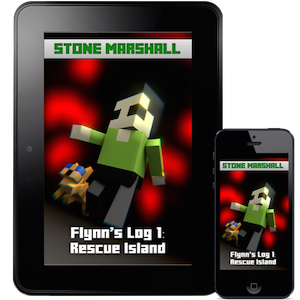
Flynn’s Log is free on the following devices
Choose your device
KindleiPad/iPod/iPhoneGoogle Play (Android Tablets)nookkoboRead Online
US$8.99 Paperback
Get Reluctant Reader Book News from Stone Marshall
Reading is important
Any book that helps a child to form a habit of reading, to make reading one of his deep and continuing needs, is good for him. –Maya Angelou
Most adults would agree that reading is important, but many kids detest reading. Video games, devices, and TV are preferred entertainment and escape. They provide instant gratification. Reading takes time. For some kids, reading isn’t engaging.
I had this same problem with my son, so I solved the problem.
The classic stories I remember enjoying as a kid don’t interest my son and his immediate attention span. If he doesn’t enjoy the story from page one, he will not read further.
So how did I get my son to read?
I showed him how much fun it is to get sucked into a story.
Your book is amazing I can’t stop reading it – Joseph Young via twitter
Contemporary and Classic titles alike don’t interest many kids. Don’t worry, the love of reading is learned. We need a starting point. We need that one book that is just as engaging on the first read as the fifth, just like a really great movie that kids want to see again and again. A positive association with reading will make kids want to read more.
A love of reading is cited as the number one indicator of future success. My son didn’t have the desire to read. He didn’t care about the books I chose to read to him, and was overwhelmed with the selection at the library. I want my son to succeed, so I had to do something. Since we struggled to find books he cared to read, I wrote one. An epic saga about the things he loves. I put it in a world he loves and addressed the issues he faces in his life.
I just love your books I’ve been reading them over and over again. -Carson via twitter
But it’s a video game book
Don’t worry; it’s not a book about video games, nor is it a game strategy book. Flynn’s Log is a hero’s journey that takes place inside the Minecraft world that today’s kids know and love. The protagonist, Flynn, naturally flows through Maslow’s hierarchy of needs (builds shelter and tools, learns what to eat and discovers a digital friend) and faces questions about his destiny. He learns important life lessons about friendship, integrity, and trust. Flynn’s Log is good for kids without being boring.
Thank you so so much for the free ebook. My son loves Minecraft now with this book I can get him to read to me. – Jennifer Wilkins
Start your son or daughter on journey today, reading Flynn’s Log 1: Rescue Island. Free on available these devices and apps.
Flynn’s Log is free on the following devices
Choose your device
KindleiPad/iPod/iPhoneGoogle Play (Android Tablets)nookkoboRead Online
US$8.99 Paperback
Why is Flynn’s Log 1 Free?
My son loves reading — finally. If you have experience with a reluctant reader then I know your pain and I want to help. I’ve seen thousands of kids transform with this book. My readers, who don’t usually read books during the summer, couldn’t put Flynn’s Log 1 down.
Good book I thought I would never read a book on my summer but I feel I’m gonna finish it soon – Multigamer 47 via twitter
Let this book change your kid’s life too. You have nothing to lose and an avid reader to gain.
Once you learn to read, you will be forever free.
–Frederick Douglas
I am giving away Flynn’s Log 1 free because I want to give you a risk-free way to hook your reluctant reader.
Please and I mean PLEASE, WRITE MORE! I absolutely love it! They’re outstanding books.
-Devon123321 via twitter
What are Books for Boys?
I spend lots of time with teachers and parents. I hear parents ask, “How do I get my son to read? Do you have books for boys?”
I wrote the Flynn’s Log series for my son, and this book is interesting for boys. However, the series is a non-stop read for both boys and girls, especially those who are interested in Minecraft.
The more that you read, the more things you will know. The more that you learn, the more places you’ll go.
—Dr. Seuss
What are you waiting for?
You have nothing to lose!
Flynn’s Log is free on the following devices
Choose your device
KindleiPad/iPod/iPhoneGoogle Play (Android Tablets)nookkoboRead Online
US$8.99 Paperback
News for Parents of Reluctant Readers
Get Reluctant Reader Book News from Stone Marshall
‘Minecraft’: 5 Reasons Why Kids Should Be Allowed To Play The Block Game

- (Photo : Photo by Joe Raedle/Getty Images) MIAMI, UNITED STATES – SEPTEMBER 15: An XBox 360 Minecraft game is seen at a GameStop store on Septemeber 15, 2014 in Miami, Florida. Microsoft today announced it will acquire video game maker Mojang and its popular Minecraft game for $2.5 billion.
So many kids play “Minecraft.” In fact, they are so crazy about it that they can spend hours upon hours building, mining and running away from monsters that come out at night.
Minecraft was launched by Mojang in November of 2011. It is a sandbox-style building game that comes in two modes: adventure and creative. It allows players to build anything and everything they want and encourages them to be as creative as they can be. Ever since the game has been made available to various platforms and a multiplayer mode was introduced, it has challenged kids’ imagination and visual skills.
Games experience a lot of backlashes, but what people might not remember is that they have been used as effective tools to effectively teach children. Educational games were a staple in most schools, with some even reserving special computer time for students.
According to Child Development Info, though games may be extremely different now, the only thing that’s really changed is the way they look and the way they are marketed. So how can a fun and an extremely enjoyable game be beneficial to kids? Well, it actually teaches kids various concepts.
Simple Programming and Machines
There is a structure called the Redstone circuit in “Minecraft” that can be built to control mechanisms. When children experiment with the Redstone circuit, they can learn and understand ideas such as how electricity works, as well as come up with simple machines and think of how they can create them. They will understand the importance of timing and will be forced to come up with solutions to get their desired results. In “Minecraft,” redstone circuits can be used to create railways, lighting that can be activated at night and automated doors.
Sense of Direction
“Minecraft” is also a great way to help kids develop their sense of direction. In the game, it is important that they recognize their location based on the landmarks available. It can also help kids come up with ways to count the distance from one point to another, allowing them to calculate and estimate how many blocks they would need to build a bridge, a house, etc.
Significance of Planning Ahead
Children about to play Minecraft without a plan may get overwhelmed easily or find themselves spending a lot of time thinking about what to build. This teaches them the importance of determining what their goals are and what they need to get there. They will be able to carry this concept as they grow older and apply them in real-life situations. And plans need not be elaborate at this point. Drawing or sketching what they want to build and simply having a general idea of what they want to achieve is already teaching them the significance of planning ahead. You can also decide to set time limits so children can better understand the importance of having a plan, especially when under time pressure.
Endurance and Problem-Solving
Minecraft encourages children to come up with solutions to the problems they will encounter. There are problems such as zombie attacks and scarcity of food that children will have to deal with.
Mathematics
Minecraft is a great way to help children develop their math skills. The game is comparable to a large grid. When children want to build a structure that is 8 squares wide and 10 squares long, they would have to calculate the total number of blocks they need to complete their project.
These are just a few of the concepts which Minecraft teaches children. Life Hack also listed some benefits that children can get from the block game including enhanced creativity, teamwork and research management.
Just a week ago, Microsoft announced the new education edition, which can be used to teach children more in-depth topics such as historical landmarks, molecular structures and provide them with visual but fun explanations of concepts such as area, mass and volume.
‘Minecraft’: 5 Reasons Why Kids Should Be Allowed To Play The Block Game
Could Minecraft be part of your child’s curriculum someday?
Could Minecraft be part of your child’s curriculum someday?
Microsoft has acquired MinecraftEdu and is looking for ways to help develop young problem-solvers with analytical minds. Is this a good idea?

An Official Microsoft Blog post by Anthony Salcito, published on January 19, 2016, announced that Microsoft has acquired MinecraftEdu and is investing in a customized version of the game Minecraft that could be used as a classroom learning tool. Like me, your first reaction to this news is probably one of skepticism and perhaps even derision. But when you think about it more deeply, the concept of using a game environment as a teaching mechanism for children, if implemented correctly, is really not a bad idea.
Minecraft
Without going into much detail, Minecraft is a virtual environment where the players build, refine, change, and destroy a virtual world of their creation using building blocks. What gets made in this virtual world is limited only by the players’ imaginations. There are also multiplayer environments that allow players to cooperate in the creation of their world.
Each building block has properties that can be used to create simple procedural programs. By combining many simple procedures, players can create very complicated machines. One of my favorites is this scientific calculator (video). Using Minecraft, this person created what is essentially a virtual mechanical scientific calculator. This takes some incredible focus and organization of thought.
If students using Minecraft as an educational tool can achieve even a small improvement in critical and analytical thinking, it is well worth the unconventional nature of the activity.
Gaming raises skill
As someone who has played video games since the early 1980s, I can attest to the power of gaming to help shape the mind. The strategy games I played back then (and still do today) helped me learn how to think both tactically and strategically. The adventure games taught me the benefits of thinking outside the box. Later, the first person shooters honed my abilities to think quickly and focus.
Back in the “old days,” gamers not only had to know how to play a game, they also had to know how to get a game to run in the first place. Under DOS, to get games to work, one had to know about batch files, and subdirectories, and file structures. This is how a career devoted to explaining how technology works was started.
Work of the future
The Information Age has changed the way society does just about everything. At TechRepublic we have been talking about big data and the Internet of Things for years now. However, these concepts are no longer phenomena of the future; they are a reality. The amount of data being collected on everything you and I do, on every transaction that takes place, is mind-boggling.
To sift through this ever increasing mountain of data we are going to need well-trained minds. We need minds that can analyze trends, that can see patterns, that can formulate plans of action, and that can imagine where those actions will eventually lead.
Microsoft funding a project to transform Minecraft into a learning tool that educators can use to help develop those analytical minds we need is a good thing. Sure it’s a bit unconventional—and some skeptics will downplay the benefits. But any attempt to create people who can analyze and solve problems on the fly is well worth the effort, don’t you think?
From a cure for cancer to the ability to fly, kids make predictions for 2026
A group of students were asked what they expect life to look like in ten years, and their predictions ranged from superhuman abilities to world peace.
CTV Toronto asked six Grade 4 and 5 students at Brampton’s Thorndale Public School to write a letter to their future selves, describing what they expected in 2026.
“In 2026, I will look forward to take care of my parents. I will take care of my parents because they took good care of me,” 9-year-old Dishanthan Sutharsan read from his letter.
“In 2026, I look forward to being a good student in university.”
Like Dishanthan, many of the students wrote about going off to university and finding a job.
“I would like to graduate with Masters of Management because I want to be a human resources manager,” Pari Sandhu wrote.
“In 10 years, I want to see myself in Harvard University,” Niket Bajwa read.
Though most wrote about school, the children’s letters also touched on what they hope for the world.
“I am hoping in 10 years scientists find a cure for all cancers and diseases. I also home the world is at peace and the world is a better place,” Bajwa wrote.
“When I will have lots of money I will make clothing for the poor people who don’t have clothing,” Simran Bhinder pledged.
Ganeev Singh filled his letter with questions: “Are we safe from guns? Are buildings taller? Can we fly? Is global warming still affecting the world?”
The students also wrote about current issues, like the conflict in Syria, and all wrote about the importance of peace.
Bajwa wrote, “I desire that the war will end and ISIS will be defeated.”
Atheka Jeyatharan said she hopes that “no such thing as war still exists.”
The letters were filled with hope for positive changes in their lives and the world around them.
“I can’t wait to read this letter in 10 years. I will keep my fingers crossed my wishes and goals come true. Sincerely, Atheka.”
From a cure for cancer to the ability to fly, kids make predictions for 2026
‘Imagine a private company deciding what your kids can read or watch’
Vivek Wadhwa, an Indian American entrepreneur turned academic, has been called one of the world’s top thinkers on tech policy. Neelam Raaj spoke to the Stanford University fellow on the ongoing controversy over Facebook’s Free Basics plan
What did you think of Mark Zuckerberg’s defence of Free Basics in TOI? Were you convinced by his case for digital equality which cited the example of a farmer named Ganesh, who would be able to access weather information, commodity prices, etc?
Zuckerberg doesn’t realize that Ganesh cherishes the freedom that India gained from its British colonizers in 1947 and doesn’t want a handout from a western company. Ganesh may be poor, but he doesn’t want anyone to dictate what sites he can visit, what movies he may watch, or what applications he can download.
Zuckerberg is right about the benefits of internet access: it will enable village artisans to access global markets; farmers to learn about weather and commodity prices; and labourers and domestic help to find work through sharing-economy applications.
But here is the problem with Free Basics: the internet access on offer is not unrestricted. Facebook and the mobile carriers get to decide what websites people can visit, and Facebook becomes the centre of the internet universe. Zuckerberg compares this limited service to libraries and hospitals. But imagine a private corporation being allowed to decide which books your children could read and which videos they could watch — and to monitor everything that they did. Would you accept that?
The aggressive nature of FB’s campaign in India has surprised many. Will the fate of net neutrality here have a global impact?
This is not an Indian issue; we are fighting these battles in the US. The Federal Communications Commission enacted rules in March 2015 to require broadband providers to treat all data equally rather than provide preference to some sites. A federal appeals court is challenging these rules at the behest of the telecommunications industry.
Google has the same motivations as Facebook — to bring billions more people online. But it is pursuing a more sensible strategy: it is setting up fast and free Wi-Fi internet access points at 400 railroad stations all over India. Facebook could one-up Google by setting up access points at thousands of schools, libraries, and villages. This “no strings attached” approach would earn it gratitude — and signups — rather than resentment.
If the solution to making internet connectivity accessible to everyone isn’t Free Basics, then what is it?
The ultimate solution, unrestricted internet for everyone, is something that Facebook, Google, and others are already working on providing, via drones, balloons, and micro satellites.
With its Aquila Unmanned Aircraft and laser technologies, Facebook has demonstrated the ability to deliver data at a rate of tens of gigabytes per second to a target the size of a coin — from 10 miles away. This is ten times faster than existing land-based technologies. With interconnected drones, it will, within two or three years, most likely be able to provide internet access to the remotest regions of the world.
Google is further ahead in its efforts. Its balloons, called Loons, are essentially floating cell towers that can relay a signal to a mobile device on the ground.
And then there are low-orbit micro satellites, which Oneweb, SpaceX, and now Samsung are building. These beam internet signals by laser to ground stations.
Google is launching Loons in Indonesia and Sri Lanka. It was also supposed to launch them in India, but India’s defence, aviation, and telecom ministries raised technical and security concerns and stopped the project. When the telecom providers figure out that with unlimited, inexpensive internet access, their cell and data businesses will be decimated, they too will place obstacles in the way of these technologies.
This, therefore, is the real battle that Facebook should be fighting. If the goal is to provide everyone with internet access, Facebook and the internet-freedom groups that it is fighting should be working together to lobby for a change in government policies — for when the new space-based technologies are ready.
Which tech advance are you most excited about in 2016?
To start with, let’s look at what happened in 2015. Knowledge became globalized, with one quarter of India’s population gaining access to the internet (this is without Free Basics). And then, the medical revolution got in high gear with inexpensive medical devices that connect to smartphones and incredible breakthroughs in genomics. Just watch over the next few years as our smartphones become doctors.
Most important of all, in 2015, we reached a tipping point in clean energy, with solar and battery storage becoming affordable and practical.
By 2030, all of India will have off-the-grid clean energy and this will be cheaper than cellphone calls. India won’t need the nuclear plants that it is purchasing.
Next up, starting in 2016, we will see amazing advances in robotics, self-driving cars, artificial intelligence, internet of things, and the space race.
‘Imagine a private company deciding what your kids can read or watch’
Library pajama party: story time holds “answers and worlds” for kids to explore
“Now it’s time for story time, story time. Now it’s time for story time, on the red mat!” Library aide and children’s programming organizer Daryl Anne Stangle sang to six kids at the Winona Public library Saturday morning, signaling the start of the story time pajama party.
The six children in attendance, all in comfy pajamas, cheered and rushed to the red mat in the youth fiction room.
On the menu today: “The Incredible Book Eating Boy,” “Snow on Snow on Snow” and “Rabbit’s Pajama Party.”
“Hey, I got that book from the library. It’s pretty silly!” said five-year-old Vera O’Shea of “The Incredible Book Eating Boy.”
Vera and her three sisters, Evie, Mimi and Nora, attend library story times often. “He eats books and that’s crazy, and I like being crazy,” Vera added.
Kids quieted down as Stangle began reading, drawn into a book whose main character literally devours books to become smarter.
“So everything he ate, he learned,” said Stangle to her attentive audience.
Stangle said she organizes Saturday programs for kids not only because she enjoys working with them, but also because she believes public libraries are a vital part of a childhood and the community.
“For me [the library]…was a place I could find answers,” Stangle said. “Kids learn that books do hold answers and worlds they can travel to in their mind. I think that’s really important.”
Vera’s seven-year-old sister Evie, who Vera describes as a “bookworm,” said her favorite part of library story time is being read to.
“I like that we got to pretend to sleep and that I got to snuggle with Piggy,” she said, clutching her stuffed toy pig to her chest. During “Rabbit’s Pajama Party” — an appropriate book for the pajama party occasion — Stangle asked her audience to act out what the characters in the book did. Rabbit gobbled a snack and so did her audience. Rabbit made an ice cream sundae and the kids pretended to put whip cream and a cherry on top.
Although Saturday programs for kids are irregular now, Stangle said she tries to do them every other month. Tuesday and Friday story times for kids occur weekly.
Saturday programs draw anywhere from five to 50 children, Stangle said, while story times during the week draw 20-30 children.
Each Saturday story time is followed by crafts or games. These activities showcase opportunities for children and parents to learn skills beyond reading at their public library, Stangle said.
“Kids learn that books do hold answers and worlds they can travel to in their mind. I think that’s really important.” Daryl Anne Stangle, library aide and children’s programming organizer
Library pajama party: story time holds “answers and worlds” for kids to explore
Flynn’s Log 5 news

Starting an email with “Dear Reader” feels lame. I’d rather say, Hello Andrew and Rachel and Ryan and Ava and, well, I think I’m making the point to myself. With each new book, I can’t exactly write an email to every one on the team, but I can reply to each email I receive. I don’t always reply and I’m sorry for that. But I’ll keep trying!
So, as I write this email, I’ll write to my son, Nabru Marshall.
Hi son,
Nice job at the Pokémon tournament on Saturday! No, I can’t play Pokémon now. Why? Because I’m writing you a letter. Let’s play tonight, 8pm, but you’ve got to give me a couple of Megas or else I have no chance. Ok, sure, we’ll build on our Studio Minecraft server for a bit and then play Pokémon.
Should we open the Stone Marshall Studio MC server to our readers? I think it makes sense to do that. They’ll get it. We’ve built the Legends & Heroes world they know from the books. Right, Jesse built most of it, but you’ve got your secret area that only you and your buddies know how to get to. Doh, it’s not a secret area now that I told everybody, but the entrance is still a secret.
How should we open it? We’ve got to keep the world intact. We can’t have Greifers destroying the Kingdom or parts of the Beyond. We can change the game mode to protect it. I think it would be cool to have a certain time each week where we login and create groups (Heroes vs. Legends) and have battles. I’m not sure how to set that up. I wonder if one of our readers knows how to admin an MC server?
You know what else I’d love? To have a reader-created world that we can write stories about. Make it part of our Legends & Heroes series.

Your buddies want me to finish Flynn’s Log 5. Yea, I know. I get email every day from readers, our friends, who want the same thing. I’m working on it. I distracted myself early in the year. We started the Stone Marshall Studio and the Legends & Heroes series to give me more time to write Flynn’s Log and keep up with our friends’ demands for more books, but it backfired. We spent tons of time working out the Legends & Heroes story arc and creating characters and illustrations and the world. And the whole time we left Flynn in limbo.
I need to tell you about Flynn.
What’s taking so long? Yikes, that’s a tough question. I love Flynn, but his mind is a bit mixed up right now. He doesn’t realize what’s really happening. So I’m trying to help him, but he’s not listening to me. He’s only listening to Zana.
Why don’t I tell Zana what to do, you ask? Right, have you tried talking to Zana? She’s way too logical. I can’t get anything past her. I try to explain “life” to her and she destroys my logic. I use the definition of life and she tells me how her version of life is more accurate. I can’t convince Zana to tell Flynn anything that I want him to hear.
Whose cap did Elle grab in Flynn’s Log 4? Wait just a minute, I’m not giving spoilers here, but I think you know what happened, if you look deep within.
When will the next book be out? If Flynn and Zana cooperate, then we’ll have a Christmas release. Elle is being helpful, but right now I need to listen in on Flynn’s mind. I also need to intercept Zana’s transmissions (her encryption is becoming more difficult to break).
I’ve not yet told you anything about Flynn. That’s because you keep asking questions. Flynn is, well, he’s where we left him. What’s he been doing? We’ll find out soon enough. But, I need to warn you. His emotional state might be unstable. He’s facing some questions that we all face, questions about his very existence and what it all means.
Does he find the answers? No more questions!
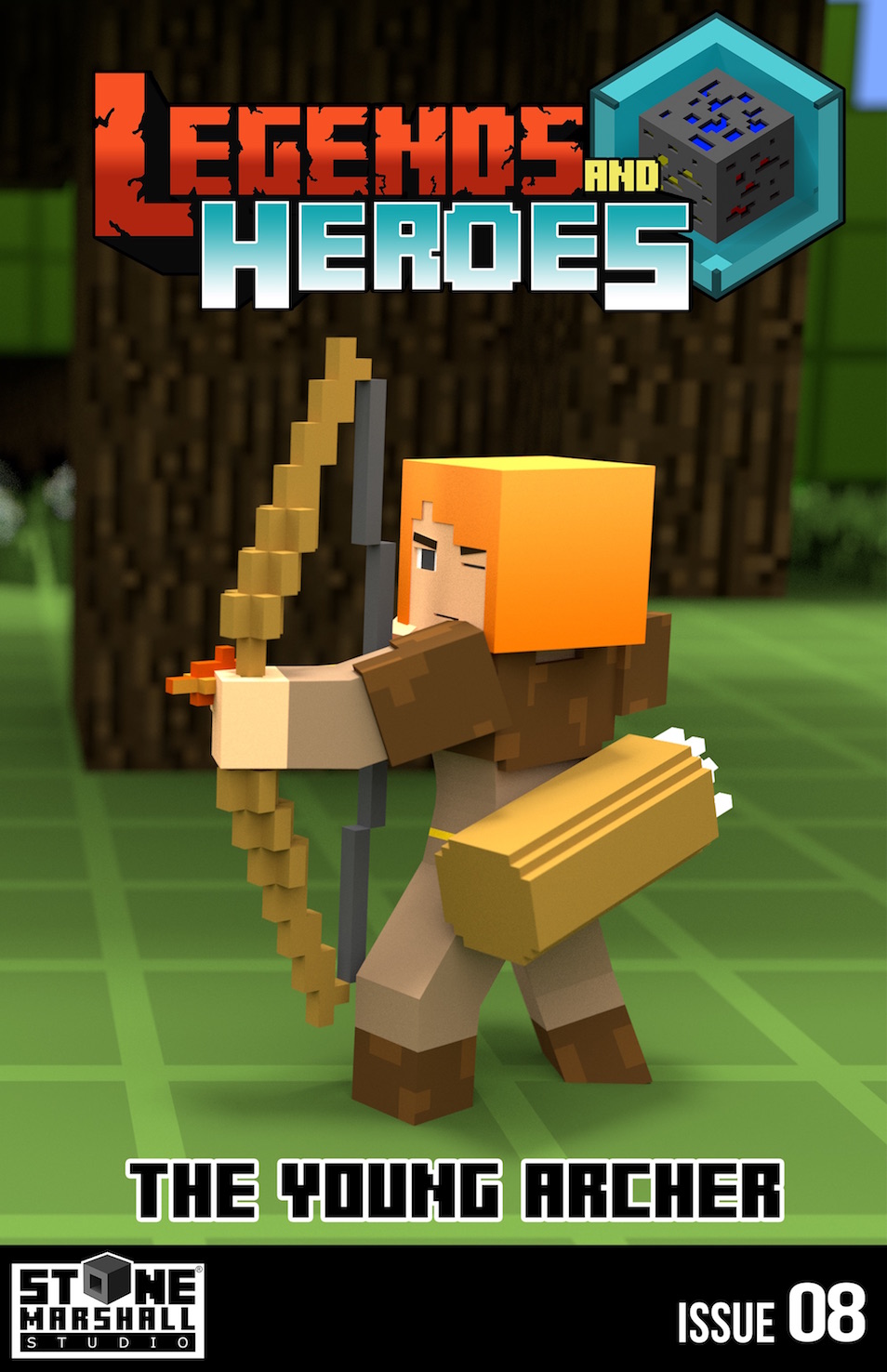
Until then, our friends can read the latest Legends & Heroes issue. Yes, our friends can get free codes for iBooks. I can’t get codes for the other ebook stores, it’s like Apple “gets it” with codes and the others don’t. But I can still get the issue to our friends who read on Kindle, Android, etc., if they know how to load an ebook onto their device.
So, if your friends want the latest issue for free, ask them to email me. If they read iBooks (Apple devices), I’ll send a promo code. If they use another device, I’ll send a link to the file for side loading.
But I need the right information, so be sure they send this to me:
Subject Line of Email: Legends & Heroes Issue 8
Type of eReader: iBooks, Kindle, Google Play, NOOK, Kobo, online, other
Or, if they don’t want the hassle of side loading and don’t mind paying a buck, they can get it here: https://www.stonemarshall.com/l&h0008. Be sure they ask their parents if it’s OK to buy the book and download the file!
With Love,
Dad (Stone Marshall)
How the computer game Minecraft can help autism
 Block building video game Minecraft could help children with autism to interact with others, according to medics.
A speech and language expert from the National Autistic Society said the game could help autistic children improve their communication, concentration and ability to solve problems.
Mum Lisa Taft said her 14-year-old son Donny “struggled with interaction” but enjoyed Minecraft because the game was “never-ending” and relied on “imagination”.
Donny said: “My confidence has now improved… and I’ve made a lot of friends around the world.”
This clip is originally from 5 live Breakfast on Wednesday 10th June 2015.
Libraries to list the most popular books borrowed
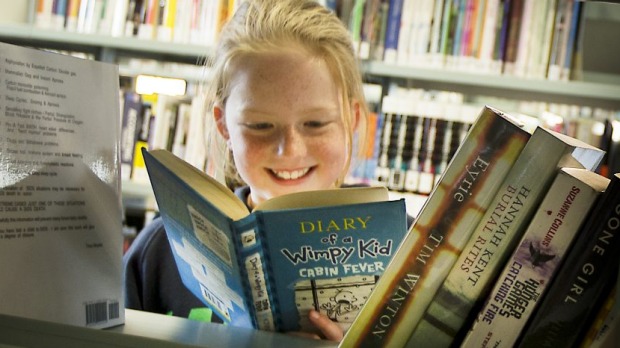 Any avid reader knows the worst thing about a good book is finishing it, and understands the curse of the seemingly perpetual hunt for the next fix, the next great read.
Today marks the start of Library and Information Week and the Australian Library and Information Association (ALIA) hopes a list of the top 10 books borrowed at more than 150 Australian libraries across four categories will momentarily ease that burden.
“We’re all interested in what everybody is reading,” said association chief executive Sue McKerracher.
A wide range of genres were borrowed and read by Australians between February and April, with thrillers, crime, humour, fantasy, science fiction, cookery, biography and contemporary literature all getting a look-in.
Advertisement
Ms McKerracher said while it was “slightly disappointing” British and American authors took out the number one spot in all four categories – adult fiction, adult non-fiction, children’s books and young adult fiction – Australian writers feature prominently in all but one group.
“I think we punch above our weight, but it was disappointing in the young adult genre, because we’ve got some fantastic young adult writers in Australia,” she said.
There were only two Australian writers in that category, and Ms McKerracher put the Americans’ dominance down to heavy investment in marketing.
“Clearly, we don’t have that kind of investment available for our writers.”
She was, however, thrilled with the children’s book category, which featured six books by Australians, including two humorous series by dream-team Andy Griffiths and illustrator Terry Denton.
Another book in the pair’s phenomenally popular Treehouse series was awarded Book of the Year at last week’s Australian Book Industry Awards, the first time a children’s book has taken out the top prize.
Meanwhile, adults voraciously consumed popular and critically acclaimed Aussie fiction titles like The Rosie Project, Burial Rites and The Narrow Road to the Deep North, and our obsession with food showed in the non-fiction category with three of Jamie Oliver’s cookbooks making the top 10.
The survey showed print books were still going strong, with e-books borrowed from libraries making up fewer than 5 percent of loans.
Ms McKerracher said the future was hopeful for print, despite earlier fears of its downfall with the arrival of e-readers.
“The feeling now is that, yes, we’re all going digital, but actually print is still a very attractive medium and people are using multiple formats.
“They’ll have an audiobook when they’re in the car, an e-book when they’re going on holiday and a print book when they’re in the bath.”
Ms McKerracher said the lists showed Australians were reading for pleasure, and, unsurprisingly, she reckons that’s a good thing.
“It’s very good for our souls and contributes to our general sense of wellbeing.”
MOST BORROWED ADULT FICTION TITLES
1. Never Go Back by Lee Child
2. The Rosie Project by Graeme Simsion
3. The Gods of Guilt by Michael Connolly
4. Burial Rites by Hannah Kent
5. Eyrie by Tim Winton
6. The Narrow Road to the Deep North by Richard Flanagan
7. Inferno by Dan Brown
8. The Rook by Daniel O’Malley
9. Gone Girl by Gillian Flynn
10. A Wanted Man by Lee Child
MOST BORROWED CHILDREN’S BOOKS
1. Diary of a Wimpy Kid series by Jeff Kinney
2. 13-Storey, 26 Storey and 39-Storey Treehouse by Andy Griffiths and Terry Denton
3. Geronimo and Thea Stilton series by Elisabetta Dami
4. Spot series by Eric Hill
5. The Wrong Book by Nick Bland
6. Just! series by Andy Griffiths and Terry Denton
7. Once by Morris Gleitzman
8. Peck Peck Peck by Lucy Cousins
9. Selby series by Duncan Ball
10. The Boy in the Striped Pyjamas by John Boyne
Encouraging the Discouraged Reader
Why do we have so many children that choose not to read? As I pondered that question, I was watching a children’s TV channel and decided to do some informal research. I decided to pay particular attention to the commercials being presented to our children. The following is what I discovered:
6 commercials about other TV shows
4 Food Commercials
7 commercials about toys
6 commercials about various video games and apps
0 commercials about books
The question of why our kids are not reading for pleasure is not a new one, but there is no easy answer. All we can do is speculate. For example:
• Kids don’t read for pleasure because they are distracted by TV.
• Kids don’t read for pleasure because they are more interested in video games.
• Kids don’t read for pleasure because there is too much technology (social media) in their life.
• Kids don’t read for pleasure because they no longer can use their imagination to create their own movie in their head.
Perhaps parents need to have their children earn TV time by reading first. Perhaps teachers need to include reading for pleasure as a part of their homework or school expectation. Authors need to compete with the movie industry. Books need to be as cool as the movies. Authors need to advertise their books on that children’s TV channel.
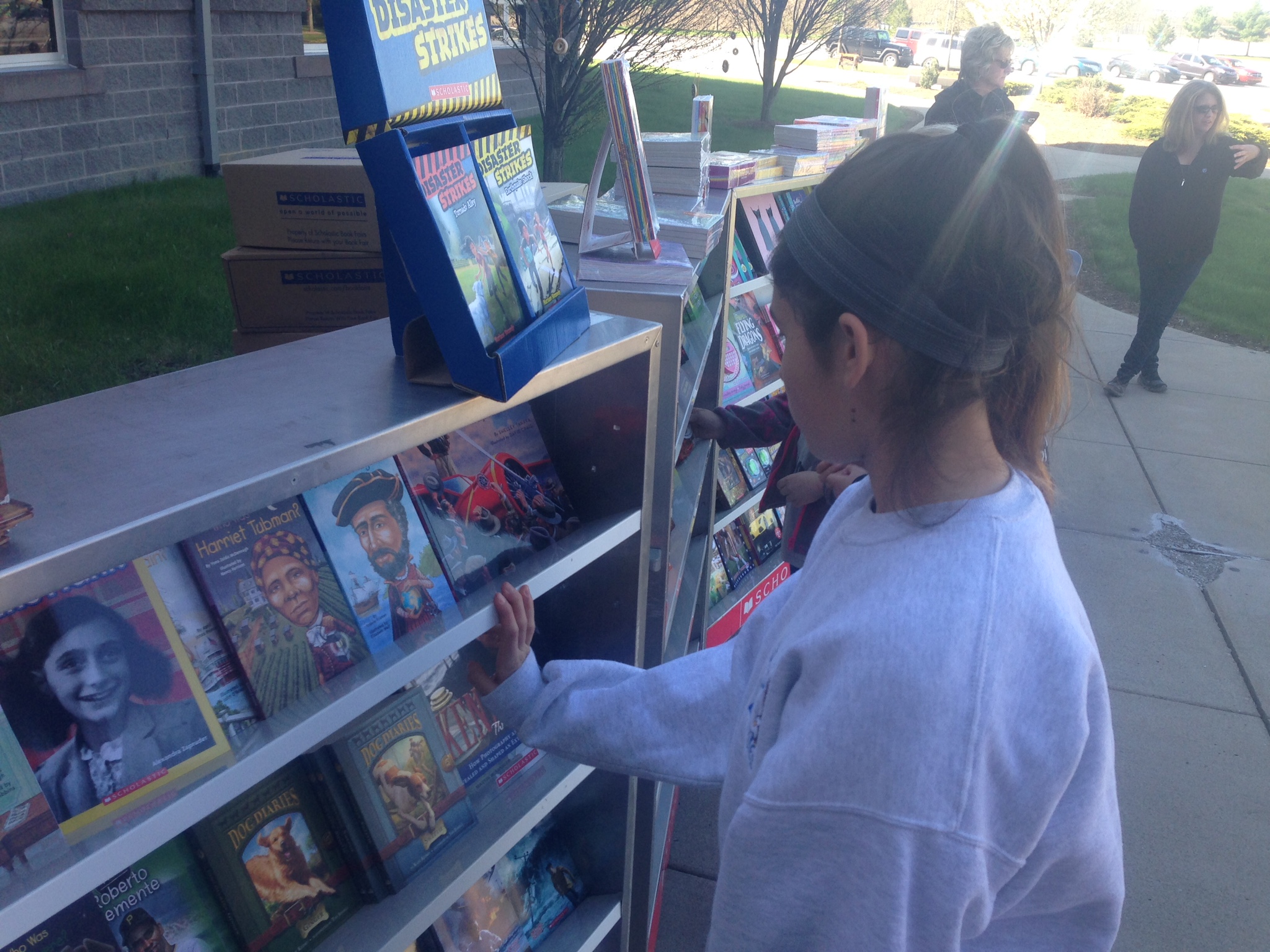
Once again, there is no easy answer for encouraging our children to read, but the fact remains that we need to get our children reading! Kids will do things if it is popular, cool, or fun. We need to make reading all three of those and the best way to do that is through… technology!
Let them read their books online. Let them read a graphic novel from their tablet or laptop. Let them use Book Wizard (http://www.scholastic.com/bookwizard/) which is sort of a Pandora Music App but for Children and Young Adult Books. Let them go on YouTube (https://www.youtube.com/user/polandbananasBOOKS) and watch book talks from other kids and help them find a good book that they might enjoy reading. Let them discuss what they have read with someone online, either in a book club chatroom( http://www.epals.com/#!/main) or have them write a critique of the book on a blog. All of these possibilities will make reading fun and highly motivating for our children.
There is one thing that must come first before any reluctant reader finds his/her passion for reading. There has to be someone who guides them to discovery. The sheer definition of reluctant tells us that there must be at least one person who helps the child find that first book…. that person must guide them to the pathway that can help them discover a love of reading. It just takes one person. Will you be the one?
Bookworms share their stories

The writer (standing), conducting a session with children who were asked to bring their favourite book.
BOOKworms Penang kick-started its series of reading events for 2015 with who else but the precious young ones aged six to 13. This was our seventh event since our inception in late 2011.
This particular event was held at MPH Bookstore, Gurney Plaza in Penang recently.
The children attended the session accompanied by their parents. Although there was a drop in numbers, I fervently hoped it had nothing to do with a decline in reading interests.
This group, however, proved to be an active bunch! Even the six-year-olds could hardly stop talking about their favourite book(s) and characters! This, amongst themselves even before a proper start!
Each child was asked to bring along their favourite book.
They had to talk a little about it – sharing the best bits and why, their favourite heroes/heroines and the genre of books preferred. I found them all to be so forthcoming and articulate!
The mother of 10-year-old Winson Tan (he attends a Chinese Primary School), said that she started him off with picture books at the age of two and at five, he turned to reading other books.
He now relishes in reading a range – mystery and adventure stories, books with mystical creatures. He completed the Harry Potter series when he was in Year Three.
Another 10-year-old, Pramod Linganathan from SK Batu Lancang shared bits from Diary of a Wimpy Kid.
He finds the book funny and this led him to catch the movie as well.
His parents and friends encourage him to read – now that is a good sign, friends encouraging fellow friends.
He doesn’t like reading eBooks. Seven-year-old Pavitra Pusparajan from Convent Green Lane enjoys Frozen.
She loves Princess Sofia and the beautiful accompanying illustrations.
Six-year-old Paramjit Singh from Trinity Kindergarten enjoys fairy tales – Cinderella, Snow White and the Seven Dwarfs. His heroines are Sofia The First and Amber.
He gets his mother to buy books of his choice.
Haresh Singh, nine, from SK Batu Lancang, likes to read books on pirates.
He finds pirates adventurous and smart enough to find hidden treasures and they have cool names like Jack Sparrow, and even Mr Smith!
A very articulate 10-year-old Darsheena Vengadasan impressed me with her impeccable English when she said in flowing sentences about her love for reading “because it helps me fill up my free time”.
“It also helps me in my studies especially with my vocabulary. It excites me and raises my awareness of what is happening in the stories that I read.”
Darsheena’s favourite comes from the bestselling children’s book series – Geronimo Stilton.
She is basically into the action and adventure genre favoured by most children everywhere.
Before we gave them the little space and time to share, we did a little warm-up quiz on fairy tales to lead them into more related activities later.
In the second half of the session, Suriya, a reading enthusiast and a teacher from Penang Free School who is a core team member of BOOKworms, took the little ones aged six to nine, to spend more time on story-sharing.
She let them do gap-filling (orally), and act out some of the characters in the story.
Meanwhile, the writer conducted reading-related activities of a more challenging nature with the 10 to 13-year-olds.
The activities were timed and therefore competitive in nature.
All winners were given token prizes courtesy of MPH (more books!) and BOOKworms Penang.
The two hours on a lazy Sunday afternoon just whizzed by because the children were so engaged and engrossed in what BOOKworms had prepared for them to further kindle and sustain their interest in reading.
It is our passion that helps make things happen! So, listen to what the children have to say – READ! It’s good for you.