by Stone Marshall | Aug 10, 2018 | Awesome Book News, Free, Intro, Minecraft News, Minecraft questions, news, parent-news, State of Stone, Stone Marshall Book News, Stone Marshall Books, Stone Marshall Club, Stone Marshall Minecraft Adventures, Uncategorized |
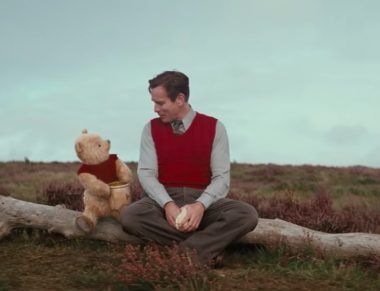
A late-summer dessert entry atop Disney’s already hearty year, Christopher Robin is a property throwback in the vein of David Lowery’s Pete’s Dragon, or Spike Jonze’s Where the Wild Things Are. Frankly, however, it has little of the former’s heart, and all the showy stylistic trappings of the latter. It feels less like a cherry than a big bowl of oatmeal, really. Bland. Gray. A little sticky. It’s salvageable in spots with lotsa hunny – if you really dig for any noticeable flavor – but even then, it’s still just serviceable. Yes, we’re still talking about Christopher Robin.
Christopher Robin takes A.A. Milne’s works about a boy and his bear, and simultaneously modernizes and retrogrades the experience. Du jour in visuals, vintage in its studio feel-goodies. You know Pooh, and his predilection for the ‘hunny’. Fewer may know that Christopher Robin Milne was the name of Milne’s son, and the world of Pooh was inspired by real toys. (You’re welcome at your next bar trivia night.) Now Marc Forster (Monster’s Ball, World War Z) has been tasked with styling a new angle on the blonde bear through a modern lens. In the end, it just doesn’t work, and Forster’s sensitive style has nothing to add beyond aesthetics for aesthetics’ sake.
Robin is now the lead. No longer a tot, he’s played by a shockingly unconvincing Ewan McGregor. It would be unfair to say that the Scottish actor isn’t trying, because the material isn’t up to snuff, and he’s perhaps growing weary of having to work off digital partners after years of War in the Stars. McGregor’s Robin is different, a military veteran. Robin fights in WW2, comes home a luggage businessman, and is on the verge of destroying his family. In shorter terms, he’s played with a stick up the ass. Robin must save his staff from layoffs through the power of accounting and charts, but at the cost of alienating his estranged wife Evelyn (Hayley Atwell) and daughter Madeline (Bronte Carmichael). Christopher Robin? A corporate stiff?
Robin needs his groove back, and only Pooh and crew can renew it in poor “Cristofer Robem.” Perhaps the best word for this characterization is “insincere”? McGregor, an amiable lead in general, is stuck with nominal dialogue, flat intonation, and smiles and moments of longing that never feel earned. Think of it as an overlong take on the little tragedies of Andy growing up in Toy Story 3. Forster never really mines the actor or the heavily stitched-together screenplay for more than mannered cliche.
Pooh, Piglet, Eeyore, Tigger, Kanga, Roo, and Owl are back and articulated with CGI to look alive. Forget the bright yellow-and-red style of Disney cartoons past; he’s been upgraded to a fully-rendered, photorealistic, handsomely budgeted novelty. Like a marionette with no strings. Winnie the Pooh is still a bear, but he’s button-eyed, texturally faded, and lurches along with limited movements in actual reality, interacting with real trees and real jars of hunny. Owl and Rabbit are straight out of Babe, with flapping lips and wide, cartoonish eyes. Perhaps it’s all computer-animated, but the goal is realism here. The effect is curiously jarring, and even a little droll. Pooh’s design is admittedly a nifty conceit to reinforce the film’s themes of the faded past, and the visual effects are nothing to snooze at. However, Pooh is still voiced by Disney mainstay Jim Cummings, because this movie never wants to go too far into the realm of the new. (And look, for fans, it does admittedly give off a feeling of warm fuzzies.)
Through the powers of a cracked jar of hunny, Pooh and Robin reconnect so that Robin can find his inner child, or some such Tony Robbins bumper sticker slogan. The film is pitched at something approximating magical realism, a layer of sparkle atop organic things, and it sounds like a great pitch. Pooh ambling about in his forest with crackling leaves and endlessly glowing lens flares. But Robin neither commits to nor excels in exploring the value of that blend. “What if Pooh but grittier?” seems to be the logline.
Forster struggles to find a tone. There’s an overt, forceful naturalism at work – handheld camera, effusive insert shots straight out of Super Bowl car commercials – that suggests a filmmaker attempting the texture of a short story. It’s bold, if rocky. But it’s at odds with the play and imagination that Milne’s comfort creatures bring. Never could one imagine an explosion in a Pooh film, yet here we get one to enforce the hardening of Robin in war. Halfway through, Forster lands on something staid and feel-good and oh-so-very Disney: a race to rescue Robin from a Very Big Meeting. Still in that crunchy, Earthy style, though.
It took five separate writers (including indie magnate Alex Ross Perry, Tom McCarthy of Spotlight, and Allison Schroeder of Hidden Figures) to come up with that? Maybe that’s partly to blame: so much punch-up that the film ironically removed so much of its feeling and liveliness. Robin must regain the trust of his past pals, revitalize his dusty Hundred-Acre-Wood, fix his family, save his job, and find time to convincingly sell Ewan McGregor smiling at CG creations. Oh, bother, indeed. While it may be inoffensive enough , we’ve seen what adventurous filmmakers can do with old material like Lowery’s Dragon remake, or Jon Favreau’s full-blooded take on The Jungle Book. Kids and parents have to watch these things, too, so make it worthwhile.
Not all is lost, though. Brad Garrett’s Eeyore is pitch-perfect, complete with great zingers in a dour key (“Looks like a disaster. Shame I wasn’t invited.”) Cummings, the man behind both Pooh and Tigger for nearly 30 years, still has it: a sweet inflection and endless amiability. The pleasure of good company is Robin’s occasionally winning quality. Parents will make it through this, but they’ll be left wondering what the point of all this remixing was. Children … well, one surmises the desaturated look and low-key story will leave them puzzled – kids are more receptive than you think. Like oatmeal, you won’t be mad, but it’s not gonna be the best or most exciting meal you’ll have this year. Again. Talking about Christopher Robin.
by Stone Marshall | Aug 10, 2018 | Awesome Book News, Free, Intro, Minecraft News, Minecraft questions, news, parent-news, State of Stone, Stone Marshall Book News, Stone Marshall Books, Stone Marshall Club, Stone Marshall Minecraft Adventures, Uncategorized |
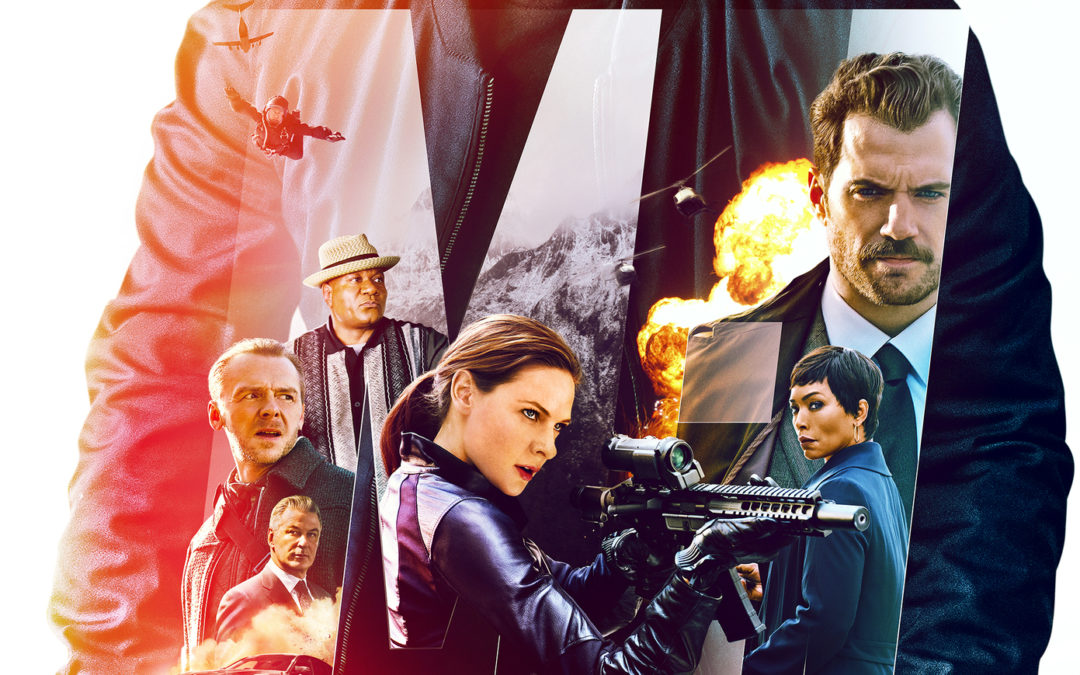
Tom Cruise will prevail again at North American multiplexes this weekend with “Mission: Impossible — Fallout,” heading for an impressive $32 million second weekend, early estimates showed Friday.
Disney’s live-action “Christopher Robin” is heading for second place with a respectable $28 million at 3,602 screens. Lionsgate’s action-comedy “The Spy Who Dumped Me” will finish third with about $11 million. Fox’s opening of dystopian sci-fier “The Darkest Minds” is launching inauspiciously with about $7 million at 3,127 locations and will battle a trio of holdovers for fourth place — Universal’s third weekend of “Mamma Mia! Here We Go Again,” Sony’s fourth weekend of “Hotel Transylvania 3: Summer Vacation,” and Sony’s third weekend of “The Equalizer 2.”
Dinesh D’Souza’s pro-Donald Trump documentary “Death of a Nation: Can We Save America a Second Time?” is performing in line with forecasts of about $3 million at 1,002 locations this weekend for Quality Flix.
“Mission: Impossible — Fallout,” the sixth film in the Paramount franchise, is screening at 4,395 sites and declining less than 50% from its opening weekend of $61.2 million. The action-thriller is also performing better than 2015’s “Mission: Impossible — Rogue Nation,” which won its second weekend over “Fantastic Four” with $28 million. “Fallout” should wind up the weekend with about $122 million in its first 10 days.
“Christopher Robin” took in $1.5 million in Thursday night previews, topping Disney’s “A Wrinkle in Time,” which opened with $1.3 million in Thursday previews and went on to a $33 million opening weekend in March.
“Christoper Robin,” based on the characters from A.A. Milne’s Winnie the Pooh books, hopes to draw nostalgia lovers and their children when it opens on 3,602 screens Friday. Ewan McGregor plays a sad adult version of Winnie the Pooh’s old pal Christopher Robin, so Pooh, Piglet, Tigger, and Eeyore come to life to help him regain his imagination. Reviews have been mixed to positive with a 63% score on Rotten Tomatoes.
Lionsgate-Imagine’s “The Spy Who Dumped Me” opens at 3,111 venues and stars Mila Kunis and Kate McKinnon as best friends pursued through Europe by assassins. Susanna Fogel directed and co-wrote with David Iserson, while Justin Theroux, Gillian Anderson, Hasan Minhaj, and Sam Heughan round out the cast. “Spy” carries a 39% rating on Rotten Tomatoes.
Prospects are downbeat for Fox’s “The Darkest Minds,” which opens on 3,127 screens. The movie, which carries a $34 million price tag, is based on Alexandra Bracken’s novel and set in a dystopian America where a group of teenagers is on the run from the government after mysteriously obtaining superpowers. The film stars Amandla Stenberg, Mandy Moore, and Gwendoline Christie. Reviewers have been underwhelmed with a Rotten Tomatoes score of 15%.
With the top two films combining for about $60 million, overall domestic moviegoing should be up significantly over the same 2017 weekend, which was led by “The Dark Tower” with $19 million in its debut — marking the start of one of the slowest Augusts in more than a decade. Summer domestic box office is up a hefty 10.4% to $3.46 billion as of Aug. 1, according to comScore, and year-to-date domestic box office is also leading last year by 7.6% at $7.4 billion.
by Stone Marshall | Aug 9, 2018 | Awesome Book News, Free, Intro, Minecraft News, Minecraft questions, news, parent-news, State of Stone, Stone Marshall Book News, Stone Marshall Books, Stone Marshall Club, Stone Marshall Minecraft Adventures, Uncategorized |
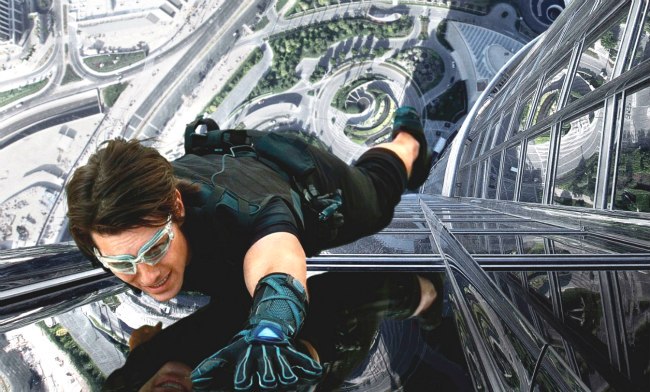
As Ethan Hunt, Tom Cruise has scaled the world’s tallest building, held his breath underwater for over six minutes, shattered his ankle in a rooftop chase, and grasped for dear life on the side of the airplane during takeoff. But those are all appetizers for the inevitable main course in the Mission: Impossible film series: [extremely “Pigs In Space” voice] TOM. CRUISE. IN. SPACE.
While promoting the latest M:I installment, the wildly fun Fallout, Cruise revealed that he’s “thought about” traveling to space. “It’s like how do we do it? It’s the mechanics of getting it there,” he said. “How do you build a sequence there and how long can we have that sequence? Because if I went up and just dropped, how do you put that into the structure of a screenplay of a mission?”
Before watching Fallout, I binge-watched all the Mission: Impossible movies, and while doing so, I couldn’t help but wonder: who would win in a fight, the Mission: Impossible crew (Ethan Hunt, Ilsa Faust, Benji, and Luther Stickell) or the Fast and Furious team (Dominic Toretto, Hobbs, Shaw, Letty Ortiz, Roman Pearce, and Tej Parker). Fast and Furious has the numbers and brute strength, but Mission: Impossible has Tom Cruise, so… Anyway, after reading Cruise’s comments, I’m curious about something else: which movie will travel to space first? It’s the new SPACE RACE, but with more Corona and exploding gum.
by Stone Marshall | Aug 9, 2018 | Awesome Book News, Free, Intro, Minecraft News, Minecraft questions, news, parent-news, State of Stone, Stone Marshall Book News, Stone Marshall Books, Stone Marshall Club, Stone Marshall Minecraft Adventures, Uncategorized |
“Mission: Impossible – Fallout” gave Tom Cruise his best opening in 13 years, but in order to make a profit, the pricey action flick from Paramount will need foreign audiences to turn out in force.
With a $178 million production budget and a promotional and distribution price tag that hovers around $150 million, sources close to the studio and at rival companies estimate that the sixth installment in the spy franchise will need to pull in $560 million in order to get into the black. Some competitors think the figure that “Mission: Impossible” needs to make is even higher, approaching the $650 million range.
These are achievable results given the past track record of films in the series. “Mission: Impossible – Ghost Protocol” boasts the biggest haul with $694.7 million globally. Its follow-up, “Mission: Impossible – Rogue Nation,” fell slightly short of the fourth iteration, generating a nevertheless robust $682.7 million worldwide. If “Fallout” hits either figure, it will be in the clear.
However, there are also a lot of big names that will need to get their share of the spoils. Namely, producer J.J. Abrams and Cruise, both of whom get a sizable percentage of the grosses. Skydance, the film’s financier, will also be cut in on any money the picture makes. All these profit participants will limit Paramount’s taste of the riches. Of the major parties involved in “Mission: Impossible,” only Cruise has gross points, meaning he gets a percentage of the first monies received by the distributor.
Part of the reason that the “Mission: Impossible” films carry a hefty price tag is because they rely on stunts and effects that are filmed “in camera.” It would be cheaper to load up on CGI, but, of course, then audiences would be deprived of seeing Cruise leap across buildings and jump out of a helicopter that’s hovering 2,000 feet above ground. Recounting stories of risking life and limb has become a key selling point for Cruise films.
That does have its drawbacks. One gnarly stunt resulted in the actor fracturing his ankle, causing production to shut down for eight weeks. Insiders say insurance covered that multi-million dollar cost.
“Fallout” does seem off to a promising start. The latest installment launched to a franchise-best $61.5 million in North America and picked up a mighty $92 million overseas. The key to turning a profit will likely be China, where the film opens on Aug. 31. “Rogue Nation,” the previous film in the series, brought in $135 million from the Middle Kingdom. That lofty sum was only dwarfed by the $195 million that “Rogue Nation” took in domestically. If “Fallout” wants to match or surpass “Rogue Nation’s” $682 million global total, it will need to replicate those results in China.
In the wake of “Fallout’s” No. 1 opening and rapturous critical reviews, as well as the earlier success of “A Quiet Place,” some were quick to say that the film was a signal that Paramount had regained its stride after years spent in the box office doldrums. That may be the case. However, “Fallout” still has several key markets left to open before the studio can pop champagne.
It should also be said that “A Quiet Place,” filmed for a measly $17 million, and with a box office haul of $332 million, will likely prove far more profitable than “Fallout.” Plus, no one broke an ankle during shooting.
by Stone Marshall | Aug 8, 2018 | Awesome Book News, Free, Intro, Minecraft News, Minecraft questions, news, parent-news, State of Stone, Stone Marshall Book News, Stone Marshall Books, Stone Marshall Club, Stone Marshall Minecraft Adventures, Uncategorized |
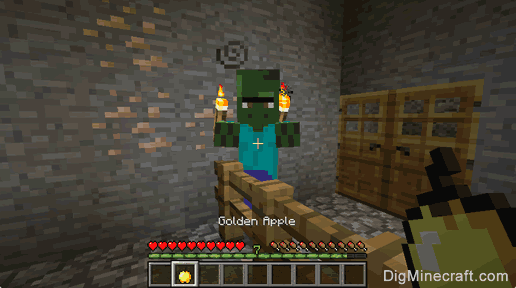
Villagers can be very helpful in Minecraft as they’re passive and can be traded with. They’ll be wearing one of six colored outfits, which depend on their profession, but their state can be changed if they’re attacked by some of the game’s many creatures. If a villager gets attacked by a zombie, they’ll turn into a zombie villager, which means they’ll try to attack you and you will not be able to trade with them. However, if this happens in your world, you’ll be happy to hear that you are able to cure a zombie villager, and here’s how you can do so.
First of all, you need to make sure that you have all the items you need. You’ll need one golden apple and one splash potion of weakness. Once you have everything ready and have found a zombie villager (in a safe place that preferably has a low barrier between you and the zombie), you’ll need to use the splash potion of weakness. You need to aim at the zombie villager and throw the item at it by pressing the right trigger on console, or the right click if you’re on PC. Grey swirls will emanate from the zombie if it’s working.
You then need to do the same thing with the golden apple, making sure that the one you’re throwing doesn’t have a purple glow of any kind. Once you’ve thrown it, some colored swirls will emanate from the zombie. It will take a few minutes, but the zombie villager will eventually turn back to their normal color and be cured. If you leave the zombie villager for five minutes, you should be fine.
That’s all you need to know about how to cure a zombie villager in Minecraft. For more on the game, be sure to search for Twinfinite.
by Stone Marshall | Aug 8, 2018 | Awesome Book News, Free, Intro, Minecraft News, Minecraft questions, news, parent-news, State of Stone, Stone Marshall Book News, Stone Marshall Books, Stone Marshall Club, Stone Marshall Minecraft Adventures, Uncategorized |
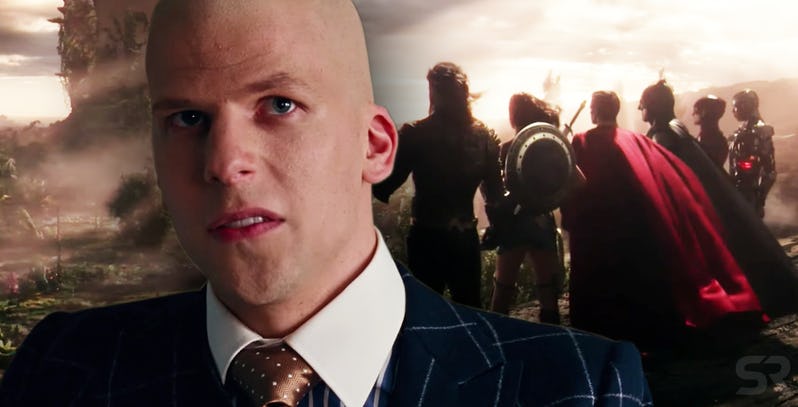
One of Shazam!’s Easter eggs lays the blame on Lex Luthor (Jesse Eisenberg) for the alien invasion in Justice League! Director David F. Sandberg’s superhero fantasy will continue the more fun and hopeful DC Universe that began when Justice League pivoted away from the darker tone established by Zack Snyder. Now, it seems the in-universe scapegoat for Steppenwolf’s invasion is the DCU’s number one Big Bad, Lex Luthor himself.
Seemingly crazed when imprisoned in Arkham and shaved bald at the end of Batman v Superman, Luthor warned Batman (Ben Affleck) that “the bell cannot be unrung… he’s coming!” As it turned out the ‘he’ who did arrive was Steppenwolf (not Darkseid), who sought to collect the three Mother Boxes and terraform the Earth into another version of his homeworld Apokalips. The Justice League resurrected Superman (Henry Cavill) and stopped Steppenwolf’s invasion in an unnamed Russian town, but the super team was unaware that the bald billionaire staged an escape from Arkham. In Justice League’s post-credits scene, Luthor recruits Deathstroke (Joe Manganiello) and revealed his plans to build “a league of our own.”
Shazam! is full of references to Justice League and all of the DC movies that precede it. In fact, Freddy Freeman (Jack Dylan Grazer), the foster brother of Billy Batson (Asher Angel) – who can become Shazam (Zachary Levi) when he says the magic word – is a superhero fanboy who has his own collection of Justice League merch. One of Freddy’s prized possessions is a framed copy of the Daily Planet boasting the headline “SUPERMAN IS BACK”. It’s a very compelling Easter egg because his “Weekend Edition” of the Planet is a composite of articles describing the events of Zack Snyder’s films.
However, the text is the really fascinating part! In the sidebar, underneath “Alien Attack on the World” and “Russia Cleans Up”, it reads: “The Top Suspect: As a worldwide search begins for those responsible, specialists say early signs point to Lex Luthor and his associates.”
Laying the blame for Steppenwolf’s invasion on Luthor and “his associates” sheds light on some of Justice League’s aftermath. Luthor’s escape was naturally news; he was also very vocal about aliens coming when he was incarcerated so it makes sense he is linked to the invasion. Citing Luthor’s “associates” indicates that recruiting for the Legion of Doom is further along than just Deathstroke (and these are matters Batman and possibly Cyborg must be tracking – they are likely the “specialists” noted).
Pointing the finger at Luthor and never naming Steppenwolf also illustrates certain decisions that were made regarding what aspects of the truth the League wanted publicly known; Lois Lane and Clark Kent would have known everything that happened in Russia, yet the truth is skewed. Choosing to omit Steppenwolf and his Parademons’s names may be a choice made for security reasons: it protects the secrets of Themyscira and Atlantis. To acknowledge the Mother Boxes means revealing the history of Steppenwolf’s first invasion thousands of years ago, and that two of the alien power sources were hidden by the Amazons and the Atlanteans – hidden civilizations the world doesn’t even know exists (yet).
Finally, while it may seem unfair to blame Luthor for the invasion when he had no actual hand in it (that fans know of), this could also be strategy on the part of the League: it puts the evil billionaire and his malevolent allies on notice that the heroes are onto them.
–
All this said, it’s worth noting that all of this is gleaned from a Shazam! prop that will likely not see more than a few seconds of screen time; and that other excerpts of the newspaper use old and repeated copy (the main stories use the same text about the events of Batman v Superman: Dawn of Justice). Ultimately, Freddy’s Daily Planet is merely a cool background detail, but it does hint at some potential direction for the wider DCEU. Fans won’t really know what will truly count as canon until Luthor and the Legion of Doom emerge in Justice League 2 – but at least the groundwork for that sequel is clearly being established.
