by Stone Marshall | Feb 18, 2017 | Minecraft News, Minecraft questions, State of Stone, Stone Marshall Books |
Apple’s spaceship-shaped campus in Cupertino, California has been under construction for several years and is one of the most expensive, ambitious buildings in the United States.
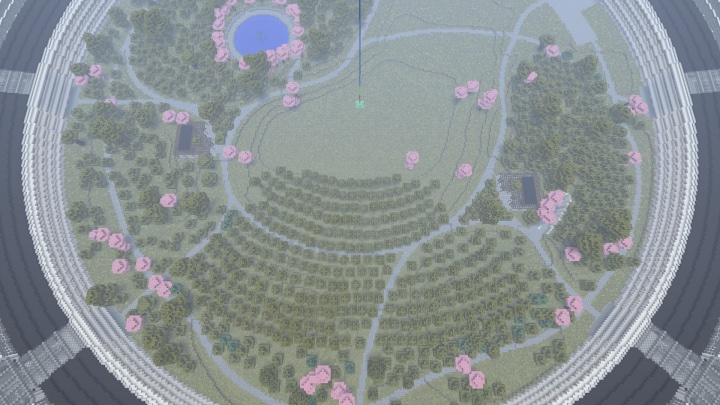
While Apple has been hard at work putting the finishing touches on the campus, which is slated to open later this year, Minecraft player Alex Westerlund has been building a Minecraft version of Apple’s second campus.
According to Westerlund, building the campus in Minecraft took him 232 hours over the course of a year. He used construction plans along with topographical maps to create an accurate rendition of the campus, down to the land it’s built on.
As can be seen in the video, the ring-shaped main building has been faithfully recreated, with its curved glass windows, massive doors, solar panels, window awnings, and more. Westerlund says the main building is “absolutely massive” at 469 blocks across, with every hill, path, and orchard placed according to construction plans.
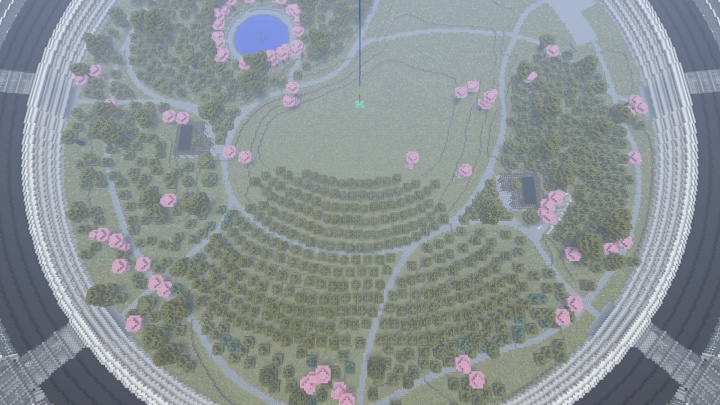
The courtyard of the building includes trails, two cafes, a cafeteria patio, cherry trees, a fitness center, and a fountain, while the interior features atriums and a huge cafeteria built to match a publicly released rendering.
Apple’s real second campus is nearing completion. According to the latest drone video, construction crews are hard at work on landscaping and are wrapping up work on solar panels and a nearby research and development facility. The campus is expected to be finished in 2017, but exactly when employees will move in remains unclear.
Westerlund tells MacRumors that as Apple continues work on its campus, he’ll continue to flesh out his virtual version, putting in up to four hours of active building time per day.
Minecraft Player Spends 232 Hours Building Apple Campus 2
by Stone Marshall | Feb 12, 2017 | Minecraft News, parent-news, State of Stone, Stone Marshall Books, Stone Marshall Minecraft Adventures |
There’s no denying 2016 was a fantastic year for video games. Honestly, the gaming industry is spoiling us rotten, and we’re thrilled. Want to get hyped for the amazing games 2017 has in store? So do we.
Resident Evil 7 – January 24
For some, Resident Evil 4 marks the spot where the franchise fell off the map: parts 5 and 6 were its most unremarkable installments. But with a jaw-dropping debut at E3 2016 during Sony’s press conference, Resident Evil 7 rekindled gamers’ desires to find themselves dangerously low on ammo while desperately fleeing shambling horrors and grotesque mutations. This chapter welcomes a new main character to the series, and in its biggest change yet, the game will play entirely first-person. Capcom even promises full virtual reality support, allowing players to play the game from beginning to end in VR.
For Honor – February 14
Get ready for one bloody valentine. With so many alpha gameplay videos on YouTube, it’s easy to forget that For Honor has yet to be officially released. An online hack and slash game, For Honor pits factions of knights, vikings, and samurai against each other in a fight to the death. Developed by Ubisoft Montreal, it looks to bring together the best aspects of Chivalry: Medieval Warfare, War of the Vikings, and Samurai Warriors in one medieval fantasy setting. Closed beta starts in January (register here), with the official release slated for February 14, 2017.
Halo Wars 2 – February 21
Halo is one of the biggest video game franchises in history, and in 2017 it’ll return to its real-time strategy roots. It’s been a long time since the original Halo Wars hit shelves—Halo Wars 2 will drop almost exactly seven years after the release of its predecessor—but Total War developer Creative Assembly promises to make it worth the wait, putting the series in the capable hands of RTS masters.
Horizon Zero Dawn – February 28
Originality can sometimes feel like it comes at a premium in the game industry. That’s why it’s refreshing to see a game with as bonkers a premise as Horizon Zero Dawn: 1,000 years in the future, mankind has been reduced to a series of caveman-like tribal groups as the world has reverted back to a pre-historic landscape of lush greenery and dangerous wild animals…that are robots. Yep, a world where every animal is a robot. Unraveling that mystery should be as fun to as Horizon Zero Dawn’s gameplay looked in its E3 demo during Sony’s 2016 press conference. Guerrilla Games’ track record with the Killzone series proves they can create engaging gameplay, and they’re not slouching with the story, either, as they’ve brought on the writer of Fallout: New Vegas to pen the script.
Legend of Zelda: Breath of the Wild – March 3
It’s hard to blame Nintendo for keeping the Zelda franchise relatively unchanged for so long. If it works, don’t try to fix it; just add and modify and twist into new shapes to deliver new yet familiar experiences. It’s a different story for The Legend of Zelda: Breath of the Wild, which promises a more open and fully exportable world than any Zelda game before it and will be available on both WiiU and Switch. This latest entry shares more in common with Skyrim and Far Cry than traditional entries in the series. Dungeons can be explored in any order; the final boss fight could be fought, and won, at the start of the game, assuming players are crazy (and skilled) enough to pull it off. It’s a Zelda unlike any other: it hands you a controller and truly puts you in control
1 2 Switch – March 3
The first game presented at the Nintendo Switch Presentation 2017, 1 2 Switch is the spiritual successor to the underrated motion-controlled masterpiece WarioWare: Smooth Moves for Nintendo Wii. In a revolutionary twist on the concept of a video game, 1 2 Switch turns the screen into an accessory; players focus on each other’s eyes and faces. It’s a party game about reflexes, psyching your opponent out, and striking silly poses along the way. We can’t wait to try it. A Nintendo Switch launch title, 1 2 Switch hits shelves March 3, 2017.
Tom Clancy’s Ghost Recon Wildlands – March 7
The Ghost Recon series is taking a cue from Metal Gear Solid 5 and Grand Theft Auto 5 by removing the idea of levels and setting the upcoming Ghost Recon Wildlands in an enormous open world rife with Bolivian drug cartel baddies who are eagerly anticipating being shot in the back of the head as they stand around guarding an abandoned warehouse. Wildlands features a robust single-player campaign that will have gamers exploring every square inch of terrain for dozens of hours. But the online multiplayer co-op is where the game promises to shine, as you and some buddies can go on raids and chase down escaping drug traffickers from the comfort of your own underwear
Mass Effect: Andromeda – March 21
Commander Shepard isn’t the only thing the Mass Effect series is leaving behind. It’s abandoning the Milky Way galaxy and setting up shop on the Citadel in our celestial neighbor, the Andromeda galaxy. All new planets. All new terrain. All new alien races. Actually, by definition, you will be playing the invading alien race of the series. Set centuries after the events of the original Mass Effect trilogy, the new series has you controlling a new protagonist, named Ryder, whose mission is to discover a new planet for the human race to call home.
South Park: The Fractured But Whole – March 31
Obsidian Entertainment’s South Park: The Stick of Truth surprised us in 2014. A mechanically sound RPG with a long campaign, enjoyable combat, hilarious writing, and fan service galore, Stick of Truth renewed gamers’ trust in the franchise. (If you played the mediocre South Park games for N64 and Playstation, you know all too well why they might have been skeptical.) A D&D parody, The Stick of Truth contained four classes (Fighter, Mage, Thief, and Jew), while the superhero-themed The Fractured But Whole features twelve (Brutalist, Blaster, Speedster, Elementalist, Gadgeteer, Mystic, Cyborg, Psychic, Assassin, Commander, Netherborn, and Karate Kid). By all accounts, The Fractured But Whole is going to be bigger and better than its predecessor.
Persona 5 – April 4
Rabid fans of the Persona series—is there are any other kind?—have waited eight excruciating years for the next official installment. The last to see release, Persona 4, came out in 2008 for the PlayStation 2. But 2017 will change all that with another turn-based RPG adventure for the PlayStation 4. In the new installment you’ll spend a year in the shoes of the new kid at Shujin High School as he and his fellow students use their “persona” powers, or manifestations of their psyche, to battle a shadowy group known only as the Phantom Thieves of Hearts.
Yooka-Laylee – April 11
Designers who worked on Banjo-Kazooie and Donkey Kong Country have formed Playtonic Games to develop the upcoming Yooka-Laylee. Funded in 2015 by 80,000 Kickstarter backers, the game aspires to be a “collect-em-up for the modern era.” Note the hyphenated title. That’s no accident. It’s meant to make us nostalgic for the N64’s golden era—and it’s working. April 11 can’t arrive soon enough.
Injustice 2 – May 16
NetherRealm, the makers of Mortal Kombat, shocked the world with Injustice. Finally, we could live out childhood dreams of pitting Superman and Batman against one another in a fight to find out—once and for all—who would win. Or Superman vs. the Flash. Or Doomsday vs. Lex Luthor. Even better, the game was great. Injustice 2 will feature gameplay mechanics similar to the original, like the trait system and the game’s show-stopping super moves, while offering new twists, like a loot-dropping system that allows players to collect gear during fights that offer costume-specific upgrades altering play.
Outlast II – Q1 2017
Don’t call Outlast fun; it isn’t fun. It’s stressful, upsetting, haunting, and the best first-person survival horror game this side of Alien: Isolation over the last ten years. Inspired by the Amnesia series, first-time developer Red Barrels’ first game surpassed its forebears in virtually every way, capturing the horror of being trapped among the violently the insane in an asylum. Trading the deranged sanitarium for an upside-down cross-burning, backwoods religious cult, Outlast II should be another not-fun masterpiece of survival horror. It’s already piqued gamers’ interest in unexpected ways: for instance, the original teaser featured a creepy reversed audio clip of a preacher menacingly reading from the Bible.
Gwent – Early 2017
The Witcher 3 was an astounding game with another great game hidden deep inside, like a Russian nesting doll of video games. This hidden game, a card game called Gwent, was originally made by a couple of designers at CD Projekt Red in their spare time. It impressed the higher-ups and made it into The Witcher 3, where it became something of an obsession among diehard fans, who loved it so much that many made their own standalone versions. Now it’s becoming a standalone title in the style of Hearthstone, but with a twist—this release is a collectable card game with single-player campaigns.
Arms – Spring 2017
Announced by Kosuke Yabuki at the Nintendo Switch Presentation 2017, Arms looks like a mix of Wii Sports’ boxing, shooting, and WiiFit. The motion controls make use of the joycons’ gyroscopic technology. Expect to sweat as you dash and jump around, using jabs, hooks, and special attacks to beat your opponent to a pulp. And it’s all set in a bright, crisp art-style reminiscent of both Splatoon for the Wii U and Ready 2 Rumble: Boxing, a classic of the N64 era. Step into the arena in spring 2017
Tacoma – Spring 2017
Fullbright Company turned some heads after they departed Irrational Games and released Gone Home, a little game about 21-year-old girl who comes home from overseas and is greeted by an empty house she must explore to unravel the mystery of her sister’s coming-of-age story. The studio’s follow-up, Tacoma, takes place on a derelict space station 200,000 miles from Earth. As with Gone Home, players must explore the empty vessel to discover what happened to the crew. Players won’t encounter any actual people; instead, the ship has recorded the voices and movements of its crew members and replays them as holograms that the player must follow to unravel the ship’s mystery.
Tekken 7 – June 2
Technically, the latest installment of the Tekken series has already been out since February 2015…but only in Japan, where it had a limited arcade release. In 2017 it’ll finally reach western shores, and it’ll finally be playable on everything that can play video games, except the Wii U. According to its E3 2016 trailer, the seventh chapter of the long-running series will include a new addition to the roaster of classic Tekken characters: Street Fighter’s Akuma. Sadly, it’s rumored that he may be the only Street Fighter character making a cameo.
Splatoon 2 – Summer 2017
The segment on Splatoon 2 at the Nintendo Switch Presentation 2017 was one of our favorite highlights. Nintendo’s clever, family-friendly take on ruthless hardcore shooters, the squid ink-spattered Splatoon was a notable high-point of the Wii U’s short life span. New arenas, game modes, special weapons, and new types of inklings mean the turf war will be even crazier the second time around. The next one promises network play and local multiplayer, as well as multiple control schemes. Join the turf war this summer.
Cuphead – Mid-2017
Inspired by old Mickey Mouse cartoons, Cuphead in Don’t Deal with the Devil aspires to be a playable old-timey cartoon with side-scrolling, platforming, retro charm. In development for several years, it’s the brainchild of first-time indie developer Studio MDHR. Rumor has it the designers are putting their finishing touches on the co-op mode. No further delays are anticipated—which is good news for Disney and Rayman Legends fans alike.
Shenmue 3 – December
The long-awaited third installment in the Shenmue franchise will finally, mercifully be released in 2017. Yi Syzuki’s series, which began way back in the Dreamcast days, was years ahead of its time. Sadly, despite mounds of critical praise, it proved a commercial failure—which is why the gaming community was blown away when Sony announced during its 2015 E3 presser that a Kickstarter fundraiser had been started to gauge interest in a possible Shenmue 3. Within nine hours its $2 million goal had been surpassed; all in all, $6.6 million was raised, making it the most heavily funded game in Kickstarter history.
Super Mario Odyssey – Holiday 2017
We know a lot more than we once did about Super Mario Odyssey. The game takes place in strange worlds beyond the Mushroom Kingdom, including one similar to our own. Mario wears a sentient cap with googly eyes on it. He uses the cap to perform special jumps. In combat, he makes like Oddjob from the Bond movies–or Kung Lao from Mortal Kombat–and flings it at his enemies. He also flies around in a tugboat-spaceship because of course he does. The gameplay looks even smoother than Super Mario Galaxy’s. Look for Mario’s familiar face this holiday season.
Suda51’s Travis Touchdown game – Title and release date TBD
Suda51 is an oddball, but he makes compelling games. The No More Heroes games were blood-spattered reasons to get a Wii and a Wii U. Killer is Dead puts a purple-drenched, psychedelic spin on Seijun Suzuki’s already nonsensical–and just as brilliant–hit man movies. Whatever Suda51 is working on for Nintendo Switch, you can trust it will be both weird and worth a look.
Agents of Mayhem – TBD
Volition is taking a breaking from the wild and ridiculous Saints Row series to bring us…a Saints Row spinoff! Set sometime after the events of Saint’s Row: Gat out of Hell, Agents of Mayhem is an open world third-person action game that revolves around an anti-terrorist organization known as—you guessed it—Agents of Mayhem, who are trying to stop the evil terrorist organization Legion from destroying the world. Players can swap between one of three characters on the fly in the midst of battle. Perform a stun maneuver to freeze all enemies on the battlefield, and instantly swap in another character that can kill them all with a well-placed grenade. It may not be Saints Row, but for now it’ll do just fine.
New Megami Tensei game – Title and release date TBD
Atlus’s Megami Tensei series, and its multiple spin-off series–such as the Persona games about teenagers who fight demons–are a lot of fun. These turn-based JRPGs have amassed a devoted following for being a weirder, headier alternative to the Final Fantasy series. A Shin Megami Tensei is early in development for Nintendo Switch.
Crackdown 3 – TBD
Since we’re on the subject of Saints Row, why not mention a game similar in terms of tone and gameplay? By the time Crackdown 3 comes out, it’ll have been six years since its predecessor debuted. What has Ruffian Games been up to all this time? Well, truthfully, no one really knows. Not much has been revealed about Crackdown 3. But what we do know is exciting: it’ll feature an open world sandbox like the previous games in the series, for sure, and judging from the trailer shown off at Microsoft’s 2015 Gamescom presentation, gamers will be transported to a massively destructive city that you can level with your god-like powers.
Full Throttle – TBD
Wait, what’s a game from 1995 doing on this list of the most anticipated games of 2017? Well, it’s one of the greatest adventure games of all time, with some of the most memorable characters and a delightfully silly sense of humor—and more importantly, 2017 is the year Tim Shafer’s classic adventure Full Throttle gets a fully remastered re-release. If you missed the wildly original tale of a biker who refuses to believe his chopper can be replaced by a silly anti-gravitational bike, this is the perfect time to hop on and ride off into the sunset with one of the best games ever made.
Toshihiro Nagoshi’s Switch game – Title and release date TBD
We don’t know anything about this game, but we know a lot about the astonishing track record of Sega’s Toshihiro Nagoshi-san. Nagoshi-san created the celebrated Yakuza series as well as Binary Domain, the top-of-the-line anime-styled third-person shooter. Part design genius and part philosopher, he makes violent games with intentionally low body counts–unless you count the blown-apart robots.
Prey – TBD
The Prey series, if you can even call it that, has had a rough life. The original Prey, released in 2006, had been in development since 1995, and went through multiple massive overhauls before it finally arrived to fan acclaim. Its sequel went through something similar before eventually being canceled long after its public announcement. But now the minds behind Fallout and Elder Scrolls are putting their full force into a new iteration of the alien invasion epic. Bethesda envisions the new Prey not as a sequel or remake, but a complete reimagining of the franchise.
Games that are going to blow everyone away in 2017