GameCentral readers discuss their favourite female characters, from Lara Croft to Aloy from Horizon Zero Dawn.
The subject for this week’s Hot Topic was suggested by reader Mesomex, following International Women’s Day earlier in the month. We wanted to know which female character you think is the most interesting and what you think of the representation of women in video games in recent years.
You can probably guess what some of the nominations were, although opinions were divided on the qualities of Lara Croft as a character. Bayonetta, Jade from Beyond Good & Evil, and the women of Uncharted were all popular though, with most readers feeling things are more positive now than they used to be.
Beaten by a woman
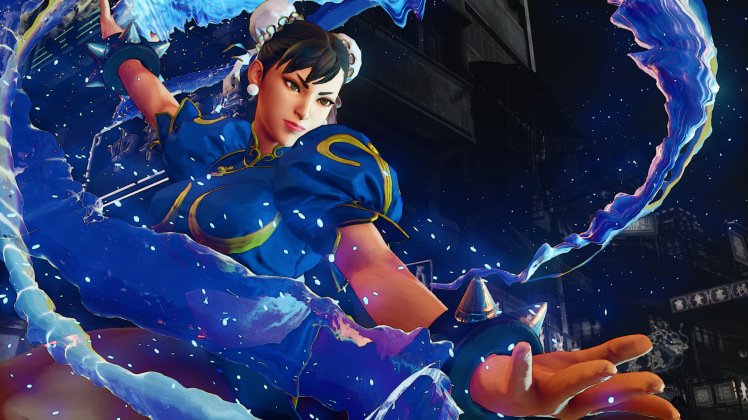
My favourite female game character is Chun-Li from the Street Fighter series. When I first saw her in the arcade days I wasn’t overly amazed by her but as I have used her in different iterations of the franchise, she has allowed one of my gaming dreams to come true.
She actually allowed me to essentially master the game and take my hobby to new heights. Unfortunately, I didn’t realise that when you beat someone online with Chun it is a real ego stealer. So the hate you get is monuMENTAL. Chun-Li is and always will be my favourite. Guile75
The anti-Lara
For me the answer is definitely Bayonetta. If you’ve never played the games you may get the impression she’s just a tawdry caricature for the male gaze but she’s absolutely not. Bayonetta is completely in control of her own games and does not rely, want, or need any man.
Not only that but she’s perfectly aware of how she looks and taunts those that would try and objectify her, including many fourth wall breaks where it’s obvious she’s addressing gamers themselves. I think she’s fantastic and the fact that her games are amazing too is just the icing on the cake.
I imagine the most popular answer is going to be Lara Croft but as far as I’m concerned that’s just name recognition. Ask yourself who is Lara Croft? What are her personality traits? Her likes and dislikes? Her famous lines of dialogue or most intriguing storylines? Her great loves and losses? Having trouble? That’s because she’s basically a blank slate.
She may as well be a customisable avatar for all the difference it makes and they often have much more personality anyway (see: Mass Effect). Bayonetta is like the anti-Lara Croft and that’s why I love her. Bailey
Believable people
I’m in the minority but I actually liked Camilla Ludington’s take on Lara Croft, I feel she did the best with what she was given but my favourites in a three way tie are Aloy (Horizon Zero Dawn) and both Chloe Price and Max Caulfield (Life Is Strange). All three are believable in their own situations and you can certainly feel empathy and sympathy for each character. The fact that Aloy and Chloe are voiced by Ashly Burch is testament to her voice acting talent.
I do think that females in gaming, both as characters and in life has got better over the last decade but I do think there should be more of them in prominent roles and if the rumours of a female lead in the next GTA are true then I’m all for it.
On another note, and while not quite gaming-related I’ve seen on social media a bit of a backlash to Alicia Vikander playing Lara Croft in the new Tomb Raider because her breasts are too small. Not only have I never heard anything more ridiculous like it’s still the ‘90s, but it’s an insult to Alicia as both a woman and an actress. Always seems to be one step forward and two steps back. Mr.Saveloy
GC: Just to note Chloe in Before The Storm is voiced by Rhianna DeVries, who we slightly prefer in the role.
The female character I am most interested in has to be without any doubt, Lara Croft. The reason for this is because of how much Lara has gone through with all of the Tomb Raider games and has still managed to come out strong. From the very first Tomb Raider game to the resent Lara has faced a great deal of many challenges and has fought against numerous odds and foes.
Adding to this, Lara Croft has won over the hearts of gamers and has even managed to win over the respect of a lot of male gamers with her overwhelming accomplishments. Lara Croft has been voiced by five people in the video games something not many female characters in games has done.
I personally think the representation of women in video games is acceptable but there are quite a few improvements that should be made, such as bigger interactions with characters and in open world games like GTA and Red Dead Redemption. As well as being given some small advantages that would allow female main characters to be given a more controversial role and to help gamers have a better understanding of female main characters.
Broken Sword 1: Director’s Cut, for example, allows you to play as a female main character called Nico from time to time, which at the time of its release was what I felt like a very cool feature and was decent of Revolution to do that.
A few other franchises that I feel could use more prominent female main characters are Dead Rising games as although Dead Rising 2 and Dead Rising 2 Off The Record did have Stacey and Rebecca players were never given a chance to play as them in co-op, to ensure they would have a more proactive role in the game and not just storyline based. gaz be rotten (gamertag)
East vs. West
I find it as hard to pick a favourite character, let alone a female one, in a game as it is to pick a single song (very hard). I could go on for a while of those that stay in the memory but would like to focus on the other part of the topic. Also, that said I have a personal favourite female character in a series of visual novels but don’t think that could be discussed here due to various reasons.
I see no issue with representation of females in video games at all, it may be an ‘issue’ in the West because certain groups take extremely selective examples, twist them and take to the more than willing gaming media to cry foul (because you can’t be sexy or be aimed at males anymore apparently) but has it ever been an issue really? Of all the games I grew up playing I did not care whether the character was male, female, dragon, car or whatever and I imagine the vast majority feel the same.
I think Japan has it down perfectly, they have by far the most diverse array of representation for all in their games and they do it because they want to not because they have to fill a quota or percentage. Take a look at Pokémon, Final Fantasy, or Dragon Quest, three of the biggest gaming franchise on the planet and from the beginning to this very day have interesting characters of both genders and all ages throughout. These are just a smidgen of an ocean’s worth of games including many from the western world.
They also cater to niches with visual novels, ecchi games that have sexy, fierce, intelligent, strong, weak, dangerous, etc. female characters and the like which are perfectly okay. They do the same with male characters in their otome games (though admittedly a smaller market). Some may scoff at these but they are popular and offer just about anything you could want. CerezoMask
Horribly effective
Even though she is an absolutely horrible person in the game, I actually quite like Irene Engel from Wolfenstein I and II. This is purely because I think she is an excellent villain, I can’t think of many other examples of villains in games where I really hate them.
Her actions over the course of both games allow you to build up a hatred for her so that any comeuppance she gets feels extremely satisfying. Nobody should look to her as a role model, but other developers and writers should look to her as a great example of a villain done well. Truk_Kurt (PSN ID)/trukkurt (Steam ID)/Angry_Kurt (Twitter) Now playing: Oxenfree (Switch)
Un-Jaded opinion
Jade from Beyond Good & Evil is a great woman for a gaming role model. Jade is friendly, not naturally violent but can handle herself, she has a great mind and cares greatly for the less fortunate who can’t defend themselves and never oversteps into an arrogance that borderlines overconfidence which turns into, ‘I do this better than you because I am better than you!’
I think that if more lead woman were like Jade, and less fan service like you get from anime-led games or Western games with the usual clichéd woman to excite teenagers or younger men, then the more interesting the storyline will be for all of us. Just as you get in the Uncharted series also.
Dialogue is important, and voice-acting to emphasise the character’s finer touches and the type of mind they have. I wish good voice-acting was not always so hit and miss in video games still, but unfortunately it still is. Character creation is good, and the world is your oyster when you can create any type of character you want, even though the storyline and character depth is not going to change because of it. But still, it’s good you get choice in creating a character that may be underused in gaming.
Personally speaking there is still an awful long way to go, but games like Horizon Zero Dawn and the Bayonetta series are good examples – both different types of characters but each a strong female that does not need the world of males to get them through difficult situations. And they’re both voice-acted beautifully, with a lot of depth and emotion.
I still think though, from what we have seen, the future looks a lot better than before and I think game developers know that. Alucard
Minecraft is a popular video game that’s sort of like virtual Lego. Players find and build stuff by themselves, or online with friends.
It’s a simple formula that’s attracted millions of fans — and Southern Methodist University professors.
Corey Clark, deputy director for research at SMU Guildhall, and John Wise, an associate professor of biological sciences, are part of a team hoping to take advantage of the game’s large user base in the search for better cancer-fighting drugs.
On their quest to disable a biological pump
Wise: These pumps are normally in our bodies, protecting us from exposures to toxins. They keep bad things out of our cells, and that’s a really good thing. But this good thing gets perverted in cancers. A cancer cell will over-express these pumps, and it will eliminate cancer chemotherapeutics from the cancer cells, which causes the cancer to become resistant. So the goal of our research at SMU is to — with high-performance computing facilities and biochemistry — discover compounds that will temporarily turn these pumps off during cancer chemotherapies.
On how Minecraft is helping the search for treatment
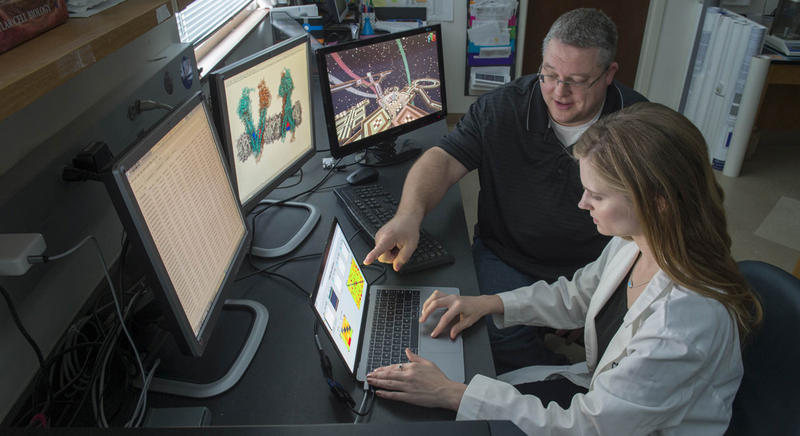
Clark: Video games themselves are all about learning — how to play a level, how to progress through a game — and so what we want to do is use that human intuition piece and take datasets from medical problems, like the chemotherapeutic problem, and then integrate that into the game, so it’s part of the natural game itself. Every time somebody does something in the game, it’s actually helping in the science. The idea that you’re making a positive impact is something the players really enjoy.
We visualize the data problems in exactly the same format as Minecraft. So there are colored blocks and you’re moving some blocks around to try to find specific properties of these compounds that John’s working with to see which of those properties are the most important in being effective in the treatments. When they’re playing the game, all of the data returns to the back-end of the platform for analysis.
On how hard it is to find new drugs
Wise: Discovering a molecule that has an effect in a biological system like this is the first step. In the last three years or so, we’ve probably found 20 different molecules that positively affect this problem. Getting those drug-like molecules — they’re not yet drugs — to the point where they could be entered in a clinic is difficult. The success rates of molecules that enter such a program and actually end up in people are maybe between 1 and 5 percent.
We’ve identified some really good compounds that we believe we can develop to be pharmaceutical-like compounds that we can put into animals and eventually, people. As I said before, maybe 1 percent of these molecules can make it to humans. That means at the beginning you need 100 of them. Finding those 100 starting molecules with what we’ve learned from Minecraft is going to be a really big deal to us.
Sonic is getting a new racing game, but will it have more in common with Sonic & Sega All-Stars Racing or the Saturn’s Sonic R?
A new Sonic-themed racing game by Sumo Digital has been rumoured multiple times, with the assumption that it would be a third entry in the Sonic & Sega All-Stars Racing franchise – just with more Sonic and less Sega.
The new teaser trailer below certainly seems to suggest exactly like that, but there is an unexpected wrinkle: the logo tease at the end looks very much like Sonic R on the Sega Saturn console.
Sonic R was a race game by Traveller’s Tales (who now make the Lego games) that was released in 1997. It wasn’t very good, but it did feature Sonic and co. racing around on foot.
The teaser clearly implies there will be actual cars in the new game, so it’s hard to reconcile the two. Unless being on-foot is going to be an option of some kind?
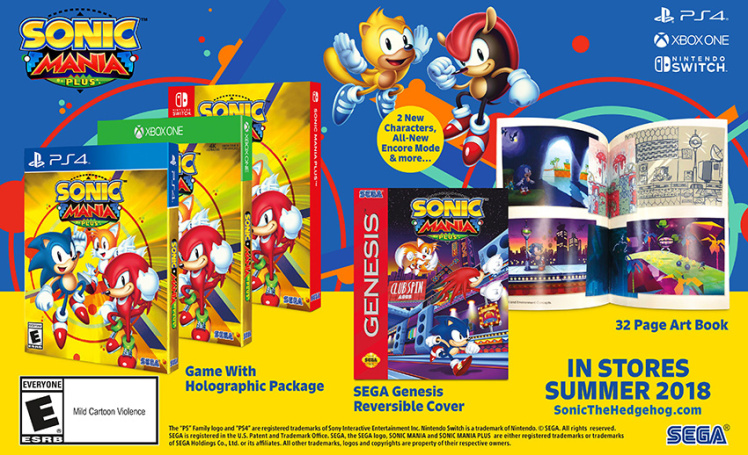
Sega’s less mysterious Sonic the Hedgehog announcement (at the SXSW event in the US, where they previously announced Sonic Mania and Sonic Forces) also involves references to obscure old games, with an expanded version of Sonic Mania called… Sonic Mania Plus.
The new version of the excellent original will feature two new playable characters: Mighty the Armadillo and Ray the Flying Squirrel. Both are taken from the obscure SegaSonic the Hedgehog coin-op, although they did cameo in Sonic Generations as well.
Sonic Mania Plus will also introduce a new Encore Mode, which adds ‘new ways to play, and new ways to explore’ for the existing levels. Sonic Mania’s split-screen multiplayer mode will also be expanded to allow four-players instead of just two.
And… that seems to be it. There’s no sign of any new levels, which is very disappointing, and it’s not clear what Sega is going to charge people that already have the original version.
They do have a natty looking retail edition planned though, so we think it’s more just a re-release to appeal to those that never got it, or heard of it, the first time round.
There’s no date for the Sonic racing game, although we’re willing to bet it’ll be out sometime this autumn. Sonic Mania Plus will definitely be out this summer for Xbox One, PlayStation 4, Nintendo Switch, and PC.
Sega’s final announcement at the weekend was confirmation that Yakuza Kiwami 2 will be getting a worldwide release on August 28, so fans in Europe will not have to wait any longer than anyone else.
Like the first Kiwami game (Kiwami means ‘extreme’ or ‘ultimate’) it’s a remake of one of the original PlayStation 2 releases, so if you’ve only got into the series recently it should be a good way to catch up on the story.
As usual though it’ll be a PlayStation 4 exclusive.
As the mobile version goes live for selected players, other publishers are worrying the success of Fortnite could cut into their profits.
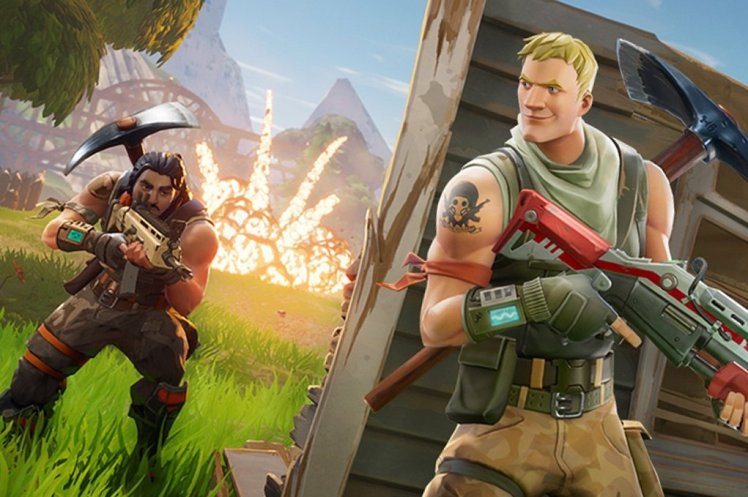
It didn’t seem as if Fortnite had any more records to break, after overtaking PlayerUnknown’s Battlegrounds and becoming the most watched game on Twitch, but now it’s also the most searched for video game on Google – surpassing even Minecraft.
Fortnite also got more searches than the term ‘bitcoin’ and is now estimated to have been played by 45 million people worldwide.
This is of course great news for Epic Games, who confirmed today that invites to play the iOS version of Fortnite Battle Royale, have gone out to certain fans.
But analysts are worrying that the success of Fortnite means problems for other video game companies.
‘We believe the strong growth of Fortnite creates tactical risk to the video game publishers’, said analyst Evan Wingren, as reported by CNBC.
‘The game is gaining momentum in Western markets, which is likely to impact engagement for all AAA games to some degree. We believe Fortnite is growing the overall gaming TAM [total addressable market], but some cannibalisation is likely.’
Rather than forcing EA and Activision execs to eat their rivals, what this means is that other publishers are likely to make about 10% less revenue from their own multiplayer games – because everyone’s spending their time and money on Fortnite.
Fortnite only seems destined to get more popular though, especially considering the mobile versions haven’t even launched properly yet.
Footage of the game on iPhone and iPad is starting to appear around the Web though, and if you want to try and sign-up yourself the link is here.
To explain where the idea for the Nintendo Switch came from, Yoshiaki Koizumi puts his hand into his jacket pocket and pulls out a Nintendo-themed playing card, placing it on the coffee table in front of him. Look back 127 years, he continues, to Nintendo’s founding in September 1889. “Nintendo made playing cards,” says Koizumi, 48. As deputy general manager of the company’s entertainment planning and development division, he’s been one of the leading creative influences behind the Switch. “Playing cards are something that you enjoy eye-to-eye with another person,” he says. “Think about a deck of cards. It’s something that is small, many of the games have rules that are easy to learn and people of all ages can enjoy playing them together.” For a deck of playing cards, his thought experiment goes, substitute a games console. The secret to Nintendo’s innovation, he concludes, is simple: “It’s not necessarily about technology.”
Nintendo’s philosophy for making games has often been counterintuitively low-tech. “A lot of the history of gameplay, up until this point, has been people looking at a screen, not necessarily seeing the facial expression and the body language of the person next to them,” says Koizumi. “So that became a very important, fundamental concept for us moving forwards on Switch: how to preserve that, how to bring people back to that kind of experience.” Whenever he attempts to explain Nintendo’s thinking with Switch, and its approach to game development in general, Koizumi comes back to playing cards: play anytime, anywhere, with anyone and always see how they react. “If I were to put it into incredibly simplified terms, we don’t necessarily view this as a gaming machine, we view this as a tool for play,” adds Shinya Takahashi, 53, director and general manager on the same team as Koizumi. The word “play” – and its distance from the word technology – crops up a lot at Nintendo. In an interview with Edge magazine for the GameCube’s launch in 2001, Nintendo’s late president Satoru Iwata said the company’s ambition with its software was to “satisfy people’s need to be happy.” The GameCube sold 21.74 million units to the PlayStation 2’s 155 million. The Wii, Nintendo’s next console, sold 101 million units to the PlayStation 3’s eighty-five million.
I meet Koizumi and Takahashi in a hotel room in South Kensington, London. Both sit on a sofa flanked by oversized, floral cushions, attentively listening to my questions in English before turning to an interpreter. Koizumi is the more smartly dressed of the two, the fringe of his hair swept carefully to one side, a Nintendo Switch lapel badge pinned proudly on his grey jacket. Takahashi, livelier and more excitable, fixes me with his gaze whenever I speak. “You’ve both worked for Nintendo for a couple of decades, is that right?” I ask. “Twenty-eight years,” says Takahashi, pausing to do some mental arithmetic. “Nineteen-eighty-nine!” he adds. “Nineteen-ninety-one,” chirps the ordinarily straight-faced Koizumi.
Takahashi and Koizumi’s curriculum vitaes read like a birthday wish list from my childhood. One of Takahashi’s first jobs was as a designer on Wave Race 64, he was also producer on Mario Kart: Double Dash!! and general producer on Dr. Kawashima’s Brain Training. Koizumi was assistant director of Super Mario 64; director of Zelda: Ocarina of Time; Majora’s Mask; Super Mario Sunshine; Donkey Kong Jungle Beat; Super Mario Galaxy; Super Mario Galaxy 2; Super Mario 3D Land and Super Mario 3D World. The pair, with their combined half-century of service, have played a key role in shaping the company’s next big hope.
The joyous idiosyncrasies in the Nintendo games I played, and still play, are what make them stand out. Accompanied by countless others, I am the intrepid explorer in the worlds it creates. In 1997 I glided through the serene landscapes of Pilotwings 64, watching the Space Shuttle take off from a virtual Cape Canaveral on Little States Island. My childhood friends and I raced around the upper deck of Block Fort in Mario Kart 64’s Battle Mode. Galloping across the fields of Hyrule in The Legend of Zelda: Ocarina of Time, it felt like I was venturing out alone against an insurmountable enemy. At their best, Nintendo’s games have always had an intangible, brilliant weirdness. That happy knack has a lot to do with heritage, which is more keenly felt at Nintendo than other games companies. For Takahashi, who has spent his entire adult life building on that heritage, the feeling of pride is clear. His favourite moment as a developer remains the time he saw someone playing a demo of the first game he had worked on, a little-known SNES title released only in Japan. “To see their reaction, to see the joy on their face,” he says. “That’s a memory that I’ll always keep.”
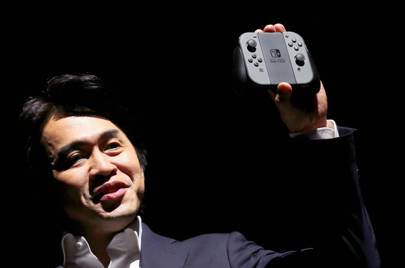
Shinya Takahashi, one of the leading creative minds behind the Switch, has worked at Nintendo for twenty-eight years
Kiyoshi Ota/Bloomberg via Getty Images
The launch of Switch comes at a tumultuous time for Nintendo. Its debut smartphone game, Super Mario Run, was released in December 2016, five years after Iwata warned that doing so would cause Nintendo to “cease to be Nintendo”. In March 2015, as the company announced plans to develop games for smartphones, Iwata admitted it would be “a waste” not to. “It is structurally the same as when Nintendo, which was founded 125 years ago when there were no TVs, started to aggressively take advantage of TV as a communication channel.”
In 2014, it was Iwata, in collaboration with The Pokémon Company’s Tsunekazu Ishihara, who conceived of the idea of Pokémon Go, inspired by a Pokémon-themed April Fools’ Day gag on Google Maps. Launched on July 6, 2016, the game now holds the record for most revenue grossed by a mobile game in its first month ($206.5 million), most downloaded mobile game in its first month (130 million), most mobile app store charts topped simultaneously (70) and the fastest mobile game to gross $100 million (20 days). Nintendo owns a thirty-two per cent stake in the Pokémon franchise and an undisclosed stake in developer Niantic. Something, somewhere, had changed Iwata’s mind.
Iwata passed away in July 2015 at the age of 55. He wasn’t around to admire the record-breaking success of his collaboration, but his way of thinking still dominates Nintendo. “On my business card,” he said during a speech at the Game Developers Conference in 2005, “I am a corporate president. In my mind, I am a game developer. But, in my heart, I am a gamer.” Iwata, like Mario-creator Shigeru Miyamoto, composer Koji Kondo, GameBoy-inventor Gunpei Yokoi, Takahashi, Koizumi and many others, all got what it meant, and still means, to work for Nintendo. “Typically, you go to a programmer and tell them what you, as a designer, want to do. They then tell you all the reasons why you can’t do that,” Shigeru Miyamoto told The New Yorker in December 2016. “Mr. Iwata was different. He felt it would be shameful for him to say something was impossible.” It’s a cliché that listlessly flops out the mouths of many company executives, but Iwata’s sentiment feels different – and it all rests on the word “shameful”.
For Nintendo’s rivals, achieving the impossible is oft-linked to rapid growth and big profits. Nintendo is, at times, confusingly different. In a speech delivered in 2011, Iwata drew a clear line between his company and its smartphone competitors. “Their goal is just to gather as much software as possible, because quantity is what makes the money flow.” Nintendo, he implied, was different. That same year, Iwata finished the point he had started: “I believe my responsibility is not to short-term profits, but to Nintendo’s mid-and-long-term competitive strength.” It’s an attitude that helps explain the company’s stoic response to its failures: Nintendo had expected to sell 100 million units of its Wii U console, in the end it shifted closer to thirteen million. The Switch must do better.
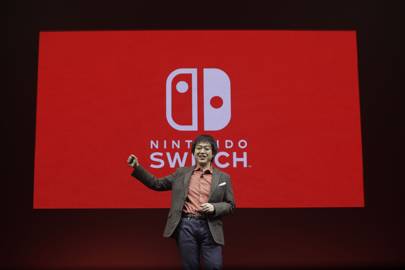
Nintendo’s Yoshiaki Koizumi demos the Switch during its unveiling at an event in Tokyo in January 2017
The Asahi Shimbun via Getty Images
When it launches on March 3, the Switch will cost £280. Nintendo is releasing the two major day-one titles – 1-2-Switch and The Legend of Zelda: Breath of the Wild – with Konami’s Super Bomberman R, Activision’s Skylanders: Imaginators and Ubisoft’s Just Dance 2017 completing the line-up. Before the end of 2017, Nintendo will add Mario Kart 8 Deluxe, Splatoon 2, Super Mario Odyssey and ARMS, a new, fast-paced fighting game that makes full-use of the innovative Joy-Con. Fire Emblem Warriors, Xenoblade Chronicles 2, Sonic Mania and a clutch of other high-profile titles from third-parties will also be available before the year is out. As ever, Nintendo will be hoping a small selection of big names can help lift an otherwise lacklustre line-up.
In recent generations, Nintendo’s home console successes have tended to come in fits and starts: the Nintendo 64 sold relatively well, the GameCube poorly, the Wii was a runaway success, the Wii U a runaway failure. But, from Wii to Wii U to Switch, Nintendo’s thinking has become clearer. The Wii, with its intuitive motion controls, opened up play to everyone, while the Wii U’s tablet-like controller laid the groundwork for the Switch’s far more polished, portable design. Takahashi describes it as a “unified system”, a blend of handheld and home console, finally made possible by the technology available to Nintendo. “It just so happened that various technologies were coming together,” adds Koizumi “And we saw that we could combine them together to solve exactly that problem. And that, I think, was the real inception of the Switch.”
The careers of Koizumi and Takahashi, both arts graduates who have worked for Nintendo their entire adult lives, are typical for a company whose employees pride themselves on lifelong devotion. “We started just a few years before the N64 era,” says Takahashi. “When we were making that shift from 2D to 3D gaming with the N64, we were two of the main individuals within Nintendo who were really leading the designers and helping to draw them out of that 2D world and into 3D game design,” he adds, pausing thoughtfully. “To put it more simply, the two of us like doing new things.”
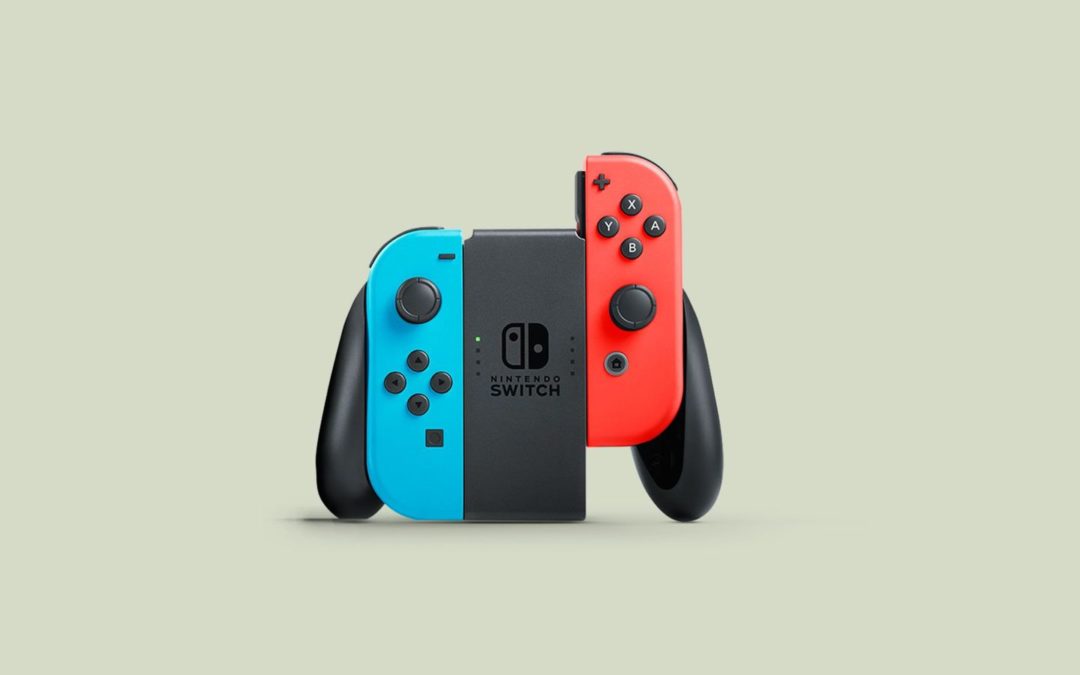
While much of the press attention, and Nintendo’s own marketing, has focussed on how the Switch is both a handheld and home console, Takahashi seems more enthused about the new Joy-Con controllers. The palm-sized red and blue batons, packed with accelerometers, gyro sensors, infrared cameras and no fewer than 22 buttons, promise both confusion and potential. Takahashi asks if I’ve played a 1-2-Switch minigame where you have to guess the number of balls inside the controller, an impressively realistic sensation created using HD rumble, another feature squeezed into the palm-sized Joy-Cons. It’s a seemingly inconsequential feature that, for Takahashi, could change the way people play games. For the first time, players are asked to play a game where they’re not meant to look at the screen. It’s a very ‘Nintendo’ idea.
Takahashi asks what other 1-2-Switch minigames I’ve played. I reply while miming milking a cow. He laughs enthusiastically. “You seem like you liked that,” he says, laughing again. Whether guessing the number of balls, milking a cow, having a Wild West shootout or unlocking a safe, all the minigames in 1-2-Switch have one thing in common: you look at the person you’re playing against, not the screen. “If you play 1-2-Switch you get a sense for what we were trying to achieve with the hardware,” Takahashi continues. “We didn’t start with the idea of trying to create an integrated device that combined a home console with a handheld. Instead, we started with the idea of wanting to create a device that had a versatility of play that could appeal to as broad of an audience as possible.”
Nintendo’s games have always had the ability to turn us all into children again. When someone gets nostalgic about their childhood, I tend to warp-pipe back to a time of leaping plumbers, drifting go-karts and Pikachu electrocuting Captain Falcon. And as with any great creative work, a great game needs a soul. “Those of us who are working on the software side are always worried about one thing: how to get players to empathise with what they’re seeing in the game,” says Koizumi when I ask about the role of emotion in Nintendo’s games. “We’re always looking for ways to make different elements of the game the exact balance of surprise and empathy, which kind of play opposite one another to create that experience.”
The Legend of Zelda: Breath of the Wild, the Switch’s most high-profile launch game, is also being released for the Wii U
Nintendo
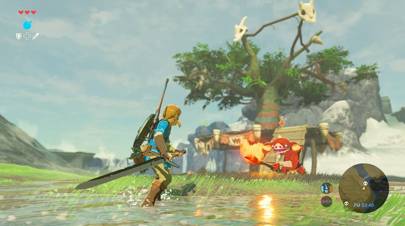
For Nintendo, nowhere does that balance play out more than in Zelda, a franchise Koizumi has worked on for nearly two decades. So what can people expect from the latest instalment? “I think you’re going to find a lot of elements that really bring it back to the very first Zelda game, in the sense that people will find puzzles as they explore and get to solve them,” he says, referring to Breath of the Wild. Previously, Link’s world was alive to a point, now it teems with weapons, secrets and foes. “It also brings in some new elements like this idea of a wild, natural world surrounding you and challenging you to survive,” explains Koizumi. That battle to survive is not just at the core of Zelda, but also a challenge Nintendo must face as it approaches the launch of its latest console. “In that sense this Zelda has a story to it, of course,” says Koizumi. “But the adventure is bigger than that, it’s about the entire world as well. And that world is very wild.”
Despite the commercial ups and downs, Nintendo continues to innovate and surprise. “The source of our creativity, really, for the past thirty-to-forty years has come from the fact that we don’t look at what other companies are doing and try to replicate their success,” says Takahashi. “The core of Nintendo culture is this feeling that if all we do is replicate somebody else’s success, we’ll never actually achieve the same level of success that they had.” That, continues Takahashi, is the reason for Nintendo’s reputation as a highly-secretive company. “We’re so busy thinking about things that other people aren’t doing,” he says, half-smiling. “We don’t want to tell people what we’re thinking about because then other people might do it.”
Parents – don’t worry about your children spending all their time online playing games. It may actually be improving their performance at school.
That’s according to new research from RMIT University in Melbourne, Australia. The institution found that playing games could help students in sharpening skills learned at school, and then applying them elsewhere.
Research was conducted by Alberto Posso, associate professor at RMIT’s School of Economics, Finance and Marketing. Posso investigated data from the globally recognised Program for International Student Assessment, scraping the test results from more than 12,000 Australian 15-year olds.
Posso looked at tests covering maths, reading, and science, while also collecting data on students’ online activities. Those who played online regularly saw sharp improvements in academic performance over those who did not.
“Students who play online games almost every day score 15 points above the average in maths and 17 points above the average in science,” said Posso.
“When you play online games you’re solving puzzles to move to the next level and that involves using some of the general knowledge and skills in maths, reading, and science that you’ve been taught during the day,” Posso added. “Teachers should consider incorporating popular video games into teaching – so long as they’re not violent ones.”
The integration of gaming and education is nothing new – educational games have existed almost as long as personal computers. However, recent years have seen the growth of collaborative, online learning experiences using the medium, with the likes of Minecraft having its own Education Edition.
Mojang
However, while gaming can have beneficial results, social media may have the opposite effect. Posso’s research found that students who visit Facebook or other similar sites daily are actually more likely to fall behind in subjects such as maths, reading, and science – some as low as 20 points worse than those who never use social platforms.
“Students who are regularly on social media are, of course, losing time that could be spent on study – but it may also indicate they are struggling with maths, reading and science and are going online to socialise instead,” suggested Posso.
“Teachers might want to look at blending the use of Facebook into their classes as a way of helping those students engage.”
Posso does highlight that other factors could have major impacts on teenagers’ academic progress though, suggesting that repeating a school year or skipping classes has a far greater negative impact than a Facebook addiction.
Real-world community divisions could also influence development to a worse extent than social media. The study found that “indigenous students or those from minority ethnic or linguistic groups” were at “greater risk” of falling behind than teens that engaged in high use of social media.
Posso’s full research, Internet usage and educational outcomes among 15-year-old Australian students, has been published in the International Journal of Communication.