In 2014, $2.5 billion might have looked like a lofty price tag, but each passing year is proving that “Minecraft” is more than just a game.
Microsoft(NASDAQ:MSFT) is no stranger to acquisitions. The company has written big checks within the last decade in order to purchase assets like LinkedIn and Skype, but even with its history of big buyouts, the decision to acquire Minecraft and its developer Mojang for $2.5 billion is one that stands out.
Minecraft doesn’t have flashy visuals or huge action set pieces. What’s more, its underlying technology isn’t something that ties into Microsoft’s other segments, and shelling out $2.5 billion for a studio dedicated to the ongoing development of a game that first released in 2009 was a bold move. That’s especially true because Microsoft has a checkered history when it comes to video game related acquisitions. However, the more time passes since the deal, the more it looks like Microsoft made a smart move.
Image source: Microsoft.
The world of Minecraft
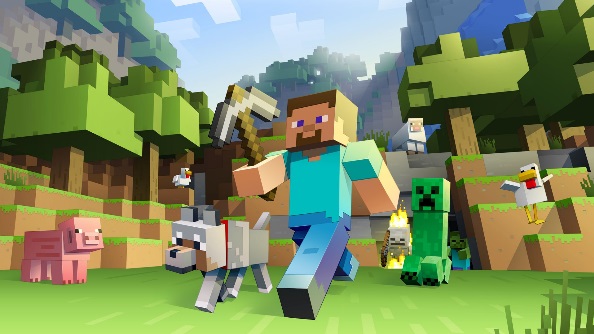
For those unfamiliar with Minecraft, the game is like a virtual sandbox. Players can create their own worlds, socialize, and explore content created by other users. It’s sort of like a virtual Lego experience mixed with elements of social media — and the game is enormously popular.
Minecraft had sold roughly 50 million copies when Microsoft acquired Mojang in 2014. Today, the title’s sales have passed 144 million units, the third most of any game ever — and it looks like there’s still a long sales life ahead.
Minecraft isn’t a fad. It’s become a fixture in the gaming world, a sort of genre and platform unto itself, and Mojang’s title continues to add to a long list of sales and engagement achievements.
The game currently stands as the second-best-selling paid app on iOS according to AppAnnie, and it’s putting up great sales on other platforms as well. Minecraft released on Nintendo’s 3DS portable console last November and was the system’s seventh-best-selling game for that month, its third-best-selling game in December, and its fifth-best-selling game in both January and February. The title was the eighth-best-selling Nintendo Switch game in 2017.
Minecraft merchandise and spinoff content have also proven to be hits, with themed bedding, clothing, toy lines, and a YouTube miniseries produced by Mattel representing just a small slice of what’s out there across mediums. There’s even a big-budget Minecraft film in development.
Image source: Microsoft.
Minecraft is building bridges
In addition to putting up great sales numbers, Microsoft is using Minecraft to expand into new areas and take advantage of some emerging opportunities. The education-tech space is one area where that dynamic is evident. In 2016, Microsoft and Mojang released Minecraft: Education Edition — a version of the hit game designed for classroom use. Tech companies including Microsoft see a lot of opportunity in having a top position in ed tech, and Minecraft has the potential to be a significant asset in the space.
Educational video games have been around for decades, but Mojang’s magnum opus is unique in that it was already enormously successful before being adapted for teaching use. The game’s popularity and flexibility set the stage for continued evolution, with new tools and features being added that shape the broader world of Minecraft.
In February, Mojang debuted a chemistry-themed resource pack to Education Edition, and Microsoft also recently announced that an online Minecraft experience had helped teach 85 million people some basic computer coding principles.
The Education Edition suite had crossed two million users as of November. With the company charging $5 per student per year, that comes out to annual revenue of $10 million — not a bad start roughly 12 months out from release but still only scratching the surface of potential ed-tech subscription revenue and import. Minecraft: Education Edition also requires an Office365 subscription in order to log in, a move that gives schools another reason to stick with Microsoft’s operating system and software suite.
Building a multiplatform position
Minecraft has put a Microsoft property on nearly every modern gaming and computing device. At a time when many of the video game industry’s big hits are transitioning to a platform agnostic model, that’s giving the company some valuable data for future software releases and strengthening its presence on emerging computing platforms.
Image source: Microsoft.
Minecraft is already one of the big software draws for virtual-reality headsets — perhaps the closest thing there is to a killer app in mixed reality at the moment. Along those lines, chief technology officer at Facebook‘s Oculus division and game development legend John Carmack once said that Minecraft was the single most important virtual-reality game.
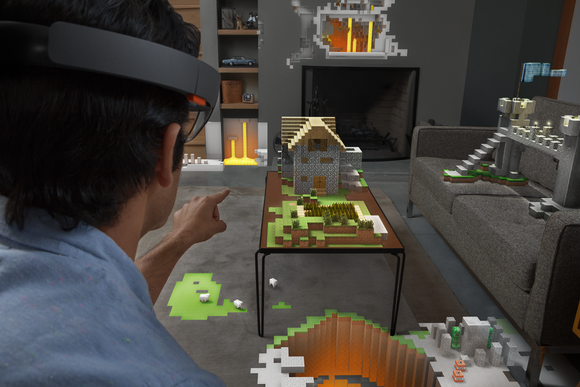
Microsoft has also made the game a part of its own push into the mixed-reality space. One of the first demos for the company’s HoloLens augmented-reality headset featured users transposing the game on to real-world surfaces. The HoloLens hardware is still a long way from going mainstream at the consumer level, but Microsoft has also put the game front and center in promoting its Windows Mixed Reality platform.
A great asset at a good price
In Minecraft, Microsoft appears to have purchased an asset that will pay for itself in relatively short order and help the company strengthen its business outside of gaming. Mojang reported $126 million in profits on $259 million in sales in 2013. That means that Microsoft paid roughly 20 times Mojang’s trailing earnings to acquire the developer in 2014 — a price that’s looking pretty nice in light of Minecraft‘s continued performance.
The game’s sales and margins have likely gotten better since the acquisition based on unit sales growth and the addition of in-game purchases to the title. When you factor in the potential for continued growth and the other ways that the game is an asset to the company, Microsoft made a great move acquiring Minecraft and Mojang.
10 stocks we like better than Microsoft When investing geniuses David and Tom Gardner have a stock tip, it can pay to listen. After all, the newsletter they have run for over a decade, Motley Fool Stock Advisor, has tripled the market.*
David and Tom just revealed what they believe are the ten best stocks for investors to buy right now… and Microsoft wasn’t one of them! That’s right — they think these 10 stocks are even better buys.
Noxcrew chief executive officer Stefan “Noxite” Panic and co-owner Joe “Avondale” Arsenault both told GamesBeat that working on products for the Minecraft Marketplace is their day job. But the team is way bigger than the two of them.
“We have around 15 members, comprising of level designers, artists, musicians, writers, technicians, and marketing managers,” said Panic.
That’s bigger than a lot of indie studios that are making their own games, and the Noxcrew team thinks that is one of the key reasons their content stands out on the Minecraft Marketplace.
“We produce all our own music, textures, art, sound effects, and voice acting in-house,” said Aresnault. “And for the longest time, we were the only team who could say that.”
The Noxcrew leaders also think that they have found an audience by always trying to build something unexpected. Minecraft is a game about building things, and Microsoft has opened up its tools to enable anyone to begin modding assets. In that world, Marketplace content needs to surprise people while also maintaining a high level of quality.
At the same time, Panic and Arsenault don’t think that this space is closed off to new creators. They both expect a new generation of Minecraft community members to rise up and make their way into the Marketplace.
“I don’t think there’s ever been a better time to get into Minecraft content creation,” said Arsenault. “The technology for the Bedrock Engine is still very new, and the community making content for it is very active and helpful, especially with new creators.”
Panic agrees.
“Noxcrew itself made it onto the Marketplace by ‘just starting to make stuff’ a long time ago,” he said. “I believe in the longevity of the Marketplace and as long as you know how to make your content look good to the public after it’s made, I don’t think it’s ever too late!”
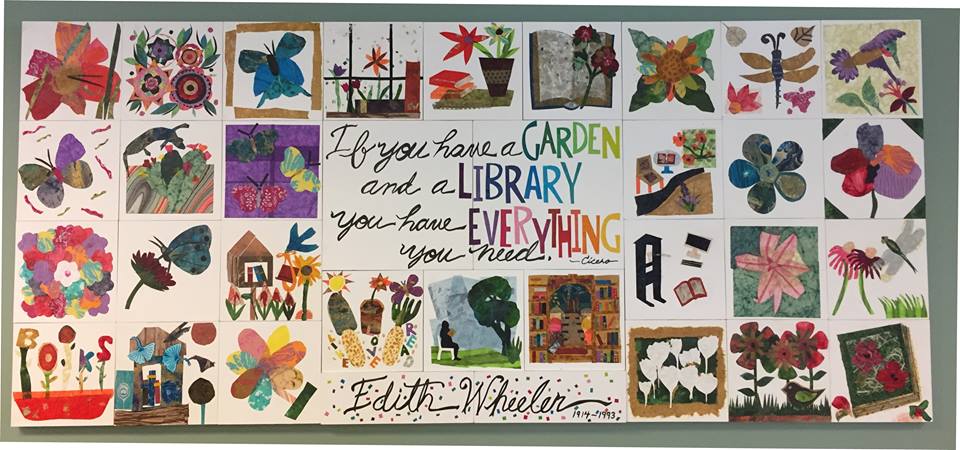
The following programs are being held at the Edith Wheeler Memorial Library. Note that the library is now open Sundays from noon to 4 p.m. The library is no longer open on Wednesdays due to budget cuts.
Sensory Storytime
Sensory Storytime has sessions on April 21 and 28. Each session is from 10:30 to 11:30 a.m. This is an interactive program especially designed for children on the autism spectrum, those who are sensitive to sensory overload or have other special needs, and those who have difficulty sitting through a traditional storytime. A parent or caregiver is required to attend with their child. Registration is required for each session and is limited to eight children.
See Star Wars: The Last Jedi
Star Wars: The Last Jedi will be playing Tuesday, April 3, at 7 p.m.
Learn about online branding
The Monroe Chamber of Commerce, Fairfield County SCORE and the library are sponsoring “10 Critical Tools for Promoting Your Brand Online (& Making Your Life Easier) on Friday, April 6, from 12:15 to 1:30 p.m. This presentation will uncover fresh ways to create or maintain a powerful and positive brand image on social media and in your digital media strategies. Lunch will be served, and networking opportunities will be available before and after the event. Registration is required.
Look back at 1918 flu epidemic
Hamish Lutris will present “I Smell Death Here: The Great Flu Epidemic of 1918” on Monday, April 9, from 6:30 to 7:30 p.m. This presentation will center on a short history of disease in the western world, te swine flu itself, its pathology and effects.
Career Tuesdays returns
Career Tuesdays Workshop Series focuses on interview skills on Tuesday, April 10, at 10 a.m. Registration is required.
Minecraft Meet-Up set
The next Minecraft Meet-Up will be Tuesday, April 10, from 4 to 5 p.m. This is for children in grades 6 to 12. Registration is required and limited to 12. Call the library (203-452-2852) or visit the Teen page to register online.
Program takes you on Italian tour
Town Council member and retired Monroe chemistry teacher Enid Lipeles will present a “Travelogue of Venice, Florence and Rome” on Sunday, April 15, from 2 to 3 p.m. In venice, see Doge’s Palace, St. Mark’s Basilica and take a gondola ride. After viewing art treasures in Florence, Lipeles will take everyone to Rome to see the ancient Colosseum, St. Peter’s Basilica and Square, the Vatican, and the Sistine Chapel. Registration is required.
Speaking with the Victorian Dead
Historian Robert Cox will explore the ideas that Spiritualists in Victorian America had in mind when communing with the spirits of the deceased in a program on Monday, April 16, at 6:30 p.m.
Artistic creations for adults
Sculpy Clay for Adults: Spring Flowers will be Tuesday, April 17, from 6:30 to 7:30 p.m. Anna Mastroianni returns to show participants the techniques for making miniature Sculpy Clay flowers. Registration is required and is underway. It is limited to 16 people.
Nachos & A Movie set
Local teenagers, grades 7 to 12, can enjoy some nachos while watching Thor: Ragnarok on Friday, April 20, beginning at 6 p.m. Registration is required and limited to 20 people.
Spring concert series continues
Rhythms of the World with Judy Handler and Mark Levesque will be Sunday, April 22, at 2 p.m. Experience an exuberant celebration of cultures with this exceptional program of music from the around the world for guitars and mandolin. No registration necessary. Refreshments served after the concert.
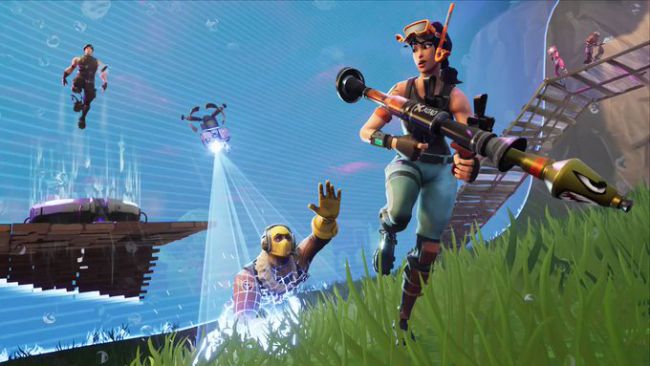
We all know that Fortnite is big: The biggest game in the world by some measures. Ninja’s recent Fortnite livestream with Drake crushed Twitch’s concurrent viewer record with more than 630,000 people watching simultaneously at one point, a mark that was beaten just this week by a Spanish-language stream on YouTube that pulled in nearly 1.1 million concurrents.
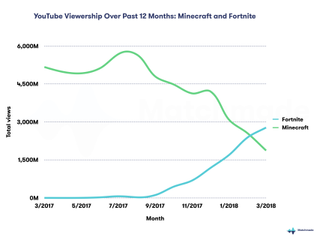
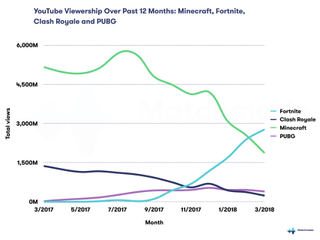
Those are impressive moments by any measure, but according to “influencer marketing platform” Matchmade, Fortnite has now surpassed an even bigger milestone—Minecraft—to become the most-viewed game on YouTube. Minecraft has long dominated YouTube’s videogame scene, accumulating billions of views per month. It’s been in a slow decline since last summer, however, and while Fortnite has yet to hit Minecraft’s lofty peak heights, it has now pulled ahead of it, breaking 2.4 billion views in February and climbing even higher this month.
Fortnite is also leaving leaving its more direct competitors in the dust. Clash Royale, the biggest mobile game on YouTube since March 2016 (minus a brief Pokemon Go interlude) has entered an accelerating decline since Fortnite showed up, and PUBG viewership has leveled off as well.
“The pace of Fortnite’s growth is astonishing. Between January and February, Fortnite’s viewership grew a whopping 151 percent,” Matchmade wrote. “During the past 6 months, The average month-to-month growth rate of Fortnite viewership on YouTube is +97 percent. Content creators are on board, and we’ve seen the number of Fortnite videos jump from 9945 (Feb 1st) to 12762 (Mar 1st) in just one month—an increase of 28 percent.”
Matchmaker cited a few possible factors behind Fortnite’s spectacular YouTube growth. Some are obvious: Fortnite is free and available on just about every relevant platform while PUBG is restricted to PC and Xbox One and will set you back $30, and Fortnite is shiny and new, something Minecraft definitely is not. But YouTube also made changes to its algorithms in August 2017, “which changed how content is discovered” and also coincides with the beginning of Minecraft’s and Clash Royale’s decline.
YouTube’s lead of gaming content Ryan Wyatt chimes in.
There’s also the obvious explanation: You can ride your own rocket like it’s a TNT-packed Fortnite hoverboard—or as Matchmade put it more prosaically, “Perhaps most importantly, the game is fun to play.”
For a closer look at how it all came to be, don’t miss our step-by-step history of “How Fortnite became the biggest game in the world.”
Among the nominees for the Strong National Museum of Play’s 2018 World Video Game Hall of Fame, one game stands out: All the other games are at least 15 years old–including Asteroids, Ms. Pac-Man, Half-Life, and King’s Quest–but Minecraft exited beta in 2011, making it the sole nominee born in this decade. The game has also earned a nod twice before–and it’s been snubbed twice before–in the Hall of Fame’s four-year history.
Arguably, the snubs happened for good reason. Past winners include classic games like Pac-Man, Super Mario Bros., Tetris, Space Invaders, and Donkey Kong, and some of the more modern winners—like Halo: Combat Evolved and World of Warcraft—have had their legacies tested for well over a decade. By contrast, Minecraft is still in active development by Microsoft, and while it’s prompted countless clones in the present day, we can still only guess at its long-term impact.
Then again, the Minecraft-loving masses could finally impose their will this year through a new Player’s Choice ballot. The top three winners will join 27 other ballots cast by industry experts, giving it a greater chance at earning an induction spot–whether it’s deserved or not.
That’s all well and good, as long as it doesn’t come at the expense of Ms. Pac-Man, which should have won a spot even before its male-centered counterpart did.JN
ROCHESTER, N.Y. (AP) — Calling all gamers to help pick World Video Game Hall of Fame inductees. Twelve finalists were named Tuesday for the class of 2018, pitting “Ms. Pac-Man” against “John Madden Football.”
Also in the running are: “Asteroids,” “Call of Duty,” “Dance Dance Revolution,” “Final Fantasy VII,” “Half-Life,” “King’s Quest,” “Metroid,” “Minecraft,” “Spacewar!” and “Tomb Raider.”
New this year, the hall is inviting gamers to weigh in on inductees. Online balloting closes April 4.
A panel of experts will vote as well.
The winners will be inducted May 3.
Jon-Paul Dyson, director of International Center for the History of Electronic Games, says the finalists span decades, gaming platforms and countries of origin.
“But what they all have in common is their undeniable impact on the world of gaming and popular culture,” Dyson said. Both the center and World Video Game Hall of Fame are inside The Strong museum.
Museum officials say thousands of nominations were submitted from more than 100 countries. To be recognized, games must have proven their popularity over time and influenced other games or forms of entertainment. They can be electronic games of any type — arcade, console, computer, handheld or mobile.
About this year’s finalists:
— “Asteroids:” Released by Atari in 1979, the game sold more than 70,000 arcade units. Millions more played it at home on the Atari 2600.
— “Call of Duty:” The first-person shooter game drops players into a World War II setting for a blend of action and historic narrative. Launched by Infinity Ward/Activision, the game and sequels have sold more than 260 million units since 2003.
— “Dance Dance Revolution:” Konami’s 1998 game spread from Japanese arcades, including to a home version for Sony Playstation.
— “Final Fantasy VII:” The 1997 game introduced 3-D computer graphics and other upgrades to the popular franchise. The game sold more than 10 million units, making it the second most popular game for the Sony Playstation and helped popularize the Japanese role-playing genre.
— “Half-Life:” After its creation by Valve/Sierra Studios in 1998, the game added the ability to modify the game itself, providing countless replay possibilities.
— “John Madden Football:” The 1990 reboot by Electronic Arts became a pop cultural phenomenon that has sold more than 100 million copies.
— “King’s Quest:” Sierra On-Line co-founder Roberta Williams in 1984 made her game a hit on personal computers with its unique visuals and irreverent humor. Seven sequels have followed.
— “Metroid:” Nintendo’s 1986 game introduced the first playable human female character in a mainstream video game.
— “Minecraft:” A top performer since its introduction in 2009, the game lets players in a worldwide, online community build elaborate structures from pixilated blocks.
— “Ms. Pac-Man:” Midway launched the follow-up to the Pac-Man arcade game in 1981. It became one of the five best-selling arcade games of all time.
— “Spacewar!” was created by members of the Massachusetts Institute of Technology Model Train Club in 1962 on a main frame computer. It is credited with helping to launch the multibillion-dollar video game industry.
— “Tomb Raider:” The 1996 game and its protagonist, Lara Croft, inspired a movie of the same name, featuring Angelina Jolie.
The 27 members of an international selection advisory committee will cast ballots for the winners. The three games that receive the most public votes from the new “Player’s Choice” voting will count as another ballot.