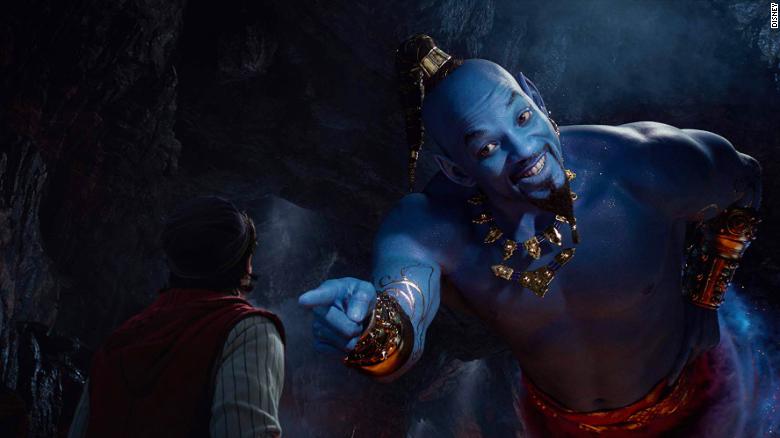
Aladdin earned an estimated $86 million over the Fri-Sun portion of its projected $105 million debut weekend. That’s no record, but it’s higher than the over/under $90 million pre-release tracking. It’s also a better debut than last year’s Disney’s Solo: A Star Wars Story. That Han Solo prequel earned $84 million Fri-Sun and $103 million over its Fri-Mon debut weekend. The problem was that reshoots and a director swap sent that film’s budget soaring to around $275 million. While $183 million for Aladdin isn’t cheap, it’s cheaper than $275 million and there’s little reason not to presume that Aladdin will perform a lot better overseas than the mostly ignored Star Wars Story.
Presuming Disney isn’t under-estimating the Sunday/Monday numbers, it will have earned a 3.38x four-day weekend multiplier, just below Alice Through the Looking Glass (3.45x in 2016) and above almost every recent “opened on a Friday” Memorial Day weekend release save for Alice 2 and Men In Black 3 ($69 million from a $17.6 million Friday) back in 2012. The film received mixed reviews but strong audience polling results. Warts and all, the film delivers on its promises of a big-scale live-action redo of Aladdin and mostly works as a blustery and colorful live-action musical with a fine cast and strong production values. The script’s a mess, but it works as surface level entertainment no matter your feelings about its source material.
Yes, there is a lot of family-friendly entertainment (Secret Life of Pets 2, Toy Story 4, Men in Black International) and at least one potentially huge musical (Rocketman) on tap over the next few weeks. However, let’s presume that the Mena Massoud/Naomi Scott/Will Smith/Marwan Kenzari/Nasim Perdrad musical romance plays like a normal Memorial Day biggie. For reference, the outliers in both directions are X-Men: The Last Stand ($234 million from a $122 million Fri-Mon debut in 2006) and Men In Black 3 ($179 million from a $69 million debut in 2012). An “average” 2.11x multiplier (Days of Future Past with a $233 million cume from a $110 million debut in 2014) gives Aladdin a $222 million cume.
An upper-level multiplier (Pirates of the Caribbean: Dead Men Tell No Tales and Alice Through the Looking Glass) gives it a 2.29x multiplier and an over/under $241 million domestic cume while a lower level multiplier of around 1.97x (Pirates of the Caribbean: At World’s End and X-Men: Apocalypse) still gives it a $207 million domestic finish. Yes, Memorial Day releases tend to be relatively front-loaded in terms of earning much of their money in the first four days (or five days, depending on when it opens) of domestic release. That’s why it’s a big deal for Walt Disney that the much-discussed Guy Ritchie flick over performed this weekend.
With a $121 million overseas debut, that gives the flick a $207 million global opening, not yet counting whatever it will earn in North America and overseas on Monday. That’s a 41/59 domestic/overseas split, and that’s with a “meh” $18.7 million debut weekend in China. Not every big movie can count on hitting pay dirt in China, but Aladdin is doing well enough here and in the rest of the world that it won’t need a bail out from the biggest overseas market in the world, albeit on that usually only gives the studio 25% of a given ticket sale.
Disney may have another live-action biggie that isn’t a superhero movie, and it does somewhat break their curse of doomed Memorial Day weekend releases (Prince of Persia, Tomorrowland, Alice Through the Looking Glass and Solo). While it may not end up earning that much more in North America than Solo: A Star Wars Story ($213.5 million), it’s probably going to do better overseas. Alice 2 earned 75% of its money overseas, Dumbo recently earned 67% of its (mediocre) $347 million global cume overseas. A 40/60 split (like Beauty and the Beast) from a $220 million domestic cume (same legs as Solo) gets it to $580 million.
That’s no Sultan’s ransom, but it’s 3.21x the $183 million production budget. That’s presuming it doesn’t really leg out and/or over perform overseas. Will Smith will help in that department, as he helped get Suicide Squad to $745 million without China in 2016, while both Men in Black 3 in 2012and Hancock in 2008 overcame bad pre-release buzz to earn $624 million global. Being stupidly optimistic, a $259 million domestic total and a 35/65 split (right between The Jungle Book’s 37% domestic portion of its $966 million global cume and Alice in Wonderland’s 33% domestic portion of its $1.025 billion worldwide gross) gets this one to $740 million worldwide.
Yes, Aladdin could crash and burn after opening weekend, or perhaps just not be that big of a deal overseas even with Will Smith as the Genie. But now that the film has opened and is playing to big crowds of mostly satisfied customers, the hard part is over. For what it’s worth, the film is yet more evidence that onscreen inclusivity either helps with big movies that folks were going to see anyway or is not remotely any kind of deterrent. I can’t say yet whether more folks showed up to Aladdin due to the ethnic makeup of its cast, but it sure as hell didn’t scare anyone away.
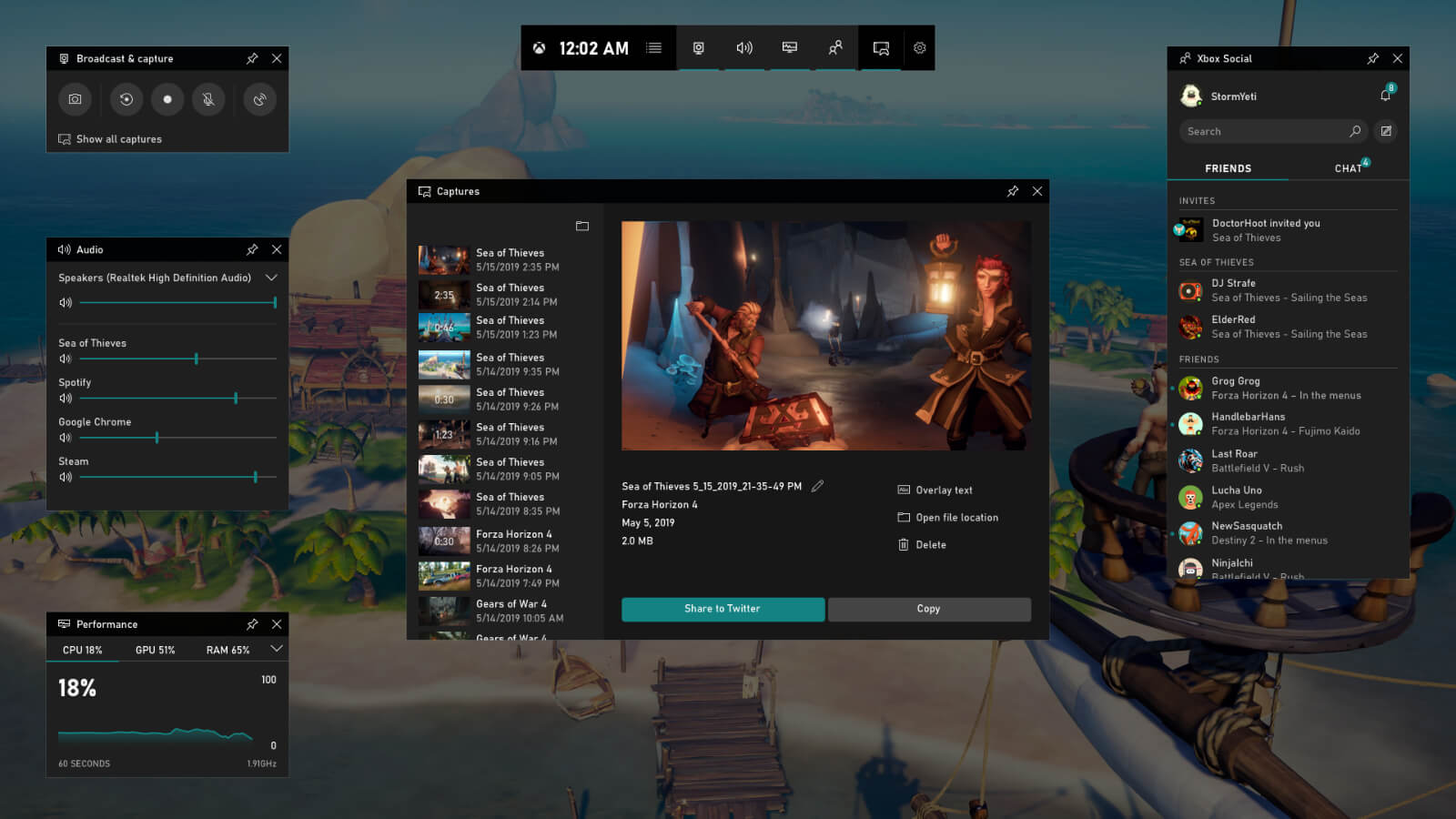
Something to look forward to: The Xbox Game Bar Team at Microsoft have recently overhauled their creation to bring more gaming features to the PC. Built into Windows 10, the new Xbox Game Bar is a customizable gaming overlay that offers instant access to widgets including screen capture, audio controls, voice or text chat and the ability to find new teammates with the Looking for Group (LFG) feature.
Gaming overlays are quite useful for players who need a multitude of features and controls during gameplay such as capturing screenshots, broadcasting, chatting with friends or just keeping an eye on their PC’s vital stats like GPU and RAM usage.
Discord, Steam, Origin and many other services, including Nvidia’s GeForce Experience (exclusive to their own GPUs), already provide in-game overlays, so it is a bit of a crowded market. Microsoft’s latest offering is the refreshed Xbox Game Bar that’s just come out after the Windows May 2019 update. While the feature was already present in Windows 10, the newer version adds a lot more features to complement the gaming experience.
What the Game Bar might have going for it is that since it’s built into the OS, it doesn’t require specific software/hardware like other in-game overlays to function. Users can just press the “Windows Key + G,” or a shortcut they like, to launch it at any point in their game to access a host of features. Though the company did point out that a small number of games, such as those built using the Vulkan API, may need to be run in windowed mode for Xbox Game Bar to display.
“Xbox Game Bar works with nearly all PC games, giving you instant access to widgets for screen capture and sharing, controlling your music, finding new teammates with Looking for Group (LFG), and chatting with Xbox friends across Xbox console, mobile, and PC—all without leaving your game,” the company posted on Xbox Wire.
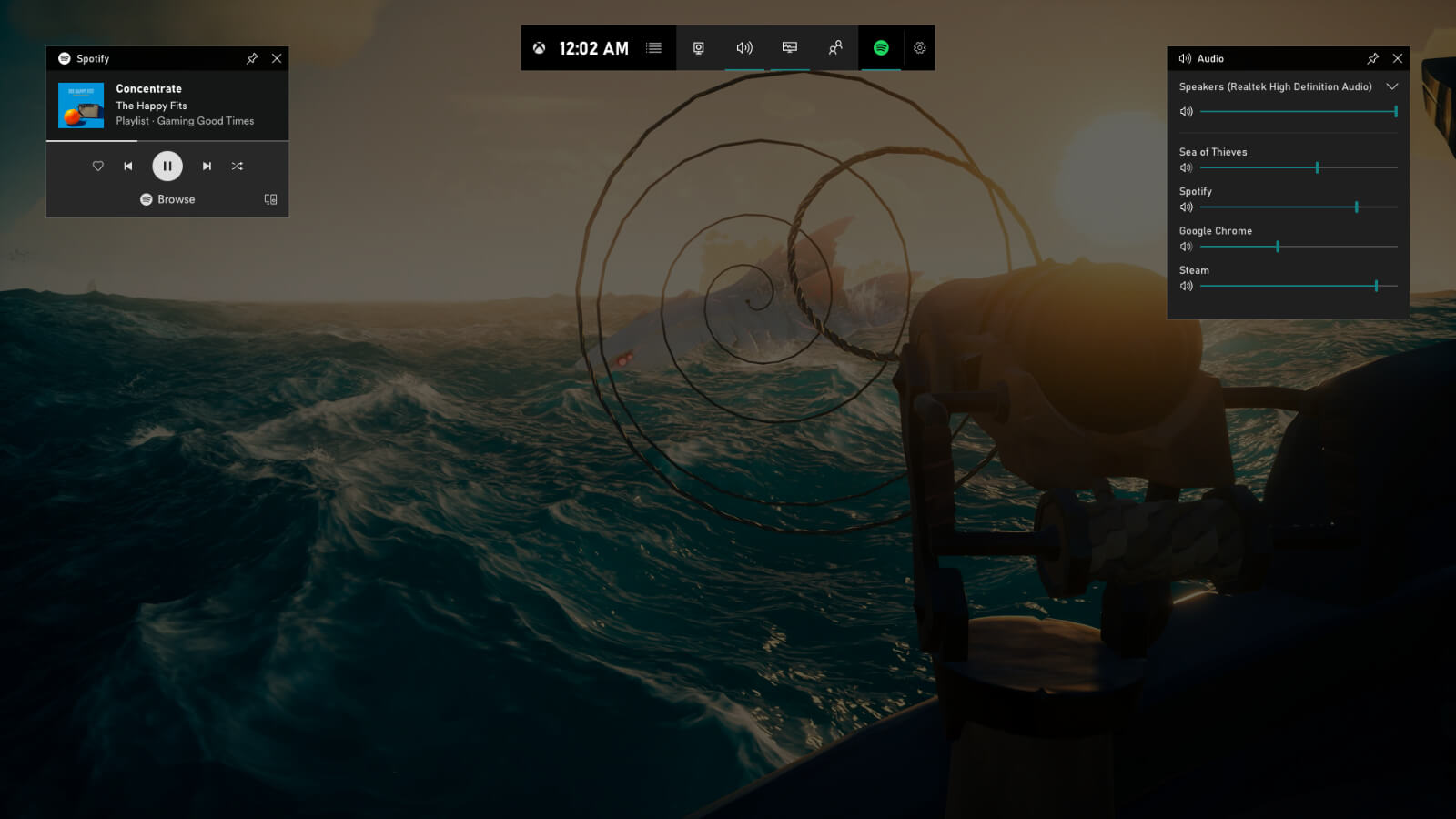
One major addition to the overlay includes a Spotify widget that can be used to easily control music and podcasts. Users can shuffle, favorite and play recommended playlists right from the overlay, once they have installed the standalone Spotify app and signed into it on their PC.
The Game Bar also allows for individual volume adjustment of various audio sources so you can better hear your opponents’ footsteps while your friends on Steam continue to chat in the background.
The Xbox team would also like you to capture screenshots and turn them into memes. “Use the Captures widget to add overlay text to your screenshot and make a meme, which you can share with your friends via a message or with the world via Twitter.” With the internet’s vast and strange appetite for memes, who knows: your next creation might end up trending everywhere.
The Game Bar widgets can be dragged around to a layout of your choosing. As part of the team’s customization focus, you can now pin streams from your favorite players, drag them anywhere on the screen and continue playing your own game, reminiscent of a picture in picture mode.
The updated Xbox Game Bar experience is “just the beginning,” with the company looking forward to evolving the feature as it listens to player feedback.
Chalk it up to modest expectations — starting with early previews that rubbed people the wrong way — but “Aladdin” is a great deal of fun, with charming leads and elaborately mounted songs. It’s hardly a whole new world, but in this suddenly well-populated land of live-action reboots, makes the most out of its familiar one.Much of the advance focus was on Will Smith and the blue-ness of it all, but his Genie manages to straddle a line between Robin Williams’ irrepressible animated antics and the theatrical Broadway version. Moreover, the filmmakers have come up with a framing device that brings a bit more heart and resonance to the role, and indeed the movie in general.Beyond that, Mena Massoud and Naomi Scott as Aladdin and Princess Jasmine, respectively, effectively carry the movie. That includes a notably beefed-up aspect to Jasmine’s character, articulated through a powerful new anthem — from composer Alan Menken and “La La Land’s” Benji Pasek and Justin Paul — that helps render her, as Disney princesses go, anything but a shrinking violet.Like Tim Burton and “Dumbo,” director Guy Ritchie (known for his jittery style in independent films, as well as “Sherlock Holmes”) might have seemed like an unorthodox choice to lead this caravan. Yet he infuses the movie with considerable energy, including the ebullient production numbers, which are staged with a bit of Bollywood flair.Lest anyone have forgotten, the plot involves a good-hearted thief who, enlisted by the Sultan’s evil vizier Jafar (Marwan Kenzari) to carry out his nefarious ambitions, winds up in possession of a magic lamp. (Kenzari brings an edge to the role, which provides the movie with some much-needed gravity.)Aladdin uses one of his wishes to become a prince in order to court Jasmine, who, much to her chagrin, must marry royalty. The deception, however, creates its own complications, as well as lessons about pushing back against traditions.Smith’s singing voice isn’t particularly well suited to the material, but he muddles through well enough, giving the Genie the requisite irreverence, as well as the longing to escape his itty bitty living space. “Saturday Night Live” alumna Nasim Pedrad is also a nice comic addition as Jasmine’s protective handmaiden.Perhaps foremost, “Aladdin” has certain advantages over some of its animated-to-live-action brethren amid Disney’s “everything old is new again” cash grab, inasmuch as it focuses on human characters, the helpful monkey and magic carpet notwithstanding. As a result, it’s a more organic adaptation than “Dumbo,” although still probably what amounts to an appetizer before “The Lion King” roars its way into the summer.Granted, it’s hard to find much originality in movies that essentially have their roots in the consumer-products division — based on another 27-year-old movie, as filtered through a long-running Broadway production. But if “Aladdin” doesn’t turn that formula into unvarnished magic, it has brought this old world to life in a manner that, above all else, won’t leave you feeling blue.“Aladdin” premieres May 24 in the US. It’s rated PG.
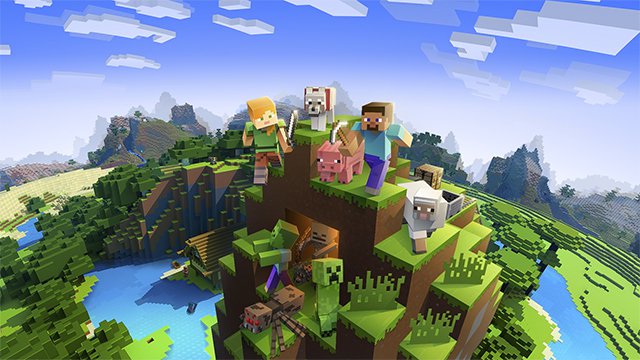
Minecraft has changed quite a bit since its early days, and most of those changes have been for the better. Features like smooth lighting and seamless biome transitions have improved the game’s visuals dramatically, and dozens of content updates have brought new blocks to build with, new enemies to fight, and new dungeons and cave systems to explore.
For better or worse, though, all of this new content has made Minecraft a considerably heavier game than it once was in terms of performance. Modern gaming PCs will obviously have no trouble running the game, but for those with weaker devices, it can be tough to maintain smooth framerates.
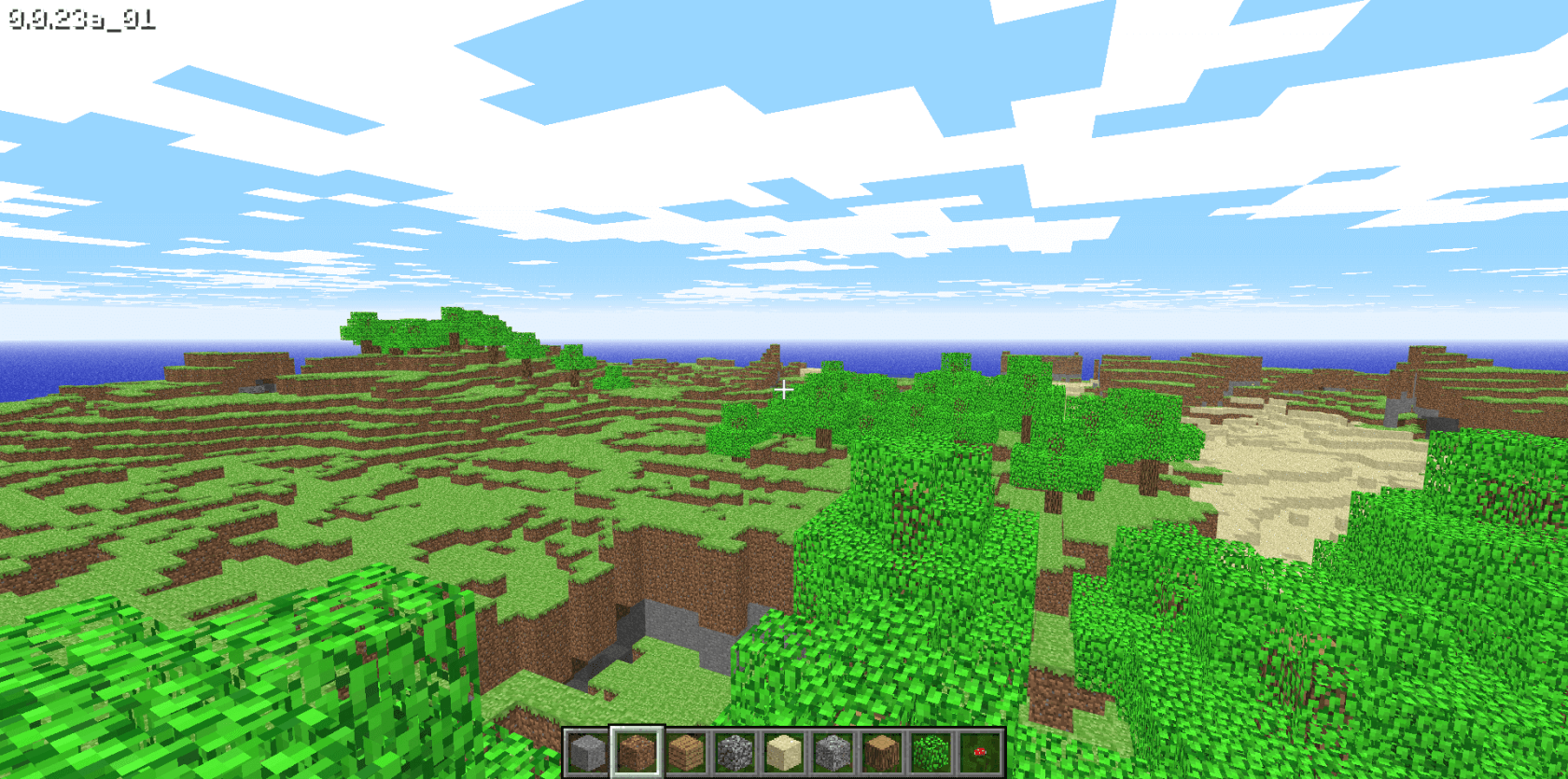
Fortunately, the Microsoft and Mojang teams are always looking to make the popular block-based title as accessible as possible – now, as long as you have a web browser, you’ll be able to experience Minecraft; albeit in the form of a significantly-downgraded “Classic” version.
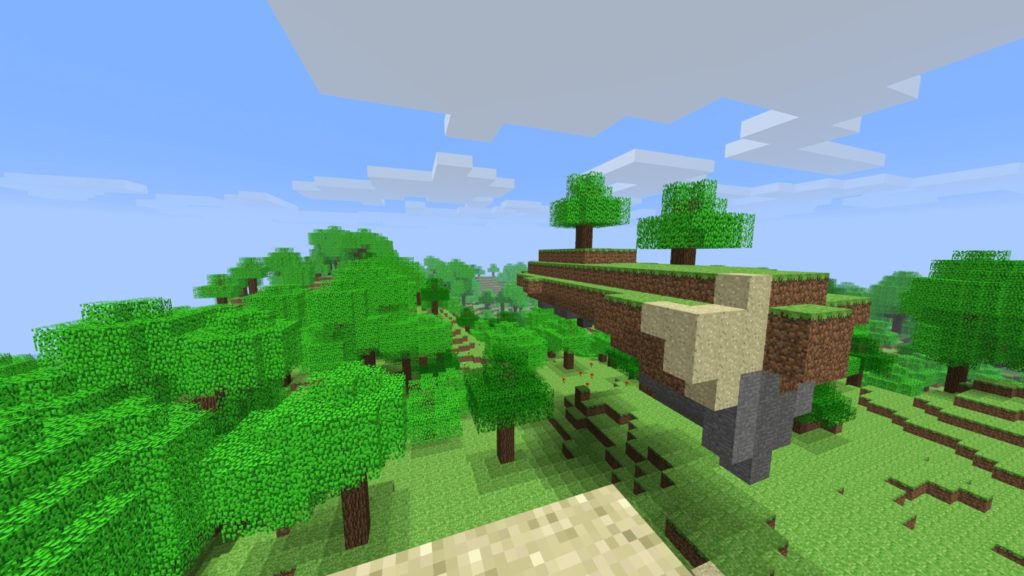
The game will play just like it did in 2009, meaning smooth lighting is out, several old bugs are back, and all of the features and content updates mentioned above are nonexistent. It’s Minecraft as you remember it during your teenage (or younger) years.
It’s purely a creative experience, so there are no tools to craft, no monsters to fight, and only 32 block types to build with. Regardless, it’ll undoubtedly be a fun little diversion if you’re having a particularly slow day at work, and you can invite up to 9 friends along with you to revel in the nostalgia.
If you want to try Minecraft Classic’s browser port for yourself, you can do so on the official website.
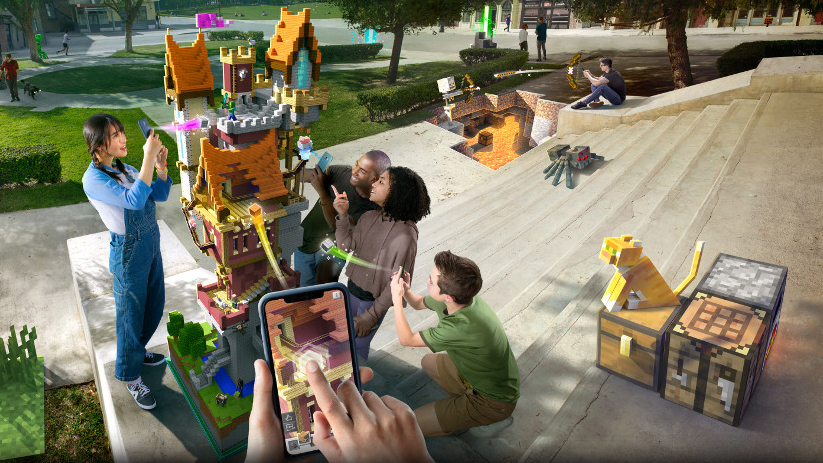
Forward-looking: Minecraft Earth could be exactly what the mobile gaming industry needs to further advance the idea of augmented reality gaming. Pokémon Go was a revolutionary step forward for AR gaming and although millions are still playing today, its impact somehow felt limited. Minecraft already has a massive user base, many of which will no doubt be excited to give the mobile AR variant a whirl.
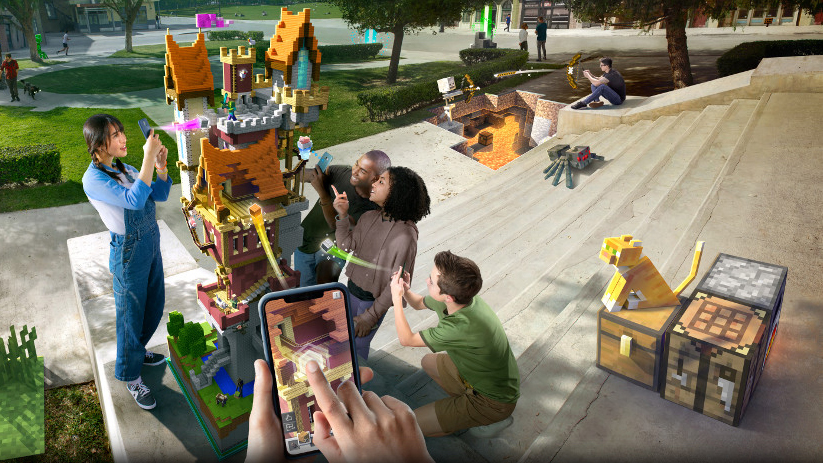
Microsoft as part of its 10th anniversary celebration for Minecraft on Friday officially unveiledMinecraft Earth, a new augmented reality mobile game.
With Minecraft Earth, you’ll be able to create, explore, collect, collaborate and survive like never before. Collaboration is arguably the biggest draw of Minecraft Earth as you’re encouraged to share your creations with others in the real world.
Microsoft’s new game is not a direct translation of Minecraft but rather, an adaptation. It’s built on the familiar Bedrock engine so, as Minecraft Earth game director Torfi Olafsson explained to The Verge, “if you like building Redstone machines, or you’re used to how the water flows, or how sand falls down, it all works.”
Microsoft purchased Minecraft creator Mojang in late 2014 for a staggering $2.5 billion. The acquisition seemed puzzling at the time but Microsoft has made the most of its investment in the years since.
Minecraft Earth launches in beta on Android and iOS this summer.
Minecraft is nothing short of a cultural phenomenon. It revolutionized video games when its first version released in 2009, encouraging developers everywhere to rethink how they approached their own well-established franchises. People who didn’t normally play games were persuaded to try out the title after learning about its educational benefits. Of course, many picked up Minecraft simply to spend more time with friends. Here are a few reasons why Mojang’s masterpiece continues to be worthwhile for fans both new and old.
Minecraft in 2019 | Great updates
While updates from 2014 to 2017 weren’t met with positive reception from the game’s community, last year’s “Update Aquatic” (1.13) and last month’s “Village and Pillage” (1.14) introduced a hefty amount of new content for fans to enjoy. The first transformed Minecraft‘s previously lifeless oceans into vastly different environments.
Frozen, cold, normal, lukewarm, and warm waters could be explored alongside regular and deep oceans. Each has its own distinct fauna and flora to discover alongside elaborate shipwrecks and dilapidated ruins. It’s fascinating to see kelp and sea grass gently sway in the trenches as a school of tropical fish swim by, especially if one has grown used to the unsophisticated oceans of the past.
“Update Aquatic” didn’t stop there. A new type of creature called the phantom now spawns in the overworld if players neglect to sleep for three days. Phantoms will increase their numbers the more that fans put off sleep, swooping down at them from the sky above until they decide to get some much-needed rest. Chest restrictions have also been removed, allowing players to place regular chests side by side without having to use trapped chests.
April’s “Village and Pillage” update was just as impressive as “Update Aquatic,” if not more. It introduced a new type of ill-willing villager called the pillager, the likes of which is armed with a crossbow and can pursue players from 100 blocks away. A new beast called the ravager helps pillagers destroy everything in their wake, from homes and crops to innocent NPCs. Speaking of creatures, foxes, llamas, and pandas now roam around the world, scurrying across forests or climbing up bamboo.
Villages now vary depending on their biome, meaning desert structures have different infrastructure than tundra structures. The fast and fluid crossbow can be commandeered from a pillager so that fans can take down targets from afar. Crafting has also been overhauled, allowing players better access to frequently used items by requiring less rare materials. A bunch of useful new objects can be built too, including blast furnaces, smokers, cartography tables, and more. That’s not to mention that combat will be improved at a later date, after Mojang receives feedback. It all goes to show that the studio is listening and still changing the game even all these years later.
Minecraft in 2019 | Millions still play it
One may be quick to assume Fortnite is the most watched game on YouTube, considering how frequently it appears on the platform’s trending section. According to YouTube’s director of gaming content and partnerships, however, that wasn’t the case last year, even with the battle royale genre’s huge surge in popularity. Rather, Minecraft remained the site’s most discussed title globally.
This makes sense considering how Microsoft had announced the game had 91 million monthly players this past March. For comparison, Epic Games stated that Fortnite garnered 78 million monthly players last September. The fact that Minecraft hit 74 million users in late 2017 indicates that the game is growing steadily despite its competition. It wouldn’t be a surprise if the game manages to hit over 100 million monthly players by the end of 2019, especially if Mojang promises new updates similar to its last two. It crossed 176 million copies sold this past weekend, so it may have reached that threshold already.
Minecraft in 2019 | It’s still unlike anything else on the market
Few games out there successfully emulate Minecraft‘s addictive and immersive qualities. Fortnite has building mechanics, but is much more focused on competitive play. Indie games like Eco allow players to build sustainable civilizations with one another, but lack the same emphasis on crafting whatever it is one desires. Major franchises like Fallout or Dragon Quest have either designed ancillary modes or spin-off titles clearly inspired by Minecraft, but each has failed to win over a huge portion of the sandbox community.
Many of today’s best AAA titles boast vast open worlds to explore, but few allow users to completely alter the terrain. These games merely make players the guests in their worlds. Minecraft, on the other hand, makes players feel like they’re a world’s overseer. Though this sensation is endemic to the sandbox genre, there aren’t many titles in this category that allow as much freedom. It’s easy to go back to Minecraft just to discover what lies inside a dark deep sea trench or what would happen if one ignited heaps of TNT around the base of a mountain. The game’s worlds beg players to keep digging until they find whatever they’re looking for.
If the above reasons weren’t compelling enough, a free-to-play AR mobile spin-off called MINECRAFT EARTH is set to launch its beta this summer. It promises to allow players the ability to recreate some of their greatest structures in the real world, wherever they may be. Whether this secures Mojang’s world domination remains to be seen, though it’s likely that the title will motivate people to log onto servers they haven’t visited in a while. There’s always reason to reintroduce yourself to an old video game, no matter how long it’s been since you last enjoyed it. Lapsed players may find that today’s Minecraft feels like a whole new adventure worth taking.