by Stone Marshall | Nov 29, 2014 | parent-news |
Instead of fighting the Black Friday crowds, take a look at these suggestions for the favorite people on your list from the Tulare County Library.
They are all in the library, so you can even examine them in (non-virtual) reality!
For children
“Guinness World Records 2015″ by Guinness World Records” — A go-to crowd-pleaser for middle and older readers. Already have the 2015 edition? Go for the recently published Gamer’s Edition. (Ages 7+)
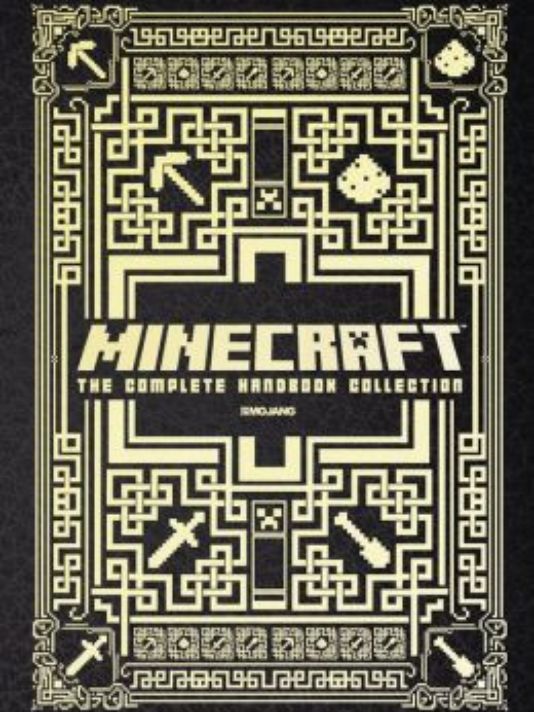
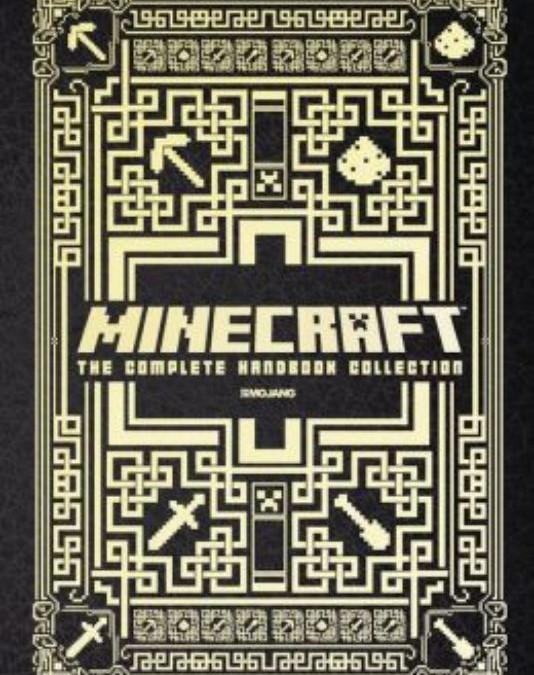
“Minecraft: The Complete Handbook Collection”
Four of Minecraft’s handbooks (Essential Handbook, Redstone Handbook, Combat Handbook, and Construction Handbook) are packaged together in this fancy boxed set. Purchase if you haven’t already given in to your child’s begging and pleading for Minecraft books, since one of these was published last year and the others months ago. (Ages 7+)
“The Book With No Pictures” by B.J. Novak — As the title indicates, this book has no pictures, just bold text that commands adults to read aloud, no matter what the words say. Novak (television writer and actor) relies on comic timing and the reader’s tone to create this hilarious (no) picture book. (Ages 3-8)
“The Princess in Black by Shannon Hale”
The first in a promising series, this beginning chapter book introduces Princess Magnolia—a princess with a secret superhero alter ego. She sneaks away from her royal duties to battle (not-so-scary) monsters and keep her kingdom safe. The large, colorful illustrations are the icing on the cake. (Ages 5-8)
“Twas Nochebuena” by Roseanne Greenfield Thong — This rhythmic re-interpretation of “The Night Before Christmas” incorporates Spanish vocabulary without skipping a beat. A wonderful celebration of family, holiday cheer, and Latino traditions wrapped up in a picture book. (Ages 4-8)
For adults
“Let’s Pretend This Never Happened” by Jenny Lawson — The first book by “The Blogess” is a laugh-out-loud combination of stories that are too awkward and horrifying NOT to have happened. A unique combination of memoir and taxidermy remembrances that will cause you to embarrass yourself in public!
“The Rosie Project” by Graeme Simsion
The first novel by Simsion (soon to be made in to a film) covers the pitfalls of dating without any knowledge of social appropriateness. At times funny and at others heart-wrenching, this book will teach you something about love.
“The Book of Life” by Deborah Harkness (third book of the All Souls Trilogy) — The last book of the All Souls Trilogy brings “closure” to the story of star-crossed witch, Diana Bishop, and vampire, Matthew Clairmont. Harkness blends fiction, science, and history into a very plausible world where the things that go bump in the night don’t just live in the dark. It all began with “A Discovery of Witches” and continued with “Shadow of Night.”
“A Little Something Different” by Sandy Hall — Sometimes it takes a little perspective to finally understand someone else’s viewpoint. In “A Little Something Different,” it takes fourteen different perspectives all seeing the same thing for those involved to see it for themselves. At times painful (you remember high school and college, don’t you), and at other times cute, this book is great for romance fans of any age, but it’s geared more toward the college crowd.
“A.D. 30” by Ted Dekker — A war that rages between kingdoms on the earth and in the heart. Step back in time to the year of our Lord…A.D. 30. The outcast daughter of one of the most powerful Bedouin sheikhs in Arabia, Maviah is called on to protect the very people who rejected her. She must secure an unlikely alliance with King Herod of the Jews. But her path leads her unexpectedly to another man. His name is Yeshua…
“The Fatal Tree” by Stephen R. Lawhead
The questors are spread throughout the universe. Kit and Cass are back in the Stone Age trying to reach the Spirit Well. But an enormous yew tree has grown over the portal, effectively cutting off any chance of return. Unless someone can find a solution — and fast —all Creation will be destroyed. In this final volume of the fantastic Bright Empires series, Stephen R. Lawhead brings this multi-stranded tale to a stunning and satisfying conclusion.
“Legend of Sheba” by Tosca Lee — In the 10th century B.C., the new Queen of Sheba has inherited her father’s throne and all its riches. Solomon, the brash new king of Israel famous for his wealth and wisdom, will not be denied the tribute of the world — or of Sheba’s queen. The one woman who can match wits with Solomon undertakes the journey of a lifetime in a daring bid to test and win the king.
Read original Article Here:
by Stone Marshall | Nov 27, 2014 | parent-news |
Let me begin with this: The kind of YA (Young Adult) books that are marketed to teens these days (think
The Hunger Games) didn’t exist when we boomers were in our teens.In fact, I’d argue that the first actual YA book wasn’t published until 1967. I’m thinking specifically of The Outsiders by the then-teenage S.E. Hinton. Many of us devoured this novel, though our parents and teachers disapproved of it. The characters smoked cigarettes (Eeek! Smoking teens!) and participated in gang wars (Eeek! Fighting teens!). At the time, I had a slight awareness that there was something different about this book; my friends and I knew that someone our age had penned those pages for people our age. It was unlike anything we had taken off the library shelves before.
That didn’t mean that we ever lacked reading material. There was plenty of fiction perfectly suitable for kids age 12 to 18. Some of these novels had been written with young people in mind (Treasure Island, for one). Many featured adolescent main characters. Most, however, had been intended for adult readers. Yet they resonated with younger audiences. As my friend Erin Martineau said the other day on my crowd-sourcing Facebook post, “I read Catcher in the Rye when I was nine or 10, and then every year after.”
So, for my list of the 10 books that shaped the boomer generation growing up, let’s begin there.
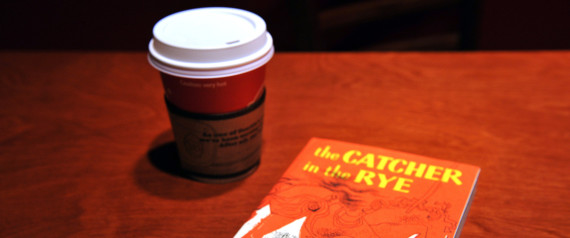
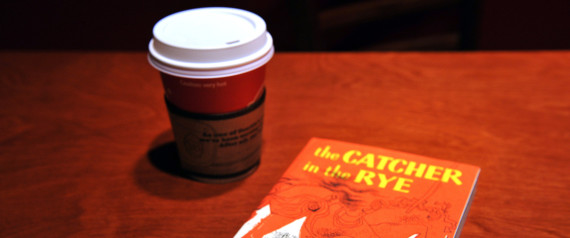
The Catcher in the Rye by J.D. Salinger
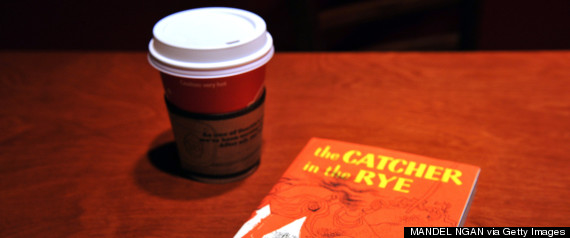
In brief: Holden Caulfield has a couple of bad days. Suspended from his posh Pennsylvania prep school, this adolescent walking-puddle-of-angst sloshes around New York City and spends some time in a seedy hotel until he can go home (so his parents won’t be immediately aware of his school troubles). He sees a few old friends, meets people who take advantage of him, tries to pay a prostitute to just talk to him (for which he gets punched in the stomach by her pimp), and, among other misadventures, brings his younger sister for a ride on the carousel in Central Park where he has a revelation about the meaning of life.
Adolescent attraction: Ask any 16 year old, life is meaningless — at least sometimes. And Holden talks, and talks, and talks, and seemed to get inside our heads.
Lasting lesson: Holden Caulfield verified our hopes that other teens were as messed up as we felt on bad days; in fact, some had it worse. But our thoughts and feelings were important, even if adults dismissed us, so said Salinger.
Little Women by Louisa May Alcott
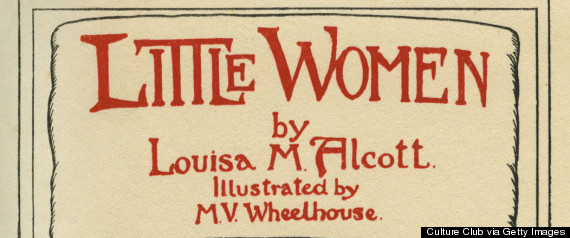
In brief: Four sisters living in mid-19th century Massachusetts encounter life’s problems and life’s joys. Thus, they pass over the divide from being “little” (almost) women to true womanhood.
Adolescent attraction: Well, there are the love stories, which all work out well, and the sentimental but moving death scene involving the lovely Beth. For some reason, teenage boys also get caught up in this book — maybe because there are a few “little men” whose story lines entwine with those of the March girls.
Lasting lesson: Follow your heart. Even Amy, the youngest and most self-absorbed sister, ends up rejecting a wealthy suitor in favor of the man she loves.
Anne Frank: The Diary of a Young Girl by Anne Frank
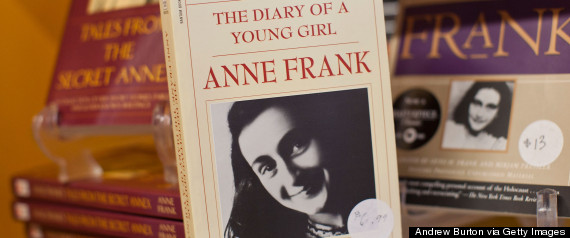
In brief: While hiding in Amsterdam from the Nazis and living in close quarters with another family, Anne records her day-to-day experiences along with her thoughts and musings about life. Remarkably, Anne is genuinely optimistic about life and people. (Her father edited out some of the darker portions for the original publication. This material was restored in 1995.)
Adolescent attraction: I imagine no teen picks up this book without knowing that Anne’s family was betrayed and shipped to a Nazi death camp, where she died just a few weeks before liberation. And yet the girl writing the diary seems so normal, so likeable. Even Justin Bieber, in one of the most cringe-worthy comments ever made by a narcissistic teen idol, expressed his wish that they could have been “friends.”
Lasting lesson: People can live through a lot of stuff. Writing helps.
To Kill a Mockingbird by Harper Lee
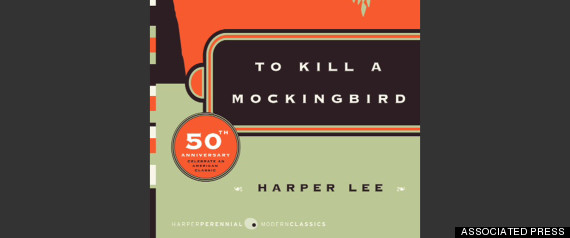
In brief: Six-year-old Scout Finch recounts how her father, the widower-lawyer Atticus Finch, defends an African- American man who has been accused of rape. Atticus’ inner nobility garners him the respect of the black community, but his two children still suffer at the hands of bigoted whites.
Adolescent attraction: Just about everything in this book works against its being a stalwart of teen bookshelves. The narrator is six years old at the beginning (nine at the end), but she talks like an adult. The hero is her middle-aged father. The mystery involves an aging reclusive neighbor. And yet, this beloved novel is perfect for teens. Maybe it’s the vividness of the writing and the tension of the plot — along with a certain sophistication and a story accessible to teens — that account for its continuing popularity. It has never been out of print.
Lasting lesson: From Atticus we learn (as do his children) that we must do what is right. From Scout and her brother we learn that adults can be cruel (like Bob Ewell) but also immensely kind (like Boo Radley).
Pride and Prejudice by Jane Austen
In brief: Elizabeth and her older sister, Jane, find love and happiness in early 19th -century England.
Adolescent attraction: The scene where Darcy and Elizabeth accidently meet at Pemberley (Darcy’s manor house) is probably the most romantic piece of writing ever. The humorous side-plots, ridiculous characters and witty ripostes are easily understood and appreciated by teens.
Lasting lesson: Each time I read this novel (and I must have read it 15 times — and I’ve seen every movie and TV version as well), I am struck by how much time and emotional energy people waste by not being forthright in the first place. I am also reminded that scoundrels can con you, foolish people are everywhere, but good-hearted souls will stand by you in trying times.
Of Mice and Men by John Steinbeck
In brief: Two migrant workers bear the emotional and economic brunt of the Depression as they look for work and try to pursue their dream of owning their own farm.
Adolescent attraction: The vivid characterizations of the intellectually-challenged Lennie and the practical George make them people teens would want to talk to and wish to help. Curley’s wife’s provocative sensuality lends a sexual tension, which fascinates teens.
Lasting lesson: Steinbeck thrillingly includes the reader in on the secret of the power of friendship. He enables the teenage reader to feel smart that he or she “gets” what George feels and why he does what he does.
Fahrenheit 451 by Ray Bradbury
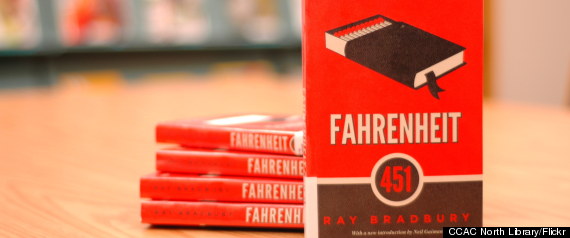
In brief: In a dystopian future, books have been banned. Instead of putting out fires, “firemen” torch anything in print, and at the beginning of the book, an old woman who wouldn’t leave her burning home. Fireman Guy Montag steals a book from the old lady’s house. It turns out that he has actually been pilfering books for a while, hiding them in his air-conditioning duct. Finally betrayed by his wife and her friends, Montag is made to burn his own home, but also kills the fire chief. He escapes and finds a community of people who memorize books because they have faith there will come a time when people are eager for true knowledge and beauty.
Adolescent attraction: Teens love dystopian fiction, and the one teenage character, an intellectual rebel, helps Montag question the policy of book burning. The story is scary and believable.
Lasting lesson: In the end, there will be goodness and truth (which is actually the lesson of all Bradbury’s science fiction).
The Great Gatsby by F. Scott Fitzgerald
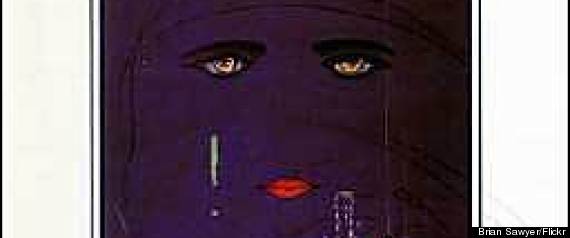
In brief: Nick Carraway moves into a small home next to the lavish estate belonging to Jay Gatsby, a mysterious millionaire. In Nick’s social circle are his wealthy cousin, Daisy, and her husband, Tom, who is having an extra-marital affair with a woman named Myrtle. Nick eventually meets Gatsby, discovers the millionaire is in love with Daisy and orchestrates a meeting between the two. Tom grows jealous, and Daisy ends up killing her husband’s mistress in an auto accident. Gatsby takes the blame and is shot and killed by Myrtle’s husband. Nothing seems to touch Daisy and Tom. Disgusted by the empty lives of the rich, Nick decides to move home to the Midwest.
Adolescent attraction: There is love. There is betrayal. There is an amazing story. There is someone who discovers that so much around him is a bunch of bullroar, something teenagers know instinctively.
Lasting lesson: A powerful novel never leaves you.
The Lord of the Flies by William Golding
In brief: A group of British boys survive a plane crash on a remote Pacific Island. At first, three boys — Ralph, Jack and Simon — form a kind of ruling troika that helps preserve order. But things quickly break down, and the savage children turn on each other.
Adolescent attraction: It’s a horrible adventure, but it’s still an adventure. Teens who finish the book inevitably ask themselves which camp they would have joined and whether they would have discarded their humanity to survive.
Lasting lesson: How easily humans can discard the trappings of civilization!
Animal Farm by George Orwell
In brief: The animals on a farm revolt and drive off the irresponsible farmer. At first they are guided by “the seven principles of animalism,” and everyone is happy. After a while, though, one of the leader pigs (named Napoleon) takes over and changes the rules: All animals are equal, but now some are more equal than others. As the years go by, the pigs begin to walk upright, carry whips and in all respects resemble humans, their former oppressors.
Adolescent attraction: Welcome to dystopia, again, one of the literary domains beloved by teens. Young readers understand Orwell’s allegory and feel intelligent, which they should.
Lasting lesson: Things aren’t fair. Those in charge will perpetuate the imbalance. Don’t you forget it!
Read Original Article Here:
by Stone Marshall | Nov 21, 2014 | parent-news |

The last in our four-part series on reading in the Common Core era.
All week we’ve been reporting on big changes in reading instruction brought on by the Common Core State Standards: a doubling-down on evidence-based reading, writing and speaking; increased use of nonfiction; and a big push to get kids reading more “complex texts.”
Whatever you think of these shifts, they’re meaningless ideas without a classroom and kids to make sense of them. That’s today’s story, as we round out our series on reading in the Core era.
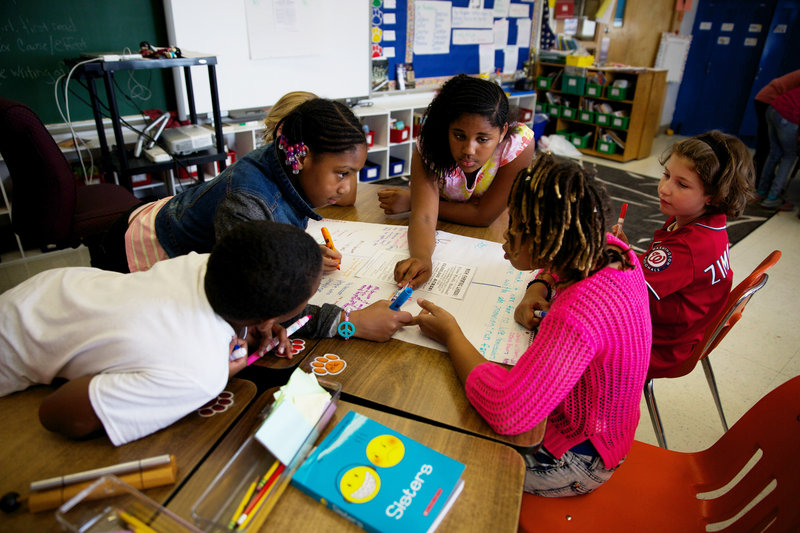
It’s midmorning at Watkins Elementary in Washington, D.C. From the fourth floor, Amy Wertheimer’s fifth-grade classroom looks out over a red-brick grid of row houses and, looming over it all, the U.S. Capitol. But every back is to the view as Ms. Wertheimer calls her kids to the reading rug.
“All right, we are on the carpet in 5 … 4… ”
The students force their rubbery legs, full of early energy, to criss-cross applesauce. Each has a binder. Inside is evidence that the Common Core State Standards have been here.
The kids are reviewing a bit of nonfiction — what the Core calls an “informational text” — titled “Who Settled the West?” It begins with the Native Americans, then moves through the arrival of Europeans and into the 19th century migrations of Mormons, former slaves and gold seekers.
For many of the kids, it was a tough read. Or, to use the Core’s vocabulary, “complex.” Which is why they’re now tackling it together, as a class.
Ms. Wertheimer warms them up with a text-dependent question: “Are all of these native peoples nomadic?”
The kids comb through the text, line by line, word by word.
What makes the text tough? The language, for one. Words like “prejudice” trip them up, as do some of the Native American names. If “Haida” is a speed bump for these readers, “Tlingit” is a brick wall.
These books for daily, independent reading have been sorted by difficulty and labeled with letters. Popular writers, including Dahl and Rowling, get their own bins.
LA Johnson/NPR
But once Khalil Sommerville struggles through them both, he does something just as hard, something the Common Core really wants him to be able to do: He answers Ms. Wertheimer’s question using evidence from the text.
“On page 6, paragraph 2,” he says, “the first sentence: ‘The Haida and Tlingit of the Northwest built permanent wooden homes called longhouses.’ ”
Khalil flags the word “permanent” — in other words, not nomadic. After an attaboy for Khalil, Ms. Wertheimer asks about the Sioux.
Destiny Brown volunteers: “Page 6, on the first paragraph, at the end it says, ‘They lived in tents called tipis.’ ”
This kind of classwide reading seems to engage the kids. Lots of hands shoot up. When Ms. Wertheimer notices a wallflower, she finds a way to include him.
Searching For Answers
It’s also tiring work for the kids. So, after 20 minutes, they break into groups.
One cluster of 10-year-olds dives into the packet, looking for reasons why African-Americans headed west before and after the Civil War.
Kandice Norris scans the text, finds a key quote and offers up Reason One: Former slaves could find paid work in the West. Novaun Lee chimes in with Reason Two: Even before the war, slavery was illegal in the West.
Ms. Wertheimer walks from group to group, helping and encouraging the kids to show evidence for their answers. She’s been teaching for 17 years and says this shift to reading more complex material is a big difference, and she loves it.
“This pushes them,” she says. “And the high kids aren’t bored, and the low kids aren’t bored. And we’re all learning about really interesting things.”
It’s at this point that I have to mention Ms. Wertheimer’s hair — a serious salt-and-pepper bob. But along the bottom runs a surprising fringe of dyed-pink hair.
A 17-year veteran of the classroom, Amy Wertheimer teaches fifth grade at Watkins Elementary in Washington, D.C.
LA Johnson/NPR
It’s a perfect metaphor for how she — and lots of teachers — are approaching reading in the Common Core era. Not as an either-or proposition. The Core standards don’t say everything kids read has to be salt-and-pepper serious and seriously hard. There’s still plenty of room for pink.
A Breather
That’s why kids here have leveled libraries. Leveling pre-dates the Core. It’s a way of labeling books based on the skill needed to read them.
In many schools, leveled reading once drove instruction. Kids would spend their entire day reading at or close to their comfort zone. At Watkins, daily independent reading with leveled books provides a counterbalance to the tough stuff, a breather.
Next door, in teacher Kate Sommerville’s fifth-grade class, Tonyae Butler sits quietly at her desk, reading Roald Dahl’s The Witches. She has already plowed through his other classics, including Matilda and James and the Giant Peach.
Tonyae says the book is actually below her reading level, but that’s OK. She’s having fun. And that’s the point.
Still, I assume she prefers Dahl to the close-reading binder on her desk. They’ll be tackling a tough, new article shortly.
“Do you think it looks kind of tough?” I ask.
Her answer: “I think it looks interesting and tough.”
To my surprise, Tonyae says, one thing can be both.
Read Original Article Here:
by Stone Marshall | Nov 20, 2014 | parent-news |
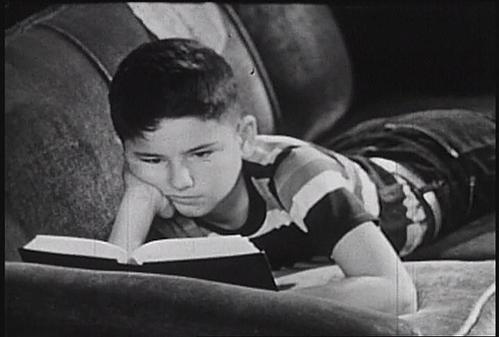
As a boy, one of my favorite times in school was when we’d get a new Scholastic News book “catalog.” I would pour over the pages picking out which books I wanted and filling out the order sheet. And as soon I got them, I was lying under the covers with my nose buried in a book.
Unfortunately, not all boys have that kind of enthusiasm for reading. For several decades now, boys have scored lower on reading assessment tests than girls. Boys also take longer to learn to read than girls, are less likely to actually read and to value reading, and are more likely to label themselves as “non-readers” (up to 50% of high school age boys consider themselves as such). Non-reading boys do poorer academically and end up as non-reading men (women read almost twice as many books as men).
What’s the problem? Some of it may be biological (boys’ language skills develop slower that girls). But a lot of it is sociological. Boys may see reading as a passive and thus sissy activity. Boys also lack male reading mentors-their librarians and teachers are often female, and it’s mom that reads to them. And in the name of gender-neutrality, teachers are foisting books on boys that they simply do not like.
But parents are to blame too, often trying to make their sons read “important books” to build their character. Dad loved some long tome as a boy and wants junior to come to an equal apprectation of it.
But reading experts all agree that boys need to be allowed to pick the books that really interest them. Of course it’s okay to make suggestions to your son about things he might like-boys very much value the opinion of other boys and men in making their reading selections. So here are 50 books that many boys and young men will really love. We’ve included some classics, but we also threw in some more modern and accessible choices-after all, not every boy has the desire or the aptitude to dive into Dickens.
Finally, while we had boys about the ages of 9-15 in mind when we made this list, I’ve always considered the distinction between adult and young adult literature to be an unfortunate and artificial one. Putting together this list I remembered just how good these books are, and I can’t wait to read them again as a man. Whether you’re 12 or 52, grab one of these books and a bag of cookies and head out to the treehouse.
Hatchet by Gary Paulsen
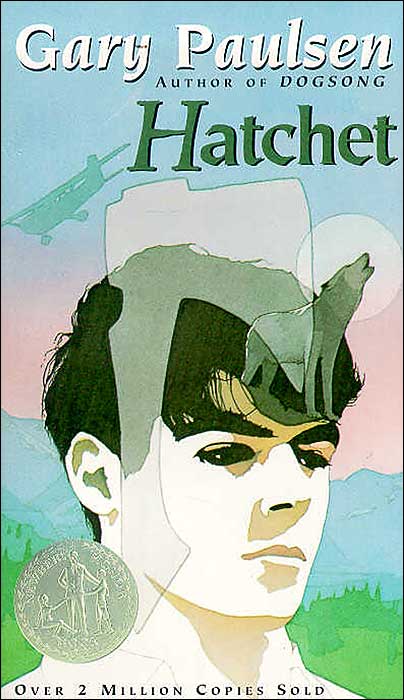
Pretty much every boy’s favorite book. When the pilot of the small plane of which he is a passenger crash lands in the Canadian wilderness, 13 year old Brian Robeson must survive with only his wits and a hatchet. Utterly alone, Brian must learn to rely on himself. Gripping and vividly told, every boy pictures himself in Brian’s shoes and wonders whether he would have what it takes to survive.
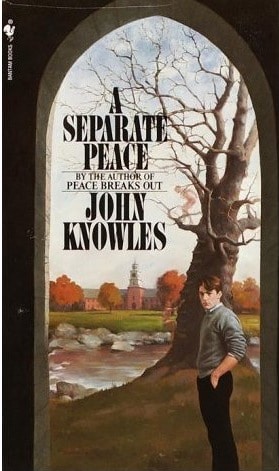
Set at a boys prep school on the eve of World War II, A Separate Peace centers on the friendship of Phineas and Gene. Phineas’ seeming perfection creates a jealously in Gene that results in a tragedy that will forever change both of their lives. A piercing look at both the light and the shadows of friendship and humanity. Every boy wishes he were Finny but knows he’s more like Gene. This book has stuck with me ever since reading it as a young man and remains one of my favorite until to this day.
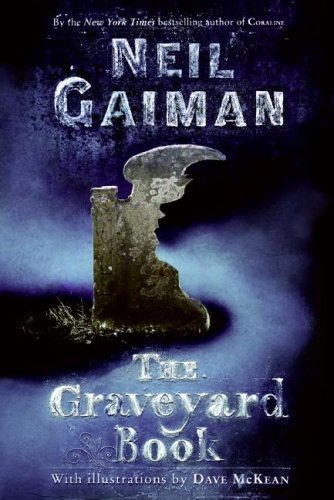
Take Rudyard Kipling’s The Jungle Book, replace the jungle with a graveyard and the animals with ghosts and you’ve got Neil Gaiman’s The Graveyard Book. The book begins with the mention of the murder of a family, but quickly moves on from there and is not a gruesome tale inappropriate for youngsters. The sole survivor of the murder is an 18 month old baby, who toddles away to a graveyard. Here the cemetery’s ghosts and ghouls adopt the boy, give him a name (“Nobody” as he’s like nobody else in the graveyard), protect him from the still on the loose killer, and teach him the life lessons that only the dead can know. It’s takes a graveyard to raise a child, andthe cemetery is a great home, but eventually Bod, as they call him, must deal with the world outside of its borders. Spooky, magical, and engrossing, it’s a must for all boys who like ghost stories (so pretty much all boys). Be sure to check out Gaiman’s other great books like Neverwhere and Anasi Boys.
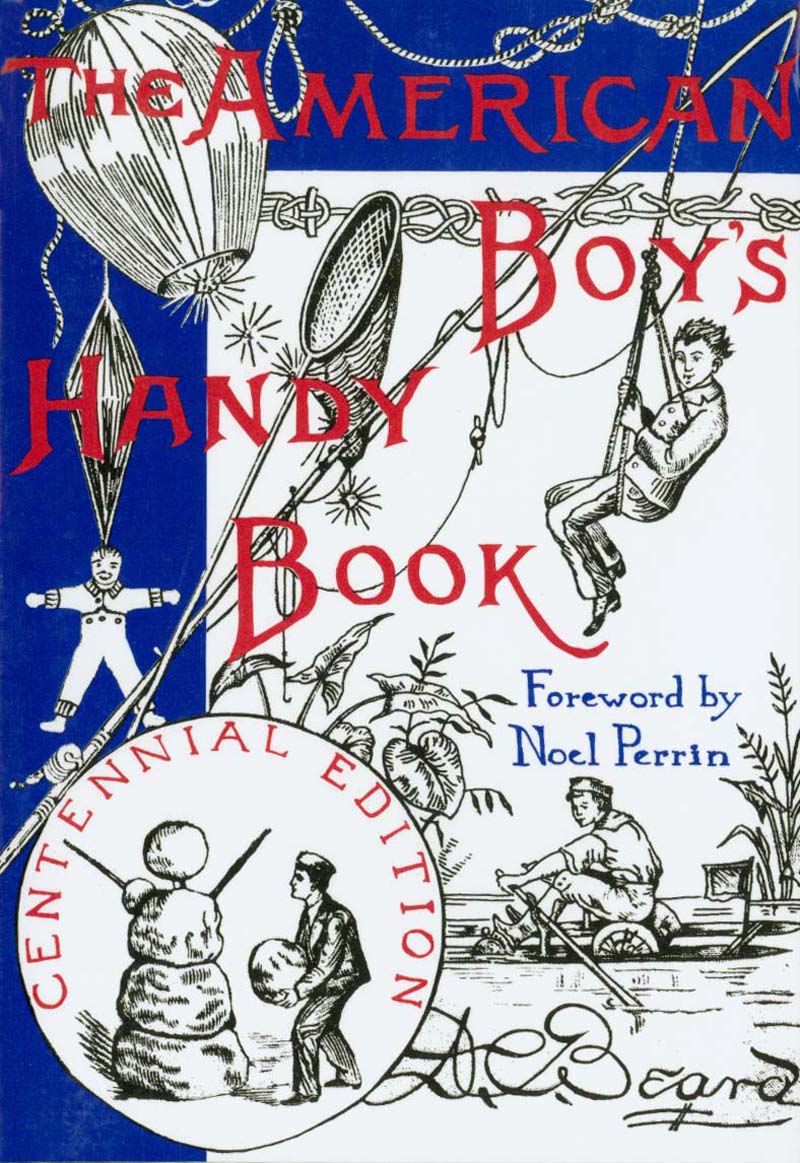
Long before The Dangerous Book for Boys became all the rage , there was the American Boy’s Handy Book. Every father and grandfather should have this on his shelf, waiting there for a boy to pull it off and start leafing through. Dozens of awesome (and unlike another book, some actually dangerous) hands on projects for boys to tackle from how to build kites and forts to how to rear wild birds and trap animals. Originally published in 1882 and still a must for every boy today.
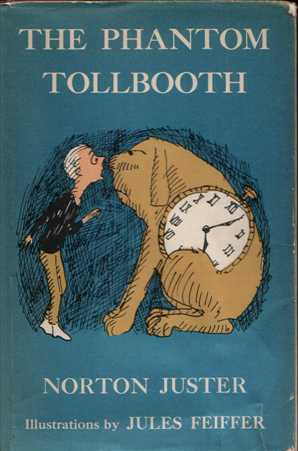
The story of a boy who’s boring life is interrupted by the appearance of something strange and unusual that transports him to a magical place. It’s a premise that underlies a myriad of children’s books, but few are as creatively constructed as The Phantom Tollbooth. Young Milo finds a tollbooth in his room, gets in his toy car and drives into another dimension. Boys will love the strange adventures Milo experiences, while older kids and adults can enjoy the witty satire and clever puns.
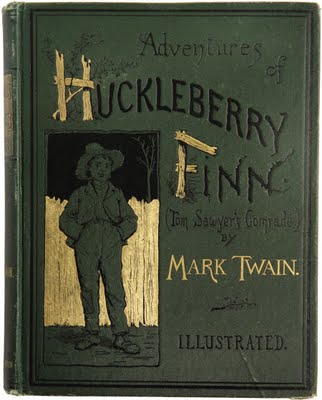
One of the great American novels. Young Huck Finn escapes from his abusive father by taking off on a raft down the Mississippi River. He is joined by Jim, an escaped slave. The two set off on a grand adventure full of close calls and interesting characters. With both wit, action, and fun, coupled with an undercurrent of serious themes, Huck Finn is a multi-layered masterpiece for young and old.
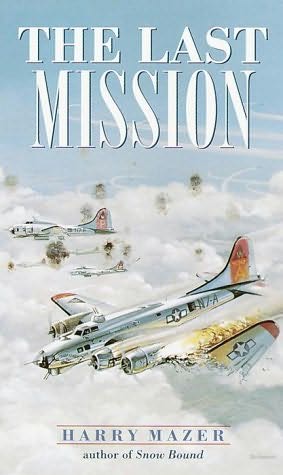
The classic tale of the collision of a boy’s idealistic view of war with it’s ugly reality. Yet the book manages to avoid being a tired cliche. 15 year old Jack Raab lies his way into the Army Air Force and finds himself flying bombing missions over occupied territory. On his 25th mission, his last mission before being sent home, his plane is shot down, and he is taken prisoner in a German POW camp. A fictional story and an easy read, but historically accurate and realistic in its details. Be sure to check out other books by Harry Mazer; his A Boy at War series is a painless way to teach boys some history.
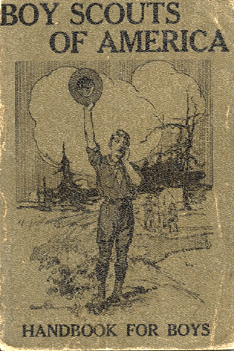
If you have a son in Scouts, he’ll definitely dig this book. Today’s Scout manual is definitely watered down compared to the first edition. The first edition manual is crammed with info on tracking and trapping animals, building shelters from scratch, and sailing. Additionally, it has stories of bravery and adventure that inspire boys to be great men. Something today’s manual is sorely lacking.
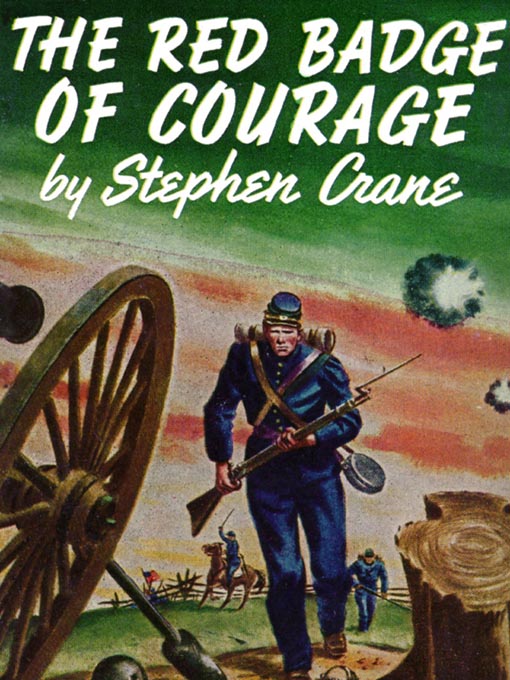
Known as a war book, The Red Badge of Courage is really a coming of age story set on the battlefield. Young Henry Fleming leaves his mother to fight for the Union Army. His question of whether or not he’ll have the courage to stand and fight is answered in the negative when he flees from his first skirmish. Fleming resolves to redeem himself during the next battle. A story not only of the tragedy of war, but the struggle to replace pride, weakness, and rationalization with bravery and personal honesty.
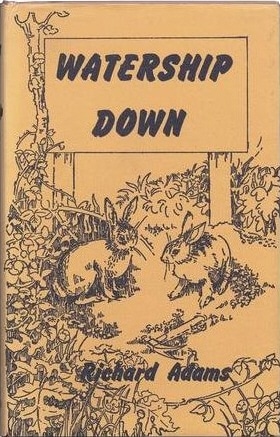
One of my favorite books as a boy-who knew the lives of rabbits could be so engrossing? I’m sure it’s rife with rich symbolism and whatnot to mull over, but it’s one of those books that creates a world so rich and evocative that it’s best to let yourself get totally wrapped up in it instead of constantly searching for deeper meaning. When a prophetic rabbit correctly foretells that their warren will be destroyed, a band of rabbits travel in search of a new home and encounter dangerous and interesting obstacles along the way. Some authors can’t make human characters as interesting as these rabbits.
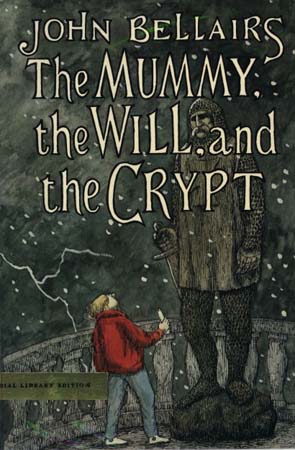
If you’ve got a kid that love scares, suspense, and mystery, don’t get em’ mediocre schlock like the Goosebumps series. Check out the books of the wholly under-appreciated John Bellairs. In the Johnny Dixon series, Johnny is somewhat of an outcast who finds a friend and mentor in Professor Childermass. Together they investigate dark and spooky mysteries. Bellairs’ writing is thoroughly engaging, his plots rich and his characters endearing. Also check out his two other equally good series featuring Anthony Monday and Lewis Barnavelt.
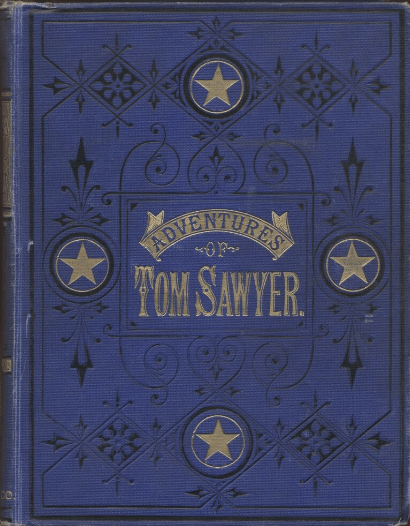
The essence of boyhood distilled, transcribed and bound. This classic is packed with humor and wit and filled with episodes familiar to any American-Tom convincing his friends to whitewash the fence, Tom overhearing his own funeral, Tom exploring a cave with Becky. Twain called it a “hymn to boyhood,” and it’s a song that can be sung over and over.
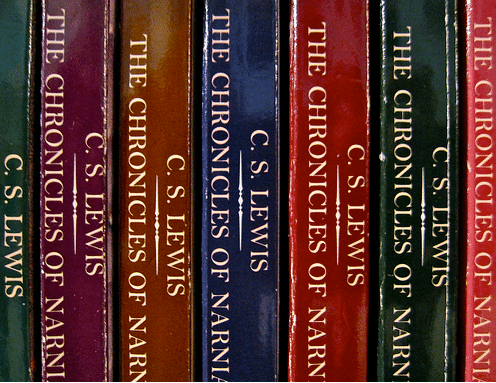
A fantasy world, talking animals, magic, good and evil….C.S. Lewis packed a treasure trove of interesting themes into his seven book masterwork. The books tell the story of group of children’s adventures, travels, and battles in the world of Narnia. While the stories have become known as a Christian allegory, CS Lewis denied writing them with that intention. And they can be enjoyed both by readers looking simply for an engrossing tale and those searching for deeper layers of meaning. The only question is, what order should you read them in?!
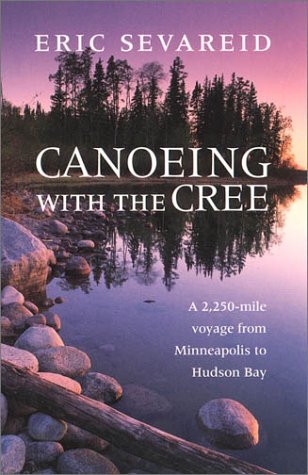
Before he became a manly anchorman, Eric Sevareid did exactly what every boy dreams of doing-setting out on a wild, unstructured, crazy adventure. After graduating high school, Sevareid and his friend William Port decided to create their own rite-of-passage and set out on a 2,250 mile canoe trip from central Minnesota to the Hudson Bay. With only an 18 foot canoe, $100, and some bad maps, the boys spent four months racing the oncoming winter and paddling through dangerous rapids, inclement weather, and hungry mosquitoes, barely surviving with their lives. Drawn from the journals they kept, Canoeing with the Cree was published in 1935 and remains a simple, but fantastic travel-adventure book.
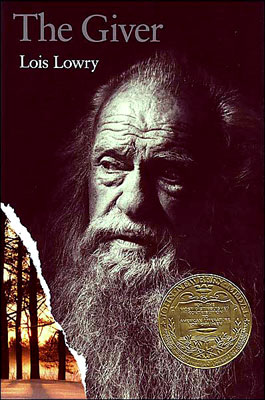
What would you be willing to give up to live in a pain-free world, a world without chaos or disease or war? At what point would the sacrifice become too great to live in such an idyllic state? The Giver describes a world where the community leaders make all the decisions for the people-who to marry, what job to take, even who should live or die. People take pills to suppress their passions. No one can remember a world before these external controls were put in place…except The Giver, who chooses 12 year old Jonas to be the new Receiver of Memories. When Jonas realizes that the people have given up their freedom, emotions, and humanity in exchange for equality and peace he is faced with an enormous decision. A truly profound and thought-provoking book.
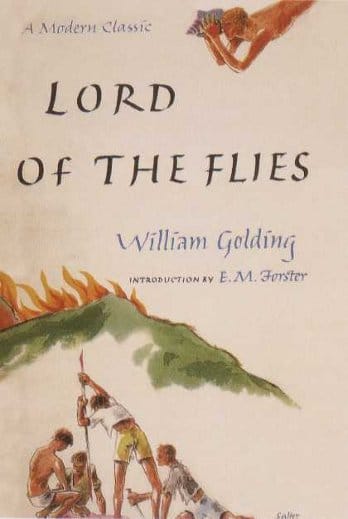
What is the truth of human nature? Away from society, freed from the constraints of external authority, how would men, boys, really act? Not too well, according to William Golding. A group of shipwrecked boys must forge a new life on a deserted island as they wait and hope to be rescued. But the pretense of civilization quickly devolves into savagery. While the boys fear the attack of a beast, it is their inner beasts which will cause their destruction. It’s a dark book, not the kind one delights to pick up and read over and over again. But every boy must read it once.
Heat by Mike Lupica
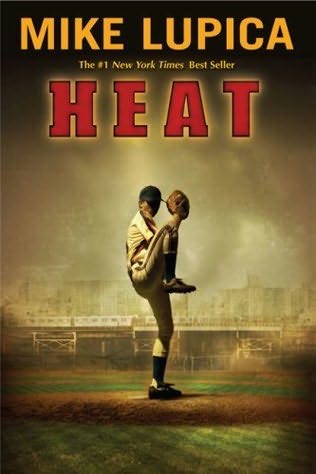
Knowing that boys love sports, there are children’s authors who churn out one cookie cutter sports story after another. And then there is Mike Lupica. Lupica gives the kind of vivid play by play details that every good sports book needs, while also filling out his characters and their stories off the field with enough interest and realism to make the reader care. Heat’s plot is of the Law & Order ripped from the headlines variety; Cuban-American Michael Arroyo is a star pitcher who’s chances of leading his team to the Little League World Series are jeopardized when he is accused of being older than 12. Not only that, but Arroyo’s parents are dead and he must keep social services from finding out. Sounds schmaltzy, but Lupica manages to keep it topical and relevant without being heavy handed. If your boy digs it, be sure to check out the myriad of Lupica’s other sports-themed offerings.
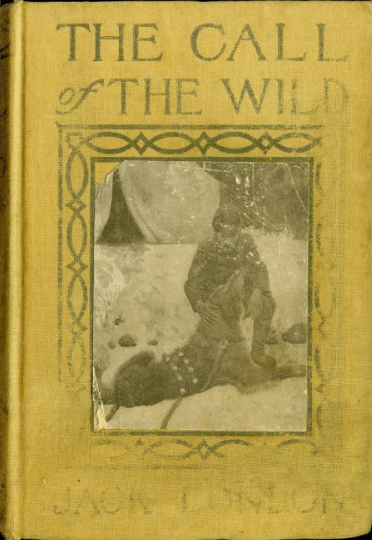
Every boy feels the call of the wild. He feels the desire to strike out and be free , and yet he soon learns the rules of society and the consequences of stepping too far out of line. For the rest of his life he will feel the desire to be primal pull against the need conform. In Jack London’s magnum opus, he explores this idea through the lives of dogs in the Alaskan Klondike. The dogs, like men, must fight to survive and to lead, in a world that is often unkind. London’s manly writing is economical and concise and yet powerful enough to compel you draw a blanket around yourself to keep out the cold and dark of an Alaskan night.
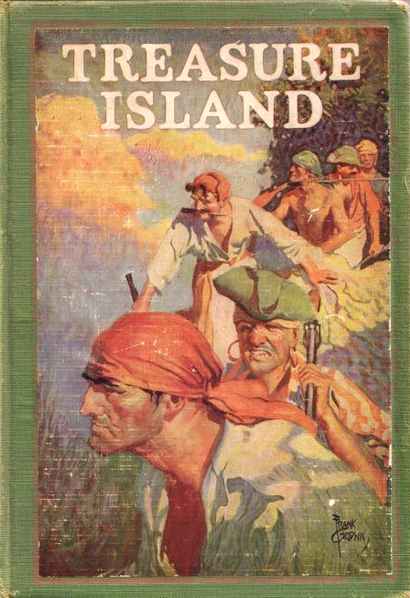
Boys love treasure. Boys love pirates. Boys love Treasure Island. Pretty much everything we think of when we think of pirates comes not from the pages of history but from this book-treasure maps with “X” marking the spot, deserted islands, peg legs, parrots, and so on. Stevenson insisted that there be no women in the book besides Jim Hawkins’ mother at the beginning, making the book a testosterone-driven, swashbuckling good time. American novelist Henry James praised it as “perfect as a well-played boy’s game.” I couldn’t agree more.
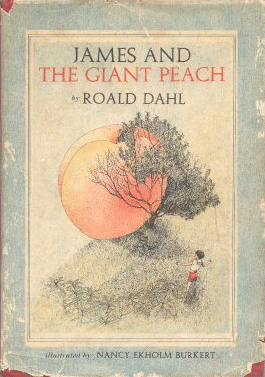
After his parents are killed in a rhinoceros accident, James is sent to live with his wicked aunts. Lonely and unhappy, he happens upon a mysterious man who gives him magical crystals he promises will completely change James’ life. But James accidentally drops the crystals on a peach tree, which slowly begins to grow into a gigantic peach. One day James climbs inside, the peach rolls away from his ordinary life, and he embarks on a grand adventure with 7 oversize insects: Centipede, Earthworm, Grasshopper, Glow-worm, Miss Spider, Ladybug, and Silkworm. More humorous and exciting than you even remember; a true classic.
Holes by Louis Sachar
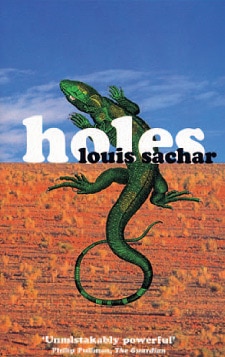
Sent to “Camp Green Lake” for a crime he didn’t commit, Stanley Yelnats finds himself at a juvenile detention facility located in a hot, dry, wasteland. Stanley quickly learns the daily routine; get up every day and dig a five foot deep by five foot wide by five foot long hole. The camp’s warden tells the boys that the digging is designed to reform their wayward characters, but Stanley soon discovers that she has some other purpose in mind. With both depth and realism and action and magic, it’s an extraordinarily good page turner.
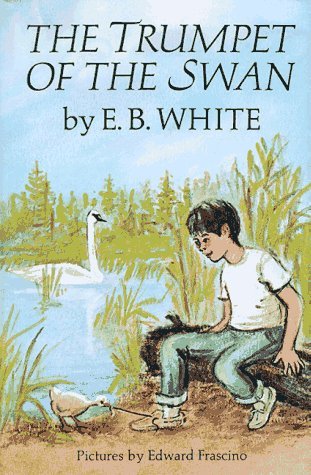
While often overlooked in favor of White’s other classics-Charlotte’s Web and Stuart Little-this is my personal favorite, and a great one for boys. A classic story of the relationship between father and son, father and son swans that is. Louis is a trumpeter swan born without the ability to make a sound. Unable to honk and attract the swan he loves, his father steals a trumpet to give his son a voice. Incredibly grateful, Louis works to repay his father’s debt. Swans don’t seem that manly, but this is a great book about individuality, courage, and overcoming life’s challenges.
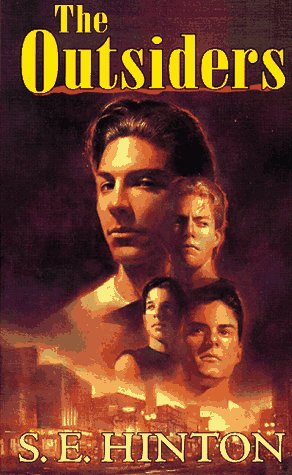
It’s incredible that S.E. Hinton starting writing this book when she was 15, but it certainly explains her uncanny ability to capture the angst, alienation, emotion, and immediacy of adolescence. Such pitch perfect tone has rightly catapulted The Outsiders to classic status. Say “greasers and socs” or “Ponyboy and Soda” or “Stay gold,” and everyone immediately knows what you’re talking about. While every young man will probably be assigned this book in school, it’s a great book to read on your own when you’re not thinking about turning the themes into a term paper.
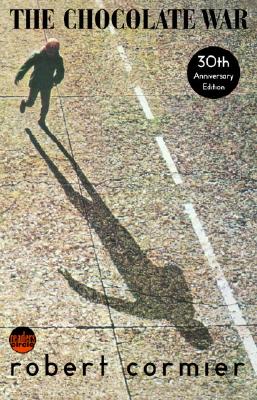
Should we dare to disturb the universe? Even when the consequences of stepping out of line can be extremely grave? Jerry Renault is an ordinary high school student. The annual fundraiser comes around, where the students are expected to sell chocolates to raise money for the school. The Vigils, a secret society of sorts, which rules both the students and the faculty, assigns students different tasks, simply to belittle them and prove their authority. They require Jerry to refuse to sell chocolates for ten days. Jerry complies with their order, but after the ten days is over, he continues to refuse to sell the chocolates, earning him the ire of the Vigils and the rest of the school. How far would you be willing to stick with your convictions, even when everyone turns against you? Powerfully written but bleak and dark, this book is best for older boys.
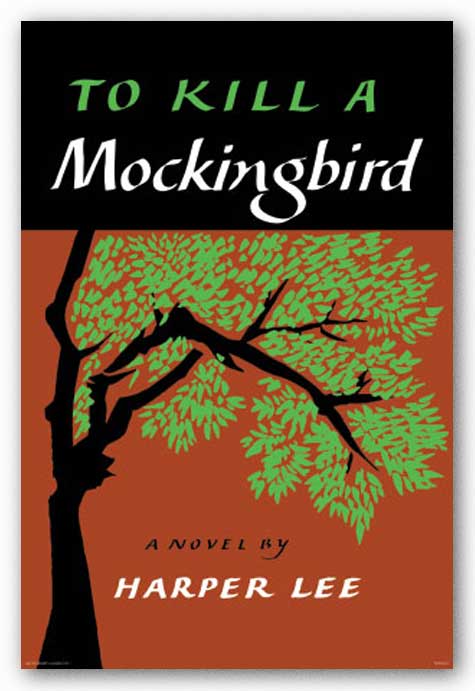
There are books that discuss profound themes, but do so at the expense of plot and character development. And there are page-turners with riveting plots that excite your mind while you read but then leave you empty when you finish. And then there is To Kill a Mockingbird. A literary masterpiece which weaves subtle lessons on racism, tolerance, innocence and guilt, and right and wrong with an engrossing plot and memorable characters. No wonder Ms. Lee made this her only book; some things you can’t improve upon.
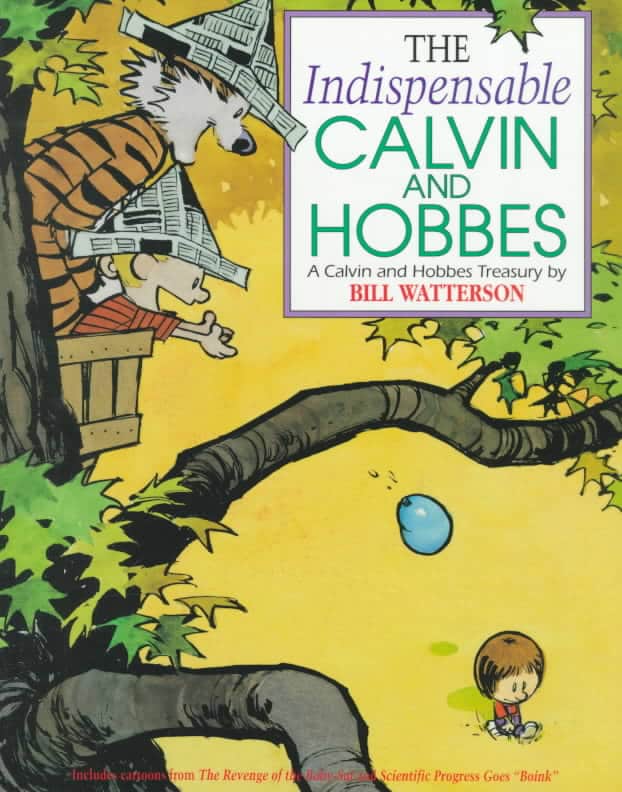
As a kid, I was a huge Calvin and Hobbes fan. I’d read the strip every day in the paper and buy all the books that came out. Admittedly, a lot of the jokes and content about politics and social issues went over my 9-year old head, but as a boy I could appreciate Calvin’s enormous imagination where his stuffed tiger pounced on him after school and together they hatched plots and threw snowballs at the annoying girl. It’s been almost 15 years since the last Calvin and Hobbes strip was published, so there’s a good chance a young man in your life has never had the opportunity to read such a fine comic. Introduce them today with one of the many Calvin and Hobbes books-I think this one is the best.
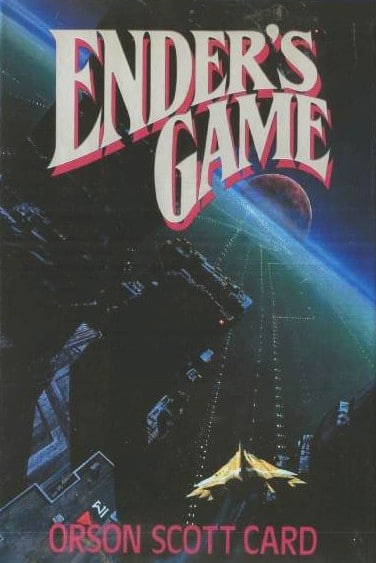
Many a man’s love of sci-fi was born in boyhood with the reading of Ender’s Game. In the 22nd century of earth, the future of mankind is threatened by ant-like aliens called Formics or buggers. Fearing for the survival of the planet, earth puts it’s trust is an international military unit called the International Fleet. The IF believes that the earth’s only hope is to train children to become military geniuses. Thus, six year old Ender Wiggins is chosen to attend Battle School to be trained to take on the aliens. Being the most intelligent of the geniuses causes the other students to resent him, but despite challenges Ender quickly emerges as a great leader in the mock battles the children must compete in. But the games have more serious consequences than he realizes. Written in a plain, straight-forward manner, many boys will love it, some will hate it, and most will at least be given some food for thought.
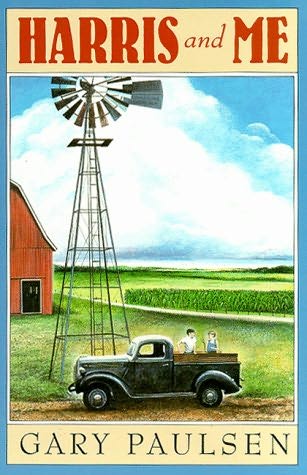
The 11 year old son of a couple of “puke drunk” parents is sent to live with some distant relatives, the Larsens, on their family farm. Befriended by his 9 year old and Tom Sawyer-esque second cousin, Harris, the two have a summer of humorous adventures as the narrator gets thrown head first into life in the country. Harris’ wild, boyish spirit is infectious and helps the narrator kick off his shoes and the reader to live vicariously through the both of them.
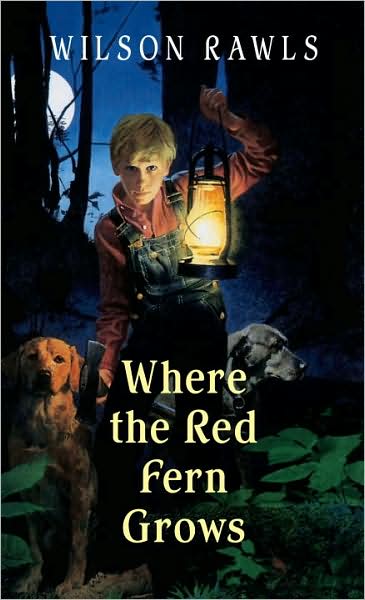
Write a story about the bond between a boy and his dog and you’re halfway towards a great book. Add good writing, great lessons, and a touching plot and you’ve got the makings of a perennial favorite. Billy desperately wants a pair of redbone hounds to hunt coons, but his parents can’t afford them. So Billy works hard for two years to save up the money to buy them himself. Together he and Little Ann and Old Dan explore the Ozarks of Oklahoma ever in search of their prize. But where does the red fern come in? According to an old Indian legend, a red fern can only grow where an angel plants it and marks sacred ground. Where does one grow in the story? Why, you’ll have to read it to find out of course!
What list for boys would be complete without something from Rudyard Kipling? While The Jungle Book certainly gets more fanfare, for my money I’d recommend Captains Courageous. It’s the perfect story for our times. A rich, coddled, spoiled boy named Harvey Cheyne falls off a steamship and is picked up by a fishing boat. His snootiness is forced to give way to the new realities of his life-on this boat, if a man does not work, he does not eat. These salty fishermen give Harvey a kick in the pants and an actual punch in the nose, and soon he learns to put his shoulder to the wheel, embrace both responsibility and adventure and work hard. The tale of brat turned man is one we all can cheer. With archaic dialect and language and a lack of real “action,” the story is not as accessible as more modern books, but the dedicated boy will be richly rewarded.
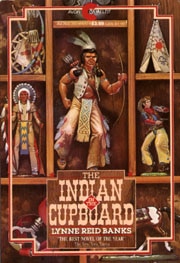
Every boy wonders and hopes that his toys secretly come alive when he isn’t watching. For his birthday, Omri gets an old cupboard from his brother and a plastic Indian figurine from his friend. He is unable to unlock the cupboard until his mom gives him a key she has held onto since her childhood. Omri is in for the surprise of his life when he discovers that locking the Indian, and then other figurines in the cabinet brings them to life. His initial excitement is short-lived however, as he must struggle to keep the secret of the cupboard’s magic, come to the realization that he’s playing god with real people, and decide what to do with his “creations.” It’s the kind of magical, well-written book that will weaken the resistance of even the most reluctant reader.
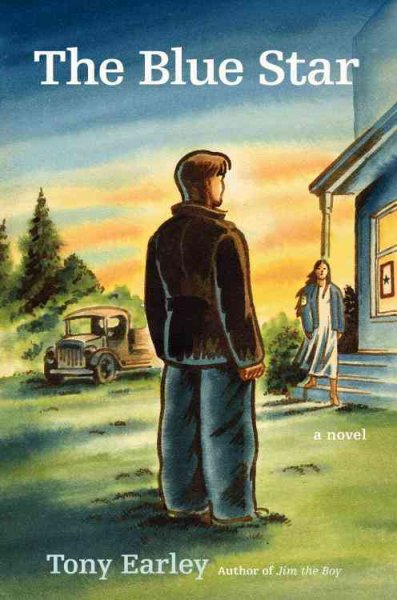
The Blue Star is a sequel to Tony Earley’s Jim the Boy, but this is the better of the books. Many books set in the World War II era, written by authors who never experienced it first hand, try too hard to recapture the setting by pumping every aspect of the characters’ lives full of drama and importance. But Earley seems to get the tone just right, understanding that life still went on in many of the usual ways, with many of the usual feelings while the storm of war gathered. The story follows a teenage boy in a small town who falls for a girl who’s beau has already enlisted in the service. Simple, quiet, excellent.
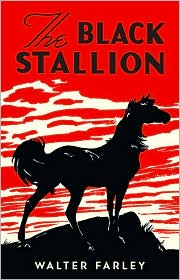
Boys saves horse. Horse saves boy. So begins this classic tale of grand adventure and classic boy/animal bonding. Young Alec Ramsey is shipwrecked with Black, a wild horse, and the two end up stranded on a deserted island. Boy and horse are rescued and brought to the States. A retired horse trainer sees great racing potential in Black if his wildness can be harnessed. Together he and Alec work to turn Black into a thoroughbred, all leading to the race of the century when Black takes on two champions as the proverbial and literal “dark horse.”
The Cay by Theodore Taylor
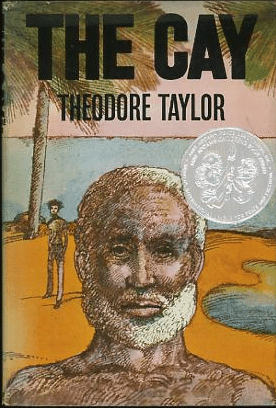
Journeying back to America from the West Indies in 1942, 11 year old Phillip is blinded and set adrift when the boat on which he rides is torpedoed by Germans. Phillip ends up on a life raft with Timothy, an old black ship hand, and Stew Cat. Exiled together on a small island, Phillip must deal with his blindness, overcome his prejudice towards his fellow castaway, and learn how to survive and stand on his own two feet. A classic tale of adventure, tolerance, self-reliance, and friendship.
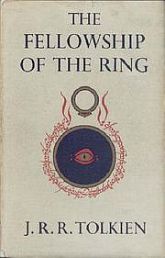
Even if a boy isn’t that big into fantasy literature, he can still enjoy The Lord of the Rings series. J.R.R Tolkien masterfully creates a world where hobbits, dwarfs, and elves join together to fight the forces of evil. Loyalty, duty, and bravery are reoccurring themes throughout the three books. And the story’s main protagonist, Frodo Baggins, teaches us that we often don’t choose our calling in life, it chooses us. And when it does, give it all you got.
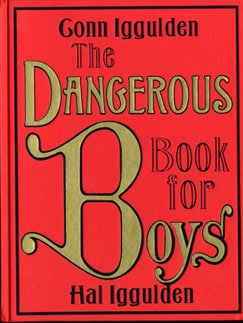
The American Boy’s Handy Book for the modern age. Sturdy, well-designed, and tactilely (is that a word?) pleasing, the book contains fun hands-on projects like making secret inks and a bow and arrow, how-to’s on various games like marbles and chess, and interesting boy knowledge about clouds and poems and battles. Of course one criticism of the book is that it seems like nostalgic men buy and read it more than actual boys, but it’s worth a purchase even on the slimmest chance that it will at least momentarily unhook your kid from the tethers of his Xbox.
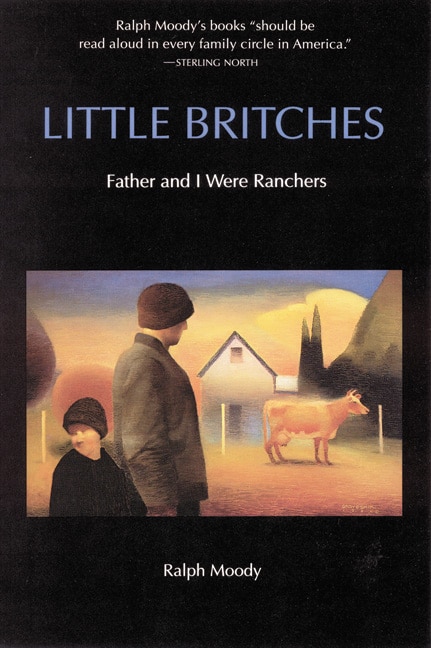
With a name like “Little Britches” and a reputation for being akin to Little House on the Prairie for boys, one might be tempted to skip this series. But that would be a big mistake. Packed full of lessons in the values cherished by the Americans of yesteryear, is may be the best series for boys you’ve never heard of. In 1906, at the age of eight, Ralph Moody and his family struck out for the frontier and the ranching life in Colorado. After a lifetime of triumph, heartache, and honest toil, he decided to write down his experiences in this autobiographical series. Follow little Ralph as his father schools him in the lessons of manliness, good character, responsibility and resiliency, and prepares Ralph to take his place as The Man of the Family.
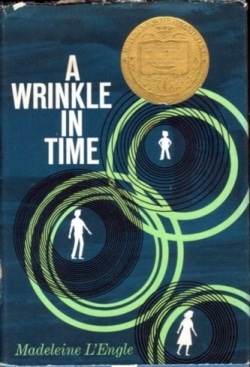
Warmer than typical sci-fi, touching on the battle between good and evil without being heavy-handed, A Wrinkle in Time is an unique book that easily won a place in the hearts of kids everywhere. Charles Wallace and Meg Murry are a brother and sister who have special gifts but are written off by others. Together with neighbor Calvin O’Keefe, and aided by three angelic beings, they go in search of their missing father who has been trapped on an alien planet controlled by an evil, disembodied brain. An interesting enough plot to keep a younger boy reading, enough symbolism and allegory to keep an older boy thinking.
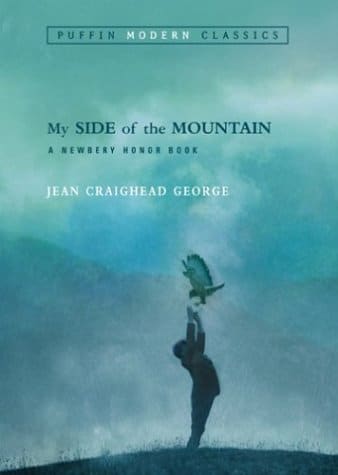 Did you ever try to run away from home? Did you tie a red bandanna to a stick, throw in some Oreos, and head down the street? You probably didn’t get very far, but you always wondered what it would have been like to strike out and keep on going. My Side of the Mountain is the story of boy who not only hears the call of the wild, but heeds it. Who not only hides out in the wilderness, but thrives there. 15 year old Sam Gribley takes up residence in the hollow of a tree and learns to survive along along with a pet falcon. Need I go on? You had me at falconry, My Side of the Mountain, you had me at falconry.
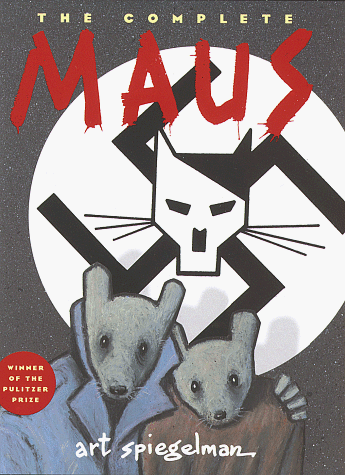
If you think about Family Circus when you think about comics, you’re missing out on some of the many excellent graphic novels out there. Arguably one of the best, and an excellent introduction to the form is Maus. It would seem no platform was less appropriate to tell the tale of the Holocaust than comics, yet somehow the juxtaposition of something we associate with frivolity with one of the gravest periods in history makes the tragedy more powerful and real than any number of more serious tomes on the subject.
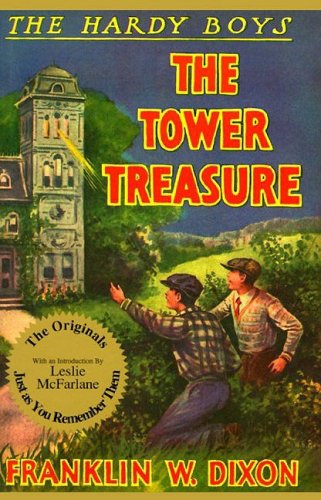
Girls have Nancy Drew; boys have the Hardy Boys. Follow brothers Frank and Joe as they investigate the exciting mysteries in Bayport (an amazingly crime-infested town).Although they frequently encounter great dangers, their pluck and, of course, hardihood, allow them to emerge unscathed and solve every case. The series has gone through many iterations, but the ones published between 1927 and 1959, largely written by Leslie McFarlane, are absolutely the best and the only ones worth reading. Beginning in 1959, the books began to be revised in effort to make them more PC, remove anything too violent, and attract readers with a shorter attention span. The result were sanitized, dumbed down books that McFarlane considered “gutted.” So buy the vintage books or those from Applewood Books which has reprinted the original 1-16.
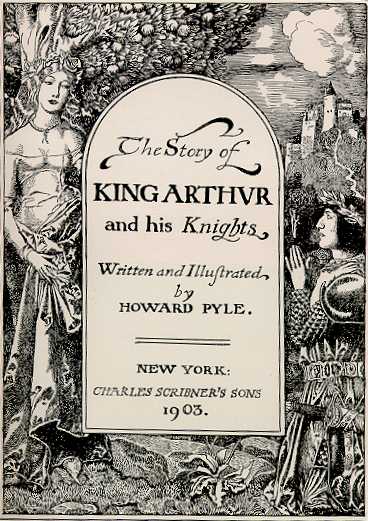
I’m pretty sure every boy goes through a knight phase. Stories of swords, armor, wizards, and dragons are the perfect fuel for a boy’s imagination. And there are few better vehicles to stoke that imagination that Howard Pyle’s rendition of the legendary stories of Arthur and his Knights of the Round Table. It is surely not the most accessible book; Pyle used the kind of archaic English true to that time, but difficult for ours. But he also wrote it with the young reader in mind, and so a dedicated boy will not find the task of reading and understanding insurmountable, and the book is packed with illustrations to provide visual interest. Of course, also check out Pyle’s The Adventures of Robin Hood, probably the better book (but knights are cooler, so they got the shout out).
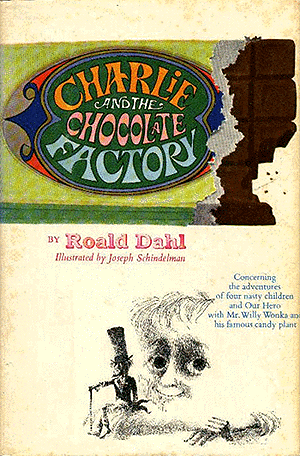
There are times where the movie is so famous, so classic, that people almost forget that a book version exists. Such is the case with Charlie and the Chocolate Factory. But while the movie (the original, of course) is a genuine gem, the book, as it always is, is even better. Dahl has a knack for taking the things that fill kids’ imaginations and building a story around them. Every boy loves candy, and every boy would love to tour a candy factory as fantastical as Willy Wonka’s. Charlie Bucket gets a chance to when he finds 1 of the 5 golden tickets that allow entrance into this world of wondrous, sugary delights. A book with a message that everyone can get behind: Snotty brats will eventually get their comeuppance while the good in heart will be justly rewarded.
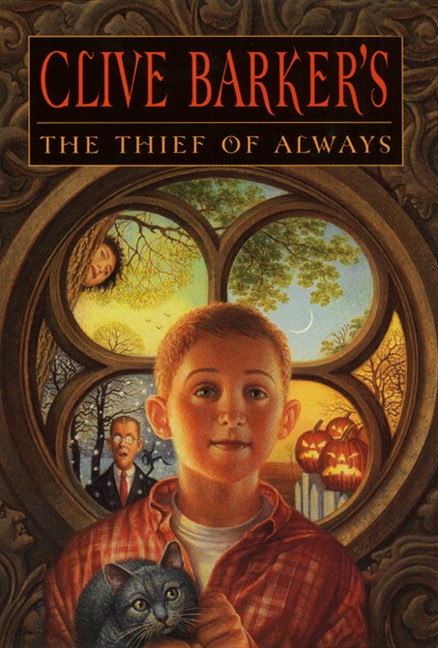
Clive Barker for the younger set. In this engrossing fable, ten-year old Harvey is bored with his life until a strange being shows him the way to the enchanting and magical Holiday House. Each day cycles through all four seasons, and the children can celebrate Halloween every evening and Christmas every night. It seems like a place of endless fun and excitement, but of course, not everything is as it seems…..

For a lady, S.E. Hinton sure knew how to tap into the mind of a teenage boy. In That Was Then, This Is Now, she returns to her favorite subject-seemingly parent-less boys trying to find their way in an unkind world. Characters from The Outsiders show up in the story as do the similar lines between Socs and Greasers. But while this book is not as good as that classic, nor is it a trite regurgitation of it. The plot instead is quite compelling-two boys, Byron and Mark, who are life-long friends with a bond like brothers, reach a crossroads in their friendship. Mark is being pulled into the violence and crime of the streets, while Byron wants to make something of himself. Their friendship is changing and Byron must decide a question that pains every man, “When does loyalty end?” Believable and real right up until the not so-happy ending.
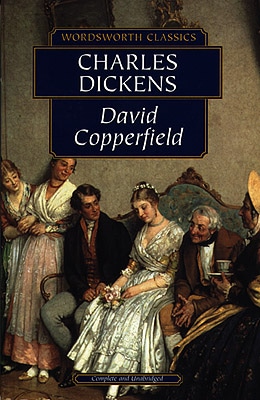
Everybody love Dickens’ Christmas Carol (I wonder what he would have thought about his work being turned into 3-D!). And everyone is assigned Great Expectations and/or The Tale of Two Cities in high school, and yet poor David Copperfield is often ignored or mistaken for a modern magician. Which is a shame-it is just as good, on some days I might say even better, than his more famous works. And it’s a perfect starting point for a boy who is ready to dip his toes into Dickens. Certainly more challenging than a choose your own adventure book, but quite possibly the thing to change a boy’s mind about “classic” literature. Dickens story is a coming-of-age tale that does not make the common mistake of unrealistically having a boy come of age all at once. Instead we are allowed to experience the great humanity of David Copperfield and the wonderful cast of characters that challenge him, love him, and help him grow into a man.
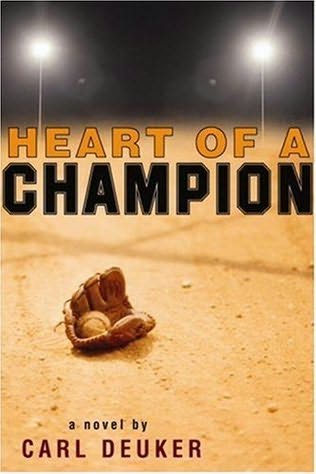
Like Mike Lupica, Carl Deuker manages to mix the kind of pitch-perfect accounts of sports action that is the hallmark of sports literature, with realistic and compelling characters and plot lines. The Heart of a Champion combines baseball with a story about the influence and impact of fathers on their sons, making this another classic entry in that distinctively male genre of stories: baseball as life. Seth’s father died when he was six and his difficultly in coming to terms with his death has set his life adrift. But then he meets Jimmy, who has a father problem all of his own-his dad is overbearing and an alcoholic. Jimmy’s friendship helps Seth get on track with baseball and school, but when his parents divorce, it’s Jimmy who’s life starts to fall apart. The boys’ choices soon lead them in very different directions.
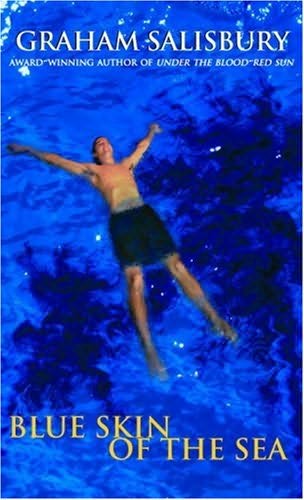
Next to Gary Paulson, Graham Salisbury was one of my favorite authors as a boy. Blue Skin of the Sea is set in Hawaii in the 1950s and 60s and follows the life of a teenager named Sonny Mendoza and his cousin, Keo, as they come of age. Despite coming from a family of a long line of fishermen who braved the ocean for their living, Sonny fears the ocean, but doesn’t know why. At its core, Blue Skin of the Sea is about the self-realization every young man must go through as they make their way from boyhood to manhood. At least that’s what I got out of it when I read it as a 12 year old.
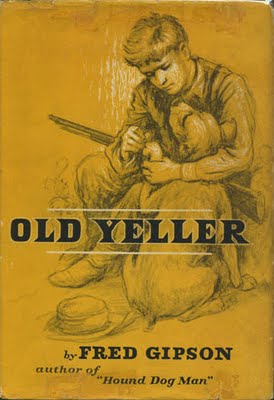
Like Charlie and the Chocolate Factory, Old Yeller is a great book that is often obscured by it’s cinematic counterpart. But instead of popping in the DVD, give your boy the book to read. Often remembered as a story of the bond between a dog and a boy, it’s really a coming of age story. 14 year old Travis Coates lives with his family in the hill country of Texas during the 1860’s. When his father must leave home for a time, he leaves Travis to “act a man’s part” and take care of the family. He does his best, but comes to need the help of, and love, Old Yeller, a dog who wanders into their lives. But when Old Yeller gets rabies, Travis learns firsthand one of the most difficult virtues of true manhood-sacrifice.
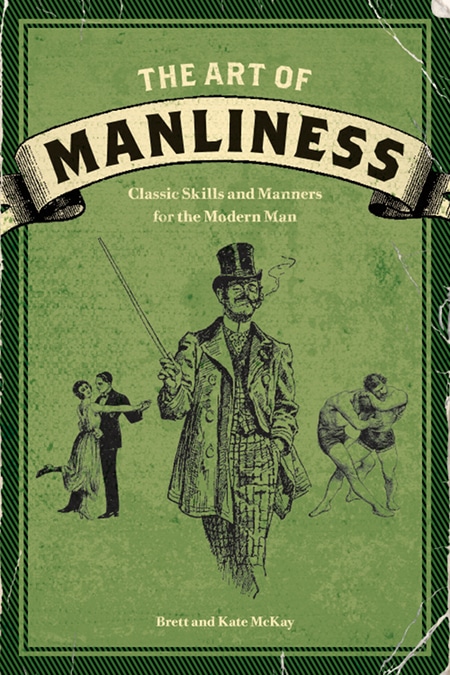
Okay, so I’m a little biased about this one. But I honestly think our book is a must-read for boys and young men. It’s never too early for a boy to start thinking about and learning what it means to be a man. Even if you’re good parents, it’s hard to think of everything a boy needs to know. Help your son learn essential classic skills and manners and become part of the generation that will revive the lost art of manliness.
These 50 books just scratched the surface. There are a TON more great books for boys out there. Share your favorites in the comments. But remember to look through all 5 pages before you do-those who suggest a book that’s already on here will get 50 lashes and their comment deleted. And yes, this list is Western-centric, so please suggest some great young adult literature from your favorite obscure Mongolian author.