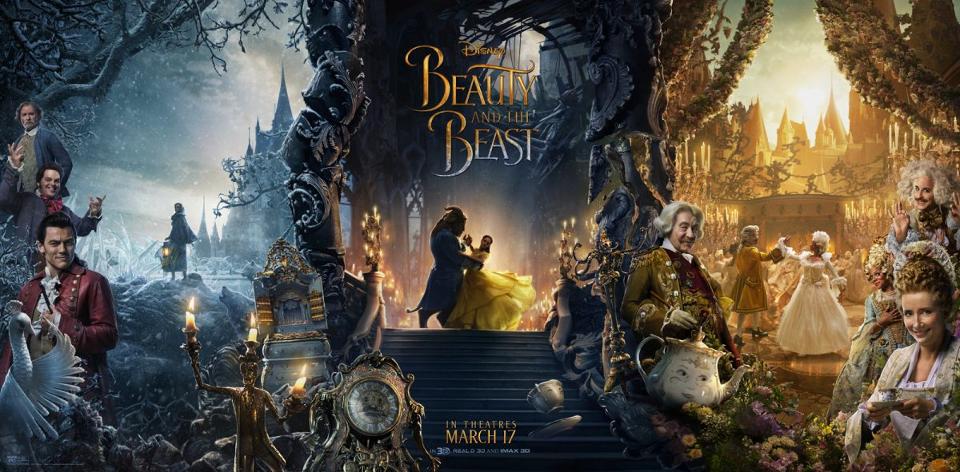
Walt Disney’s Beauty and the Beast hits theaters in North America (and elsewhere) on March 17, 2017. The film is the latest in one of the Mouse House’s most valuable would-be franchises. What started as a “wow” moment with Tim Burton’s Alice in Wonderland (2010), which made $1.025 billion worldwide, thanks to a well-timed release date and spectacular director, concept and stars, has now morphed into a regular feature of the Disney playbook. And the only question is whether this $160 million-budgeted live action/CGI hybrid fantasy will become the fairest one of all.
For the record, it is entirely possible for me to argue that this Bill Condon-directed adaptation of the 1991 animated feature has a solid shot at becoming one of the highest-grossing movies of the year while swearing up-and-down that it doesn’t have to clear $1 billion to be considered a success. But as this is the first one of these live-action adaptations to retell a more contemporary Disney animated feature, we’re getting a comparatively unprecedented shot of nostalgia and multi-generational interest.
You’ve got adults who grew up with the Oscar-nominated toon, kids who will come to this either with fresh eyes and everyone in between. Oh, and toss in Emma Watson as the title character, just as the kids who grew up with Harry Potter are coming of age, and you have a financial concoction so perfect it borders on evil. Including the 2012 3D reissue and not accounting for inflation, the original toon has earned $216 million domestic and $424m worldwide. It will be fun to see how quickly that figure gets trounced by this new variation. Say what you will about Disney’s diabolical doings, but if it gets them the money to make the likes of Pete’s Dragon and Queen of Katwe, then be my guest!
The Review:
Walt Disney’s Beauty and the Beast is the first of these newfangled live-action fairy tale adaptations that feels motivated purely by financial whims. The live-action adaptation of the 1991 animated musical is less of a new interpretation of an old text than a straight remake of a popular movie purely because that previous film was popular. It is a celebrity cover band version of the animated movie, intended primarily to milk nostalgia and cross-generational interest. Yet it is burdened by length-padding digressions, miscasting, a choppy narratives and an emotional detachment that only highlights that icky subtexts within.
One of the core problems, believe it or not, is Emma Watson as the title character. Even with slight revisions to make Belle more of a master of her own destiny, this is still not the healthiest romance ever told. Unlike, say, Twilight or Fifty Shades of Grey, it is a romance that begins absent consent and without equal agency. And Watson can’t quite sell her own acceptance of this narrative. Like Jodie Foster in Anna and the King, Watson can’t quite dumb herself down to the level of buying it.
Belle is much more engaged when she’s fending off Gaston (Luke Evans) or conversing with her father (Kevin Kline). She looks unsure of how to react when she’s watching a bunch of silverware put on a dinner theater or falling for a relatively charmless Beast (Dan Stevens, with a great singing voice even if I kept thinking of Colm Wilkinson’s Jean Valjean). The film is much stronger, at least as surface-level entertainment, in the village sequences, where good actors are conversing with each other, as opposed to Beast’s castle where good actors do their best to bring visually displeasing CGI creations to life.
What works fine in animation–the various anthropomorphic dishes and tea cups singing and dancing–comes off as awkward in live-action. Much of the Beast’s castle is visually drab and ugly, in contrast to the bright and vibrant village sequences. That may be intentional, but since much of the film takes place in said location, it’s akin to a horror movie set in a single poorly-lit locale. Further muddying the waters is a series of digressions and complications that stretch the film to over two hours while offering little beyond undoing what was a fat-free and airtight screenplay of logical cause-and-effect.
We get a new subplot explaining, in detail, what happened to Belle’s mother and Gaston gets more scenes with Belle’s dad, which only serves to overly complicate Gaston’s third-act machinations. While more Kevin Kline is a good thing, the extraneous material and altered emphasis has two significant consequences. They make Gaston much more interesting than anyone else onscreen while pushing the Beast himself into a narrative corner until the film’s second half. Both sabotage what should be the movie’s core dramatic arc.
Luke Evans is pretty great as Gaston, and he is almost sympathetic until the story demands that he cross a clear moral line. Sure, he’s a take on the proverbial “nice guy,” but Evans imbues him with a certain level-headed charm and an awareness of societal injustices. That he’s totally okay with his best pal (Josh Gad) nursing an obvious crush on him makes him that much more endearing for the first half of the picture. Besides, he’s comparatively better than the abusive monster who locks women in cages.
This live-action version emphasizes one of the big problems with the animated film, namely that the Beast and his servants assume that that just because Belle is an attractive young girl that she might be “the one” to break their curse. They expect her to fall for him with just a token amount of effort. All due sympathy in regard to their cursed state, but every single action they take is self-serving. Beast saves Belle from the wolves not because he does a mitzvah but because it is in his interest for her to not die. Ditto the candlestick and the teapot and the feather duster all making Belle feel at home and trying to convince her that the abrasive, monstrous head of the household isn’t all that bad. It’s not quite gaslighting, but it’s close.
The Beast himself is largely absent in the film’s first half, until it is time for him to soften up and woo his would-be bride. Due to an arbitrary restructuring of certain plot points and dialogue exchanges (the library reveal is basically accidental), the Beast comes across as less sympathetic. This only highlights the fact that Beauty and the Beast is arguably something of a bodice-ripping Harlequin romance story squeezed into a G-rated bottle.
What works in the animated movie just doesn’t travel into the live-action realm. And that’s a problem considering Bill Condon’s core mission is to turn the animated feature into a live-action romantic fantasy. Unlike the previous live-action fairy tale adaptations, the ones I liked (Pete’s Dragon, Cinderella) and the ones I didn’t (Maleficent, Alice in Wonderland), this doesn’t even add anything to the mythology or bring anything new to the table.
It’s a deluge of good actors (including Ian McKellen, Emma Thompson, Ewan McGregor, Audra McDonald, Stanley Tucci and Gugu Mbatha-Raw) trying their best in what amounts to a cover band of a popular album. The new version feels obligatory rather than narratively organic, with the core romance feeling unearned. The love story plays out merely because all parties know how the plot must go. All we can do is simply admire the visual elements, the pomp and circumstance and the new variations on iconic beats.
And, source material fidelity notwithstanding, I’d like to think we’ve advanced a bit beyond the whole “that mean creepy dude is really a sweetheart once you get to know him” trope. On one hand, that’s the story. But it says something about our addiction to nostalgia that we keep having to tweak old stories so that they are slightly more palpable to modern audiences.
Since the Mouse House is going to make a fortune on this one, I think I can admit that I was never a huge fan of the 1991 film for much of the same reasons, namely the notion of rewarding the Beast for the initial act of kidnapping a young girl and being cruel to her. We can at least acknowledge something unsavory about the stories that are chosen as the next mega-bucks blockbuster.
If you argue that I’m overly harsh, it’s partly because I know Walt Disney can do better in this specific sandbox and I don’t feel the need to be too charitable to a movie that’s going to make a gazillion dollars anyway. My daughter liked it just fine, and I’m glad that I saw it in an environment with enough kids in the audience to observe their reactions. My critical opinion on this one is going to matter as much as my pan of Illumination’s Sing, which I made a point to see in that #SingSaturday national sneak preview, and I suppose that’s okay.
This new version accidentally accentuates the icky text at the core of the story while the plot alterations cause confusion and delay. If I was overly harsh on The Force Awakens partly because I feared it would unleash a deluge of glorified remake-quels, I also worry that the Mouse House will look at the success of this carbon copy revamp and choose to go in that direction instead of the likes of Pete’s Dragon and Cinderella. Nonetheless, Beauty and the Beast is among the lesser entries in Disney’s recent live-action fairy tale theater.
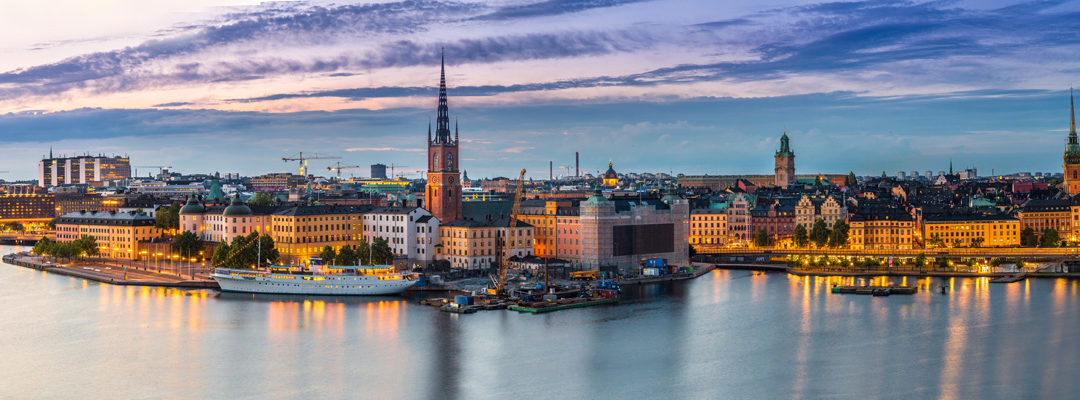
Swedish National Land survey has put its maps on Minecraft to promote its work
Since December 2015, anyone playing popular sandbox game Minecraft has been able to build their worlds on the actual map of Sweden.
Lantmäteriet, the Swedish National Land survey, launched the country’s maps as Minecraft-friendly downloads to increase interest in geospatial information and open data, particularly among younger citizens.
Tideström introduced the idea of a Minecraft Sweden in August 2015, and the complete map of Sweden and individual maps of each of its 290 municipalities were released to the public four months later. “For a governmental department, we completed the project very fast,” said Tideström. Lantmäteriet had a small internal team working on the project while the map data was converted to Minecraft by outside consultants using FME mapping tools.
The maps have gathered over 19,000 downloads to date, but Tideström believes their reach is far wider through the visibility of the project and the use of the maps in various other projects, such as a competition for schools to design a future city in the municipality of Kiruna.
“We were surprised that municipalities and organisations have started to use Minecraft as an actual planning tool for city development and have a dialogue with citizens,” said Tideström. “It is an easy way to translate maps into 3D, which makes it far easier for people to see how their city will look.”
The project, which cost an estimated kr400,000 (£36,000), has also received an accolade from the IT community, winning Digital Project of the Year at the Swedish CIO Awards.
Sweden is not the first country to recreate itself in Minecraft. Denmark and Norway have previously had similar projects, but Tideström said Lantmäteriet has gone a step further with the granular data the maps offer, from roads and lakes to forests and grasslands.
Lantmäteriet used the earlier project in Denmark for benchmarking, namely in opting for downloadable maps instead of a server-based approach. “In Denmark, they had an open server so people could log in and play,” said Tideström. “They had big problems with houses being torn down by players.”
The Swedish maps are available in 8×8 metre resolution (each Minecraft block is equivalent to eight meters). While this means small file sizes for downloading, the maps are more suitable for roaming the landscape than building detailed houses. To address this Lantmäteriet has so far launched four municipalities in a higher (1×1) resolution to enable more creativity.
“In some areas, schoolkids have built the whole centre of a town so it looks like real life, with the right textures and colours,” said Tideström.
Tideström said the Minecraft project hasn’t faced any major technical issues, but it has had an impact on Lantmäteriet’s approach to IT projects. The agency is now encouraging more experiments and fast deployments in addition to traditional large-scale projects.
“We realised if we would have taken this project through our normal process of driving things, we would have released it in 2018 or 2019,” he said. “We are now looking into how we can change this prioritisation and act faster with the deployment of ideas.”
Young gamers will take to the big screen this weekend to battle for the right to represent Denver at qualifiers for the first-evee.
Organized by Santa Monica-based Super League Gaming, Minecraft City Champs is a season-long competition that pits teams from twelve cities against each other across seven different Minecraft game modes. (A thirteenth team, the Virtual Storm, is made up of players that don’t live in an area with its own squad.) To earn a place on Colorado’s team, the Denver Drakes, players will have to qualify at a series of four weekly events.
For those not familiar with the phenomenon, Minecraft is a sandbox-style game that has players gather resources, create structures and attempt to survive in a blocky, pixellated landscape. The title has established itself as a favorite both of parents, who value it for its pseudo-educational, Lego-esque gameplay, and older players, who have used the platform to build everything from a working Game Boy to a model of Kings Landing from Game of Thrones.
This isn’t Super League Gaming’s first foray into this type of tournament. Last year, the company tested the model with a similar tournament for the popular eSports game League of Legends. In the fall, SLG held competitive Minecraft events in more than fifty cities across the U.S., with the best players entering into a nationwide tournament with a college scholarship as the prize.
Unlike the Minecraft tournament, SLG’s League of Legends competition allows players over seventeen.
While Minecraft doesn’t have the same reputation as a competitive game as popular eSports titles like League of Legends, DOTA 2, or Counter-Strike: Global Offensive — whose tournaments tempt pros with prize pools that can reach well into eight figures — SLG said in an e-mail that it aims to offer “a positive place for Minecraft fans to come together and experience the spotlight on the big screen.”
“The first League of Legends City Champs showed how intense local pride can be in gaming, and we want to bring that intensity to even more players across America,” said Super League Gaming CEO Ann Hand in a press release. “Adding a Minecraft tournament alongside League of Legends and expanding the number of cities are our next steps to bringing the big-screen gaming experience to everyone.”
Tickets to compete in the qualifiers are $20 per event. All players receive a free City Champs t-shirt; the highest-ranked will go on to compete against Seattle and Chicago in the City vs. City phase.
The first qualifications will take place today, Saturday, March 11, at 10:30 a.m. at Boulder’s Century 16 theater; participants must be seventeen or younger.
BOULDER – Playing video games on the big screen might sound like a dream to many kids.
That dream became a reality for some on Saturday who faced off in Super League Game’s event Minecraft City Champs.
The group of Minecraft enthusiasts faced off in Minecraft themed games including capture the flag and soccer.
The tournament is still in the qualifying rounds. The top finishers of the Denver Drakes team will face off against the champions from other cities around the country.
There will be three additional qualifying rounds that will be held at the 16 Century Theatre in Boulder.
The remaining events will be held every Saturday morning through April 1 at 10:30 a.m., with the championship round taking place this summer. Anyone from age 6-16 is eligible for the competition.
For more information, or to register for the remaining rounds, click here.
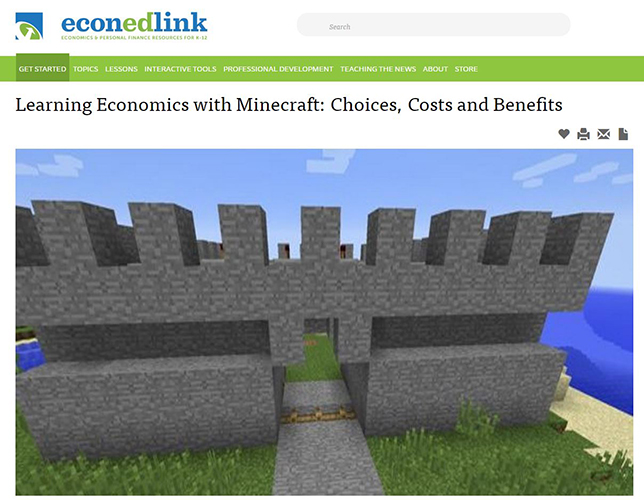
Last week, CEE released two free Minecraft lesson plans providing teachers in grades 3 to 5 nationwide the opportunity to further engage their students on the subject of economics via one of the most popular games in the world.
The lesson plans are designed for students to explore how to make smart economic choices in a team setting. When playing Minecraft, groups of students will evaluate the costs and benefits to help determine the types of resources needed to build a structure. In turn, when they’ve created a structure in Minecraft, they will reflect on how their economic decisions made a positive or negative impact on their built environment.
“Only 20 states require students to take a course in high school economics and it’s our mission to ensure kids at every age are given the opportunity to learn key economic concepts,” said Nan Morrison, CEO and president of CEE, in a statement. “Using Minecraft is a fun and easy way to teach kids about fundamental life skills —choices, costs and benefits — all core principles of economics.”
CEE will continue to develop free Minecraft lesson plans tied to economic concepts for teachers to use in the classroom. To view the two free lesson plans, visit these sites:
Teachers can sign up for a trial of Minecraft: Education Edition by visiting the Minecraft Education website.
CEE is a nonprofit organization that focuses on the economic and financial education of K–12 students. The organization provides free economic and personal finance lessons and resources for educators at its site EconEdLink.
Let’s be honest, most games we play are fun for a few weeks. We’ll try the campaign, give multiplayer a go, then become tired with the game and move on to the next in line. Sure, some popular older titles get a rebirth via smartphones (Super Mario Run, Pokémon Go), but it’s very rare to play the same game for years on end – unless that game is Minecraft.
Since 2011, Minecraft has captivated the world in a way we’ve not seen in years, perhaps ever. It’s played on Android and iOS devices, PCs and Macs, and PlayStation, Xbox, and Nintendo consoles. Heck, it’s even being used to teach in schools now. Is there really another game that is as all-encompassing as Minecraft? There are conferences, all manner of merchandising, a recent story mode, and even a movie we’re told is being released one day this century.
What keeps this ball rolling? What is it that over 100 million users return for again and again, despite the game not exactly having memorable characters or an interesting narrative? It’s the ability to create. Of course, there are sandbox games which let us wander around and destroy as we see fit, but what’s evident is that people love – really love – to build, to produce, to mine, and definitely to craft. It’s nigh on impossible to find a game that lets you create to the scale that Minecraft does.
Today, we wish to give a little respect to some Minecrafters who spend their days turning blocks into replicas of real cities, or produced majestic worlds to rival the works of any science fiction writer. These folk don’t just want to play the game, but live it, often putting in countless hours of creation time over several years. Afterward, they can make their maps available to download, where others can marvel at the construction and engage in the newly built world. Although, it should be said that these digital architects aren’t always alone, and will often host their own servers and let others take part in community projects (for example, the Westeros server is a massive ongoing development which aims to recreate the lands from Game of Thrones).
When you’ve got the option to oversee a world of your own design, it’s not hard to see why many people turn out as server-gods in Minecraft. Your rules, your vision, your domain. Don’t like the way someone is behaving on your server? Ban them and move on; things can be very simple in the Minecraft world. Once you’ve understood how to set it up, you’ll have to offer something awesome to convince other gamers to play on your server, as there are a lot out there. Unless of course you simply wish to have a server on which you and your friends can romp about without a care, engage in epic PvP battles, or build gorgeous worlds like the ones you’re about to see. The options are virtually limitless as to where Minecraft can be taken.
So, without further ado, here are three amazing maps created by talented Minecrafters, which may well inspire your own creations one day…
Last Jump Hero
If your two loves are parkour and platform video games, then you’re in luck. Last Jump Hero, apart from the great name, is an incredibly fun download that should give a good 1.5 hours of jumping fun. With five levels to complete (Green Forest, Desert Hills, Sea of Lava, Hell, and Into the End), Last Jump Hero by Mehlie puts a Minecraft twist on a classic platformer like Prince of Persia. Jump like your life depends on it.
The Star Wars Adventure Map
Any Star Wars fan loves to picture themselves roaming the icy lands of Hoth or wandering around the intricate paths inside the Death Star. There are, of course, many great Star Wars video games, but for something more pixelated, give The Star Wars Adventure Map by Hypixel a download. With the option to play as a Stormtrooper or Jedi, you’ll be given plenty to do in the form of main and side quests, and you can expect the journey to last around 40 minutes. It’s well worth it to delve into the Star Wars universe once again.
Chicago
Those scenes in movies in which a character wanders around an empty city are always fascinating and a bit trippy (28 Days Later, Vanilla Sky, etc.), so imagine being able to do something similar in Minecraft. This download, created by 18-year-old Ryan Zull, is a blocky duplicate of Chicago, Illinois. You don’t exactly have to be an inhabitant of the Windy City to appreciate the faithful replication, as it’s simply stunning to marvel at the level of detail put in by Zull. Although the project only started in 2013, Zull says he is about 80% finished and plans to keep working on more details of Chicago. How about New York next please?
These are but three downloads we wanted to cover, but there are many more out there. It will be interesting to see how the release of Lego Worlds will shake the might of Minecraft, as players will be able to build epic creations with Lego pieces and landscaping tools, but somehow we think that people will be Minecrafting for a long, long time.