Thanks to Marvel’s unprecedented partnership with Netflix, the superhero studio has been able to mirror their cinematic success with serialized storytelling. Fans and critics held their breath when Daredevil debuted in 2014, and were pleasantly surprised when the show’s bareknuckle adaptation proved to be just what comic readers and TV viewers had been hoping for. Jessica Jones and Luke Cage raised the bar even higher, blending social commentary into the fantastical story to highlight issues like rape and police brutality, respectively. Even Daredevil dealt with issues like gentrification while providing a look at one of the few superheroes with a disability.
With the final Defender just on the horizon, Iron Fist has always seemed like the riskiest bet. Not only are his mystical origins a far-cry from the street-level action we’ve seen so far (give or take a clan of undead ninjas), but the character has long been controversial. While audiences have been repeatedly assured everything will be fine, the initial reviews for Iron Fist have confirmed many people’s worst suspicions. Still, we have hope it can improve. In the meantime, Marvel aren’t slowing down their marketing ahead of the series’ Friday debut.
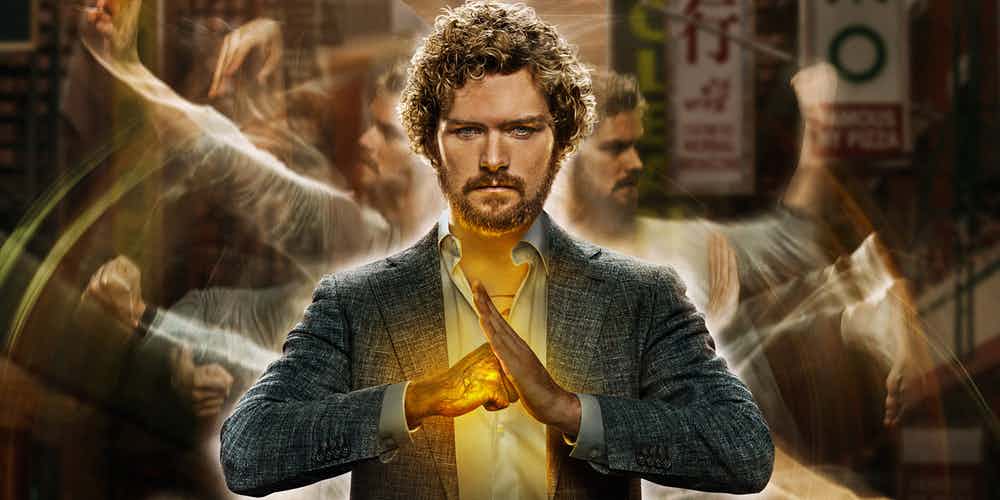
IGN has a new banner from the show that mirrors similar promo images for Daredevil and Jessica Jones. The heavily-photoshopped art features Danny Rand, along with Colleen Wing and the Meachum family. It also highlights Danny’s neighborhood and teases one of the MCU’s landmarks. Check it out below:
As you can see, the Avengers Tower is quite visible, as it was in the previous banners. Sadly, we’ve never seen the tower in the actual shows. Despite Marvel’s claims that all of their series take place in the same universe, we’ve not had more than a few passing references to the events of the MCU films in the Netflix series. While inserting Avengers Tower into a shot would presumably not be too difficult, Marvel have chosen to forego that Easter egg so far.
As we await the premiere of Iron Fist, we’re learning quite a lot about it. We know, unfortunately, that both Danny’s costume and the dragon Shou-Lao won’t appear in the first season. Given the poor reviews, one has to wonder whether a second season will even happen. There’s always the chance for a Heroes for Hire series, which could further explore Danny’s backstory while allowing him to suit up. On top of that, we’ve also been given a better look at Colleen Wing, who may just prove to be the future of the franchise. There are even more comic characters being teased as set to appear on the show, so if nothing else, this show will be for the fans.
Iron Fistseason 1 premieres on March 17th. The Defenders will arrive sometime in the summer, with The Punisher coming later this year. Daredevil seasons 1 and 2, Jessica Jones season 1, and Luke Cage season 1 are now available on Netflix. Premiere dates for the newest seasons of Jessica Jones, Daredevil, and Luke Cage have not yet been revealed.
When Marvel brought Nerd Christmas early in the summer of 2008 by teasing the rise of the Avengers in the tag at the end of Iron Man, even they didn’t fully envision the shared universe they were on the brink of creating. A few years later, The Avengers finally saw a number of their films and heroes join forces for an unprecedented blockbuster that finally proved Marvel and superhero movies were here to stay. Since then, the company has only reached new heights, while virtually every other studio taking steps to build their own shared universe.
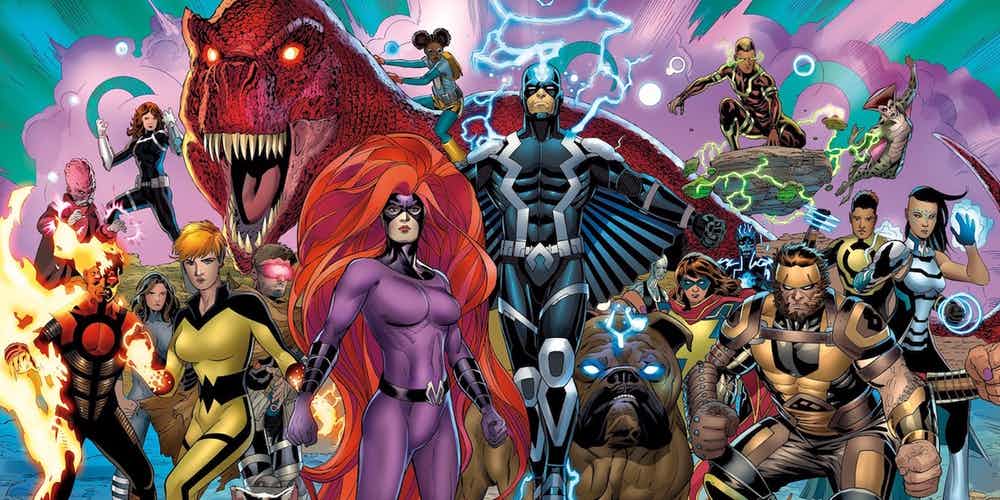
Marvel have taken things a step further, spinning off the adventures of Agent Phil Coulson into ABC’s Agents of S.H.I.E.L.D. Along with their group of Netflix shows, the TV side of Marvel is said to exist in the same universe as the movies. While it’s merely been alluded to on Netflix, S.H.I.E.L.D. has built entire episodes and seasons around the events of Marvel movies. Given this shared continuity, many have wondered how connected the upcoming Inhumansshow will be to S.H.I.E.L.D. when it premieres on IMAX screens later this year. Not only will both show eventually share a network in ABC, but S.H.I.E.L.D. actually introduced the concept of the Inhumans to the Marvel Cinematic Universe some years back.
Since then, charatcers like Daisy “Quake” Johnson from the Marvel comics (played by Chloe Bennet on Agents of S.H.I.E.L.D.) have even been altered to match their Inhuman heritage on TV. While we haven’t heard any official confirmation of the two ABC Marvel TV shows being intimately connected or sharing characters, a new batch of set photos from @CrlRbs (see below) provides us with one direct connection between the two series.
As Carlos states, that alien writing matches the carvings we saw all throughout season 2 of S.H.I.E.L.D. The mystery of the writing eventually led to the discovery of the Terrigen crystals that transformed Daisy and Raina (and sadly killed Tripp). What’s more, but the comics have used the writing for years within the font of the Inhumans comics, further connecting things. Hopefully, this will just be the first of many threads joining S.H.I.E.L.D. and Inhumans, as the latter recently started shooting a few weeks back.
The beginning of production has also given us our first looks at the announced Inhumans cast in action. We’ve already seen Black Bolt and Lockjaw, and yesterday gave us our first look at Crystal in a very comics-accurate costume. We’ve also heard a rumor about Hawaii’s famous Diamond Head volcanic crater being used as a filming location, possibly to house the Inhuman city of Attilan. With filming continuing out in the open, we’re likely to get a lot more looks at the upcoming show in the coming weeks and months, so stay tuned.
Inhumans comes to IMAX theaters for two weeks starting Friday, September 1st, prior to its television debut on Tuesday, September 26th on ABC.
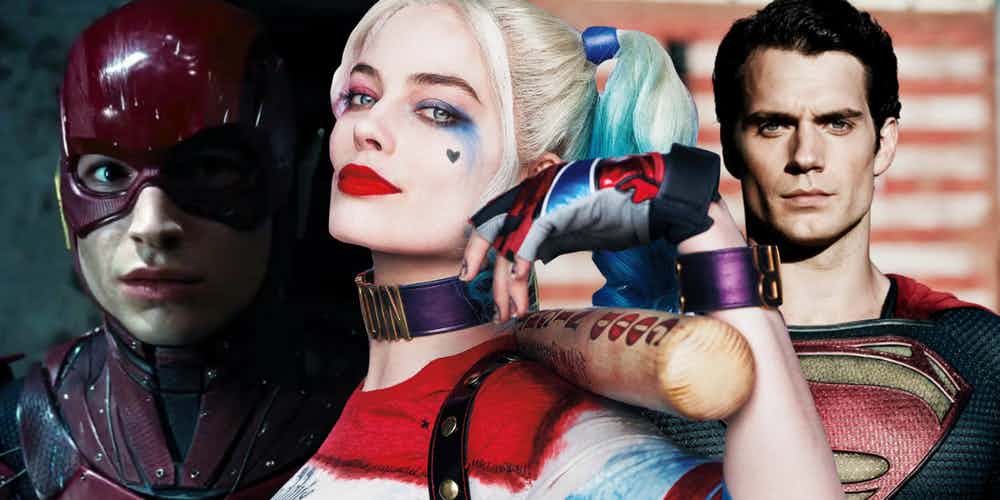
Among the many DC Extended Universe films that are currently in some stage of development without an official release date is The Flash solo movie, as well as the Suicide Squad spinoff Gotham City Sirens and a direct followup to Zack Snyder’s Superman movie reboot, Man of Steel. That’s just the tip of the iceberg too, as the list of DCEU movies that are actively moving forward without a firm launch date in place (yet) includes director Matt Reeves’ The Batman, the Dwayne Johnson-headlined Black Adam movie, a Birds of Prey film and a Nightwing solo movie from The LEGO Batman Movie‘s director, Chris McKay.
Over the past year, there’s been much in the way of reported activity on a number of those same DCEU movies. The Flash, for example, was seemingly all ready to begin filming at the beginning of this year, before writer/director Rick Famuyiwa stepped down in late 2016. Meanwhile, Gotham City Sirens (by most accounts) continues to make steady progress forward, with not only a director (Suicide Squad helmsman David Ayer) but also a screenwriter (Tomb Raider reboot writer Geneva Robertson-Dworet) and one of its three central stars (Margot Robbie as Harley Quinn) in place already. As for Henry Cavill’s Superman: a Man of Steel 2 script is in active development and has been since last fall, but there hasn’t been a major update on the project since.
We may now have some fresh details concerning the release date windows for the three aforementioned DCEU films, thanks to “leaked” information that was posted on a DCEU sub-Reddit (via Screen Geek). According to the post, Gotham City Sirens is targeting a February 2019 theatrical release date, putting it a few months ahead of the current release date for the Shazam movie. Man of Steel 2, meanwhile, is supposedly taking the November 2019 release date previously reserved for Justice League 2, while The Flash is apparently being put on the back-burner for a 2020 release (the same year that Cyborg and Green Lantern Corps movies are scheduled for).
While this information should (obviously) be taken with a healthy helping of salt – given that it comes from Reddit – there is fair reason to believe that it’s accurate. For starters, this comes from the same source that claimed Joe Manganiello is playing Deathstroke in the DCEU, long before the news was made official. Moreover, these release date windows more or less align with other recent progress updates concerning these three DCEU installments.
It’s to be expected that Gotham City Sirens would be fast-tracked ahead of the Suicide Squad sequel’s release, given the popularity of Robbie’s turn as Harley Quinn from Ayer’s (yes, Oscar-winning) first Suicide Squad movie. The early 2019 date would give the film sufficient time to make its way down the pipeline, thus avoiding the blowback that Warner Bros. and DC endured for Suicide Squad‘s rushed development process. Alternatively, with The Flash struggling to hold onto a director and now undergoing rewrites, the movie (once scheduled to arrive in March of 2018) is unlikely to hit theaters until 2019, at the earliest.
As for Man of Steel 2: with many DCEU fans wanting to see a truly Superman-focused followup to Man of Steel (e.g. not the shared universe launchpad that was Batman V Superman: Dawn of Justice), WB and DC have good reason to prioritize getting such a project off the ground at last. Snyder is following up Justice League with his passion project The Last Photograph rather than Justice League 2 and Man of Steel 2 reads as being a sensible replacement for the latter. That said: with so many films currently in the pipeline, the larger game plan for the DCEU may be equally fluid right now.
When the first X-Men movie dropped into theaters back in 2000, with a modest budget and few stars, few could have predicted the unbelievable cultural impact that the film would have. Back then a sequel wasn’t a sure thing, but Bryan Singer’s little mutant sci-fi film paved the way for superhero cinema as we know it today. Since then, Fox has released nine more movies in the X-Men universe, culminating in Logan — a tense, heartbreaking finale to the X-Men as we know them, finally bringing the series full circle. Throughout these films, the series has weaved together a complex continuity, with characters that grow old, change, die, and inspire others.
There have certainly been continuity errors throughout the X-Men series. Unlike the Marvel Cinematic Universe, the X-Men films weren’t planned out in advance, so mistakes were made along the way. But in the long road from X-Men to Logan, a fascinating, mutant-influenced alternate history has been developed, full of intriguing divergences from our own version of history — along with similarities that call attention to our greatest societal mistakes. The X-Men’s mutant conflicts have always been used as a political allegory for real life issues, and the movies have taken this to the next level, through the use of prequels, back stories, and peeks into the future, with major events tied to specific dates.
But this raises an interesting question: if one lived in the X-Men movie universe, and was sitting in Logan’s history class as a student of Charles Xavier’s School for Gifted Youngsters, what sort of lessons would they be learning?
Alternative History Lessons
Since the X-Men movies were not made in chronological order, it requires some work to put the X-Men history book together. And their history, of course, isn’t over: while we now have a definite endpoint in the future of 2029, there’s plenty of still unknown time between then and the 1990s, when the next X-Men sequel will come out. But since Logan tells the story of a day when the X-Men are no more, and thus gives us a conclusion, we can now look over the entire alternate history of this movie universe from the beginning until now.
All of the best alternate history theories pivot around a single change, and how that one change impacts everything. You know, the butterfly effect. What would happen if the Nazis won WWII? How would today’s music scene be different if Kurt Cobain hadn’t committed suicide? The key is to start with one change, drop that single stone into the river, and watch the ripples spread.
In the X-Men universe, that single change to the timeline is easy to pinpoint: the existence of mutants.
Lesson #1: Ancient Egypt & Apocalypse
So, how would history students study Apocalypse?- what would the textbooks say? In the pre-Days of Future Past timeline, he never rose up again, so he would likely be viewed as a mythological god, discussed in the same chapter as Ra, Anubis, and Set.
Really, there’s no way that En Sabah Nur wouldn’t be a major mythological figure that history students would write papers on. After all, the guy singlehandedly constructed the pyramids with his powerful telekinetic abilities. His fearsome appearance would likely be depicted in countless relics, murals, statues, scrolls, and so on. In X-Men: Apocalypse, Moira MacTaggert even proposed the notion that the biblical “Four Horseman of the Apocalypse” were named after his horseman, not the other way around.
But in the X-Men universe, contemporary historians probably don’t think that En Sabah Nur was a mutant. In fact, they probably don’t believe he actually existed in real life. There would be some historians who would propose the “Maybe Apocalypse was a mutant?” theory, but these ones are outliers, most likely mocked by the scholarly community. Even in the post-Days of Future Past timeline, the general public wouldn’t have any reason to associate the big blue mutant overlord with the historical En Sabah Nur.
Lesson #2: Magneto Studies
After Apocalypse, the timeline wasn’t much influenced by mutant activity (at least, not that we know of) until the mid-20th century, when mutants began to emerge more frequently. When WWII came along, it played a key role in shaping the single most controversial mutant of the 20th century -a figure who would certainly be discussed in history classes for decades to come, and who would the singular focus of millions of magazine articles, research papers, and books.
Lehnsherr’s story began when his family was murdered in the Holocaust, decades before mutant powers become public knowledge. This event scarred Lehnsherr for life, and eventually led to him becoming Magneto, who in the X-Men universe would certainly be seen by authorities and the news media in the same context as Osama Bin Laden. Unlike the universally reviled Bin Laden, however, there would probably also be studies and news analysis pieces debating whether there were merits to Lehnsherr’s argument, and whether perhapshis cause was justified, if not his methods. Some would argue that he was a terrorist, others would say he was a freedom fighter.
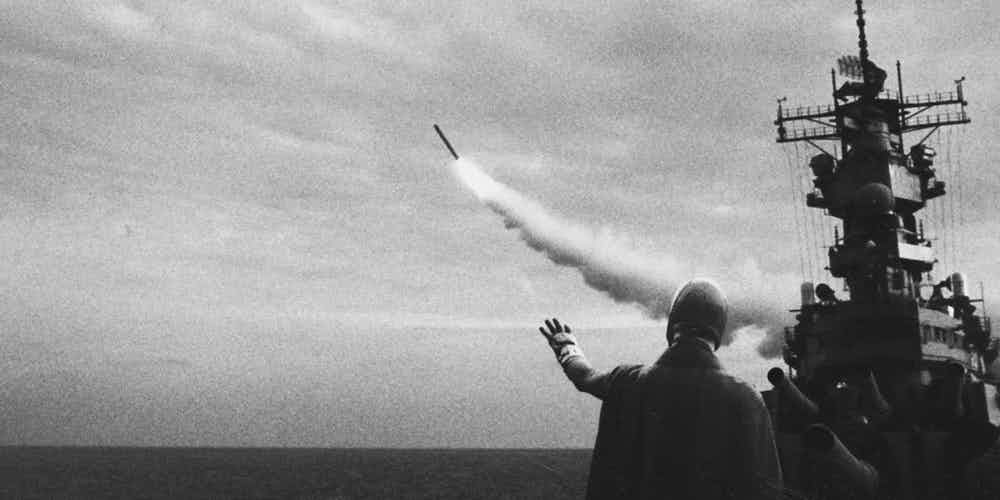
If there were a college course devoted to the subject of “Magneto Studies,” it would certainly begin with the Holocaust, at which point the next important point in history would be the Cuban Missile Crisis. In X-Men: First Class, the incident itself was actually manipulated into happening by Sebastian Shaw, the leader of the Hellfire Club. But the point where history started really diverging from our timeline was in that single moment where Magneto took control of all of the missiles, turned them around, and got ready to make his first massive strike on human society. Even though this bloodbath was halted, this was the first time in history where mutantkind was truly unveiled to the world’s governments, and Magneto didn’t set the best first impression.
Only one year later, Magneto was implicated in the murder of John F. Kennedy Jr., his metal-controlling powers offering the best explanation ever for the oft-disputed “magic bullet” theory. Based on Charles and Hank’s discussion of Erik’s imprisonment in Days of Future Past, it can be reasonably assumed that Erik Lehnsherr’s supposed guilt in the assassination was common knowledge, even if his mutant powers were not (yet).
Lesson #3: Anti-Mutant Prejudice Begins
Once we get to 1973, when Days of Future Past takes place, the history book gets complicated. Due to time travel interference, the entire course of history was changed. Because the new X-Men movies are taking place on the altered timeline, much of history from 1973 onward is unknown to us. For that reason, when studying a hypothetical X-Men history book, it’s necessary to continue on with the original timeline. Also, for the sake of argument, it’s conceivable that Xavier may want to teach his students about the original timeline, so that they could know what to watch out for.
In any case, 1973 is a pivotal year. In the original timeline, Mystique assassinated Trask and was captured, eventually leading to the development of Sentinels modeled after her powers. Soon after, the world truly learned about mutants, and opinions began to form. The human/mutant conflict erupted.
According to 25 Moments, a cool viral marketing website that Fox released in conjunction with Days of Future Past, by the mid-1970s Professor Charles Xavier was presenting himself before the U.S. House of Representatives, where he pleaded for basic mutant rights. In 1977, Pietro “Peter” Maximoff decided to compete in the Olympics. When Quicksilver broke eight world records, it ignited a massive controversy that resulted in a complete ban from mutants participating in sports.
In the 1980s, the televangelist Bob Bell began an organization called “The Human Majority,” which believed mutants were a curse. The Chernobyl catastrophe caused the spread of new mutant births all over Eastern Europe, included Piotr Rasputin/Colossus. Germany formally adopted anti-mutant policies, and a resulting mutant riot led to more bloodshed; in this universe, the Berlin Wall was never knocked down.
Lesson #4: The New Millennium Begins
Any study in 21st century mutant history would be closely tied in with Magneto Studies. While Charles Xavier was an equally important historical figure, his role was quieter, whereas Magneto was busy mounting violent offensives against the human race. Since the US Government had an anti-mutant agenda, it would have used Magneto’s image as a propaganda tool to fuel anti-mutant sentiment. Holding up Magneto as a symbol of mutantkind would allow politicians to pass controversial policies like the Mutant Registration Act, whereas devoting any attention to Xavier and Jean Grey’s pleas for peace could potentially lead to pro-mutant sympathy.
Thus, Magneto was the single most controversial mutant in history, and the most prominent. And his actions in the 21st century were a big reason why.
First of all, there was the Statue of Liberty incident. This didn’t claim too many lives thanks to the X-Men, but it still would have been a huge deal in the news. Keep in mind, at this point Magneto was a wanted felon – the mutant who murdered JFK. His mutant terrorist group barging into the Statue of Liberty and flashing some weird lights at the top would be scary stuff to people sitting at home. In X2: X-Men United, viewers see the near-extinction of mutants, immediately followed by Magneto causing the near-extinction of humans, but Lehnsherr’s involvement in this would not have been clear to the general public.
The miraculous thing is that after all of this went down, the United States actually started to turn around in its stance on mutants. A pro-mutant president was elected to office, and Hank McCoy was even appointed to the position of Secretary of Mutant Affairs. Things were looking up for the first time in history.
Flashforward to San Francisco, 2006, where it all came crashing back down.
When Worthington Labs announced a mutant “cure,” Magneto sprang back into action. After gathering a massive army of mutants behind him, including the Phoenix, Magneto staged his first true act of war against the human race: he tore the entire Golden Gate Bridge off of its roots, and then unleashed hundreds of bloodthirsty mutants upon the Worthington Labs facility on Alcatraz.
Consider the scale of this for a moment. Forget that the X-Men intervened to save the day, or that Wolverine stopped Jean Grey from blowing up the entire city, because the news media and general public wouldn’t know any of that stuff. What they would know is that the most wanted man on the planet had just destroyed a national landmark in the name of war — most likely killing thousands.
In the X-Men universe, this “Golden Gate Bridge Attack” would have been their 9/11. In this one action, Magneto implicated all of mutantkind as being enemies of the American people. The bomb had finally dropped.
In the X-Men universe there was never any “War on Terror,” because the “War on Mutants” took its place. Mutants were questioned, deported, subjected to police brutality, killed in hate crimes, and thrown into Guantanamo Bay. Every mutant was accused of being a secret agent for Magneto, and forced to register. And sure enough, what did all of this end up leading to?
Sentinels.
Lesson #5: The Future That Almost Was, And Then Wasn’t
Days of Future Past paints a pretty clear picture of what happened at this point. The Anti-Mutant movement reached fever pitch, mutants were thrown in concentration camps, the US government commissioned Sentinels from Trask Industries… and oops, there goes the world. After almost all of the mutants have been eliminated, the Sentinels then turned their guns on the humans.
Until the X-Men sent Wolverine back in time. The efforts of Xavier’s team saved the entirety of humanity from themselves. This would be the final history lesson for students at Xavier’s school, at which point they’d be dragged to Professor Beast’s science class so they could learn weird, confusing lessons about time travel.
However, for human students, their lessons would continue all the way to 2029, which we now know as the endpoint. By then, a new question has arisen:
Lesson #6: Where Did All the Mutants Go?
While the future world depicted in Logan isn’t so great, it’s certainly better than the post-apocalyptic scenario featured in Days of Future Past. Logan shows a country where corporate greed, genetically engineered crops, and anti-immigrant nationalism have choked the life out of the economy, easily making it the most political X-Men movie to date. While people in this society are getting by, they’re struggling, and it shows. Mutants, once poised to take over the human race, have mostly died out, and no new mutants are being born, thanks to Zander Rice’s high fructose corn syrup.
But what’s most significant here, as far as the history of the X-Men, is that at this point the context in which mutants are viewed has entirely changed. Now that they’re no longer a “threat” for human survival, people have become nostalgic about mutants, and celebrate their past achievements, or are excited when they run into one of them. The X-Men have become iconic heroes of the past, pop culture icons whose past heroism is never questioned. Comic books are made of them. Parents probably brag to their kids about the time “the X-Men saved me.”
Strange as this might seem, it’s actually quite realistic. Real life heroes and social movements are often controversial in their time — but in later decades, these figures become celebrated as icons. It makes sense that in this universe the X-Men would be treated the same way. Even though the mutant gene was suppressed, and even though the X-Men never lived to see themselves accepted, their legacy will live on… and in the history books, they will be forever memorialized as the heroes that they really were.
The new King Kong film, Kong: Skull Island, effectively recontextualizes the story of the mighty gorilla. Instead of merely remaking the primal fairy-tale once again, Jordan Vogt-Roberts’ version reworks the tale of the giant primate into something fresh. Almost the entire movie takes place on the titular island, with the story following a group of explorers trying to survive the strange prehistoric creatures that live there and get to the other side for rescue. This quest is hampered by the maniacal Col. Packard (Samuel L. Jackson), who develops a grudge match with Kong after several of his men are killed in the first encounter with the primal beast. Unlike the original, capturing this jungle ruler isn’t an option and the movie goes the long way around when it comes to explaining why.
Part of the new MonsterVerse that launched with 2014’s Godzilla, Kong: Skull Island introduces the King to the fold with a new backstory that mixes some classic elements with new mythology, in order to set the universe up for the long-haul. The crux of this is the hollow earth theory, which theorizes a whole other world is lurking below the planet’s surface. Bill Randa (John Goodman) is a scientist who, along with the organization Monarch, has become obsessed with the idea that the world once belonged to giant monsters, and some of those monsters are still around. Randa is convinced that one such creature attacked a boat he was serving on in the navy and left him as the only survivor, and he’s dedicated his life to proving it.
Randa’s search leads him to Skull Island, a previously completely uncharted region of the South Pacific ocean. Randa and his assistant, seismologist Heuston Brooks (Corey Hawkins), believe Skull Island to be an entry point through which the entities that live under the earth’s crust can come up, and after some last-ditch scientific funding and the enlisting of a military escort, they embark to explore it. To get seismic data as quick as possible, they drop bombs on the island’s surface when they first arrive to get a read on whether the earth below is hollow.
Their hypothesis is proven correct but quickly draws the attention of Kong – which was the real motive behind the bombing of the island. The giant gorilla makes swift work of the helicopters that the scientists and their escort arrive in. Once they’re stranded in various parts of the isle, the scientific team and the soldiers work their way around the forests and jungles, encountering giant spiders, pterodactyl-like birds and massive water beasts – seeing first-hand the kind of life that exists around a hollow earth waypoint.
No other monsters are mentioned specifically until the post-credits sequence, but the overt implication is that all the monsters of the MonsterVerse will come from places like Skull Island – mysterious pieces of land where the ground is thin enough for these possibly prehistoric beings to break through. Godzilla hinted at a similar story, though kept it contextual to Godzilla as a “great equalizer” that was there to keep us in check, riffing on the lizard being an embodiment of nuclear paranoia. Monarch is the same company seen in Godzilla, and some of the same language is employed in Kong: Skull Island – specifically, the idea that we share the planet with ferocious entities beyond ourselves.
King Kong’s cinematic history began in 1933, and the giant ape has been portrayed in many different movies over the years (some good, most pretty bad). Initially Kong is painted as the brute Godlike animal with allegiance to no other living creature, but gradually he’s revealed to be the protector and lode-bearer of the island’s eco-system. Mason Weaver (Brie Larson) and James Conrad (Tom Hiddleston) find a completely isolated tribe of indigenous people, with whom John C. Reilly’s Hank Marlow has lived for years after his plane crashed. As with previous iterations the tribe still regard King Kong as sacred, but here it’s retooled as respect for their eco-system and its balance, rather than as a violent or sacrificial religion. The tribe are shown to be completelu pacifist and in harmony, having built a wall to keep out anything that Kong himself hasn’t killed that would try to to hurt them.
The main threat to this tribe – and, indeed, to anyone else unfortunate enough to land on Skull Island – is a race of monsters dubbed “Skull Crawlers” by Marlow, who play an important role in the rebooted Kong’s backstory. Both of the Kong’s parents died keeping bigger Skull Crawlers at bay, leaving him the only one who can stop them – and even then, only by killing them while they’re still young and weak.
The movie also takes care to establish another key fact about Kong: that he is relatively young, and is still growing. This is important because Kong will eventually face off against Godzilla, whose current incarnation is around 350ft tall, and could therefore crush classic portrayals of King Kong under one foot. Since Kong: Skull Island is set in the 1970s, and Godzilla was set in the modern day, the already massive Kong can spend several more decades growing before he has to fight the King of Monsters.
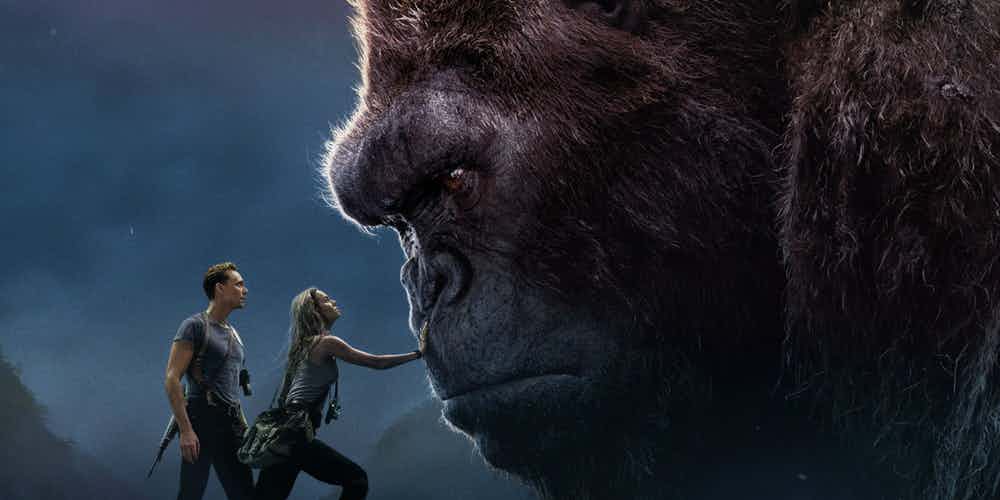
One important questions remains: the question of why Kong and Godzilla will end up fighting, since both creatures are portrayed as being fairly benevolent – a balancing force against monsters like the M.U.T.O.s and the Skull Crawlers. Beyond his initial (arguably justified) rampage against Packard’s men, Kong appears to be relatively docile, submitting to Weaver’s touch and even protecting her from the adult Skull Crawler towards the end.
In one of the movie’s most striking images, Kong allows the surviving characters to fly away, watching and roaring as they leave. He has a purpose to continue to serve on the island as its great guardian, saving it from whatever other oddities happen to emerge from the ground. But while the island’s visitors may have pledged to keep it a secret, it seems unlikely that Skull Island will remain undisturbed by the outside world for much longer.
Streaming giant Netflix continues to expand, and not just with its many award-winning original TV series. The company has reportedly been looking into increasing the production of their own original content. This means more original series, but it also means more focus on improving their feature-length offerings. Movies are an area where Netflix hasn’t been performing as well as they could be, with plenty of films having been released, but none that have reached the level of critical acclaim or fan excitement seen with the company’s television series.
Earlier this month, it was reported that Netflix was looking to hire a producer to head up their film division and bring it up to scratch — and now we can confirm that the company has found the man for the job.
Today, THR confirmed that Scott Stuber has been hired as the new head of Netflix’s film division, and will be ‘leading future development, production and acquisition’ for Netflix’s feature-length content. Stuber spoke about his new role in the company, saying:
“Netflix is at the forefront in changing the way entertainment is enjoyed throughout the world, bringing a greater variety of stories to more people than ever before. It’s an incredible opportunity to work with a company with such reach and that stands for such diverse quality content for global audiences.”
Stuber is known for his work on Patriot’s Day, Ted, A Million Ways To Die In The West, Love And Other Drugs, and many more. He is described by Netflix head Ted Sarandos as “well known and respected in the film industry. His innovative work and strong talent relationships should help accelerate the Netflix original filminitiative,” and was previously being courted by Paramount to head up their film division.
This is big news for Netflix’s film division, as it points toward an emphasis on even more original content coming soon. The streaming site has already got several big titles in the works, including the live-action anime adaptation Death Note, Martin Scorsese’s highly anticipated gangster movie The Irishman, and Will Smith’s latest project, Bright. Orson Welles’s final film will also be released on Netflix. The addition of Stuber to the team promises even more exciting new creations and acquisitions for the company.
However, some may be concerned that Netflix’s move toward even more original content could impact its future as a streaming service for content created elsewhere. Should Netflix become it’s own ‘network’ of sorts, we may be left looking for somewhere else to watch all of our other favorite shows. This is unlikely to be an issue any time soon, of course, but it is worth keeping an eye on as the site continues to grow and shift focus.