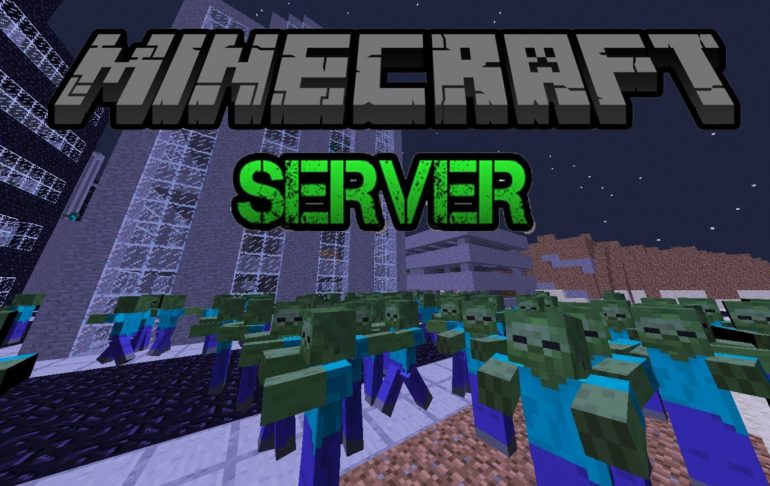
 The network is known mainly for its minigames, a unique selling point for the network. There are over a dozen custom-coded minigames available on its official server.
 fun for all players; these game modes include SkyBlock, Prison, OP Factions, Factions, Creative, and KitPVP.
 GotPVP currently runs plugins across MCMMO, Factions, WorldBorder, Votifier, ObbyDestroyer and various others.
 Its games fall under Creative, PVP, Skyblock, Spigot and Survival.
 constant betrayals, wither raids, new defensive tactics deployed each day and a location to battle against YouTubers.

You wouldn’t know, turning into this nondescript street in Stockholm and padding up the stone steps to Minecraft HQ, that anything special was being made up here. The truth only becomes clear when you step through the door and discover the endless shelves filled with awards (including a Bafta) and the vast boxes of Minecraft merchandise piled in every corner. This is where they make what many regard as a digital version of Lego: a game that’s been downloaded more than 100m times on PCs, consoles and smartphones since its launch in 2009. If you have children aged between six and 16, the chances are they’re hooked on this strange, blocky pursuit. And the chances are you’ve asked yourself: why?
To truly understand the appeal of Minecraft, you need to understand the studio behind it. Five years ago, when makers Mojang moved to this first-floor office in the trendy area of Södermalm, they wanted it to have the feel of a gentlemen’s club. In came Chesterfield sofas, a snooker table and lots of dark oak furniture. They even designed a Mojang coat of arms, which hangs near an enormous banqueting table. The aim was to make a nice place to hang out, meet people and have fun – an environment that felt personal. In short, they wanted the office to be like Minecraft.
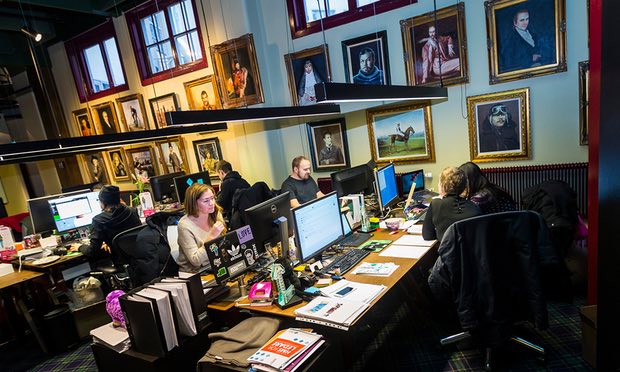
Even now, with more than 80 staff, this still seems the case. New arrivals are asked to choose a favourite portrait from history, then Vu Bui, the chief operating officer and a keen photographer, takes a snap of them, which is sent to a company in China that refashions the painting using the employee’s face. These portraits line the office: whenever staff look up, they see their own faces staring back, depicted as soldiers, monks and queens.

Minecraft arrived in my household in 2012. As games editor for the Guardian, I’d heard of it, but somehow hadn’t got round to playing it. As soon as I saw the blocky landscape load up and heard the soothing piano soundtrack trickle out, I knew someone who would like it: my eldest son, Zac. He’d just been diagnosed on the autism spectrum and I knew that we’d need to find new ways to communicate with him. His vocabulary was limited and he had little patience for painting or drawing. Although he enjoyed being read and spoken to, he didn’t say much back.
Zac had always loved technology, though, learning to use an iPad before he could walk. He responded to Minecraft immediately. He started to experiment, chopping down a few trees, digging a shallow quarry – the usual beginner stuff. But before long, with his younger brother, Albie, he was making houses, then mansions, then giant, sprawling castles.
More importantly, for the first time in his life, he was talking to us about what he was doing. For the next two years, I think every single conversation he started was about Minecraft, but we didn’t care. He’d gone from grunted responses, one or two words, to lively tales of zombies, naughty pigs and wildly ambitious building projects. It was a revelation.
After writing an article about our experiences with Minecraft and autism in early 2015, I soon found out I wasn’t alone. I was inundated with tweets, emails and comments from other parents. The game was not only bringing people together – it was teaching basic skills. To play Minecraft you need to collect certain resources. A bed, for example, requires you to combine wood and wool, while a longbow is made from a stick and some string. There’s no story, no mission, just you and a world of possibilities.

I’m thinking about this while sitting in a meeting room in the cluttered Mojang office, chatting to the company’s CEO, Jonas Mårtensson. He was at a Minecraft convention in Orlando Florida four years ago when he realised there was more to all this than just a game. He’d only just joined Mojang, coming straight in to lead the studio. He had previously worked in the hard, fast and serious world of gambling. Now he was at a video game community conference, surrounded by families walking around with foam swords and giant cardboard helmets. So he started talking to them; wandering the hall, trying to find out why they liked playing this weird building simulation.
“I met this dad, a soldier, I think he’d been based in Afghanistan,” he says. “While he was out there, he would call back home and speak to his young son, but he didn’t really get his full attention for more than five minutes before the boy ran off to do something else. But when they were playing Minecraft, he could sit for hours, and they spent that time together.”
Minecraft is now being used in schools all over the world. The company released an education version, which allows teachers to set up classroom servers where students build scale models of their own towns; learn about geography, agriculture, architecture and physics. But the game has had specific value for autistic children who respond to its simple visuals, open design and logical, interlocking systems. You can do what you like in the world, but everything adheres to strict physical rules. If you put sand in the furnace, it makes glass. If you make a sword out of iron, it’s stronger than a sword made out of wood.
There have always been computer games that let you build things. Indeed, original developer Markus “Notch” Persson was highly influenced by Infiniminer, a block-building game released in 2009 that also featured construction and mining. But those games didn’t take off in the way Minecraft did. I ask Jens Bergensten, who has been creative director since Notch handed over the reins in 2011, why he thinks that is. “It’s the way that you build in the first-person perspective, and you only interact with one block at a time,” he tells me. “It’s also very open-ended. It doesn’t tell you what to build.”

Markus “Junkboy” Toivonen oversees all the game’s merchandising, working with toy manufacturers to make sure the various action figures, playsets and official books express the feel of the game correctly. “When I came on board at Mojang I could see, like, a billion things I would improve about Minecraft,” he says. “But over time I’ve grown to respect the naive qualities of the visuals. The communication is so straightforward and simple, and I now realise that’s part of the appeal. If someone else had become involved early on and made it pretty, I honestly don’t think it would have been as successful.”
Bergensten agrees. Since Minecraft’s release, there have been dozens of copycats, all looking to expand on what the game offers, hoping to attract a fraction of its gigantic audience. Some have fared well, but nothing has come close to the simple purity of Mojang’s vision. “Clones tend to add a lot of visual information to the textures,” he says. “Minecraft is kind of cartoony because of the low resolution, the low fidelity. But a benefit of that is it allows you to fill the world in with your own imagination.”
This definitely resonates with Zac. The game’s awkward, blocky aesthetic makes him less self-conscious about what he makes. Even a multi-coloured stack of wool bricks and stone bricks with weird shapes jutting out looks sort of good. It works. Nowadays, most Lego sets are rigidly designed around specific movie and TV tie-ins. But Minecraft is still in that space where anything you make is absolutely fine.
When Mojang was first formed in 2009, it was Notch, co-founders Jakob Porsér and Carl Manneh, and a small group of programmers working out of an apartment a few blocks away from the current office. They’d hang out, code a bit, mess around. “It was a geeky boys’ club,” laughs Toivonen. But it’s not a boys’ club any more. Many of the staff are women, reflecting the gender-neutral nature of the game itself. When you attend a Minecon event, you see just as many girls as boys. Minecraft is up there with Pokémon as a truly universal gaming experience. This is another reason for its extraordinary success: everyone is welcome.
I chat to Maria Lemón, who joined the company four months ago as a programmer. She’s been playing Minecraft for years, and jumped at the chance to work on the game. “I’ve always played video games – that is what’s most fun in life,” she says. “When I was 12 our family computer broke, so me and my brother built a new one of our own and used it for gaming. My daughter is only one, but I have a long-term plan to make her a gaming professional. I named her Zelda, so she’s doomed to be a gamer.”
Maria is one of a big group of staff who stop work every Friday afternoon to play games. And what do they play? “Mostly Minecraft,” she laughs. She favours highly customised versions, created by the vast modding community that designs and shares its own texture maps, items, creatures and even new stories and adventures, making them available online. Players can easily download these files into Minecraft and suddenly have a version of the game that looks like it’s set in space or Middle-earth.

The fact that Mojang has embraced hobbyists and hackers has been an essential part of the experience. “The way Notch handled the game in the early days – he didn’t care if people copied it,” says Michael Stoyke, who created the tools that a lot of people use to modify Minecraft before getting a job at Mojang three years ago. “If anything it was beneficial – it spread the game more,” he says. “If you look at his old blog posts, Notch was a little bit annoyed that we’d cracked Minecraft open and started making mods, but he didn’t mind in the end. It’s a game where we don’t stop you – you can do whatever you want. A big publisher would never have done that.”
This sense of ownership that every Minecraft player has is vital – it’s the heart of the game. When my son was little, he found it hard to express his ideas; there wasn’t much he could tell us. But when he started building in Minecraft, that changed. For him, it wasn’t a game to play, it was a place to be. It was an escape, a safe space, and he was able to model it in his way. I remember him taking me by the hand and leading me to the TV to show me something he’d made – a little house, oddly shaped and constructed from a jumble of different blocks and textures. The game is filled with animals, cows, sheep, dogs, pigs – the dogs were his favourite. He domesticated them and gave them their own room in the house. He guided me around, pointing out little areas of interest, telling me about the purpose of every room. And I just remember trying not to cry. Because this was the first time he’d ever had the confidence to say, “this is mine”.
Did the team at Mojang understand that this happened with their audience? “I hear this a lot,” says Bergensten, “especially talking with kids, they feel it’s their game, not ours. They make up their own rules, they make up their own structures and how to interact with others. They have this sense of ownership.”
It was late in the afternoon when I started talking to Mårtensson about Zac. I told him about how our experiences had led me to write my novel, A Boy Made of Blocks, about a father and an autistic son communicating through Minecraft. “There was a mother I spoke to,” he says. “Her son was autistic, and he was having to switch schools – he was really anxious about it. But they knew he was a fan of Minecraft, so what they did was, they gave him a plan of the school. It showed where his classroom was, and where he entered the building and everything. And he built the school in Minecraft. Later, when he actually started at school, he knew exactly where he was going, and he felt comfortable. That was the moment I cried at Minecon.”
Even after seven years of development, Bergensten still plays. Every year, he takes two weeks off, and he sets up a shared Minecraft world with his younger brother. The two of them build and chat. He loads the map up and shows me their work – his brother mixes lots of materials to build towering, byzantine complexes while Bergensten himself crafts stocky medieval castles. Minecraft has become part of their family lives.
Every year, new features are added – new materials to build with, new boxy animals to rear and new monsters to fight, but there seem to be no plans for a sequel. Later this year, however, there will be a Warner Bros motion picture, a confirmation of the game’s slip into the mass cultural consciousness.
Referring to Minecraft as a computer game is like calling Lego a toy: it’s technically correct, but also reductive. Both are creative platforms; they are about self-expression. On top of that, Minecraft is also a place, it’s a world to explore, to play and meet friends in – it is Narnia, it’s the Hundred Acre Wood. I know that on my old Xbox 360, which is now put away in a cupboard somewhere, I will find that original version of Minecraft, I will find the maps that I first built with Zac – and they’ll take me back. Perhaps many years from now I’ll load it up and explore the first weird little hut we built together.
- This article was amended on February 9 2017 to correctly attribute a quote to Michael Stoyke, and to note that the Minecraft staffer pictured is Kris Jelbring.
• A Boy Made of Blocks by Keith Stuart is published by Sphere at £7.99. Buy it for £6.79 at bookshop.theguardian.com