The Avengers Reimagined in a Dark Fantasy Realm

The Avengers Reimagined in a Dark Fantasy Realm


The Marvel Cinematic Universe is about to enter the world of sorcery, magic and the occult with the addition of Doctor Strange. He’s one of my favorite characters in the Marvel universe, and I’m so stoked that he will finally be coming to the big screen!

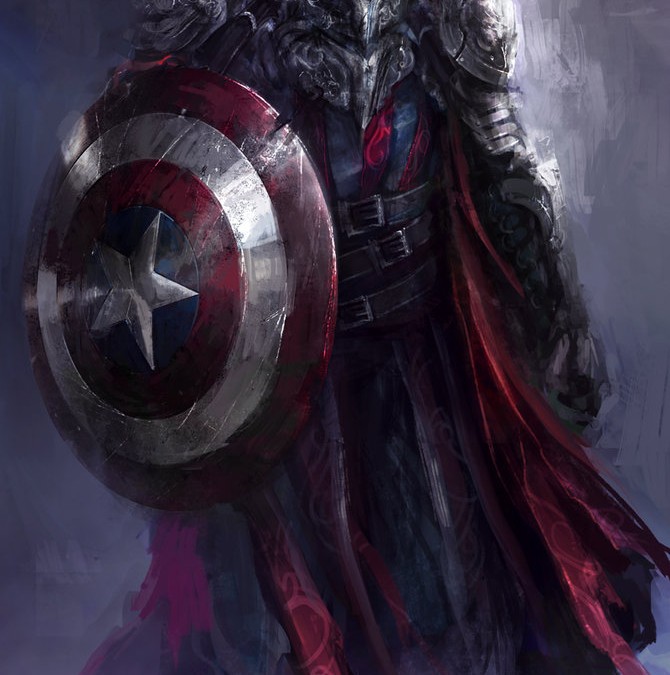
While we wait for that, here is an awesome series of art created by artist Daniel Kamarudin, which reimagines several characters from the Marvel universe in a dark fantasy alternate universe. The series is called Avengers: Dark Fantasy, and I think you’re really going to like what you see.

The character designs are pretty damn cool. To see some similar art click on the following link: THE AVENGERS as Medieval Fantasy Warriors.

The Avengers Reimagined in a Dark Fantasy Realm

World Book Night: how poetry helps reluctant readers take flight

World Book Night: how poetry helps reluctant readers take flight

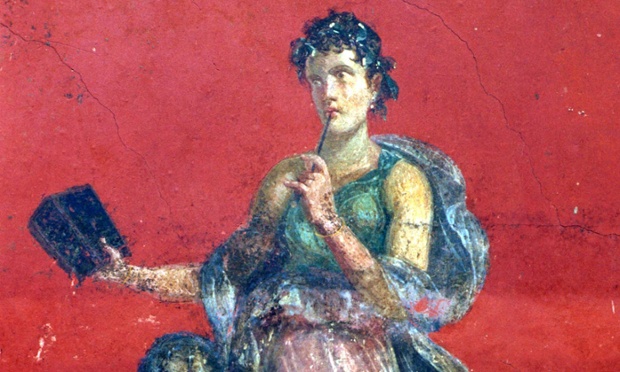
A detail from a fresco taken Monday, November 6, 2000, shows the roman divinity Calliope, Muse of epic poetry, portrayed on the walls of the recently rediscovered ruins of what is believed to be the ancient guest house of Roman Pompeii, Italy. Excavations for an extension of the Naples-Salerno highway brought light on a 1000 square meters construction, forgotten since its first discovery in 1959. Archeologists believe that these frescoes, of extreme importance for their beauty and technique, could prove that the Roman Pompeii was not declining in importance when covered by ashes in 79 a.D. (AP Photo/Pasquale Sorrentino)

A detail from a fresco taken Monday, November 6, 2000, shows the roman divinity Calliope, Muse of epic poetry, portrayed on the walls of the recently rediscovered ruins of what is believed to be the ancient guest house of Roman Pompeii, Italy. Excavations for an extension of the Naples-Salerno highway brought light on a 1000 square meters construction, forgotten since its first discovery in 1959. Archeologists believe that these frescoes, of extreme importance for their beauty and technique, could prove that the Roman Pompeii was not declining in importance when covered by ashes in 79 a.D. (AP Photo/Pasquale Sorrentino)

World Book Night: how poetry helps reluctant readers take flight

This year, the annual event to promote reading is giving away an anthology of poems for the first time, and the response has been extraordinarily positive

“Is it mine? Can I keep it?” Kieran has just read a poem aloud in the foyer of St Mungo’s Broadway hostel for the homeless in London’s Covent Garden. Silence by Mourid Barghouti begins: “Silence said: / truth needs no eloquence.”

Why did he choose that one? “Because I like silence. There’s not enough of it.” Kieran, 24, has lived in the hostel for more than a year since a serious motorbike accident interrupted his working life as a mechanic. Soon, he hopes to leave, to find a job, a place of his own.

He is holding a copy of a specially printed edition of the poetry anthology Essential Poems, edited by Neil Astley, one of 250,000 books that is being distributed to mark Thursday’s World Book Night. This annual event, run by the Reading Agency, sees thousands of volunteers share their love of reading by pressing books into the hands of others. The aim is to reach people who rarely read and don’t own books.

But how to tell who reads, who doesn’t? I wonder how the people I see daily on my street – the Irish builders, the Bangladeshi newsagent, the Italian hairdresser – will react to: “Psst! You look as if you rarely read. Can I interest you in a book?”

Oddly, it’s easier to offer a poem than a book. A novel or a biography requires a reader to start at the beginning, plough on to the end, persevering through interruptions. A poem delivers more, with fewer words. An anthology can slot into free moments in a chaotic day. You don’t have to like every page: just one. Seen this way, the quick hit of the single poem is a more promising gateway into reading than any other form of literature.

This is the first year World Book Night has included a poetry anthology in its giveaway – and the response has been extraordinarily positive. The initiative, supported by the Forward Arts Foundation and the Jerwood Charitable Foundation, clearly struck a chord with the 394 individuals and 224 institutions – homeless shelters, prisons, mental health trusts – who were offered a choice of 20 World Book Night titles, all but one written in prose, and went for the poems. 12,500 anthologies were printed: all have been snapped up. The givers’ enthusiasm, as seen on Twitter with the hashtag #shareapoem, suggests an unslakeable appetite for sharing poetry. Why?
Mass redistribution of words: World Book Night prepares for UK-wide book giveaway
Read more

Simon Phillips, a basic skills tutor at St Mungo’s Broadway, tells of reluctant hostel-dwelling readers who have been kickstarted into writing their own poems by discovering a poem that works for them: “John Hegley is good that way, and Invictus – the poem that kept up Nelson Mandela’s spirits in prison. People who aren’t confident with spelling and punctuation seem happier writing poetry than prose: there’s a bit more freedom for them.”

Writing a poem can lead to other things: involvement in the St Mungo’s magazine, turning up to editorial meetings, co-operating, being punctual, taking pride in an achievement. “Lots of the clients here have troubles and don’t see anyone except others in the same predicament or professionals – doctors, psychiatrists, nurses, key workers. And they have to describe what’s happened to them again and again. It’s quite depressing. It can get them down. But the right poem gives them something else to talk about,” adds Phillips. Rumi, he says, works particularly well for a client with mental health issues: “He tells me the Persian version: we look at the words in English together. It makes him happier, no question.”
Advertisement

It makes Phillips happier too: “When you read a poem like Frost’s The Road Not Taken with a group, they see their whole lives in it. They all find different meanings. The first time this happened, I’d never heard a conversation go so well: hierarchy goes out of the window.”

The World Book Night edition of Essential Poems includes Frost, alonside Cavafy, Rilke, Neruda, Elizabeth Bishop plus – in a special addendum – work by Emily Berry, Michael Symmons Roberts, Liz Berry and Kei Miller, all recent winners of the Forward prizes for poetry.

The language is current, fresh, vivid: my fears of coming across as a patronising missionary for culture are dissolved by the warmth of the book’s reception. Liz Berry’s poem, about a seven-year old girl pretending to be a boy, gets a hoot of recognition from my hairdresser, who immediately pledges to make her copy go further by offering it to customers with their blow-dries instead of Grazia and Hello! “I like a poem to make you laugh, make you feel good. Who doesn’t?”

World Book Night: how poetry helps reluctant readers take flight

A story to tell: Teen author shares experience at Eden Park

A story to tell: Teen author shares experience at Eden Park


Herald photo by Jen Cowart
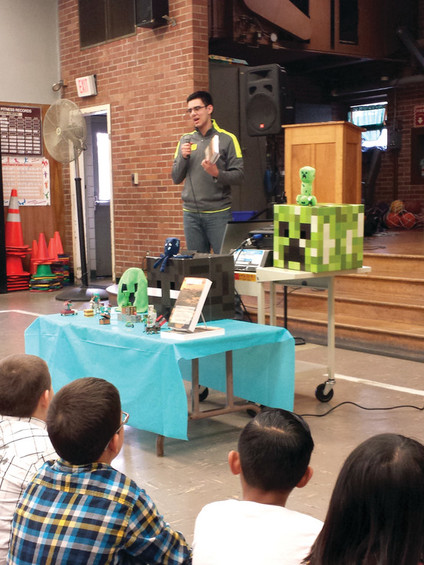
YOUNG AUTHOR: Sean Fay Wolfe, a 17-year-old author of a book set in the world of Minecraft, was able to relate to the students’ love for the game when he spoke at Eden Park last week.

Sean Fay Wolfe, teen author of the fan fiction title “Quest for Justice, a Minecraft Novel” (Elementia Chronicles, Volume 1), had the students at Eden Park Elementary School in the palm of his hand last week as he spoke about his journey from 14-year-old fan of the game to 17-year-old author of a fiction series of three action adventure books set in the world of the video game Minecraft.

Fay Wolfe’s first book in the series was originally created using Createspace, a self-publishing format, but has since been picked up by HarperCollins Publishing. The publishing house will release all three books, starting in July for the first, and following with the second book in October 2015 and the third in January 2016.

“When I first tell people that I wrote a story set in the world of Minecraft, their first question is always, ‘Why?’” Fay Wolfe said. “But let’s have a show of hand here as to how many of you like Minecraft.”

Nearly every hand in the room filled with upper-grade elementary students flew into the air, and Fay Wolfe had their rapt attention.

“I really like Minecraft. There’s so much you can do. A couple of years ago, I was on Minecraft constantly, non-stop,” Fay Wolfe said. “The game is just as much fun to play by yourself as it is to play with other people using multi-player servers. I like to play it with my friends and with hundreds and thousands of people playing together on the servers in online survival worlds. I realized though, as I was playing with other people, that people playing together encounter problems. Most problems are little and annoying, but I started thinking about other problems that could possibly take a Minecraft server and render it useless so that people can’t use it any more. I tried to think of what types of problems those could be.”

Fay Wolfe brought the discussion to the topic of resources.

“Every resource has its purpose. There might be diamonds, gold, stone, dirt, wood or water,” he said. “But I started to wonder what would happen if people who played the game were grouped together in their cities and their cities got so big that they used up all of the resources until there were no more and people who were the older, original players who had helped to found the cities decided that there could be no more new players and wanted the newer players to leave the cities. That wouldn’t be fun, would it? If someone gets you to leave, if you’re no longer welcome, that’s a problem, right?”

He told the students that considering such a problem led him to his idea for his first book.

“That single biggest problem that Minecraft could have became the seed in my head for my story,” he said. “It was the conflict, the issue of the story, and created an epic quest, a journey across the world of Minecraft for my characters.”

Fay Wolfe explained more about his writing process and how he created his three main characters.

“Without players, this would not be a good story. I started to think about who my main character should be, what should their traits be,” he said. “They should be brave, talented and care for their friends. I decided to name my first character Stan, and he’s a new player. He does all the questing. ‘The Elementia Chronicles’ is his story. Then I came up with his sidekick, Charlie. He’s a good guy, but he’s different than Stan. He’s smarter, and he has more common sense than Stan. He’s kind of a coward though, he’s a scaredy-cat. Together, they help each other and balance out each others weaknesses.”

Before introducing his third character, Fay Wolfe asked how many girls in the audience liked Minecraft. Dozens of hands went up.

“I realized that a lot of girls play Minecraft, too, and my main characters so far were just boys. So, they ran into Kat. They had a rocky start, but before long, the three of them travel together and the trio becomes good friends. Kat is wild, crazy, sarcastic, and she’s better at fighting than both of them put together from the start,” he said. “That was everything I needed to start my story. They encounter other characters along the way, but those were my three main characters. I was putting a lot of it together in my head, asking myself what would happen in this situation or that situation, how would my characters react?”

Fay Wolfe was in the ninth grade when he began to write his story.

“I was 14 years old and I was in love with the game. It was awesome, and I’d just started playing. But in the 10th grade I kind of forgot about my story and I took a little break. I’m a normal kid and I had other things going on besides Minecraft. I have homework, and chores and extracurricular activities, just like you. I couldn’t devote my whole life to Minecraft,” he said. “Then, in the winter of my 10th-grade year, I found the half-finished version of my Minecraft story. I showed it to my mother and my younger brother and they both liked it, and they told me to go right back upstairs and finish it so that they could find out how it ended.”

Fay Wolfe emphasized that his book is fan fiction, not endorsed by the creators of the game itself, just set in the world of the game. He talked about the publishing process.

“I finished the book when I was 16, but publishing isn’t easy. I used Createspace, a self-publishing site, which means I published it on my own, without the help of an outside publishing company. I went around Rhode Island promoting the book, and before I knew it, it got noticed by HarperCollins. They’re about the same size as Scholastic Books,” he said. “So now, starting in July, they’ll be publishing and distributing my book and it’ll be distributed all over the country, all over the world, and in all different languages.”

He gave the students advice on how to get started writing their own books, encouraging them to use what they know and enjoy – such as arts and crafts or other hobbies – as topics. He asked the students to raise their hands if they had a hobby they enjoyed, and got a resounding response.

“Regardless whether or not anyone else also likes to do the hobby you like to do, your experiences and knowledge are unique to you,” he said. “Your hobbies are a good place to come up with your own story.”

He used the arts and crafts hobby as a story starter and mapped out for the students how to build a storyline around it.

“You can take all of the knowledge that you have about arts and crafts, whether it’s painting and brushstrokes, things that you know about because art is your hobby, and use that knowledge in your story. It makes it a richer experience for your readers because you know what you’re talking about, and it makes you more credible to your reader. The very best stories come from real life, from people who have built up their knowledge through experience,” he said.

Fay Wolfe told the students how to turn their idea for a story into a finished published product.

“The process is a lot like school,” he said. “You have a first draft and then you edit it and fix it, and then you have other people read it, just like when you do peer editing at school. Then you fix that draft and then you show it to your teacher, and she makes you fix it again. That’s what publishing is like. If everyone just submitted just their first draft though, the books wouldn’t be nearly as good.”

Fay Wolfe explained that his first draft was over 400 pages long and he edited it himself multiple times before it was published. Once HarperCollins took on the publishing, he had a new editor who gave him more recommended fixes and changes before the new edition comes out.

“It’s not all bad, though. If you’re willing to do the work and if you’re serious about it, there will be people willing to help you. You will have support from your parents, your teachers, and if you have a publishing company, you’ll have a whole team of people there to help you,” he said.

He emphasized that anyone in the room had the potential to accomplish what he had accomplished.

“If you have an idea for a story and you’re willing to put the work in, you could do this, too, if you really want to,” he said. “Publishing is much more accessible through self-publishing, and self-publishing is much more accepted than it used to be, making it all easier than ever. Even with social media, with the Internet, it’s easier to get the word out about what you’re doing.”

Fay Wolfe left the students with one last powerful and encouraging reminder.

“I was a normal kid,” he said. “I had a story to tell about something I really loved, and any of you can do the same thing.”

For more information about Fay Wolfe’s book series, or to pre-order his book, visit sfaywolfe.com.

A story to tell: Teen author shares experience at Eden Park

‘Avengers: Age of Ultron’ Opens to Massive $201.2 Million at Foreign Box Office

‘Avengers: Age of Ultron’ Opens to Massive $201.2 Million at Foreign Box Office

031acc83cd5c422685c7ab2e8352e88c-28623ec3e12a5311740f6a706700aa8bLOS ANGELES (Variety.com) – “Avengers: Age of Ultron” debuted to a massive $201.2 million across 44 territories this weekend.

Disney and Marvel’s super team adventure was the highest-grossing film in everywhere it opened, and has now rolled out in 55% of the international marketplace, including such major locales as France, Italy, Germany, the United Kingdom, Russia, Korea and Australia.

Going into the weekend, Disney was projecting a foreign debut of between $160 million to $175 million.

“The bar was high, but this is a sign of unbelievable momentum in the marketplace,” said Dave Hollis, Disney’s distribution chief. “It all goes back to the strength of the brand and the incredible work the Marvel team does in telling stories in such a consistent way and creating these worlds.”

The hotly anticipated superhero sequel opens next week in the U.S., where it is expected to earn north of $200 million and could top the first “Avengers” film’s record-breaking $207.4 million bow. Bringing Thor, Iron Man, Captain America and other costumed heroes together isn’t cheap, and “Avengers: Age of Ultron” carries a $250 million pricetag.

The success of “Avengers: Age of Ultron” is a testament to the strength of the global market, which now accounts for 70% or more of a major film’s box office gross. Two decades ago, foreign ticket sales usually comprised less than half of a movie’s revenues.

“We are living in rarefied air with ‘Avengers’ to be even talking about these kind of numbers,” said Paul Dergarabedian, senior media analyst at Rentrak. “A weekend like this is why a lot of people think it could be even bigger than the first one.”

What’s particularly impressive is that “Avengers: Age of Ultron” put up such big numbers despite currency fluctuations. The strength of the dollar and economic troubles in Europe and Russia have dramatically altered the exchange rate picture in the three years since the first “Avengers.” The euro has fallen roughly 20% in the ensuing time, while the ruble has plunged 46%. Yet the second film is still exceeding the first installment by 44% in today’s dollars.

Enthusiasm for the film gave Imax the largest international opening in its history, not counting China, with $10.4 million of “Avengers: Age of Ultron’s” gross coming from the widescreen locations. In a sign of the Imax’s popularity when it comes to comic book titles, its newly opened Denmark theater, its first venue in Scandinavia, did a staggering $172,000 on one screen.

“This picture is right in our wheelhouse,” said Greg Foster, Imax Entertainment CEO. “It’s a fanboy title, and those are the pillar titles that drive what we do.”

He likened Imax’s relationship to films in the Marvel universe to the one it enjoyed with the “Harry Potter” series.

“It’s building a similar relationship with audiences,” said Foster. “That became a tradition to let’s go see Harry Potter”

‘Avengers: Age of Ultron’ Opens to Massive $201.2 Million at Foreign Box Office

Did The Dursleys Have A Reason For Being Shockingly Awful Caregivers? A ‘Harry Potter’ Fan Has A Good Theory

Did The Dursleys Have A Reason For Being Shockingly Awful Caregivers? A ‘Harry Potter’ Fan Has A Good Theory

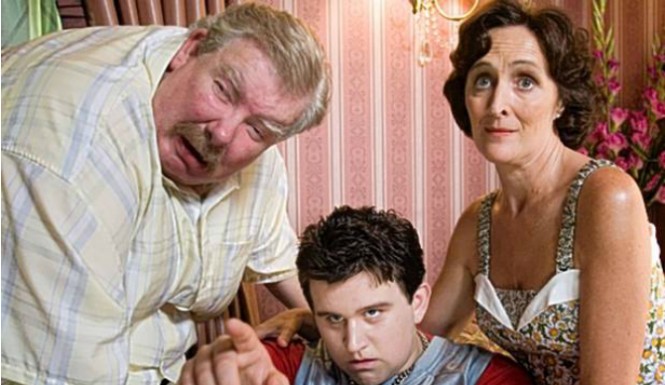
Harry Melling with film parents Richard Griffiths and Fiona Shaw

A Harry Potter fan has come to the defense of the truly horrible Dursleys with a theory that’s brilliant because it seems so simple and obvious — why didn’t anyone think of it sooner? The theory, outlined on Tumblr, talks about what might have caused the Dursley’s inhumane treatment of Harry.

“…[the] Dursleys were just minding their own business when a horcrux was dumped on their doorstep. For the next decade it proceeded to warp their minds. Turning them from your garden variety insufferable human beings into horrible, heartless monsters. The fact that they survived such prolonged horcrux exposure without delving into insanity or abandoning a helpless child only solidifies their place among the pantheon of noble and virtuous heroes in the Harry Potter universe.”

Though it may seem like an epiphany and it certainly casts the family in a nicer light, it’s not without it’s problems. If we go with the idea that Harry, as a horcrux, would negatively effect the people around him, just like the necklace they carry around during the last book/final movie — why were the Weasleys always so nice to him? Why weren’t the other students at Hogwarts lining up to give him a beating on a regular basis? Sure he had some enemies but he also had a lot of friends who were very much behind him.Apparently though, the fan who wrote the theory, added a proviso, probably knowing that it might be taken seriously.

“Allow me to state for the record that the above description was intended to be read as satire. I do not honestly believe Harry is responsible for the abuse he suffered, nor do I seriously consider the Dursleys to be noble and virtuous heroes.”

But that’s the thing about Harry Potter lovers — they rival any fandom for their passion. A testament to the strength of J.K. Rowling’s story about a boy who finds out he’s part of a bigger, more fantastical world than he ever dreamed. And because of this insatiable appetite for the world of Harry Potter, fan fiction, sarcasm, and theories about the solutions to mysteries that remain open to interpretation are going to be a never-ending kind of black hole.

What Culture wrote a piece outlining seven of the crazier ones, but here’s just a few.

  • It’s all in Harry’s head.
  • Harry is the reincarnation of King Arthur.
  • J.K. Rowling isn’t a real person.

An Inquisitr story reported another fan argument, that maybe Hogwarts was simply an insane asylum.

Then there are the ones, like the speculation about the Dursleys, that make you look at the story in a different way. Maybe the Deathly Hallows anecdote isn’t just a story about three brothers but also a tale that has close ties to Voldemort, Snape and Harry?

Then there’s the heart-wrenching video that YouTube user kcawesome13 put together that has the important Snape scenes in chronological order — not technically a fan premise but something that completely shifts how you feel about a character that gets falsely painted with a pure evil brush.The point is that when an artist creates a world that seems to live and breathe, it draws people in and calls on them to interact with it in whatever way will keep it alive for them. And that can’t be such a bad thing.

Did The Dursleys Have A Reason For Being Shockingly Awful Caregivers? A ‘Harry Potter’ Fan Has A Good Theory

Daniel Radcliffe in new ‘Victor Frankenstein’ promo, honoured at British LGBT Awards

Daniel Radcliffe in new ‘Victor Frankenstein’ promo, honoured at British LGBT Awards

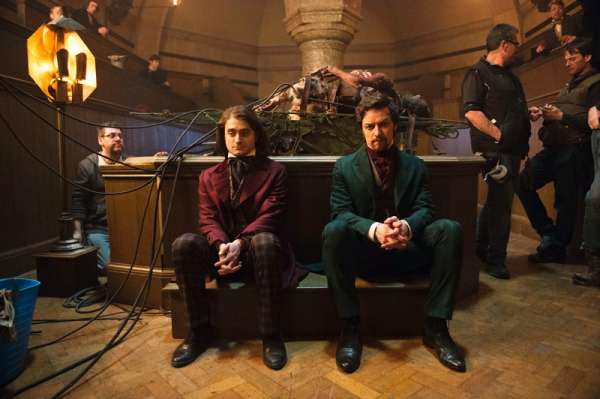
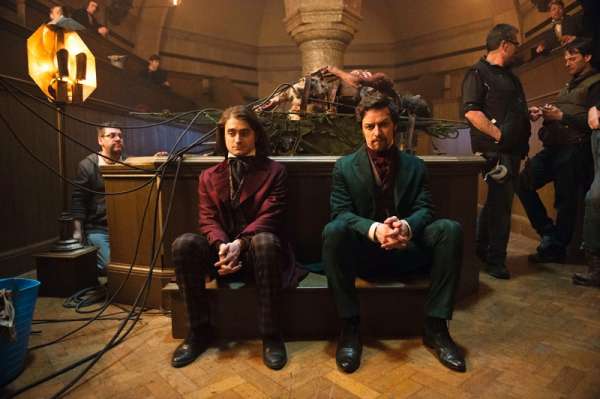
The first official promo with Daniel Radcliffe and James McAvoy from the set of Victor Frankenstein was released by Empire magazine earlier this week, and can be seen below.

The thriller, where the Harry Potter actor stars as Igor, sidekick to McAvoy’s Dr. Frankenstein, will be released this fall around the world.

Dan was chosen as the Celebrity Straight Ally of the Year at the 2015 British LGBT Awards. The actor uploaded a quick video of thanks via his Google plus page, which can be seen here.

Daniel Radcliffe in new ‘Victor Frankenstein’ promo, honoured at British LGBT Awards