Earlier today we saw the first Logan trailer, which is cut to Johnny Cash‘s cover of NIN’s “Hurt.” Perhaps not a terribly subtle song choice, but it’s pretty damn effective. The fun nod to Mangold’s Walk the Line aside, the song choice also hints the filmmaker is bringing audiences a slightly different offering from the superhero genre, and that was the Mangold and 20th Century Fox’s intent with the trailer.
Below, James Mangold discusses Logan’s timeline and his aspirations for the film.
Mangold believes Cash’s music makes the trailer stand apart from the “standard, bombastic, brooding orchestral, swish-bang, doors opening and slamming, explosions kind of methodology of some of these movies.” Another way Mangold wants Logan to stand out from the herd? By making the stakes less global, more personal. Logan isn’t saving the world this time.
In an interview with Empire, Mangold talks about how his film is driven more by character than conventional genre spectacle:
Hugh and I have been talking about what we would do since we were working on the last one, and for both of us it was this requirement that, to be even interested in doing it, we had to free ourselves from some assumptions that had existed in the past, and be able to change the tone a bit. Not merely to change for change’s sake, but also to make something that’s speaking to the culture now, that’s not just the same style — how many times can they save the world in one way or another? How can we construct a story that’s built more on character and character issues, in a way as if it almost wasn’t a superhero movie, yet it features their powers and struggles and themes.
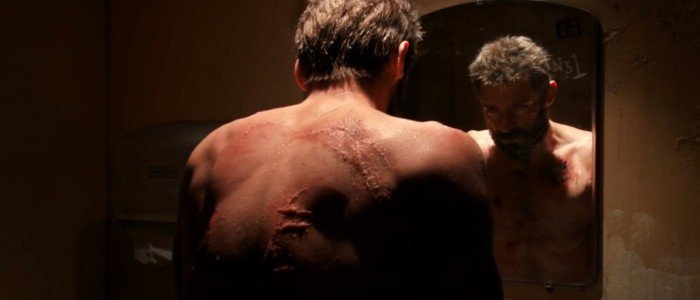
To make the character more vulnerable his healing powers have been slowed down. The Logan we see in the trailer is scarred and battered, a true depiction of Old Man Logan. Mangold explains Jackman and him had the freedom to play with certain rules and traditions from the X-Men series:
One of the things we all thought about as we worked on this film is, well, we don’t want to rebuild everything. We want to have some questions. In order to make a different Logan, and a different tone of a Wolverine movie, we felt like we couldn’t hold on to every tradition established in all the movies religiously, or we’d be trapped by the decisions made before us. So we questioned whether Logan’s healing factor causes him to heal without even a scar. We imagined that it may have when he was younger, but with age, he’s getting older and ailing. Perhaps his healing factor no longer produces baby-soft skin. So we imagined he heals quickly, still, but it leaves a scar. The simple idea was that his body would start to get a little more ravaged with a kind of tattooing of past battles, lacerations that remain of previous conflicts.
Although Mangold wants to dig deeper under Logan’s skin, that doesn’t mean we’re not going to see the character unleash his claws and go berzerk in Logan. Mangold promises visceral, R-rated action, which, based on the trailer, relies far more on practical effects and real environments than CGI:
This represents] to me the kind of aggressive, classical Wolverine action that we want in the movie – more of something that fans have been asking for, for a really long time. We’ve been limited in one way or another from giving it to them, but I think we’ve got the go-ahead to really go for it on this picture. So we’re really trying to deliver what folks have always imagined those kind of battles would look like. There is a lot of high-octane action in the movie. We’re just trying to do it very differently and very viscerally.
Mangold doesn’t have much to say about Laura Kinney (Dafne Keen) or Donald Pierce (Boyd Holbrook). He’d prefer to maintain a little mystery regarding those characters. The director does say Holbrook brings some humor to the villain, though, and that Keen’s character is a part of the film’s family. Mangold tells Empire that Logan, first and foremost, is a movie about family. Based on the trailer, and Jacob’s breakdown, this family is going to get put through the wringer next March.
Back in Norman Rockwell’s America, kids weren’t afraid to take a chance on going into business for themselves. Rockwell’s iconic “Lemonade Stand” image showed a whole generation of children that to succeed in business, all they had to do was hang out a sign, and a whole community of lemonade lovers (or sympathetic neighbors) would gather round, happily paying a nickel for a cold cup of lemonade on a hot summer day.
Unfortunately for kids in the lemonade business – or the gaming business, for that matter – things are a lot more complicated today. Mobile game developers may find themselves among the thousands whose apps barely get played, or are never even downloaded. Let’s face it; if you go according to the odds, the chances of success in the mobile game marketplace (which grows by hundreds of titles a day) are not good. Is there anything developers can do to improve their chances?
The good news is that there is. Actually, the solution is rather simple; to get a lot of people to play a game, all you have to do is develop a community around a title, brand, or series, to create a group that will grow organically (provided, of course, the game is appropriately challenging and exciting) Here are some ideas on how to get “there” from “here.”
Get to the core
You have to start somewhere, and that somewhere is a core community, a small group of insiders that can act as a base for further “expansion.” To entice that initial group, game marketers (or their community managers) can build up a following by nurturing followers on social media, offering them an insider link to a new game or other benefits. For example, many new users will be willing to try out a new game as part of an alpha or beta test, members of an exclusive club whose opinion matters. And, of course, it’s important to reach out to everyone you have ever met online and in person and notify them that you have a new venture.
Chances are that most of those who respond will back out, but a small group – one that the game appeals to – will remain. That’s the core group that managers should get to know, communicating with them personally, taking their suggestions and integrating them in the game – in short, giving them a stake in the community, as founding members.
‘Tis better to give than …
This core group now becomes the front-line shock troop squadron with which managers can build a true following. Social media, blogs, special gaming events, press releases, etc. — a good PR firm or marketing person will get the word out that a) there’s a new, great, fun, and interesting game, and b) it’s already got a loyal group of followers who will welcome newcomers into the fold.
As new members come in, it’s important to groom them as well, with “treats” and positive reinforcement – communications, notifications, personal contact, etc., to make them feel a part of something.
Growing strong and healthy
It’s here that the true mettle of the fledgling community is tested. As more players join the community – it grows from infancy to childhood through its “teen phase.“ No longer a child, a game in its teenage years is when a gaming community is solidified, and gets ready to move on to “adulthood,” with the establishment of the game as a true influence and a major brand in the gaming world.
To accomplish this, it’s important to keep growing the community – coming up with new methods to bring in even more users. The key is to keep things exciting and new; for example, developing related spin off games based on existing characters, sequel games that offer more challenge and status, and cross-promotions across the community of players of different games (whether under the same brand or otherwise) can expose many more people to the charms of your game. It’s just like in the supermarket; the more “shelf space” you have in the App Store, the more engagement you have with potential players, who have a greater range of experiences to choose from.
Most important, though, is keeping players in the loop – making them feel that they count. It’s especially critical as the site and community grows; the more personal contact at this stage the better, because it shows that you really care about the individual, not just the numbers. Soliciting suggestions from players on how to enhance the game is key; players who spend hours a day engaged with your product will have a great sense of where things should be going.
Not all the suggestions will be good ones, but some of them will be; but that is part of the growing process, too. Implementing good ideas suggested by the community will further solidify ties to the game – and help bring your game to full maturity, to the point where it can hopefully become the most popular in its category. With this approach, game developers and managers will be able to build a great, supportive – and large – community around their game, avoiding the fate of the barely played apps.
After a small delay, the advertised Boss Update is rolling out for Minecraft on Windows 10 and Windows phones.
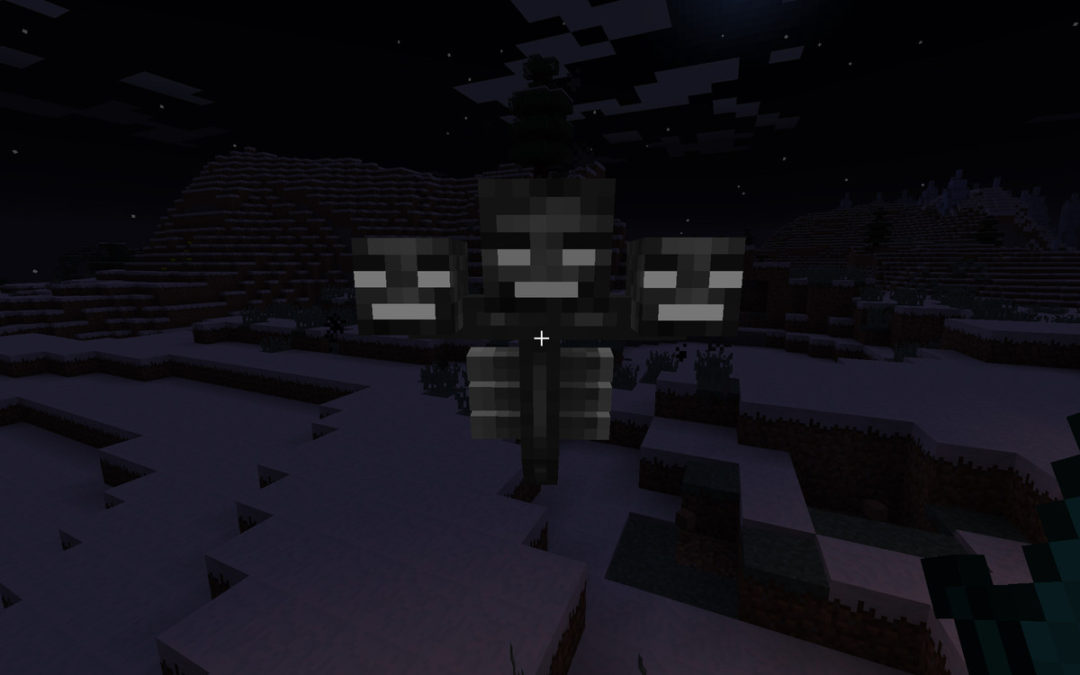
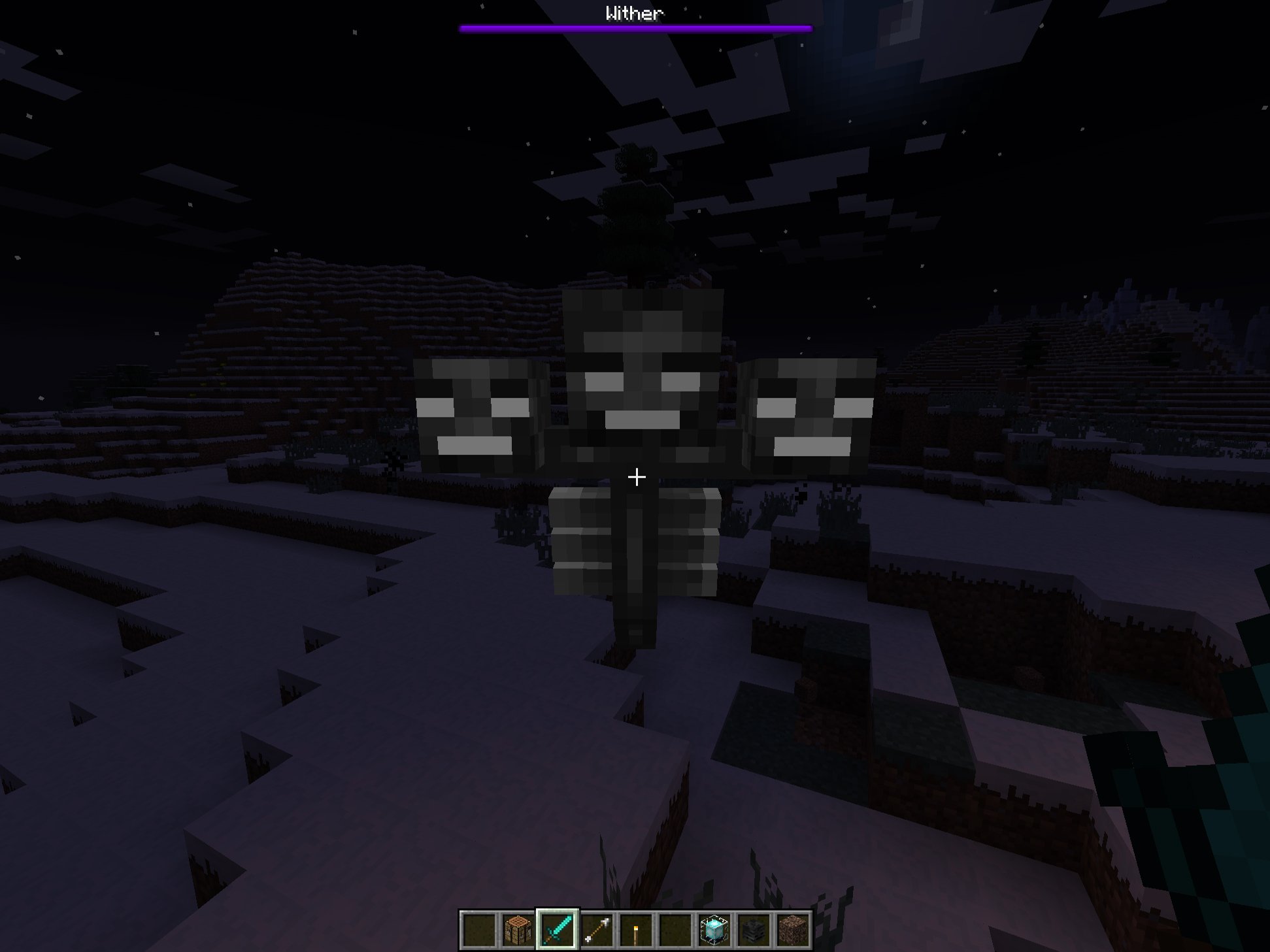
The Boss Update will bring Guardians, Ocean Monuments, the summonable Wither Boss fight, slash commands, and some UI refinements to the game. Additionally, it also provides the first iteration of Add-ons, allowing people to customize Minecraft using tools as simple as Notepad and MS Paint.
You can download some example Add-ons from Minecraft.netright here, including the E3-demonstrated Alien Invasion pack and a zombie Castle Siege pack. We’ll have some guides up shortly on how you can customize your own creatures in Minecraft, from the way they look, to the way they behave and interact with the game’s world.
Slash commands (with a handy auto complete feature). Enable cheats for a world in the options screen for access, but note that Xbox Live achievements will be disabled when you’re using ’em!
Custom key bindings! Hooray for lefties!
A new Creative inventory search feature
Add-On section for world settings
Basic F3 support! (Win 10 only)
Coordinates!
You can change game modes in Realms (note that doing this will restart the realm)
Ability to upload & download worlds in Realms
Ability to promote players as operators in Realms
Tweaks
UI improvements!
Performance improvements!
Tweaks to various mob action/behavior triggers, including fixing creeper explosions
Elder guardian de-buff visuals fixed (feedback from Android beta)
Fishing rods & arrows will fire in more than just one direction
Lots of tweaks to water textures to make underwater more fun
Tweaks to Realms settings
Visual tweaks to sun, moon & stars when rendering in VR immersive mode
Ridiculous numbers of bug fixes!
Sadly, the update still excludes the Windows Phone version of the game from Realms, Microsoft’s subscription-based dedicated Minecraft hosting service, but the company has always told me that it is their goal to bring it in, eventually, in addition to Xbox One and Xbox 360.
If you don’t have Minecraft and want to see what all the fuss is about, join me, Daniel Rubino and Zac Bowden tonight on Beam.pro where we’ll stream some Minecraft, chat with you about Microsoft and probably get blown up by wayward creepers!
It’s been two years since Microsoft bought Minecraft, and the new owners are faced with a conundrum: what do you do with a game that is already a phenomenon?
Complicating things further, Minecraft is now a seven-year old game. While lot of work has been put into keeping the game current, Minecraft is also beginning to show its age. Mojang developer Nathan Adams compared it to rebuild the engines of a jet in the middle of a flight, because taking the game down to patch it just isn’t an option. The tension at the heart of Minecraft heightens when you consider that the developers say difficulties associated with coding the blocky builder sometimes prevents them from adding features that the community wants, like a working API or a server browser.
I got a chance to suss out the future of Minecraft at last month’s Minecon, where the community rubs elbows with the people who make Minecraft great. Obviously, that description includes the developers, but it also expands farther into the YouTubers who make hilarious videos, the modders who create new ways to play, and the builders, who create wonderful worlds for others to enjoy as well.
This was at the forefront of my mind when I attended Minecon. Minecraft has always been a community-driven game, and I was curious how Mojang would handle that aspect of Minecraft’s identity while also pushing the game into new frontiers.
I met with Saxs Persson, developer for the Pocket and Windows 10 editions of Minecraft, and Matt Booty, head of Minecraft, in nearby Marriott hotel. Persson was dressed casually, in a black shirt and jeans. He came off as enthusiastic, prone to geeking out about new tech or features. Booty on the other hand was dressed in a button-down, slacks and came off as more reserved. They couldn’t have chosen a better pair to represent Minecraft.
“We want everybody to play with everybody,” Persson told me. “Minecraft is better when you can connect to your world wherever you with whatever device.” Windows 10 and Pocket Edition players already enjoy cross-platform play, but Persson paints a picture of complete compatibility – console and Java and Win 10 players all connecting and enjoying Minecraft together. In his ideal world, you’d be able to log on to the same persistent server from your iPad, your computer, and your console—a technical and legal hurdle that has been branched in part by games like Rocket League, but full connectivity across all platforms still seems like a lofty goal for Minecraft.
What’s more, this idea seems to ignore that the various Minecraft editions floating around all have varying features, something that even the biggest Minecraft fan finds annoying. For example, MCPE is still missing The End, but at the same time it will get additions that Java won’t see till later (or ever.) Persson didn’t specifically address version mismatches when I asked if feature parity was still a priority, but he also didn’t seem concerned about potential version conflicts. “There’s not a lot holding us back from connecting these versions, and parity is not the main goal,” he said. There is no doubt that this kind of cross-platform play would be popular and welcomed, but I’m skeptical as to how it would actually work. I’m also not sure it’s a feature that the community truly cares about.
Persson also enthused about “new input methodologies,” specifically the Oculus touch. Actually, VR played a big role in Minecon: the line to try it out was hours long throughout the entire event, and Mojang highlighted it often enough that VR seems to form a centerpiece for Minecraft’s future plans.
Virtual reality is still an incredibly niche technology, and Minecraft’s hallmark has always been its accessibility—you can run the game on pretty much any device. It’s hard to understand how adding a style of play that requires a powerful computer or console and a pricey headset fits with the existing appeal of Minecraft. Community response to VR offerings is and always has been tepid at best, especially among veteran Minecraft players, who remember Notch’s quarrel with Oculus in the past.
For now, most of the YouTubers and map makers and modders attached to Minecraft seem pretty happy with their current arrangement—Mojang is still very relaxed about letting people profit off of their game—but some are starting to see the writing on the wall. Long-time Minecraft YouTubers, such as skitscape and setosorcerer, have been moving on to other games or other careers. Map creators like Hypixel have had to adapt and often abandon single-player maps in favor of multiplayer ones, and the often-ignored mod community is starting to feel the strain of an aging game. Each recent patch has created a new set of problems — a recent one, for example, made many large texture packs unuseable, and while a different patch made PvP unplayable for many. With add-ons and an API still a long way off, frustrations continue to mount for some fans.
Mojang’s vision for the future of the game and the communities’ vision have not always been in line, and you could see the effects of that fissure on the showfloor itself. When I asked how they chose the people that ended up on stage at Minecon—essentially receiving the Mojang stamp of approval—or heading up the panels, Persson and Booty were a little evasive. “There is an active curation [of exhibitors],” Booty said about the people that were invited to attend the event and present, “ranging from trying to stay true to Minecraft’s indie roots to working with corporate partners and everything in between.” This was an obvious nod to the big name partners like Mattel that were taking up large amounts of real estate on the expo floor. There were plenty of indie names and creators features, but their competition was fiercer. The Minecon docket was stacked with young, high energy personalities who curated an atmosphere of fun and excitement—the old guard, like Hypixel and other creators, were less well represented.
Persson and Booty still recognized, at least in part, the debt that they owed to the the community. “We ask that they come and meet their fans with open arms,” Persson said, “as a true fan event, not just a primarily corporate one.” Persson and the Mojang team seem eager to signal to their fans that they were still the focus of the event and of their efforts, and that the Microsoft buyout still doesn’t indicate a change in direction or an abandonment of their core users. It was a necessary reminder, given that Minecraft’s indie origins made some people deeply skeptical of Microsoft’s purchase, and these same fans have remained guarded even as the company seeks to reassure them.
Regardless, the Mojang team has actually shown that they are listening to the community in some respects. Minecon saw the first full presentation of the add-on system, which allows players to tweak the behavior and statistics of mobs at first, and will eventually allow wide modification of all entities. Players have been asking for something like this as far back as 2011.
“Add-ons are just the first step,” Persson said, confirming that an application program interface, or API, was being co-developed – a feature that would make modding significantly easier. Persson admitted that two previous attempts at creating an API had failed, and that they had brought on the creators of Bukkit–a popular mod utility–to help them make this attempt stick. This may represent a serious commitment to developing an API, but those promises go back as far as 2009. The community remains skeptical after being burned so many times before.
It’s also obvious that Microsoft has invested heavily in making Minecraft more than just a video game. Minecraft’s developers preferred to use words like “platform”, “tool”, and “environment” instead of “game,” and they were effusive about applications for research, education, and machine learning. “At a high level, we want to maintain Minecraft as an innovation brand,” Booty said when asked about his vision for the future of the game. It was a little hard to pin down exactly what they meant by this — it sounds like they want Minecraft to be all things to all people, which, while ambitious, sounds like a recipe for failure.
Despite the abundance of buzzwords, Mojang’s description is a telling indication of Microsoft’s concerns over their $2.5 billion investment. Minecraft is a completely unprecedented phenomenon, and so too is a massive buyout of an indie game by a major corporation. Minecraft has already conquered video games, so it seems natural that Microsoft and Mojang now want to create something that supersedes gaming.
Everyone I talked to at Minecon was excited about exactly one thing—meeting their heroes, whether that was one of the developers, a popular YouTuber, or a modder. As far as the fans are concerned, the future of Minecraft will always be with the people who make the game great, not fancy technology. Mojang has loftier goals, though it’s hard to say if VR and added connectivity truly hold the key to where Minecraft goes next. Then again, predicting the future is no easy task.
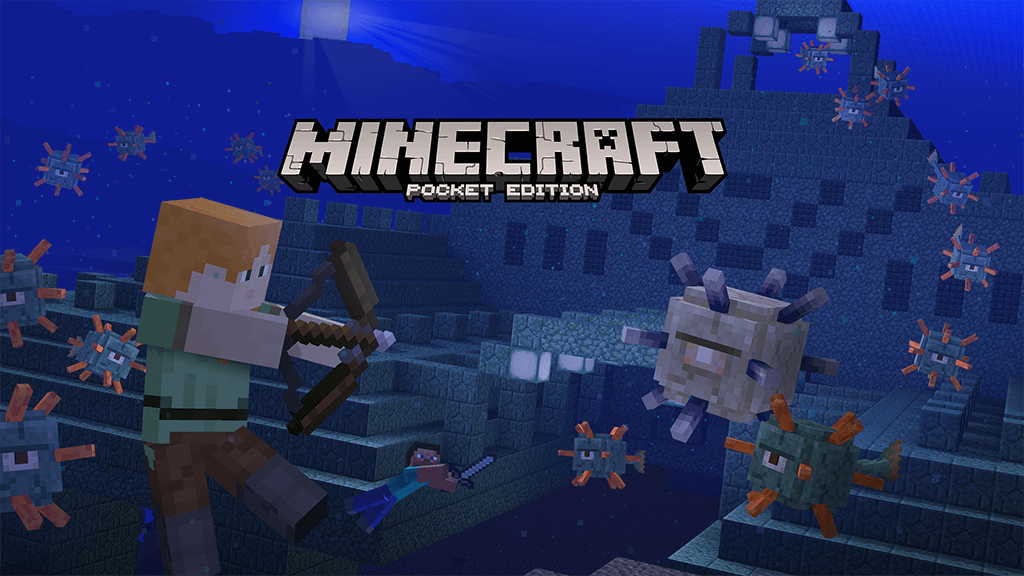
Microsoft recently announced a major update coming to Minecraft on Windows 10. Today, Mojang has started rolling out the update, titled the “Boss Update” to Minecraft’s Windows 10 Edition and Pocket Edition. With the latest Minecraft update, players can now fight the wither, and the game also includes new ocean monuments, as well as the beacon. More importantly, the update brings support for add-ons which is a huge addition to the game. Along with all the new features, the update also comes with some user interface and performance improvements. Here is the full changelog:
New Features
Ocean Monuments
Guardians and Elder Guardians
Prismarine, dark prismarine & prismarine bricks
Prismarine shard & prismarine crystal
Sea lantern
The Wither!
Nether star
Beacon
Wet & dry sponges
Slash commands (with a handy auto complete feature). Enable cheats for a world in the options screen for access, but note that Xbox Live achievements will be disabled when you’re using ‘em!
Custom key bindings! Hooray for lefties!
A new Creative inventory search feature
Add-On section for world settings
Basic F3 support! (Win 10 only)
Coordinates!
You can change game modes in Realms (note that doing this will restart the realm)
Ability to upload & download worlds in Realms
Ability to promote players as operators in Realms
Tweaks
UI improvements!
Performance improvements!
Tweaks to various mob action/behavior triggers, including fixing creeper explosions
Elder guardian de-buff visuals fixed (feedback from Android beta)
Fishing rods & arrows will fire in more than just one direction
Lots of tweaks to water textures to make underwater more fun
Tweaks to Realms settings
Visual tweaks to sun, moon & stars when rendering in VR immersive mode
Programming is a valuable skill for kids of all ages to pick up, and when they learn by playing with their favorite characters and games it’s even more fun. Code.org has two new tutorials that will appeal to many kids based on Minecraft and Star Wars.
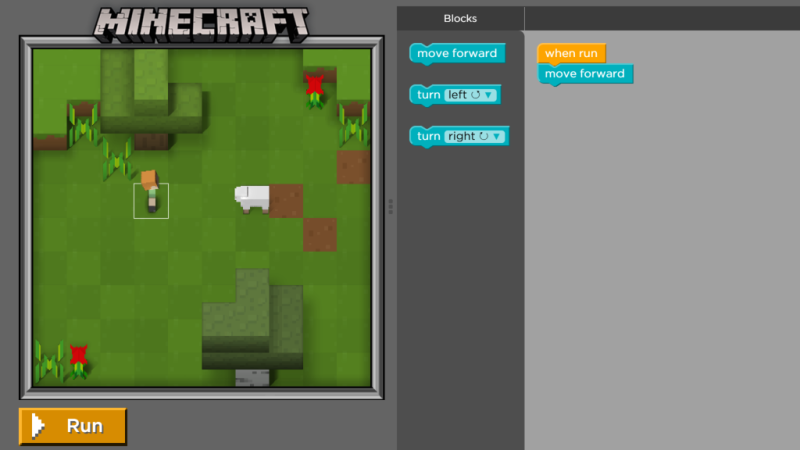
The Minecraft interactive tutorial has kids choosing between Steve and Alex for their character and then dragging and dropping code blocks to get their character to mine, explore, and craft in the very familiar Minecraft world (complete with that haunting music). There are 14 challenges available now, rated for kids ages 6 and up, and it looks like more languages will be added soon.
The Star Wars tutorial, also in beta, offers both the blocks code and a JavaScript version intended for older kids ages 11 and up (but depending on your child, it’s totally doable for younger kids as well).
These are incredibly fun tools, part of the Hour of Code, which many schools are scheduled to participate in from December 7 to 13th, Computer Science Education Week. You can volunteer here. Thanks Vin!