


We Shall Get Another Look at Minecraft: Switch Edition on April 18

We Shall Get Another Look at Minecraft: Switch Edition on April 18

We finally found out that Minecraft is coming to the Nintendo Switch during the Nintendo Direct which took place earlier this week. We received a glimpse of the game and we will be getting more footage come on Tuesday, April 18th. Minecraft: Nintendo Switch Edition launches on Nintendo eShop on May 11th and in stores at a later date.

We Shall Get Another Look at Minecraft: Switch Edition on April 18

Bringing Minecraft into the classroom

Bringing Minecraft into the classroom

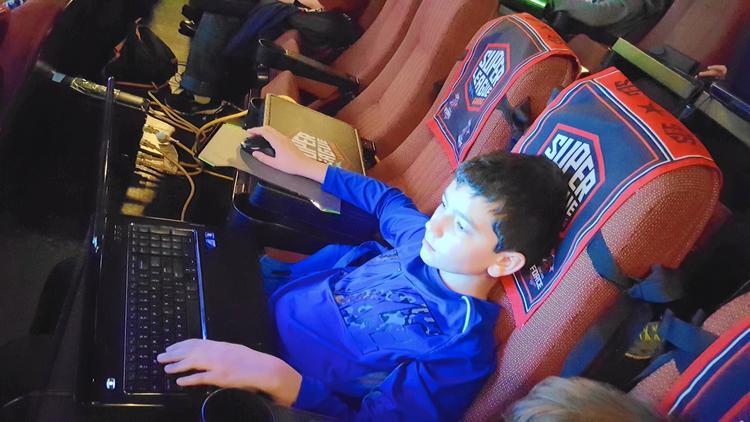
PETOSKEY — It was a zoo in Nikky Willison’s third-grade classroom on Wednesday morning.

In fact, there were about a dozen zoos in the process of construction as students worked in pairs to create the ideal habitats for a wide array of animals through the popular video game Minecraft.

Willison said they first began using Minecraft in the classroom at Central Elementary School at the start of the school year through a free trial offer. They purchased the program after the free trial ended with grant funds designated for STEAM resources.

In the latest project, students have been studying how to calculate area and perimeter. The math lesson merged with a science lesson on animals and habitats and students will use all of their research to build their own zoos in the game.

“We’ve been working on area and perimeter and so this ties in with their Common Core standards,” Willison said. “They’re working with a partner, so learning how to collaborate, and then they’re going to design their own zoo.”

Depending on which animals they chose to populate their zoos, the students have to calculate how large to build the habitats based on the animal’s needs. Before they can begin building in the game, Willison said the students map out the zoo by making a blueprint on graph paper.

“They’ve designed the blueprint of their zoo on there and when they have that done, then they’re building it in Minecraft,” she said. “They’re building it together.”

Because of the collaborative nature of the project, Willison said students are learning to recognize that there are real people behind the avatars in the game.

“A lot of times, if they’re playing games, they don’t actually see the person and now their friend is right with them,” she said. “So we’ve had kids where they knocked over a building and their friend has gotten upset and they’ve actually seen them get upset. That’s been a good lesson for the kids to learn.”

One of the students, Alex Cannon, said he has animals such as red pandas, gorillas and iguanas in his zoo and that his favorite part of the project is “probably building the cages with the animals.”

Emma Mitas added that “it’s really fun” using Minecraft in the classroom.

“You have to do math to get their habitats done,” she said.

Because the program is fairly new to the classroom, Willison said she is still learning of new ways to incorporate the game into her lessons.

“You can also combine social studies with it. You can build longhouses and simulate trading posts in it,” she said. “(The students) love Minecraft. They write in their journals, they give me ideas of ways we can use it in school, which is great. They’re motivated to learn.”

In fact, Willison said the students are learning above grade level skills as they build their zoos.

“It’s fun to see them stretch their brains and learn a little bit more,” she said. “I’m so happy we got an opportunity to try it because it’s really great for these guys. They really love it. I just love how engaged they are.”

Bringing Minecraft into the classroom

Minecraft for Windows 10 and Mobile Is Finally Getting a Creator Marketplace

Minecraft for Windows 10 and Mobile Is Finally Getting a Creator Marketplace

At some point in May, Minecraft will experience a kind of coda to Microsoft and Mojang’s grand synchronization of the original Java version and its newer, future-proofed Windows 10 and smartphone/tablet ones. It’s called the Discovery Update, and it will add the last few absent components — llamas, shulkers, spooky woodland mansions, ill-natured villagers and spectral vexes — to a game that has perhaps received more post-purchase content, gratis, than any other.

And then it will go a step further, adding features the Java version will never see. Like a new, curated, in-app marketplace for handpicked creators to offer things like skin packs, retextured overlays and entire worlds. Those creators, dubbed “Pioneer Partners” and limited to just nine at the outset, will be allowed to sell their wares alongside Microsoft and Mojang’s own. To buy them, players (with Xbox Live Silver or Gold accounts) will have to spend a new in-game currency dubbed “Minecraft Coins,” reserved in exchange for real world money ($1.99 for 300, $4.99 for 840 or $9.99 for 1,720) and intended to be the de facto means of buying all things Minecraft going forward.

Microsoft 

“We have nine creators today, but we’ll be growing that number at a measured pace,” John Thornton, Executive Producer of Minecraft Realms, says when asked how fast Microsoft hopes to scale things up. “We want to have high quality content, we want to be able to support each creator building what they want to build. To do that we need to pace ourselves and grow our team at the same time that we’re growing the marketplace. Every creator needs somebody to talk to, like an account rep, somebody to review content, so there’s a bunch of mechanics.” The plan right now, he says, is to add partners at a pace of roughly two to five a month.

One of those launch partners, an outfit calling itself Blockworks, is known for seemingly impossible feats. Like creating a scientific facility staged in a martian landscape composed of some 2 million blocks. The twist? It took five builders just two days to pull off. Or an ancient civilization at the bottom of the ocean composed of 33 million blocks that took 15 builders less than a month to complete. “Until now, all of our content’s been pretty much exclusively on Java,” says James Delaney, Blockworks’ founding and managing director. “So this is a chance to connect with all the other Minecraft platforms excluding Java and console. That’s a been a community that’s struggled to access quality content up to now.”

Each creator can only furnish so much content per month, explains Thornton, which makes for a natural bottleneck that should keep the curation process expedient. The content can also now be folded into Minecraft‘s worlds without requiring a full game update. The store itself will have its own approval guidelines, and includes a conventional 30% sales cut back to the app platform, after which the company says it will “seek to give the majority of the remainder to the creator.” What sort of content will Microsoft approve? “Our goal is to make content that’s appropriate for our audience,” says Thornton. “We’re not necessarily critiquing the art style or choice of gameplay. That’s up to the creator. But what we will do is make sure it fits with our brand and within the marketplace itself.”

Microsoft 

Could the store wind up catering to mass market brands? Is this what went around circa Mojang’s banning of advertising agencies and corporations using Minecraft as a promotional tool last year finally coming around, only with Microsoft at the wheel? Never say never, but Thornton stresses that the company’s plan at this point is to foster a community-driven marketplace. “The goal isn’t to call up Coca-Cola tomorrow and say ‘Come in and party with us’,” he says. “We want our community to come into the marketplace. That’s really our focus.”

And if you’re an original Java version player feeling threatened by any of this, don’t be, says Thornton. “We’re not changing the existing community at all. If you want to still make content for free, and feel the best way to get known is to go out there and just make stuff, that’s still encouraged,” he says. “We’re not changing anything there. Players and creators are still welcome to make free content and put it on social media sites to try to make a name for themselves.”

Microsoft 

Regardless, some of this is surely down to a company that paid $2.5 billion for the industry’s all-time second bestselling game a few years ago forging new, fire-walled profit channels for an experience that has to date flourished off unfettered user mods. But curation also entails safeguarding, and to that end, Microsoft says this is partly about creating a place for players to find content dependably free of viruses or malware. It’s also working on a way to enable a buy-once, play-anywhere framework through its Xbox Live service, though since this involves multi-platform coordination, all it’s committing to is to say more about how or when this might happen later this spring.

Minecraft for Windows 10 and Mobile Is Finally Getting a Creator Marketplace

Startups: How Roblox Plans to Copy Microsoft’s Minecraft

Startups: How Roblox Plans to Copy Microsoft’s Minecraft

This week, Roblox Corporation, the San Mateo, California-based developer of the popular online social gaming platform for kids known as Roblox, announced the closure of its first private equity offering in more than five years.

The funding round, which raised $92 million for the company, was primarily backed by Meritech Capital Partners, a venture capital firm that was an early investor in many tech giants such as Snapchat, Facebook and Index Ventures. In addition to expanding the company’s mobile strategy, the funds raised will also be used to repurchase shares from those employees who wish to cash out of some of their equity. (For related reading, see: Is Microsoft Stock a Bargain at Tech-Bubble Highs?)

Minecraft Rival

The game Roblox allows its players to create their own virtual worlds, and is often described as being very similar to Microsoft’s Minecraft video game. Microsoft acquired Minecraft for $2.4 billion in 2014. The funds raised from the recent funding round could help to better position Roblox to compete with Minecraft. The main ages for the users of both gaming platforms ranges from 6 years to 16 years.

According to the company’s corporate website, Roblox’s platform currently sees 48 million monthly users while a March 2017 article in Bloomberg reports that Minecraft has a total of 55 million active users. (For more, see also: Can LinkedIn Become Microsoft’s Instagram?)

The Business Model

Although Roblox declined to disclose the valuation at which their recent financing round was offered, an article that was published in Forbes last summer revealed that the company had realized more than $50 million in gross revenues in the year 2015. The company primarily makes its money by selling a virtual currency to its players and also by charging a subscription fee to developers who use the platform to develop games. Roblox also takes a commission from purchases on games that were made by developers. Some of Roblox’s top game creators are reportedly making as much as $50,000 a month.

Want to Make Money Even When the Market is Falling?

If the markets are in a free fall you want to be able to profit when everyone else is losing their shirt. You need to learn everything you need to know about short selling by signing up for our free 8-week email course. Learn what a short sell is, what the risks are and how you can use them to profit on declining stocks. So sign up today and start looking at every movement as an opportunity to make money.

Startups: How Roblox Plans to Copy Microsoft’s Minecraft

Is the Latest MINECRAFT POKÉMON the Coolest One Yet?

Is the Latest MINECRAFT POKÉMON the Coolest One Yet?

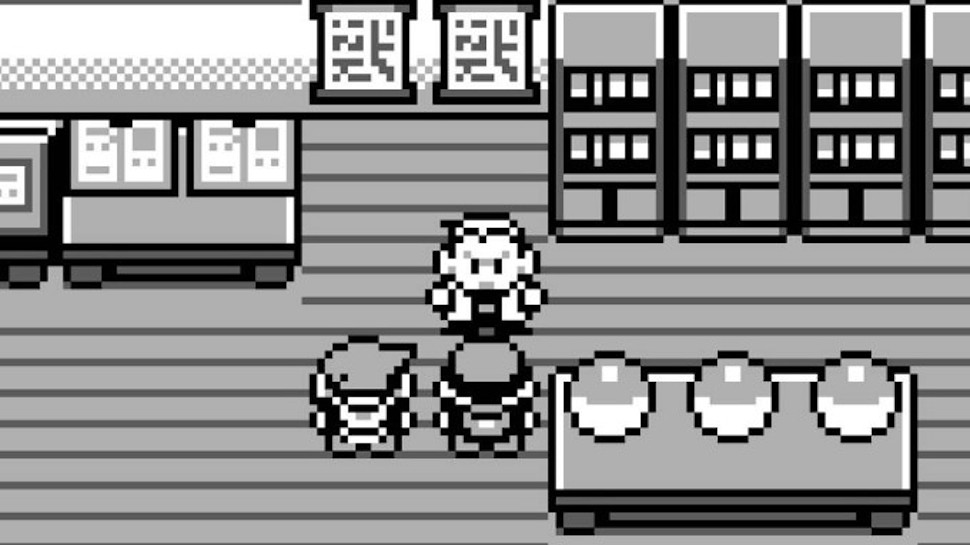
As has been well-documented, Minecraft is a sort of breeding ground for Pokémon fan recreations. Somebody made a working Game Boy Advance capable of playing Pokémon Fire Red last summer, while another fan created an entirely new 3D Pokémon adventure, all in Minecraft. If you’ve been reading the site for a while, you might also remember the fan who was working on a fully functional recreation of Pokémon Red. He was off to a strong start in 2015, and now, the project is finally finished (via Polygon).

When we last checked in on Mr. Squishy, who went by Magib1 at the time, he had the Pokédex, basic game mechanics, and the world map done. Now, he’s finally finished, and the game is a true port, meaning that he didn’t just make a Game Boy emulator in Minecraft and load the Pokémon Red ROM into it: He recreated the entire game from scratch.

In the above video interview with Polygon, Mr. Squishy explains how that process worked and why it was necessary:

Minecraft has command blocks, which allow you to write code in-game. There’s no easy way to just take the ROM for one of these old games and dump it into Minecraft. To get all of the functionality in the game, you basically need to re-code everything from the ground up inside the game, so that’s what I’ve done here.

Mr. Squishy also documented the process on Reddit and answered some questions there, revealing that so much effort went into this endeavor: He walked over 1,760 in-game miles and used 357,000 command blocks over the 21 months it took to finish the project. Even all of the game’s original glitches have been recreated. Now that’s dedication.

Of course, this Minecraft-based Pokémon game is a totally different beast from the other aforementioned efforts…

The Pokémon Fire Red remake is more graphically intensive since it’s a GBA game, but movement is a bit choppy and it’s still very much a work in progress (although the latest version of the game has made great strides and it looks fairly accurate at this point).

Then there’s Pokémon Cobalt and Amethyst, which is in a completely different league. Instead of recreating an existing game, this one is a completely new adventure in 3D. It copies the original game mechanics, and it’s sort of like a merge of Pokémon Stadium and Pokémon Sun and Moon, so it’s very robust. It has an original plot and even a bunch of brand new Pokémon, so the game definitely goes beyond the call of duty.

Each of these fan projects are special in their own way, and a testament to how versatile of a creation environment Minecraft can be to people with good ideas and ambition.

Feel free to download the Pokémon Red remake for yourself and give it a go, right here. Are you going to try this out, or are you going to stick to your emulators, or perhaps an original cartridge? Hit up the comments below and let us know what you think!

Is the Latest MINECRAFT POKÉMON the Coolest One Yet?

Minecraft in urban planning: how digital natives are shaking up governments

Minecraft in urban planning: how digital natives are shaking up governments

When we think of governments and technology, the image that springs to mind is more likely to be clunky computers and red tape than it is nimble innovators.

But things are changing. The geeks in jeans are making their way into government and starting to shake things up.

New ideas are changing the way governments use technology – whether that’s the UK’s intelligence organisation GCHQ finding a secure way to use the instant messenger Slack or senior mandarins trumpeting the possibilities of big data.

Governments are also waking up to the idea that the public are not only users, but also a powerful resource – and that engaging them online is easier than ever before. “People get very excited about using technology to make a real impact in the world,” says Chris Lintott, the co-founder of Zooniverse, a platform that organisations can use to develop their own citizen science projects for everything from analysing planets to spotting penguins.

For one of these projects, Old Weather, Zooniverse is working with the UK Met Office to gather historic weather data from ancient ships’ logs. At the same time, people helping to discover the human stories of life at sea. “Volunteers noticed that one admiral kept turning up on ship after ship after ship,” says Lintott. “It turned out he was the guy responsible for awarding medals!”

The National Archives in the US has similarly been harnessing the power of people’s curiosity by asking them to transcribe and digitise, handwritten documents through its Citizen Archivist project.

“When we started, two of my staff created a little prototype and stuffed it with 2,000 pages for transcription. They just cobbled it together,” says chief information officer Pam Wright.

She expected it to take six months for the public to transcribe the pages – instead, they “just dived right in and transcribed everything within the first two weeks”. There are now more than 275,000 transcriptions in the catalogue – but with 20 million more records ready and waiting, Wright says “there is no concern about running out of material for folks to transcribe”.

Governments don’t generally have the budgets for blockbuster technologies, but, as Wright notes, “fiscal constraint is the mother of innovation”. The other bonus is the community spirit of developers, who will often publish their code openly so others can put it to good use.

This is particularly useful when people with the necessary digital skills enter government. Matti Lindholm, a communications officer in the Finnish environment agency – who also happens to be a web developer – did just that to create a platform to collect data on the country’s lakes.

The idea for the Järviwiki, which asks citizens to log observations about Finland’s tens of thousands of lakes via a wiki service, came to Lindholm one morning on the way into work.

“I had been trying to come up with something to make better use of citizen observations on blue-green algae blooming,” he says. “WikiLeaks was in the news a lot at the time, and in one story it was misspelled ‘WikiLakes’ – suddenly everything seemed very clear.”

Lindholm set up the service by populating open source wiki software with existing lake information. People are now able to add their own observations and comments, and they have recorded almost 110,000 observations – as well as correcting a few errors in government data.

The increase in the number of digital natives in governments not only brings in different skills, it also enthuses the rest of the workforce, and opens their eyes to more unusual ideas.

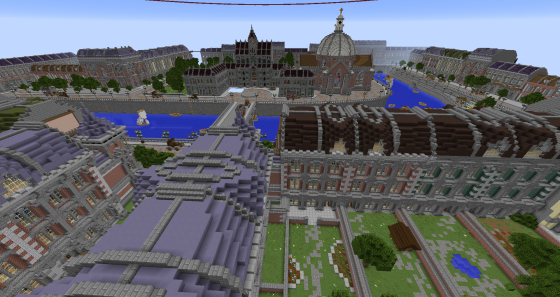
Take Block by Block, which uses the game Minecraft to help young people show city planners how urban spaces could work better for them.

A decade ago it would have been hard to imagine a UN agency encouraging local governments to use a game to re-design their cities. Now UN-Habitat, which works with governments to promote more sustainable urban environments, is doing just that.

“I remember putting in a lot of work to convince colleagues, who were a little bit hesitant when you said, ‘We’re going to use video games’,” says Pontus Westerberg, programme officer at UN-Habitat. “But the nice thing is it really works, and that’s what convinced people.”

With 35 projects worldwide, in countries as varied as Vietnam, Kenya and Mexico, Westerberg says it is now usually local governments that approach his team.

Of course, there are other ways of allowing citizens to influence what goes on in their cities. Apps like FixMyStreet allow you to report problems in your neighbourhood, while projects such as Madame Mayor, I have an idea in Paris allow citizens to pitch ideas to the government (and in this case help spend €500m).

And, because governments tend to focus on what matters most to people, it’s not surprising that transport is a major area of investment around the world.

About a decade ago, says Stacy Donohue, who works at the philanthropic organisation Omidyar Network, transport was a big deal in the US – now it’s shifted to the developing world. She picks out the South African company WhereIsMyTransport, which brings together all transport data for a city on one platform, to help planning, as an example.

In Singapore, meanwhile – a country with densely populated cities and high volumes of traffic – the government is using tech to do more than manage information. It has created an app, MyResponder, that alerts a network of more than 10,000 medically trained volunteers to anyone who has a heart attack nearby, sometimes getting someone to the scene faster than the ambulance can get through the traffic.

The government is now piloting an expansion of the project by kitting out taxis with defibrillators and giving drivers first aid training, then linking them up to the app.

It’s examples like these, where governments use technology to bring communities together, that demonstrates the benefit of embracing innovation. The people making it happen are not only improving services for citizens – their quirky ideas are breathing new life into archaic systems.

Talk to us on Twitter via @Guardianpublic and sign up for your free weekly Guardian Public Leaders newsletter with news and analysis sent direct to you every Thursday.

Minecraft in urban planning: how digital natives are shaking up governments