Microsoft Strategy Vice President Teper: ‘Minecraft is a development tool’

Microsoft Strategy Vice President Teper: ‘Minecraft is a development tool’

Those who’ve been puzzling over why Microsoft spent $2.5 billion on Minecraft developer Mojang may need to puzzle no more.

minecraftasdevtool

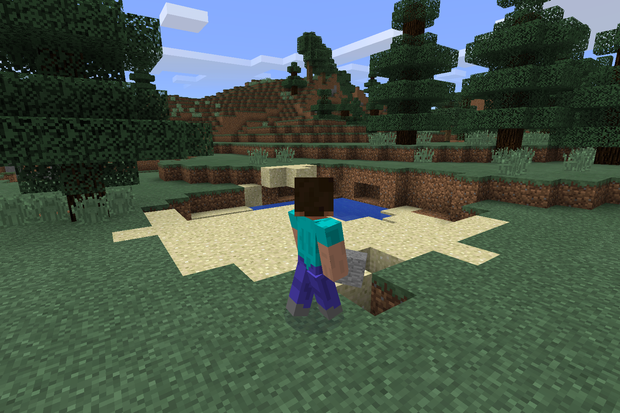
Jeff Teper — the “father of SharePoint” and (as of earlier this year) Corporate Vice President of Corporate Strategy at Microsoft — explained the thinking behind Microsoft’s Minecraft acquisition quite succinctly during a recent tech conference.

“Minecraft is a development tool,” Teper told attendees of the UBS Global Technology Conference in Sausalito, Calif., last week. “People build worlds out of it. If we can get eight-year-old girls and boys building worlds and getting inspired by creating content digitally, as they grow up they’ll want to create in PowerPoint, or Visual Studio. And in addition to being one of the few gaming franchises that doesn’t have to be freemium, Minecraft can actually charge money. It turns out it’s a great business with lots of upside.”

The full transcript of Teper’s remarks from November 19 is worth a read. He provided his two cents on everything from Microsoft’s need to redefine mobile, to why he believes Microsoft can’t always listen to its customers, especially when it comes to the cloud.

Teper also confirmed that Microsoft is now placing “bigger bets on fewer things” — something CEO Satya Nadella hinted recently when he told some reporters that Microsoft’s key investment areas could be pared down to three major buckets: Windows, Office 365 and Azure.

A few other Teper tidbits:

Dual use (in reverse) key to the rebranding of Lync as “Skype for Business”: “Lync business as it transforms to Skype for Business is an enormous business opportunity. Part of the go-to-market for it is going to be that a bunch of people are using Skype free, and they come into the office and they’re familiar and they love it. The consumer scenarios have a play in these dual-use applications.”

Unlike HP, Microsoft “bought the right one” (Fast Search) for intra-company search: “In 2008 I said, look, search is just like on the Internet, an intranet search is going to be a big deal and there were three or four companies out there. We bought the right one. HP unfortunately bought the wrong one (Autonomy)…. And the Fast team that we bought in 2008 is still the leader in enterprise search. People may have seen this announcement we made a few months ago about this concept called the Office Graph and this Delve module for Office that lets you, based on all the activity in your organization, it shows you relevant content regardless of where it lives. It’s a pretty amazing experience. Satya has sometimes called it Pinterest for documents.”

When it comes to the cloud, don’t take your cues from your IT customers: In 2011, Microsoft asked 100 of its Technology Advisor Partner customers whether they planned to move to the cloud in three to five years. Most said no. “That’s when it hit me, that sort of innovator’s dilemma story, that our customers were going to be a trailing indicator on the market, that the IT people in the room were not going to tell us when the market had turned, they were going to tell us after it turned and we actually — that motivated us to go invest (in the cloud) even faster. We literally after that meeting had to not listen to our customers’ right-now discussion….”

If you can’t beat them in mobility, redefine mobility: “I think first, we have to redefine mobility is the mobility of the user across all devices and not just necessarily our mobile platform. We have a great mobile platform. We’re investing in it. But, I think if somebody has a Windows PC and an iPhone and they love our software, when they go buy their next PC, tablet, phone they’re going to say, you know, the new version of Office is amazing, I love it, or the new version of Skype, wow, they’ve done some unique things on the Surface, on the Lumia phone, let me think about that.

Why “gaming” is still considered part of Microsoft’s core: “If you look, video, books, music are not so much of a focus” for Microsoft, unlike Google and Amazon. “But there is one other category that we’ve called out special which is gaming. We have an incredible franchise in gaming… How does gaming relate? And there are really two things. One is, if you look on PCs and phones people spend an enormous amount of time on gaming. They spend a lot of time on communications and productivity and surfing the web, but gaming is pretty key.”
Read Original Article Here:

Minecraft: Pocket Edition is better than ever in version 0.10.0

Minecraft: Pocket Edition is better than ever in version 0.10.0

minecraft thirdperson lead


Have you heard about this cool game called Minecraft? It’s made of blocks!

Kidding. It’s abundantly clear that anyone with the faintest interest in video games is surely well aware of Mojang’s lo-fi smash hit. Google Play claims between 5-10 million downloads of Minecraft: Pocket Edition ($7), which had sold more than 54 million copies across all platforms. Let that sink in: fifty-four million.

There’s a good chance you’ve already bought Minecraft on Android, but it may have been ages since you last played—the game launched in 2011 in a pretty meager state. So why cover it now? Because Pocket Edition may be the ultimate example of a mobile game worth investing in for the long haul, as the premium sandbox game has been majorly enhanced over that span. And this week’s version 0.10.0 update offers as great an opportunity as any to jump back in—or start fresh.

Make mine Minecraft

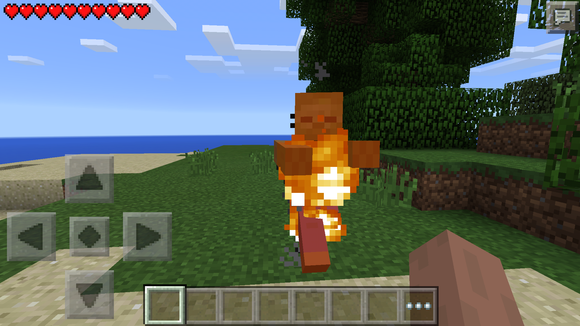
minecraft mobs
Enemies appear at night in Survival mode and are incredibly persistent. Luckily, the rising sun sets them ablaze. 

If you’ve somehow missed out on the Minecraft phenomenon, it’s a very simple indie game that lets you collect an array of materials in a randomly-generated block-based world, concoct tools and items, and build freeform structures. You can also try to survive the night in an unforgiving environment filled with aggressive monsters, or connect to online servers and construct cooperatively with others.

It fits the “sandbox” definition well because there’s little here to motivate you: the world is very much what you make of it, and you’ll discover intriguing minerals, tools, and even portals to another land as you experiment and hopefully thrive. Minecraft can look mighty boring at a glance, but there’s plenty of fun hidden below the surface—figuratively and literally. (Seriously… start digging.)

Pocket Edition isn’t a complete port of the PC original, but the Android version has evolved tremendously from its skimpy 2011 debut. It began as a proof of concept, to show that Minecraft could work on mobile, but now it’s a truly robust, engaging experience that rivals the bigger versions in allure. Version 0.9.0, launched in July, was the biggest update by far, bringing infinite worlds, generated structures like caves and villages, and a huge array of new blocks and environment types. All of that added some much-needed variety and personality to the experience.

By contrast, this week’s Version 0.10.0 update is all about polish. After expanding the world, the latest free enhancement focuses on improving performance across all devices (while adding 64-bit support), slaying lingering bugs, and lightly enhancing the graphics. In Mojang’s own words, that means “more watery-looking water,” along with things like tinted lighting and particle effects. Small tweaks, sure, but the end result is the best-running Minecraft you’ve ever seen on a smartphone.

Deep Pocket

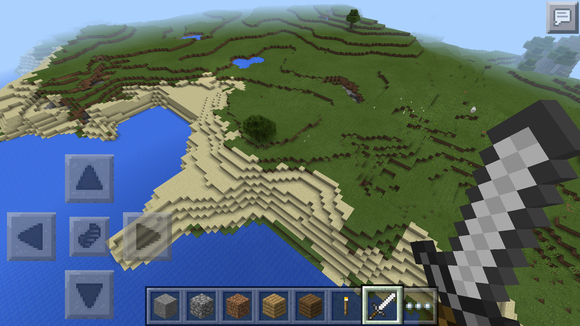
minecraft cloudview

Creative mode lets you chuck the shackles of gravity at any moment to soar through the sky. While that allows you to build structures more freely (especially with the infinite inventory of items), it also provides an opportunity to catch a great view.

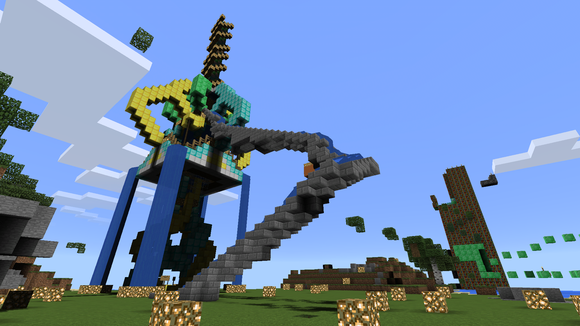
minecraft creativemode

One of the best parts of going online—search Google to find loads of free public servers to join—is seeing the elaborate structures that others have poured hours into. This one’s pretty tame compared to some of the others out there!

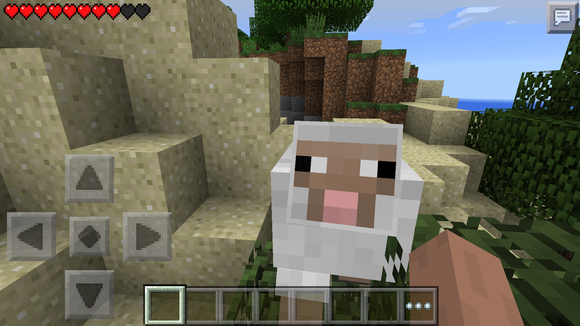
minecraft wildlife

It’s important to get to know the wildlife around you. Not just for companionship in this cold, quiet world, but because you’ll inevitably need to bash them into parts—like meat and wool—at some point. It’s a sad fate for a block buddy.

minecraft online

Minecraft has an online deathmatch mode? Believe it: fans have used the sandbox setting to create their own game modes. Here, you’ll make a mad dash to treasure chests to quickly secure items, and then use those to bludgeon others.

Why it’s worth your money

Had Mojang left Minecraft: Pocket Edition in its original state, it still probably would have sold millions. It is Minecraft, after all. But that $7 investment has been rewarded time and again with a routinely improved and ever more valuable game experience. Sometimes it’s a big content addition, while other times it’s a push towards improved performance and making sure it runs great on your latest device. Either way, Pocket Edition keeps growing, but you don’t have to pay another cent.

Having a game of this depth and replayability with you at any given time is a wondrous thing, and with multiple modes, online play, and plenty of surprises to uncover in each new world, there’s reason to keep coming back. Microsoft’s acquisition of the franchise this fall hasn’t stopped forward progress, as evidenced by the new 0.10.0 update and more on the way. It’s rare piece of mind to know that you can spend a little extra for a great mobile game that will only get better and better. That’s why Minecraft: Pocket Edition is a game well worth paying for.

Read Original Article Here:

Minecraft: Pocket Edition Brings you Update 0.10

Minecraft: Pocket Edition Brings you Update 0.10

maxresdefault

It was only sometime before Halloween that I’ve tried out Minecraft and like every other person who’s tried out the sandbox game, I was instantly hooked. Before I knew it, my waking moments were interspersed with how to connect that other village to my home, or how to create that next great home. The game’s so open-ended, each playthrough is a new experience and there’s a new story to be created everytime you delve into the world.


There is another version of Minecraft that’s available on smartphones and that’s Minecraft: Pocket Edition. It’s a cool version to have, because basically it’s Minecraft on the go. What’s more is that you really don’t need a Net connection to be able to play the game—it’s that awesome, I know. However, the small screen and the limited options might be a big let-down.

Same Minecraft, Different Features

While it’s essentially the same Minecraft that we all love, there are some options that are left out. For one, while the build-your-own-piece-of-paradise property is still in effect, there are other missing features; the survival elements in the PC and console games such as brewing and hunger are gone, and so are the bosses and the dimensions such as the Nether or the End.

The only time you’re going to need a WiFi or an Internet connection is when you’re going to play with friends. There is an option for a multiplayer in Minecraft: Pocket Edition, and it brings to mobile phones what LAN inter-connectivity does to PC players or to console players.

Recently, in a bid to give Pocket Edition players more content, update 0.10.0 was released for Minecraft: Pocket Edition.

New Contents, New Challenges

Update 0.10.0 is to smartphone Minecraft players what 1.8.0—otherwise known as the Bountiful Update—is to players of the PC and the console formats. There are a lot of bug fixes that are resolved with this update, but that’s not all. Here we have a list of the features that this update brings courtesy of Mac Rumors and The Minecraft Pocket Edition Wiki:

  • Updated Shaders.
  • Gold Ore is more abundant in Mesas—a get-rich-quick scheme?
  • Fences and fence gates receive an update.
  • Swamp water now looks more like swamp water should.
  • Sun is now exponentially bigger.
  • Water receives smoother light rendering.
  • Day or night doesn’t affect Creative mode.
  • Water pushes more things away with force.
  • Chest layouts have been changed.
  • Brightness can now be toggled.


A Timely Update

In the past, Mac Rumors reveals that Minecraft Pocket Edition was widely reviled due to the fact that they don’t live up to expectations of people who have already played versions available on the PC and the console. However, many updates later, and thanks to ones such as 0.10.0, Minecraft enjoys a bigger similarity with its console and PC cousins.

For those who want to play Minecraft Pocket Edition, it’s available on the Google Play Store and Apple’s App Store.

Read Original Article Here:

Library suggests gifts for book lovers

Library suggests gifts for book lovers

B9315207736Z.1_20141126114912_000+G6K97UDCI.1-0

Instead of fighting the Black Friday crowds, take a look at these suggestions for the favorite people on your list from the Tulare County Library.

They are all in the library, so you can even examine them in (non-virtual) reality!

For children

“Guinness World Records 2015″ by Guinness World Records” — A go-to crowd-pleaser for middle and older readers. Already have the 2015 edition? Go for the recently published Gamer’s Edition. (Ages 7+)

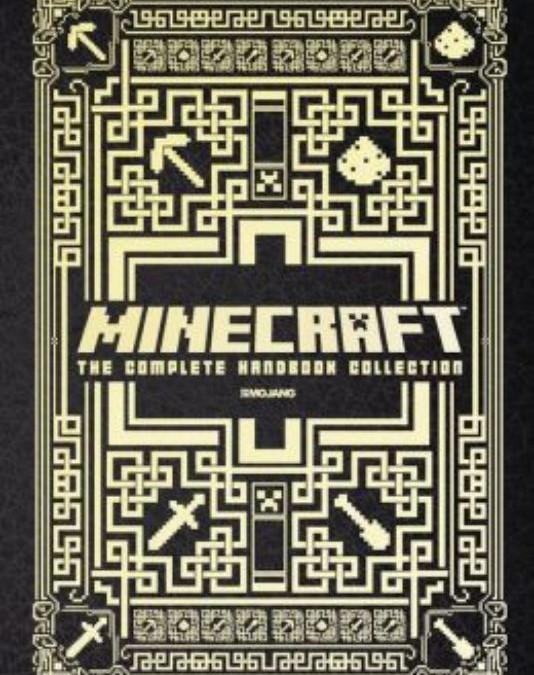
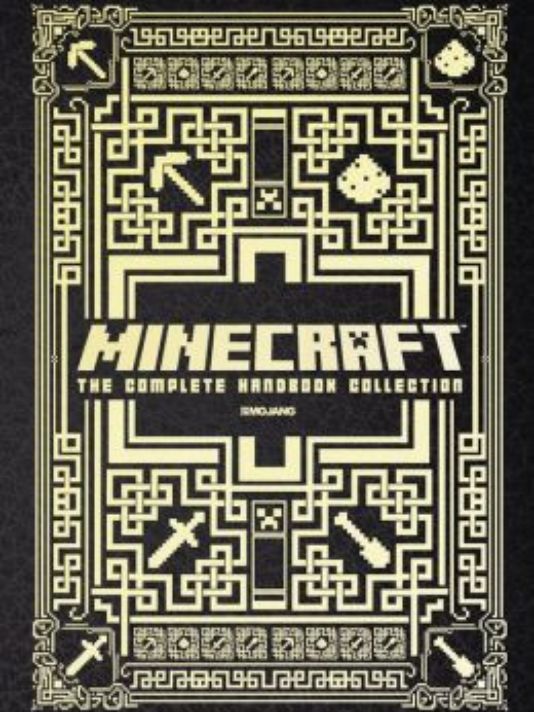
“Minecraft: The Complete Handbook Collection”

Four of Minecraft’s handbooks (Essential Handbook, Redstone Handbook, Combat Handbook, and Construction Handbook) are packaged together in this fancy boxed set. Purchase if you haven’t already given in to your child’s begging and pleading for Minecraft books, since one of these was published last year and the others months ago. (Ages 7+)

“The Book With No Pictures” by B.J. Novak — As the title indicates, this book has no pictures, just bold text that commands adults to read aloud, no matter what the words say. Novak (television writer and actor) relies on comic timing and the reader’s tone to create this hilarious (no) picture book. (Ages 3-8)

“The Princess in Black by Shannon Hale”

The first in a promising series, this beginning chapter book introduces Princess Magnolia—a princess with a secret superhero alter ego. She sneaks away from her royal duties to battle (not-so-scary) monsters and keep her kingdom safe. The large, colorful illustrations are the icing on the cake. (Ages 5-8)

“Twas Nochebuena” by Roseanne Greenfield Thong — This rhythmic re-interpretation of “The Night Before Christmas” incorporates Spanish vocabulary without skipping a beat. A wonderful celebration of family, holiday cheer, and Latino traditions wrapped up in a picture book. (Ages 4-8)

For adults

“Let’s Pretend This Never Happened” by Jenny Lawson — The first book by “The Blogess” is a laugh-out-loud combination of stories that are too awkward and horrifying NOT to have happened. A unique combination of memoir and taxidermy remembrances that will cause you to embarrass yourself in public!

“The Rosie Project” by Graeme Simsion

The first novel by Simsion (soon to be made in to a film) covers the pitfalls of dating without any knowledge of social appropriateness. At times funny and at others heart-wrenching, this book will teach you something about love.

“The Book of Life” by Deborah Harkness (third book of the All Souls Trilogy) — The last book of the All Souls Trilogy brings “closure” to the story of star-crossed witch, Diana Bishop, and vampire, Matthew Clairmont. Harkness blends fiction, science, and history into a very plausible world where the things that go bump in the night don’t just live in the dark. It all began with “A Discovery of Witches” and continued with “Shadow of Night.”

“A Little Something Different” by Sandy Hall — Sometimes it takes a little perspective to finally understand someone else’s viewpoint. In “A Little Something Different,” it takes fourteen different perspectives all seeing the same thing for those involved to see it for themselves. At times painful (you remember high school and college, don’t you), and at other times cute, this book is great for romance fans of any age, but it’s geared more toward the college crowd.

“A.D. 30” by Ted Dekker — A war that rages between kingdoms on the earth and in the heart. Step back in time to the year of our Lord…A.D. 30. The outcast daughter of one of the most powerful Bedouin sheikhs in Arabia, Maviah is called on to protect the very people who rejected her. She must secure an unlikely alliance with King Herod of the Jews. But her path leads her unexpectedly to another man. His name is Yeshua…

“The Fatal Tree” by Stephen R. Lawhead

The questors are spread throughout the universe. Kit and Cass are back in the Stone Age trying to reach the Spirit Well. But an enormous yew tree has grown over the portal, effectively cutting off any chance of return. Unless someone can find a solution — and fast —all Creation will be destroyed. In this final volume of the fantastic Bright Empires series, Stephen R. Lawhead brings this multi-stranded tale to a stunning and satisfying conclusion.

“Legend of Sheba” by Tosca Lee — In the 10th century B.C., the new Queen of Sheba has inherited her father’s throne and all its riches. Solomon, the brash new king of Israel famous for his wealth and wisdom, will not be denied the tribute of the world — or of Sheba’s queen. The one woman who can match wits with Solomon undertakes the journey of a lifetime in a daring bid to test and win the king.

Read original Article Here:

Can SkySaga capture the Minecraft magic?

Can SkySaga capture the Minecraft magic?

It’s no surprise that Minecraft, the building game born in Sweden in 2009 and now played by millions, has imitators keen to construct their own mega money-spinner. The latest is SkySaga, a British-made title. David Crookes takes a look and meets its makers.

The phrase “if you build it, they will come” is one of Hollywood’s most infamous misquotes (it should be “he will come”) and, if you were to apply it to a certain block-based construction game, you would, once again, be making a teeny weeny error. For while Swedish developer Markus “Notch” Persson has been the brains behind the hugely successful game-cum-phenomena that is Minecraft, its incredible success is arguably less to do with him and more to do with the fans. A case, then, of “if they can build it, they will come”; and build they do, in their droves.

Since the game made its debut in 2009, it has sold more than 54 million copies across games consoles and PCs, earning it the title of the best-selling indie videogame of all time, according to the Guinness World Records: Gamer’s Edition. Over the past two-and-a-half-years, those fans have created more than 225 million Minecraft worlds on the Xbox 360 alone.

In April, a 1:1-scale recreation of Denmark was unveiled within the game, mapping the entire 16,062 square miles of the country but even that paled when compared with the 22 billion blocks used to represent 86,500 square miles of the UK. And as if to reinforce its popularity, the game holds the world record for the largest indie game convention after 7,500 people jammed into a venue in Orlando, Florida last November.

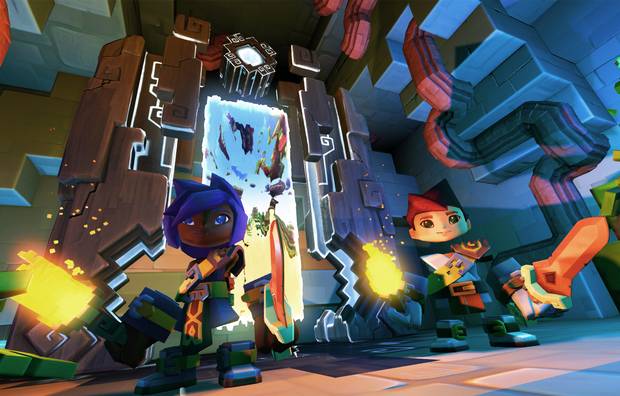
With all of that in mind, it is no surprise that other titles are trying to build on its winning formula. The latest is SkySaga, a game with open-world play, cuboid creatures and all manner of materials to mine. Players smash blocks, gather up the remnants and use them to construct tools, buildings and weapons as they seek to explore the virtual sandbox laid out before them.

SkySaga has been in development for a couple of years in a small game studio on the outskirts of Leamington Spa. And yet despite its British creator Radiant Worlds producing a clever, home-grown, good-looking riff on Minecraft, it isn’t too keen on drawing attention to the undoubted parallels. “There have been comparisons to a game that I won’t mention,” says the developers’ CEO Philip Oliver with a chortle. And when pressed on whether it could be a British Minecraft, he looks down, fiddles with his coffee mug and offers, smiling: “You could call it that.” And so we shall.

Despite its creators’ coyness, it’s hard to get away from the similarities between SkySaga and Minecraft. Gamers are handed a permanent, floating, customisable home island upon which they can construct castles and dungeons and the like from the materials they find around them as they explore terrain as high as mountains or as low as dark, gloomy caves.

Both games also use voxels, or volumetric pixels, a technical term for a unit of graphic information which defines a point in 3D space: it’s what gives both games their distinctive “look”. But there are gaming twists. SkySaga players can hop into other worlds by opening portals to landscapes that are rich with other treasures and raw materials, giving them greater opportunity to chop trees, hunt animals and engage in looting.

Each player can also choose between participating as an adventurer, crafter, architect, farmer, explorer, miner, trader or gladiator. “If you are playing as a trader, your focus will be on buying low and selling high,” says Ben Fisher, SkySaga’s game director. “If you’re a farmer, you’ll want to cultivate.” But all of the characters have the potential to become anything the players want them to be, mixing and matching skills.

But where the two games really differ is in a feature called the Adventure Director. It allows players to embark on personal quests that are created entirely on the hoof with no two players experiencing exactly the same quest.

SkySaga hopes to emulate Minecraft’s global money-spinning popularity

SkySaga hopes to emulate Minecraft’s global money-spinning popularity

The game procedurally generates a unique world, together with a mini-adventure that has a specific objective taking around 30 minutes to complete. When combined with dual wielding – the ability to carry a weapon in both hands – and characters that can pull off combo moves, SkySaga is leant added depth that helps to throw light between the two games.

It feels as if Radiant Worlds has blended SkySaga with healthy dollops of Nintendo’s Legend of Zelda and Animal Crossing and this is helping it attract attention. But it has its work cut out trying to match Minecraft’s impact, a game which had 10 million players signed up to the beta release before the game was released on PC and Mac on 18 November 2011.

Other games have tried but none has quite amassed the same amount of money and acclaim as Notch’s classic. Not The Blockheads, despite throwing in neat elements such as railways and solar-powered oil refineries; nor the acclaimed 2D exploration adventure Terraria (which has sold around 300,000 copies in Japan). Synthetic World is a 3D sandbox game that some are saying is a Minecraft killer; Blockland is about as Lego-like as a Minecraft-type of game could be. Neither of those is in the same league, though: Minecraft sold 1.3 million of its official books in the UK in the first eight months of this year.

Still, SkySaga is entering gamer consciousness at a good time. In September, gaming was rocked by the news that Persson had agreed a £1.2bn deal with Microsoft for the sale of his company Mojang. It led to accusations that he was “selling out”, amid fears that Microsoft’s rival platforms would see a withdrawal of support.

It was a far cry from Minecraft’s early years when it became the undisputed gaming success story; a quirky, indie title that gave gamers a blank slate on a deserted island, unleashed player creativity, allowed them to build, hunt, explore and fight. Players would produce their own narratives and be actively involved in a rich community. It changed the way games were played by running in a browser, opening it up to everyone with a computer, it altered the way developers approached their own games by dispensing with stories, putting the player in control, emphasising creativity and giving a fresh spin to the fantasy genre. It was less a game, more an experience; one that still has a staff of just 40 people working on it.

Minecraft has inspired the creativity of gamers and developers alike Minecraft has inspired the creativity of gamers and developers alike
For Radiant Worlds, the emphasis now is on encouraging gamers to join in the fun. The game is in an alpha phase and it is being made free-to-play initially, with in-game purchases not being introduced until much later down the line. This will hook a new audience into SkySaga’s virtual world and it will allow gamers to get involved, helping to iron out the game’s bugs and giving them a sense of ownership.

“We want this to roll on for five, 10 years and more,” says Oliver, whose last company, Blitz Games Studios, collapsed thanks to mounting debts. Radiant Worlds has bet its entire future on the game, bankrolled by South Korean billionaire Herald Kwon, who as the CEO of Smilegate has presided over Crossfire, Asia’s most popular online game with 400 million players. And in building its cuboid world, it is dearly hoping the players will come… and build some more.

Game on: Minecraft and SkySaga compared

Minecraft

Country of origin: Sweden

Developer: Mojang

Time in development, prior to release: 2.5 years

Released: 18 November 2011 (PC)

Formats: PC, Mac, Linux, Android, iOS, Windows Phone, Xbox 360, Xbox One, PS3, PS4, PS Vita, Raspberry Pi

Money made: £330m (2013)

Recognisable characters: The Player

Mission statement: Minecraft is a game about breaking and placing blocks. At first, people built structures to protect against nocturnal monsters, but as the game grew players worked together to create wonderful, imaginative things.

SkySaga

Country of origin: UK

Developer: Radiant Worlds

Time in development, prior to release: 18 months+

Released: Provisionally 2015

Formats: PC

Money made: £0

Recognisable characters: Explorer

Mission statement: “In SkySaga you are the hero, choosing your own path in pursuit of your destiny. Fresh challenges await you each day and your successes are celebrated among friends and fellow heroes.”

Read Original Article Here: