No Man’s Sky – and why the Minecraft generation will reject Call of Duty
Your space craft touches down on the uncharted planet. In the distance, a craggy spine of mountains looms over a vast alien forest. No human has ever been here before; perhaps no one will ever come back. You are alone.
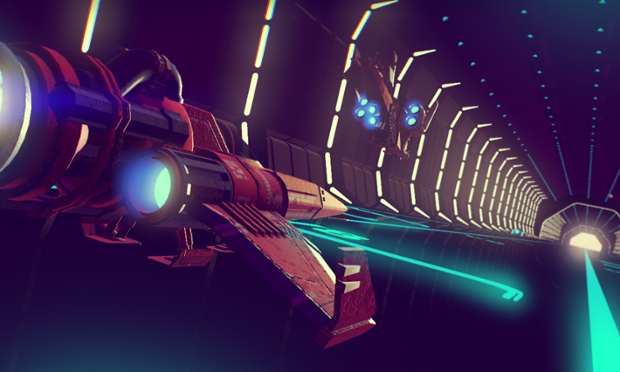
No Man’s Sky doesn’t work like other science-fiction adventures you may have played. There is no over-arching story, no grand scheme to funnel players through. Instead, it provides a vast universe filled with worlds that have been procedurally generated by computer algorithms, and it tells you to go out there and explore. You can fly your spaceship, land on any chunk of rock, get out and look around. Everything else, from here on in, is up to you.
Somehow this is counter-intuitive to expectations in 2014.
Sean Murray, co-founder of Hello Games, the tiny Guildford-based studio behind No Man’s Sky, is unrepentant about its narrative minimalism. For him, the game is about freedom and personal experience in an unknowable cosmos. “We have this galactic map, and when the game starts, the map is completely unexplored,” he says. “As people fly out, they slowly start to fill in some of the detail, but the universe is so vast that they’ll only discover a tiny amount. Everyone will have very different experiences.”
Although presented to the public on several occasions since it was revealed last year, very little is really known about No Man’s Sky. We know that it’s a persistent online universe inhabited by every player; we know participants will be able to gather resources from planets in order to buy new equipment and space craft. We know there are computer-controlled inhabitants – from creatures roaming planet surfaces to aliens piloting space craft – but nothing else is clear. Perhaps because there is nothing else. That is the point.
Advertisement
“I’ve travelled quite a bit,” says Murray. “I was in the Arctic for a while, where there’s this sense of utter isolation. It’s something games just don’t do. Danger in games is always about explosions. That’s not the danger most of us experience in real life.”
What Murray laments is the way mainstream titles tend to restrict the gaming experience. “Games are obsessed with having no breathing space – they never let the player walk around and enjoy something,” he says. “With Call of Duty, it feels like they sit there with a stopwatch and if an explosion hasn’t gone off every 30 seconds, someone is fired.
“I’m numb to it. I mean, games are amazing now, they’re beautiful. But you sit and watch something that looks glorious, and hundreds of people have worked on it, and you find yourself yawning.
“Then you play something much more simple, like Amnesia, and you have so many more emotions – just because there are lulls, there is sometimes nothing, so when something does happen, it surprises you. That’s what real life is like. Anything you see enough of, just becomes normal. Games are terrible for that.”
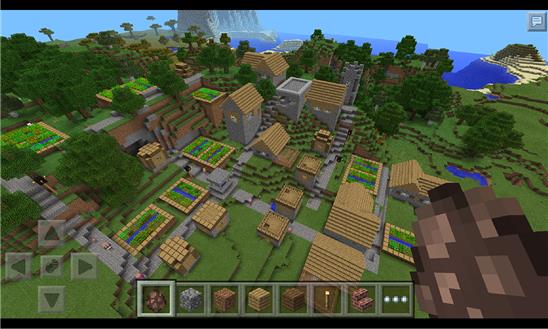
But Murray has a theory. Since Minecraft was first released in 2011, it has engendered a new era of game design – and gamer – that is more about player experience and creativity than it is about a drip-fed narrative. Right now, the players who are in to open-ended games like Minecraft, Terraria and Day Z represent a niche – but soon they will be the mainstream.
“The kids who grew up with Minecraft will really struggle to relate to something like Assassin’s Creed,” argues Murray. “They won’t want to be that guy. When they say ‘I love games’ they don’t mean the same things that we do when we say it. The Minecraft generation has a totally different expectation. I’ve found myself intersecting with them – I’ve found myself playing those games, playing Day Z for hours and being reinvigorated. This is the kind of game we want to make.”
But these new games do not just provide players with the freedom to explore, they also offer the freedom to be creative agents in the world. As well as building houses, it means experimenting with the environment and mechanics to produce their own game experiences.
“So few games allow you to express yourself,” says Murray. “In the Call of Duty single-player story, I can’t express myself at all. They don’t want me to. They’re fighting me so hard – to the point where I just go around shooting everyone in the groin– it’s the only thing I can do to be expressive, to be funny within the game. And when you make choices in Mass effect it feels like it was agony for the designers to put that in there.
“Then suddenly, there are these other games where you’re just telling your own story. You ask a kid what they’re doing when they play Minecraft and they can’t even tell you – they’re doing dozens of things no one has told them to. They’re just playing. As a veteran gamer, you almost feel guilty doing this. Oh I’m wasting time, what have I achieved? What’s my score? Tell me Xbox! Validate what I’m doing! Legitimatise me!”
Murray is keen to stress that No Man’s Sky will provide a familiar “core experience” to players. It has space combat, it has first-person shooter action on the planets; there is a structure that will guide players toward some sort of resolution at the centre of the galaxy. There are also hints of some sort of darker threat lurking out there in space.
But everything will be more esoteric than many are used to now. The Hello Games team are all computer gaming veterans; they grew up playing weird obtuse adventures on the Commodore 64, Spectrum and Amstrad. In those days the possibilities were not always signposted for the player. It was all about discovery; you had to draw your own maps and figure things out. Minecraft has retained an element of this, on the PC at least, by not spelling out to players how everything has to be crafted. It has allowed the community to flourish through the sharing of arcane knowledge.
The plan with No Man’s Sky is to fill the game with experiences that the player will have to figure out for themselves. As Sean Murray explains: “When I play Battlefield, I actually find it really engaging; you’re in this astonishing war scenario, you have a tightness in your stomach, a tension. But then you shoot someone and you get a headshot bonus; and then it’s ‘oh of course, I’m just playing an arcade game, I’m just playing Virtual Cop again. It won’t let you let go.”
“Most of the games at E3, no YouTuber is going to play them,” says Murray. “The Last of Us is a favourite game of mine, but there is almost no point in doing a Let’s Play of that: there will be no differentiation between your playthough and mine. Did you complete it? Yes I did. Did you see the giraffe? Yes I did. That’s lovely but what’s different about games is that they’re intereractive; we shouldn’t remove that, or try to corral it and constrain it.”
For Murray, the places where mainstream games get closest to their more obtuse and demanding ancestors is in their hidden elements; their Easter eggs and secrets, the stuff put in for the real fans to discover and decipher. No Man’s Sky is that stuff stretched out again into a whole game.
“The mythology that surrounds the yeti in GTA – we’re sort of making a game that is about that,” he says. “It should appeal to the people who that appeals to. This is slightly embarrassing, but we have a whole lore, a mythology mapped out, and every design decision we make, we make it with that in mind.
“So choosing the insignia on ships or the type of architecture – if people lived on these types of planets, what kind of buildings would they have? How many different races are there? We have it all mapped up, but we won’t tell you any of it; and you probably won’t be able to figure it out.
“But if it happens that people start a wiki to map the whole thing out, that’s fantastic – that’s so much more interesting than us just trying to ram it down your throat, or having a little AI that travels around with you in your ship, telling you the name of everything. It’s not our story.”
One of the game’s trading posts, where players will be able to buy upgrades to items – and learn more about other inhabitants. “There will be consistency to the universe so you can gain some insight,” says Murray. “You’ll see that the insignia on a certain ship will match a certain space station, in a certain quadrant.”
Maybe there is no goal; maybe the experience is the destination. That will be hard for some people to accept. But perhaps there is another way to think about No Man’s Sky. While big ambitious space games like Mass Effect and Star Citizen are perhaps looking to the likes of Star Trek and Star Wars, Hello Games is more closely referencing those weird, disoptian sci-fi films of the 60s and 70s: Silent Running, Solaris, 2001 – movies that explored the surreality and mysticism of space.
“There’s a natural, almost horror element to all those films, where loneliness is something dangerous in itself,” says Murray. “That’s the feeling we want you to have all the time; that you are vulnerable and tiny in this universe.
“Then you can really lose yourself in it … just a little bit.”
No Man’s Sky is due out in 2015 on PC and PlayStation 4