by Stone Marshall | Dec 29, 2014 | Minecraft News |
At long last, kids ruled in 2014. Books aimed at them have often figured in the top 10 of the all-year sales chart for printed books, but in the respective heydays of JK Rowling, Stephenie (Twilight) Meyer and Suzanne (The Hunger Games) Collins the rest of the elite group usually consisted of grown-up titles and there was always a chance that one such mega-seller – by Dan Brown, say, or EL James – would pip them to the top spot.
This year, in contrast, seven of the top tier books including the No 1 – by John Green, David Walliams and Jeff Kinney, plus four Minecraft manuals – are for children or young adults and an eighth, Guinness World Records, is predominantly aimed at them.
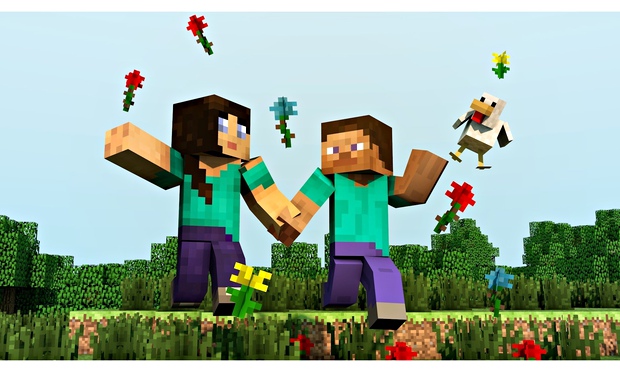
The Minecraft books (2, 5, 6, 7) are 80-page guides to a hugely successful video game in which players either build structures or battle enemies; launched in Sweden in 2009, it passed 100 million registered users in February this year. Published by Egmont (the UK arm of a Danish media group, the name possibly signalling Beethovenian ambitions), the four titles spearheading this new Viking invasion achieved combined sales of around 1,700,000.
What’s fascinating about this is that there should be a market for video game spin-off books at all, let alone such a stunning one. There’s no shortage of Minecraft tutorials on YouTube, in its own online domain, but rather reassuringly young gamers en masse evidently felt a need for a hardback handbook opened next to their PCs – a demand reflecting the relative robustness of manuals of all types and children’s books, compared to other genres whose print sales and revenue have been hit harder by readers’ inexorable (though possibly slowing) flight to ebooks.
Being a hit on screen first, or as well, is not a phenomenon confined to the Egmont quartet. Kinney’s Diary of a Wimpy Kid existed first in an online version before becoming a book. Walliams was a TV writer and actor long before taking up children’s fiction. Green has a sideline as a video blogger, or vlogger; whereas that’s Alfie Deyes’s (29) day job, with his jokey book as a spin-off.
If you took the Minecraft books away, 2014’s top 10 would look very similar to 2013’s: the latter also included Walliams’s and Kinney’s latest offerings, Guinness World Records and Dan Brown’s Inferno (then No 2, now No 8). The Fault in Our Stars, Green’s 2012 love story narrated by a teenager with cancer – widely seen as a YA book, though not officially classified as one – was at No 17 a year ago, and owes its spectacular subsequent ascent to the screen adaptation. Similarly, Gone Girl, also originally published in 2012, is at No 4 two and a half years later (it was No 3 in 2013) thanks to David Fincher’s film. Its author Gillian Flynn is the only woman to make the top 10.
Just like YouTube idols transformed into writers, reminiscing celebrities capitalise on their screen fame (usually on television) to win publishing deals; but the 2014 list confirms that the public long ago got out of the habit of seeing the resulting books as ideal Christmas presents. Besides the late Lynda Bellingham’s autobiography (12), two sports books, by Guy Martin (32) and Roy Keane (37), are the only hardback memoirs in the top 100. Yet publishers still seem in denial about the once-mighty subgenre’s slump, shelling out for much-hyped autumn offerings from John Cleese, Stephen Fry, John Lydon, Graham Norton and others that all flopped.
More surprising is the decline of cookery titles, which until recently gave crime and children’s fiction a good fight for the highest positions. The genre’s talisman Jamie Oliver, who up to 2012 routinely occupied a top 10 spot and for several years running was the Christmas-week No 1, now languishes at No 23. Mary Berry is ahead of him at No 13, but you’d expect her to be higher, given The Great British Bake Off’s vast audience.
Advertisement
The Hairy Bikers (47) and Tom Kerridge (77) are well below their 2013 positions, while other TV cooks who once seemed set for annual hits – Lorraine Pascale, Nigel Slater, Paul Hollywood – are nowhere to be seen. It appears counterintuitively possible that, while Minecraft addicts are turning to print manuals, their parents are turning away from them, increasingly getting their recipes online rather than from food-stained Jamie or Nigella recipe books on the kitchen table.
With memoirs and cookbooks both ailing, this has been another annus horribilis for non-fiction: ever fewer “serious” factual titles do well enough to make the top 100 – in an especially feeble 2014 showing, only Bill Bryson’s One Summer (54) really qualifies besides Alan Johnson’s Orwell prize-winner, This Boy – while at the other end of the spectrum once-bankable genres are losing their commercial potency. Both less serious and less sellable, then: not a good combination.
Non-fiction’s woes have allowed fiction to surge into the positions vacated, notably the places just below the top 10 where celebrity cooks and comedians formerly roamed in packs. Here can be found, not just commercial crowd-pleasers, but literary titles feted by critics and award judges – though some are missing.
There is, for example, no sign of the winners of the Folio, Baileys Women’s fiction or Man Booker prizes (George Saunders, Eimear McBride and Richard Flanagan, respectively), or indeed the 2013 Booker winner (Eleanor Catton) in paperback; all were probably seen as too forbidding. Yet the Costa awards did much better, with Kate Atkinson’s novel prizewinner (11) and Nathan Filer’s first novel and overall winner (26) both well placed. Shoppers also picked out two attractive losing finalists, Donna Tartt (14) from the Baileys shortlist and Karen Joy Fowler (42) from the Booker last six.
Amid these garlanded titles can also be found Girl Online (28), by (or rather “by”, as it was ghost-written) Zoe Sugg, AKA Zoella, another YouTube vlogger. The book, and Penguin’s handling of its authorship, have been much criticised but it pulled off something remarkable in being the third highest placed 2014 novel; outselling the likes of John Grisham, James Patterson, Sophie Kinsella and Jodi Picoult, even though these authors’ efforts were paperbacks available for most of the year and hers was a pricier late-November hardback.
Read Original Article Here:
by Stone Marshall | Dec 28, 2014 | Awesome Book News |
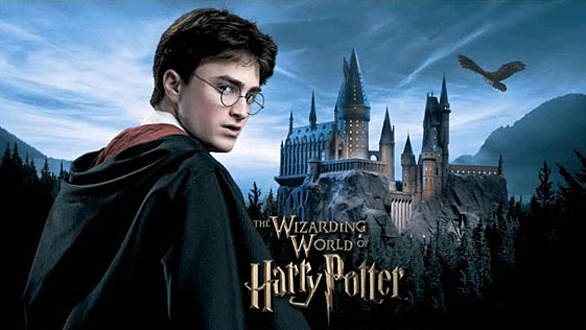
Whatever happened to Harry Potter’s Hogwarts nemesis after Harry defeated Voldemort? Where is he now? J. K. Rowling finally revealed Draco Malfoy’s life post-Harry Potter in her 12 Days of Harry Potter Christmas at Pottermore.
 Click image
 to view larger image
In her second to the last installment of her Harry Potter Christmas stories, best-selling author, J. K. Rowling unfolded the life of Slytherin antagonist Draco Malfoy after Harry Potter soundly routed arch-villain Voldemort and drove the Death Eaters away for good.
J. K. Rowling revealed that after the events in the last book, Draco, who was born into a traditional pureblood family from a very old line, finally realized his parents’ ways (and that of all purebloods for that matter) were slowly becoming anachronistic in the present time.
From a pureblood perspective, only witches and wizards born of parents from wholly magical decent were the only ones worth considering as equals. After Harry saved him from the fiendfyre inferno he and his cohorts had set to kill Harry, Draco is said to have seen things in a different light.
Rowling says Draco abandoned this pureblood way of thinking, and when we last saw him in the final book sending his own son off aboard the Hogwarts Express, Draco and his wife, pureblood Astoria Greengrass, had already been raising their son, Scorpius, to believe that Muggles, squibs and other people not of pureblood decent were of equal footing.
“Family gatherings were often fraught with tension,” ABC News reported on Rowling revelations in Pottermore, referring to the times Draco got together with his pureblood parents, Lucius and Narcissa.
“Being raised by either the Malfoys or the Dursleys would be a very damaging experience, and Draco undergoes dreadful trials as a direct result of his family’s misguided principles. However, the Malfoys do have a saving grace: they love each other,” Rowling continues.
In the end, though, can one not feel pity for poor Draco, who is, when all is said and done, a product of his own family’s upbringing? He was merely doing what he thought was the proper thing, and if he was portrayed as a sneering, prejudiced racist, was not that the very same personality traits leached from his father?
For Draco to have changed his line of thinking in the end amounts to a huge paradigm shift in the pureblood way of thinking. There is hope for the Slytherins after all.
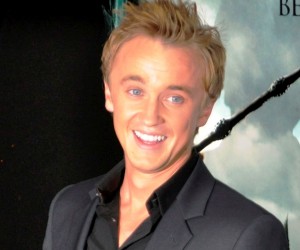
Watch the real Draco Malfoy, Tom Felton, as he shares his life after “Harry Potter:”
Read Original Article Here:
by Stone Marshall | Dec 28, 2014 | Awesome Book News |
A turning-point moment came Monday night.
It involved my daughter, Katie, who has been filling our life with joy for more than 13 years.
When Katie became an avid reader as a wisp of a child, I announced one of my goals in life was to read a Harry Potter novel before she did.
Naturally, I got sidetracked. As a homeowner and occasional maintenance man/groundskeeper, I started spending more of my available reading hours focusing on repair manuals and how-to books. Instead of seeking out the wisdom of Mark Twain, I found myself contemplating the insights of Norm Abram from “This Old House.”
Katie eventually caught wind of my goal and often threatened to beat me in the Harry Potter reading race. I scoffed. She laughed. Then from time to time she would start reading a Harry Potter book — simultaneously with a host of other things. At least seven of those lengthy novels would invariably fall by the wayside, unfinished.
Then came Monday night. Everyone else had gone to bed when I retired to my recliner downstairs for some quiet time. Waiting on the seat was a note from Katie with a copy of the 734-page paperback version of “Harry Potter and the Goblet of Fire.”
The note said: “Done. Eat your heart out, Dad.”
Dang! She got me.
I sat down on the chair with the note and reflected on how my little girl was growing up so fast. It seems like yesterday she was a pre-schooler joyfully catching bugs while exploring the backyard. Now she’s a worldly eighth grader with a keen sense of humor and strong opinions about injustices happening in society.
I was struck by how fast time is rushing by and how change keeps occurring at a furious pace.
For instance, in just the last couple of months, several of my contemporaries have headed off into retirement, including my good buddy Mark, who started in the newspaper business around the same time I did in the mid-1970s. On Oct. 29 he sent a final email as he departed his newspaper for the last time, declaring: “The end is here. I am going to grab my golf clubs, a beer mug and my fishing gear and head off to a new part of my life.”
News of more changes comes in the Christmas cards that arrive daily. The faces in snapshots keep getting older. Several aging relatives have grown ill or died. The flower girl from our wedding is getting married next year. A nephew who played football for Michigan now watches his own son play for Air Force.
On and on life goes. But with it comes the pleasant satisfaction of watching the developments as they take shape — turning like the pages of a good book.
Read Original Article Here:
by Stone Marshall | Dec 27, 2014 | Awesome Book News |
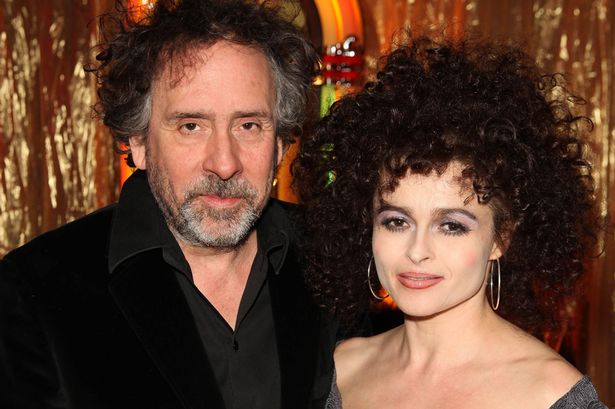
HELENA BONHAM CARTER and Tim Burton have confirmed they split up earlier this year, but insist the break is “amicable”.
The couple, who have two children, Billy, 11, and Nell, seven, have announced they “separated amicably earlier this year” after 13 years together.
A spokesperson for 48-year-old actress said: “Tim Burton and Helena Bonham Carter separated amicably earlier this year and have continued to be friends and co-parent their children.
“We would ask that you respect their privacy and that of their children during this time.”
It comes just weeks after they were spotted with their children at Winter Wonderland – proving they’re remaining good friends.
The duo started dating after Tim, 56, directed Helena in Planet of the Apes in 2001 and had a famously unconventional relationship, living in two neighbouring houses joined by a communal room.
News of their split comes more than a year after the British director was photographed embracing another woman after a cinema date in Hampstead, London in September 2013.
But Helena rubbished allegations he had been unfaithful at the time, saying: “This is absolute nonsense. The pictures were taken whilst they were out and the large group includes family, friends and work colleagues.”
Although they frequently worked together, Tim previously admitted they often had a turbulent relationship on set, especially during the making of Sweeney Todd: The Demon Barber of Fleet Street in 2007.
He said: “We’ve survived [as a couple], but it hasn’t always been easy. ‘Sweeney Todd’ was the worst; definitely the worst. But then I found out she was pregnant with Nell and it kind of all made sense.”
Read Original Article Here: