
Program aims to get boys interested in reading

Program aims to get boys interested in reading

A nine year old boy using his ipad tablet in his bedroomGADSDEN, Ala. (AP) — Adventures around the world await, Steven Winston told fourth-grade boys at Floyd Elementary School.

“It takes you opening up that book and beginning to read,” Winston said.

Winston, who works at the Alabama Power Steam Plant, and Greater Gadsden Tourism Director Hugh Stump met with students for the first time Thursday as part of Guys Read, a Gadsden Public Library project designed to keep boys interested in reading.

All Gadsden City elementary schools have “Guys Read” volunteers coming in to promote reading this month, thanks to the efforts of the library staff.

Stump will soon be back with the Floyd fourth-graders, introducing them to a tale of high adventure on the open seas: “Pirate Diary, The Journal of Jake Carpenter.”

He will be talking to the boys about how to speak like a real pirate — just another example of cool things kids can learn from books.

The goal is not to read to students. As library director Amanda Jackson said, they are fourth-graders and can read for themselves.

Instead, the idea is get the boys interested in seeking out these books to read for themselves.

“We’re not doing this for the girls,” Stump told the boys, and there’s a reason.

Studies show girls continue to read after fourth grade, while boys tend to lose interest, Jackson said. Guys Read was developed to keep boys interested in reading, ideally, for the rest of their lives.

The program will bring “cool guys” into the classrooms twice a week throughout February, to show the boys that cool guys keep reading.

On Thursday, Winston and writer Nick Bruel’s “Bad Kitty Takes a Bath” had Jeanmarie Wright’s students doubled over their desks in laughter.

Winston told the students the book would make them laugh and give them helpful tips for giving a cat a bath.

Stump had a confession: “I’ve got a cat. I’ve never given it a bath.”

It was not, Winston said, something for the faint of heart.

The book listed things needed to give a cat a bath: a bathtub, warm water, a suit of armor, a letter to your family and a kitty-shaped bathrobe.

“Who has a kitty-shaped bathrobe?” Winston asked the students. “Really? Where’d you buy it?” he asked, when one boy raised his hand indicating that he had one.

“Wal-Mart,” the boy said.

Both Stump and Winston said they are involved in Guys Read because they loved spending time with kids, and they love books.

The visit included a slide presentation with photos and text from the book that students enjoyed reading aloud.

At one point, Winston had to prompt Wright to move to the next slide.

“I got so caught up in it,” Wright said, of Winston’s interaction with the kids, that she forgot she about the slides.

She was appreciative of the enthusiasm Stump and Winston generated in the children. She said the children are, at this point, still interested in reading. The faculty and administration try to cultivate that with the Scholastic Book Fair and in other ways.

When they discuss something in class, Wright said, such as World War II, teachers will talk about “The Diary of Anne Frank.” They see their students then going to the library to look for the book. They also are encouraged to seek out books on other subjects, such as Black History Month.

If the response in the classroom was any indication, cat-bathing soon may be a research subject.

The first step in the program involved having students complete a brief survey, asking if they like to read, if they read books at home, if they think books are fun and to name their favorite book. They will complete the same survey at the end of the program.

Read original article here:

Books for kids from the heart for February

Books for kids from the heart for February


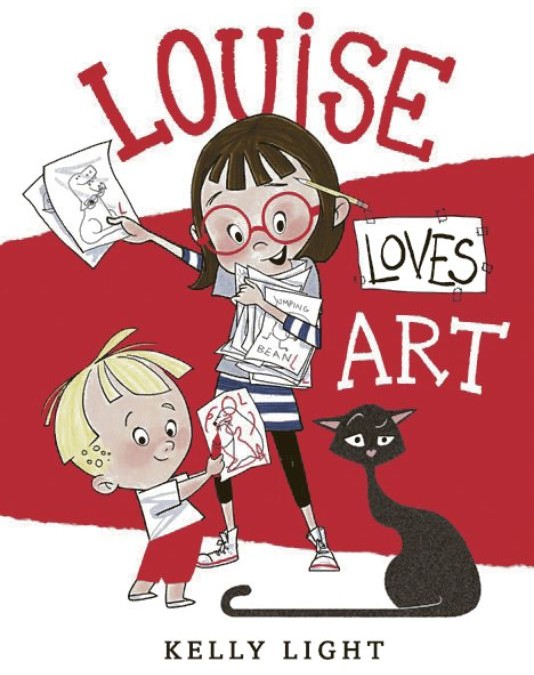
By Kelly Light

Best for girls, ages 3 – 8

The spunky little girl in this tale is hard to resist.

She’s got a flare for art and marvels at her ability to see every detail. As she races through the house creating art for her one-woman show, she is missing the important stuff right under her nose — her little brother’s love. In the end, Louise learns that she really does love Art.

That is, she loves her brother, Art. And by the looks of his creations, he loves his sister too.

It’s not only our hero’s attitude that makes us think of Eloise and Olivia tales. It’s also Light’s illustrative use of strong black lines and a single color highlighted for emphasis. In this case that single color is a bright red that is used for glasses and illustrative energy. This is a great book for young siblings.

What’s good: Energetic, easy to translate illustrations.

What’s bad: Louise’s turnaround from angry to loving is a little abrupt, but not unexpected.

.

“Born From the Heart”

By Berta Serrano

Illustrated by Alfonso Serrano

Best for ages 4 – 8

A unique approach to the adoption story, this book uses heart and humor to convey very real issues, struggles and joys. When Rose and Charlie want a baby, they go see a doctor. He gives them a magic potion to help, but in the end we discover that it is adoption that makes this family whole. Through fun illustrations we see that it is Rose’s heart, not her belly, that grows bigger in anticipation of the arrival of her new child. The modern and somewhat blob-like illustrations may be a little hard for children to accept. However, the use of colors and movement make the emotions very clear throughout.

This book is probably better suited as a gift for new adoptive parents, or those awaiting the arrival of their child. Children may enjoy this book once, but parents will connect to the storytelling and want to read it many times.

What’s good:Strong message about the importance of adoption.

What’s bad: Younger children might be confused by some of the imagery.

.

“Coming Home”

By Greg Ruth

Best for boys, ages 5 – 10

We’ve all seen the videos on YouTube, but have we really stopped to think about the story we’re witnessing? No service person goes to war alone. They take a piece of their parents, children, friends and pets with them. This story takes the reader through all the emotions while using an economy of words.

We follow one boy waiting for his reunion at the airport. While he waits and anticipates, we see a soldier and his dog, sweethearts and families find their loved ones. We feel the boy’s growing anxiety as he wonders why he is still alone on the airport tarmac. Using only a word or two here and there, the entire story is told through framing the illustrations and reading the expressions. When the reunion finally happens and he yells, “Mom!” we feel like we’re a part of the embrace. This is a great reminder of the sacrifices our soldiers and their families make to keep us safe.

What’s good:Strong illustrations that will engage even young readers.

What’s bad: The cover is a little misleading to what is actually in the book.

Read original article here:

Book Review: ‘Stotan!’ by Chris Crutcher great reading for young boys

Book Review: ‘Stotan!’ by Chris Crutcher great reading for young boys

Stotan!STOTAN! Chris Crutcher.
Written by Rich RogersMany parents wonder how they can get their sons reading. The trick is to find something he likes and then help him find books that fall in that category. For sports loving boys, Chris Crutcher’s books, especially the early ones, fill that category.

This book hooked me on young adult literature and showed me how great it can be, for both teens and adults. I first read it back in my college years, and I’m not saying how many years ago that was. Fortunately it’s still in print, along with many of Crutcher’s other early works.

A Stotan is a cross between a Stoic and a Spartan.

The narrator, Walker Dupree, and his friends are members of the high school swim team, and spend a week living together over the Christmas holidays–Stotan week. Essentially Hell Week. A week of intense swim training, that leaves them drained at the end of each day, but bonds them together even deeper than before.

Together they face racism, broken families and a devastating illness. What hooked me solidly on this was how real it all felt. Of course, any fiction augments things, but the emotions Crutcher pulled from me are all legitimate, I never felt manipulated. Reading Stotan, I felt everything from legitimate friendship to their struggles, and all the way to their commitment to each other. I laughed out loud several times here, and I was frustrated and angry in all the right spots too, and I cheered at the heroism I found here.

All the early works of Crutcher are worth reading (although I always recommend parents read a title first before passing it on to their kids). The best thing for parents is that great YA titles read very fast, because they lack padding. Teens don’t tolerate all the filler that finds its way into most adult novels. They want it straight to the point.

I’d recommend everything beginning with his first books, Running Loose, Stotan, the Crazy Horse Electric Game, Whale Talk, Chinese Handcuffs, Staying Fat for Sarah Byrnes, Ironman, and the short story collection Athletic Shorts. Some of these do have some objectionable parts, but they do reflect–usually–the realities teens face.

However once you get beyond these titles Crutcher becomes an angry scold rather than a gentle guide. These tendencies begin showing up in “Chinese Handcuffs”, “Byrnes”, and “Ironman,” but they’re manageable. But by the time I read, “The Sledding Hill”, “Deadline”, and the next short story collection, “Angry Management,” I realized he’d lost what drew me to him initially. He keeps reliving the past problems without acknowledging that times have changed. And he does it with such anger and vehemence, that I had to finally stop reading him. It’s really a shame, because for years, I looked forward to new Crutcher books. Now, just looking at them tires me.

But still his early work is definitely worth reading and still in print as well as available in electronic formats as well.

Rich welcomes questions and comments from readers. You can contact him at 62rich@gmail.com.

Teaching in the Age of Minecraft

Teaching in the Age of Minecraft


Like many 11-year-olds in Texas, Ethan had to build a model of the Alamo as a school project. Often, students make their dioramas out of paper mache or popsicle sticks, but Ethan’s teacher gave him permission to build his project in Minecraft, the popular sandbox software game in which players build structures out of blocks. With his dad’s help, Ethan recorded a video tour of his scale model of the fort, complete with explanatory signs, and posted it on YouTube. A few minutes into the tour, it started raining unexpectedly over Ethan’s diorama, but Ethan noted, “This is exactly what happened during the battle of the Alamo—it rained.” To his dad—and, presumably, his teacher—this comment revealed Ethan’s familiarity and knowledge with the subject matter that he might not have had otherwise shown.

With more than 18 million downloads to date, Minecraft is the best-selling computer game of all time; the game’s free-form structure has made it popular with kids and adults alike. But little by little, teachers, parents, and students have discovered that the game can be used for educational purposes, too. Former teacher Joel Levin and his colleagues founded a startup called TeacherGaming that aims to bring Minecraft into classrooms everywhere, helping students and teachers of all disciplines use their creativity to design projects, free from the kinds of limitations they would face using traditional methods.

“Teachers already want to use these games in the classrooms,” Levin said. He and his colleagues work to make the software more intuitive and suited to their needs so that teachers—and students—can use the games in classrooms and have fun while they’re at it.

Levin, now 40 with a sandy beard, glasses, and ponytail, first played an early version of Minecraft with his 5-year-old daughter in 2010. He was amazed at how much his daughter was learning from Minecraft; she solved problems on her own, developed a spatial understanding in the game, and accelerated her reading and writing skills because she wanted to be able to interact with other players, he said. At the time, Levin was teaching technology classes at a private elementary school in New York City, so he decided to try out some Minecraft lessons with his second graders. As a self-identified “gamer” who worked with an Internet service provider before the dot-com bubble burst, Levin saw that teaching with Minecraft combined his interests perfectly.

The segment that involved Minecraft was intended to last a week, but Levin used the game for the rest of the semester, teaching students to type by allowing them to communicate with each other in the game and showing them how to do online research by trawling the vast Minecraft forums for specific information. But getting there wasn’t easy; Levin spent a lot of time customizing the game to fit his instructional needs. Minecraft is an open-ended game with a never-ending landscape and digitally rendered resources. In certain game modes, players have to gather resources to craft shelter, tools, and armor to meet basic needs and survive battles with one another. But the part that players seem to enjoy the most is the construction element, in which they build entities like functional computers or reconstruct landscapes such as the entire country of Denmark. Given how versatile the game is, it’s understandable that Levin wanted to restrict some of these capabilities to give his students a safe, age-appropriate experience. He modified the code so that kids weren’t able to fight with one another in the game, and he limited some of their geographic range so that they could find their way back to a central location where they had a building just for their class to use. He wasn’t yet plugged into the online community where teachers were sharing similar modifications to the game, so he coded it all himself.

But it was worth it. Levin’s students learned more than just the hard skills he had intended for them to they pick up—they were also having profound discussions about topics that were notoriously challenging for teachers to communicate effectively. “It led to conversations in the classroom about how we treat these virtual spaces that we all find ourselves in, especially the young people that are coming into this complicated world of social networking,” Levin said. “Are we going to treat our class’ Minecraft world as an extension of our classroom? Do the rules that apply in the school building also apply on our Minecraft server? What happens if someone breaks those rules?” These were lessons in what Levin calls digital citizenship, which were typically being taught in middle school, once students were already deeply embedded in social networks, but not yet in elementary school when they were just starting to use them and the lessons would be most useful. “There was just so much to do and the game was so malleable that I kept being able to bring in all the things I needed to teach in the game,” Levin said. He started a blog to share his experiences with other teachers, and it went viral, making its way to the front page of Reddit.

Though he had heard of game-based learning and knew he was “kind of doing it,” Levin was unfamiliar with the research emphasizing the educational value of some video games. Studies published over the past two decades support the idea that video games can increase students’ spatial knowledge, improving their aptitude for math and science. And video games can help give students the hard skills they will need to function in a digital world, such as physical dexterity with keyboards and touch screens, an understanding of algorithms and search engines, and even basic programming. “Games are also uniquely suited to fostering the skills necessary for navigating a complex, interconnected, rapidly changing 21st century,” Alan Gershenfeld, the president of videogame publisher E-Line Media, told Scientific American.

Levin knew that he had stumbled onto something great by bringing Minecraft into the classroom, so when Finnish educator and gamer Santeri Koivisto found his blog and approached him about founding a company to make a version of Minecraft for educators, he couldn’t say no.

Three years since its inception, TeacherGaming now has nine employees that have worked to create MinecraftEdu, which has been sold to schools in 42 countries and six continents. TeacherGaming licenses Minecraft from Mojang, the small Swedish company that created the game and is now owned by Microsoft, and sells the educational version that incorporates many of Levin’s original modifications. MinecraftEdu also has some new elements based on teacher feedback and beta testing, like the ability to freeze students mid-play.

But Levin and his colleagues knew that, for MinecraftEdu to make its way across the curriculum, they had to lower the technological barriers, replacing complex code with intuitive check boxes or in-game tools designed for teachers to use even if they’re not hardcore programmers. Levin noted that TeacherGaming sells about half its software to technology classrooms, but the other half is evenly distributed across other subjects.

This is where Levin has seen incredible displays of teachers’ own creativity, especially from those who try to use MinecraftEdu to fulfill Common Core standards, the universal math and reading benchmarks for students at each grade level. Though MinecraftEdu is a great tool, Levin admits that the game doesn’t perfectly align with many of these standards, so innovative teachers have developed new ways of using the software to satisfying the requirements. “TeacherGaming does have curriculum, we have Minecraft ‘worlds’ that you can download and use in your own classroom, but teachers didn’t want to download what we were making—they wanted to make their own experiences,” Levin said. History teachers make Minecraft dioramas, English teachers have kids act out Shakespeare plays in a model of the Globe Theater, and art teachers let students recreate famous works of art in the game. Now, Levin says that teachers have created 98 percent of the downloadable “worlds” in the MinecraftEdu forum.

Most of the teachers that I spoke to are part of a Google group for educators using MinecraftEdu and were unanimously enthusiastic about what they had been able to accomplish with students using the software. Sara Richards, an instructional technology specialist in Round Rock, Texas, began her interest in the game after talking with a parent about how to help a student with some learning disabilities. “We thought it would be fantastic if we could harness the excitement of Minecraft into an educational setting, especially to help bolster children who might not always be successful in a traditional school setting,” Richards said. In the 13 months since then, Richards has seen second graders build elaborate digital communities, helped students recreate a scene from A Cricket In Times Square, and watched third graders quickly grasp the mathematical concepts of area, perimeter, and volume.

Diane Main teaches a high-school computer-science class at the Harker School in San Jose, California. She has been using MinecraftEdu with her students for the past two years and has been consistently impressed by what her students have created in the game, especially when they are given the flexibility to follow their own interests, figuring out how to do the desired actions in their own way. “When you have opportunities for creativity and more open-ended situations, it allows kids to figure out that they can try things, they can do things differently—there’s not one formulaic way to do well in this class,” Main said. “A student told me after the class that he learned that first option [to solving a problem] isn’t always the best option. And that’s something you can’t teach kids—they need to have the opportunity to experience it themselves.”

In the past year TeacherGaming has expanded to include another game called Kerbal, which is more focused on math and engineering than Minecraft is. As TeacherGaming makes educational versions of more games, its founders hope to continue to give teachers the creativity and ability to present their students with new challenges. “I’m really proud that we’ve been able to be a vehicle for experimentation in different types of progressive education,” Levin said.
Read original article here:

Harry Potter Alliance celebrates 10 years of doing good deeds around the world

Harry Potter Alliance celebrates 10 years of doing good deeds around the world

Screen-Shot-2015-02-05-at-8.23.57-AM-620x344

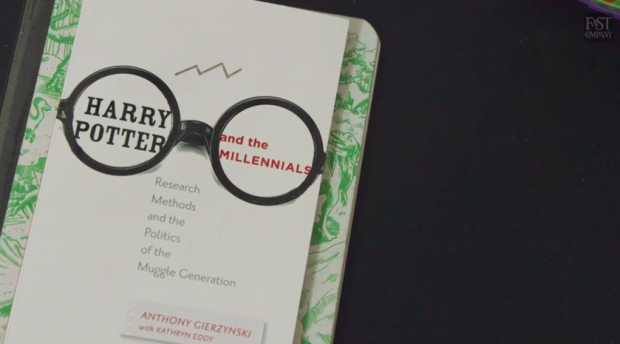
Did you realize that there is a major nonprofit activist group that was created around Harry Potter?

The Harry Potter Alliance, formed in 2005, is celebrating its 10-year anniversary of turning “fans into heroes,” around the world. They have more than 300 organized chapters in 45 countries.

The org was started by a touring comedian, Andrew Slack, when he was looking for a way to integrate social purpose into his acts. The Alliance has built libraries, sent cargo planes to Haiti and headed fund-raising efforts to help citizens in Darfur as just a few of its philanthropic efforts.

This is a great story about a nonprofit pulling together likeminded fans to bond over Harry Potter and using stories to “mobilize for social change.” And, yep, even J.K. Rowling has gotten involved, saying she is “humbled” by the Alliance’s good deeds.

Read original article here: