by Stone Marshall | Mar 6, 2015 | parent-news |
 Give others more kindness than is necessary.
That’s the take home from R.J. Palacio’s “Wonder,” an engaging read for kids fourth grade and older and adults too, making this novel ideal for families to read together.
Main character August Pullman was born with a combination of syndromes, including a type of mandibulofacial dysostosis, a genetic mutation that affects how his face formed. According to the story, there’s a one in four million chance any baby would be born with this condition, and August declines to describe his own face because “whatever you’re thinking, it’s probably worse.”
The story covers his first year in public school, and he’s off to fifth grade at Beecher Prep, a New York middle school. He’s nervous and for good reason; he’s familiar with being called “freak,” “mutant,” “monster” and “orc.”
But on the first day a girl names Summer sits by him at lunch and finds out he’s funny, so she keeps coming back day after day. Jack, a boy the administrators asked to befriend August, does so out of obligation at first but eventually realizes August is more than a challenge to be met; he’s a boy, just like Jack. He’s funny and smart, and in spite of appearances he’s the friend Jack chooses in the end.
Not everyone is so kind, some by accident as they react involuntarily to seeing August’s face and some because they choose to be mean.
As far as readability goes, there couldn’t be a more leisurely novel to work through. The novel is just 310 pages long, but it can easily be read in a week’s worth of afternoons. Most chapters are two to five pages long, and the book is chunked into sections with different characters telling their own first-person account of the story.
That’s another endearing part of the story: Readers get to hear from several characters and become sympathetic to them. For instance, one section told by August’s sister Via examines the conflict between fiercely loving and defending her brother and desperately wanting more attention from her parents and less negative attention from others because of August. It’s an interesting perspective from a family member who’s life is impacted for good and bad by a loved one’s struggle.
Maybe the best way to read “Wonder” would be as a parent with your kids because the story has lots of anecdotes perfect for conversation starters. For instance, the antagonist, Julian, knows just what to say to get on the good side with teachers and other adults, but around peers he is arrogant and condescending, and with August he’s downright cruel. His character isn’t likeable and provides the ideal opportunity to talk about authenticity and what real popularity is.
In the end, most fellow students are rooting for August, even though they don’t want to be open about it — and it’s another chance to ask your kids what kind of friend they are: one who is unashamed to be inclusive and accepting of others, or one who cares more about the crowd than being kind.
Reading this book as a family or at the same time as one another can be a good way to open the discussion about how we treat people who are different than us — appearance wise and otherwise. Because as Palacio preaches, “Your deeds are your monuments,” and little can be as monumental in people’s lives as the genuine care of others.
Read original article here:
by Stone Marshall | Mar 5, 2015 | Minecraft News |
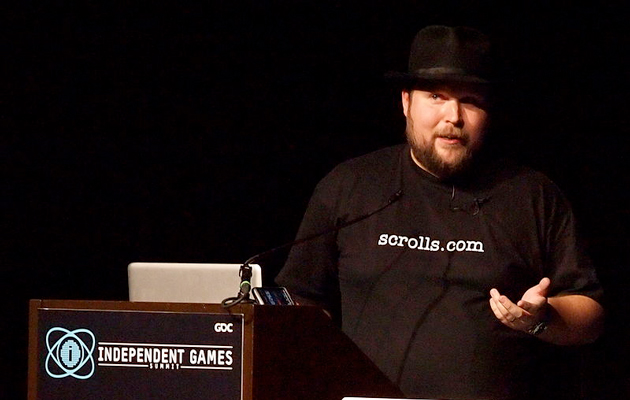
 We’re only halfway through the decade, but it’s already obvious that Minecraft is the biggest game of the ’10s. Its creator, Markus “Notch” Persson has now been honored for his achievement with a cover story in Forbes. The piece reveals a few interesting tidbits about how he came to leave the game that made his name, including the fact that the $2.5 billion sale to Microsoft was prompted with a single tweet.
On June 6th, 2014, Persson was feeling exhausted with dealing with the Minecraft community, and ventured onto Twitter to release the tension. He asked if anyone would be interested in buying his share of Mojang so that he could “move on with [his] life.” According to the interview, it was mere minutes afterward that Mojang CEO Carl Manneh was being called by a Microsoft executive asking if Persson was serious. Other companies were bidding for control of Minecraft, including Activision Blizzard and Electronic Arts, although talks with the latter stalled because Persson, apparently, isn’t a fan of EA’s policies.
Unfortunately, Persson was less happy with the way his post-Minecraft life has been portrayed by the piece. There is a suggestion that he now spends his days running up $180,000 bar bills at Swedish nightclubs.It’s something he has denied, again, using his favorite medium of Twitter. In a series of messages earlier this morning, he said that he isn’t “dedicated to partying his life away,” and it would be difficult anyway, since the interest payments on his $1.5 billion fortune are going up faster than he could spend it on fancy vodka.Read original article here:

by Stone Marshall | Mar 5, 2015 | Awesome Book News |

Entertainment Tonight has released a fun sneak peek at Joss Whedon‘s Avengers: Age of Ultron. The video includes footage from the set of the film with interviews from the cast and crew. It also features some really cool new footage from the film. One of the clips shows Quicksilver punching Captain America in the face, and Scarlet Witch casting some kind of spell on Black Widow. There’s a good chance a lot of these new little clips we see will be included in the trailer that is being released by Marvel tomorrow. In the meantime, enjoy this video. It’s worth checking out for anyone who is excited about this movie, which drops on May 1st.
Read original article here:
by Stone Marshall | Mar 4, 2015 | parent-news |
As a child, I was so desperate to read that I would painstakingly scan the ingredients list on the tomato ketchup bottle when mealtimes kept me from my books. Perhaps that’s why I’m so relaxed about mixing easily devoured trash with genuine masterpieces.
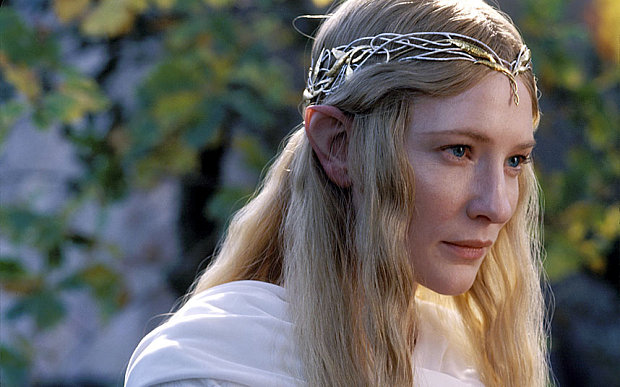
Yet even I was taken aback by last week’s furore over the annual What Kids Are Reading report, which seemed to indicate that children are now shunning classics such as J R R Tolkien’s The Lord of the Rings trilogy in favour of books by David Walliams or Jeff Kinney’s Diary of a Wimpy Kid.
To be honest, this is a debate that is as predictable as a fairy‑tale ending with the words “happily ever after”. Every generation thinks that standards are slipping – in my childhood it was Enid Blyton in the line of fire, for my sister it was the Sweet Valley High series, and today it’s The Hunger Games. All have been roundly condemned for stopping children reading good books.
And yet children keep reading. Shouldn’t we be celebrating that children’s books sales were up by 9 per cent last year – and that seven out of 10 of the best-selling books in 2014 were for children or young adults? Many of those books today have messages as sophisticated as those in classics such as To Kill a Mockingbird. I’ve been gripped by The Fault in Our Stars by John Green, Wonder by R J Palacio or Keren David’s When I Was Joe trilogy.
Plus, let’s not blind ourselves to the fact that some “classics” don’t always deserve the title. I was delighted that Tolkien, the favourite author of nerds and fantasists, has finally slipped out of the “most popular” lists. What can account for the perpetual appeal of Middle Earth? I’m fully with Hugo Dyson, one of the “Inklings” – a literary circle of Oxford dons – who had to listen to Tolkien read out early drafts of The Lord of the Rings, until one day he could bear no more and shouted out: “Oh no! Not another —-ing elf!”
Read original article here:
by Stone Marshall | Mar 4, 2015 | parent-news |
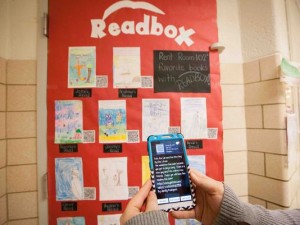
The door into Jackie Ewasko’s second grade classroom at Gallaher Elementary should look familiar to anyone who’s checked out a DVD from a Redbox kiosk.
On a red background, the “Readbox” has pictures drawn by her students to illustrate a book they read. Next to each is a QR code which, when scanned with a smartphone or similar device, brings up a review the student wrote and links to websites and YouTube videos about the book.
The Readbox is the class’s entry in a door-decorating contest the school had as part of I Love to Read Month, a campaign to get students excited about reading.
“In my room, I really push how reading should be fun and enjoyable. I want them to explore all kinds of different books,” Ewasko said. “We talked about decorating our book for just one story, but everybody had different ideas. So we came up with something that said, hey, there’s a book for everybody!”
The door-decorating contest is only one of several events that have happened at Gallaher over the past few weeks. The school worked with Heifer International, a charity organization that provides animals to poverty and famine-stricken countries, and it’s “Read to Feed” program.
Students got “sponsors,” who pledged small amounts of money if kids read a certain amount. Students were able to pick certain animals out of a catalog and attempt to raise enough money to purchase one for a needy family.
The school invited two children’s authors, Jill Perry and Lynne Silber, to the school to talk with students about the books they wrote and read to them.
“We really wanted them to read, to write, to draw, to think and know that they can do it,” said school librarian Molly Keohane. “You don’t have to be somebody extraordinary to be successful.”
Delaware has been making a push over the past year or so to boost literacy for students, focusing especially on making sure students are reading at grade-level by the third grade.
If students aren’t reading as well as they should by that time, they will often have a much more difficult time understand class assignments and are more likely to get frustrated. In the short term, that leads to low grades and even behavioral problems, but in the long term it can mean dropping out of school.
Keohane said one of the best ways to do that is to continuously read to kids or, once they are able, have them read themselves and discuss what they learned.
“Children learn by communication. You have to talk to them,” she said. “They have to hear the language, hear the flow of words.”
And Ewasko said it’s important to let kids read for pleasure as well as school.
“If you only have them reading these texts for assignments, it sucks the joy out of it,” she said. “I want my students to have a love for learning and a love for reading, no matter kind it is.”
Read original article here:
