Technobubble covers games, gadgets, technology and all things geek. Follow Technobubble poobah Jason Hidalgo’s shenanigans on Twitter @jasonhidalgo
Oh. My. Gosh.
Is that a non-video game review I see squeezed into the weekly Technobubble Wrap? Why yes, yes it is.
I admit, I haven’t been as prolific with the gadget reviews for some time. But I’ll try to squeeze more of the stuff in, especially now that the year-end video game rush is over.
Now let’s get this week’s game and gadget party started, shall we?
Disney Infinity 3.0 Star Wars: The Force Awakens Play Set
Spoiler alert!
That’s actually something you ain’t gonna see in the campaign of the “Disney Infinity 3.0 Star Wars: The Force Awakens Play Set.” Thanks to a campaign that does its darned tootin’ best not to spoil as many details as possible from “Star Wars Episode 7: The Force Awakens” movie, fans of the blockbuster will find themselves having, well, a bit of a different experience.
Graphically, the game’s three main areas continue to be an improvement over the drab cityscapes of “Disney Infinity 2.0 Marvel Super Heroes.” Gameplay also remains solid, particularly for action lovers. Each character typically employs a unique fighting style that can be upgraded and customized via skill trees for adding combo extenders, powering up moves and beefing up a characters’ health bars, for example. I also like how the two base characters included in the playset play differently from each other. Rey, for example, is more of a melee character who especially benefits from improving his staff-based moves. Finn, on the other hand, is awesome with firearms — especially once upgrading his shooting skill tree. Folks who buy the extra packs also can get pilot Poe Dameron and the film’s resident emo force user, Kylo Ren.
If you liked the original Disney 3.0 experience, The Force Awakens Play Set gives you more of the same while allowing you to experience the franchise’s new characters. The not-exactly-canon story might disappoint some folks and the campaign itself is pretty short outside of the side missions. If you’re a fan of the series, however and are itching for more content to play or add to your Toy Box for 3.0, then this game gives you more of what you love.
Rating:3.5
Cost:$35 for playset with Rey and Finn, $14 each for Kylo Ren and Poe Dameron
After the Debbie Downer that was “Game of Thrones Episode 6: The Ice Dragon,” I needed some serious positivity to bring a much needed ray of sunshine into my life. After all, a man can only take so much soul-crushing sadness before he throws up his hands and says, “You know what? Those Morrissey songs weren’t as depressing as I thought.”
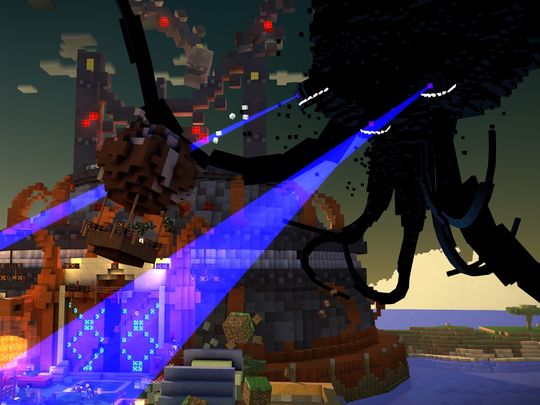
This makes “Minecraft Story Mode Episode 4: A Block and A Hard Place,” a much welcome change of pace. Oh, look at those cute blocky people doing cute blocky things. I think everything’s going to be just alright.
Not that Episode 4 doesn’t have its share of serious moments, mind you. In fact, it’s probably the most serious episode of the bunch and includes what’s arguably the most powerful moment of entire series. Even with all the serious stuff going on, though, the series still manages to sneak in some chuckles. It’s obvious that this is a game aiming to satisfy more than one audience, comprising of of Minecraft’s stalwart base of young kids on one side as well as older gamers who love their point-and-click adventuring.
It’s a double-edged sword to be sure as its propensity to please two masters makes it appeal to a wider audience but also blunts its storytelling impact in a way that, say, “Tales From the Borderlands” didn’t have to worry about. The end result is that it’s a great series for young Minecraft fans, who will like its familiar blocky look, item crafting nods and witty storytelling. The same can’t be said for older audiences, however, who might find it lacking the extra punch they expect in their story-driven games.
Rating:3.5
Cost:$25 for five episodes; PC, PS3, PS4, X360, XB1, iOS, Android (Review based on Xbox One version)
We kick off the return of gadget reviews with the Ratsel BT speaker from Thonet and Vander. I remember positively gushing about the last Thonet and Vander speakers I reviewed in this space, the Kurbis BT. I actually really liked those. A lot.
As such, I had high expectations for the Ratsel BT, which diverges from the double speaker setup of the Kurbis and includes two mini towers and one serious looking subwoofer instead. So far so good. It even includes a control tower that lets you adjust volume, bass and treble settings separately, which is always a plus for control freaks like me.
Admittedly the speakers didn’t sound that great the first time I listened to them. After using them for about a week during the holiday season, however, the sound improved a lot. I know some folks say that speaker break-in is a myth and, honestly, I wonder myself sometimes but for whatever reason, it worked for this set of speakers. Obviously, it still won’t sound as good as some serious component speakers but for its size and class, the Ratsel BT stacks up well against its competitors. Having both wired and wireless options also are a plus.
One downside is that it appears to be prone to interference. I noticed a faint buzz, for example, when I placed it by my home workstation, where all my other gadgets and ginormous TV are. Placing it at a different corner, however, alleviated the problem. Another is the lack of input controls on the control tower. Instead, you have to use the remote to switch from wireless to wired, which is mightily inconvenient for some such as myself. It also means you’re screwed if you ever lose the remote.
If you don’t have any issues with those two main niggles, the Ratsel might still work for you. Otherwise, I recommend opting for the Kurbis instead.
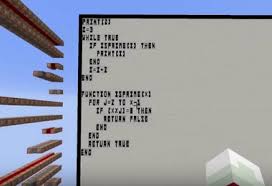
BASIC is a programming language, and Minecraftis a video game. If you used a Commodore 64 or Amstrad CPC464 back in the 1980s, you probably have some vague familiarity with the language. Anyway, someone has built a BASIC interpreter in Minecraft. It doesn’t work very well, and you’ll probably never want to actually use it, but the fact that it exists is its own reward.
It’s the work of one SethBling, who does a great job of explaining what it is and how it works in the accompanying video. It’s made in vanilla Minecraft, and utilises hundreds (or maybe thousands) of command blocks. You can download the scripting here, if for some reason you actually wanna use it, but I feel like it’s better just to watch, and to marvel at what’s possible.
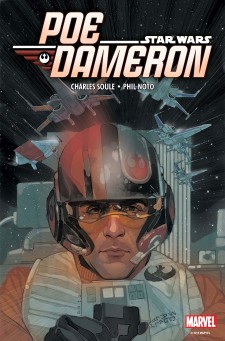
Following therecord-obliteratingbox office run enjoyed by“Star Wars: The Force Awakens,”it seemed like only a matter of time beforeMarvelannounced a comic book tie-in. Now,USA Todayhas announced that Poe Dameron, the bestfighter pilotin the Resistance, will get his own ongoing comicbook series.
Launching in April, the ongoing “Star Wars: Poe Dameron” comes from a pair of comic creators —Charles SouleandPhil Noto— that are veterans of Marvel’s Star Wars line. The series marks writer Soule’s third entry into the canon, following the “Lando” and “Obi-Wan & Anakin” limited series. Noto will serve as Soule’s co-pilot, making “Poe Dameron” the artist’s second Star Wars series following “Chewbacca.”
Poe as played by Oscar Isaac has become a breakout character from “The Force Awakens,” and series writer Soule told USATodaythat seeing “people reacting to him so strongly now just feels like we’re hopefully in a great position.” Soule reacted strongly to Poe, sharing his enthusiasm for the character during “Force Awakens'” opening weekend.
“Poe Dameron” sketches by Phil Noto
“I’ve seen people on Twitter and Instagram looking for Poe Dameron in the comics,” added Noto. “Now the pressure’s on us to deliver.” Writer Charles Soule was also one of those people tweeting praise for Poe Dameron.
The series will be set prior to the events of “Star Wars: The Force Awakens,” in the gap between “Return of the Jedi” and the latest Star Wars film. The series will also introduce a new threat from the First Order that will serve as Poe’s primary antagonist, with Soule commenting that the new villain “is going to feel fresh and cool.” BB-8 and some of the newly introduced X-wingpilotswill round out Poe’s supportingcast.
“Poe Dameron” will be the second series set in that 30-year gap, following last year’s “Journey to the Force Awakens – Shattered Empire” limited series. Aprose novel, “Before the Awakening,”also explored Poe Dameron in this time period.
Marvel Confirms Shelving ‘Fantastic Four’ as Ongoing Comic Book Concern This will be the first time Marvel has not had a Fantastic Four comic in publication or development in more than five decades. Jack Kirby/Marvel Enterprises This will be the first time Marvel has not had a Fantastic Four comic in publication or development in more than five decades.
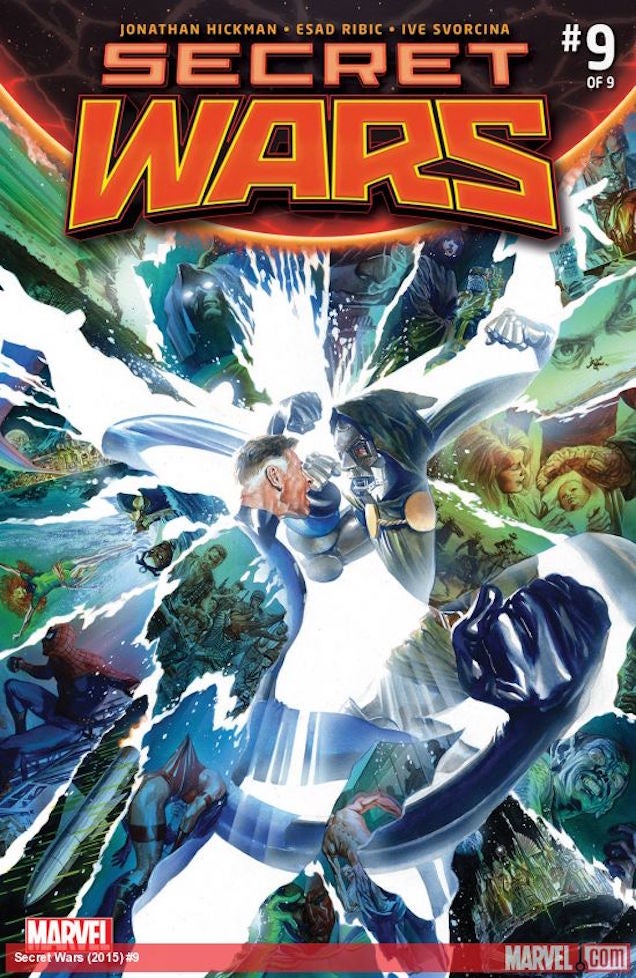
It’s not a good time for Marvel’s first family. Not only did Fox’s second attempt at the Fantastic Four movie franchise crash and burn at the box office last year, but with the release of the much-delayed final issue of Marvel’s Secret Wars series, the publisher has brought the comic book adventures of the team to a close as well. Spoilers for Secret Wars follow.
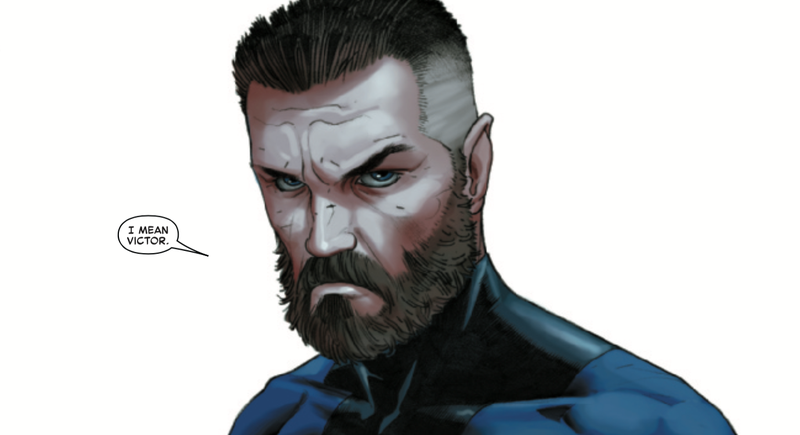
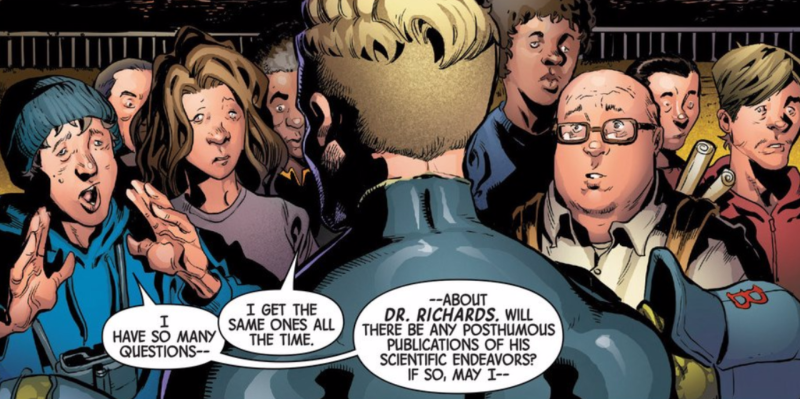
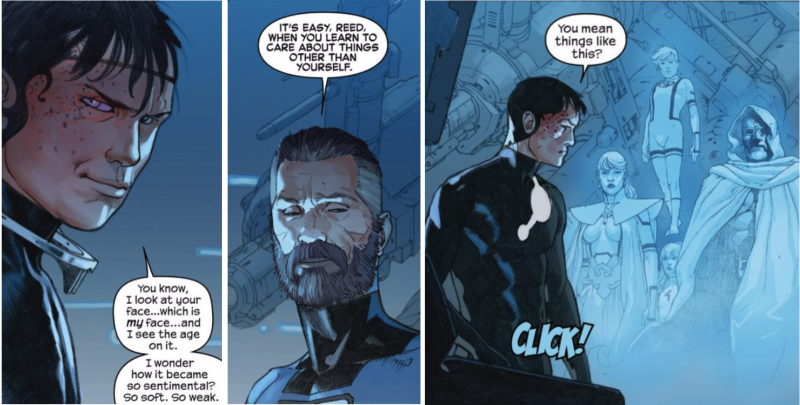
By the close of Secret Wars No. 9, Reed Richards, his immediate family — wife Sue, and children Franklin and Valeria — and group of students the Future Foundation end up outside reality, creating new universes in an attempt to repopulate a comic book multiverse decimated by events leading up to the series. A bearded Richards makes a metatextual comment to emphasize his retirement to the reader: “No more superheroes for a while, just science. And no more Mister Fantastic, just Dad. That doesn’t sound too bad, does it?”
In an interview with Comic Book Resources, Marvel executive editor Tom Brevoort said that, “at a certain point, we set out [in Secret Wars] to do the last Fantastic Four story, at least for the time being,” although he admitted that, “we didn’t necessarily start with that as the original goal.”
The end of the Fantastic Four as a comic book property has been a matter of much speculation for months, with the title not being listed among the many relaunches as part of the publisher’s All-New, All-Different Marvel comic book line reboot. The idea that the comic book was a casualty of a struggle between Marvel and Fox was often floated, but Brevoort said that the reason for the decision has more to do with reader and creator apathy toward the concept.
“Fantastic Four has been one of those books that, for a number of years, has been effectively taken for granted,” he told CBR. “It’s been considered stodgy, or old school, or some people see it as a thing that’s there and people are comfortable because it’s there, but they’re not particularly passionate about it. So we’re not going to have that book for a while.”
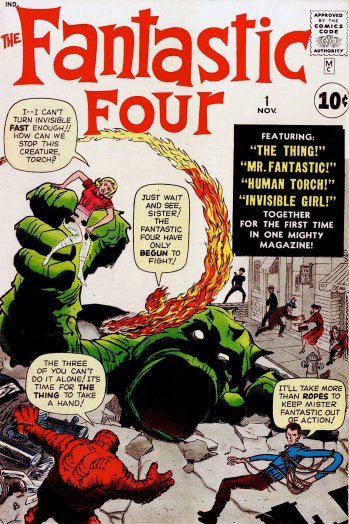
Fantastic Four was the series that launched Marvel Entertainment as it’s known today, with the success of the book’s 1961 debut leading to the creation of such characters as Iron Man, Spider-Man, the X-Men and the Hulk. A handful of Marvel characters, most notably Captain America, predate the creation of the Fantastic Four, but it was the response to the work of Stan Lee and Jack Kirby on Fantastic Four that led to those characters being brought back into use, as well as the creation of the shared “Marvel Universe” seen in Marvel Studios movies today. This will be the first time Marvel has not had a Fantastic Four comic in publication or development in more than five decades.
Some of the FF characters will continue to appear in other series — the Thing is part of the Guardians of the Galaxy cast, with the Human Torch appearing in both Uncanny Avengers and Uncanny Inhumans — and Brevoort said that “inevitably and invariably” the rest of the cast will return at some point in time. (An evil alternate universe version of Reed Richards is already appearing in the New Avengers series.)
“We didn’t have a Thor book for a while,” he explained. “For a couple of years, there was absolutely no Thor book, and when Thor came back, it was a huge book. It continues to be a huge book to this day. I think that absence was part of what made people cherish its return, and then it was just having great talent to execute that return. If the same sort of thing happens with Fantastic Four that would not be the worst thing in the world.”
The final issue of Marvel’s everything-changing event series bids farewell to the fictional father figure of its superhero reality. Reed Richards doesn’t exit the stage quite the way we’ve been led to believe, either.
The end of Secret Wars comes a few months deep into an aftermath that’s well underway. Marvel Comics’s All-New, All-Different initiative is a complete re-imagining of their universe’s characters and status quos. The changes so far have given readers a Spider-Man who runs a global tech conglomerate, a female Wolverine and a Hulk who isn’t Bruce Banner. All of this takes place eight months after the end of Secret Wars. The Fantastic Four is no more, and the Human Torch and the Thing fight evil on different super-teams. The whereabouts of Reed Richards (the original, not his evil alt-reality counterpart) have been an ongoing mystery for a while, with allusions to his apparent death.
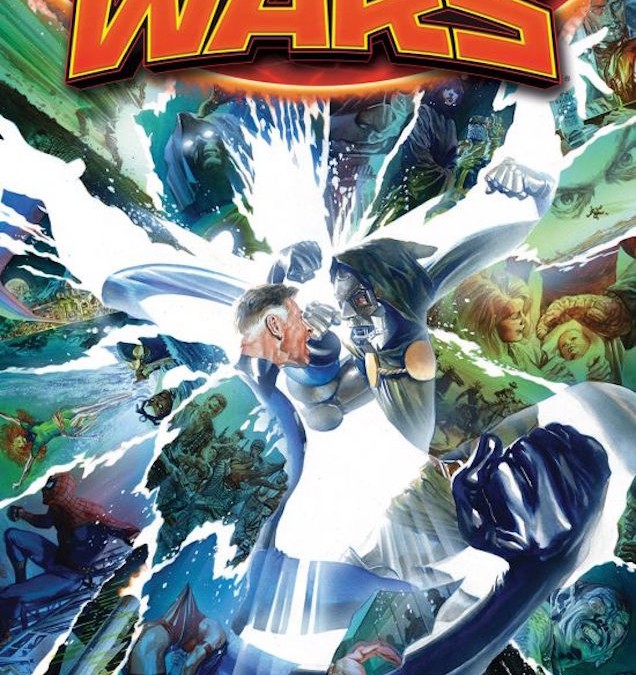
Secret Wars #9—out this week from Jonathan Hickman and Esad Ribic—shows what happened to Mr. Fantastic just before the Marvel Universe gets reborn.
Secret Wars has been happening on a cosmic scale. It is set on a patchwork planet created by Dr. Doom after snatching omnipotence from mysterious beings who were orchestrating the end of all existence. What’s made the series the best mainstream crossover event in recent memory, though, is that it’s actually a focused character study. It’s largely been concerned with Victor Von Doom and the way that the archvillain has embodied godhood, but there’s been an increasing focus on his lifelong enemy, too. After surviving the erasure of the multiverse, Reed Richards has found himself in a reality where his life has been stolen. He’s been focused on working with the Black Panther, Namor and other survivors to come up with a way to defeat Doom-turned-God. The scenes where he reckons with what’s been lost, like the ones below from Secret Wars #6, have been wrenching.
The difference between superficial and meaningful change can be hard to chart in superhero comics. Death, estrangement and other reversals are just storytelling tools used in panels and word balloons. But Marvel Comics’ latest mutations have been consequential in game-changing ways. The company whence Iron Man, Captain America and the X-Men sprung isn’t just a comics publisher anymore. Even before its acquisition by Disney five years ago, Marvel was acting on ambitions to make their characters the source of an ambitious multimedia business. Those ambitions have been largely met, manifesting in a reality where multiple Marvel-branded movies and TV shows come out every year.
This issue’s best subtext is in how Hickman comments on the real-world shifts that are seemingly influencing how Marvel is grooming its stable of characters. Despit rampant speculation, it’s never been explicitly confirmed that 20th Century Fox’s command of the Fantastic Four film rights is the reason that Marvel isn’t publishing a monthly series featuring their beloved super-family. But the way that the publisher has reconfigured its fictional landscape is clearly prioritizing characters whose film and TV rights are under Marvel’s control. For example, the X-Men franchise is another one whose multimedia rights are controlled by a non-Marvel/Disney entity so the new Marvel Universe is a place where mutants are becoming extinct while the Inhuman population booms. Those are the same Inhumans who are a major part of Disney-owned ABC TV show Agents of SHIELD. If they are what they seem to be, editorial decisions like these—driven by outside factors—are a big change from how Marvel used to craft its storylines.
That change is deeply felt in Secret Wars #9, which reads like an explosion of all the series’ various attributes. There are giant battles of epic scale, shot through with heated monologues revealing how characters see themselves and others. The issue ends with a glimpse of the new reality Marvel’s heroes inhabit and teases the reason that Miles Morales got his mother back. Early on, as the Black Panther and Doom face off in a prelude to the series’ final showdown, Doom sneers at the attacks on his rule, characterizing them as “machination.”
It’s a sly beat that reminds readers that all superhero universes are the aggregate results of decades of tweaks, feints and left turns. Machinations, both metafictional intratextual, aren’t anything new in cape comics. What’s changing now is the fact that the successes of various adaptations appear to be filtering back into the wellspring that the TV shows and movies came from. It’s an undeniably plausible reason that, say, Daredevil has a secret identity again.
There’s also a sense of closure here, as Hickman returns to characters and scenes from his tenures on various Marvel series. The Black Panther counsels young charges in his kingdom like he did in New Avengers #1, but it’s the beginning of a new universe—and not the impending death of many—that serves as a backdrop. Epitomized by a stellar stint on the Fantastic Four family of titles, Hickman’s time at Marvel linked many of the publisher’s franchises into a sprawling mega-story, concerned in part with the hard choices superheroes have to make to preserve entire societies. Fittingly, Secret Wars ends with Reed Richards peacefully resigning himself to the idea of a new Marvel Universe built off of the emotional resonances of the old one. He can’t be part of it now, but serves in a role that’s a tacit acknowledgement that he’ll always be the foundation stone upon which Marvel’s superhero successes were built