The Nov. 1 launch of a “Minecraft” version tailored for the classroom is exciting educators and parents alike.
“Phenomenal” is how Mark Minghella describes the test version of “Minecraft: Education Edition,” the new iteration of the popular building game.
“I’ve got an overwhelmingly … positive attitude toward ‘Minecraft’ in the classroom,” says Minghella, a technology teacher in the nation’s capital at the British International School of Washington. He says he was familiar with “Minecraft” thanks to his two kids. “It’s actually being used for education purposes and not just for students to play games.”
Minghella says the game can help students understand the concepts involved with building a sustainable community, as well as how to work collaboratively, overcome obstacles and prioritize tasks.
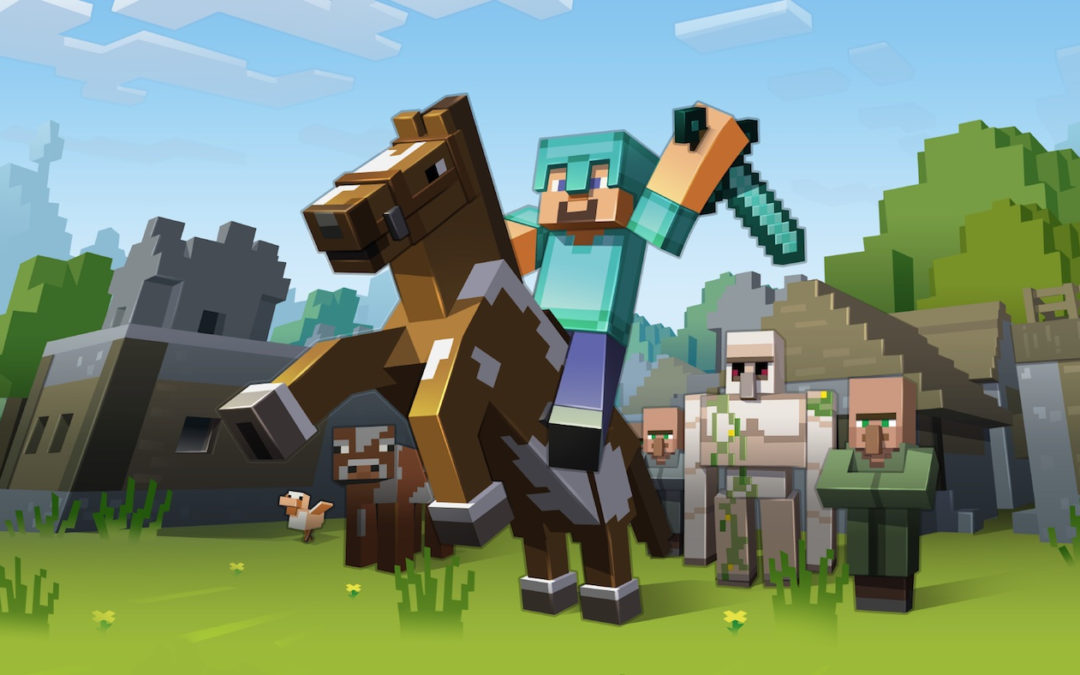
“Minecraft” gamers can build their own worlds. Stealth/YouTube
“Understanding that logical sequencing and systems thinking” is one of the many benefits of gaming for students, says Lisa Douthit, an emerging technology teacher with the Turner Unified School District of Kansas City, Kansas. “It’s all about logical thinking and critical thinking, and how it expands that student’s mind from that perspective.”
For Microsoft, the parent company of “Minecraft,” the foray appears to make sense, as the game-based learning market is expected to reap revenues of $4.9 billion by 2019. The company, which acquired “Minecraft” developer Mojang for $2.5 billion in 2014 in one of the largest acquisitions in gaming history,announced the updated game version in January. The original “Minecraft” version has seen more than 100 million downloads on PCs alone since 2009.
Based on MinecraftEdu, a licensed game developed by TeacherGaming LLC and purchased by Microsoft earlier this year, “Minecraft: Education Edition” has been free to more than 35,000 students and teachers around the world taking part in an early access program. Since June, schools and students have been testing the new edition, providing feedback to the company to refine the game before its official launch.
“We have high hopes for this title to be a game-changer in classrooms around the world,” Deirdre Quarnstrom, director of “Minecraft” education at Microsoft, tells U.S. News. “Our first priority in the short term is driving awareness of the new title and getting continued educator feedback to finesse the experience as we go.”
“Minecraft: Education Edition” provides a team-play mode for up to 30 students and allows them to take pictures of their work for teachers to track their development. It also adds a chalkboard feature so teachers can post information or give instructions during the game. It has a single sign-on feature for privacy and security protection, and a non-player character function in the November version enables educators to act as guides within the game.
The technical nature of the game itself may impede classroom adoption for some, as it takes place in an open “sandbox” format in which players build worlds from scratch using 3-D blocks.
“For educators who know and love ‘Minecraft,’ the blank canvas is an exciting opportunity, but for those who are new to ‘Minecraft,’ this format can be overwhelming,” Microsoft’s Quarnstrom admits.
But features like an in-depth tutorial, lesson plans, a variety of templated worlds and a classroom mode can help reduce the learning curve. So-called “Minecraft” mentors will be available to aid teachers working to incorporate the game into classwork as well.
That schools and interested parents will adopt the game on a widespread level is the gamble Microsoft is taking. “Minecraft: Education Edition” will be available in the Windows Store for $5 per user per year from Nov. 1, while schools also can obtain the game under a districtwide licensing agreement that charges in the range of $1 to $2 per user per year, the “Minecraft” team tells U.S. News in an email.
The November launch comes as efforts to connect more classrooms to the internet have ramped up in recent years, involving advocates such as Facebook founder Mark Zuckerberg in the nonprofit world and the Obama administration on the federal level. Yet concerns about children and teens spending too much time watching television or using other media devices remain prevalent, with the American Academy of Pediatrics recommending parents set consistent limits on such activities.
“Minecraft” encourages logical thinking and critical thinking, educators say. Stealth/YouTube
But while some may balk at the idea of making gaming a focal point in the classroom, most of the educators contacted by U.S. News say they have overwhelming support from parents.
“There are definitely parents who would not agree to applying gaming, but I would like to think that it is a function of not understanding the association with the learning objectives,” says Steven Isaacs, a game design and development teacher at William Annin Middle School in New Jersey, who also will be serving as a “Minecraft” mentor.
Minghella says his school did receive a complaint from a parent who was not convinced about the benefits of applying gaming to the classroom. But he says most parents have been very supportive.
“I think that some parents play games and as such, get the idea. Some don’t play games but understand that we can harness games to enhance education. Finally, some don’t play games and can’t see past games as being anything more than just games,” Minghella says.
He also thinks efforts by schools and teachers can mitigate parents’ worries. The British International School of Washington, for example, hosted a “Minecraft for Parents” event to let parents experience the game and see what the students can learn.
Mark Blair, a technology specialist with the Douglas County School District in Colorado, says some teachers testing the game did have technical difficulties getting it running. But he thinks those issues will be minimized in the new edition, in which teachers will simply have to create a world for the students to operate within after joining.
“Because they added some new modifications for teachers to better manage their class, and to be able to do things like coding and other things that teachers are interested in, it’s just easier for teachers to adopt it,” says Mimi Ito, research director of the Digital Media and Learning Hub at the University of California—Irvine. Ito also is a co-founder of Connected Camps, a for-profit online learning organization through which teenage coaches use “Minecraft” to teach younger children computer coding and Spanish.
Some educators and after-school programs already using the standard “Minecraft” version may be reluctant to switch to the education edition, worried it may pale in comparison to some of the original’s more powerful features, such as modded weapons, characters and game modes.
Whether students can continue their learning at home using the education edition is another question for users. While Microsoft has said kids can play the game at home as well, Ito notes their particular identity in the game is tied to where they currently attend school, meaning switching to another may force them to start from scratch or scrap the game altogether.
“What’s very important for our learning model is that it’s about having a social relationship, a community, being a part of a shared ‘Minecraft’ server community,” Ito says. “And in order to do that, kids need to be able to connect from home and need to be able to maintain that ‘Minecraft’ identity, which is different from the education edition where the school is going to buy the accounts and the school owns the account for whatever period of time that they want to subscribe their kids.”
However, Douthit says she’s excited to see how the new version evolves.
“Obviously they are developing their regular version of ‘Minecraft,’ so I have great confidence that they are gonna do the same with the teacher version,” she says.
Today’s Apple event might be about new Macs, but the company is taking time to detail updates for its other products too. First up: Apple TV. On stage today, CEO Tim Cook said that the box now offers access to over 8,000 apps, and will soon become home to one of the most popular games on both consoles and mobile: Minecraft. That’s right, Microsoft’s huge open-world sandbox game will be available on Apple TV “by the end of the year.”
Apple has provided no additional details about what is in store but you’ll likely want to invest in a third-party controller to get the most from the title. Sure, Apple’s new wireless remote sports a touchpad and hosts more buttons than the minimalist silver remote that shipped with the company’s older streamers but we imagine it won’t be the best tool to help you (or the little ones) build that all-important End Portal. We’ve contacted Microsoft and Mojang for more details and will bring you more information as we get it.
At an event in New York City today, Microsoft unveiled a radically updated version of its ubiquitous Paint app for Windows 10, one that lets users build three-dimensional creations. And it turns out that the new tool will be especially useful for Minecraft players. According to Microsoft, players will not only be able to export their in-game creations to the new Paint 3D tool, but then 3D print them from the app, so you can have a real live version of your previously digital creation. There are already a few third-party options that offer similar services, of course, but given the tight integration between Minecraft and Paint 3D, this should be the most streamlined way yet.
In the 15-30 minutes of downtime I corner in a day, I have a tendency to dive into comic books. Old, new, Marvel, DC, IDW, Dark Horse – you name it, I read it. It’s been this way for years, which have given me some wild insight into this creative universe. It’s also gifted me with an extensive knowledge of comic monsters. Today’s focus are a few of the monsters ruling the Marvel Comics universe. These are beasts who deserve their own films. But not those family friendly comic adaptations, we’re talking full bore horror films. Check out 10 Marvel Comics characters that deserve their own horror movies!
Morbius
Uh… Morbius is a living vampire. Yeah, you read that right: He’s a living vampire! He consumes blood, he attacks the unsuspecting, he stalks the streets under light of the moon. He doesn’t give a rat’s ass about anything other than sinking his incisors into your neck and draining every last drop of your blood. Assuming Blade can’t track the man down, he could really run roughshod on a group of intoxicated 20-somethings.
Venom
Come on now, Venom is already one of the coolest and most imposing villains Spiderman has ever had the misfortune of facing. You know he’s a bad ass. You know he’d just as soon kill a speedbump as opposed to slowing for it, and you know that, while that symbiote is really worked up, he’s completely remorseless. This beast would make for a paralyzing villain in a horror feature.
Calypso
A psychopathic voodoo priestess of Haitian nationality… hmm, just imagine the possibilities! Seeing genuinely menacing female antagonists is always great. When they just so happen to be as unpredictable as Calypso, well, that just adds to the fun. This is a character that’s often gone underappreciated, but with the right casting, she could be one genuinely vile beast fully capable of fronting a horror film!
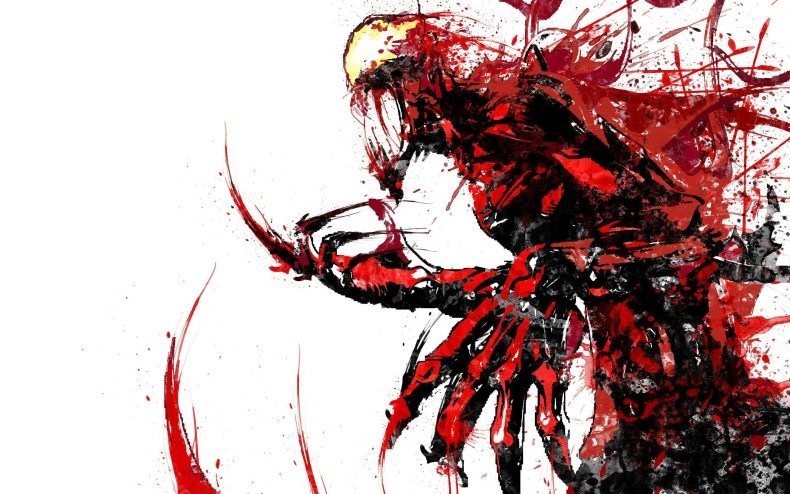
Carnage
Carnage is basically the ultraviolent version of Venom. In fact, in many ways Carnage makes Venom look like a boy scout. If you want to see a Marvel character that could make for a horrendously bloody film, you want to see Carnage. The dude more than lives up to his name, and you can bet were this feared commodity given the chance to front his own film we’d see an absurd amount of extremely grahic violence. We’re talking Hard-R, at the least!
Deathlok
Deathlok is a reanimated monster enhanced by cybernetics. He’s basically a cross between a zombie and the Terminator. If that’s not the kind of character who could take heads (and maybe eat a little brains in the process) and leave viewers stunned at his murderous aggression, I simply don’t know who, or what is!
Wolverine
Let’s just cut the crap and forget all about the X-Men flicks, and the Wolverine flicks we’ve seen. In each of those pictures Wolvie was displayed as a good guy with an angry streak. But let’s just imagine Wolverine on a true rampage, a mission to slaughter anyone and everyone. That could be the darkest Marvel movie ever created. And the blood… goodness the blood!
Jack O’Lantern
This dude just looks awesome. In fact, the villainous Jack O’Lantern makes Ghost Rider look like an anorexic weirdo with a BIC lighter affixed to his neck. What’s also cool about this character is the fact that he could totally and completely own a Halloween-themed genre pic. He might even give the Headless Horseman a good run for his money!
Legion of Monsters
Is this cheating? It sure feels like cheating. With Dracula, the Mummy, a hideous Wolfman and more on deck, this group seems like a very obvious selection for a big screen transfer. In fact, in some ways we’ve already seen this. And I’m not talking about classic Universal Monster Crossovers, I’m talking about the 80s flick we all hold so dear to our hearts: The Monster Squad.
Not that we’d be against a new rendition featuring these specific Marvel characters!
Man-Thing
A cross between the Swamp Thing and Cthulu, this character is destined to front a violence packed, blood-flinging flick in which vengeance at the core. Ted was wronged by those he trusted. They betrayed him in his quest to create the super soldier. But when he consumes that serum himself it turns him into something vicious… a monstrous killing machine and you can bet, there isn’t a single soul safe in the beast’s presence! Awesome flick in the making? We think so!!
Scarecrow
This dude was certifiably insane. He slaughtered too many innocents to count. He beefed with just about every noteworthy superhero on the Marvel roster. And through it all, he clung to that insanity, and then slaughtered more unsuspecting victims. In short, he’s a killing machine, and given his cool getup and ice cold demeanor, he could make for an absolutely magical horror film. Just keep all the Avengers away from him while he does his evil bidding!
Cyborgs and serial killers, crime bosses and capitalist pigs, literal demons and just plain dickheads: Evil takes many forms on television, and rare is the show that would be any good without it. After all, a memorable villain does more than provide someone for the main characters to punch, shoot, or wrestle into a pond in evening attire — they reveal the protagonists for who they are by demonstrating who they’re not. And let’s face it, they usually get the coolest lines.
Below you’ll find the 40 finest villains ever to (dis)grace your TV screen. No antiheroes here: Rather than clog up the list with the Don Drapers, Piper Chapmans, Walter Whites, and Tony Sopranos of the world, who drive their own stories, we stuck strictly with the characters who exist to run the others off the road. And believe us, this crew is the best at being the worst.
40. Kilgrave, ‘Jessica Jones’
“Jessicaaaaa!” If you’ve ever been filled with dread simply by hearing your own name called by someone who “loves” you, the telepathic predator no doubt struck a nerve. Actor David Tennant is best known for playing one of TV’s most iconic heroes on Doctor Who, and his turn as a villain sees him feed more than a little scenery into his maw. But the Kilgrave concept is so chilling, and so resonant with all-too-real abuse, that the character still belongs in any discussion of TV evil.
39. Ace, ‘Girls’
The murderous metahuman called Sylar from NBC’s Heroes was Zachary Quinto’s breakout role, but an even better villain awaited him. That would be Ace, the preposterously awful hipster who blew up the lives of multiple characters in Girls‘ fourth season. Given the charges of millennial self-absorption frequently leveled at Lena Dunham’s dramedy, creating the worst possible Brooklyn stereotype imaginable — from his jaunty cap to his trademark toothbrush, it’s like he was sprung from the same place the fraudulent chocolate brothers bought their beards — to be the core crew’s antagonist was a masterstroke. His best line, “Let’s take some selfies and get weird,” is what the Borg would tell people if it was going to assimilate them into Williamsburg.
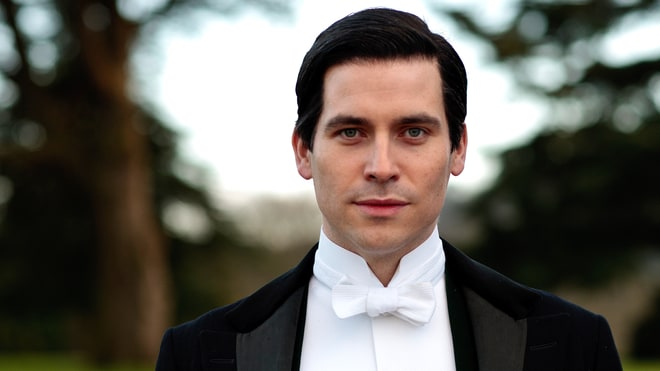
38. Thomas Barrow, ‘Downton Abbey’
Of course, the show’s greatest villain is the British aristocracy itself. But if we limit ourselves to actual human beings, then scheming, sneering footman Thomas Barrow takes top billing. Embittered by both life in the closet and the underappreciated existence of the servant class, Thomas takes it out on his fellow employees with DGAF devilishness. Striking actor Rob James-Collier imbues his every scheme with a vibe that’s half snake charmer, half snake. But over time, as Thomas’ plight deepens — cowardice during the Great War, countless social-climbing attempts gone wrong, his attempts to “cure” his homosexuality — so does our sympathy.
37. Skeletor, ‘He-Man and the Masters of the Universe’
The action cartoons of the 1980s were full of memorable villains, which made good financial sense: Many were glorified commercials for toy companies, and kids needed figures for their heroes to fight, right? But of all the big names — Cobra Commander, Megatron, Hordak, Mumm-Ra, the Shredder, the Misfits — Skeletor stands out from the pack. His skull-faced character design is a perfect encapsulation of what a “bad guy” would look like to a child, and that imperious cackling voice (courtesy of actor Alan Oppenheimer) is the sonic antithesis of He-Man’s heroic “By the power of Greyskull” battle cry. And most importantly for young viewers, he never wins.
36. The One-Armed Man, ‘The Fugitive’
Less a villain than the idea of a bad guy, the One-Armed Man was the human maguffin who drove The Fugitive‘s basic story — the real killer of Dr. Richard Kimble’s wife, whom the good doctor was on a quest to catch and thereby clear his name. Played by Bill Raisch, he was only glimpsed a handful of times before the end, but his influence lingers on: He bequeathed his moniker and disability to a prominent Twin Peaks character (real name: Philip Gerard, after the cop tracking Kimble down), and he’s synonymous with the mystery culprits that conspiracy theorists and accused killers alike concoct to explain seemingly open-and-shut crimes.
35. Reverse Flash, ‘The Flash’
You have to hand it to the writers of the show, one of the best and brightest of superhero TV’s new breed. (Spoilers ahoy!) After painstakingly establishing scientific genius Harrison Wells (Tom Cavanagh) as the Scarlet Speedster’s yellow-clad, time-traveling opposite number, they then revealed that Wells wasn’t Wells at all — he was Eobard Thawne (Matt Letscher), who murdered the man and stole his identity to accelerate his villainous schemes. The whole story is the kind of bait-and-switch a supervillain would love.
34. The Trinity Killer, ‘Dexter’
Talk about killer casting. Actor John Lithgow had long walked the line between manic and maniac in his performances, comedic or otherwise, but his role as Arthur Mitchell — the so-called “Trinity Killer” was — saw him leap that line in terrifying fashion. Initially seen as a family-man role model, he’s revealed to be Dexter‘s most prolific and disturbing murderer — evil in a way not even our homicidal antihero can stomach. This makes him the titular killer of killers’ most formidable target; it also places the people Dexter cares about in grave peril, as he learns to his lasting devastation.
33. The Gentlemen, ‘Buffy the Vampire Slayer’
Faith, Angelus, Spike, Drusilla, Glory, the Mayor, Dark Willow: Joss Whedon’s influential horror-action-teen-drama hybrid had no shortage of memorable baddies, big and otherwise. But sometimes one episode is all it takes to cement your place in the horror hall of fame, and that’s the deal with the Gentlemen — the smiling, silent, spectral stars of the landmark episode “Hush.” Other Buffy villains may have wreaked more havoc or broken more hearts, but these entities were genuine nightmare fuel.
32. Constance Langdon, ‘American Horror Story’
We’ll say this for Ryan Murphy’s over-the-top anthology series: When it comes to creating memorable villains for talented actresses, the show is an assembly line. Take Constance Langdon, the murderous woman scorned at the center of the show’s first season, commonly called “Murder House.” Leaving a trail of dead bodies and cutting one-liners in her cigarette-scented wake, she was played by Jessica Lange like a one-woman crossover between Sunset Boulevard and The Amityville Horror
31. Black Jack Randall, ‘Outlander’
Racist, rapist, killer, colonialist, self-loathing closet case — plenty of actors would take this sadistic British army officer straight into moustache-twirling territory, and Starz’s bodice-ripper practically demands it. But Tobias Menzies does something special with Black Jack Randall, glowering and growling through every scene as though he’s a man incapable of experiencing pleasure at all, except at the expense of other people. While sexual sadists like Ramsay Bolton on Game of Thrones (on which Menzies briefly co-starred as Robb Stark’s doofus uncle Edmure Tully) delight in their depravity, Black Jack is harrowingly joyless.
30. The Master, ‘Doctor Who’
He’s the Doctor’s fellow Time Lord, and the entire multiversal spacetime continuum ain’t big enough for the both of them. Created to be the Moriarty to the do-gooding Doctor’s Sherlock Holmes, the Master has seen a number of incarnations over the course of the long-running British sci-fi series, from Roger Delgado’s Satanic approach to John Simm’s Tory-sociopath vibe. (“He” is currently a woman, played by Michelle Gomez.) But no matter who plays him or what he looks like, his goal is clear: Conquer the universe, and make the Doctor pay while doing it.
29. Lucretia, ‘Spartacus’
By any reasonable standard, Lucy Lawless’ warrior princess Xena would rank high on a list of TV’s greatest heroes. But like the god Janus, she has two faces, and her Spartacus villain Lucretia is the glorious result. Clawing her way up the social ladder at the side of her equally loathsome husband Quintus Batiatus, she views her slaves as little more than sexual playthings and disposable work animals; the revolt led by the couple’s prize gladiator is an inevitable response to that kind of cruelty. But there’s a tragic element to the fate that befalls her, too — it’s not hard to hear echoes of her arc in that of Cersei Lannister, Game of Thrones‘ similarly dangerous grand dame.
28. Vee, ‘Orange Is the New Black’
For some villains, how they die is almost as important as how they live. Played by Lorraine Toussaint (whose defense attorney Shambala Green would rank high on a list of the best recurring Law & Order characters, by the way), Vee was OITNB‘s second-season antagonist, a position she earned through psychological manipulation and brute force alike. A Fagin-like figure who used kids like Taystee as drug runners back in the day, she brutally assaulted Red and viciously manipulated Crazy Eyes before escaping. But her freedom was short-lived, thanks to a van-tastic demise that ranks as one of the great TV villain death scenes. Always so rude, that one!
27. Alexis Carrington, ‘Dynasty’
Few actor/character combinations have ever felt as seamless as Joan Collins’s embodiment of Alexis Carrington. She spent her tenure on the glitzy Eighties primetime soap making the lives of her ex-husband, oil magnate Blake Carrington, and his wife Krystle a living hell, all while looking and sounding like she just stepped off the Iron Throne. More than just a schemer, she was a physical threat as well: Her catfights, particularly the knock-down drag-out brawl with Krystle that saw them splashing and thrashing through a pond full of lilypads, were the stuff of legend.
26. Wilson Fisk, ‘Daredevil’
The kingpin of crime in Marvel’s first Netflix series brought a welcome complexity to comic-book black-and-white morality. Yes, he was a vicious ganglord, using an army of interconnected ethnic mobs to clear the way for his even more rapacious white-collar crimes of gentrification. But he was also a softie who genuinely cared about his mom, his girlfriend Vanessa, and, in his own perverse way, the city he tried to rule. The great Vincent D’Onofrio played Fisk like an overgrown toddler — vulnerable one minute and filled with tantrum-like rage the next. The performance risked alienating an audience for superhero media used to clear-cut crowd-pleasers, which is Fisk’s boldest move of all.
25. The Yellow King, ‘True Detective’
HBO
You know you’ve got a good villain on your hands when he manages to drive not just his victims but the entire viewing public insane. The figure at the center of the anthology show’s first season was the minotaur in its labyrinth of occult references and Satanic-panic creepiness — a boogeyman who turned out to be Errol Childress, odd-job worker and an enthusiastic serial killer of women and children. But this inbred good ol’ boy was best known as the Yellow King, the hallucinatory identity that Rust Cohle and Marty Hunt hunted for for years. It didn’t hurt that he was played by Glenn Fleshler, who’s carved out a nice niche as TV’s go-to heavy (see Boardwalk Empire, Hannibal, Billions).
24. Nina Myers, ’24’
Move over, Benedict Arnold: America has a new top traitor in town. Over the course of the show’s first season — ahem, first day — Nina went from heroic CTU operative to hated, murdering mole, serving as Jack Bauer’s archenemy for two more seasons before finally receiving the same lethal punishment she’d doled out to so many others. Actor Sarah Clarke gave Nina a steely-eyed glare and an equally unyielding personality, separating her from the jittery, guilt-ridden double agent Nicholas Brody whom 24 staffers Howard Gordon and Alex Gansa would go on to create for Homeland.
23. Duck Phillips, ‘Mad Men’
AMC
For every Draper, there is an equal and opposite anti-Draper. Not-quite-recovered alcoholic advertising executive Duck Phillips (Mark Moses, in a challenging role) was a recurring thorn in the side of Mad Men‘s main man, a fact made all the more frustrating by the fact that Don hired him to begin with; he also stood as the single strongest example of Peggy Olsen’s terrible taste in men. Whether attempting to shit in Don’s office, staging a drunken swing-and-miss brawl with him in the men’s room, or (most unforgivably) ditching his family dog, Duck never had his ducks in a row. It didn’t make him the office’s resident alpha male, but it did make him the perfect foil for Draper’s unbeatable combo of looks, lies, luck, and raw talent.
22. Vern Schillinger, ‘Oz’
Long before he terrified Peter Parker as J. Jonah Jameson or triggered PTSD flashbacks for music majors everywhere in Whiplash, J.K. Simmons was the influential HBO prison drama’s equivalent of the Wicked Witch of the West. Only instead of a broomstick and an army of flying monkeys, he had penchant for rape and terrorizing the penitentiary’s inmates, with an army of white-supremacist gang members to back it up. And his torment of, and payback by, his nebbishy “prag” Tobias Beecher was the show’s most visceral example of Oz‘s villain/victim dynamic.
21. The Cigarette Smoking Man, ‘The X-Files’
It was intended to refer to the likely longterm result of his tobacco habit, but this conspiratorial character’s second sobriquet, “Cancer Man,” is in many ways more apt. He and his shadowy Syndicate ate away the system from the inside, preparing the planet for alien invasion with a ruthless, decades-long cover-up — which, ironically, only Mulder and Scully managed to uncover. Played with weathered gravitas by William B. Davis, he is perhaps the prime example of the mastermind model of TV villainy.
20. Amanda Woodward, ‘Melrose Place’
Quick: Name a show about a high-powered, highly sexed advertising executive who emerged from an abusive past by seducing, fighting, lying, and occasionally actually earning their way to the top, even faking death to start a new life. Good guess, but Melrose Place did it with Amanda Woodward when Don Draper wasn’t even a twinkle in Matthew Weiner’s eye. Introduced late into the era-definining drama’s first season and played by Heather Locklear, whose stint on Dynasty gave her an impeccable primetime-soap pedigree, Amanda’s unpredictable secrets and voracious appetite for the male characters made her a sensation. Like several villains on this list, she was an afterthought addition who wound up taking over the whole damn show.
19. The Governor, ‘The Walking Dead’
No character before or since has demonstrated The Walking Dead‘s core contention that humans are a bigger threat to humanity than zombies ever could be than the tyrant formerly known as Brian Blake. Played from behind the black void of an eyepatch by an icy David Morrissey, the Governor ruled his survivor town of Woodbury with an iron fist. He mercilessly slaughtered outsiders and dissidents alike, and even turned on his loyal followers when they fail him. And his war with Rick Grimes and company for control of the prison where the latter group tried to make their home raised the show’s already brutal stakes to new levels of intensity.
18. Hannibal Lecter, ‘Hannibal’
Mads Mikkelsen is such an extremely handsome guy that if he didn’t have access to knives he could probably kill you with those cheekbones. But don’t let the tumblr gifsets fool you: On the inside, Dr. Hannibal Lecter is as close to pure evil as television has come. Believing humanity to be little more than pigs fit for slaughter, Lecter spends the bulk of Bryan Fuller’s beautiful, miraculously bloody series tormenting his opposite number, empathic FBI profiler Will Graham. When not carving up human bodies, he slices into Will’s brain — perhaps the only mind capable of comprehending his deranged ideas and emotions. But understanding can only get you so far, because in the end there’s no explanation for what he is. “Nothing happened to me,” he says. “I happened.”
17. Number Two, ‘The Prisoner’
When even the archvillains are interchangeable cogs in the machine, you know bad shit is afoot. This was the dilemma faced by Number Six, the stiff-upper-lip spy imprisoned in a bizarre open-air psychological experiment called the Village, in actor/writer/director/co-creator Patrick McGoohan’s paranoid classic. The colony is run by a series of operatives called Number Two, each of whom devises their own ways of trying to break our mysterious hero down. Few last long in the position, though by appearing in three separate episodes, including the soul-crushing highlight “The Chimes of Big Ben,” Leo McKern deserves special mention. If you’ve ever had to answer to the contradictory whims of uncaring bosses in a soulless corporate work environment, you know Number Two by heart already.
16. Newman, ‘Seinfeld’
“Helloooo, Newman.” Wayne Knight’s nosy neighbor was such a noxious presence in the lives of Seinfeld‘s gang of four that he generated a trademark villainous catchphrase from someone else — the sitcom equivalent of the Death Star making Luke Skywalker say “I have a bad feeling about this.” Whether part of the vast Postal Service conspiracy or all on his own, Newman was a nuisance in human form, and a type recognizable to anyone petty enough to have their own low-key arch-nemesis, which is basically all of us. “Perhaps there’s more to Newman than meets the eye,” Elaine once mused. “No,” Jerry spits back. “There’s less.”
15. Head Six, ‘Battlestar Galactica’
Or Cylons: It’s Complicated. Played with smoldering menace by Tricia Helfer, “Head Six” was so named because she was the Six-model Cylon (the humanoid robots bent on exterminating humanity) who seemed to exist only in the head of sleazy scientist Gaius Baltar. Maybe she was a hallucination, induced by trauma or guilt over accidentally enabling humanity’s partial demise. Or maybe she was some kind of cybernetic transmission who seduced him into triggering the apocalypse. Regardless, Head Six was of the great sci-fi allegory’s big ideas about morality, loyalty, deception, technology, and spirituality, all wrapped up in a little red dress.
14. Boyd Crowder, ‘Justified’
The Joker to Raylan Givens’s Batman, Boyd Crowder was the villain whose existence makes the hero possible. Thanks to actor Walton Goggins (who’s name sounds the moniker of a Justified villain), Boyd’s Southern-friend charisma helped him blow past a demise the writers planned for his very first appearance and made him as indispensable to the show as Timothy Olyphant’s straight-shooting protagonist. Through his many reversals of both fortune and morality, his compelling presence was a consistent throughline no matter which side of the law he wound up on.
13. Rowan Pope, ‘Scandal’
From Don Draper to Darth Vader, bad dads dominate our collective conception of villainy — and Rowan Pope makes those guys look like candidates for father of the year. As befits the mind-racingly twisty soap/political drama/thriller centered on his daughter Olivia, Papa Pope takes the morally dubious dynamics that make her such a compelling antihero and cranks them up to 11. Anything she can do, actor Joe Morton’s cold-blooded black-ops expert can do meaner, and has most likely been doing since before she was born. To him, she’s merely one of his many achievements — and as monologues like the rip-roarer above indicate, if he can’t have her, no one will.
12. Gyp Rosetti, ‘Boardwalk Empire’
HBO
“Nothing’s personal? What the fuck is life if it’s not personal?” That’s the beauty of the berserk Prohibition Era gangster who stole the third season of Boardwalk Empire — and, nearly, said empire itself — out from under Nucky Thompson’s nose. Wish him good luck, tell him it’s nothing personal, and he’ll take these harmless conversational niceties as insults worth murdering you for. Actor Bobby Cannavale dug into this role like a starving mafioso with a plate of pasta, and the resulting feast won him an Emmy. The sight of him walking through a shot-up whorehouse, blood-soaked and bare-assed naked with an autoerotic-asphyxiation belt still dangling from his neck, is one for the ages; the dude was an animal, and at that moment, it showed.
11. J.R. Ewing, ‘Dallas’
“Who shot J.R.?” That was the question that commanded the pop-culture zeitgeist of a nation, after the oil-magnate patriarch of primetime got popped. A better question: Given the opportunity, who wouldn’t have? As played by Larry Hagman, Ewing was proof of Hamlet’s lament “that one may smile, and smile, and be a villain”; no matter how dirty his deeds, he looked like he was having the time of his life. And given the subsequent ascendency of Ronald Reagan’s big-business, greed-is-good conservatism, the Dallas villain ended up being as much a prophet as he was a profiteer.
10. Catwoman, ‘Batman’
Cats have nine lives, but all it took for this particular kitty to attain pop-culture immortality was three. Actresses Julie Newmar, Eartha Kitt, and (in the big-screen cash-in movie version) Lee Meriwether each slipped into the black catsuit and slinked their way into the pantheon of Batman villains — no small feat, given that the Caped Crusader has the strongest rogues’ gallery in the entire superhero genre. Of course, compared to Cesar Romero’s Joker, Frank Gorshin’s Riddler, or Burgess Meredith’s Penguin, Catwoman certainly had sex appeal on her side, but there’s more to her than that. Any connection between this femme fatale and feminism was likely unintentional on the part of the producers, but the way her feline wiles made total fools of the Dynamic Duo spoke, or purred, for itself.
9. The Borg, ‘Star Trek: The Next Generation’
“You will be assimilated. Resistance is futile.” For a collective consciousness of cybernetic organisms, the Borg sure have a way with words. While great Star Trek villains from Khan to Q draw strength from their individual idiosyncrasies and performances, the power of this alien race stems from the dystopian sci-fi perfection of the concept, courtesy of writer Maurice Hurley. The idea of a vast, cool, unsympathetic intelligence floating through the remote corners of the universe, absorbing entire civilizations unimpeded for centuries, is exactly the kind of heady stuff that characterized the franchise at its best. Of course, making them look like Hellraiser gone cyberpunk didn’t hurt either — nor did briefly assimilating Captain Jean-Luc Picard as “Locutus of Borg,” literally turning him into his own worst enemy.
8. Montgomery Burns, ‘The Simpsons’
When our socialist great-grandchildren use collectively funded time machines to travel back to our era, all they’ll need to understand capitalism is this man. Homer Simpson’s plutocrat boss (voiced, along with his obsequious minion Smithers, by Harry Shearer) is a man so wealthy that he’s completely out of touch with the reality that the rabble experience — and so obsessed with becoming even more wealthy that it almost qualifies as both a mental and phyisical illness. We think we speak for all of us when we say Boo-urns!
7. Gus Fring, ‘Breaking Bad’
Long live the Chicken Man! It’s difficult to overstate how crucial this criminal genius was to the appeal of Breaking Bad‘s central seasons, which first helped solidify the show’s cult following before turning it into a massive mainstream phenomenon. A brutal druglord beneath a legitimate-businessman exterior, everything about this fast-food exec-cum-ruler of a meth empire was as carefully constructed as his impeccable wardrobe and soft, precise speaking voice. (We can still hear actor Giancarlo Espositio croaking “I will kill your infant daughter.” Shudder.) He simply seemed impossible to outwit or defeat, which made the times Walter White pulled it off all the more impressive.
6. Al Swearengen, ‘Deadwood’
HBO
Open the fuckin’ canned peaches —it’s time to celebrate the cocksucker who made David Milch’s wondrous Western what it was. Black of both hair and heart, Swearengen wore many hats, though none were ten-gallon: bar owner, pimp, gangster, multiple murderer, and eventually, ersatz community organizer. Ruling from the Gem Saloon like a spider at the center of a web, he wound up just as ferocious in defending the town as he had been in exploiting it, with his hatred of the rich — and pathological fear of the Pinkertons — exposing a human side to his oily insectoid malevolence. Throughout the series, Ian McShane delivered every word of Milch’s gutter-Shakespeare patois like a man savoring the best drink he’s ever been poured, making Swearengen not just a great villain, but the prime exponent of a great show.
5. Bob, ‘Twin Peaks’
Behold, the answer to the question: “Who killed Laura Palmer?” As a being from the extradimensional vortex of evil with the red curtains and zig-zag flooring that was Twin Peaks’ visual signature, Bob is a kind of demon who relies on possession to perpetrate his horrible crimes. And while we won’t tell you whom he took over to commit the murder at the heart of David Lynch and Mark Frost’s still-peerless horror-mystery masterpiece, we will say that his every on-screen appearance, from the truly shocking reveal on down, is the stuff of nightmares. Actor Frank Silva, who screamed and laughed his way through the part like he was possessed, was just a crew member until a couple of coincidental glimpses of him on set led Lynch to create the character for him. The result: the greatest ghoul in the history of television, hands down.
4. Joffrey Baratheon, ‘Game of Thrones’
HBO
Seven gods, seven kingdoms, zero redeeming qualities — the atrocious boy king who bedeviled House Stark was a living embodiment of George R.R. Martin’s furious fantasy revisionism: If you’re a rich man with a good family name, you can get away with literally anything. In Joffrey’s case, this included torture, murder, sexual assault, the beheading of the show’s main character (R.I.P. Ned, you were too good for this world), and generally being a sneering little shit. He was so hateful that the few times he received any kind of comeuppance—an insult, a slap, a good old-fashioned regicide at the so-called Purple Wedding — are among the show’s most meme-able moments. Actor Jack Gleeson retired from showbiz immediately upon completion of the role; by scraping the bottom, he went out on top.
3. Livia Soprano, ‘The Sopranos’
HBO
“If you want my advice, Anthony, don’t expect happiness. You won’t get it, people let you down … It’s all a big nothing. What makes you think you’re so special?” Has any villain ever wielded a weapon half as effectively as Livia Soprano deployed pure nihilism? This monologue served as a backdrop for six(ish) seasons of her mafia-don son Tony’s brushes with death and depravity. Sure, she tried to have him killed, but it was the joyless way in which she lived that truly made her an enemy. The character’s story was tragically cut short by the death of actor Nancy Marchand, but in being struck down she became more powerful than Tony could possibly imagine; the damage she inflicted was irreversible.
2. Marlo Stanfield, ‘The Wire’
HBO
And now an object lesson in evil, courtesy of a purloined lollipop. By the time Marlo Stanfield waltzed out of a convenience store with a stolen sucker, he’d already been established as the crime drama’s most ruthless gangster yet — an underworld wunderkind capable of giving both the Barksdale organization and the Baltimore P.D. a run for their collective money. But we wouldn’t learn how ruthless until the shop’s guard, half-apologetically, told Stanfield he couldn’t let that kind of brazen rule-breaking slide. Marlo has the man executed. His crime: the audacity of expecting to be able to do your job without criminals, white-collar or otherwise, enriching themselves by destroying you for it. “You want it to be one way,” Marlo tells him. “But it’s the other way.” If there’s an epigraph for David Simon’s entire lament for the American city, there you have it.
1. Benjamin Linus, ‘Lost’
Like the magical mystery island that changed the lives of those aboard Oceanic Flight 815, Michael Emerson’s performance as Ben Linus warped reality around him. Originally cast as a for a brief arc as a castaway who may or may not have been one of the sinister Others, the actor brought such a twitchy, soft-spoken intensity to the work that showrunners Damon Lindelof and Carlton Cuse reimagined the role as the series’ Big Bad. Kidnapping, torture, mass murder, the sacrifice of his own daughter — there was nothing Ben wouldn’t do to protect the Island from those he deemed unworthy of its secrets.
Yet his nerd-turned-bully demeanor contained a perverse charisma — particularly when played off his odd-couple relationship with Terry O’Quinn’s John Locke, the Professor X to his Magneto — that slowly won audiences over. By the end of the series he was almost a co-protagonist, granted a shot at redemption he probably didn’t deserve. A series is only as good as its bad guys; Lost had its problems, but Ben Linus was as good as bad gets.





:format(webp)/cdn0.vox-cdn.com/uploads/chorus_image/image/51529213/SSP_113.0.0.jpg)